
How Does OEM Help Save on Convenience Store Uniforms
Table of Contents
Display
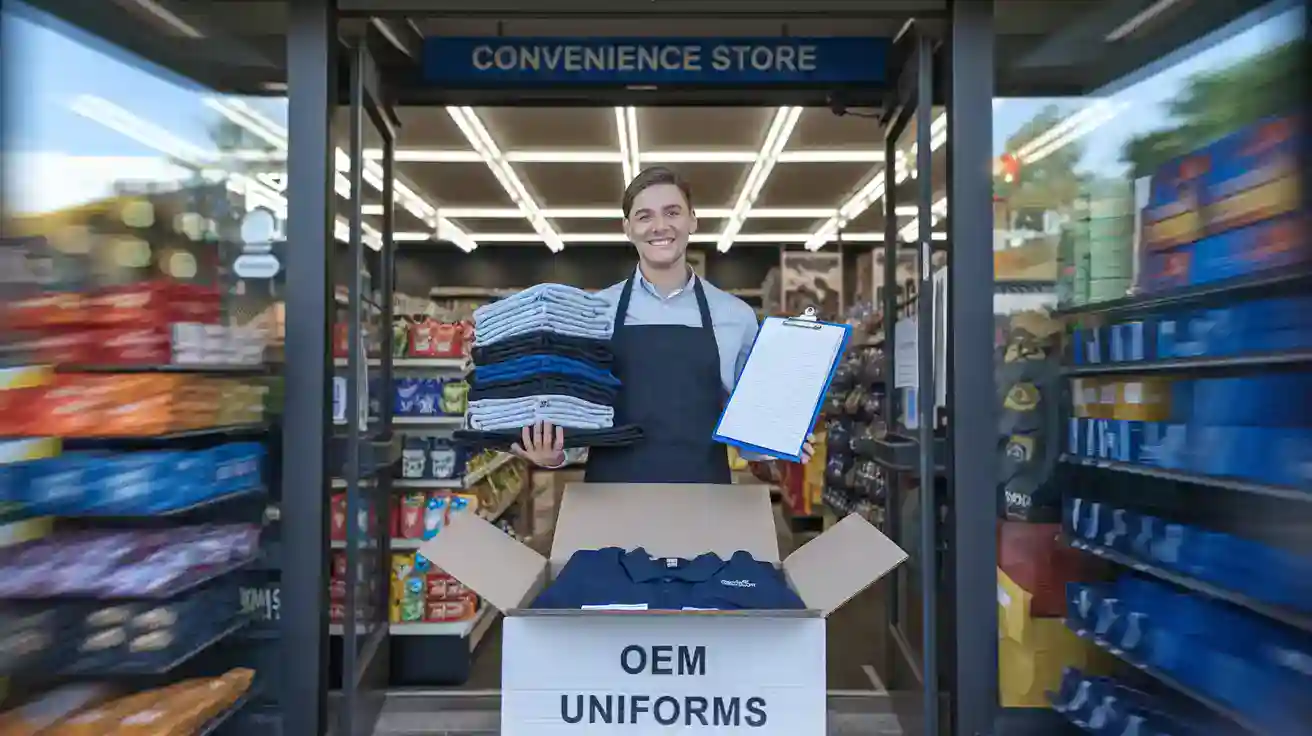
I see oem as a smart way to cut costs on convenience store uniform purchases. When I order uniforms in bulk through oem, I notice significant savings. Customization options allow me to design work uniforms that match my brand while keeping expenses low. Efficient supply chains speed up delivery and reduce waste. The benefits of work uniforms extend beyond appearance—they promote my store and lower what employees spend on clothes. Automated management systems save time and money, making uniforms even more valuable.
Key Takeaways
OEM allows for bulk ordering, leading to significant cost savings on uniforms.
Customization options help create uniforms that reflect your brand’s identity and meet employee needs.
Branded uniforms enhance professionalism, boost employee morale, and improve customer recognition.
Direct collaboration with manufacturers reduces costs by eliminating middlemen and streamlining the ordering process.
High-quality materials from OEM ensure durability, reducing the frequency of replacements and long-term costs.
Automated management systems simplify uniform tracking, improve efficiency, and enhance employee satisfaction.
Consider your order size and customization needs to determine if OEM is the right choice for your store.
Plan ahead for special uniform requirements to ensure timely delivery and compliance with safety standards.
OEM and Convenience Store Uniforms
OEM Basics
When I first explored OEM for my convenience store uniform needs, I realized how much control I gained over the process. OEM stands for Original Equipment Manufacturer. In the context of uniforms, OEM means working directly with a manufacturer to produce apparel that fits my store’s requirements. I do not rely on generic suppliers. Instead, I collaborate with experts who understand my brand and can deliver exactly what I need. This approach allows me to choose materials, colors, and styles that suit my business. I find that OEM streamlines ordering and reduces unnecessary costs.
Uniform Customization
Customization is one of the biggest advantages I see with OEM. I can design uniforms that reflect my store’s personality. I select colors that match my logo and add features that improve comfort for my team. For example, I might request moisture-wicking fabrics for summer or extra pockets for convenience. OEM gives me the flexibility to create a convenience store uniform that stands out. I do not settle for off-the-shelf options. Instead, I make choices that support my brand and my employees. Custom designs also help me maintain a consistent look across all locations.
Tip: I always ask my OEM partner for samples before placing a large order. This helps me check quality and make adjustments if needed.
Brand Identity
I believe that uniforms play a key role in building a strong brand identity. When my team wears branded uniforms, they feel proud to represent the store. Customers notice the professional appearance and associate it with quality service. I see several benefits from using OEM to create branded uniforms:
Branded uniforms instill a sense of pride among employees, enhancing brand identity.
Apparel with company branding increases the perception of quality and professionalism.
Clean and branded uniforms prevent negative perceptions of unprofessionalism.
Uniforms with logos create a cohesive and orderly appearance for the team.
Uniforms contribute to a cohesive and professional image, enhancing brand perception.
Uniforms foster a sense of belonging among employees, which is crucial for team identity.
First impressions are critical; uniforms help build a strong brand image.
I notice that branded uniforms also improve customer recognition and loyalty. Customers feel more comfortable and are more likely to return when they see a familiar look. Retailing groundedness leads to increased customer willingness to pay and loyalty. Branded uniforms serve as a powerful marketing tool by providing a physical representation of my store in various environments. The psychological impact of branded merchandise enhances customer perceptions and loyalty. I see positive word-of-mouth and longer, more frequent customer visits as a result.
OEM Cost Savings

Bulk Orders
When I order convenience store uniform supplies through OEM, I see the biggest savings come from bulk orders. Placing a large order at once means I get a much better price per uniform. I avoid the hassle of buying uniforms one at a time or in small batches. The price advantage becomes clear when I compare OEM bulk orders to traditional retail shopping. I created a table to show the differences:
Factor | Retail Shopping | |
|---|---|---|
Price | Lower per piece | Higher per piece |
Consistency | Same fabric & design | Variations likely |
Convenience | One time order for all | Parents buy separately |
Customisation | Easy with suppliers | Limited options |
Long Term Value | Strong | Weak |
I notice that bulk orders not only reduce the price but also ensure every uniform looks the same. This consistency helps my team look professional. I also find it easier to manage inventory when I receive all uniforms at once. Bulk ordering through OEM lets me plan ahead and avoid last-minute rushes. I see this as a key way how employers can save money on uniforms.
Lower Production Costs
OEM gives me more control over component procurement, which helps reduce the costs of each convenience store uniform. I work directly with the manufacturer to select materials and components that fit my budget. I also benefit from accurate sizing, which means fewer returns and less waste. Here are some ways OEM helps lower production costs:
Sizing accuracy reduces replacement rates and inventory waste.
Accurate measurements lead to lower returns and improved employee satisfaction.
Bulk orders lead to lower unit costs due to economies of scale.
Consistency in quality improves as production processes become more refined.
Streamlined operations reduce delays and enhance product quality.
Cost savings are achieved through better resource utilization.
I focus on component procurement to make sure I get the best price for every part of the uniform. By working closely with the OEM, I can choose fabrics, buttons, and zippers that meet my standards without overspending. I see that every step in the process, from design to delivery, is optimized to reduce the costs.
Fewer Middlemen
When I use OEM for uniforms, I cut out the middlemen. I do not need to go through distributors or third-party suppliers. This direct approach means I have more control over component procurement and the final price. I negotiate directly with the manufacturer, which helps me reduce the costs and avoid unnecessary markups.
I find that fewer middlemen also speed up the process. I get my uniforms faster and with fewer errors. I can track my order from start to finish, which gives me peace of mind. By handling component procurement myself, I make sure every convenience store uniform meets my standards and stays within my budget.
Tip: I always ask my OEM partner about their component procurement process. This helps me understand where my money goes and how I can save even more on uniforms.
Uniforms as Marketing Tools
Brand Promotion
I see uniforms as a powerful marketing tool for my convenience store. When my team wears branded uniforms, customers notice the logo and colors immediately. This visual consistency helps my store stand out in a crowded market. I use OEM uniforms to communicate my brand’s identity and values. Every time an employee interacts with a customer, the uniform reinforces the store’s image. I believe this approach builds trust and encourages repeat visits.
Utilizing uniforms as a marketing strategy can significantly enhance a convenience store’s brand visibility. They serve as a subtle yet impactful way to promote the brand, influencing customer perceptions and creating a lasting impression. I have found that uniforms work better than many traditional advertising methods. A recent survey of 14 major industry groups revealed that 67% of respondents believe managed uniform programs are more effective than Internet, TV, and print media.
According to marketing researchers, “67% of respondents believe that managed uniform programs are a more effective form of advertising compared to Internet, TV, radio, billboard, yellow pages, and newspaper advertising.”
OEM uniforms help me create a professional image that customers remember. I see the benefits of work uniforms every day. They foster customer loyalty and recognition, which leads to increased sales and stronger brand awareness. I consider uniforms an essential part of my marketing strategy.
Employee Appearance
I pay close attention to how my employees look when they wear uniforms. A neat and consistent appearance sends a message of professionalism. Customers feel more comfortable when they see staff dressed in clean, branded uniforms. I notice that employees take pride in their appearance, which improves morale and teamwork.
I use OEM uniforms to ensure every team member looks sharp and represents the store well. I select styles and materials that are comfortable and durable. This investment reduces costs over time because I do not need to replace uniforms as often. I see that a well-dressed team creates a positive first impression and encourages customers to return.
Here are some ways uniforms improve employee appearance and customer experience:
Employees present a unified look that builds trust.
Customers can easily identify staff for assistance.
Uniforms reduce confusion and create a sense of order.
Staff members feel valued and motivated to perform well.
Tip: I always encourage my team to keep their uniforms clean and tidy. This simple habit boosts confidence and enhances the store’s reputation.
I believe the benefits of work uniforms go beyond marketing. They shape how customers view my store and how employees feel about their jobs. Uniforms help me maintain high standards and deliver a consistent experience every day.
Quality and Durability
Material Standards
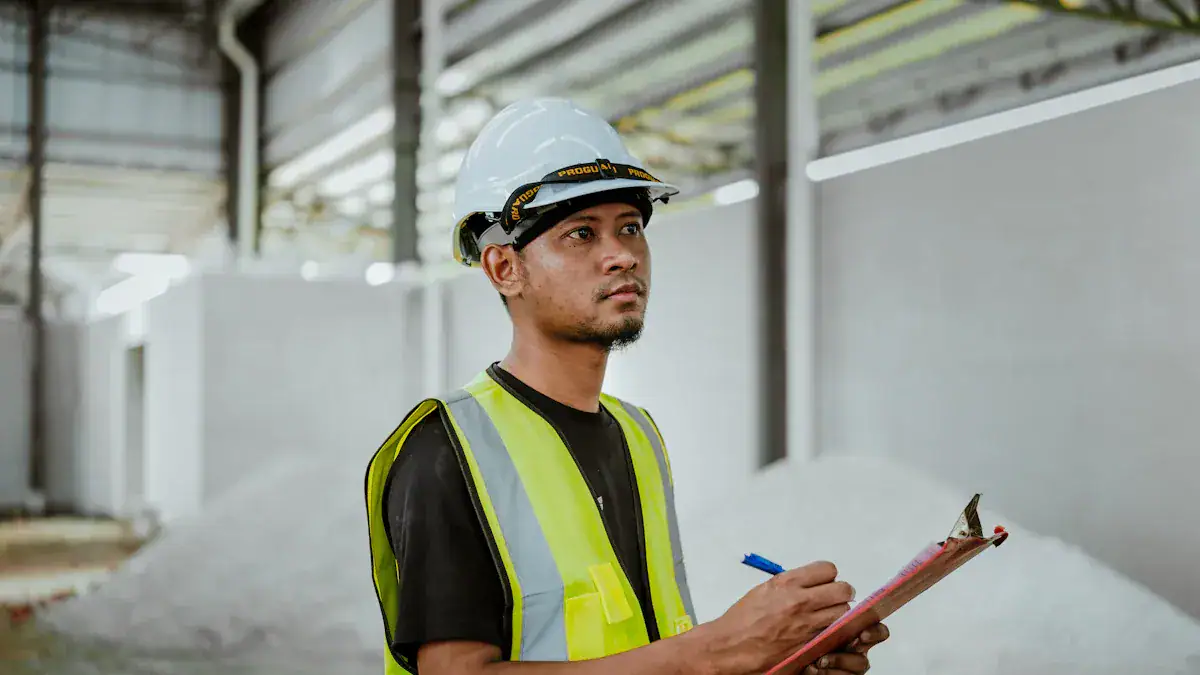
When I choose uniforms for my convenience store, I always focus on material standards. I want my team to look sharp and feel comfortable throughout their shifts. I work with OEM partners who offer advanced fabrics that outperform traditional options. For example, I often select polyester blends because they resist wear and tear better than standard cotton. These materials hold up well after repeated washing and daily use.
I have learned that investing in high-quality corporate uniforms pays off in the long run. The initial cost may seem higher, but the superior quality means fewer replacements and less hassle. I notice that uniforms made with durable fabrics maintain their color and shape longer. This keeps my staff looking professional and helps me uphold my store’s reputation for excellence.
Tip: I always request detailed fabric specifications from my OEM supplier. This helps me compare options and choose the best balance of comfort, durability, and appearance.
Replacement Savings
Durability plays a major role in controlling uniform expenses. I used to buy from traditional suppliers, but I found myself replacing uniforms more often due to fading, shrinking, or tearing. Since switching to OEM, I have seen a clear difference. The uniforms last longer because they use better materials and construction methods.
I discovered that high-quality fabrics, like those offered by OEM manufacturers, reduce the frequency of replacements. This means I spend less money over time, even if the upfront cost is a bit higher. I also save time because I do not need to reorder uniforms as frequently. My employees appreciate the consistent fit and appearance, which boosts morale and keeps everyone looking their best.
Here are some ways I maximize replacement savings with OEM uniforms:
I track the lifespan of each uniform to identify which materials perform best.
I schedule regular inspections to catch wear early and plan replacements efficiently.
I communicate with my OEM partner to update designs or materials when needed.
A table helps me visualize the difference in replacement frequency:
Supplier Type | Average Replacement Cycle | Maintenance Required |
|---|---|---|
Traditional Supplier | 6-12 months | High |
OEM | 18-24 months | Low |
By prioritizing quality and durability, I ensure my investment in uniforms delivers long-term value. I see fewer disruptions, lower costs, and a more professional team every day.
OEM vs. Other Uniforms Options
Traditional Suppliers
When I first started searching for uniforms, I worked with traditional suppliers. These companies offered catalog options and standard sizes. I noticed that the process felt rigid. I had to choose from what they had in stock, which limited my ability to match my brand’s colors and style. The ordering process took longer because I waited for shipments from multiple warehouses. I also saw that prices varied depending on the season and availability.
Traditional suppliers often use a one-size-fits-all approach. I found that this led to inconsistent fits for my team. Some employees felt uncomfortable, which affected morale. I had to order extra pieces to accommodate everyone, increasing my costs. The lack of customization made it hard to create a unified look. I wanted my store to stand out, but generic uniforms did not help.
I compared these experiences with oem solutions. OEM gave me direct access to manufacturers. I could specify materials, colors, and features. The process felt more streamlined. I received uniforms that matched my brand and fit my team perfectly. I saw fewer returns and less waste. OEM proved to be a cost-effective choice for my business.
Tip: I always recommend reviewing supplier contracts carefully. Some traditional suppliers add hidden fees for rush orders or special sizes.
Rental Services
I also explored rental services for uniforms. These companies promise convenience by handling cleaning and replacements. At first, the idea sounded appealing. I thought I could save time and avoid managing inventory. However, I quickly realized that rental costs add up over time. Monthly fees and service charges made the uniforms more expensive than buying outright.
Rental services often provide standard designs. I could not customize the uniforms to reflect my brand. My team wore generic outfits that did not promote our store’s identity. I noticed that some uniforms showed signs of wear after repeated use. The quality did not meet my expectations. Employees felt less motivated to care for rented uniforms, knowing replacements would arrive soon.
I found that oem solutions offered better control over quality and appearance. I could invest in durable uniforms that lasted longer. The upfront cost was lower than the total rental fees over a year. I managed replacements on my schedule, which helped me plan my budget. OEM allowed me to maintain a professional image and save money.
Note: I always calculate the total cost of rental services before signing a contract. Long-term expenses often exceed the initial savings.
Work Uniforms Management
Automated Systems
I have found that automated systems completely change how I manage work uniforms in my convenience store. These systems use technology like RFID to track every uniform, making the process fast and accurate. I no longer worry about missing items or wasted time searching for the right size. Automated storage and retrieval let my employees grab their work uniforms quickly, so they can start their shifts on time. Real-time inventory tracking keeps me updated on stock levels, which helps me avoid shortages or over-ordering.
Here is a table showing the key features I rely on in my automated uniform management system:
Feature | Description |
|---|---|
Automated Storage and Retrieval | Employees can quickly retrieve or return uniforms using RFID technology, eliminating wait times. |
Real-Time Inventory Tracking | Provides updates on uniform availability, ensuring stock levels are maintained. |
Security and Theft Prevention Features | RFID tracking accounts for each uniform, reducing losses and unauthorized use. |
Integration with Employee Systems | Syncs with HR software for accurate employee records and efficient operations. |
Time Efficiency for Daily Operations | Reduces time spent searching for uniforms, allowing employees to focus on their tasks. |
Cost Savings and Long-Term ROI | Minimizes manual handling and theft, optimizing inventory for cost savings. |
Improved Employee Satisfaction and Convenience | Ensures employees have easy access to clean, ready-to-wear uniforms. |
Enhanced Operational Efficiency | Streamlines workflows and improves resource allocation. |
I see that these features not only save time but also improve employee satisfaction. My team always has access to clean work uniforms, which boosts morale and keeps everyone looking professional. The system also helps me control costs by reducing losses and manual handling.
Assignment and Maintenance
Managing work uniforms goes beyond just tracking inventory. I use automated systems to assign uniforms to each employee, making sure everyone gets the right fit and style. This reduces confusion and helps me maintain a consistent look across my team. I also schedule regular maintenance and cleaning, so the uniforms stay in top condition.
To maximize savings with OEM and automated management, I follow several best practices:
I train my staff on how to use the system and record uniform usage accurately.
I encourage open communication, so any issues with work uniforms get resolved quickly.
I set clear procedures for checking out and returning uniforms.
I use a first-in, first-out (FIFO) system to rotate uniforms and reduce wear.
I conduct regular counts to prevent shortages and ensure every employee has what they need.
Tip: I use cloud-based automation tools to centralize all my work uniforms data. This helps me spot trends, plan orders, and avoid unnecessary costs.
Automating manual tasks reduces errors and keeps my records up to date. I can identify trends in uniform usage, which helps me make better decisions about stock and pricing. By following these steps, I increase profitability and keep my work uniforms program running smoothly.
When OEM May Not Fit
Small Orders
I have learned that OEM works best when I need uniforms in large quantities. When I run a small convenience store or only need a few uniforms, OEM may not offer the same cost benefits. Manufacturers often set minimum order requirements. These minimums help them keep production efficient and prices low. If I only need five or ten uniforms, I might not meet the minimum. I have faced this challenge before when hiring just a few new employees.
Ordering in small quantities can also lead to higher prices per uniform. The manufacturer cannot spread setup costs over many items. I have seen that shipping costs also become less efficient with small orders. I sometimes find that local suppliers or retail stores offer better deals for small batches. They let me buy uniforms off the shelf, which saves time and avoids minimum order issues.
Note: If I expect my team to grow soon, I sometimes plan ahead and order extra uniforms to reach the minimum. This helps me get the OEM price and prepares me for future hires.
Special Needs
Some situations require uniforms with unique features. I have managed stores where employees needed flame-resistant or high-visibility uniforms. I also worked with team members who needed custom sizing for comfort and safety. OEM manufacturers can handle these requests, but the process takes more time and planning.
I use the following table to show how OEM addresses special uniform needs:
Feature | Description |
|---|---|
Tailored uniforms to ensure proper sizing, enhancing safety and comfort for employees. | |
Safety Standards Adherence | Compliance with industry safety regulations, including FR and high-visibility uniforms. |
Specialized Features | Incorporation of moisture-wicking fabrics, reinforced seams, and antimicrobial properties. |
I have found that OEM partners can deliver uniforms that meet strict safety standards. They offer options like moisture-wicking fabrics and reinforced seams. These features help my employees stay comfortable and safe during long shifts. However, I must communicate my needs clearly and allow extra time for production. Custom features often require special materials or extra steps in manufacturing.
Sometimes, I need uniforms quickly or in very small quantities for special roles. In these cases, OEM may not be the fastest or most cost-effective choice. I weigh the benefits of customization against the urgency and size of my order. For unique needs, I sometimes combine OEM for standard uniforms with local suppliers for special cases.
Tip: I always discuss my special requirements with the OEM partner early in the process. This helps avoid delays and ensures every employee gets the right uniform for their job.
I have seen OEM deliver real savings for convenience store uniforms. By working directly with manufacturers, I cut costs and improve quality. Key benefits include:
24% cost savings from better inventory management and technology
Reduced wear on employee clothing, saving staff money
Tax deductions on uniform expenses for my business
Improved morale and professionalism, which builds customer trust
Automated management systems help me streamline operations and reduce staffing costs. I recommend evaluating OEM and automation for your next uniform order to boost efficiency and long-term value.
FAQ
What does OEM mean for convenience store uniforms?
I work directly with the manufacturer to design and produce uniforms that fit my store’s needs. OEM stands for Original Equipment Manufacturer. This approach gives me more control over quality, style, and cost.
How do I know if OEM is right for my store?
I consider my order size, need for customization, and long-term goals. OEM works best when I want unique uniforms and plan to order in bulk. For small orders, I sometimes use local suppliers.
Can I customize every part of my uniform with OEM?
Yes, I can choose fabrics, colors, logos, and features. I work with the manufacturer to create a design that matches my brand and supports my team’s comfort and safety.
How do automated uniform management systems save money?
Automated systems track inventory, reduce losses, and speed up distribution. I spend less time on manual tasks and avoid over-ordering. This technology helps me keep costs low and operations smooth.
What should I ask my OEM partner before ordering?
I always ask about minimum order quantities, sample availability, production timelines, and material options. Clear communication helps me avoid surprises and ensures I get the best value.
Are OEM uniforms more durable than retail options?
I find OEM uniforms last longer because I select higher-quality materials. This reduces replacement costs and keeps my team looking professional for a longer period.
What if my employees need special uniforms?
I discuss all special requirements with my OEM partner early. They can provide flame-resistant, high-visibility, or custom-fit uniforms. Planning ahead ensures every employee gets what they need.
Can I combine OEM with other uniform solutions?
Yes, I sometimes use OEM for standard uniforms and local suppliers for urgent or small orders. This flexible approach helps me balance cost, speed, and customization.