
Recycling Center Uniform OEM China | MRF & Sort Line Workwear
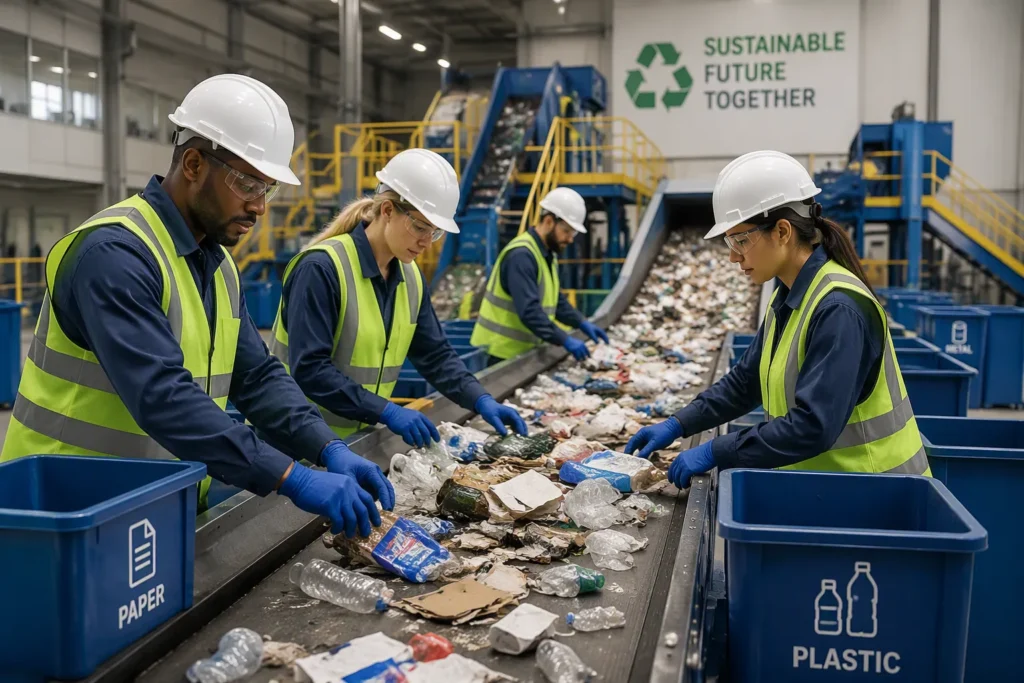
China leads the world in making workwear. It exported 293.64 billion US dollars in textiles and clothing in 2023. This huge output lets you find special fabrics for recycling center uniform oem china needs. MRF and sort line jobs need gear that resists wear and is easy to see. Your uniforms get constant wear from conveyor belts and sharp materials. Safety features like reflective strips keep workers visible near heavy machines. This guide shows you how to check a reliable manufacturer, talk about terms, and pick a factory that balances durability with sustainability. You will learn to compare samples, check credentials, and get fair pricing for your recycling team’s uniforms.
Related OEM uniform programs
Key Takeaways
China has many fabrics and factories to choose from for custom recycling uniforms.
Figure out your fabric, safety, and sizing needs before you contact suppliers.
Check that makers have business licenses and offer live factory tours.
Talk about prices, the smallest order you can place, and wait times. This helps you avoid surprise fees.
Check samples and get reliable after-sales help for long-lasting uniforms.
Why Choose Recycling Center Uniform OEM China?
China has more factories and fabric choices than any other country. No other place can match this size. You can find thousands of fabric mills, trim makers, and sewing lines all in one place. This matters when you need tough workwear for MRF and sort line teams.
China's textile and apparel (T&A) exports have grown by 50 percent and China has doubled its share of world T&A exports in less than a decade, to about 25 percent.
That size gives you real benefits for your recycling center uniform oem china project. You can get special fabrics, try new designs, and make more uniforms without changing suppliers.
Cost Efficiency and Scalability
Big MRF teams need hundreds of uniforms in the same sizes and colors. Chinese factories can handle this amount easily. One factory can do a forty-piece order in 14 sizes as a normal job. This keeps your costs low and your rollout smooth.
Sustainable uniform sourcing from China also helps your green goals. Many factories now offer recycled polyester and organic cotton choices. You can make a program that fits your budget and your environmental aims at the same time.
OEM manufacturing makes every uniform fit your brand and safety needs. Your logo, reflective strips, and pocket layouts all follow your specs. This custom work costs much less than doing it at home.
Access to Specialized Textiles
The table below compares China with other big apparel exporters. It shows why China leads for complex, custom workwear programs.
Country | Strengths | Weaknesses / Key Traits |
|---|---|---|
China | Dense polyester teamwear supply chain; speed and tolerance for complexity; small-order capability (forty-piece order with 14 sizes routine) | Additional US import duties; supplier verification needed |
Vietnam | Strength in large repeat cut-and-sew programmes | Weaker fit for custom club kit |
Bangladesh | Volume knitwear focus | High minimums; full-garment sublimation uncommon |
China’s textile ecosystem gives you choices that other countries cannot match. You can find flame-resistant fabrics, high-visibility materials, and moisture-wicking blends all from one manufacturer. This variety supports sustainable uniform manufacturing practices too. Many mills now carry recycled content certifications and offer traceable supply chains.
Your factory can also mix multiple fabric types in one order. This makes your uniform sourcing simpler and cuts shipping costs. You get one shipment, one invoice, and one quality standard for your whole team.
Define Your Sourcing Sustainable Uniforms Needs
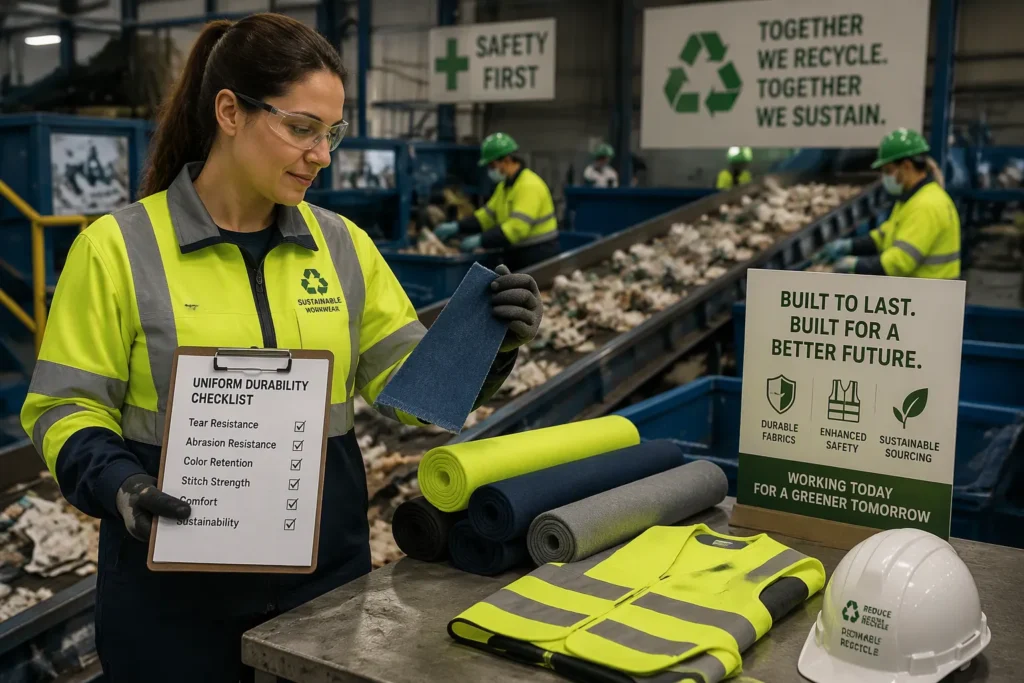
A good manufacturer can’t help you if you don’t have a clear plan. You need to know what you want before you talk to any supplier. Write down your fabric details, safety rules, and size range. A factory that gets your needs will always do better than a cheap price. Cheap uniforms that break in three months end up costing more than strong ones. The fit also matters. A uniform that stops you from moving freely slows your sort line and makes injuries more likely.
Fabric and Durability for Sort Lines
Sort line work ruins normal clothes. Workers deal with sharp metal, wet paper, and rough plastics all shift long. The fabric you pick decides how long each uniform lasts. Look for tight-weave cotton-poly blends or ripstop nylon. These stand up to tearing when caught on conveyor edges. Ask the mill for abrasion test data before you buy. A fabric that pills or fades after a few washes is a sign of poor quality.
Your sustainability goals also affect fabric choice. Recycled polyester and organic cotton now match virgin materials in strength. Many mills have certifications for recycled content and traceable supply chains. These papers prove your sustainable uniforms meet your environmental claims. Ask for them early in your sourcing process.
Safety Features and Customization
MRF environments have real dangers. Waste collection workers need high-visibility features like reflective tape and bright colors. Vehicle and machine operators must see your team easily. In some cases, workers need hi-vis gear with an ANSI 107 rating. This national standard for hi-vis clothing requires specific amounts of reflective and fluorescent material.
ANSI/ISEA 107 groups apparel by work environment and visibility level. Use this table to match gear to your site.
Category | Description |
|---|---|
Type O (Off-Road) | For workers in non-roadway environments |
Type R (Roadway) | For workers exposed to roadway traffic |
Type P (Public Safety) | For emergency and public safety personnel |
Class | Visibility Level |
--- | --- |
Class 1 | Minimum high-visibility material |
Class 2 | Greater high-visibility material |
Class 3 | Highest visibility level |
Following ANSI standards makes sure a safety vest gives enough protection in the chosen work setting. Flame-resistant materials also matter near balers and compactors. Add reinforced knees, double-stitched seams, and secure pocket flaps. Your logo placement and reflective strip layout belong in the spec sheet too. Give the factory exact measurements and colors. Clear specs stop costly changes later.
Vet Manufacturers in China
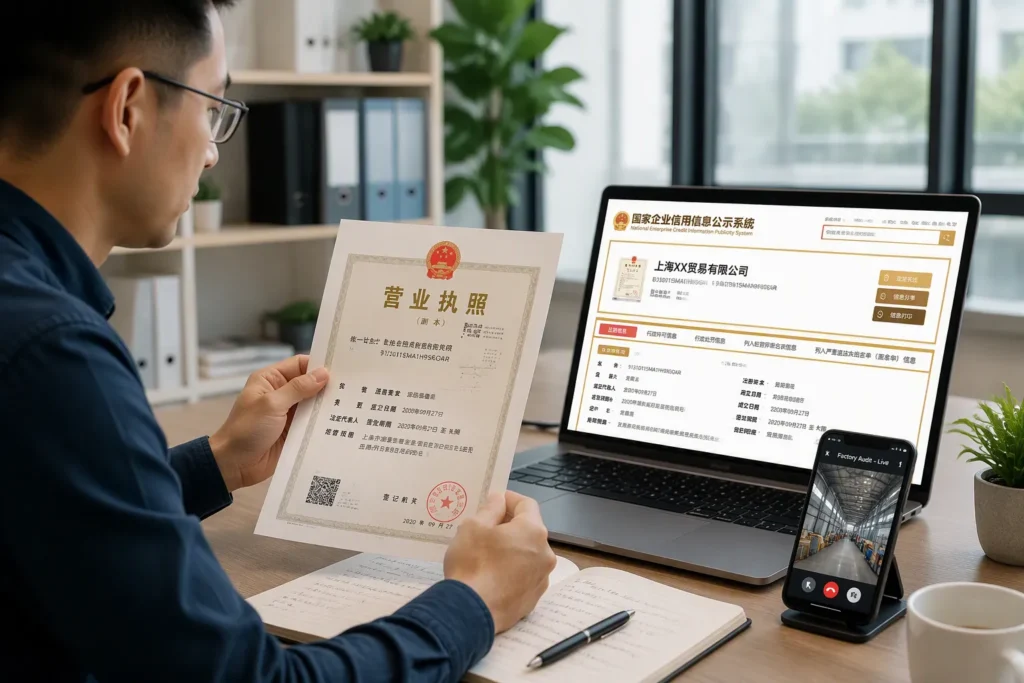
You found a supplier with good prices and nice samples. Now you must prove they are real. Anyone can build a website and send photos. Smart buyers check every claim before sending money. This step protects your budget and your team’s safety.
Verify Credentials and Business License
Start by asking for a copy of the Chinese Business License. This document proves the company is a registered business. Look for the 18-character Unified Social Credit Code (USCC) on the license. This code is your key to opening public records.
Get the business license image and pull the Chinese company name and USCC using Google Translate Lens.
Go to gsxt.gov.cn (NECIPS), use Chrome auto-translate, enter the USCC, solve the captcha, and save a PDF of the translated detail page.
Copy story fields like business scope and penalty descriptions from the source Chinese text and run through DeepL for better translation.
Cross-check the company on Tianyancha or Qichacha using the USCC, and search the Supreme People’s Court judgment database for lawsuits.
Order a full verification report for high-stakes cases that combines NECIPS data with court records, tax records, and customs data.
Confirm the registration status shows active and in operation. Check that the stated business scope matches what they claim to make. Look for operational abnormality flags or administrative penalties. Any current or past flag needs an explanation from the supplier.
Conduct Factory Audits and Video Calls
A video call lets you see the real factory. Ask for a live tour, not a recorded video. Watch for blurred production zones, missing raw-material labels, and poor trim sorting. Check that the machine mix matches their claims. A factory claiming bar-tack capability should have a running station. Demand timestamped QC records. Not willing to show these often means unauthorized subcontracting.
A reliable eco-friendly clothing manufacturer owns the whole process from fabric to final shipment. This ensures better quality control and transparency. During your virtual tour, inspect these areas: measurements, appearance, color, stitching, fabric, poppers, contamination, hang tags, labeling, pull test, fade test, dry rub test, and SPI check.
Very low price with unclear specifications
Compliance documents that don’t match the product
No reasonable factory verification
Materials changed without approval
No clear QC procedure
Unclear subcontracting
Match your uniform type to the right manufacturing hub. Some cities in China specialize in workwear production. Ask your manufacturer about their location and local supply chain. Request third-party audit reports for certifications like BSCI, Sedex, ISO, OEKO-TEX, GOTS, and GRS. These prove safe working conditions and ethical labor practices. A garment factory that welcomes inspections and shares documentation is your best partner for recycling center uniform oem china projects. This level of verification protects your sustainability goals and your workers.
Compare Pricing, MOQs, and Lead Times
Most Chinese suppliers add a 30% profit margin to their prices. Expect this and get ready to bargain. Your goal is a fair price that still lets the factory make good uniforms for your recycling center. Three things affect your total cost: pricing, MOQs, and lead times. Each one needs careful attention when you source.
Understanding Hidden Costs and Shipping
Your invoice price does not cover everything. Common hidden costs when importing work uniforms from China include:
Unplanned sample changes from unclear fit notes or missing logo files
Fabric swap when the first choice is not available or costs too much at low volume
Color matching fixes that need re-dyeing or changed trims
Failed packaging rules for stores or fulfillment centers
Air freight used because production or sign-off ran late
Extra duty from wrong classification guesses
Port storage or fees for delayed customs clearance
Rework costs from wrong measurements or decoration flaws
Shipping costs change by port and container size. Ask your factory for a full list of inland freight, port fees, and customs brokerage. Tariffs depend on your country’s import rules for work uniforms. Sampling fees also add up. Ask for three rounds of sample changes in your contract. This stops surprise charges from eating your uniform budget.
Negotiating Minimum Order Quantities
Custom uniforms often have high MOQs because of special equipment and hard steps. You can lower these MOQs with smart bargaining. The table below shows methods that work with Chinese factories.
Technique | How It Applies to Uniform MOQs |
|---|---|
Mix SKUs creatively | Combine colors or sizes to meet total fabric instead of hitting MOQ per style/color |
Offer material support | Promise to buy leftover fabric or pay for custom dye lots |
Plan for growth | Show the factory your first order is a test with bigger volumes planned |
Use timing strategically | Talk to suppliers during slow seasons for smaller runs |
Pay more upfront | Increase deposit above 30% to lower supplier risk |
Ask why the MOQ is high before asking for a lower number. The answer might show simpler options like laser engraving instead of screen printing. Accept a higher unit price for a smaller order. Reduce choices and start with 3-5 options. Show real proof of your market testing. Use these methods together for the best result. This way makes your factory more flexible on MOQs.
Assess Design, Prototyping, and Support
The Sampling Process and Sizing
You need to hold a real sample before you approve a full order. Photos can hide problems. Feel the fabric, look at the stitching, and wash the sample a few times. A good sample will not fade or shrink after washing. Also check how fast the manufacturer responds during this stage. Quick replies and clear answers show they care about your project.
The prototyping process includes logo placement and reflective strips. Give the factory exact measurements for each logo and strip. Ask for a digital mockup first, then a physical pre-production sample. Make sure the reflective tape is at the right height on sleeves and back panels. Check that the logo colors match your brand guide. A factory that rushes this step will send you uniforms with crooked logos or peeling strips.
Communication and After-Sales Support
Clear communication channels stop costly mistakes. Set up one main contact with your supplier. Use video calls and shared documents to track changes. Language barriers cause errors in sizing, color, and decoration. Ask for written confirmation of every spec change. This creates transparency and protects both sides.
Warranty guarantees matter for recycling center uniforms. Ask what happens if seams fail or reflective strips peel after a few months. A strong warranty covers defects in materials and workmanship. Get the warranty terms in writing before you sign. Reliable after-sales support means quick replacements for faulty items. This protects your team and your sustainability goals. A manufacturer who stands behind their work will fix problems fast. Your sourcing process should end with a partner you trust for the long term.
You now have a clear plan for your recycling center uniform oem china project. First, decide your fabric, safety, and sizing needs. Check every supplier by looking at their business license and taking live factory tours. Test real samples before you approve full orders. Talk about pricing, MOQs, and shipping terms using real data. Never give up safety or durability just to pay less. Cheap uniforms break fast and put your team in danger. Use the checklist above to begin your search today. A good manufacturer will protect your workers, your budget, and your sustainability goals for years.
FAQ
How do I know a Chinese supplier is real?
Ask for their Chinese Business License. Check the 18-character Unified Social Credit Code on gsxt.gov.cn. That is the official National Enterprise Credit Information Publicity System. Make sure their registration status says active. Also check that their business scope includes workwear production. Look at court records and third-party audit reports before you send any deposit.
What is the smallest order I should expect for custom workwear?
The smallest order depends on the fabric, decoration method, and factory schedule. You can lower it by mixing colors or sizes to meet total fabric needs. You can also offer to buy leftover material or pay a higher deposit. First ask the factory why the minimum is high. Their answer often shows simpler options.
Which safety standards apply to MRF and sort line uniforms?
ANSI/ISEA 107 sets rules for high-visibility gear. It depends on the work area and traffic exposure. Type R covers roadway work. Class 2 or Class 3 fits higher speeds or busy backgrounds. Flame-resistant materials matter near balers and compactors. Put reflective tape placement and ratings in your tech pack.
How many sample rounds should I plan for?
Plan for three rounds of sample changes in your contract. This covers fit fixes, logo changes, and reflective strip placement. Check each physical sample. Wash it. Look for fading or shrinking. When a factory responds fast during sampling, it often means reliable production later.
What hidden costs should I watch for when importing uniforms?
Budget beyond the invoice price. Watch for air freight from late production. Watch for rework from wrong measurements. Watch for port storage fees and duty from wrong classification. Ask your factory for a full list of inland freight, port fees, and customs brokerage. Lock sample revision limits into the contract.