

Essential Men’s Workwear Types Every Tradesman Should Own
Table of Contents
Display

You step onto the job site and rely on mens workwear to protect you from hazards and keep you comfortable all day. Essential workwear supports your safety and lets you focus on your tasks. Have you ever wondered which types of workwear help you stay efficient and protected in trades? The right workwear essentials make a difference in every project. Consider these must-have workwear pieces that experts recommend for trades and construction workwear:
Hi-vis jackets
Comfortable work trousers
Waterproof overalls
Breathable base layers
Work shirts
Protective gloves
Safety helmets
Tool belts
Protective eyewear
Investing in quality mens workwear ensures that your essential workwear items last longer, fit well, and give you the confidence to tackle any job. You benefit from reliable workwear essentials, superior comfort, and practical features. Different types of workwear offer solutions for every environment, so you can choose essentials that match your needs. Quality construction workwear provides durability, while types of workwear with advanced technology improve safety. When you select workwear essentials made for trades, you get essentials designed for performance. The right types of workwear deliver value and protect you every day.
Key Takeaways
Invest in durable work boots to protect your feet and enhance comfort during long shifts.
Choose hi-vis jackets and vests to increase visibility and reduce accident risks in low-light conditions.
Select comfortable work trousers with utility features like reinforced knees and extra pockets for better mobility and tool access.
Opt for high-quality work shirts that offer breathability and protective features to maintain professionalism and comfort.
Wear protective gloves that balance safety and dexterity, allowing you to handle tools and materials effectively.
Use waterproof overalls to stay dry and comfortable in harsh weather, ensuring you can focus on your tasks.
Select insulated jackets and rain gear to protect against cold and wet conditions, enhancing your overall work performance.
Organize your tools with a well-designed tool belt to improve efficiency and reduce time spent searching for equipment.
Work Pants Essentials
Durable Work Pants
Comfort and Mobility
You spend long hours on your feet, so your trousers must support every move. Durable work pants give you the flexibility to kneel, climb, and stretch without restriction. Many designs feature articulated knees and gusseted crotches, which help you bend and move naturally. These features increase comfort and reduce fatigue during demanding tasks. Work pants also protect you from debris and workplace hazards, so you can focus on your job with confidence.
Tip: Look for trousers with reinforced seams and flexible panels. These details make a big difference in daily comfort and mobility.
Feature | Description |
|---|---|
Durability | Work pants are designed for maximum durability to withstand the rigors of daily tasks. |
Comfort | They prioritize comfort to ensure tradesmen can work effectively without discomfort. |
Mobility | The design allows for unrestricted movement, essential for tasks like climbing or kneeling. |
Protection | Provides protection against debris and workplace hazards, enhancing safety during tasks. |
Utility Features
You need trousers that do more than just fit well. Utility features set durable work pants apart from regular pants or work jeans. Reinforced knees, extra pockets, and tool loops help you carry gear and protect high-stress areas. Double or triple-stitched seams add strength, while rivets and bartacks prevent tearing. These features extend the life of your workwear and keep your tools within reach.
Feature | Description |
|---|---|
Materials & Construction | High-quality materials and construction techniques, including double or triple-stitched seams, are crucial for durability. |
Fit & Mobility | Garments must allow for movement; articulated knees and gusseted crotches enhance mobility. |
Reinforcements | Features like rivets, bartacks, and reinforced knees help prevent wear and tear in high-stress areas. |
Choosing Work Pants
Material Options
Selecting the right material for your durable work pants affects how long they last and how comfortable you feel. Common materials include:
Cotton: Breathable and heavyweight, but may shrink and dries slowly.
Denim: Offers excellent durability, often blended for comfort.
Cotton Duck: Extremely tough and resists tears, ideal for heavy-duty work.
Polyester: Strong and quick-drying, often blended with cotton for balance.
Spandex: Adds flexibility and comfort, usually blended with other fabrics.
Cordura: Highly resistant to abrasion, used in high-stress areas.
Each material brings unique benefits. Cotton duck and Cordura stand out for their toughness, while blends with spandex improve flexibility. Polyester blends dry quickly, which helps in wet conditions.
Fit Tips
When you choose comfortable work trousers, focus on fit and function. Pants that fit well prevent chafing and discomfort. Try on different styles to find the right balance between snugness and freedom of movement. Weather-resistant fabrics help if you work outdoors. Always check if the trousers meet safety standards for your trade. Easy-care fabrics save you time on maintenance. You can also ask colleagues or read reviews to find the best options for your needs.
Material and durability: Match the fabric to your job.
Fit and comfort: Ensure a good fit for all-day wear.
Weather appropriateness: Choose weather-resistant options for outdoor work.
Compliance and safety: Make sure the pants meet safety standards.
Versatility: Pick trousers that adapt to different tasks.
Flexibility: Test for ease of movement.
Easy maintenance: Select fabrics that clean easily.
Professional recommendations: Seek advice from experienced tradesmen.
You rely on your workwear every day. Investing in the right durable work pants and trousers ensures you stay comfortable, protected, and ready for any challenge.
Work Shirts for Tradesmen
High-Quality Work Shirts
Comfort and Professionalism
You need work shirts that help you look professional and feel comfortable throughout your shift. High-quality work shirts use durable fabrics that stand up to daily wear and tear. You benefit from features like stain resistance and UV protection, which keep you safe and presentable in tough environments. Many styles, such as button-downs and polos, offer a polished look while letting you move freely. You show pride in your trade when you choose shirts designed for your job.
Tip: Select work shirts with reinforced seams and easy-care finishes. These details help you maintain a professional appearance and extend the life of your workwear.
High-quality work shirts last longer because manufacturers use strong materials like cotton, denim, and polyester.
Protective features such as moisture-wicking and flame resistance keep you safe in different work settings.
You can choose from versatile styles that suit your personal taste and workplace standards.
Breathability
You work hard, so you need shirts that keep you cool and dry. Breathable fabrics allow air to circulate, reducing sweat and discomfort. Many high-quality workwear options use advanced blends that wick moisture away from your skin. You stay focused and productive when your shirt helps regulate your temperature.
Benefits | |
|---|---|
Polyester/Cotton Stretch Fabric | Combines strength and durability with breathability and comfort, ideal for construction and manufacturing. |
Polyester/Viscose Stretch Fabric | Offers durability and moisture-wicking properties, suitable for healthcare and hospitality. |
Cotton/Nylon Stretch Fabric | Provides comfort and superior abrasion resistance, perfect for mechanics and outdoor trades. |
Polyester/Lyocell Stretch Fabric | Leverages strength and eco-friendly qualities, great for sustainable workwear. |
Cotton Stretch Fabric | Enhances flexibility while maintaining comfort, ideal for outdoor work and healthcare. |
Shirt Types
Long Sleeve vs. Short Sleeve
You choose between long sleeve and short sleeve work shirts based on your job and environment. Long sleeves offer extra protection from sun, sparks, and chemicals. Short sleeves keep you cooler in warm conditions and allow greater freedom of movement. You match your shirt style to your daily tasks for maximum comfort and safety.
Standard Shirt | Blue Collar Work Shirt | |
|---|---|---|
Durability | Moderate, often lower | High, designed for repeated heavy use |
Material Type | Basic cotton or blends | Reinforced cotton, ripstop, synthetics |
Safety Features | Rarely included | UV/flame resistance, reinforced points |
Comfort & Mobility | Standard fit | Enhanced mobility and thermal control |
Professional Symbolism | Minimal | Reflects trade expertise, pride |
Replacement Frequency | Frequent | Lower (longer lifespan) |
Cost over Time | Can be higher due to replacing | Lower, due to durability |
Moisture-Wicking
You stay dry and comfortable when you wear moisture-wicking work shirts. These shirts pull sweat away from your skin and help it evaporate quickly. You avoid chafing and overheating, especially during intense tasks or hot weather. Moisture-wicking technology is common in high-quality workwear, making it a smart choice for tradesmen who value comfort and performance.
Note: Moisture-wicking shirts work best when paired with breathable base layers. This combination keeps you cool and dry all day.
You improve your safety, comfort, and professionalism when you invest in high-quality work shirts. You find options that match your needs, whether you prefer long sleeves, short sleeves, or advanced moisture control. The right workwear helps you perform at your best every day.
Protective Footwear
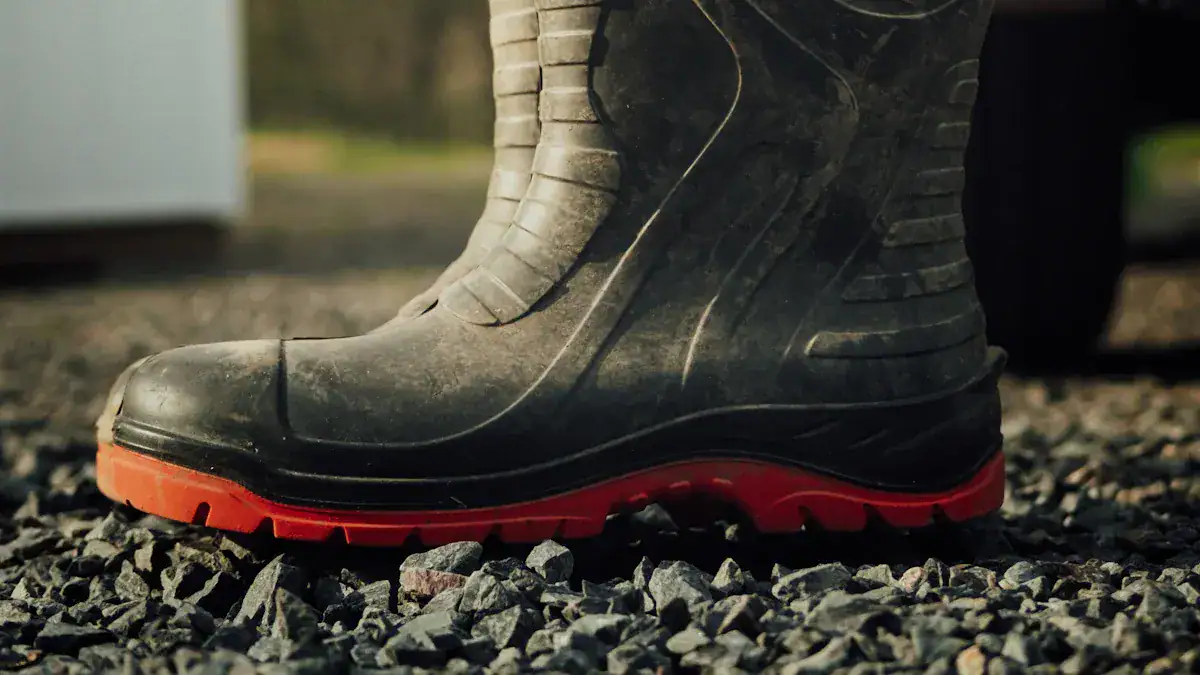
You face many hazards on the job site, so you need protective footwear that keeps your feet safe and comfortable. The right work boots prevent injuries and help you stay productive throughout the day. When you choose durable work boots, you invest in your safety and long-term health.
Safety Features
Steel Toe vs. Composite Toe
You often need to decide between steel-toe boots and composite-toe options. Steel-toe boots offer strong impact protection and are a classic choice for many trades. They shield your toes from falling objects and heavy equipment. Composite-toe boots use materials like fiberglass or carbon fiber. These boots provide similar protection but feel lighter and do not conduct electricity. You might prefer composite toes if you work around electrical hazards or need lighter footwear for long shifts.
Slip Resistance
You work in environments where spills and slick surfaces are common. Slip-resistant work boots help you avoid falls and injuries. Look for soles with deep treads and special rubber compounds. These features give you better grip on wet or oily floors. Slip resistance is essential for trades like construction, plumbing, and electrical work.
Tip: Always check the safety standards for your trade before choosing work boots. Proper certification ensures your boots meet industry requirements.
Description | |
|---|---|
Impact protection | Protects against falling or rolling objects. |
Metatarsal protection | Shields the upper foot from impact and compression. |
Compression protection | Guards against heavy loads compressing the foot. |
Electrical hazard protection | Reduces the risk of electrical shocks. |
Static dissipation | Prevents the buildup of static electricity. |
Puncture resistance | Protects against sharp objects penetrating the sole. |
Dielectric insulation | Provides protection against electrical hazards. |
Chainsaws | Offers protection from chainsaw injuries. |
Comfort and Support
Insoles
You spend hours on your feet, so comfort matters as much as safety. Quality insoles in your work boots reduce fatigue and prevent foot pain. Insoles with arch support and cushioning help you maintain good posture and stability. You can replace standard insoles with custom or gel options for extra comfort.
Comfort and support in work boots reduce fatigue and prevent foot-related health issues.
Properly designed work boots enhance stability and promote better posture.
Improved footwear reduces the risk of injuries, leading to increased productivity and job satisfaction.
Waterproofing
You often work outdoors or in wet conditions. Waterproof work boots keep your feet dry and comfortable. Materials like treated leather and waterproof membranes block moisture while allowing your feet to breathe. Dry feet help you avoid blisters and infections, so you can focus on your tasks without distraction.
Note: Durable work boots with waterproofing and slip resistance last longer and perform better in tough environments.
When you select protective footwear, consider your trade and daily tasks. Construction workers may need steel-toe boots with puncture resistance. Electricians often choose composite-toe boots with electrical hazard protection. Plumbers and landscapers benefit from waterproof, slip-resistant work boots. Always match your workwear to your job for the best results.
You rely on your work boots every day. The right pair protects you from injuries, supports your health, and helps you work at your best. Invest in quality protective footwear to stay safe and comfortable on every job.
Work Gloves Essentials
Protection and Grip
You handle sharp tools, rough materials, and hazardous substances every day. The right gloves protect your hands and help you keep a strong grip on your equipment. You need gloves that balance safety and control, so you can work efficiently without risking injury.
Cut Resistance
You face risks from sharp edges, blades, and abrasive surfaces. Cut-resistant gloves use materials like kevlar to shield your hands from cuts and scrapes. These gloves let you handle glass, metal, or tools with confidence. You do not sacrifice dexterity, so you can still perform tasks that require precision.
Dexterity
You need to move your fingers freely to grip small parts, operate tools, or tie knots. Gloves with form-fitted designs and technical knit fabrics give you flexibility without bulk. You avoid fatigue and maintain control, even during long shifts. Open finger designs or reinforced palms help you grasp objects securely.
Tip: Choose gloves that combine cut resistance with high dexterity. You stay safe and productive when your gloves fit well and allow natural movement.
Glove Types
You find many types of gloves designed for different trades and tasks. Each type offers unique protection and features.
Material Choices
Padded work gloves protect your knuckles and fingers with rubberized points. You get comfort and dexterity for tasks that require both.
Leather work gloves shield you from cuts, burns, and heat. Welders and metalworkers often use these for tough jobs.
Cut-resistant work gloves use advanced fibers to guard against sharp objects. You maintain dexterity while staying safe.
Chemical and liquid resistant latex gloves block hazardous substances. You need these when handling chemicals or cleaning agents.
Insulating rubber gloves protect you from electrical burns. Electricians and linemen rely on these for safety.
Feature | Description |
|---|---|
Dexterity | Open pointer finger, middle finger, and thumb for grasping small parts. |
Grip | Padded palm and reinforcements for reliable grip on various materials. |
Comfort | Technical hex-stretch knit provides flexibility without bulkiness. |
You also benefit from gloves with Syntrex synthetic palms. These offer increased abrasion resistance and durability. High-quality construction methods ensure your gloves last longer and perform better.
Sizing
You need gloves that fit your hands properly. Gloves that are too tight restrict movement and cause discomfort. Loose gloves slip off or reduce your grip. Always check sizing charts and try on different styles. You improve safety and comfort when you choose the right size.
Measure your hand width and length before buying gloves.
Look for adjustable wrist closures for a secure fit.
Test the gloves for flexibility and grip before using them on the job.
You rely on protective gloves as a key part of your workwear. The right gloves protect your hands, improve your grip, and help you work safely in any environment.
Hi-Vis Workwear

Hi-Vis Jackets and Vests
Visibility in Low Light
You often work in environments where lighting changes quickly. Hi-vis jackets and vests help you stand out when daylight fades or shadows fall across the job site. These garments use fluorescent colors and reflective stripes that catch light from headlights or flashlights. You increase your visibility on the job, which helps drivers and equipment operators see you from a distance. Studies show that wearing high-visibility clothing can lower the risk of vehicle accidents by nearly 25% in roadside construction zones. You protect yourself and your team when you choose workwear designed for low-light safety.
Tip: Always check for ANSI/ISEA 107 certification on your hi-vis jackets. This standard ensures the materials and design meet strict visibility requirements.
Reflective Features
Reflective features play a key role in keeping you safe. Retroreflective strips bounce light back toward its source, making you visible even when direct light is limited. You benefit from wide reflective bands placed on the chest, back, and arms. These features help you stay visible from all angles. You should look for jackets and vests with high-quality reflective tape that remains effective after repeated washing. The combination of fluorescent fabric and reflective stripes gives you maximum protection in dim conditions.
Choosing Hi-Vis Gear
Color Options
You have several color choices when selecting hi-vis workwear. Fluorescent yellow-green and orange are the most common options. These colors stand out against most backgrounds, making you easy to spot. The ANSI/ISEA 107 standard recommends these shades for tradesmen working in low-light or high-traffic areas. You should match the color to your work environment for the best results. Orange works well near roadways, while yellow-green is ideal for construction sites and warehouses.
Standard | Description |
|---|---|
OSHA | Mandates high-visibility vests in environments with traffic or heavy equipment. |
ANSI/ISEA 107 | Specifies visibility and reflectivity criteria for safety vests, categorizing them into three classes based on risk levels. |
Class 1 | Suitable for low-risk environments, such as warehouse tasks. |
Class 2 | Best for moderate-risk situations, like roadside construction work. |
Class 3 | Designed for high-risk areas with fast-moving traffic or low light conditions. |
Fit and Comfort
You need hi-vis jackets and vests that fit well and feel comfortable. A proper fit keeps the garment in place and ensures the reflective features work as intended. Adjustable cuffs, waistbands, and breathable fabrics help you stay comfortable during long shifts. You should try on different sizes and styles to find what works best for your body type and job requirements. Comfortable workwear lets you focus on your tasks without distraction.
Note: You improve your safety and job performance when you invest in hi-vis gear that meets industry standards and fits well.
You rely on hi-vis jackets and vests to boost your visibility and protect you in challenging conditions. Choosing the right color, fit, and certified features ensures you stay safe and confident every day.
Waterproof Overalls
Weather Protection
Staying Dry
You face rain, mud, and splashes on many job sites. Waterproof overalls shield you from moisture and keep your clothes dry. These garments use advanced fabrics that block water while allowing air to circulate. You stay comfortable even when the weather turns harsh. Waterproof overalls help you avoid chills and discomfort that come from wet clothing. You can focus on your tasks without worrying about getting soaked.
Tip: Choose waterproof overalls with sealed seams and water-repellent coatings. These features prevent leaks and extend the life of your workwear.
Comfort in Harsh Conditions
You work in environments where cold winds and heavy rain challenge your endurance. Waterproof overalls provide insulation and block wind, helping you maintain body heat. Many designs include adjustable straps and elastic panels that let you move freely. You benefit from soft linings that reduce irritation and keep you comfortable during long shifts. You can layer these overalls with base layers for extra warmth.
Waterproof overalls protect you from rain, snow, and mud.
You stay dry and warm, which helps you avoid fatigue and illness.
Comfortable designs let you bend, stretch, and kneel without restriction.
Selecting Overalls
Material Durability
You need overalls that stand up to tough conditions. Manufacturers use heavy-duty fabrics like nylon, polyester, and treated cotton to create waterproof overalls. These materials resist tears and abrasions, so your workwear lasts longer. Reinforced knees and double-stitched seams add strength where you need it most. You can trust these overalls to protect you day after day.
Material | Durability Level | Water Resistance | Best Use Case |
|---|---|---|---|
Treated Cotton | High | Moderate | General construction |
Nylon | Very High | Excellent | Outdoor trades |
Polyester | High | Excellent | Plumbing, landscaping |
Adjustable Features
You want overalls that fit well and adapt to your movements. Adjustable suspenders and elastic straps let you customize the fit for comfort. Multi-compartment bib pockets and large lower-front pockets give you secure storage for tools and small items. Double knees with cleanout bottoms increase durability and make cleaning easier. These features improve usability and help you work efficiently.
Feature | Benefit |
|---|---|
Adjustable suspenders | Provides a customizable fit for comfort |
Elastic straps | Enhances freedom of movement |
Multi-compartment bib pocket | Offers secure storage for tools and items |
Two large lower-front pockets | Allows easy access to frequently used items |
Double knees with cleanout bottoms | Increases durability and ease of cleaning |
Note: You improve your safety and productivity when you select waterproof overalls with adjustable features and durable materials.
You rely on waterproof overalls to protect you from the elements and keep you comfortable in demanding environments. The right workwear helps you stay dry, move freely, and carry your tools with ease. When you invest in quality overalls, you prepare yourself for any weather and every challenge on the job.
Outerwear Essentials
Weather-Appropriate Outerwear
Insulated Jackets
You need outerwear that protects you from cold, wind, and rain. Insulated jackets help you stay warm and mobile in freezing temperatures. Manufacturers design these jackets with thick linings and advanced fabrics that trap heat but allow you to move freely. You can layer insulated jackets over your regular workwear to boost warmth without adding bulk. Many tradesmen choose insulated jackets for winter jobs because they combine comfort and protection.
Tip: Layering basics give you flexibility in changing weather. You can add or remove layers to adjust your comfort level throughout the day.
Rain Gear
Rain can disrupt your work and lower your productivity. You need rain gear that keeps you dry and comfortable. Waterproof jackets and pants use water-resistant finishes and sealed seams to block moisture. Flame-resistant rainwear protects you from flash fires and harsh weather, making it a smart choice for high-risk environments. You should look for rain gear with adjustable cuffs and hoods to seal out wind and rain. Waterproof boots and heavy-duty gloves complete your protection in wet conditions.
Recommended Outerwear for Extreme Weather:
Flame-resistant rainwear shields you from fire hazards and rain.
Insulated jackets keep you warm and mobile in cold climates.
Heavy-duty work gloves offer thermal insulation and water resistance.
Waterproof boots ensure stability and prevent injuries in wet areas.
Layering basics provide flexibility for varying temperatures.
Durability
Reinforced Seams
You rely on your outerwear to last through tough jobs. Reinforced seams prevent seam failure when you lift, reach, or carry heavy loads. Manufacturers use triple-needle stitching and bar tacks at stress points to strengthen jackets. Extra reinforcement at corners, pockets, and closures helps your outerwear resist tearing and wear. Construction work jackets often feature these techniques to improve durability and extend the life of your gear.
Durability Feature | Benefit |
|---|---|
Triple-needle stitching | Prevents seam failure during heavy lifting |
Bar tacks at stress points | Adds strength to high-strain areas |
Reinforced corners/pockets | Reduces risk of tearing and increases lifespan |
Flexibility
You need jackets that let you move easily while working. Flexible outerwear uses advanced fabrics that stretch and bend with your movements. Water-resistant finishes keep you dry without sacrificing comfort. You can choose jackets with adjustable features, such as cuffs and waistbands, to customize the fit. These details help you stay comfortable and productive in demanding environments.
Note: Outerwear with reinforced seams and flexible fabrics ensures comfort and protection. You get the best results when you select workwear designed for your trade.
You improve your safety and job performance when you invest in jackets and rain gear with high durability and flexibility. The right outerwear helps you face any weather and every challenge on the job site.
Base Layers for Workwear
Temperature Regulation
Thermal Options
You need base layers that help you stay warm in cold conditions. Thermal base layers trap heat and wick moisture away from your skin. These layers add between 4°F and 8°F of warmth, which makes a big difference when you work outside. Merino wool stands out because it keeps you warm even when wet and resists odors. Synthetic blends also work well because they dry quickly and last longer. Cotton is not a good choice for base layers since it holds moisture and can make you feel cold.
Material Type | Properties | Temperature Regulation Effect |
|---|---|---|
Thermal Base Layers | Wicks moisture, adds warmth (4°F to 8°F warmer) | Effective for cold environments |
Cotton | Retains moisture, poor choice for base layers | Not effective |
Merino Wool | Maintains warmth when wet, wicks moisture, antimicrobial | Highly effective |
Synthetic Blends | Durable, breathable, fast-drying, may hold odors | Good balance |
Moisture Wicking
You sweat during hard work, so moisture-wicking base layers help you stay dry and comfortable. Fabrics like polyester and polypropylene pull sweat away from your skin and let it evaporate quickly. This keeps you from feeling clammy or chilled. Merino wool also wicks moisture and fights bacteria, which helps you avoid odors. Cotton-polyester blends offer comfort and durability for daily wear. Synthetic fabrics dry fast and last longer, but they may hold odors after repeated use.
Cotton-polyester blends give you comfort and wick moisture, making them durable for everyday work.
Merino wool regulates temperature well, but it costs more and may wear out faster.
Synthetic fabrics dry quickly and last, but you might notice odors over time.
Tip: Choose base layers that wick moisture and add warmth. You stay comfortable and focused on your tasks.
Comfort and Fit
Seamless Design
You want base layers that feel smooth against your skin. Seamless designs prevent chafing and irritation, especially when you move a lot. If a base layer does not fit well, you will not wear it. Seamless construction adapts to your body shape and helps you stay comfortable all day. The Seamless Base Layer In Motion Top uses a polypropylene blend to wick moisture and keep you dry. Its seamless design and elastic fabric move with you, so you do not feel restricted.
Stretch Fabrics
You need base layers that stretch and flex as you work. Stretch fabrics let you bend, reach, and lift without feeling tight. These materials adapt to your movements and keep their shape after many washes. You stay comfortable and avoid distractions when your base layers fit well and move with you. Manufacturers use elastic fibers in base layers to improve flexibility and comfort.
Note: Seamless designs and stretch fabrics make your workwear base layers more comfortable and practical. You get better results when you choose base layers that fit well and wick moisture.
You improve your comfort, temperature control, and performance when you select the right base layers for workwear. The best options help you stay dry, warm, and focused on your job.
Headgear for Tradesmen
Safety Helmets
Impact Protection
You face risks from falling objects, swinging tools, and unexpected impacts on the job site. Safety helmets protect your head and reduce the chance of serious injury. Manufacturers design helmets with tough shells and shock-absorbing liners. You should always check that your helmet meets recognized safety standards. In the United States, two main organizations set these standards:
Regulatory Body | Description |
|---|---|
OSHA | Establishes guidelines for safety helmet quality and performance in the U.S. |
ANSI | Sets strict standards for personal protective equipment, including helmets. |
Helmets that meet OSHA and ANSI standards give you confidence that your headgear will perform when you need it most. You can choose Type 2 vented helmets for better breathability in hot weather. Type 2 non-vented helmets offer extra protection against electrical hazards, which is important if you work near power sources.
Tip: Inspect your helmet regularly for cracks or damage. Replace it if you see any signs of wear.
Adjustable Fit
You need a helmet that fits securely and feels comfortable all day. Adjustable headbands and chin straps help you customize the fit. A snug helmet stays in place when you bend, climb, or turn your head. Many modern helmets include ratchet systems that let you adjust the size with one hand. You avoid distractions and stay focused on your tasks when your helmet fits well.
Weather Protection
Beanies
Cold weather can make outdoor work uncomfortable. You can wear a beanie under your helmet to keep your head warm. Manufacturers use moisture-wicking and thermal fabrics to trap heat and pull sweat away from your skin. You stay comfortable and avoid chills during winter shifts. Some beanies fit snugly without interfering with helmet safety features.
Sun Caps
Sun exposure can lead to burns and heat stress. You protect yourself by choosing headgear designed for hot and sunny conditions. Several options help you stay cool and shielded from UV rays:
Cooling helmet liner with nape: Offers UPF-50 sun protection and chemical-free cooling.
Cooling towel: Activates when wet and provides UPF-50 sun protection.
SHK-1 neck shade: Attaches to your helmet and shields your neck from UV rays and debris.
SHK-1 sun brim: Slides onto your helmet for instant sun protection.
Sentinel safety glasses: Delivers 100% UVA/UVB protection with impact-resistant lenses.
You can combine these accessories with your helmet for complete protection. You stay comfortable and safe in all weather conditions. The right headgear works with your workwear to keep you focused and productive.
Note: Choose headgear that matches your environment. You improve your safety and comfort with the right combination of helmet, beanie, and sun cap.
Tool Belts and Organization
Tool Belt Essentials
Pocket Layouts
You need a tool belt that keeps your essential tools organized and within reach. Well-designed pocket layouts help you work faster and avoid wasting time searching for items. You can find tool belts with dedicated spaces for hammers, screwdrivers, and measuring tapes. These pockets allow you to grab what you need quickly, which improves your workflow and productivity. Tradesmen often customize their tool belts by adding or removing pouches to match the demands of each job. This flexibility ensures you always have the right tools at hand.
Tip: Arrange your tool belt so the most-used tools sit closest to your dominant hand. This setup saves time and reduces fatigue.
Weight Distribution
You spend long hours wearing your tool belt, so proper weight distribution matters. A balanced tool belt reduces strain on your hips and back. Padded belts and adjustable straps help you carry heavy loads comfortably. When you organize your tools evenly, you move more freely and avoid discomfort. Efficient weight distribution also lets you bend, squat, and climb without hindrance. You stay mobile and focused on your tasks throughout the day.
Feature | Description |
|---|---|
Strong materials like leather or heavy-duty synthetics ensure longevity and withstand daily use. | |
Comfort and Fit | Padded belts and adjustable straps reduce strain and enhance comfort during long hours of wear. |
Efficient Tool Organization | Well-designed pockets and loops allow for easy access to tools, improving workflow and productivity. |
Additional Features | Features like hammer loops, tape measure clips, and customizable pouches enhance functionality. |
Choosing Tool Belts
Material
You should select a tool belt made from durable materials. Leather and heavy-duty synthetics stand up to daily wear and tear. These materials resist abrasions and last longer, making them a smart investment for your workwear. You benefit from a belt that holds its shape and protects your tools. Comfort also depends on the material. Padded sections and breathable fabrics keep you comfortable during long shifts.
Customization
You can customize your tool belt to fit your specific needs. Many tradesmen buy individual pouches and accessories to build a belt that matches their workflow. Customization lets you adjust pocket layouts and add features like hammer loops or tape measure clips. You improve your efficiency by keeping essential tools close and reducing trips back to your workspace. A personalized tool belt adapts to different tasks and job sites, helping you stay organized and productive.
A well-organized tool belt keeps essential tools within reach, helping you complete tasks quickly.
Proper organization enhances mobility and comfort, which is vital for tradesmen who move often.
The choice of materials and weight affects comfort and usability, impacting your overall efficiency.
Tool belts allow you to keep tools and fasteners at your side for quick access, which is crucial for productivity.
Construction workers often assemble tool belts with specific pouches to meet job requirements.
You rely on your tool belt as a key part of your workwear. The right belt helps you stay organized, comfortable, and efficient every day.
Protective Eyewear
Eye Safety
You face many risks on the job site that threaten your vision. Protective eyewear acts as a barrier between your eyes and workplace hazards. You encounter flying debris, dust, and chemicals during daily tasks. These dangers can cause serious injuries if you do not use proper eye protection.
Impact Resistance
You need eyewear that can withstand sudden impacts. Safety glasses and goggles use tough polycarbonate lenses that resist shattering. This material absorbs force from flying particles and tools. You protect your eyes from corneal foreign bodies and abrasions, which make up a large portion of workplace eye injuries. Grinding activities and construction work often send small fragments toward your face. Impact-resistant eyewear keeps your vision safe and lets you focus on your job.
Tip: Always check for ANSI Z87.1 certification when choosing safety glasses. This standard ensures your eyewear meets impact resistance requirements.
UV Protection
You spend time outdoors or near bright lights. Ultraviolet rays can damage your eyes over time. Many safety glasses include UV protection to block harmful rays. You reduce your risk of long-term eye problems by wearing glasses with UV-blocking lenses. This feature is important for tradesmen who work outside or near welding equipment. You keep your eyes healthy and comfortable in any environment.
Safety glasses with UV protection shield your eyes from sun exposure.
You avoid discomfort and reduce the risk of cataracts and other eye conditions.
Comfort and Fit
You wear protective eyewear for long hours. Comfort and fit matter as much as safety. If your glasses pinch or slip, you may remove them, leaving your eyes exposed.
Adjustable Frames
You need eyewear that adapts to your face shape. Adjustable frames let you customize the fit for comfort. Many models include flexible arms and nose pads. You avoid pressure points and keep your glasses secure during movement. A good fit ensures your eyewear stays in place, even when you bend or turn your head.
Feature | Benefit |
|---|---|
Flexible arms | Adjust to different head sizes |
Soft nose pads | Prevent discomfort |
Wraparound design | Offers full coverage |
Anti-Fog
You work in changing temperatures and humid conditions. Fogged lenses block your vision and increase the risk of accidents. Anti-fog coatings keep your lenses clear, so you see your surroundings at all times. You stay productive and safe, even when you move between indoor and outdoor environments.
Note: Clean your lenses regularly and store your eyewear in a protective case. This practice extends the life of your workwear and keeps your vision sharp.
The most common causes of eye injuries among tradesmen include:
Corneal foreign bodies
Corneal abrasions
Chemical exposures
Grinding activities
You can prevent most injuries by wearing appropriate protective eyewear.
Employers should enforce the use of safety glasses and provide training on their importance.
You rely on protective eyewear as a vital part of your workwear. The right glasses shield your eyes from impact, chemicals, and UV rays. Adjustable frames and anti-fog features keep you comfortable and focused. You protect your vision and improve your safety every day.
You improve your safety, comfort, and productivity when you choose the right workwear. Quality workwear gives you lasting value and helps you perform at your best. Consider these long-term benefits:
Better durability from double stitching and wear-resistant fabrics
Enhanced professional appearance that builds trust with clients
Take time to assess your gear and upgrade where needed. Investing in reliable workwear supports your well-being and job performance for years to come.
FAQ
What is the most important workwear item for tradesmen?
You need protective footwear. Work boots with safety features prevent injuries and support your feet during long shifts. Choose boots that match your trade and work environment.
How do you choose the right size for workwear?
You should measure your body and compare it to the manufacturer’s sizing chart. Try on different styles to check comfort and mobility. Proper fit helps you stay safe and productive.
Why is hi-vis clothing necessary on job sites?
Hi-vis clothing makes you visible to others, especially in low light or near moving vehicles. You lower your risk of accidents when you wear certified hi-vis jackets and vests.
Can you wash workwear in a regular washing machine?
You can wash most workwear at home. Always check the care label first. Use mild detergent and avoid high heat to preserve durability and protective features.
What materials last longest for work pants and jackets?
Cotton duck, nylon, and polyester blends offer high durability. You benefit from reinforced seams and abrasion-resistant fabrics. These materials withstand tough conditions and frequent use.
How often should you replace safety helmets and gloves?
You should inspect helmets and gloves regularly. Replace them if you see cracks, tears, or signs of wear. Frequent replacement keeps you protected and ensures compliance with safety standards.