

Warehouse Picker Uniform OEM China | Fulfillment & DC Workwear
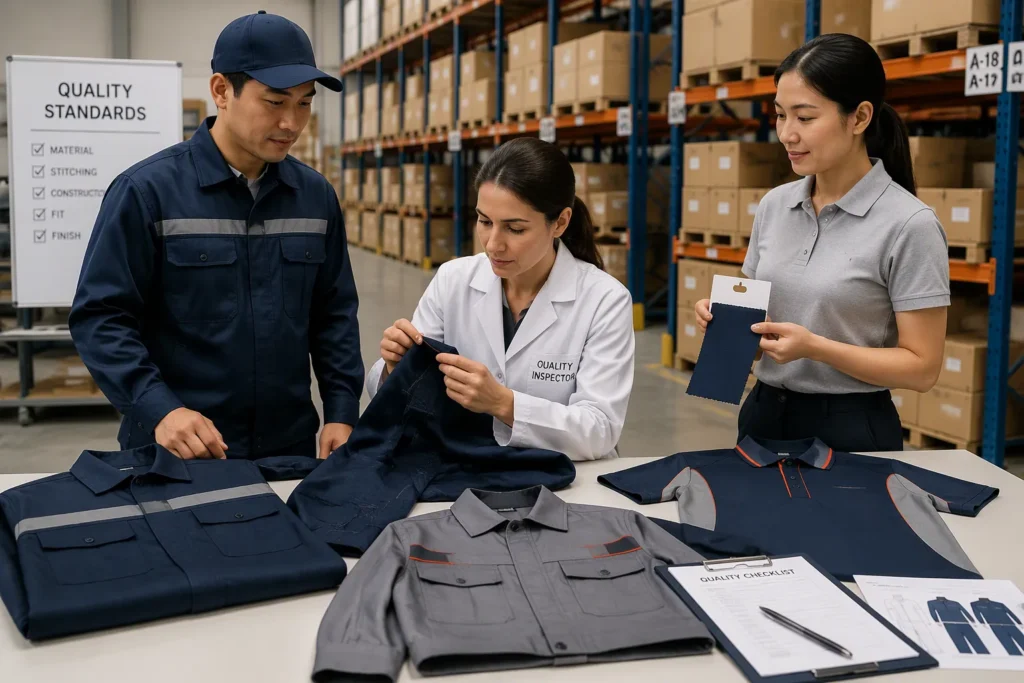
How do you find a trustworthy OEM for warehouse picker workwear in China? A low price does not mean the company is reliable. A warehouse picker uniform OEM China should give you certifications, audit reports, and samples. ISO and BSCI certifications show they follow global standards. These papers prove the manufacturer can meet your needs. Samples let you check the fabric and stitching quality. Many manufacturers do not keep the same quality, so real proof protects your money. Clear communication makes sure your design is understood. Without these checks, you risk costly mistakes. Do not rush the selection process. Choose proof over price to build a strong partnership with a skilled manufacturer. Build a relationship based on honesty and trust.
Key Takeaways
Check ISO and BSCI certifications to make sure the factory meets quality and ethical standards.
Test sample uniforms before ordering in large amounts to make sure the fabric, stitching, and fit are correct.
Talk about the price based on how much you order, and ask for a clear list of what each cost is.
Plan your shipping and customs work early to avoid delays and keep your money safe.
Define Requirements and Research OEM Manufacturers
Specify Materials, Design, and Quantity
Before you talk to any supplier, know what you need. Start with fabric type and stitching standards. A 200–240 GSM poly-cotton (TC) blend gives you a good mix of breathability and abrasion resistance. Polyester in the blend resists tearing and holds color well through frequent washing. Cotton keeps the fabric comfortable against the skin. Using high-quality materials lowers replacement costs over time. If your warehouse runs hot, think about a cotton-rich blend for better airflow. For high-wear tasks, pick ripstop or cotton duck fabrics. These fabrics resist tears and snags. Nylon offers very high abrasion resistance, about ten times stronger than cotton. Polyester also holds up well under mechanical stress. For maximum ventilation, add mesh panels in the back or underarms.
Stitching standards matter just as much. Double-stitched seams on shoulders and knees add durability. Reinforced pockets stop them from collapsing when workers carry tools and scanners. Your design must include high-visibility elements, proper pocket layout, and a fit that allows movement. Fabric quality directly affects uniform lifespan. Your quantity also affects your options. Many suppliers in China require minimum order quantities starting at 500 to 1000 pieces. Smaller runs may limit your fabric choices and raise per-unit cost. Plan your order volume based on your team size and replacement cycle.
Find OEM Manufacturers via Trade Shows and Platforms
Next, you need to find reliable suppliers. Trade shows in China give you direct access to factory owners. The Canton Fair in Guangzhou and Intertextile in Shanghai let you meet suppliers face to face. These events showcase thousands of suppliers with live product samples. Online platforms such as Alibaba, Global Sources, and Made-in-China list many suppliers. You can also ask industry contacts for referrals. When you search, compare oem manufacturers, private label suppliers, and low MOQ factories. Many oem manufacturers offer custom design services. OEM manufacturers handle full production based on your specs. Private label suppliers offer existing styles you can brand. Low MOQ factories accept smaller orders but may charge more per piece. Matching your product to the right manufacturing hub improves efficiency. Guangzhou and the Pearl River Delta region specialize in apparel and textile production. Many suppliers there handle warehouse picker uniform oem china orders for global brands. Handling oem manufacturing in china requires knowledge of local standards. Compare at least three to five candidates. Check their product range, minimums, and response time. Ask for fabric quality certifications. A manufacturer who answers technical questions clearly shows they understand your needs. Look for a manufacturer who specializes in workwear. Every manufacturer should offer sampling before bulk orders. Skilled manufacturers maintain strict quality control.
By defining your materials and finding the right partners, you set a strong foundation for the next steps.
Apply Criteria for Selecting OEM Manufacturers
Verify Certifications and Factory Audits
Certifications show which factories are truly serious and which are just trading companies. ISO 9001 proves a factory follows a written quality management system. BSCI covers wages, health and safety, and labor conditions. This matters most for European retail and public procurement buyers. SGS is the kind of independent verification you should ask for on test reports. For EU-bound uniforms, REACH limits azo dyes and formaldehyde. Workwear with anti-static or flame protection needs EN1149-5 or EN ISO 11612. A strong Chinese workwear manufacturer holds ISO 9001, BSCI, REACH, and both EN standards. Check every certificate through accredited bodies or national databases. Do not trust factory photocopies alone.
These criteria for selecting oem manufacturers go beyond paper checks. Ask for physical finished-garment testing. For US-bound children’s wear, require a Children’s Product Certificate and tracking-label logic per CPSC guidelines. If a supplier claims sustainable fabrics, request raw transaction certificates right away. Set exact GSM targets and reject bulk batches below 220 GSM. Require specific ISO test methods for wash-cycle claims. Build a complete tech pack with CADs, a full Bill of Materials, measurement specs, and packaging details. Without a detailed BOM, sewing teams guess, and consistency falls apart.
Watch for red flags during factory tours. Blurred production zones, missing raw-material labels, or poor trim segregation signal hidden subcontracting. Confirm the machine mix matches what the factory claims. Reject suppliers that claim bar-tack capabilities but cannot show a running station. Assess in-house quality control maturity, including retroreflectometer use for reflective testing and spectrometer use for color control. Request dye-lot logs, AQL workflow, and corrective-action records. If they will not show timestamped QC records, that warns of unauthorized subcontracting. These criteria for selecting oem manufacturers protect your brand.
Check Client Reviews and Export Experience
Experience tells you whether a manufacturer can handle your order. Manufacturers with long-term quality commitment deliver better fabric selection and color matching. Long-term quality commitment shows in their reviews and testimonials. Read customer reviews carefully. They reveal strengths, weaknesses, and the ability to handle large or tight-deadline orders. Ask directly about export experience. A manufacturer who ships to your target market understands customs, labeling, and compliance rules.
Evaluate manufacturer’s production capacity before committing. About 55% of businesses faced delays because suppliers took on too much work. Fast turnaround matters for peak periods. Poor communication causes roughly 40% of disputes. Test response time during vetting. A supplier who answers technical questions clearly shows they understand your needs. Roughly 70% of manufacturers reportedly use subpar materials to cut costs. Reviews help you spot this pattern. Ask for references from buyers in your region. Compare pricing and quality across at least three to five candidates. These criteria for selecting oem manufacturers lower risk. Skilled manufacturers maintain strict quality control standards and prove it through records.
Assess Quality Through Sampling and OEM Negotiation
Test Samples and Quality Benchmarks
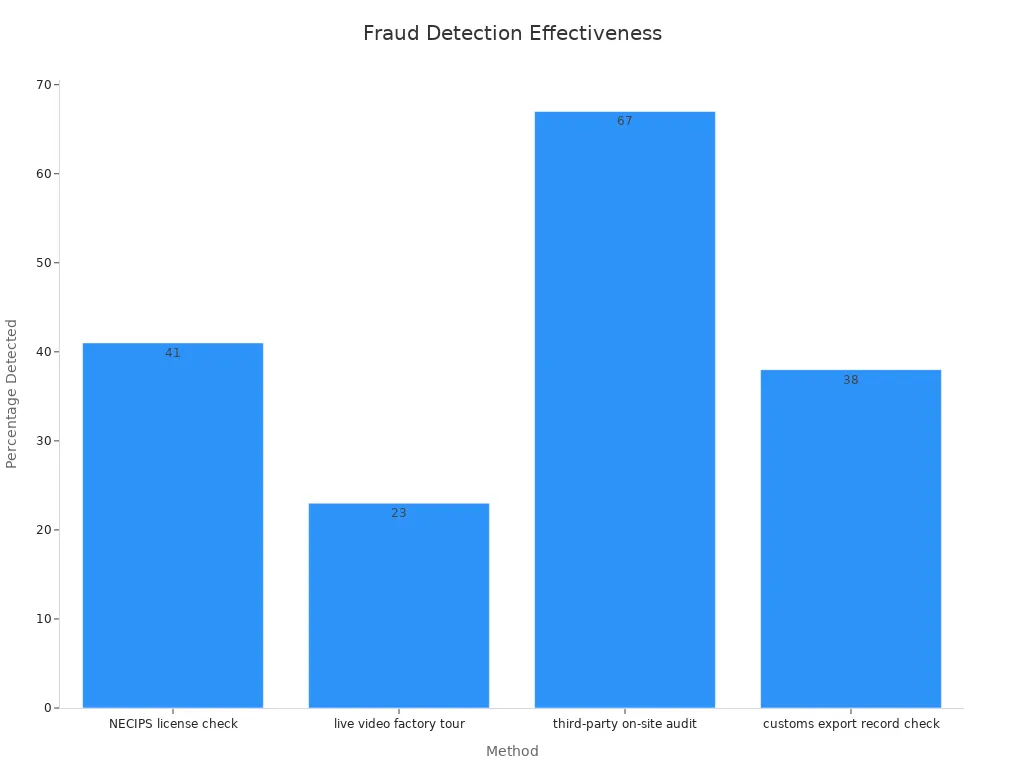
You must check that a supplier is real before you ask for any samples. Ask for the business license and look it up on China’s National Enterprise Credit Information Publicity System. This one check finds 41% of fake companies. A live video tour of the factory shows 23% of suppliers who lie about what they can do. A third-party on-site audit costs $280–$450 and finds problems in 67% of cases. These steps guard your money before you spend anything on samples.
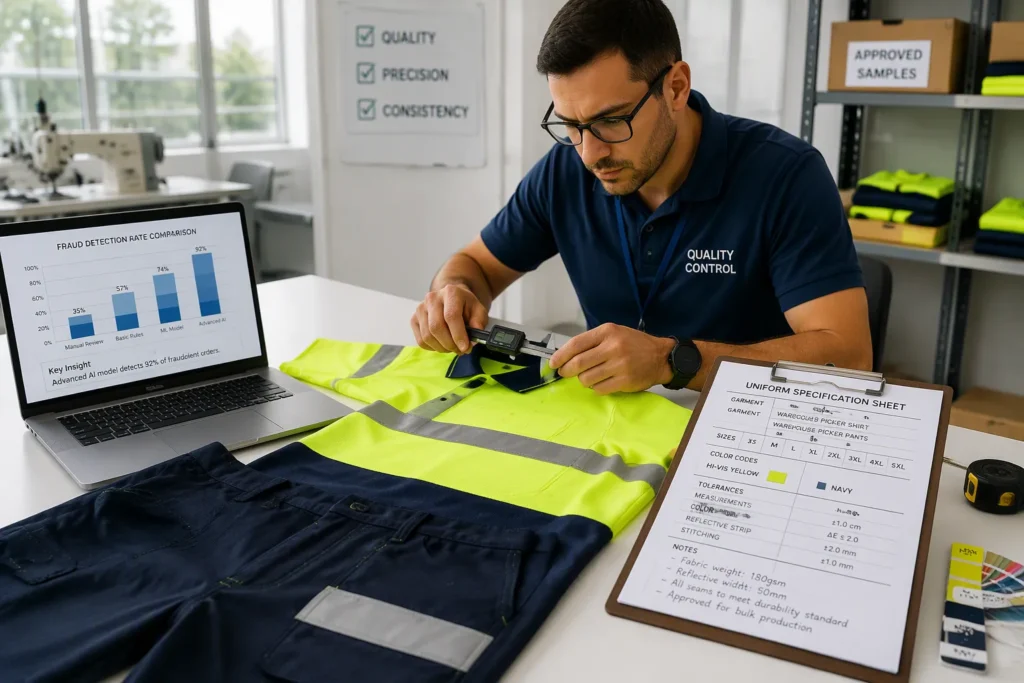
After you check the supplier, send a detailed spec sheet. Include sizes with tolerances of plus or minus 2mm, material grades, Pantone color codes, and what the item must do. Order 2–3 units for each version. Sample prices usually run 2–4 times the bulk price, and shipping costs $35–$80 by DHL or FedEx. Making the sample takes 3–5 days, and shipping adds 4–7 days. About 67% of Chinese suppliers charge for samples, based on a 2025 Alibaba survey.
Look at each sample under 5000K daylight. Use digital calipers to measure and weigh the fabric to check its density. Run stress tests like a 15–20 lb seam pull for textiles. Check the size and fit against your approved size chart. Confirm fabric weight, hand feel, and color accuracy. Inspect the stitching, seam strength, and logo placement. Test how the pockets are built and how much the wearer can move. Write down every flaw with photos and measurements. Send a request to fix the problems to the manufacturer. A good supplier replies in 24–48 hours with a plan. A defensive reply is a warning sign for the future.
Negotiate Pricing and Understand Costs
Most Chinese suppliers keep a 30% profit margin and expect buyers to bargain. Do not take the first price you get. Ask for quotes at three levels: 500, 1,000, and 2,000+ units. You can expect 8–12% off at the first MOQ, 15–22% at double the MOQ, and 25–35% at five times the MOQ. This side-by-side look at price and quality helps you get the best deal. A fair approach to MOQ, payment terms, and price leads to deals that last. Pushing only for the lowest price makes suppliers cut quality.
Chinese OEMs often hide their pricing structure and who supplies their parts. A real contract manufacturer breaks down costs and backs up any price increase with proof. Ask for this clear information. How you talk and how open you are during the deal builds trust. Know the cultural rules. Chinese partners spend time building a relationship before talking about deal details. They avoid saying no directly and may say “we will study it” (we will study it) as a polite no. Always protect face (face). Stay patient when talks stall.
Payment terms are a key part of the negotiation. Standard terms need 30% deposit upfront and 70% before shipment. For orders over $10,000, think about a letter of credit. You can negotiate smaller deposits or part payment after inspection. Group your negotiation points together. Take a slightly higher MOQ in return for a better price. A longer lead time can lead to better payment terms. These criteria for selecting oem manufacturers go past the unit price. They cover the whole partnership. Skilled manufacturers keep strict quality control and prove it with records. Your quality assurance depends on these early agreements.
Manage Logistics and Finalize the OEM Partnership
Plan Shipping, Customs, and Timelines
Pick your shipping method based on order size and timeline. Sea freight works best for large uniform orders. A full container load (FCL) takes 15–40 days port-to-port. For smaller shipments, less than container load (LCL) offers a similar transit window. Air freight moves goods in 5–10 days door-to-door. Express couriers deliver samples in 3–7 days.
Shipping Method | Best For | Transit Time | Cost |
|---|---|---|---|
Sea Freight (FCL) | Large orders | 15–40 days | Low |
Sea Freight (LCL) | Small orders | 15–40 days | Low |
Air Freight | Urgent shipments | 5–10 days | High |
Express Courier | Samples | 3–7 days | Very High |
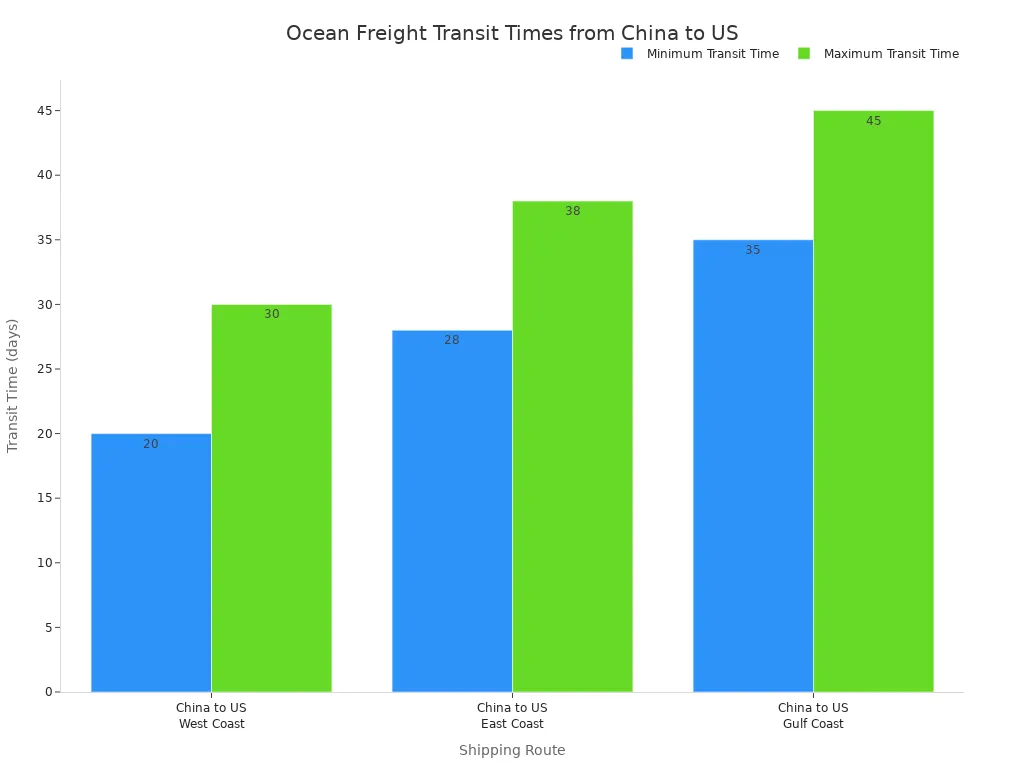
Port-to-port times change depending on where you ship. A shipment from Shanghai to Houston takes 28–38 days. To the US West Coast, plan on 20–30 days. For the US East Coast, expect 28–38 days. Always add a 10–15 day buffer for delays. Plan your inventory 60–90 days ahead for large imports.
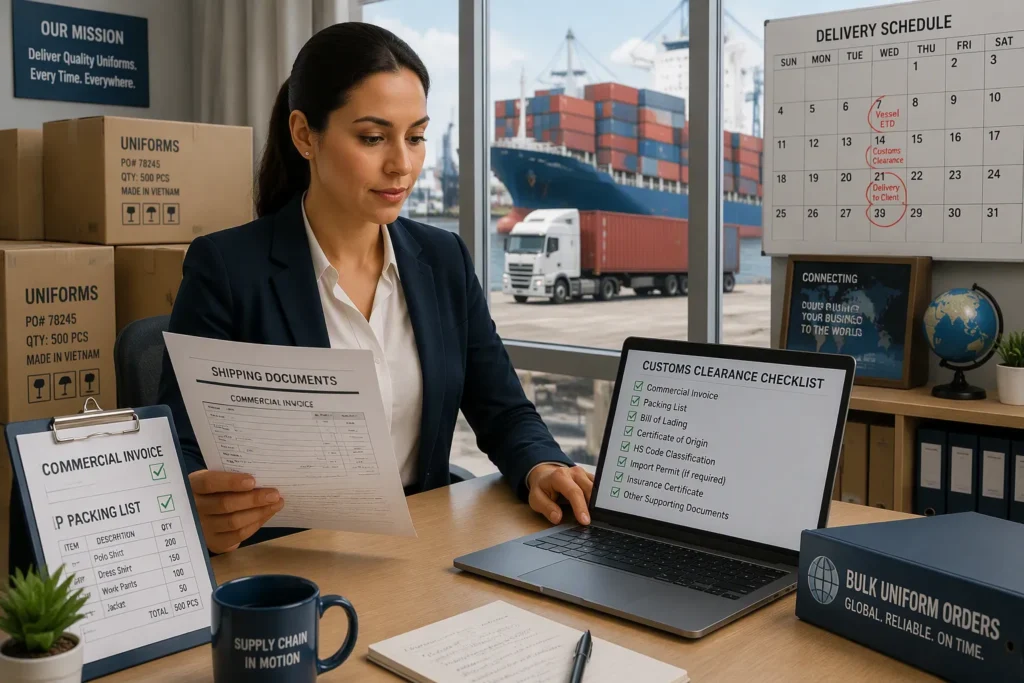
Customs clearance needs the right paperwork. You need a commercial invoice with the HS code, unit value, and country of origin. A packing list and bill of lading are also required. Include a certificate of origin if claiming a preferential rate. Fiber content and care labels must match your specifications.
For US imports, the $800 de minimis exemption has been suspended since August 2025. For the EU, the €150 relief ended in July 2026 and changed to a €3 per item duty. Most commercial uniform orders exceed these thresholds. You will pay duty. In the US, you need an importer of record number. In the UK and EU, apply for an EORI number before shipment. The process is free and takes a few days.
Who handles clearance depends on your Incoterm. Under DDP, the seller manages customs. Under FOB or EXW, you hire a customs broker in your country. Choose an experienced broker. They help you avoid delays and extra fees. On-time delivery depends on proper customs planning. A small paperwork error can hold your container at the port.
When you find a warehouse picker uniform oem china supplier, ask about their shipping partners early. Logistics planning starts before you place the order.
Sign a Contract That Protects Your Interests
A clear contract prevents disputes with Chinese manufacturers. Start with product specifications and quality standards. Reference your tech pack, golden sample, and required certifications. Include AQL thresholds, typically AQL 2.5 for major defects and AQL 4.0 for minor defects. This sets a measurable quality benchmark.
Outline inspection procedures at each stage. Pre-production, mid-production, and final inspections catch problems early. Define how you approve or reject products. Specify penalties for non-compliance. Financial consequences motivate the manufacturer to maintain quality.
Protect your intellectual property. State that all designs, drawings, and molds remain your property. Any improvements created during manufacturing also belong to you. The factory must return or destroy molds when the partnership ends. Include an NNN agreement that survives contract termination.
Define pricing and quantity terms. State the unit price and minimum order quantity. Include a price adjustment mechanism. The factory must give 30 days written notice before any price change. Cap annual increases. Specify payment terms, like 30% deposit and 70% before shipment after quality control passes.
Add a bank account verification clause. Require any account changes confirmed by phone and writing. This prevents fraud common in China.
When you work with reliable oem manufacturers, a strong contract secures your investment. You lock in the pricing and quality you negotiated. You set expectations for durability and delivery. A good manufacturer accepts these terms. Choose a manufacturer with proven export experience. The contract defines manufacturers’ responsibilities. A written agreement turns the relationship into a true partnership.
Related OEM uniform programs
You now have a clear plan to find a dependable uniform partner. Begin by deciding what fabric and design you need. Look for manufacturers at trade shows and on online platforms. Check certifications such as ISO and BSCI. Review client feedback and export experience. Test samples before you place a large order. Talk openly about pricing and quality with your top choices. Put everything in a written contract with clear terms.
Doing your homework early stops costly mistakes later. Think of choosing a manufacturer as a long-term partnership. A good manufacturer communicates clearly and meets deadlines every time. Manufacturing in china takes patience and planning, but the rewards are worth it. China has many skilled manufacturers who deliver consistent quality order after order. Build trust step by step through honest communication. Your investment pays off with better worker safety and a stronger brand reputation.
FAQ
How many uniforms should I order for my first run?
Most suppliers in china set minimums between 500 and 1,000 pieces. Smaller runs limit fabric choices and raise per-unit cost. Plan your volume around team size and replacement cycles. Ordering too few now may cost more later.
What certifications should I look for?
Check for ISO 9001, BSCI, and REACH. For flame-resistant workwear, ask for EN ISO 11612. Verify every certificate through accredited bodies. Do not trust photocopies alone. These documents prove a manufacturer follows global standards.
How do I check quality before a bulk order?
Order 2–3 sample units first. Inspect stitching, fabric weight, and color under daylight. Run a seam pull test. Send photos of every flaw to the manufacturer. A good supplier replies with a fix plan within 24–48 hours.
What payment terms are standard?
Most manufacturers ask for 30% upfront and 70% before shipment. For orders over $10,000, consider a letter of credit. You can negotiate smaller deposits or partial payment after inspection. Always confirm bank account changes by phone and in writing.
How long does shipping take?
Sea freight takes 15–40 days port-to-port. Air freight moves goods in 5–10 days. Express couriers deliver samples in 3–7 days. Add a 10–15 day buffer for customs delays. Plan inventory 60–90 days ahead for large orders.