

LOGO Embroidery or Printing for Global Brand Consistency
Table of Contents
Display
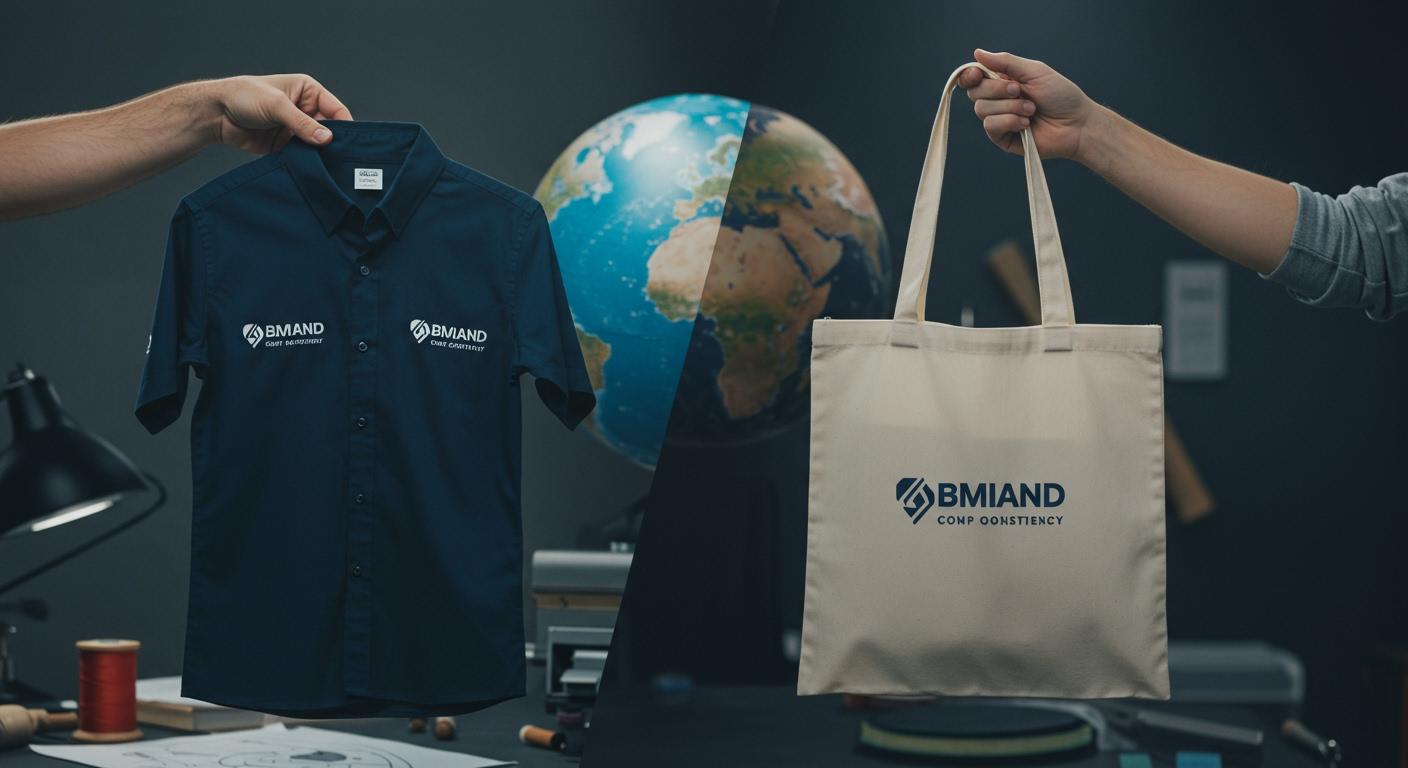
I often face the challenge of choosing between LOGO Embroidery and printing for global brand consistency. International chains rely on branding to create a uniform look and feel that customers recognize and trust. Consistent branding helps customers recall the brand and builds loyalty. I focus on durability, cost, appearance, scalability, and suitability when comparing these methods.
A consistent experience across locations makes customers feel confident and encourages repeat business.
Description | |
|---|---|
Repeat Purchase Rate (RPR) | Measures how often customers return for additional purchases. |
Customer Lifetime Value (CLV) | Predicts the net profit from the entire future relationship with a customer. |
Net Promoter Score (NPS) | Assesses customer willingness to recommend the brand. |
Key Takeaways
Choose embroidery for durability. It withstands wear and washing better than screen printing.
Consider cost differences. Screen printing is cheaper for large orders, while embroidery offers a premium look.
Evaluate appearance needs. Embroidery adds texture and sophistication, while screen printing allows for vibrant colors and complex designs.
Assess scalability. Screen printing is faster for bulk orders, while embroidery requires more setup time but ensures quality.
Maintain brand consistency. Use clear guidelines to ensure logo colors match across different regions.
Prioritize quality control. Regular audits help catch inconsistencies in branding before they reach customers.
Select the right method for uniforms. Embroidery provides a professional look that lasts longer than printed logos.
Match decoration methods to purpose. Use embroidery for premium items and screen printing for colorful, high-volume products.
Embroidery vs Screen Printing
Durability
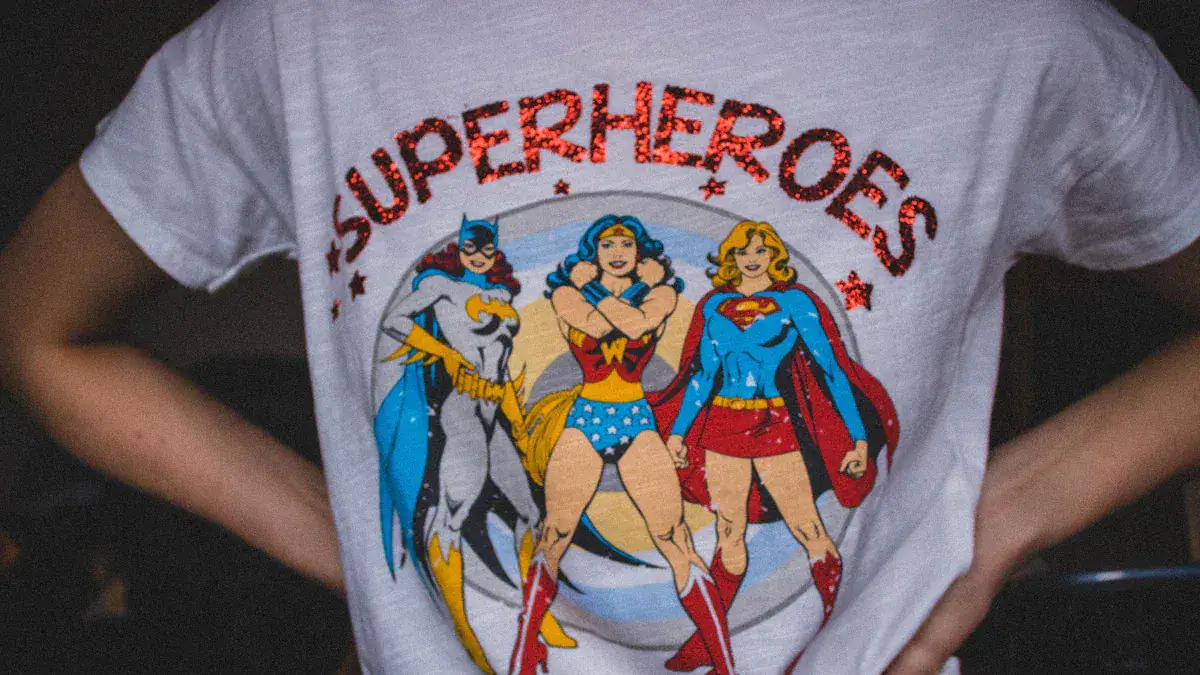
When I compare embroidery vs screen printing, durability stands out as a major factor for global brand consistency. Embroidery offers superior durability. I have seen embroidered logos withstand years of wear and repeated washing without losing their shape or color. Screen printed logos can fade or crack over time, especially after frequent washing. The table below shows the main durability differences:
Feature | Embroidery | Screen Printing |
|---|---|---|
Durability | Superior durability; withstands years of wear and washing without degrading. | Can fade or crack over time, especially after frequent washing. |
Environmental factors also play a role in how long logos last. I always recommend storing embroidered items in shaded areas to help maintain their appearance. Prolonged exposure to sunlight can lead to fading of both the fabric and the embroidery. Direct sunlight can accelerate the deterioration of printed logos, especially when combined with excessive sweating or harsh conditions. Washing methods matter too. Printed logos lose their vibrancy faster if washed harshly or too often.
Tip: If you want your logo to look sharp for years, choose embroidery for uniforms and workwear that face tough conditions.
Cost
Cost is another important consideration. I notice that screen printing usually has a lower per-unit cost for large orders. Embroidery tends to be more expensive, but it gives a premium look that many brands want. The table below compares the average cost per unit:
Feature | Screen Printing | Embroidery |
|---|---|---|
Cost | Lower per-unit cost for large orders |
Setup costs also differ. Screen printing is more cost-effective for larger quantities because the setup cost spreads across many items. Embroidery costs more due to the intricate stitching and digitization required. Here is a quick breakdown:
Screen printing is typically more cost-effective for larger quantities.
Embroidery is often more expensive due to the intricate nature of the stitching and the need for digitization.
Screen printing is more economical for larger orders due to lower per-unit costs as setup costs are spread across many items.
Embroidery has higher setup costs because of the detailed stitching process and labor involved.
Method | Setup Cost (VAT) | Reusability | Refund Policy |
|---|---|---|---|
Embroidery | £20 (text) / £35 (logo & text) | Yes | Non-refundable |
Screen Printing | £25 per screen | Yes | Non-refundable |
Appearance
Appearance plays a huge role in how customers perceive your brand. Embroidery creates a raised, tactile feel that adds sophistication to any garment. I find that embroidered logos work best for small designs and intricate details, especially when capturing delicate features or tiny lettering. Screen printing produces a flat, sleek design that integrates into the fabric. This method is ideal for gradient colors and fine details, making it perfect for colorful garments like t-shirts and hoodies.
Screen printing produces a flat, sleek design that integrates into the fabric, ideal for gradient colors and fine details. Best for colorful garments like t-shirts and hoodies.
Embroidery results in a raised, tactile feel due to intricate stitching, adding a sophisticated touch. It is well-suited for small designs and intricate details, capturing delicate features and tiny lettering.
Color retention and sharpness also matter. Embroidered logos maintain their vibrancy and sharpness over time. Printed logos may lose color and sharpness after many washes. The table below highlights these differences:
Feature | Embroidered Logos | Printed Logos |
|---|---|---|
Durability | Superior durability, withstands wear | May degrade over time |
Color Retention | Thread colors maintain vibrancy indefinitely | Can fade or crack with washing |
Sharpness | Maintains sharpness over time | Potential loss of sharpness over time |
I always advise brand managers to consider how their logo will look after months or years of use. Embroidery keeps logos looking professional and sharp, while screen printing offers more flexibility for colorful and complex designs.
Scalability
Scalability matters when I manage branding for global chains. I need to know how quickly I can produce and distribute logo products across many locations. Both embroidery and screen printing offer fast turnaround times, but each method has unique strengths.
I often choose screen printing for large orders. The process allows me to print thousands of items in a short period. I can easily scale up production for events, promotions, or new store openings. Screen printing works well for bulk orders because the setup is simple and the printing speed is high.
Embroidery also supports global scalability, but the process involves more steps. I must digitize each logo and set up embroidery machines. This takes extra time, especially for complex designs. However, once I finish the setup, embroidery runs smoothly for repeated orders. I rely on embroidery for uniforms and premium merchandise that require consistent quality.
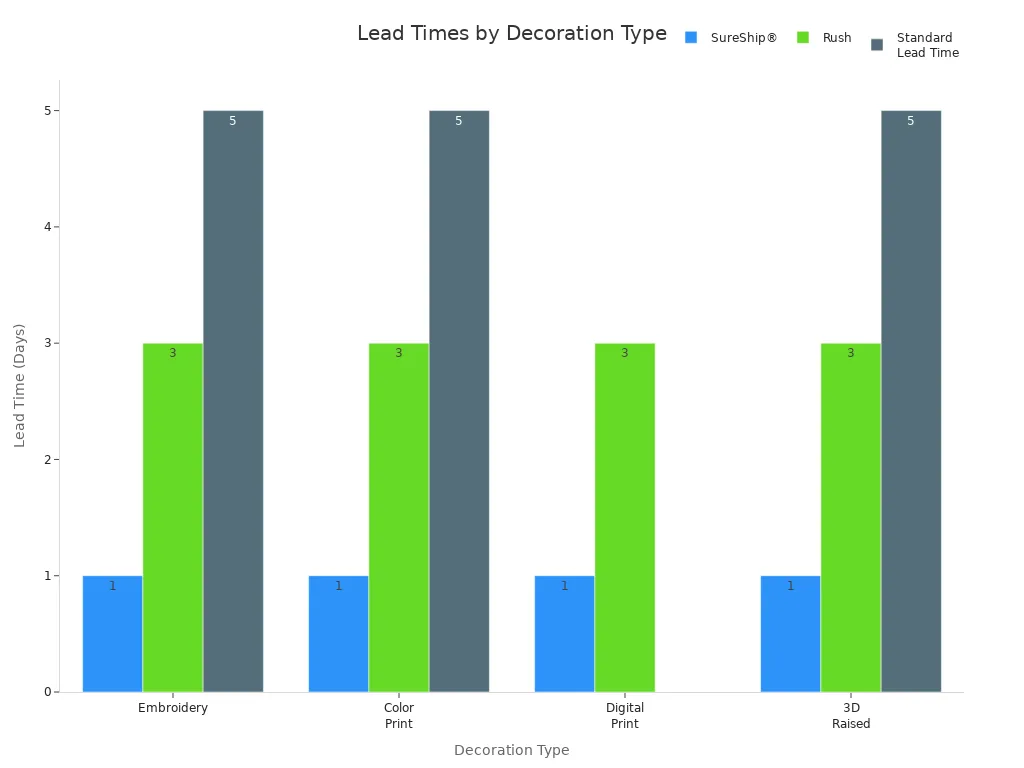
Lead times play a big role in my decision. I compare how quickly suppliers can ship embroidered and printed products worldwide. The table below shows the typical lead times for each decoration method:
Decoration | SureShip® | Rush | Standard Lead Time |
|---|---|---|---|
Embroidery | 1 Day* | 3 Days* | 5 Days |
Color Print | 1 Day* | 3 Days | 5 Days |
Digital Print | 1 Day | 3 Days | N/A |
3D Raised | 1 Day | 3 Days | 5 Days |
Tip: I always check lead times before placing large orders. Fast shipping helps me keep brand launches on schedule.
I find that both embroidery and screen printing can meet tight deadlines. I choose screen printing for massive campaigns and embroidery for items that need a premium touch. Scalability depends on my order size, design complexity, and delivery needs. I balance speed and quality to keep my brand consistent across every location.
Logo Embroidery Benefits
Professional Look
I always choose logo embroidery when I want my brand to stand out with a high-end look. Stitched designs add texture and dimension, which gives my company logo embroidery a premium feel. Customers notice the difference right away. They see the raised threads and recognize the attention to detail. This high-end finish signals professionalism and quality. I find that company logos look more credible when embroidered. People associate high-quality branding with trust and reliability.
Evidence Type | Description |
|---|---|
Embroidery | Stitched designs add texture and dimension, giving your brand a premium, professional look. |
Professionalism | Customers associate quality with credibility; a well-printed logo signals attention to detail. |
Durability | High-quality embroidery builds trust, while poor quality can negatively impact brand perception. |
Logo embroidery works best for small logos and simple designs. I often use it for uniforms, hats, and jackets. The high-end finish makes every custom embroidered garment look sharp and polished. When I want a high-end brand image, embroidery is my first choice.
Tip: Choose logo embroidery for uniforms and merchandise that need a high-end finish and lasting impact.
Longevity
Durability matters to me when I select branding methods. Logo embroidery lasts much longer than printing. I have seen embroidered logos survive hundreds of wash cycles without fading or cracking. The high-quality threads resist wear and tear, making embroidery a cost-effective choice for daily use items. I rely on logo embroidery for uniforms and workwear because it keeps my brand looking fresh year after year.
Embroidered logos have a premium texture and durability, lasting through hundreds of wash cycles without fading or cracking.
The wear resistance of embroidery makes it a cost-effective choice for daily use items.
An embroidered jacket worn twice a month can create thousands of brand exposures at a low cost per impression.
I track how logo embroidery impacts my brand’s visibility. Every time an employee wears a custom embroidered garment, my brand gets noticed. The high-end look stays sharp, even after repeated use. High-quality embroidery helps me maintain a consistent image across all locations.
Custom Embroidery Options
Custom embroidery gives me flexibility to create unique branding solutions. I can choose thread colors, stitch styles, and placement to match my brand’s identity. High-end brands often use custom embroidery to highlight their logos on premium products. I work with suppliers who offer a wide range of options, so I can tailor each design to fit my needs.
International brands assess how embroidered logos enhance perceived product value by tracking sales metrics.
They analyze customer engagement to gauge interest and perception.
Brand awareness is measured to understand the overall impact of embellishments on consumer views.
Customer feedback is collected to directly learn how these embellishments affect their perception of the brand.
I use custom embroidery for special events, limited-edition merchandise, and exclusive uniforms. The high-end finish sets my products apart from competitors. High-quality embroidery ensures every logo looks crisp and professional. When I want a high-end brand image, I rely on custom embroidery to deliver consistent results.
Note: Custom embroidery allows me to create a high-end finish for any product, from hats to jackets. This flexibility helps me maintain brand consistency worldwide.
Screen Printing Advantages
Vibrant Colors
I always choose screen printing when I want my brand’s colors to stand out. This method uses thick ink that bonds strongly with the fabric. The result is vibrant, eye-catching colors that last through many washes. I notice that screen printing, especially simulated techniques, allows me to blend colors and create gradients. This is something embroidery cannot do well. When I need my logo to pop on t-shirts or hoodies, I rely on screen printing for its color intensity.
Screen printing excels at maintaining the visual impact of complex designs. The advanced layering of ink creates photorealistic images and intricate details. I see global brands use this method to achieve a wider color spectrum and better blending. The ability to keep colors bright and sharp over time makes screen printing a top choice for high-quality apparel.
Tip: If your brand relies on bold colors and detailed artwork, screen printing will help your logo stay vibrant and attractive.
Design Flexibility
Design flexibility is another reason I prefer screen printing for certain projects. I can reproduce almost any logo, no matter how complex. Screen printing lets me use halftones, gradients, and fine lines that embroidery cannot match. I often work with designers who want to push creative boundaries. Screen printing gives them the freedom to experiment with textures and effects.
Printed logos look crisp and detailed, even on large surfaces. I use simulated screen printing to layer multiple ink colors, which creates realistic images. Water-based inks add comfort and quality, making the final product soft to the touch. This flexibility helps me deliver apparel that meets both aesthetic and functional needs.
Feature | Screen Printing | Embroidery |
|---|---|---|
Color Range | Wide, vibrant spectrum | Limited by thread colors |
Detail Level | High, photorealistic | Moderate, less nuanced |
Texture | Smooth or layered | Raised, tactile |
I recommend screen printing for brands that want to showcase complex logos or artwork. The method’s versatility ensures every design looks its best.
Bulk Production
Bulk production is where screen printing truly shines. I often manage large orders for events, promotions, or new store launches. Screen printing allows me to produce thousands of items quickly and efficiently. The process is streamlined, so I can meet tight deadlines without sacrificing quality.
The average turnaround time for bulk screen printing orders is about 14 working days. If I need more colors, I usually expect an 8-12 business day turnaround. This speed helps me keep my supply chain moving and ensures my brand launches stay on schedule.
Fast production for large quantities
Reliable turnaround times for international orders
Consistent quality across all items
Note: Screen printing is ideal for bulk orders and complex designs. I use it when I need speed, consistency, and vibrant results.
I trust screen printing for global campaigns that require thousands of printed logos. The method’s durability and efficiency make it a reliable choice for international brands.
Brand Consistency Challenges
Color Matching
I often face challenges when I try to keep logo colors consistent across all regions. Every corporate brand wants its colors to look the same everywhere, but local differences make this difficult. I notice that regional differences in culture and customer expectations can affect how colors appear. Sometimes, a color that looks perfect in one country does not match the corporate standard in another. I work with teams from different regions, and each team may interpret brand guidelines in its own way. This can lead to inconsistent logo colors on uniforms, merchandise, and promotional items.
I always stress the importance of clear corporate guidelines. When I provide detailed instructions and local insights, I help teams adapt without losing the core brand identity. I see that siloed teams often create problems. If teams work independently, they may use different shades or printing methods. This breaks the visual unity of the corporate brand. I encourage centralized brand guidelines so everyone follows the same standards. I also work with multiple partners and vendors, which increases the risk of diverse interpretations. Balancing global consistency with local adaptation is a constant challenge for me.
Regional differences in culture and customer expectations complicate logo color consistency.
Siloed teams may interpret corporate guidelines differently, leading to inconsistent colors.
Centralized brand guidelines help maintain a unified corporate identity.
Multiple teams and partners increase the risk of diverse interpretations.
Tip: I always recommend regular training and clear communication between global and local teams to keep corporate colors consistent.
Quality Control
Quality control is essential for maintaining a strong corporate image. I make sure that every logo, color, and message matches the brand’s standards. I apply all brand elements uniformly, whether I am working with embroidery or printing. I conduct regular brand audits to find and fix inconsistencies in visual identity and messaging. These audits help me catch mistakes before they reach customers.
I establish strong brand management guidelines for every corporate project. I set up a uniform creative process and approval protocol for all vendors. I designate a single point of accountability within the company to oversee quality control. This person checks every sample and makes sure it meets the corporate standard. I always request vendor samples and multiple estimates to compare quality. I avoid low-quality service providers who do not meet my expectations.
Apply all brand elements uniformly, including logos, colors, and messaging.
Conduct regular brand audits to identify and correct inconsistencies.
Establish strong brand management guidelines and a uniform approval process.
Designate a single point of accountability for quality control.
Request vendor samples and avoid low-quality providers.
Note: I find that strict quality control protects the corporate brand and builds trust with customers worldwide.
Suitability by Use Case
Uniforms
When I select uniforms for my team, I always focus on brand presentation. Embroidery stands out as the best choice for corporate apparel. I notice that high-quality embroidered uniforms last up to three times longer than cheaper alternatives. This durability means I do not need to replace uniforms often, which saves money in the long run. I see that quality materials and advanced embroidery techniques make uniforms tough enough for daily wear.
Embroidered designs keep their professional look after many washes. Printed options often crack or fade, which hurts brand presentation.
The raised thread of embroidery gives uniforms a premium appearance. Customers and employees associate this look with quality and attention to detail.
Embroidered logos can survive hundreds of wash cycles. Threads resist fading and snagging, so uniforms stay sharp.
Although embroidery costs more upfront, the cost per wear drops over time. My team looks professional without frequent replacements.
I believe that embroidered uniforms help me maintain a consistent brand presentation across all locations. When employees wear custom embroidered corporate apparel, they project reliability and professionalism. This approach builds trust with customers and strengthens my brand.
Tip: I always choose embroidery for uniforms that represent my brand in front of customers. The investment pays off with lasting quality and a polished image.
Promotional Items
Promotional items play a big role in brand presentation during campaigns and events. I often compare embroidery and screen printing for these products. Embroidery usually costs more because of digitization and longer production times. I pay $6-8 more per item compared to screen printing. Screen printing is more cost-effective, especially for large orders. I save $4-6 per item when I choose printing for bulk promotional giveaways.
Embroidery gives promotional items a premium look and superior durability. I use it for products that need to withstand frequent washing, like custom tote bags or hats. Screen printing delivers vibrant visuals, which makes it perfect for promotional campaigns where immediate impact matters. When I want my logo to stand out at a trade show, I rely on screen printing for its bold colors.
For custom logos, embroidery costs between $15 to $40 per shirt. Screen printing averages about $3 per shirt for materials and inks. I choose screen printing for large promotional orders to maximize my budget and reach more people.
Note: I match the decoration method to the purpose of the promotional item. Embroidery works for premium gifts, while screen printing suits mass giveaways.
Retail Merchandise
Retail merchandise demands strong brand presentation to attract customers and drive sales. I use both embroidery and printing, depending on the product and target audience. Embroidery adds value to custom retail items like jackets, polos, and hats. Customers see the raised thread and associate it with quality. This perception helps me position my brand as premium in the market.
Screen printing works well for retail merchandise that features complex designs or vibrant colors. T-shirts and hoodies benefit from printing because I can reproduce detailed artwork and gradients. When I launch a new collection, I use screen printing to create eye-catching displays that boost brand presentation.
I always consider the product’s use and customer expectations. Embroidery suits retail merchandise that needs a high-end finish and durability. Screen printing fits products that require bold visuals and quick turnaround. By choosing the right method, I ensure my brand presentation stays consistent and appealing across all retail channels.
Tip: I recommend custom embroidery for premium retail merchandise and screen printing for colorful, high-volume items. This strategy keeps my brand presentation strong and versatile.
Events
When I plan for events, I always look for ways to make my brand stand out. Events give me a chance to reach new customers and strengthen my brand’s presence. I often choose between embroidery and screen printing based on the event’s goals and the type of items I want to showcase.
Embroidery works well when I want to create a high-quality impression. I notice that embroidered logos on hats, polos, or jackets attract attention. The raised threads and detailed stitching make my brand look unique and premium. People often comment on the texture and quality of embroidered items. This method helps me increase engagement because attendees see something special and memorable. I have found that embroidery not only boosts brand awareness but also adds value to the products I give away or sell at events. Many businesses now recognize the effectiveness of embroidery for event branding.
Screen printing offers a different set of advantages. I rely on this method when I need to produce large quantities of branded items quickly. Screen printing delivers vibrant colors that catch the eye from across the room. I can replicate my logo or artwork with precision on t-shirts, tote bags, and banners. This method works especially well for detailed images or colorful designs. When I want my brand to be visible to a big crowd, screen printing helps me achieve that goal. The speed of production means I never worry about running out of items during busy events.
Here is how I decide which method to use for event branding:
Embroidery:
Creates a unique, high-quality look that stands out.
Increases engagement and brand awareness by offering something special.
Enhances product value and durability, making items more desirable.
Works best for premium giveaways, staff uniforms, or exclusive merchandise.
Screen Printing:
Delivers vibrant colors and sharp details for maximum visibility.
Allows for fast, large-scale production to meet high demand.
Replicates complex logos and images on a variety of materials.
Ideal for mass giveaways, event t-shirts, and promotional banners.
I always match the decoration method to the event’s purpose. For trade shows or conferences where I want to impress key clients, I choose embroidery for its quality and impact. For festivals, charity runs, or large public events, I use screen printing to reach as many people as possible with bold, colorful branding.
Tip: I recommend planning ahead and considering both methods for your next event. Embroidery gives your brand a premium edge, while screen printing ensures you never miss an opportunity to get your logo seen by the crowd.
Decision Guide for Brand Managers
Key Questions
When I make decisions about logo embroidery or printing, I ask myself several questions to ensure global brand consistency. I focus on marketing objectives first. I consider how each method supports my marketing strategy. I ask if embroidery or printing aligns with my marketing goals for visibility, durability, and customer perception. I review how the chosen method fits into my overall marketing plan. I check if the supplier can deliver consistent quality across all regions. I look at their financial stability and ability to support my marketing campaigns long-term. I ask if they follow compliance and regulatory standards, which protects my marketing reputation worldwide.
I evaluate production capability. I want to know if the supplier can handle the volume required for my marketing rollouts. I check their innovation and technical expertise. I ask if they can adapt to new marketing trends and deliver advanced solutions. I review their quality control systems. I need strong controls to maintain my marketing standards. I assess risk management. I ask how well the supplier can respond to supply chain disruptions that might affect my marketing timelines. I look at customer service. I want responsive support for my marketing needs after the contract starts.
Here is a table I use to evaluate supplier capabilities for logo application methods:
Description | |
|---|---|
Financial stability | Assess the supplier’s financial health to ensure long-term reliability and reduce disruption risk. |
Compliance and regulatory adherence | Confirm the supplier’s adherence to relevant laws, certifications, and ethical standards. |
Production capability | Evaluate their capacity to handle your volume and product requirements efficiently. |
Innovation and technical expertise | Gauge their ability to innovate and deliver technical excellence consistently. |
Quality control systems | Check for strong internal controls that maintain product or service standards. |
Risk management | Understand how well the supplier anticipates and mitigates supply chain disruptions. |
Customer service | Assess responsiveness and post-contract support capabilities. |
I use these questions to guide my marketing decisions and keep my brand consistent worldwide.
Checklist
I rely on a detailed checklist to choose between embroidery and printing for my marketing campaigns. I include quality standards for print and embroidery in my marketing tech packs. I prepare a checklist to avoid mistakes in my marketing rollouts. I mention print and embroidery quality requirements in every marketing document. I comment on strike offs as per the details in the marketing tech pack. I review artwork for print and embroidery to ensure it matches my marketing vision. I check color ways and shades using pantone codes for marketing consistency. I confirm artwork size and printing outline sharpness for every marketing item. I assess the quality of the base fabric to support my marketing goals. I select the printing process required for my marketing strategy. I review possible outcomes of the printed fabric in marketing pictures. I test color fastness, washing, and running to ensure marketing durability.
For embroidery, I check artwork, design, sharpness, and sample outcomes. I use high-performance embroidery threads for marketing durability. I choose easy and accurate hooping systems to speed up marketing production. I select backing for every application to support marketing quality. I use professional-grade embroidery needles and quality scissors for precise marketing results.
Here is my ordered checklist for global brand rollouts:
Follow the quality standards of the print quality.
Prepare checklist to avoid mistakes.
Mention print and embroidery quality requirements in tech packs.
Comment on strike off as per the details mentioned in the tech pack.
Artwork for print.
Color ways and color shades for print (pantone codes).
Artwork size.
Printing outline sharpness.
Quality of the base fabric.
Printing process required to be used.
Possible result or outcome of the printed fabric in picture.
Color fastness.
Washing.
Running.
For embroidery, I add:
Artwork for embroidery.
Design for embroidery.
Design sharpness.
Design outcome in picture and sample.
I also use:
High-performance embroidery threads.
Easy and accurate hooping systems.
Backing for every application.
Professional-grade embroidery needles.
Quality scissors.
I follow this checklist for every marketing rollout. I ensure my marketing materials meet global standards. I keep my marketing consistent and professional across all locations.
Tip: I always review my checklist before launching any marketing campaign. This habit helps me avoid costly mistakes and keeps my marketing strong.
I find that embroidery delivers premium durability and a professional look, while screen printing excels in vibrant colors and fast bulk production. My choice depends on operational needs and use cases.
Factor | Influence on Choice |
|---|---|
Technical Capabilities | Digitizing expertise and equipment shape project results |
Production Limits | Scale determines method |
Turnaround Times | Urgent needs favor printing |
Complexity of Designs | Intricate logos suit embroidery |
I always assess my requirements and consult suppliers. A strong, consistent brand identity builds trust and sets my business apart in global markets.
Consistent branding increases recognition and customer loyalty.
Navigating cultural differences helps my brand succeed internationally.
FAQ
What is the main difference between embroidery and screen printing?
I see embroidery as a stitching process that uses thread to create logos. Screen printing uses ink pressed onto fabric. Embroidery gives a textured, raised look. Screen printing creates flat, colorful designs.
Which method lasts longer on uniforms?
I always choose embroidery for uniforms. The threads hold up well after many washes. Printed logos can fade or crack over time. Embroidery keeps my brand looking sharp for years.
Can I use both methods on the same product?
Yes, I sometimes combine embroidery and screen printing. I use embroidery for small logos and screen printing for large, colorful graphics. This approach helps me get the best of both worlds.
How do I keep my brand colors consistent worldwide?
I always use Pantone color codes and provide clear guidelines to suppliers. I request samples before full production. This helps me match colors across all locations and maintain brand consistency.
Is embroidery more expensive than screen printing?
Embroidery usually costs more per item, especially for complex logos. I find screen printing more affordable for large orders. I balance my budget by choosing the right method for each project.
Which method works best for detailed artwork?
I use screen printing for detailed or colorful artwork. It handles gradients and fine lines better than embroidery. Embroidery works best for simple, bold logos.
How do I choose the right method for my brand?
I consider the product type, logo complexity, order size, and budget. I ask suppliers for samples and advice. I always test both methods before making a final decision.
Tip: I recommend reviewing your brand’s needs and consulting with experts to make the best choice.