

Should schools have uniforms
Table of Contents
Display
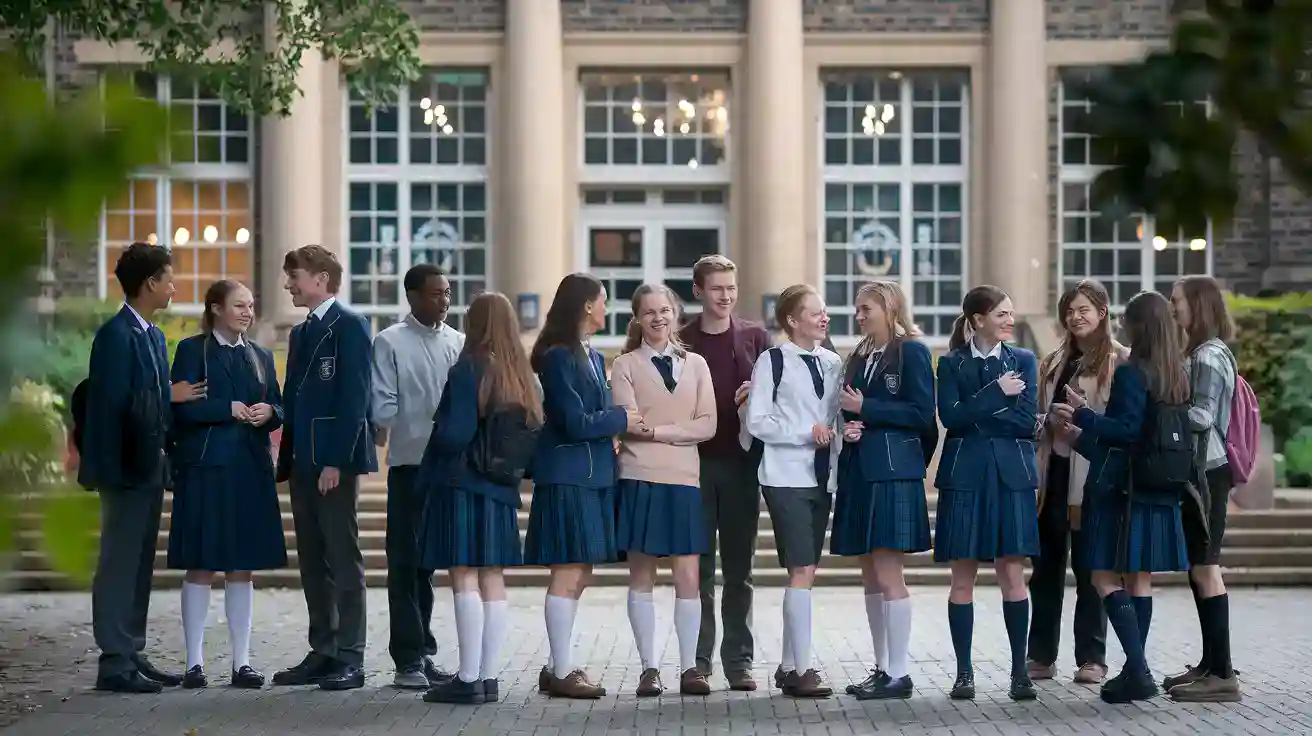
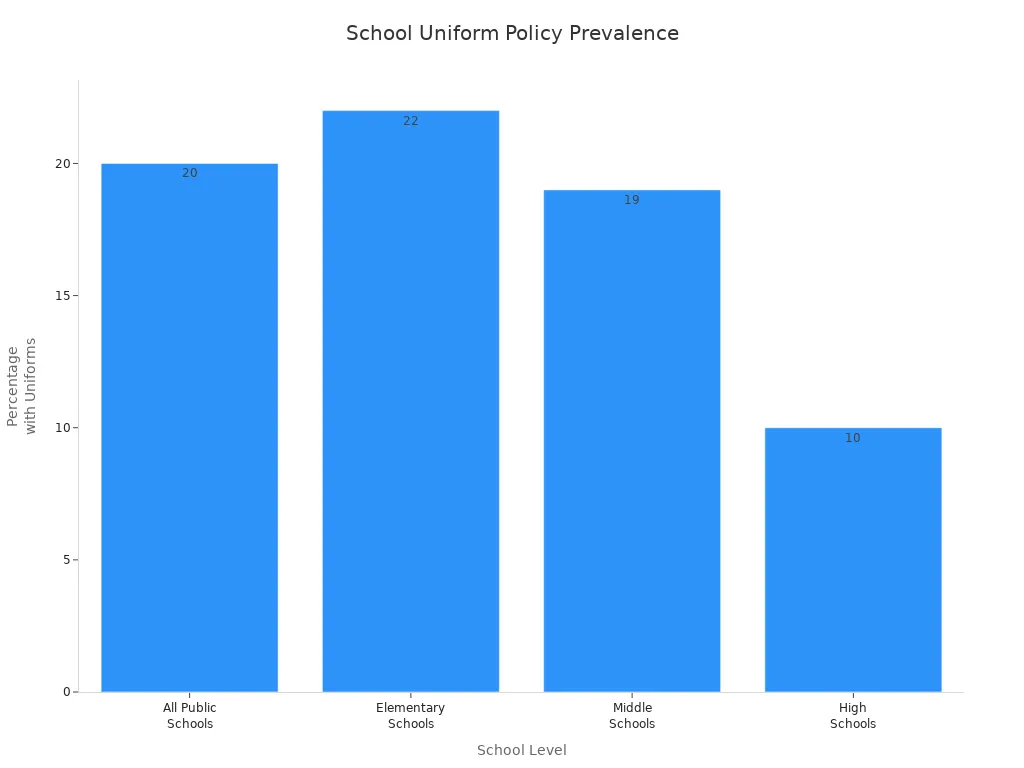
I believe the debate over whether schools have uniforms remains important for students, families, and educators. Research shows that uniforms promote equality, reduce distractions, and foster community spirit. For example, attendance rates increased and bullying decreased in Long Beach, California, after uniforms were introduced. According to recent data, only 20% of public schools require uniforms, with the lowest rate at the high school level.
I encourage you to reflect on both the benefits and challenges of uniform policies.
Key Takeaways
Uniforms promote equality among students by reducing visible economic differences.
Wearing uniforms can decrease bullying and create a safer school environment.
Uniforms help students focus on learning by minimizing distractions related to clothing choices.
A sense of belonging and school spirit increases when students wear the same attire.
Uniform policies should respect cultural and religious needs to ensure inclusivity.
Regular reviews of uniform policies can help adapt to changing student and family needs.
Open discussions about uniforms can empower students and families to voice their opinions.
While uniforms can limit self-expression, allowing small personal touches can enhance individuality.
Equality and School Uniforms
Socioeconomic Barriers
Economic Differences
I see economic differences every day in schools. Some students wear expensive brands, while others struggle to afford basic clothing. Uniforms help minimize these visible gaps. When everyone dresses the same, I notice less comparison and fewer feelings of exclusion. This simple change can make students feel more equal. I remember a time when a friend felt embarrassed about his clothes. After our school introduced uniforms, he felt more comfortable and confident.
Bullying Prevention
Bullying often targets students who look different or cannot afford trendy clothes. Uniforms reduce these opportunities for teasing. I read about a school in Long Beach, California, where bullying dropped after uniforms became mandatory. Students felt safer and more accepted. Uniforms create a level playing field, making it harder for bullies to single out others based on appearance. I believe this leads to a more positive school environment.
Classroom Distractions
Focus on Learning
Uniforms help students concentrate on their studies. I notice fewer distractions when everyone wears the same outfit. Students spend less time worrying about what to wear and more time focusing on lessons. A study by the Schoolwear Association found that consistent apparel reduces stress over outfit choices and fosters pride in academics. I see students feeling more prepared and ready to learn each day.
Peer Pressure
Peer pressure can affect students in many ways. Uniforms can both reduce and create pressure. On one hand, uniforms minimize competition over fashion and help students feel equal. On the other hand, some students worry about the fit or style of uniforms, especially girls and those from low-income families. According to a University of Nevada study, 54% of students felt uniforms allowed self-expression, while 42% felt less pressure about appearances. Uniforms also reduce anxiety related to social media and promote belonging.
Evidence | Description |
|---|---|
University of Nevada Study | 54% of students felt uniforms allowed self-expression, and 42% felt less pressure about appearances. |
Psychological Comfort | Uniforms reduce anxiety related to social media pressures and promote a sense of belonging. |
Schoolwear Association Study | Consistent apparel reduces outfit decision stress and fosters pride in school and academics. |
Tip: I encourage students to share their feelings about uniforms with teachers and parents. Open conversations can help schools improve uniform policies and address concerns.
Community and Identity
Unity
School Spirit
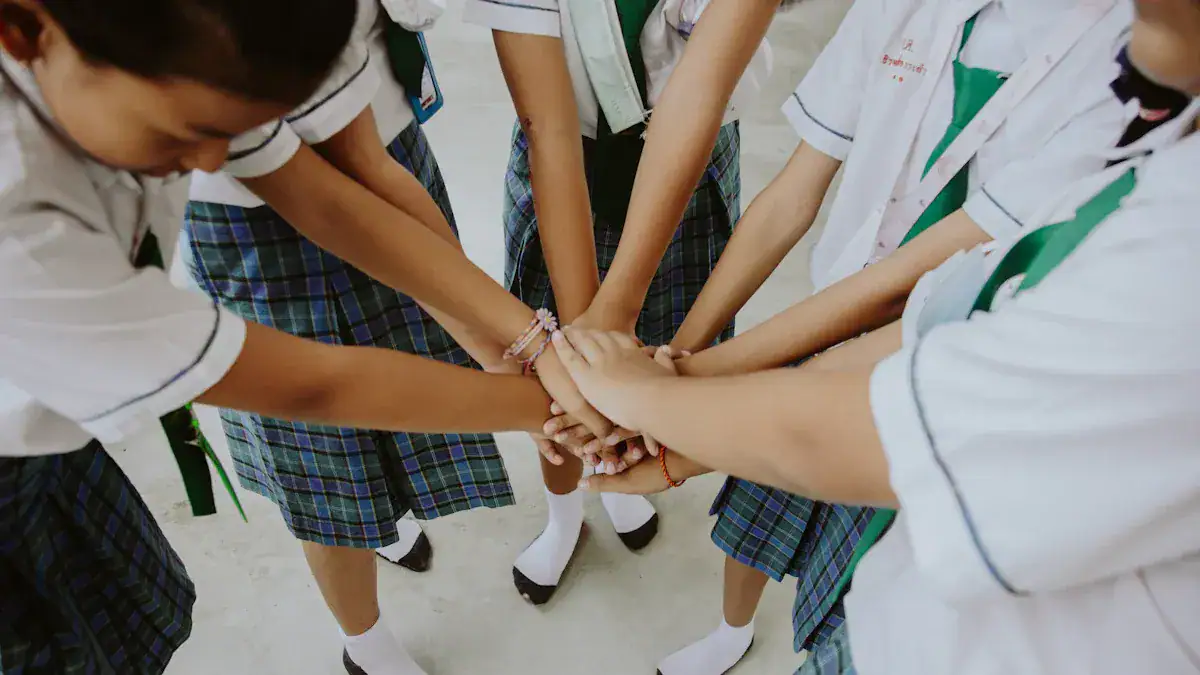
I notice that uniforms help students feel like part of a team. When I walk into school and see everyone dressed the same, I sense a strong school spirit. Students cheer together at events and support each other in class. Wearing uniforms makes me feel proud to represent my school. I see less competition over clothing and more excitement about shared goals. This shared look brings us together and helps us celebrate our achievements as one group.
Uniforms act as an equalizer among students, reducing visible signs of economic disparities.
They lessen peer pressure related to clothing, helping students from low-income families feel less isolated.
Wearing the same attire cultivates a shared identity, building a sense of unity and school spirit.
I believe that when students wear uniforms, they focus more on what they have in common. This unity boosts morale and encourages everyone to participate in school activities. I have seen students who felt left out before uniforms now join clubs and teams with confidence.
Belonging
Uniforms help students feel like they belong. I remember feeling nervous about fitting in during my first week at a new school. The uniform made it easier to connect with classmates. I did not worry about what to wear or how I looked. Instead, I focused on making friends and learning. Uniforms remove barriers and help students feel accepted. I see new students adjust faster and feel comfortable in their new environment.
School Reputation
Public Image
Uniforms play a big role in shaping a school’s reputation. I have noticed that schools with uniforms often get recognized for their discipline and safety. Parents feel more confident sending their children to these schools. Uniforms make it easier for staff to identify students and keep outsiders away. This helps create a secure learning space.
Evidence | Explanation |
|---|---|
School uniforms help lower student victimization and gang activity. | This contributes to a safer school environment, enhancing the school’s reputation as a secure place for learning. |
Uniforms maintain social control within the school environment. | This helps in identifying students and preventing unauthorized access, which boosts public confidence in school safety. |
Long Beach Unified School District’s uniform policy aimed to combat gang wear and economic disparities. | This initiative improved the school’s public image by focusing on learning rather than clothing competition. |
I see that uniforms also reduce distractions related to clothing choices. Students spend less time worrying about what to wear and more time on academics. This focus on learning improves the school’s image in the community.
Positive Behavior
Uniforms encourage positive behavior. I notice that students act more respectfully when they wear uniforms. Teachers expect students to follow rules and show pride in their appearance. Uniforms help set clear standards and remind students of their responsibilities. I see fewer incidents of teasing and bullying. The school feels safer and more welcoming. Uniforms support a culture of respect and cooperation.
Discipline and Academic Focus
Academic Performance
Improved Results
I often hear that uniforms help students achieve better grades. Many teachers and parents believe that uniforms create a more focused learning environment. I wanted to see if research supports this idea. I found several studies that looked at the link between uniforms and academic performance. The results surprised me.
Study | Findings |
|---|---|
No difference in student engagement between uniform and non-uniform schools | |
Brunsma’s Analyses | No positive effect on academic achievement; some cases indicated a negative correlation |
National Study (ECLS-K) | No discernible effect on behavior or attendance due to uniforms |
I see that some schools report a 5-10% improvement in test scores after introducing uniforms. However, large studies show mixed results. Uniforms may not directly boost grades, but they can help students feel more prepared and less distracted. I notice that when students wear uniforms, they spend less time worrying about their clothes and more time on their work.
Professional Mindset
Uniforms help students develop a professional mindset. I feel more serious about my studies when I dress in a uniform. The routine of putting on a uniform each morning sets the tone for the day. I see my classmates act more responsibly and treat school like a workplace. This attitude helps us focus on learning and respect our teachers. Uniforms remind us that school is a place for growth and achievement.
Discipline
Expectations
Uniforms set clear expectations for behavior. I know what teachers expect from me when I wear my uniform. The rules are simple and easy to follow. I see fewer arguments about dress code violations. Students understand the boundaries and act more respectfully. Uniforms create a sense of order that helps everyone feel safe and supported.
Classroom Management
I notice that uniforms make classroom management easier for teachers. When everyone dresses the same, teachers spend less time dealing with distractions. Students pay more attention to lessons and follow instructions better. I found research that supports this idea:
School uniform policies have been shown to positively impact academic outcomes by promoting a sense of belonging and reducing distractions related to clothing choices.
The implementation of dress codes often leads to improved student behavior, as students tend to show more respect for rules and authority, creating a more focused learning atmosphere.
Wearing uniforms can enhance students’ perception of authority and seriousness about their education, fostering increased motivation and responsibility.
I see teachers spend more time teaching and less time correcting behavior. Uniforms help create a calm and productive classroom. Students know what is expected and feel motivated to do their best.
Inclusivity and Family Impact
Cultural Needs
Modifications
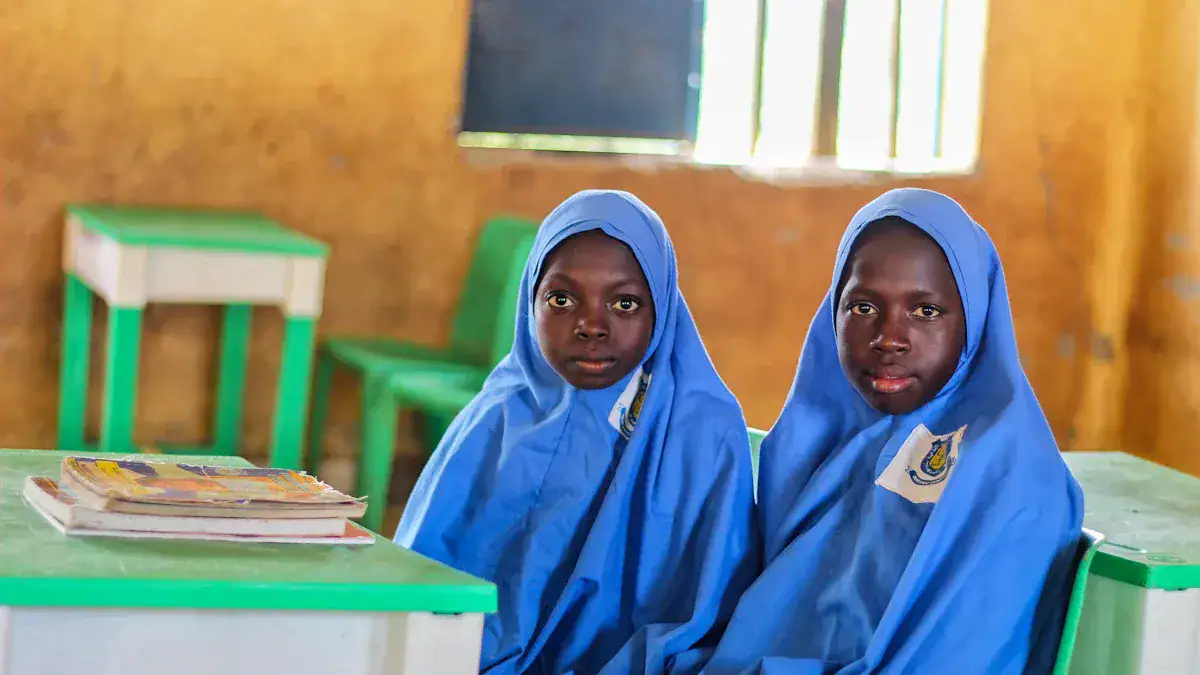
I have seen how important it is for schools to respect cultural and religious dress needs. When schools create uniform policies, they should allow for modifications that honor students’ beliefs. For example, some students may need to wear headscarves, turbans, or long sleeves for religious reasons. I believe schools should set clear guidelines that respect these practices while keeping a professional look. I have noticed that when schools stay aware of these needs and apply policies fairly, students feel more included.
Schools should establish clear guidelines that respect religious practices while maintaining professional standards.
Awareness and consistent implementation of policies regarding religious attire are crucial.
Facilities supporting religious practices, such as prayer spaces, should be made available.
Incorporating brief breaks during long teaching sessions can accommodate students’ prayer needs, promoting inclusivity.
I appreciate when schools provide spaces for prayer and allow short breaks for religious observance. These steps help everyone feel welcome and respected.
Diversity
Uniforms can support diversity if schools listen to students and families. I have seen retailers like Asda introduce adaptive clothing ranges for children with specific needs. This shows a growing understanding of inclusivity in clothing. Girlguiding’s new uniform range, based on feedback from girls and families, highlights the importance of both inclusivity and affordability. ASICS worked with schools to design PE kits for girls, making it easier for everyone to participate in sports.
Sometimes, strict uniform rules can exclude students with disabilities. For example, a student with eczema may struggle with polyester trousers. Allowing cotton trousers in the same color and style makes the policy fairer. I think schools should always look for ways to include everyone, no matter their background or needs.
Financial Considerations
Uniform Costs
I know that buying uniforms can be expensive for some families. While uniforms often cost less over time because they are durable and reusable, the upfront cost can be a burden. Some parents even skip meals to afford uniforms for their children. I have compared the costs of uniforms and regular clothing:
Item Type | Cost per Year | Notes |
|---|---|---|
School Uniforms | Includes 10 to 12 items, durable and reusable | |
Regular Clothing | Varies | Often requires more items, less durable |
School uniforms reduce the need for a large wardrobe.
Parents spend less on uniforms as they can be reused year after year.
Casual clothes may wear out faster and follow trends, leading to higher costs.
Uniforms minimize the need for frequent shopping.
They are often more affordable in the long run due to durability.
Parents typically spend less overall compared to buying trendy casual clothes.
Support Programs
Many families need help with uniform costs. I have learned about several support programs that make uniforms more affordable. In places like Scotland, Wales, and Northern Ireland, low-income families receive grants ranging from £120 to over £200 per child. Local charities and faith-based groups in the U.S. also provide clothing vouchers and uniforms for families in need. Some well-known organizations include St. Vincent de Paul Society, Love INC, Operation School Bell, Lutheran Social Services, Back 2 School America, and Operation Warm.
Region | Support Program Description | Amounts Available |
|---|---|---|
Northern Ireland | Clothing allowance scheme for low-income families. | £42.90 for primary, £61.20 for post-primary under 15, £67.20 for post-primary over 15, £26.40 for PE kit. |
Scotland | School clothing grant, typically a cash grant. | Varies by local council. |
Wales | Schools essentials grant covering various school-related costs. | £125 per student, £200 for Year 7 starters. Eligibility based on benefits. |
Charities | Grocery Aid and Buttle UK offer grants for school essentials. | Varies; check respective organizations for details. |
General | Many schools provide their own support, including grants, vouchers, and second-hand sales. | N/A |
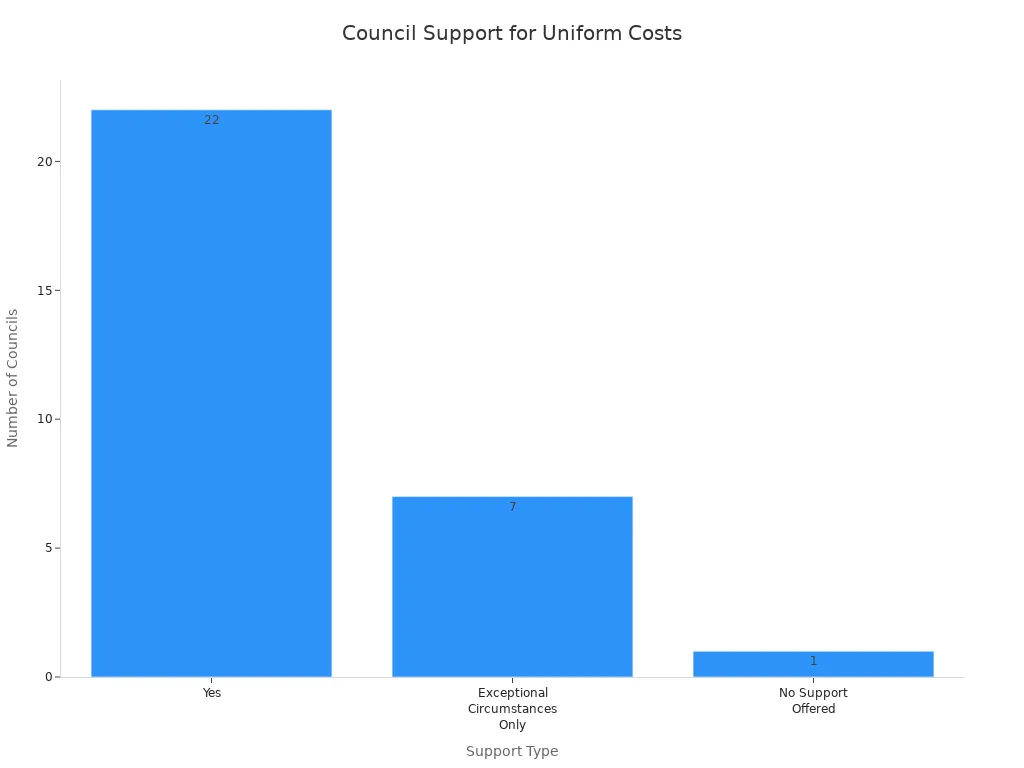
I have also seen many schools offer second-hand uniform sales or voucher programs. These options help families save money and make sure every student can wear the required clothing. I believe that with the right support, uniforms can be accessible to all.
Arguments Against School Uniforms
Self-Expression
Identity
I often hear students say that uniforms limit their ability to express who they are. I remember feeling frustrated when I could not choose my own clothes. Many of my classmates shared this feeling. We wanted to show our personalities through our outfits. A study from the University of Nevada, Reno found that 70% of students felt uniforms made them less unique and restricted their self-expression. I believe that clothing helps students build their identity. When I wore my favorite shirt, I felt more confident and true to myself.
Students want to express their individuality through fashion.
Uniforms can make students feel less unique.
Many students feel that their personal style is important for self-esteem.
I see that self-expression plays a big role in adolescence. Research in the Journal of Educational Psychology links self-expression during these years to higher self-esteem and better social adjustment. I think students need opportunities to show who they are. When schools require uniforms, some students feel invisible or disconnected from their peers.
Creativity
Uniforms can also limit creativity. I remember enjoying the challenge of putting together outfits that matched my mood or interests. Dress codes that require uniforms take away this creative outlet. Students lose the chance to experiment with colors, patterns, and styles. I believe that creativity in clothing helps students develop problem-solving skills and confidence. When I could choose my own clothes, I learned how to express myself in new ways.
Note: I encourage schools to consider ways to allow personal touches, such as pins or accessories, even if uniforms are required.
Practical Issues
Comfort
Comfort is another concern I hear often. Some uniforms use materials that feel itchy or stiff. I remember struggling to focus in class because my shirt felt uncomfortable. Dress codes sometimes ignore the need for comfort and flexibility. Students may have different body types or sensitivities. I believe that uncomfortable uniforms can distract students and lower their motivation to learn.
Challenge | Impact on Students |
|---|---|
Uncomfortable fabric | Difficulty focusing in class |
Poor fit | Lower self-confidence |
Limited options | Frustration and distraction |
Enforcement
Enforcing uniform policies creates challenges for schools and students. I have seen teachers spend valuable time checking for dress code violations. This focus on clothing can take away from learning. Enforcing a dress code may not address the real issues of personal judgment based on appearance. Students are not given the opportunity to learn about the importance of personal expression through clothing. Uniform policies create an artificial environment that does not prepare students for real-world challenges regarding personal appearance.
Teachers spend time enforcing rules instead of teaching.
Students may feel punished for small violations.
Uniforms do not teach students how to make appropriate clothing choices.
I believe that schools should help students learn how to dress appropriately for different situations. Real-world experiences with clothing choices prepare students for life after graduation.
Impact on Education
Academic and Social Outcomes
Benefits
I have seen how uniforms can shape the school environment in positive ways. When everyone dresses the same, students often feel more equal. This sense of equality can reduce bullying and help students focus on their studies. I notice that uniforms make mornings easier for many families. Students do not spend extra time deciding what to wear, so they arrive at school ready to learn. Some teachers tell me that uniforms help create a calm atmosphere in the classroom. I have also observed that uniforms can encourage students to act respectfully and take pride in their school.
Drawbacks
Uniforms also bring challenges. I hear from students who feel that uniforms limit their ability to express themselves. Some students say that wearing the same clothes every day makes them feel less unique. I have met students who struggle with uncomfortable fabrics or poor-fitting uniforms, which can distract them from learning. Families sometimes worry about the cost of buying both uniforms and regular clothes. I know that not all students feel included if the uniform policy does not allow for cultural or religious modifications. These drawbacks can affect how students feel about school and their sense of belonging.
Stakeholder Perspectives
Students
Students have a wide range of opinions about uniforms. Some appreciate the benefits, while others focus on the challenges. I have gathered several student perspectives in the table below:
Perspective Type | Student Viewpoint |
|---|---|
Positive Opinion | Many students appreciate the equality and reduced competition that uniforms provide. |
Positive Opinion | Amelia says, “I think uniforms… help prevent bullying. You are less likely to be teased…” |
Positive Opinion | Chant’e enjoys saving time in the morning and likes customizing her look with accessories. |
Positive Opinion | Callum believes uniforms make all children look the same, which promotes inclusivity. |
Positive Opinion | About 25% of students believe uniforms promote positive behavior. |
Negative Opinion | Maryam feels that clothes show emotions and individuality should be embraced. |
Negative Opinion | Deandre argues that everyone should wear what they want. |
Negative Opinion | Kaitlyn highlights the financial burden of maintaining two wardrobes due to uniforms. |
Negative Opinion | Miguel points out that uniforms can lead to embarrassment if they do not fit well. |
Note: I encourage students to share their honest opinions with teachers and school leaders. Open conversations can help improve uniform policies.
Parents and Educators
Parents and educators also hold strong views about school uniforms. Many parents support uniforms because they believe these policies create a safer and more focused learning environment. Some parents appreciate the simplicity uniforms bring to daily routines. Educators often notice fewer distractions and less peer pressure in classrooms with uniforms. However, I have spoken with parents who worry about the cost of uniforms, especially for families with more than one child. Some teachers express concern that strict uniform rules may take time away from teaching. I believe that listening to all voices helps schools create fair and effective policies.
Should Schools Have Uniforms?
Decision Factors
School Culture
When I think about whether schools have uniforms, I always consider the unique culture of each school. School culture shapes how students, teachers, and families interact every day. I have seen that the success or failure of a uniform policy often depends on how well it fits with the school’s values and traditions.
Howard Hurwitz, a former principal, explained that any decision about uniforms should involve parents to ensure cooperation. He also pointed out that uniforms alone cannot solve every problem related to discipline.
I notice that the practice of wearing uniforms reflects a country’s history and cultural norms. Some communities see uniforms as a symbol of pride, while others view them as restrictive. I believe that understanding the local culture helps schools decide if uniforms will support their goals.
Community Input
I have learned that community input plays a huge role when schools have uniforms. When schools ask for feedback from parents, students, and community members, they create a sense of ownership and trust. This process helps everyone feel heard and respected.
Schools must engage parents and community members in the process of adopting uniform policies.
The Education Code permits schools to adopt uniform policies if they involve input from parents and the community.
Community input brings diverse perspectives to the table. I have seen that when schools listen to families, they can design a policy that meets real needs. This collaboration leads to better acceptance and smoother implementation. I always encourage schools to hold meetings, send surveys, and invite open discussions before making decisions about uniforms.
Policy Recommendations
Flexibility
I believe that flexibility is essential when schools have uniforms. Students come from different backgrounds and have unique needs. A rigid policy can create problems, but a flexible one can adapt to changing circumstances.
A significant majority (85%) of parents agree with the need for schools to review their uniform policy every three years.
Parents advocate for ongoing reviews in addition to the formal three-year assessments to adapt to changing costs and family needs.
There is a strong sentiment that uniform policies should not serve as a disciplinary tool, emphasizing the need for comfort, flexibility, and safety in these policies.
I have seen that flexible policies allow for religious, cultural, and medical accommodations. Schools can also adjust requirements if families face financial hardship. I recommend that schools focus on comfort and safety, not just appearance. When students feel comfortable, they can focus better on learning.
Ongoing Review
I always support regular reviews of any uniform policy. Needs change over time, and what works today may not work tomorrow. I suggest that schools set up a schedule to review their policy every few years.
Trust the research. Develop dress code policies based on evidence to create a safe learning environment.
Assess the impact. Evaluate how dress codes affect different student groups and ensure inclusivity.
Enforce with care. Avoid humiliating enforcement practices and focus on private, respectful corrections.
Conduct regular reviews. Involve the community in annual reviews of dress code policies to ensure they remain relevant and effective.
I have noticed that ongoing reviews help schools respond to new challenges, such as rising costs or changing family needs. When schools invite feedback and make adjustments, they show that they care about students and families. This approach builds trust and keeps the policy effective.
I encourage every school to treat their uniform policy as a living document. By listening to the community and staying flexible, schools can create a policy that supports learning, respect, and inclusion.
I see that uniforms offer benefits like saving time, promoting equality, and building community. Many students feel less creative and dislike wearing uniforms. School uniforms can help reduce distractions, but they may affect self-esteem. I believe schools should involve students and families when updating uniform policies.
Uniforms foster inclusion and discipline.
Uniforms can limit comfort and creativity.
I recommend ongoing review and open discussion to ensure uniforms support every student’s needs.
FAQ
What are the main benefits of school uniforms?
I see school uniforms help students feel equal. They reduce distractions and make mornings easier. I notice less bullying and more school spirit. Many teachers say uniforms improve classroom focus.
Do school uniforms affect student self-expression?
I believe uniforms limit how students show their style. Some students feel less unique. I encourage schools to allow small personal touches, like pins or accessories, to help students express themselves.
How do schools handle religious or cultural clothing needs?
I notice schools often allow modifications for religious or cultural reasons. Students can wear headscarves or other items if needed. I recommend schools create clear guidelines to support everyone.
Are school uniforms expensive for families?
Uniforms can cost a lot at first. I see many schools offer support programs, like grants or second-hand sales, to help families. I suggest parents ask about these options if cost is a concern.
Do uniforms improve academic performance?
I read mixed results in studies. Some schools report better grades, but others see no change. I think uniforms help students focus, but they do not guarantee higher test scores.
How do schools enforce uniform policies?
Teachers check uniforms daily. I see some schools use gentle reminders. Others give warnings or call parents. I believe respectful enforcement works best and keeps students comfortable.
Can students give feedback about uniform policies?
Many schools ask for student opinions. I encourage students to share their thoughts in meetings or surveys. Open feedback helps schools improve policies and make everyone feel heard.