

School Logo on Uniform: Embroidery vs. Printing – Cost & Durability Comparison
Table of Contents
Display

When I compare embroidery and screen printing for a school logo on uniform, I find screen printing offers the most cost-effective choice, especially for large orders. Embroidery stands out for durability, but it usually costs more because of the labor involved. Cost and durability matter because uniforms face daily wear and frequent washing. Here’s a quick look at average costs:
Method | Average Cost per Item |
|---|---|
Embroidery (Small Logo) | £3.75 – £11.25 |
Screen Printing (Single Color) | £1.50 – £3.00, plus setup fees |
Full-Color DTG Printing | £5.00 – £15.00 |
Key Takeaways
Embroidery offers a premium look and lasts longer, making it ideal for uniforms that need to withstand daily wear.
Screen printing is the most cost-effective option for large orders, especially when budgets are tight.
Choose embroidery for smaller quantities or when a professional appearance is important, as it maintains quality over time.
Screen printing allows for vibrant colors and intricate designs, making it suitable for casual wear and promotional items.
Consider durability when choosing a method; embroidery resists fading and peeling better than screen printing.
Match the customization method to the fabric type for the best results; embroidery works best on heavier fabrics.
Follow care instructions for both methods to extend the life of the uniforms and keep them looking sharp.
Evaluate your priorities—durability and appearance for embroidery, or affordability and design flexibility for screen printing.
Direct Comparison
Cost-Effective Options
When I look for cost-effective options for a school logo on uniform, I always compare embroidery and screen printing side by side. Screen printing stands out as the most cost-effective method, especially when I need to order in bulk. The initial setup fees for printing may seem high, but the price per unit drops sharply as the order size increases. Embroidery, on the other hand, usually comes with a higher upfront cost because of the labor and materials involved.
Here’s a breakdown of typical costs for embroidery on school uniforms:
Color Options | Quantity Range | Price per Unit |
|---|---|---|
1 Color (White or Light) | 24-60 | $12.75 |
1 Color (White or Light) | 61-143 | $11.00 |
1 Color (White or Light) | 144-299 | $10.40 |
1 Color (White or Light) | 300-599 | $9.65 |
1 Color (White or Light) | 600-1500 | $9.25 |
1 Color (White or Light) | 1501-3000 | $9.15 |
1 Color (Dark) | 24-60 | $13.55 |
1 Color (Dark) | 61-143 | $11.70 |
1 Color (Dark) | 144-299 | $11.20 |
1 Color (Dark) | 300-599 | $10.40 |
1 Color (Dark) | 600-1500 | $10.10 |
1 Color (Dark) | 1501-3000 | $9.95 |

When I compare these numbers to screen printing, I notice that printing offers a lower price per item for large orders. For example, a single-color screen printed logo can cost as little as $1.50–$3.00 per item, plus setup fees. This makes screen printing the most cost effective choice for schools with tight budgets or large student bodies.
I also consider long-term value. Embroidery has higher initial costs, but it often provides better value over time because it lasts longer. Printing is more affordable upfront, but it may need to be replaced sooner. The perceived value of embroidered uniforms often justifies the higher initial investment.
Durability
Durability matters a lot for school uniforms. I want the school logo on uniform to look sharp after months of wear and washing. Embroidery always impresses me with its strength. The yarn is woven directly into the fabric, which gives the logo structural stability. This method resists fading, cracking, and peeling, even after repeated washes.
Screen printing, while cost-effective, does not match embroidery in terms of durability. Printed logos can crack or fade over time, especially with frequent laundering. I have seen printed designs lose their vibrancy and start to peel after a semester of daily use.
Tip: If you want uniforms to last through multiple school years, embroidery is the best method for durability.
When I weigh the options, I see that embroidery is the clear winner for durability, while screen printing is the top choice for cost-effective options in bulk orders. Here’s how I compare maintenance costs over time:
Embroidery has higher initial costs but provides better long-term value due to its durability.
Printing is more affordable upfront but may not last as long as embroidery.
The perceived value of embroidered items often justifies the higher initial investment.
Embroidery for School Logo on Uniform

How Embroidery Works
When I choose custom embroidery for school uniforms, I rely on advanced machines that stitch the logo directly onto the fabric. The process starts with digitizing the logo, which means converting the design into a format that the embroidery machine can read. I select the thread colors to match the school’s branding as closely as possible. The machine then uses commercial-grade threads and stabilization techniques to ensure the embroidered logos stay crisp and vibrant.
I usually recommend a minimum order of 50 pieces per design for cost-effective production. This threshold helps keep the price reasonable, especially when schools want professional embroidery for large groups. Pricing strategies often include a markup of 40-60% above wholesale costs, with tiered pricing for bigger orders. The durability of embroidery comes from the way the threads are woven into the fabric, making the logo resistant to fading, cracking, or peeling.
Aspect | Details |
|---|---|
Minimum Order Quantity | Typically requires a minimum of 50 pieces per design for cost-effective production. |
Quality Maintenance | High-quality embroidery uses commercial-grade threads and stabilization techniques for durability. |
Pricing Strategies | Items are usually marked up 40-60% above wholesale costs, with options for tiered pricing. |
Materials
I always pay close attention to the materials used in custom embroidery. The choice of thread and backing affects both the look and longevity of the logo. For school uniforms, I prefer polyester threads because they offer excellent strength and color retention. Rayon threads also work well when I want a shiny finish and extra durability.
For backing materials, I select from several options depending on the fabric and design:
Polyester threads: Known for their strength and color retention.
Rayon threads: Valued for their shiny appearance and durability.
I use different backing techniques to stabilize the embroidery:
Tear-away backing: Best for stable fabrics.
Cutaway backing: Ideal for delicate designs.
Fusible mesh backing: Recommended for stretch fabrics.
These choices ensure that embroidered logos remain intact and vibrant, even after repeated washing and daily wear.
Pros and Cons
I find that custom embroidery offers a premium finish and exceptional durability for school logos. Embroidered logos give uniforms a sophisticated and professional appearance, which many schools appreciate for branding. The technique works well on sturdy fabrics like fleece, canvas, and heavy cotton. I notice that embroidered logos often outlast the garment itself, maintaining their color and texture over time.
However, embroidery does have some limitations. The process is more expensive than printing, especially for larger or more complex designs. Pricing depends on stitch count, so bigger logos cost more. Fine details and gradients are difficult to achieve, and small text can be hard to read. Embroidery works best on heavier fabrics and may not suit lightweight garments.
Advantages | Disadvantages |
|---|---|
Professional look for business logos on polos, jackets, and hats | Limited detail — no fine gradients or subtle shading |
Extremely durable — outlasts the garment, won’t fade, crack, or peel | Not fully waterproof; Pantone matches may be approximate |
Scalable for small or large orders, no screen setup needed | Size and color limits; pricing based on stitch count |
Brand consistency with precise thread color matching | Best on heavier fabrics, less suited for lightweight garments |
Ideal for sturdy fabrics like fleece, canvas, and heavy cotton | Higher cost than printing |
Low-res artwork friendly if the design is clean | Small text (under 5 mm) can be hard to read |
3D texture that stands out visually and to the touch | N/A |
Works over seams and on structured items like caps or bags | N/A |
Rich finish with natural thread sheen | N/A |
Tip: I recommend professional embroidery for schools that want a premium look and long-lasting logos, especially for uniforms that see heavy use.
Embroidery vs Screen Printing
Cost Comparison
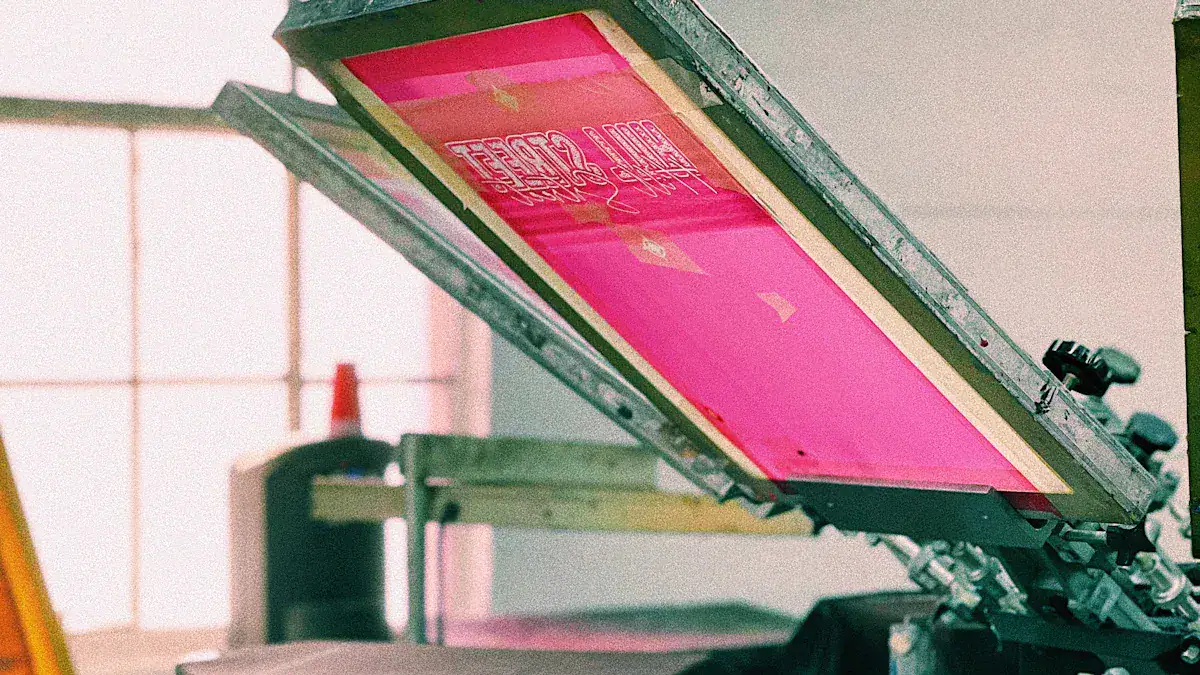
When I compare the cost of embroidery vs screen printing for a school logo on uniform, I always look at the order size first. Screen printing usually offers a lower per-unit cost for large orders. The setup process for printing takes time, but once the screens are ready, the price per shirt drops quickly as the quantity increases. Embroidery, on the other hand, comes with a higher per-unit cost, but it delivers a premium look and feel.
Here is a table that summarizes the cost comparison between these two methods:
Feature | Screen Printing | Embroidery |
|---|---|---|
Cost | Lower per-unit cost for large orders | Higher per-unit cost, premium look |
Best Uses | Events, team uniforms, promotional items | Corporate wear, jackets, upscale apparel |
For most orders, embroidery is not less expensive than screen printing, especially when I order in bulk. The more shirts I print with the same design, the cheaper each one becomes. Most of the work in printing comes from preparing the screens and mixing the ink. Embroidery works best for small, high-end batches, while screen printing is the best choice for large, cost-effective runs.
I also pay attention to minimum order quantities. Screen printing usually requires at least 24 pieces to be cost-effective. Embroidery can be more flexible, with a minimum order of 12 pieces. This makes embroidery a better choice for smaller runs or unique designs.
Method | Minimum Order Quantity | Cost-Effectiveness Description |
|---|---|---|
Screen Printing | 24 pieces | More cost-effective for larger orders due to volume discounts, reducing per-piece costs significantly. |
Embroidery | 12 pieces | More cost-effective for smaller orders, with consistent pricing regardless of order size, ideal for unique designs. |
Tip: If you need a small batch of uniforms with a high-end look, choose embroidery. For large orders, screen printing will save you money.
Durability Comparison
Durability plays a major role in my decision when choosing between embroidery and screen printing. Embroidery stands out for its durability and versatility. The threads are stitched directly into the fabric, making embroidered logos resistant to fading, peeling, and fraying. I have seen embroidered logos last longer than the garment itself, even after frequent washing and heavy use.
Screen printing can produce high-quality prints with vibrant colors and sharp details. However, printed logos may crack, fade, or peel over time, especially after repeated washing. I notice that screen-printed garments look great at first, but the design can lose its vibrancy after a semester of daily wear.
The choice of fabric also affects the durability of both methods. Tightly woven fabrics like cotton or high-thread-count polyester work best for embroidery. These fabrics prevent distortion and help the logo maintain its shape. For screen printing, I prefer smooth, flat surfaces. Polyester is a good choice for vibrant, high-quality screen printing.
Here are the key points I consider:
Embroidery is more resistant to fading, peeling, and fraying.
Screen printing can produce high-quality designs, but may not last as long as embroidery.
The right fabric enhances the durability and elegance of both methods.
Note: If you want uniforms to last through multiple school years, embroidery offers unmatched durability and elegance.
Bulk Orders
Bulk orders change the cost dynamics for both embroidery and screen printing. When I place a large order, screen printing becomes much more cost-effective. The setup costs for printing are spread over many items, which lowers the price per shirt. I often see schools save a significant amount by choosing screen printing for orders of 100 or more uniforms.
Embroidery offers tiered pricing as well, but the per-unit cost does not drop as sharply as it does with printing. Here is a table that shows how embroidery pricing changes with order size and stitch count:
Stitch Count | 1-10 | 11-49 | 50-100 | 100-299 | 300+ |
|---|---|---|---|---|---|
Up to 6000 | $7.75 | $4.75 | $3.50 | $2.75 | $2.50 |
6000-8000 | $8.75 | $5.25 | $4.00 | $3.25 | $2.75 |
8000-12000 | $10.25 | $5.75 | $4.50 | $3.75 | $3.25 |
12000-14000 | $10.75 | $6.25 | $5.00 | $4.25 | $3.75 |

I also look at turnaround times for bulk orders. Embroidery usually takes about 10 business days. Screen printing can be faster for simple designs, with turnaround times of 5-8 business days for lower color counts. For more complex, high-quality prints, printing may take up to 15 business days.
Method | Turnaround Time |
|---|---|
Embroidery | Approximately 10 business days |
Screen Printing | 5-8 business days (for lower color count) to 10-15 business days (for higher color count) |
When I need high-quality designs for a large group and want to keep costs low, I choose screen printing. If I want a premium look and long-lasting embroidered logos, I go with embroidery, even if the cost per item is higher.
Tip: For large orders, screen-printed garments offer the best value. For smaller, upscale batches, embroidered logos provide unmatched quality.
Additional Factors
Appearance
When I evaluate the look and feel of school uniforms, I notice that custom products with embroidery stand out immediately. Embroidered logos have a three-dimensional texture that creates a premium, professional appearance. This tactile quality gives the logo a luxurious finish, which many parents and school administrators value. The raised stitching not only enhances the brand’s image but also provides a unique sensory experience. I often recommend embroidery for schools that want their uniforms to project a sense of tradition and prestige.
Printed logos, on the other hand, offer a different kind of customization. A well-designed print can communicate the school’s values and history, helping students feel connected to their community. The flat surface of a printed logo allows for intricate designs and vibrant colors, which is ideal for custom products that require detailed artwork. I find that printing works best for schools that want to emphasize creativity and modern branding through their uniforms.
Tip: If you want a professional appearance with a dynamic look and feel, embroidery is the best choice. For maximum customization in design and color, printing offers more flexibility.
Fabric Compatibility
I always consider fabric compatibility when recommending custom products for school uniforms. Embroidery works best on heavier fabrics like cotton, fleece, or canvas. These materials support the weight of the threads and help maintain the logo’s shape over time. When I work with lightweight or stretchy fabrics, I notice that embroidery can sometimes cause puckering or distortion. For these cases, I suggest using special backing materials or switching to printing.
Screen printing excels on smooth, flat fabrics such as polyester or cotton blends. The ink bonds well with these surfaces, allowing for sharp lines and vibrant colors. Printing also supports a wider range of custom products, including athletic wear and performance fabrics. If a school wants to offer a variety of custom uniform options, printing provides more customization possibilities across different materials.
Note: Always match the customization method to the fabric type to ensure the best look and feel for your custom products.
Maintenance
Proper maintenance extends the life and durability of custom school uniforms. I always advise schools and parents to follow specific care instructions for each customization method.
For embroidered custom products:
Wash garments inside out with mild detergent at 60ºC / 140ºF.
Avoid bleach and chemical admixtures.
Do not leave damp items balled up; hang to dry.
Iron on the reverse side between cloths, using a steam iron.
Dry clean with extreme care, avoiding pre-spotting agents, especially on dark shades.
Use non-chlorine bleach if necessary, and wash in cold water on a delicate cycle.
Remove promptly after washing and do not leave items soaking.
Avoid wringing out or rubbing stained embroidery.
For printed custom products:
Wash inside out in cold water on a gentle cycle.
Avoid harsh detergents and bleach.
Tumble dry on low or hang to dry for best results.
Do not iron directly over the printed area.
I find that following these guidelines preserves the customization and keeps the uniforms looking sharp. Embroidery generally offers greater durability, but both methods require proper care to maintain their professional appearance and the intended look and feel.
Cost-Effective Recommendations
When to Choose Embroidery
When I help schools select the best method for their school logo on uniform, I often recommend embroidery for its durability and professional appearance. Embroidery works best when uniforms need to last through frequent washing and daily wear. I see the value in choosing embroidery for heavier garments, such as sweaters, jackets, or polo shirts. These fabrics support the stitching and prevent puckering, especially with larger or multi-color logos.
I find embroidery especially cost-effective over time. The initial cost may be higher, but the long-term savings are clear because embroidered logos rarely need replacement. Parents appreciate this investment, as the uniforms maintain their look and structure even after months of use. Embroidery also allows for detailed, multi-color logos without extra charges per color, making it a smart choice for schools with complex branding.
Here is a quick table to help decide:
Criteria | Embroidery Benefits | Printing Drawbacks |
|---|---|---|
Durability | Embroidery lasts longer and withstands wear and tear. | Prints may fade and are harder to maintain. |
Cost-Effectiveness | Higher initial cost but long-term savings due to durability. | Custom prints can be more expensive and may require more frequent replacements. |
Tip: I always suggest embroidery when the school wants a premium look, needs the logo to last, or uses heavier fabrics.
When to Choose Printing
I recommend screen printing when schools need a cost-effective solution for large orders. Printing shines when the design is simple and the order size is 50 pieces or more. The setup costs for screen printing spread out over many uniforms, which lowers the price per item. This method works well for events, sports teams, or when the school wants to update the logo frequently.
Screen printing is also ideal for lightweight fabrics and for schools that want vibrant colors or intricate designs. However, I remind schools that printed logos may fade or crack after repeated washing, so this method suits situations where uniforms will not see heavy, long-term use.
Consider these points when choosing printing:
Screen printing is ideal for large orders of 50 or more.
Simple designs with fewer colors keep costs low.
Printing works best for lightweight shirts and athletic wear.
The method is most cost-effective when uniforms are replaced often.
Note: I choose printing when budget is the top priority, the design is simple, and the uniforms do not need to last for several years.
By weighing these factors, I help schools make the most cost-effective decision for their needs. I always match the method to the school’s priorities—durability and appearance for embroidery, or budget and flexibility for printing.
Summary
Key Points
When I compare embroidery and screen printing for school uniforms, several important factors stand out. I have seen both methods used in many schools, and each offers unique strengths. Here are the main takeaways:
Embroidery delivers a premium look and superior durability. I recommend it for schools that want uniforms to last for years and maintain a professional appearance.
Screen printing excels with vibrant, intricate designs. I find it works best for large orders where cost savings matter most.
Embroidery suits smaller quantities and structured items, such as polos, jackets, and hats. The stitching holds up well to daily wear and frequent washing.
Screen printing handles complex artwork and bold colors. I use it for casual wear, athletic uniforms, and promotional items.
The choice between methods depends on your priorities: durability and prestige, or affordability and design flexibility.
To help clarify these differences, I often refer to this comparison table:
Feature | Embroidery | Screen Printing |
|---|---|---|
Durability | Durable but can fade or crack over time | |
Design Complexity | Limited to simpler designs | Handles intricate designs well |
Cost | Higher cost per piece, especially for larger designs | More cost-effective for bulk orders |
Best Use Cases | Professional wear, small logos | Casual wear, large promotional orders |
I always advise schools to weigh these factors carefully before making a decision.
Final Recommendation
After working with many schools, I have developed a clear approach for choosing between embroidery and screen printing for school logos on uniforms. If your school values a high-end look and needs uniforms to last through years of daily use, I recommend embroidery. The upfront cost may be higher, but the investment pays off in durability and appearance. Embroidered logos resist fading, cracking, and peeling, even after countless washes.
If your school needs to outfit a large student body or wants to keep costs low, screen printing is the better choice. I suggest this method for bulk orders, especially when the design features multiple colors or fine details. Screen printing allows for creative, vibrant logos and keeps the price per item affordable.
When I compare embroidery and screen printing for a school logo on uniform, I see clear differences. Embroidery delivers a premium, durable finish that withstands repeated washing, while screen printing offers cost savings for large orders and vibrant designs. I recommend schools with higher budgets or a need for long-term wear choose embroidery. For bulk orders or simple, colorful designs, screen printing works best.
Method | Best For | Durability |
|---|---|---|
Embroidery | Premium, long-lasting uniforms | Excellent |
Screen Printing | Affordable, bulk orders | Moderate |
Consider your priorities—budget, durability, and appearance—before making a final decision.
FAQ
How long does an embroidered school logo last?
I have seen embroidered logos last for years. The threads resist fading, fraying, and peeling. With proper care, the logo often outlasts the garment itself.
Can I wash printed uniforms in a washing machine?
Yes, I wash printed uniforms in a machine using cold water and gentle cycles. I avoid bleach and harsh detergents. This helps the print stay vibrant longer.
Is embroidery better for detailed logos?
I find embroidery works best for simple or moderately detailed logos. Fine details or gradients may not appear clearly. For intricate designs, I recommend screen printing.
What is the minimum order for screen printing?
Most suppliers I work with require at least 24 pieces for screen printing. This keeps the cost per item low and makes the process efficient.
Does embroidery cost more for larger logos?
Yes, I pay more for larger embroidered logos. The price depends on the stitch count. More stitches mean higher costs.
Which method is best for lightweight fabrics?
I choose screen printing for lightweight or stretchy fabrics. Embroidery can cause puckering on thin materials. Printing keeps the fabric smooth and comfortable.
How do I keep embroidered logos looking new?
I always wash embroidered uniforms inside out with mild detergent. I avoid wringing or soaking. Ironing on the reverse side helps maintain the logo’s appearance.