

Why Do Chains Prefer Cross-Border Uniform Customization?
Table of Contents
Display

I see the rapid growth of cross-border commerce changing how chains approach uniform customization. Globalization boosts demand for personalized work attire, especially in consumer goods and retail. Many companies now face higher expectations for fashionable and sustainable uniforms. I notice supply chains evolving to meet these needs, creating new market opportunities for b2b solutions. Chains gain a competitive edge by using cross-border uniform customization, which helps them prepare for future growth in this dynamic industry.
Customers want more personalization and sustainability.
Chains adapt to stay competitive in a global market.
Key Takeaways
Cross-border uniform customization helps chains meet rising demands for personalized and sustainable work attire.
A consistent brand image across different countries builds customer trust and loyalty.
Streamlined operations in procurement and training enhance efficiency and reduce costs for chains.
Investing in advanced payment solutions lowers transaction costs and speeds up cross-border payments.
Local adaptation of uniforms respects cultural differences while maintaining brand standards.
Involving employees in uniform design boosts morale and fosters a sense of belonging.
Strong supplier networks enable quick responses to market changes and enhance resource availability.
The uniform customization market is projected to grow, driven by trends in sustainability and technology.
Brand Consistency
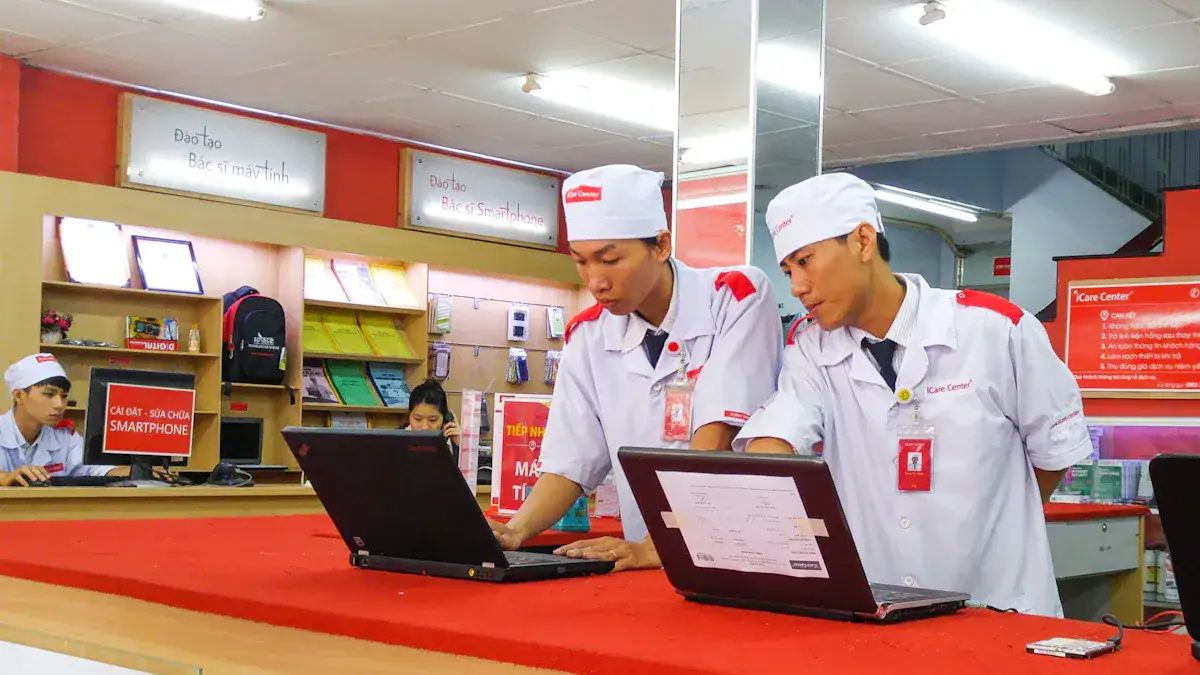
Brand consistency stands at the heart of why I see chains investing in cross-border uniform customization. When I look at the global uniform customization market, I notice that companies want to present a unified image everywhere they operate. This approach helps them build trust and recognition, which are essential for success in the competitive world of consumer goods and retail.
Unified Image
Visual Standards
I believe that visual standards shape how customers view a brand. Chains use cross-border uniform customization to make sure every employee, no matter the country, wears attire that matches the brand’s identity. This standardization supports the idea of global branding, which stresses the need for a consistent image across all markets. When I visit a store in one country and see the same uniform style in another, I feel confident about the brand’s reliability. This consistency reassures customers and encourages loyalty, especially for business travelers who expect the same quality and service everywhere.
Customer Trust
Uniforms do more than just look good. They help build customer trust. When I see employees dressed in the same way across different locations, I know what to expect. This sense of familiarity makes me more likely to return.
In today’s complex global market, prestige brand development transcends mere image enhancement—it acts as a strategic defense against external pressures like rising tariffs and supply chain disruptions. By cultivating a high-value brand that commands premium pricing and fosters deep customer loyalty, your business can sustain profitability without compromising global appeal.
Global Uniform Customization Market
International Branding
The global uniform customization market continues to expand as more chains recognize the value of a consistent brand image. I see this trend in the rising demand for customized uniforms in consumer goods and retail. Companies want to boost awareness and enhance brand recognition across countries and cultures. This strategy helps them build brand value and trust among potential customers in different markets.
Benefit of International Branding | Description |
|---|---|
Brand Awareness | Boosts recognition across countries and cultures |
Brand Value | Builds trust and loyalty among customers |
Economies of Scale | Reduces costs in research, development, marketing, and operations |
Marketing Efficiency | Allows for global campaigns with minimal changes |
Marketing Alignment
I notice that marketing alignment becomes easier when chains use cross-border uniform customization. A single advertising campaign can run worldwide with only minor adjustments. This approach works well if the product features appeal to customers everywhere. The global uniform customization market supports this strategy by offering solutions that meet the needs of both local and international markets.
The global uniform customization market is growing fast:
Estimated market size in 2024: USD 1.32 billion
Projected market size in 2025: USD 1.45 billion
Expected market size by 2033: USD 3.09 billion
Compound annual growth rate (CAGR) from 2025 to 2033: 10.4%
I see this growth creating new market opportunities for b2b providers. As demand rises, more companies in consumer goods and retail seek partners who can deliver consistent, high-quality uniforms across borders. This trend drives innovation and competition in the b2b space, making the global uniform customization market even more dynamic.
Efficiency
When I look at chains that invest in cross-border uniform customization, I see efficiency as a major driver of growth. Chains in consumer goods and retail need to respond quickly to changing demand. I notice that streamlined operations help these companies stay ahead in a competitive market. The b2b sector plays a key role by offering solutions that optimize procurement, training, production speed, and delivery.
Streamlined Operations
Procurement
Procurement has become a strategic function for chains. I see businesses using b2b partners to adapt to market changes and seize new opportunities. Outsourcing partners help identify inefficiencies and implement improvements. I often observe that investing in procurement strategies leads to cost savings and operational success. Improved communication and collaboration with suppliers enhance partnerships and negotiation outcomes. Chains that use data analytics gain insights for informed decision-making in production and distribution.
Procurement now drives growth by:
Adapting to market demand
Reducing costs
Improving supplier relationships
Using analytics for better planning
Training
Training also benefits from streamlined operations. Chains standardize training programs to ensure employees understand uniform policies and expectations. I see that b2b providers help chains create efficient onboarding processes. This approach reduces waste, such as overproduction and excess inventory. A well-optimized supply chain gives chains a competitive advantage, enabling timely delivery of high-quality uniforms.
Tip: Streamlining training and procurement processes helps chains respond faster to demand and supports overall growth.
Production Speed
Lead Times
Production speed is critical for chains facing high demand. I compare domestic and cross-border uniform manufacturers to see which offers faster time to market. Domestic manufacturers usually deliver standard lines in 2–6 weeks and custom lines in 6–10 weeks. China-based manufacturers take 6–12 weeks, while hybrid setups range from 8–16 weeks. Offshore options with local representatives average 8–14 weeks.
Option | Typical Time to Market |
|---|---|
Domestic uniform manufacturer | 2–6 weeks (standard); 6–10 weeks (custom) |
China uniform manufacturer (FOB/CIF) | 6–12 weeks |
China manufacturer with hybrid setup | 8–16 weeks |
Offshore with local reps | 8–14 weeks |
Average lead times for private label clothing production range from 8 to 24 weeks. Factors like location, order size, materials, and factory availability affect these times. Geopolitical and economic challenges can add extra time to manufacturing and shipping.
Delivery
Efficient delivery depends on advanced technology and full supply chain visibility. I see chains using tailored order management solutions to maximize revenues and keep inventory moving. Nearshoring allows businesses to react quickly to consumer demand by getting products closer to markets. Enhanced visibility aids in better planning and execution, supporting growth in b2b uniform customization.
Efficiency Type | Description |
|---|---|
Nearshoring allows businesses to react quickly to consumer demand by getting products closer to markets. | |
Improved Inventory Management | Tailored order management solutions maximize revenues and optimize efficiency, keeping inventory moving. |
Enhanced Visibility | Advanced technology provides full visibility across the supply chain, aiding in better planning and execution. |
Cost & Logistics
When I analyze cross-border uniform customization, I see that cost and logistics play a crucial role in shaping the strategies of chains. Chains use global manufacturing and labor costs to optimize expenses. They also rely on advanced cross-border payments to simplify transactions and reduce financial friction. I notice that the right payment solutions and currency management strategies help chains achieve growth and meet market demand.
Cross-Border Payments
Managing cross-border payments has become a top priority for chains in cross-border commerce. I observe that digital b2b payments and modern payment solutions have transformed how companies handle payments across borders. These innovations support growth and help chains respond to market demand more efficiently.
Payment Solutions
I see that payment solutions have evolved rapidly. Traditional payment systems often create high transaction costs. On average, each transaction costs $8, with $6.40 going to operational and IT expenses. Compliance costs add another $1.20 to $1.60 per transaction. When chains switch to permissioned DeFi models, transaction costs drop to between $1.25 and $1.69. This represents an 80% reduction compared to traditional systems.
Lower transaction costs mean:
Chains can offer better prices to customers.
Financial institutions provide lower fees.
Payments become faster and more reliable.
Chains can reinvest savings into growth and innovation.
I recommend that chains explore digital b2b payments and permissioned DeFi models to maximize efficiency in cross-border payments.
Currency Management
Currency management presents unique challenges in cross-border payments. I have seen chains struggle with tariff volatility, which forces them to create flexible contracts with pass-through clauses. Disputes often arise when payment terms do not match actual practices. Chains must draft clear contracts to avoid misunderstandings. Supplier risks also threaten the supply chain. A single unreliable supplier can disrupt payments and delay uniform delivery. Chains need backup sourcing and contingency plans to maintain stability.
Common currency management challenges:
Payment disputes highlight the need for clear agreements.
Supplier risks demand backup plans and careful monitoring.
Cost Optimization
Cost optimization drives growth in the uniform customization market. Chains leverage global labor costs and manufacturing capabilities to reduce expenses and meet market demand. I compare labor costs and production capabilities across countries to identify the best options for chains.
Labor Costs
Labor costs vary widely between countries. I find that chains often choose manufacturing partners in Bangladesh and India for affordable and cost-effective production. In contrast, the USA, Germany, and Japan offer premium market segments with much higher labor costs.
Country | Monthly Labor Cost | Production Cost Range (Uniforms) | Market Segment |
|---|---|---|---|
Bangladesh | $68 | $1.50 – $12 | Affordable |
India | $2 – $6 (basic) | $2 – $18 | Cost-effective |
USA | $2,500+ | $25 – $75 | Premium |
Germany/Japan | $2,500+ | N/A | Premium |
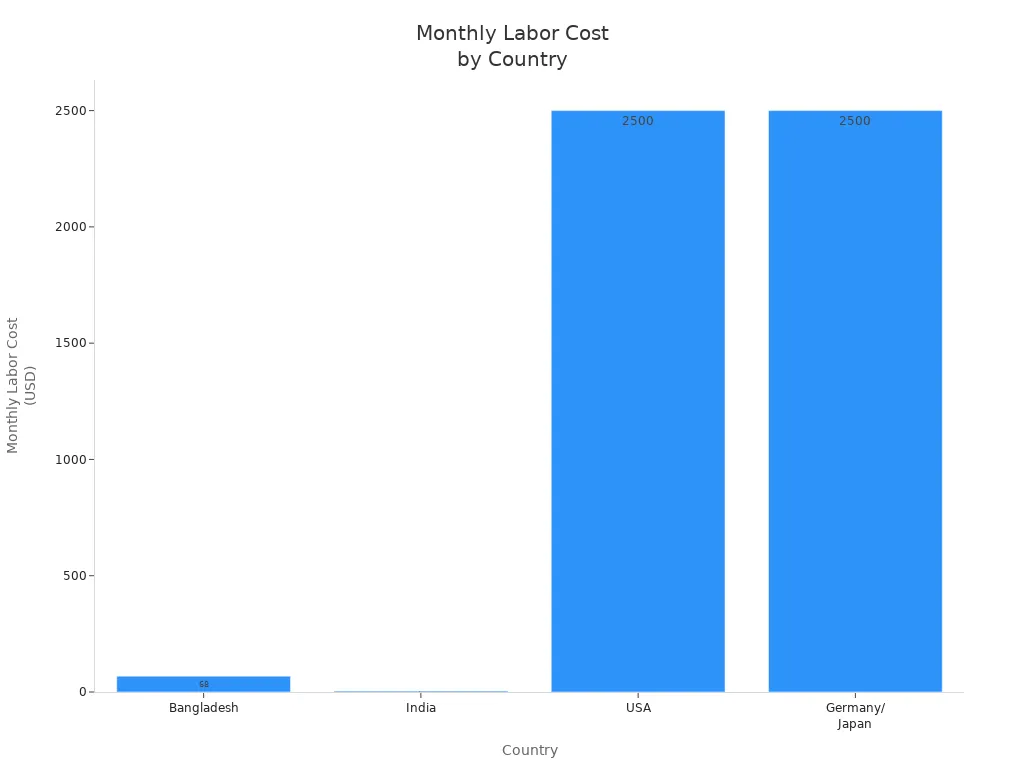
I notice that chains targeting the affordable and cost-effective segments prefer Bangladesh and India. These countries help chains meet market demand for budget-friendly uniforms while supporting growth in b2b partnerships.
Manufacturing Capabilities
Manufacturing capabilities influence the success of cross-border uniform customization. I look for countries that offer diverse production options, lower minimum order quantities, and reduced lead times. Geographic proximity helps chains respond quickly to market demand. Sustainability has become a key factor, with many manufacturers adopting ethical practices to enhance brand reputation.
Capability | Description |
|---|---|
Offers a range of production options from casual wear to high-end fashion, simplifying logistics for brands. | |
Lower Minimum Order Quantities | Flexibility in order sizes benefits startups and small businesses, reducing investment risks. |
Reduced Lead Times | Geographic proximity leads to faster production and market responsiveness, crucial in the fashion industry. |
Commitment to Sustainability | Adoption of sustainable practices enhances brand reputation and meets consumer demand for ethical production. |
Cultural Affinity | Similarities with North American markets facilitate communication and reduce misunderstandings. |
Access to Quality Materials | Availability of high-quality raw materials supports product excellence and can lower costs. |
Government Incentives | Various incentives from the government lower operational costs and encourage foreign investment. |
Stable Economic Environment | A stable economy reduces risks associated with currency fluctuations and political instability. |
Innovation and Technology Adoption | Advanced technologies improve production efficiency and product quality, allowing for new design possibilities. |
I recommend that chains evaluate manufacturing partners based on these capabilities. This approach supports growth, meets market demand, and strengthens b2b relationships in cross-border uniform customization.
Access to Resources
Specialized Materials
Quality Sourcing
I see that chains in the uniform customization market rely on access to specialized materials to meet the rising demand for unique and high-quality uniforms. When I look at how companies source these materials, I notice that they often turn to established manufacturing regions with strong textile ecosystems. China stands out as a leader in this area. Provinces like Guangdong and Shanghai offer advanced production capabilities and efficient logistics. These regions have vertically integrated supply chains, which help chains in the uniform customization market reduce costs and shorten production cycles. I find that this approach gives chains a wide range of material options, supporting both quality and efficiency. The uniform customization market benefits from these resources, as chains can quickly adapt to changing trends and customer preferences.
Innovation
Innovation drives the uniform customization market forward. I have seen global supplier networks introduce new materials and technologies that transform how uniforms are made. The table below highlights some of the most exciting innovations I have come across in the uniform customization market:
Innovation Type | Description |
|---|---|
Fabric Technology | Graphene-infused fabrics offer durability and excellent temperature regulation, making uniforms lighter and stronger. |
Temperature Control | Phase Change Materials (PCM) maintain optimal temperatures for wearers, enhancing comfort in fluctuating environments. |
Self-Healing Textiles | Advanced materials that can close small tears extend the lifespan of uniforms, reducing waste. |
3D Knitting | Enables seamless, comfortable garments tailored to specific needs, providing targeted support and flexibility. |
Augmented Reality in Design | Enhances design and customization of uniforms, allowing for precise adjustments in a virtual space. |
Biometric Sensors | Embedded sensors monitor vital signs and physical activity, improving health and safety in high-performance uniforms. |
Eco-friendly dyes and printing techniques minimize environmental impact while producing vibrant colors. |
I believe these innovations help the uniform customization market respond to the growing demand for comfort, durability, and sustainability. Chains that work with global suppliers can offer uniforms that stand out in the market and meet the needs of modern businesses.
Uniform Customization Market
Supplier Networks
The uniform customization market depends on strong supplier networks. I have observed that chains build relationships with suppliers across different countries to ensure a steady flow of materials and finished products. These networks allow chains to respond quickly to shifts in demand and take advantage of new opportunities in the uniform customization market. I see b2b partnerships playing a key role here, as they help chains access the latest materials and technologies. The uniform customization market thrives when suppliers and chains work together to solve challenges and deliver value.
Resource Availability
Resource availability shapes the uniform customization market. I notice that the market is experiencing significant growth, driven by trends in personalization, sustainability, and technology. The uniform customization market is projected to grow at a CAGR of 4.2% through 2032. This growth reflects strong demand for unique and well-fitted uniforms across many sectors. Key players like Galls, Boombah Inc., and LT Apparel Group serve diverse segments, including public safety, youth sports, and corporate apparel. The uniform customization market remains dynamic, with b2b providers constantly adapting to meet new challenges and opportunities.
Note: I recommend that chains in the uniform customization market evaluate their supplier networks regularly to ensure they can meet demand and support ongoing growth.
Local Adaptation
When I examine how chains succeed in global markets, I see that local adaptation plays a vital role. Chains must balance brand consistency with the need to respect cultural differences and meet local regulations. I notice that the uniform customization market thrives when companies listen to local feedback and adjust their strategies.
Cultural Preferences
Design Adjustments
I often observe that chains use glocalization to combine global standards with local adaptation. This approach helps them create uniforms that appeal to customers and employees in different regions.
Chains consider product characteristics and cultural sensitivity before finalizing uniform designs.
Local economies influence the materials and styles chosen for uniforms.
Responses to global trends often drive economic change in local markets.
Adaptation is essential when entering new global regions, where market trends and customers’ needs often differ from those in the company’s home region. A fast-food chain may standardize its menu design and kitchen operations globally while localizing advertisements and menu items based on regional values and tastes.
I see that chains apply similar strategies to uniforms. They might keep the same color palette but change fabric types or add regional design elements. This flexibility allows chains to maintain a recognizable brand while respecting local customs.
Employee Acceptance
Employee acceptance matters when introducing new uniforms. I notice that chains involve local teams in the design process. This practice increases comfort and boosts morale. Employees feel valued when their opinions shape the final product.
Chains gather feedback from staff before launching new uniforms.
Local adaptation helps employees feel proud to represent their brand.
Uniforms that reflect local culture improve team spirit and customer interactions.
I believe that b2b providers play a key role here. They offer customization options and help chains collect feedback from different regions. This partnership ensures that uniforms meet both brand standards and local expectations.
Regulatory Compliance
Safety Standards
Safety standards vary across countries. I see that chains must research and follow local regulations to avoid penalties.
Chains need certifications for materials and production processes.
Understanding customs regulations helps prevent delays at borders.
Compliance with safety standards protects employees and customers.
I often work with b2b partners who specialize in regulatory compliance. They help chains navigate complex legal frameworks and ensure that uniforms meet all safety requirements.
Legal Requirements
Legal requirements create challenges for chains operating in multiple countries.
Chains must manage compliance with both local and international regulations.
The burden of paperwork and documentation can slow down uniform rollout.
Adhering to diverse legal frameworks requires constant monitoring and updates.
I recommend that chains build strong relationships with b2b suppliers who understand local laws. These partnerships make it easier to stay compliant and avoid costly mistakes. I see that successful chains invest in training and technology to track changes in regulations and respond quickly.
Employee Experience
Team Identity
Uniforms do more than create a professional look. I see them as a powerful tool for building team identity in global chains. When employees wear uniforms that reflect both the brand and their local culture, they feel a stronger connection to their workplace. I have noticed that this connection grows even deeper when uniforms include cultural elements important to the team.
Belonging
I believe a sense of belonging is essential for any team. Uniforms help employees feel like they are part of something bigger. I often see that when uniforms reflect cultural identities, employees take pride in wearing them. This pride leads to stronger bonds among team members and helps everyone feel included.
Culturally inclusive uniforms enhance team cohesion and spark conversations, raising cultural awareness.
A sense of belonging is crucial for employee morale, strengthening their connection to the organization.
I find that employees who feel they belong are more likely to stay with the company and contribute to a positive work environment.
Morale
Employee morale rises when uniforms make people feel valued and respected. I have seen that standardized uniforms create a shared identity and boost motivation. When employees see their cultural heritage represented in their attire, they feel recognized by the company.
A strong sense of belonging leads to increased engagement and motivation.
Uniforms that reflect local culture can boost employee morale.
Standardized uniforms can enhance employee morale by fostering a sense of belonging and unity.
Wearing uniforms instills pride and professionalism, leading to increased job satisfaction.
I notice that employees proud of their uniforms often deliver better customer service. This positive attitude reflects well on the brand and builds a strong reputation in each region.
Onboarding
A smooth onboarding process helps new employees feel welcome and ready to succeed. I see uniform customization as a key part of this process. When new hires receive uniforms that fit well and reflect both the brand and local culture, they feel included from day one.
Training
Uniforms play a big role in training. I find that a corporate uniform program helps employees dress for success, which boosts engagement and productivity. Company-branded uniforms make it easy for customers to identify staff as brand ambassadors. This trust supports teamwork and collaboration.
Company-branded uniforms allow staff to be easily identified as brand ambassadors, fostering customer trust.
Well-executed uniform programs create a sense of shared purpose among employees, driving collaboration.
I have seen that involving employees in the uniform selection process increases acceptance and satisfaction. This involvement makes training more effective and helps new hires feel like part of the team.
Expectations
Clear expectations help new employees understand their roles. Uniforms set a standard for appearance and behavior. I notice that when everyone wears the same uniform, it reduces confusion and decision fatigue. New hires know what is expected and can focus on learning their job.
Involving employees in the selection process increases acceptance and satisfaction with uniform choices.
This involvement can enhance the onboarding experience by making new hires feel valued and included.
I believe that cross-border uniform customization supports a positive employee experience. It helps teams build identity, boosts morale, and makes onboarding smoother for everyone.
Challenges & Solutions
When I work with chains in the uniform customization market, I often face complex challenges. Supply chain disruptions and cultural differences can threaten brand consistency and operational efficiency. I have learned that overcoming these obstacles requires careful planning and smart strategies.
Supply Chain Issues
Logistics
Managing logistics in the cross-border uniform customization market presents many hurdles. I see customs duties and tariff compliance as major risks. The case of US v. Barco Uniforms, et al. shows how underpayment of customs duties can lead to lawsuits and legal trouble. Chains must pay close attention to regulations in every market they enter. I always recommend that companies invest in strong compliance programs to avoid costly mistakes.
Supply chain disruptions can also slow down uniform delivery. I notice that chains often struggle with delays caused by shipping problems, customs inspections, or supplier failures. These issues can damage customer trust and hurt the brand’s reputation in the market.
Contingency
To address these risks, I use several proven strategies. I focus on end-to-end visibility, making sure I understand every part of the supply chain in each market. Open communication with suppliers and partners helps me respond quickly to problems. I also conduct regular vulnerability audits to spot weaknesses before they become serious. Cybersecurity has become more important, so I check that all partners protect their systems. I update emergency plans based on past disruptions, which prepares me for future challenges.
Strategy | Description |
|---|---|
End-to-End Visibility | Track every element of the supply chain in the market and prepare contingency plans. |
Open Lines of Communication | Keep all stakeholders informed to ensure smooth operation in the market. |
Customer Satisfaction | Maintain transparency with customers about market disruptions to retain trust. |
Supply Chain Vulnerability Audit | Identify weaknesses in the market supply chain and prepare for future disruptions. |
Cybersecurity Preparedness | Ensure all partners in the market have strong cybersecurity measures. |
Document Response Procedures | Update emergency plans for the market based on previous disruptions. |
Balancing Standardization
Flexibility
Chains in the uniform customization market must balance global standards with local adaptation. I find that strict standardization can clash with local needs. To solve this, I conduct market research to understand what employees and customers want in each region. I offer customizable marketing so franchisees can adjust their campaigns for local audiences. Encouraging local engagement helps build community ties and brand loyalty in every market.
Strategy | Purpose |
|---|---|
Conducting Market Research | Learn about local market needs and preferences for informed adaptation. |
Offering Customizable Marketing | Allow franchisees to tailor efforts for their market. |
Encouraging Local Engagement | Foster community ties and brand loyalty in the market. |
Local Input
I always involve local stakeholders in the decision-making process. I conduct thorough needs assessments to make sure uniform programs meet both practical and strategic goals in each market. Balancing consistency with flexibility lets me address different roles and workplace conditions. This approach helps me maintain a strong brand image while respecting local customs and regulations.
I gather feedback from local teams in every market.
I adjust uniform designs to fit market-specific needs.
I balance global consistency with market flexibility.
Tip: Involving local stakeholders and adapting to market conditions helps chains succeed in cross-border uniform customization.
I see cross-border uniform customization giving chains a clear advantage. This approach supports brand consistency, efficiency, cost savings, resource access, and adaptability in a fast-changing market. The market keeps growing as companies seek stronger branding and better sustainability. I expect the market to shift with new technology, eco-friendly materials, and more demand from the gig economy.
The market is set to grow at a 4-5% CAGR over the next five years.
Companies want more branding and flexible design.
Sustainability and digital printing shape the market.
E-commerce and safety needs drive new market opportunities.
I encourage every chain to review its needs and explore the global market for cross-border uniform customization.
FAQ
What is cross-border uniform customization?
I see cross-border uniform customization as the process where chains design and source uniforms from different countries. This approach helps companies meet global standards while adapting to each market. It also allows chains to access better materials and manufacturing options.
Why do chains choose cross-border suppliers?
I choose cross-border suppliers to access a wider market of materials and skilled labor. This decision helps me reduce costs and improve quality. I also find that working with international partners gives me more flexibility in meeting customer needs.
How does cross-border uniform customization support brand consistency?
I use cross-border uniform customization to ensure my brand looks the same in every market. This strategy helps me build trust with customers. I can keep my visual identity strong, even when I operate in many countries.
What challenges do chains face in the global uniform market?
I often face challenges like supply chain disruptions, customs delays, and changing regulations in each market. I solve these problems by working closely with local partners and staying updated on market trends and requirements.
How do chains adapt uniforms for local markets?
I adapt uniforms by listening to feedback from employees and customers in each market. I might change fabrics, colors, or designs to fit local preferences. This approach helps me succeed in every market I enter.
What role does technology play in the uniform customization market?
I rely on technology to track orders, manage inventory, and speed up production in the market. Digital tools help me respond quickly to changes in demand. I also use technology to improve communication with suppliers in every market.
How do chains ensure compliance with local regulations?
I work with experts in each market to understand local laws and safety standards. I make sure my uniforms meet all requirements before shipping. This careful planning helps me avoid legal issues and delays in the market.
What trends are shaping the future of the uniform customization market?
I see sustainability, digital printing, and e-commerce driving growth in the market. Companies want eco-friendly materials and faster delivery. I expect the market to keep evolving as new technologies and customer needs emerge.