

Complete Guide to Custom Embroidery Techniques for Polo Shirts
Table of Contents
Display

You see embroidered logos as the top choice for custom polo shirts in 2025. Brands rely on embroidery because it gives a premium look and supports strong corporate identity. When you select fabric, cotton offers comfort and excellent embroidery quality, while polyester provides lasting durability and a polished finish. Blended fabrics balance breathability and resilience. Precise hooping and understanding embroidery methods help you achieve flawless results. Picking the right provider ensures your polos reflect your business image.
Key Takeaways
Custom embroidered polos enhance brand visibility and professionalism, making them ideal for corporate identity.
Choosing the right fabric, like cotton or polyester, ensures comfort and durability for embroidered designs.
Proper digitizing and stabilizing techniques are crucial for achieving high-quality embroidery results.
Consider logo placement carefully; popular spots include the left chest and back for maximum visibility.
Utilize performance fabrics for active wear, as they offer moisture-wicking and durability benefits.
Stay updated on trends like eco-friendly materials and smart embroidery technology to appeal to modern consumers.
Testing designs on sample fabrics helps ensure clarity and comfort before full production.
Work with reputable providers who prioritize quality and sustainability to achieve the best results for your custom polos.
Custom Polo Shirts Overview
What Are Custom Polo Shirts
You can spot the difference between custom polo shirts and standard polos by looking at their features. Custom polo shirts use advanced fabric technologies, such as moisture-wicking and snag-resistant materials. These shirts often have a tailored fit that matches your needs. They offer greater durability and withstand rugged use. When you choose a custom embroidered polo shirt, you get a garment designed for embroidery compatibility, especially with polyester threads. The table below highlights the main differences:
Feature | Custom Polo Shirts | Standard Polo Shirts |
|---|---|---|
Fabric Technologies | Moisture-wicking, snag-resistant | Basic fabric options |
Fit | Tailored for specific needs | Standard fit |
Durability | Engineered for rugged use, added protections | General durability |
Embroidery Compatibility | Careful digitizing, polyester threads recommended | Basic compatibility |
Custom embroidered polos stand out because you can personalize every detail, from the fabric to the logo placement. This flexibility lets you create a unique look for your team or brand.
Branding Benefits
You boost your brand’s visibility and reputation when you use custom embroidered polos. Employees in custom logo uniforms appear professional and inspire consumer confidence. Branded apparel acts as a walking billboard, spreading your company’s name and services wherever you go. Marketing studies show that 79% of consumers link embroidered apparel with professionalism and trust. When you hand out a custom embroidered polo shirt as a promotional item, 85% of people remember your brand. Businesses that use embroidered branding see a 66% increase in brand recall rates.
Tip: Custom embroidered polos help your team look unified and make your brand memorable at every event.
Common Uses
You will find custom embroidered polos in many settings. Companies use them to enhance corporate branding and increase recognition. These shirts foster customer loyalty and help employees feel like part of a team. Custom embroidered polo shirts also promote unity and professionalism among staff. Studies show that 83% of consumers are more likely to engage with a brand after receiving promotional products like a custom embroidered polo shirt.
Custom embroidered polos increase brand recognition.
They foster customer loyalty.
They help employees feel part of a cohesive team.
You can use them for uniforms, events, or giveaways.
Custom embroidered polos work well for both business and casual occasions. You can rely on them to deliver a polished, professional image every time.
Fabric Selection
Best Fabrics for Embroidery
You want your custom embroidered polo shirts to look sharp and last for years. The fabric you choose plays a major role in embroidery quality and durability. Sturdy fabrics create a solid base for embroidery stitches. Textile experts recommend several fabric types for custom polos:
Cotton offers a soft feel and provides a smooth surface for embroidery. You get vibrant colors and crisp designs.
Twill stands out for its strength and texture. Embroidery on twill holds up well, even after repeated washing.
Canvas delivers durability and resists wear. You can rely on canvas for heavy-duty performance wear.
Denim gives a unique look and supports embroidery that stays intact over time.
When you select these fabrics, you ensure your custom polo shirts maintain their appearance and structure. You also make embroidery designs more resistant to fraying and fading.
Performance Fabrics
Performance fabrics have changed the way you experience custom embroidered polo shirts. These materials combine technology and comfort, making them ideal for performance wear. You see them in sports, corporate uniforms, and outdoor activities. The table below highlights the main advantages of performance fabrics for custom polos:
Advantage | Description |
|---|---|
Durability | Synthetic fabrics resist wear and tear, maintaining shape and color after multiple washes. |
Quick-Drying | Moisture-wicking properties keep the wearer dry and comfortable during physical activities. |
Flexibility | Fabrics like polyester and spandex allow for a wide range of motion without losing shape. |
Breathability | Lightweight materials enhance air circulation, improving comfort during use. |
UV Protection | Some performance polos offer UV protection, ideal for outdoor use. |
Odor Resistance | Certain fabric blends neutralize odors, keeping the shirt fresh throughout the day. |
You notice that performance wear made from these fabrics delivers benefits beyond basic comfort. Moisture-wicking keeps you cool and dry. Breathability lets air circulate, which helps you stay comfortable during long hours. Stretch and flexibility allow for active movement, making performance wear suitable for sports and busy workdays. Durability ensures your polos last longer than traditional cotton options. Odor resistance keeps your shirt fresh, even after a full day of wear. You find performance wear in many industries because it meets the demands of modern work and lifestyle.
Fabric and Embroidery Durability
You want your embroidered designs to stay vibrant and intact over time. The choice of fabric directly affects the long-term durability of embroidery on polo shirts. Sturdy materials such as cotton, denim, and twill provide a solid foundation for embroidery stitches. You see that designs on these fabrics remain secure and resist damage, even after frequent washing and daily use. When you select performance wear with engineered fabrics, you add another layer of protection. These fabrics help embroidery withstand stretching, moisture, and abrasion. You get polos that look professional and last through tough conditions. You make a smart investment when you choose the right fabric for your custom embroidered polo shirts.
Design and Placement
Design Preparation
You set the foundation for high-quality embroidery by preparing your designs carefully. Professional embroiderers recommend several steps to ensure your designs look sharp and last long:
Use a proper stabilizer or backing to support the fabric.
Choose a cut-away stabilizer for stretchy fabrics to prevent warping.
Ensure the backing is larger than the design for adequate support.
Hoop the fabric tightly but without stretching to avoid puckering.
Utilize placement guides for consistent logo positioning.
You should always check your artwork before digitizing. Clean lines and clear details help your designs translate well to embroidery. When you work with lettering, select fonts that remain legible at small sizes. Avoid overly thin or script fonts, as these can lose clarity. Embroidery lettering requires careful planning, especially when your designs include both text and graphics. You want your designs to stand out, so test your artwork on a sample fabric before starting full production.
Placement on Polo Shirts
You have many logo placement options when customizing polo shirts. The most common locations include the left chest, right chest, collar, and back. Each area offers a unique way to showcase your designs and brand identity. The table below outlines popular placement locations, recommended logo sizes, and average stitch counts:
Placement Location | Logo Size | Stitch Count |
|---|---|---|
Left Chest | 4″H x 4″W | Approximately 8,000 |
Right Chest | 4″H x 4″W | Approximately 8,000 |
Left Bottom | 4″H x 4″W | Approximately 8,000 |
Right Bottom | 4″H x 4″W | Approximately 8,000 |
Collar Left | 1″H x 4″W | Approximately 2,000 |
Collar Right | 1″H x 4″W | Approximately 2,000 |
Collar Back | 1″H x 4″W | Approximately 2,000 |
Back | 16″H x 14″W | 32,000–28,000 |
Upper Back | 3″H x 10″W | 6,000–10,000 |
Back Bottom | 6″H x 14″W | 12,000–14,000 |
Left Shoulder | 4″H x 4″W | Approximately 8,000 |
Right Shoulder | 4″H x 4″W | Approximately 8,000 |
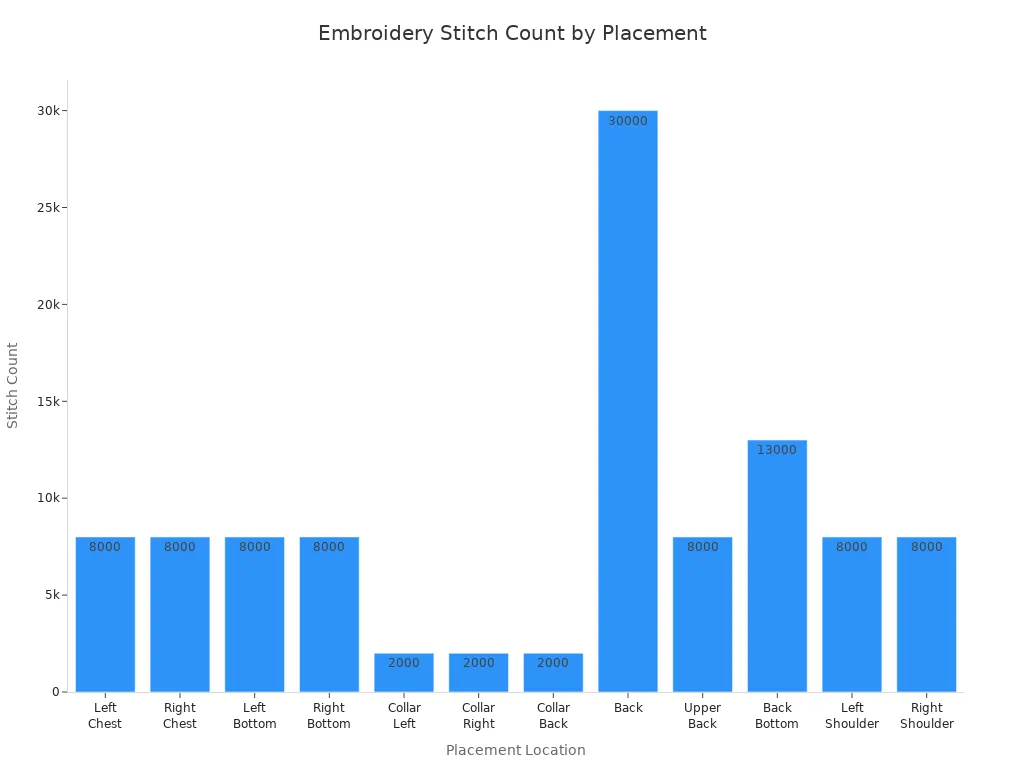
You can use these logo placement options to highlight your designs and create a professional look. The left chest remains the most popular spot for company logos, but you can also use the collar or back for creative branding. When you plan your designs, consider how the placement will affect visibility and comfort.
Sizing Considerations
You need to balance appearance and comfort when choosing the size of your embroidery designs. Apparel design research shows that embroidery size and stitch density play a big role in how your polo shirts look and feel. The recommended stitch density of 0.4–0.45mm helps prevent puckering, which can distort your designs and fabric. This density also keeps your designs looking neat after many washes. If you use cotton or polyester blends, you get added comfort and durability for your embroidered designs.
When you add lettering to your designs, keep the text large enough to read but not so big that it feels heavy on the fabric. You should limit the number of lettering lines to avoid overcrowding. If your designs include both images and text, make sure each element has enough space. You want your designs to enhance the shirt, not overwhelm it. Test different sizes on sample fabrics to see how your designs look and feel before finalizing your order.
Tip: Always review your embroidery lettering and designs on a sample shirt to check for clarity, comfort, and durability.
Machine Embroidery Techniques

Modern Machine Embroidery
You see machine embroidery evolving rapidly in 2025. New technology lets you create quality embroidery designs with more precision and speed than ever before. You can now use advanced machines that adjust thread tension automatically. This feature ensures your stitches lie flat and smooth on polo shirts. You avoid puckering and gaps, which helps your designs look professional.
You also benefit from layering stabilizers for complex patterns. When you add a second layer of stabilizer, you distribute stitch tension evenly. This method works well for bold graphics and intricate logos. After you finish stitching, you can apply an iron-on backing to the inside of the shirt. This step adds comfort and increases durability, especially for polos worn daily.
The latest machine embroidery trends focus on bold colors and geometric patterns. You notice a Y2K revival with vibrant palettes and sharp shapes. Personalized designs, such as custom names or coordinates, are popular for team polos and gifts. Floral and nature-inspired motifs also stand out, often enhanced with metallic threads for extra flair.
Technique/Trend | Description |
|---|---|
Thread Tension | Set your machine’s thread tension so stitches lie flush with the fabric. |
Layering Stabilizers | Add a second layer of stabilizer for complex designs to distribute stitch tension. |
Post-Embroidery Reinforcement | Apply an iron-on backing for comfort and durability. |
Trending Placements | Use left chest for logos and center chest for bold graphics. |
Bold Colors & Geometric Patterns | Choose vibrant palettes and geometric motifs reflecting the Y2K revival. |
Personalized Designs | Add custom names and coordinates for individuality. |
Floral & Nature-Inspired Motifs | Use floral patterns and nature themes, often with metallic threads. |
You find that machine embroidery now claims 28% of the decorated apparel market. This popularity shows how much businesses and individuals value quality embroidery designs on polo shirts.
Tip: Use tools like HoopMaster to help you hoop your polo shirts with precision. This tool ensures your logo sits exactly where you want it every time.
Digitizing for Polo Shirts
You cannot achieve quality embroidery designs without proper digitizing. Digitizing converts your artwork into a format that machine embroidery systems can read. You must tailor your digitizing process for polo shirts. A design that works for a cap will not always work for a shirt. You need to adjust stitch types, densities, and underlay settings for each product.
You should always test your digitizing before starting full production. Testing helps you spot issues early. You can make changes and get feedback to improve your final results. High-quality digitizing requires you to understand thread, fabric, and machine compatibility. You must select the right stitch types for your chosen fabric and adjust your settings for the best outcome.
You need specific digitizing for each product. A polo shirt design will not work for a cap without changes.
Always test your digitizing before production. Testing helps you find and fix problems.
High-quality digitizing depends on your knowledge of thread, fabric, and machine compatibility.
You also need to focus on embroidery digitizing software. Modern programs let you preview your designs on a digital polo shirt. You can adjust size, placement, and stitch direction before you start stitching. This step saves you time and reduces waste. You can also use embroidery digitizing to create 3D effects or add texture to your logos.
You should remember that digitizing is not just about converting images. You must plan every detail, from underlay to stitch angle. You want your machine embroidery to look crisp and last through many washes. When you invest in quality digitizing, you get embroidery that stands out on any polo shirt.
Stabilizers and Backings
You cannot ignore the importance of stabilizer and backing when you do machine embroidery on polo shirts. The right stabilizer keeps your fabric from stretching or puckering during stitching. For knit fabrics like polos, you should use a cutaway stabilizer. This type prevents your design from distorting after embroidery.
You must choose your stabilizer based on fabric weight and design density. Lightweight polos need a thin cutaway stabilizer. Thicker shirts or dense designs require medium or heavy stabilizer. If you work with very light knits, a no-show mesh cutaway stabilizer works best. This option keeps your stabilizer invisible from the outside.
Use cutaway stabilizer for knit polo shirts to prevent stretching and puckering.
Match your stabilizer weight to your fabric and design density.
For thin knits, choose a no-show mesh cutaway stabilizer to avoid visible backing.
You also need to select the right backing for your machine embroidery. Backing supports your stitches and adds structure to your design. You can use iron-on backing after embroidery for extra comfort and durability. This step helps your polo shirts feel smooth against the skin and keeps your embroidery looking sharp.
You should always hoop your fabric tightly with the stabilizer and backing in place. Tools like HoopMaster help you achieve perfect placement every time. Proper hooping prevents shifting and ensures your quality embroidery designs stay centered.
Note: Never skip the stabilizer or backing step. Your machine embroidery will not last without this support.
You see that machine embroidery on polo shirts requires careful planning. You must use the right digitizing, stabilizer, and backing to achieve quality embroidery designs. When you follow these steps, your polos will look professional and last for years.
Hand Embroidery and Specialty Methods

Hand Embroidery
You can achieve a unique, artisan look on polo shirts with hand embroidery. This method uses a needle and thread, allowing you to create intricate and personalized designs. Hand embroidery stands out for its variety of stitches and the ability to add fine details that machines cannot replicate. You may choose this technique for limited-edition polos, heirloom gifts, or when you want to showcase craftsmanship.
Textile artisans highlight several differences between hand and machine embroidery:
Aspect | Hand Embroidery | Machine Embroidery |
|---|---|---|
Production Method | Done by hand using thread and needle | Done by machine using specialized software |
Production Volume | Low per unit | High per unit |
Time Required | High per unit | Low per unit |
Cost | More costly due to time and skill | Less costly |
Quality | Depends on artisan’s expertise | Consistent quality maintained |
Variety of Stitches | More variety possible | Limited variety |
Design Complexity | More complex and intricate designs possible | Pre-programmed or limited designs |
Skill Requirement | Requires high skill and patience | Requires knowledge of computer operation |
You gain flexibility with hand embroidery, but you also invest more time and skill. For small batches or special projects, this method gives your polos a personal touch.
3D Puff Embroidery
You can add dimension and boldness to your polo shirts with 3D puff embroidery. This technique uses a layer of foam under the stitches, making your design stand out with a raised, tactile effect. Many sports teams and fashion brands use 3D puff embroidery to create logos that pop.
Industry case studies show several advantages of 3D puff embroidery:
Advantage | Description |
|---|---|
Design Enhancement | Adds a fresh, three-dimensional look and feel to your polos. |
Maximizing Profits | Justifies a premium price point due to its unique appeal. |
Durability and Longevity | Maintains brilliance and structure after many washes, ideal for athletic apparel. |
Customization Flexibility | Lets you control the amount of puff for subtle or bold effects. |
Fashion Forward Appeal | Matches current trends and attracts style-conscious customers. |
You can customize the level of puffiness to match your brand’s style. This method works best for bold logos and simple shapes. You should avoid using it for very fine details, as the foam may not support intricate lines.
Tip: Choose 3D puff embroidery when you want your logo to stand out and make a statement.
Appliqué and Metallic Threads
You can elevate your polo shirts with appliqué and metallic threads. Appliqué involves stitching fabric pieces onto the shirt, creating colorful and textured designs. Metallic threads add shimmer and catch the light, making your logos or graphics more eye-catching.
Embroidery experts recommend these best practices for using appliqué and metallic threads:
Loosen the upper thread tension so the thread lies flat and does not break.
Use a strong stabilizer to keep the fabric in shape, especially with metallic threads.
Manage threads carefully and use vertical spool holders to prevent tangling.
Try thread conditioners to reduce friction and fraying.
Test your design on a sample to adjust stitch density and underlay.
Combine metallic and regular threads for a balanced, striking look.
You can experiment with these specialty methods to create polos that reflect your brand’s creativity. When you follow expert tips, you ensure your designs remain durable and attractive, even after repeated wear.
Best Tips for Embroidering Custom Polo Shirts
Preparing Artwork
You set the stage for flawless embroidery by preparing your artwork with care. Professional digitizers recommend a series of steps to make sure your designs translate well onto polo shirts:
Select the Right Design
Choose artwork that suits embroidery. Avoid intricate details and color gradients, as embroidery machines cannot capture fine lines or subtle shading. Clear lines and bold shapes work best.Submit High-Quality Artwork
Provide your design in a high-resolution format. Use vector files like AI, EPS, SVG, or PDF, or raster files such as PNG or JPG at a minimum of 300 DPI. Crisp images help the digitizer create clean stitches.Clean Up Your Artwork
Remove backgrounds, merge layers, and use solid colors. Simplify your design to ensure every element appears clearly when stitched.Understand Embroidery Limitations
Keep text large enough to remain legible. Avoid thin lines and small details that may not show up well. Know the minimum text size and line thickness your provider recommends.Communicate Fabric Type
Tell your digitizer what fabric you plan to use. Embroidering on performance wear, cotton, or blends requires different settings. This information helps the digitizer adjust the design for the best results.Provide Clear Instructions
Share your preferences for stitch type, logo size, and thread colors. The more details you give, the better your finished product will look.
Tip: Always review a sample stitch-out before starting a full production run. This step helps you catch any issues early.
Thread Selection
You make a big impact on the look and durability of your polo shirts by choosing the right thread. Polyester thread stands out as the top choice for most custom polos. It resists fading, holds up to frequent washing, and works well with both cotton and performance fabrics. Rayon thread offers a soft sheen and smooth finish, but it may not last as long as polyester, especially on workwear or athletic polos.
When embroidering on performance wear, you want threads that can handle stretching and moisture. Polyester threads excel in these conditions. They keep their color and shape, even after many washes and hours of wear. Specialty threads, such as metallic or glow-in-the-dark, add creative flair but may require special needles or slower machine speeds.
Consider these factors when selecting thread:
Colorfastness: Choose threads that resist fading from sunlight and washing.
Strength: Pick threads that can withstand abrasion and stretching.
Finish: Decide if you want a matte, glossy, or metallic look.
Compatibility: Make sure your thread matches your fabric and design needs.
Note: Always test your thread on a sample fabric to check for color changes, breakage, or puckering.
Hooping Techniques
You achieve precise embroidery by mastering hooping techniques. Proper hooping keeps your fabric stable and your design centered. Industry tutorials highlight several methods to help you avoid common mistakes:
Use Magnetic Hoops
Magnetic hoops apply even tension across the fabric. They reduce slippage and prevent hoop burn, which can damage delicate or stretchy materials.Create a Placement Template
Print or draw a template of your design. Place it on the shirt to mark the exact location before hooping. This method ensures your logo sits where you want it every time.Measure for Accurate Placement
For men’s polos, measure 7–9 inches vertically and 4–6 inches horizontally from the collar. For women’s polos, use 5–7 inches vertically and 4–6 inches horizontally. These measurements help you position your design consistently.Use Magnetic Grid Systems
Tools like HoopMaster provide visual guides for alignment and centering. They help you hoop each shirt with the same precision, which is essential for large orders.Hoop with Stabilizer
Always include the correct stabilizer with your fabric in the hoop. This step prevents shifting and puckering during stitching.
Tip: Avoid stretching the fabric when hooping. Stretching can cause distortion and misaligned designs, especially when embroidering on performance wear.
You set yourself up for success by following these best tips for embroidering. Careful artwork preparation, smart thread selection, and precise hooping techniques ensure your custom polo shirts look professional and last through repeated wear.
Ensuring Durability
You want your custom embroidered polo shirts to last through countless wears and washes. Durability starts with the right setup and careful attention to each step of the embroidery process. When you work with stretchy or performance fabrics, you face unique challenges. These materials can stretch, shift, or pucker if you do not use the correct techniques.
The most important factor when embroidering performance fabric is stabilization. You create this by using embroidery backing to stabilize and reduce fabric stretch.
You can follow these best practices to ensure your embroidery stands the test of time:
Hooping: Select the correct hoop size for your shirt. Place the fabric in the hoop without stretching it. This step prevents puckering and keeps your design flat.
Stabilizer: Choose a performance stabilizer that supports the fabric but does not add bulk or discomfort. For most polos, a cutaway stabilizer works best. For very light or stretchy knits, try a no-show mesh stabilizer.
Toppers: Use a water-soluble topper on top of the fabric. This layer lifts the stitches and stops them from sinking into the shirt, especially on textured or stretchy materials.
Digitizing: Make sure your design is digitized specifically for performance fabrics. Adjust the stitch type and direction to match the fabric’s movement.
Needle Choice: Use a ball point needle. This needle glides between the fibers instead of cutting them, which protects the fabric and prevents holes.
Thread Selection: Pick polyester or rayon threads. These threads resist fading and breakage, even after many washes.
Stitch Density: Adjust the stitch density to suit your fabric. Too many stitches can cause puckering, while too few may not hold up over time.
Hooping Techniques: Hoop the fabric just tight enough to keep it stable. Avoid over-tightening, which can damage the shirt or distort your design.
You can also match your thread and fabric for maximum durability:
For stable or mildly stretchy fabrics, use polyester thread for long-lasting results.
For moderately stretchy fabrics, try a polyester-spandex blend for a softer feel.
For high-stretch activewear, choose a spandex-blend top thread or a specialized stretch thread.
Tip: Always test your embroidery on a sample piece of fabric before starting your main project. This step helps you spot problems early and make adjustments for the best results.
You protect your investment by following these steps. Your custom embroidered polos will look sharp, feel comfortable, and stay strong—no matter how often you wear them.
Choosing a Provider for Custom Embroidered Polos
What to Look For
You want your custom embroidered polos to reflect your brand’s quality and professionalism. When you evaluate providers, you should use clear criteria to make the best choice. Business procurement guidelines recommend checking for quality management, regulatory compliance, and material safety. Providers should offer documentation that aligns with ISO 9001 principles and follow U.S. labeling rules. You also need to ask for fabric safety certifications, such as OEKO-TEX® STANDARD 100, which ensures low chemical content.
Criteria | Description |
|---|---|
Quality management | Ask for certification or documented processes aligned to ISO 9001 quality management principles. |
Regulatory compliance | Ensure knowledge of U.S. labeling and product rules, including FTC Textile Fiber Products Identification. |
Material safety & sustainability | Request fabric/test documentation like OEKO-TEX® STANDARD 100 for low-substance limits. |
Supply chain & cyber risk | Require a vendor risk questionnaire referencing NIST SP 800-161r1 for data handling and continuity. |
Decoration capabilities | Confirm in-house or vetted partners for embroidery and DTF printing, including stitch/placement guidance. |
SLAs & scalability | Documented lead times, rush options, reorder workflows, and service recovery processes. |
References & sample proofing | Like-for-like program references, pre-production proofs, and wear-test samples. |
You should confirm that the provider can handle embroidery and direct-to-film printing with expert guidance on stitch and placement. Ask for references and sample proofing to see real results before you commit.
Quality Assurance
You need assurance that your custom embroidered polos will meet high standards every time. Leading providers use advanced manufacturing technologies and high-quality materials. They follow strict industry certifications, such as GOTS, OEKO-TEX, Fair Trade, GRS, and Bluesign. These certifications guarantee organic content, chemical safety, ethical labor, and recycled materials. Providers who meet these standards show commitment to quality and responsibility.
Providers use high-quality materials and advanced manufacturing.
Certifications like OEKO-TEX and Fair Trade ensure safety and ethical practices.
You receive polos that look professional and last through repeated wear.
You should always ask about the provider’s quality control process. Request details about how they inspect finished products and handle any issues. Reliable providers will share their procedures and offer solutions if problems arise.
Tip: Choose providers who offer sample stitch-outs and wear tests. These steps help you verify quality before placing a large order.
Business Branding Considerations
You want your custom embroidered polos to strengthen your brand identity. Marketing professionals highlight several key factors for branding success. Color consistency matters most. Providers should match your logo colors using Pantone Matching System codes. This step creates a unified look across all branded materials.
Consideration | Description |
|---|---|
Color Consistency | Ensures that the logo’s colors are matched precisely with embroidery thread using Pantone Matching System (PMS) codes, creating a cohesive visual identity across all branded materials. |
Contrast Strategies | The relationship between shirt color and embroidery thread affects logo visibility; dark logos on light shirts or light embroidery on dark garments enhance readability and professionalism. |
Strategic Color Palette | Limiting color selection to 2-3 complementary colors maintains visual consistency while providing variety, ensuring a coordinated appearance across the team. |
Seasonal and Industry Considerations | Different industries may favor specific colors; for example, healthcare often uses light colors for cleanliness, while technology companies may opt for modern grays and blues. |
You should also consider contrast strategies. Dark logos on light shirts or light embroidery on dark polos improve readability and professionalism. Limit your color palette to two or three complementary colors for a coordinated team look. Think about seasonal and industry preferences. Healthcare brands often choose light colors, while tech companies prefer modern grays and blues.
You need to pay attention to fabric selection, digitizing quality, and logo placement. These choices impact embroidery quality and brand recognition. Strategic placement and sizing of your logo make your custom embroidered polos stand out at every event.
Note: Work closely with your provider to ensure every detail supports your brand’s image and message.
Trends for 2025
Eco-Friendly Materials
You see eco-friendly materials shaping the future of custom embroidered polo shirts in 2025. Sustainability reports highlight a major shift in consumer preferences. Most shoppers now look for responsible production when choosing apparel. Brands respond by using materials that reduce environmental impact and support circular fashion models. You notice these key trends:
Recycled fabrics, such as recycled polyester and organic cotton, have become standard choices for custom polos.
67% of consumers say sustainable materials influence their buying decisions.
Leading brands like Patagonia and Eileen Fisher use circular fashion models, which has led to a 30% rise in customer loyalty.
The apparel industry now prioritizes eco-friendly production methods to meet growing demand.
You benefit from these changes by getting polos that feel good and align with your values. When you choose recycled or organic fabrics, you help reduce waste and support a cleaner planet.
Tip: Look for certifications like OEKO-TEX® or GOTS on your custom polos to ensure true sustainability.
Smart Embroidery
You experience a new era of embroidery with smart technology in 2025. Modern polo shirts feature advanced techniques that improve both design and production. Technology news sources describe how digital tools and artificial intelligence transform the embroidery process. The table below shows how smart embroidery changes the industry:
Aspect | Description |
|---|---|
Digital Embroidery | Digital embroidery increases speed and precision for custom designs. |
Advanced Technology | CAD and computerized machines create intricate patterns and ensure consistent results. |
AI-Powered Designs | AI algorithms help generate unique patterns, making each polo more personal and creative. |
You gain access to more detailed and creative designs. Digital embroidery lets you customize polos quickly and with fewer errors. AI-powered tools suggest new patterns, so your team or brand can stand out with original artwork.
Note: Smart embroidery not only speeds up production but also opens new possibilities for personalization.
Popular Styles
You see popular styles for custom embroidered polos evolving in 2025. Minimalist logos remain a favorite, offering a clean and professional look. Many brands use bold color blocking to make their polos eye-catching. You also notice a rise in retro-inspired designs, with vintage fonts and classic color palettes making a comeback.
Performance features stay in demand. Moisture-wicking fabrics and stretch blends keep you comfortable during long days. Eco-friendly dyes and recycled threads add value for those who care about sustainability. You can choose from a wide range of fits, from slim to relaxed, to match your team’s style.
Minimalist and retro designs lead the trends.
Bold colors and creative placements attract attention.
Performance and sustainability features add practical benefits.
You shape your brand’s image by selecting styles that reflect both current trends and your unique identity.
You make the most of custom embroidered polos by choosing durable, comfortable fabrics and styles that fit your needs.
Select from classic pique, lightweight mesh, or eco-friendly blends for your custom embroidered polos.
Keep your designs modern and clean, and always test your logo on sample custom embroidered polos.
Work with trusted providers who offer quality and sustainability for your custom embroidered polos.
Custom embroidered polos help you stand out, especially when you use precise logo placement and stay current with trends.
You benefit from custom embroidered polos by exploring suppliers, focusing on digitization, and using flexible ordering. Custom embroidered polos let you express your brand and connect with customers. As demand grows for sustainable and personalized products, custom embroidered polos give you an edge. You reach more people with custom embroidered polos through e-commerce and social media. Custom embroidered polos remain a top choice for businesses and individuals who want quality, style, and impact.
FAQ
What is the best fabric for custom embroidered polo shirts?
You get the best results with cotton or performance blends. Cotton gives you a soft feel and crisp embroidery. Performance blends offer durability and resist shrinking. Both options hold stitches well and keep your design looking sharp.
How do you prevent puckering during embroidery?
You should use the correct stabilizer and hoop the fabric tightly. Avoid stretching the shirt. Choose the right stitch density for your fabric. Test your setup on a sample before full production.
Can you embroider on stretchy or athletic polos?
Yes, you can. Use a cutaway or no-show mesh stabilizer. Select polyester thread for flexibility. Hoop the fabric gently. These steps help you avoid distortion and keep your design in place.
What is 3D puff embroidery, and when should you use it?
3D puff embroidery uses foam under the stitches to create a raised effect. You should use it for bold logos or simple shapes. It works best when you want your design to stand out.
How do you choose the right thread color for your logo?
You match thread colors to your brand’s Pantone codes. Test the thread on your chosen fabric. Check the color in natural light. This ensures your logo looks consistent and professional.
How long does custom embroidery last on polo shirts?
Quality embroidery lasts for years. Use strong threads like polyester. Wash polos inside out and avoid high heat. Proper care keeps your design vibrant and prevents fraying.
Can you combine embroidery with other decoration methods?
Yes, you can. Many providers offer embroidery with direct-to-film (DTF) printing or appliqué. Combining methods gives you more creative options for your custom polos.
What is the typical turnaround time for custom embroidered polos?
Most providers deliver orders in 7 to 14 business days. Rush options may be available. Always confirm timelines before placing your order.