

How to Choose the Best Blank Hoodies for Your Business
Table of Contents
Display

Choosing the right blank hoodies for your business shapes how customers see your brand. You should focus on quality, comfort, and style to match current trends in streetwear and athleisure. Customers prefer custom hoodies that feel good and look modern. Many shoppers now care about sustainability, so eco-friendly fabrics and water-based inks can boost your brand image. The type of printing you choose, whether embroidery or screen printing, also impacts how people view your custom apparel.
Key Takeaways
Choose hoodies that reflect your brand identity. Consider colors, fabrics, and styles that align with your business values.
Understand your target customers. Know their age, lifestyle, and preferences to select hoodies that appeal to them.
Order volume impacts pricing and supplier choice. Small orders allow testing, while large orders require reliable suppliers for consistency.
Select the right fabric for comfort and durability. Cotton is soft and breathable, while polyester blends offer strength and moisture-wicking.
Match printing methods to hoodie materials. Screen printing works best on cotton, while embroidery suits heavyweight fabrics.
Stay updated on fashion trends. Offer hoodies in popular colors and styles to attract customers and boost sales.
Consider sustainability. Eco-friendly materials and ethical practices can enhance your brand image and attract conscious consumers.
Test samples before bulk orders. Check quality, fit, and print results to ensure your final products meet your standards.
Business Needs
Brand Identity
Your brand identity shapes every decision you make when choosing blank hoodies. You want your apparel to reflect your business values and style. If your brand stands for sustainability, you should look for eco-friendly fabrics and ethical suppliers. A streetwear brand often prefers bold colors and modern fits. A sports team might need performance fabrics and moisture-wicking features. You can use a simple checklist to match hoodie features with your brand goals:
Color palette that matches your logo and theme
Fabric type that supports your brand message
Style that appeals to your target audience
Tip: Ask yourself, “Does this hoodie represent my brand at first glance?” If the answer is yes, you are on the right track.
Target Customer
Understanding your target customer helps you select hoodies that sell. You should consider age, gender, lifestyle, and fashion preferences. Young adults often want trendy oversized fits. Professionals may prefer classic cuts and neutral colors. If your customers care about comfort, you should choose soft fabrics and relaxed fits. For active customers, performance blends work best. You can use a table to organize customer needs:
Customer Type | Preferred Fit | Popular Colors | Key Features |
|---|---|---|---|
Teens/Young Adults | Oversized | Bright, Pastel | Soft, Trendy |
Professionals | Regular | Neutral | Durable, Classic |
Athletes | Athletic | Team Colors | Moisture-Wicking |
You should always keep your customer profile in mind when reviewing hoodie options.
Order Volume
Order volume affects your choice of supplier and pricing. Small orders give you flexibility to test different styles. Large orders require reliable suppliers and consistent quality. You should estimate how many hoodies you need for each campaign or season. Bulk orders often come with discounts, but you must check minimum order requirements. Sampling a few hoodies before placing a big order helps you avoid costly mistakes.
Small volume: Try new styles, test customer response
Medium volume: Balance cost and variety
Large volume: Focus on supplier reliability and price breaks
Note: Always confirm production timelines with your supplier, especially for large orders. Delays can impact your business schedule.
Choosing the best blank hoodies starts with understanding your business needs. You set the foundation for successful apparel by aligning your choices with your brand, your customers, and your order volume.
Material Selection

Choosing the right fabric for blank hoodies shapes the quality, comfort, and print results you deliver to your customers. You need to understand how each material performs in terms of printing, durability, and wearability. This section breaks down the most common options so you can select the best sweatshirt material for printing and long-term use.
Cotton
Cotton remains a popular choice for blank hoodies. You find it soft, breathable, and comfortable for everyday wear. Many brands use cotton because it holds prints well and feels good against the skin.
Printing Suitability
Cotton is often considered the best sweatshirt material for printing, especially for direct-to-garment (DTG) and screen printing. The natural fibers absorb ink, which helps you achieve vibrant designs. Cotton also works well for embroidery, allowing threads to sit smoothly on the surface. However, images on cotton may fade over time, especially after repeated washing.
Advantages | Disadvantages |
|---|---|
Comfort | Images fade |
Print-friendly | Durability issues |
Breathability | Moisture retention |
Tip: If you want crisp, detailed prints, cotton gives you a reliable base. You should consider pre-shrunk cotton to reduce shrinkage after printing.
Comfort & Durability
Cotton feels soft and comfortable, making it a favorite for casual wear. You notice that cotton hoodies breathe well, which keeps you cool. However, cotton does not match the durability of synthetic blends. Frequent washing and high temperatures can cause cotton to wear out faster.
Fabric Type | Durability Insights |
|---|---|
100% Cotton | Less durable, can wear out faster, especially with frequent washing and high temperatures. |
Polyester Blend | Generally lasts longer, stronger, and more resistant to wear and chemicals, needing replacement 25% less often than 100% cotton. |
When you buy cotton hoodies in bulk, you pay more than for polyester. Cotton prices can fluctuate with the seasons, and organic cotton costs even more.
Fabric Type | Average Cost per Meter |
|---|---|
100% Polyester | $0.85–$1.25 |
100% Cotton (Combed) | $1.30–$1.80 |
Poly-Cotton Blend | $1.10–$1.50 |
Polyester Blends
Polyester blends combine synthetic fibers with cotton or other materials. You see these blends in athletic and performance hoodies. Polyester adds strength and helps the hoodie keep its shape.
Print Compatibility
Polyester blends are also considered among the best sweatshirt material for printing. You get good results with screen printing, heat transfer, and sublimation. Thicker polyester styles work well for screen printing, while cotton-polyester blends support embroidery and DTG printing. Polyester resists fading, so your prints stay vibrant longer.
Note: Polyester is generally cheaper than cotton. You benefit from stable prices and year-round production.
Performance Features
Polyester blends excel in moisture-wicking and color retention. You stay dry during workouts or outdoor activities because polyester moves sweat away from the skin. The colors remain bright, even after many washes. Polyester blends last longer than cotton, needing replacement less often.
Polyester blends also resist shrinking and wrinkling. You find them easy to care for, which appeals to busy customers. If you want blank hoodies that perform well and look new after repeated use, polyester blends offer a smart choice.
Specialty Fabrics
Specialty fabrics give you unique options for blank hoodies. You can choose materials that fit specific needs or create a standout product.
Unique Qualities
You find specialty fabrics like fleece, French terry, nylon, rayon, wool, denim, spandex, and bamboo in the market. Each offers distinct benefits:
Fleece provides warmth without weight and dries quickly.
French terry feels lightweight and breathable, ideal for casual wear.
Nylon is water-resistant and lightweight, perfect for sporty styles.
Rayon feels soft and flowing, but needs gentle care.
Wool regulates temperature and controls moisture, giving an upscale feel.
Denim offers rugged durability and a unique look, though it limits printing options.
Spandex adds stretch and recovery, great for athletic fits.
Bamboo is eco-friendly, soft, breathable, and resists odors.
Best Uses
You should match specialty fabrics to your brand and customer needs. Fleece suits outdoor and winter collections. French terry works for light workouts and casual wear. Nylon and spandex fit athletic brands. Bamboo appeals to eco-conscious shoppers. Wool and denim create premium or fashion-forward hoodies.
Tip: Specialty fabrics let you offer something different. You can use them to target niche markets or add variety to your product line.
When you select the best sweatshirt material for printing, you must consider how each fabric interacts with your chosen printing method. Cotton and blends work well for embroidery. Thicker styles support screen printing. Cotton-polyester blends deliver durability and print quality. Specialty fabrics help you stand out, but you need to test print compatibility before launching a new style.
Print Compatibility
Screen Printing
Screen printing stands out as one of the most popular methods for customizing blank hoodies. You get bold, vibrant designs that last through many washes. The material and weight of your hoodie play a big role in the final result. Medium-weight hoodies work well for branding because they support different printing methods, including screen printing. You see the best results on 100% cotton fabrics, which absorb ink and show colors clearly. Cotton-polyester blends also offer versatility, letting you use screen printing for a wide range of styles.
Heavyweight hoodies give you a strong base for bold designs. You notice that screen printing on these thicker fabrics creates a premium look, perfect for streetwear or team apparel. However, heavyweight hoodies do not work well with direct-to-garment printing because they absorb too much ink. If you want to create standout graphics, choose heavyweight or medium-weight blank hoodies made from cotton or blends.
Tip: Always check the surface of your hoodie before printing. Smooth, tightly woven fabrics help you achieve crisp lines and sharp details.
You can use screen printing for large orders, making it ideal for businesses that need wholesale blanks for printing. This method keeps costs low and quality high, especially when you work with reliable suppliers.
Embroidery
Embroidery gives your blank hoodies a high-end finish. You add logos, names, or minimalist designs that stand out with texture and durability. For the best embroidery results, choose high-quality hoodies with pure, heavyweight ring-spun cotton. This material feels substantial and smooth, providing a stable surface for clean stitching. Cotton is breathable and strong, making it the top choice for embroidery.
You can also use cotton-polyester blends, which support embroidery and add extra durability. These blends resist wear and keep your designs looking fresh after many washes. When you select blank hoodies for embroidery, focus on thickness and texture. Heavyweight fabrics hold stitches well and create a premium look.
High-quality blank hoodies work best for embroidery.
Pure, heavyweight ring-spun cotton gives you a smooth, stable surface.
Cotton offers breathability and strength for lasting designs.
Embroidery suits upscale streetwear, team uniforms, and branded merchandise. You create a professional image that appeals to customers who value quality.
DTG Printing
DTG printing, or direct-to-garment printing, lets you print detailed, colorful designs directly onto blank hoodies. You get soft, breathable results, especially on 100% cotton or cotton-polyester blends. DTG printing works best on smooth-faced fabrics, which help the ink bond and show colors clearly. Avoid terry loop or heavy fleece materials, as they can prevent full contact and reduce print quality.
Before you start DTG printing, always do a test print on a scrap hoodie. This step helps you fine-tune time, temperature, and pressure. Pre-press your hoodie to remove moisture, wrinkles, and dust. Set your heat press to 300°F and press the print area for five seconds. If your blank hoodies feel stiff, pre-wash them to remove sizing chemicals that can interfere with ink bonding.
Choose smooth-faced cotton or 50/50 cotton-polyester blends for the best results.
Avoid heavy fleece or terry loop fabrics.
Pre-press and pre-wash hoodies to improve print adhesion.
Apply enough adhesive powder and cure it properly to prevent peeling or cracking.
Check the white underbase on dark hoodies to ensure vibrant colors.
You can use DTG printing for small batches or custom orders. This method gives you flexibility and high-quality prints, making it a smart choice for businesses that want to offer unique designs.
Description | Suitable for Heavyweight Hoodies | |
|---|---|---|
DTG Printing | Directly prints ink into cotton fibers for soft, breathable results. | Yes, especially on 100% cotton or poly blends. |
DTFlex Printing | Uses water-based inks on transfer film for vibrant, durable designs. | Yes, works well on thick or textured fabrics. |
Embroidery | Adds a high-end finish, ideal for logos and minimalist designs. | Yes, suitable for upscale streetwear aesthetics. |
You should match your printing method to the material and weight of your blank hoodies. Screen printing works best on cotton and blends, embroidery shines on heavyweight cotton, and DTG printing excels on smooth-faced cotton or blends. When you choose wholesale blanks for printing, consider your design needs and customer preferences to get the best results.
Heat Transfer
Heat transfer gives you a flexible way to customize blank hoodies. You use this method to apply designs, logos, or text by pressing a printed transfer onto the fabric with heat and pressure. Many small businesses choose heat transfer because you can start with a low investment and work with a wide range of hoodie materials.
You see the best results when you use hoodies made from cotton, polyester, or blends. Smooth surfaces help the transfer bond well. Thicker hoodies hold up to the heat and pressure, so you get a durable finish. You should avoid textured or heavily brushed fabrics, which can cause uneven prints.
Heat transfer works well for short runs and custom orders. You can print vibrant colors and detailed graphics. This method lets you personalize each hoodie, which appeals to customers who want unique designs. You also benefit from quick turnaround times, making it easy to respond to trends or special requests.
When you compare heat transfer to other printing methods, you notice differences in cost and durability. The startup cost for heat transfer is lower than for direct-to-film (DTF) or sublimation. You can begin with a basic heat press and transfer sheets. The durability of heat transfer prints is moderate. You get good results for casual wear, but heavy washing or stretching may cause the design to crack or peel over time.
Here is a table that compares heat transfer with other popular printing methods:
Feature | Sublimation | Heat Press (HTV/Transfer) | DTF Printing |
|---|---|---|---|
Durability | Excellent | Moderate | High |
Startup Cost | Medium ($400–$800) | Low ($150–$400) | High ($1,000–$3,000+) |
You should choose heat transfer if you want a budget-friendly way to offer custom hoodies. This method suits small batches, special events, and limited-edition drops. You can experiment with different designs without a large upfront investment.
Tip: Always test your transfer on a sample hoodie before starting a full run. You check for color vibrancy, adhesion, and wash resistance. This step helps you avoid costly mistakes and ensures your customers receive high-quality products.
Heat transfer printing gives you flexibility and speed. You can meet customer demands and keep your business agile. When you select blank hoodies, look for smooth, medium-weight fabrics to get the best results from your printing process.
Blank Hoodies Styles

Weight
You notice that weight plays a major role in how blank hoodie styles feel and perform. Comfort is essential for a best-selling hoodie. The material used significantly impacts the overall comfort of the garment. Recognizable and comfortable materials enhance wearability. Heavyweight hoodies are designed for warmth during winter months. They are known for their bulkiness and ability to keep the wearer warm in cold environments. Features like double stitching enhance comfort and durability.
Here is a table that highlights important features of heavyweight hoodies:
Feature | Description |
|---|---|
Weight | |
Durability | Thicker and denser, providing better resistance to wear. |
Comfort | Warmer and more structured, ideal for colder weather. |
Design | Features a sturdier feel and substantial drape, suitable for a premium look. |
Usage | Perfect for outdoor activities and environments requiring durable clothing. |
You should select the right weight based on your customers’ needs and the climate. Lighter hoodies work well for layering or mild weather. Heavyweight options suit outdoor work, sports teams, and winter collections.
Cut & Fit
Cut and fit influence how customers perceive your brand and how likely they are to keep their purchase. Consistent fit is crucial for customer satisfaction and reducing return rates. Poor fit leads to customer dissatisfaction, negative reviews, and decreased future purchases. Reliable sizing fosters brand loyalty and increases customer lifetime value.
You can see how different fit types send messages about your brand. Oversized fits attract younger audiences who want a relaxed look. Slim cuts appeal to those who prefer a tailored style. Streamlined sizing improves inventory management and operational efficiency.
Tip: Always request sizing charts from your supplier and test samples before placing bulk orders.
Here are some important points to consider:
High return rates incur costs such as shipping fees and labor for restocking.
Inconsistent fit complicates quality control and increases errors in manufacturing.
Streamlined sizing improves inventory management and operational efficiency.
The fit of garments serves as a non-verbal cue that reinforces brand identity. You should choose blank hoodie styles that match your target market’s lifestyle and preferences.
Personalization Options
Personalization sets your hoodies apart and increases their appeal. Businesses often request several customization techniques to create unique products. You can choose from a variety of methods, each with its own advantages for printing and branding.
Personalization Technique | Description |
|---|---|
Screen Printing | A fast and affordable method for customizing hoodies in bulk, ideal for logos and designs. |
Embroidery | Best for smaller designs like logos or names; can be done locally or by hand for unique creations. |
Tie-Dye | A fun and colorful way to personalize white hoodies, suitable for all ages. |
Iron-On Transfers | Allows for professional-looking designs on a small number of hoodies, using inkjet or vinyl cutters. |
Screen printing works well for large orders and bold graphics. Embroidery adds a premium touch to logos and names. Tie-dye creates playful, eye-catching pieces. Iron-on transfers let you experiment with small batches and custom designs. You should test your chosen printing method on sample hoodies to ensure quality and durability.
Personalization options allow you to align your products with your brand identity and customer preferences. You can offer limited editions, team apparel, or event merchandise. The right choices in printing and customization help your business stand out in a crowded market.
Blank Sweatshirts Brands
Brand Comparison
You have many choices when you search for blank sweatshirts brands. Each brand offers unique strengths in quality, style, and customer service. You should compare top brands to find the best fit for your business. The following table highlights how leading brands stand out:
Brand | Quality Highlights | Customer Service Highlights |
|---|---|---|
US Blanks | Committed to sustainability and ethical practices; high-quality blank hoodies. | N/A |
The Adair Group | Solid reputation for high-quality products; extensive inventory of hoodies. | Responsive customer service. |
Independent Trading Company | Premium fabrics; over 60 styles and colors available. | N/A |
J. America | High-quality products with fine details; ethical working conditions. | Exceptional customer service. |
Delta Apparel | High-quality blank apparel; exceptional printability. | N/A |
Gildan | Good quality in material, color, and fit. | Always on time; fast shipping. |
You notice that brands like Gildan and The Adair Group receive praise for fast shipping and reliable service. US Blanks and J. America focus on ethical practices and sustainability. Independent Trading Company stands out with a wide selection of styles and colors. You should consider these factors when you choose blank sweatshirts for your business.
Price vs. Quality
You want to balance price and quality when you select blank sweatshirts. Some brands offer premium features at higher prices, while others provide solid value for bulk orders. The table below compares popular options:
Brand | Price Range | Quality | Style Range |
|---|---|---|---|
Champion S700 | $30-40 | High | 27 colors |
Bella+Canvas 3719 | $30-40 | High | 63 colors |
Next Level 9300 | $25-35 | High | 10 colors |
Champion and Bella+Canvas deliver high quality and a broad color selection. Next Level offers competitive pricing with fewer style choices. You should match your budget to your brand goals. If you want premium features, you may pay more. For large orders, you can save by choosing brands with lower prices but consistent quality.
Tip: Always request samples before you commit to a bulk order. You can check the fabric, stitching, and print results to ensure the sweatshirts meet your standards.
Sizing & Style Range
You need a wide sizing and style range to serve different customers. Brands like Bella+Canvas and Independent Trading Company offer dozens of colors and fits. You can find oversized, slim, and classic cuts to match your brand identity. Gildan provides reliable sizing and consistent fit, which helps reduce returns and improve customer satisfaction.
You should review each brand’s sizing chart and style options. Some brands specialize in athletic fits, while others focus on streetwear or casual styles. You can use a checklist to compare:
Number of available sizes (XS to 5XL)
Variety of colors and patterns
Fit types (regular, slim, oversized)
Special features (moisture-wicking, eco-friendly fabrics)
A broad style range lets you target different markets and seasons. You can offer blank sweatshirts for teams, events, or fashion collections. Reliable sizing helps you build trust with your customers and grow your business.
Sustainability
You see more brands focusing on sustainability when you shop for blank sweatshirts. Many companies now use eco-friendly materials and ethical manufacturing processes. This shift helps protect the environment and supports fair labor practices. You can make a positive impact by choosing brands that value sustainability.
Brands often highlight their certifications to show their commitment. These certifications help you identify which blank sweatshirts meet strict environmental and social standards. Here is a table that explains some of the most common certifications and practices you will find:
Certification/Practice | Description |
|---|---|
Fairtrade (FLOcert) | Certification aimed at alleviating poverty through socially conscious production standards. |
SA8000 | Focuses on social compliance and ethical manufacturing. |
WRAP | Promotes safe and humane manufacturing practices globally. |
GOTS | Ensures organic textile production and environmental sustainability. |
Oeko-Tex Standard 100 | Certifies textiles free from harmful substances. |
You should look for these certifications when you compare brands. GOTS and Oeko-Tex Standard 100 focus on the safety and sustainability of the materials. Fairtrade, SA8000, and WRAP address the working conditions and ethical treatment of workers. These labels give you confidence that your blank sweatshirts come from responsible sources.
Many brands also use recycled fibers or organic cotton in their products. You may notice some companies use water-saving dyes or reduce packaging waste. Some brands even offer take-back programs to recycle old sweatshirts. These efforts help lower the environmental impact of clothing production.
When you choose sustainable blank sweatshirts, you support a cleaner planet and better working conditions. Your customers may also prefer eco-friendly options. Many shoppers now check for certifications and green practices before they buy. You can use this trend to build trust and loyalty for your business.
Tip: Always ask your supplier for proof of certifications. Reliable brands will share this information and explain their sustainability efforts.
You play a key role in promoting sustainability. By selecting blank sweatshirts from ethical brands, you help set higher standards in the apparel industry.
Cost & Suppliers
Bulk Pricing
You need to understand how bulk pricing works when you source blank hoodies for your business. Most suppliers offer volume discounts, which help you save money as your order size increases. Wholesale pricing gives you access to lower costs per unit, making it easier to maintain healthy profit margins. The table below shows typical pricing structures from major suppliers:
Supplier | Hoodie Price (Low) | Volume Discounts | Free Shipping Threshold | Minimum Order |
|---|---|---|---|---|
ShirtSpace | ~$9 | Yes | Varies | None |
Blankstyle | ~$9 | Yes | $99 | None |
Ninja Blanks | ~$9 | Yes | $50 | None |
Royal Apparel | ~$20 (premium) | Yes | Varies | None |
Original Favorites | ~$72 | Yes | Varies | None |
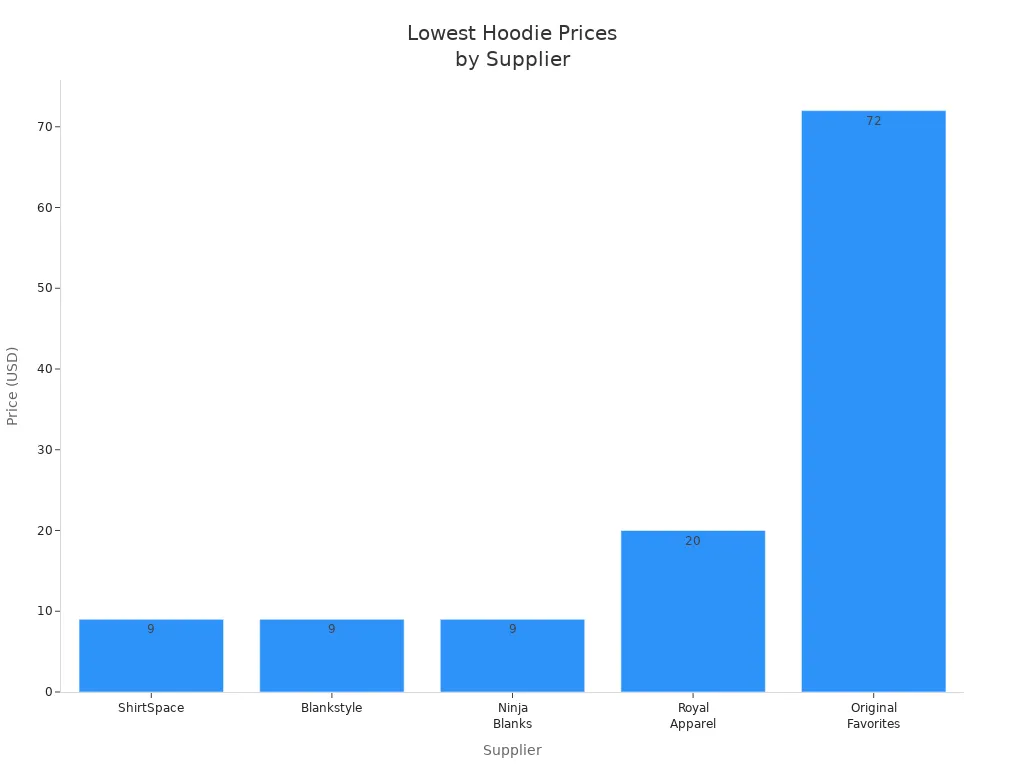
You see that wholesale blanks from ShirtSpace, Blankstyle, and Ninja Blanks start at around $9 per hoodie. Premium options like Royal Apparel and Original Favorites cost more but may offer higher quality. Free shipping thresholds and minimum order requirements vary, so you should check these details before placing bulk orders.
Tip: Always compare pricing and discounts across suppliers. You can maximize savings by meeting free shipping thresholds and ordering in bulk.
Supplier Reliability
Supplier reliability plays a key role in your business success. You want to work with partners who deliver on time and provide consistent quality. Reliable suppliers help you avoid delays and costly mistakes. When you evaluate wholesale suppliers, consider these factors:
Communication and support help you resolve issues quickly.
Quality standards and customer testimonials show how well a supplier meets expectations.
Researching a manufacturer’s history reveals past problems or strengths.
Price comparisons and minimum order quantities affect your financial planning.
Return policies and product guarantees protect you from defective items.
You should read reviews and ask for references before choosing a supplier. Reliable wholesale partners respond promptly and offer clear information about their products. You can build long-term relationships by choosing suppliers who value transparency and customer service.
Sample Orders
Sample orders let you test hoodie quality before committing to wholesale blanks. You can check fabric feel, fit, and wash durability. Sampling helps you avoid surprises and ensures your bulk order meets your standards. Most suppliers offer sample pricing or allow you to order a few units at regular wholesale rates.
You should wash and wear sample hoodies to see how they hold up. Look for shrinkage, fading, and stitching issues. Testing samples gives you confidence in your supplier and helps you deliver quality products to your customers.
Note: Always request samples from new suppliers. You can spot potential problems early and make informed decisions for your wholesale business.
Choosing the right supplier and understanding bulk pricing help you manage costs and maintain quality. You set your business up for success by evaluating sample orders and building strong relationships with reliable wholesale partners.
Customer Suitability
Demographics
You need to understand your customer demographics before selecting blank hoodies for your business. Age, lifestyle, and values shape what your buyers want. Younger shoppers often follow streetwear trends and look for bold styles. Professionals may prefer classic fits and neutral colors. Many buyers now care about sustainability and ethical production. You can use the following table to see how demographic trends influence hoodie selection:
Demographic Trend | Influence on Hoodie Selection |
|---|---|
Rising demand for comfortable apparel | Increased preference for hoodies as layering pieces that provide warmth and style. |
Influence of streetwear culture | Boosted appeal of hoodies among younger demographics, driven by social media and celebrity endorsements. |
Adoption of sustainable fabrics | Attracts environmentally conscious buyers, enhancing market growth for premium blends. |
You should match your hoodie styles to these trends. If you target teens or young adults, choose oversized fits and vibrant colors. For eco-conscious customers, offer hoodies made from organic cotton or recycled fibers.
Seasonal Needs
You must consider seasonal changes when planning your hoodie inventory. Fleece hoodies become popular during colder months because they provide warmth and comfort. Lightweight hoodies work better in spring and summer, offering breathability and easy layering. Seasonal promotions, such as holiday-themed colors or limited-edition styles, can create urgency and boost sales. You can adjust your marketing strategy to highlight these seasonal preferences.
You should align your stock with the time of year. Stock up on heavyweight and fleece hoodies before winter. Offer lighter options as temperatures rise. This approach helps you meet customer demand and avoid excess inventory. You can also use seasonal colors and designs to attract attention during holidays or special events.
Tip: Plan your inventory around seasonal trends to maximize sales and keep your customers satisfied.
Fashion Trends
You need to stay updated on current fashion trends to keep your hoodie selection relevant. The color mocha mousse is gaining popularity. This warm, earthy tone works well with minimalist designs and bold accents. You can use it as a versatile base for your blank hoodies.
Consumers are increasingly prioritizing sustainable practices, leading to a demand for eco-friendly materials in the wholesale blank apparel industry. This shift is not just a trend but a significant change in consumer behavior, with millennials and Gen Z driving the demand for transparency and ethical production.
You see several key trends shaping hoodie design and selection:
The influence of streetwear is evident in the popularity of blank zip-up hoodies, which are versatile and complement various styles.
There is a growing emphasis on sustainability, with consumers preferring eco-friendly materials and ethical production methods.
Minimalism and personalization are key trends, as blank hoodies serve as a canvas for individual expression.
You notice oversized and boxy fits becoming standard in streetwear. Slow fashion encourages buyers to choose durable, sustainable hoodies. Eco-friendly materials, such as organic cotton and recycled fibers, are changing how businesses produce blank apparel.
You should use these trends to guide your product choices. Offer hoodies in trending colors and fits. Highlight sustainable features in your marketing. Give customers options to personalize their hoodies for a unique look.
Decision Tips
Testing Samples
You should always test samples before making a large purchase. Sampling lets you check the quality, fit, and print results of blank hoodies. You can order a few pieces from different suppliers. Wash and wear each sample to see how the fabric holds up. Look for shrinkage, fading, and stitching issues. You can also test your chosen printing method on these samples. Screen print, embroider, or use heat transfer to see how the design looks and feels.
Tip: Keep a simple checklist for each sample. Note comfort, durability, print quality, and sizing accuracy.
Sample Test Criteria | What to Check |
|---|---|
Comfort | Softness, breathability |
Durability | Stitching, wash resistance |
Print Quality | Vibrancy, adhesion |
Sizing | Fit, consistency |
Testing samples helps you avoid costly mistakes. You gain confidence in your supplier and product before placing a bulk order.
Shortlisting Options
You should create a shortlist of hoodie options based on your sample results and business needs. Compare each style, material, and supplier. Use your checklist to rank hoodies by quality, price, and print compatibility. Consider your brand identity and customer preferences. Remove any options that do not meet your standards.
List the top three to five hoodie styles that fit your requirements.
Compare prices and bulk discounts.
Check supplier reliability and shipping times.
Review sustainability certifications if eco-friendly products matter to your brand.
Note: You can use a table to organize your shortlist and make the decision process easier.
Hoodie Style | Material | Price per Unit | Supplier | Print Method | Sustainability |
|---|---|---|---|---|---|
Heavyweight Crew | Cotton Blend | $12 | ShirtSpace | Screen Print | GOTS |
Lightweight Zip | 100% Cotton | $10 | Blankstyle | DTG | Oeko-Tex |
Fleece Pullover | Poly-Cotton | $15 | Ninja Blanks | Embroidery | WRAP |
Shortlisting helps you focus on the best choices for your business.
Final Purchase
You should make your final purchase after reviewing your shortlist and sample results. Confirm order details with your supplier. Double-check sizing charts, color options, and minimum order requirements. Ask about shipping times and return policies. Place your order for the selected hoodie style and quantity.
Tip: Start with a moderate order size if you are working with a new supplier. You can increase volume once you confirm quality and reliability.
You should keep records of your purchase and supplier communication. Track delivery and inspect the hoodies when they arrive. You can use feedback from your customers to refine future orders.
Decision tips help you choose blank hoodies with confidence. You test samples, compare options, and make informed purchases that support your brand and satisfy your customers.
You have learned how to choose blank hoodies that fit your business needs. Review material, style, and print compatibility before making a decision. Match your selection to your brand and customer preferences. Use sample orders to test quality and fit. Reach out to suppliers for more information or place a small order to start. Take these steps to build a strong apparel lineup for your business.
FAQ
What is the best material for blank hoodies?
Cotton gives you comfort and print quality. Polyester blends offer durability and moisture-wicking. You should choose based on your brand needs and customer preferences.
How do I know which size to order for my customers?
You should request sizing charts from your supplier. Test samples to check fit. Review customer feedback to adjust your size range.
Can I use any printing method on all hoodie fabrics?
No. Screen printing works best on cotton and blends. DTG printing needs smooth cotton. Embroidery suits heavyweight fabrics. Always test your chosen method.
How do I find reliable hoodie suppliers?
Read reviews and ask for references. Request samples before bulk orders. Reliable suppliers communicate clearly and deliver on time.
Are sustainable hoodies more expensive?
Eco-friendly hoodies often cost more due to higher material and production standards. You may find bulk discounts or affordable blends from some suppliers.
What is the minimum order quantity for wholesale hoodies?
Minimum order quantities vary by supplier. Some offer no minimums. Others require you to order at least 12 or 24 pieces. Always confirm before purchasing.