

How to Select the Best T-Shirt Manufacturer
Table of Contents
Display

Imagine you want your clothing business to stand out in a crowded market. You need a t shirt manufacturer who not only delivers on quality but also shares your commitment to ethical practices. When you choose a reliable t-shirt manufacturer that aligns with your brand’s values, you build trust and loyalty with your customers. This connection helps your brand stay relevant as consumer preferences shift toward sustainability and digital experiences. Your choice of manufacturer influences your brand’s reputation and long-term success, so consider both practical factors and the relationship you build with your clothing partner.
Key Takeaways
Define your needs before searching for a t-shirt manufacturer. Focus on quality, order size, customization, and budget.
Set clear quality standards for your t-shirts. Choose the right fabric and construction methods to ensure durability and comfort.
Understand the impact of order size on costs. Larger orders often lead to lower prices per shirt.
Customization helps your brand stand out. Discuss options like branding and printing techniques with your manufacturer.
Establish a clear budget. Balance quality and cost to make smart decisions for your clothing line.
Consider local vs. overseas manufacturers. Local options offer better quality control, while overseas can provide lower costs.
Check the manufacturer’s experience and specialization. Choose one with a proven track record in t-shirt production.
Use reviews and testimonials to evaluate potential manufacturers. Look for consistent quality and good communication.
Define Your Needs
Before you start searching for a t shirt manufacturer, you need to clarify your brand’s requirements. This step helps you avoid costly mistakes and ensures your clothing stands out in the market. Focus on four main areas: quality standards, order size, customization, and budget.
Quality Standards
You want your customers to associate your brand with a high-quality t-shirt. To achieve this, set clear quality standards for your products. Leading clothing manufacturers use specific benchmarks to maintain consistency and reliability. These standards often include the type of fabric, construction methods, and certifications.
Fabric Types
The fabric you choose affects the comfort, durability, and appeal of your clothing. Different brands use various materials to meet their quality goals. Here is a comparison of common fabric types and features used by top brands:
Brand | Fabric Type | Certifications/Features |
|---|---|---|
Stanley/Stella | 100% organic cotton | GOTS/OCS/GRS/OEKO-TEX certified, eco-friendly, soft |
Comfort Colors | Ring-spun cotton, pigment-dyed | Vintage look, heavyweight durability, breathable |
Cotton Heritage | Soft-washed combed & ring-spun cotton | Premium smooth fabric, tear-away tags, WRAP-certified |
Next Level Apparel | Lightweight pre-shrunk cotton blends | Breathable, slim fits, active-ready |
Gildan | Heavyweight & lightweight cotton options | Moisture-wicking, OEKO-TEX dyes, strong durability |
Printful Original | 100% cotton with extra-long staple fibers | Resists fading, wrinkling, pilling; reinforced neck |
Choose a material that matches your brand’s values and your customers’ expectations. If you want to promote sustainability, consider organic cotton or recycled blends.
Construction
The way a t shirt manufacturer constructs your clothing affects its fit and lifespan. Pay attention to stitching, seam strength, and finishing details. High-quality t-shirt construction includes reinforced necklines, double-stitched hems, and smooth seams. These features help your clothing maintain its shape after many washes. Ask potential clothing manufacturers about their construction techniques and request samples to check the quality firsthand.
Order Size
Order size plays a big role in your costs and production options. Most clothing manufacturers offer better pricing for larger orders. Here is a simple breakdown:
Order Size | Cost per T-shirt |
|---|---|
10-20 shirts | $20 each |
100-500 shirts | $10 each |
If you run a small clothing business, you may want to start with a lower minimum order. Larger brands often benefit from bulk pricing. Always ask about minimum order quantities before you commit.
Customization
Customization sets your brand apart from the competition. A custom clothing manufacturer can offer many options to help you create unique clothing. The most popular customization choices include branding, private label features, and printing techniques.
Customization Type | Description |
|---|---|
Branding | Custom tags, woven labels, care labels, hang tags, and branded packaging. |
Private Label & White Label | Build your brand with custom tags, woven labels, and packaging. |
Printing Techniques | Screen printing, sublimation, heat transfer, embroidery, and digital printing. |
Think about which customization options fit your brand’s image and budget. Discuss these needs with your t shirt manufacturer early in the process.
Tip: Write down your quality standards, preferred material, order size, and customization needs before contacting any clothing manufacturers. This preparation will help you communicate clearly and find the best partner for your clothing manufacturing journey.
Budget
Setting a clear budget helps you make smart decisions when choosing a t-shirt manufacturer. Your budget shapes every part of your project, from fabric selection to customization options. You want to find the right balance between quality and cost so your brand can grow without overspending.
Start by estimating how much you can invest in your first production run. Think about your business goals and how many shirts you plan to sell. A higher budget gives you more choices for premium fabrics, advanced printing, and custom labels. A lower budget may limit your options, but you can still create great products by focusing on the essentials.
Several factors affect the cost of manufacturing t-shirts:
Cost Factor | Description | How It Affects Your Budget |
|---|---|---|
Fabric Type | Organic cotton, blends, or specialty fabrics | Premium fabrics cost more |
Order Quantity | Number of shirts per order | Larger orders lower unit price |
Printing Method | Screen, digital, embroidery, or heat transfer | Complex methods increase cost |
Customization | Labels, tags, packaging, and finishing touches | More features add to total cost |
Shipping & Duties | Domestic or international delivery | Overseas shipping may cost extra |
You can use this table to compare different manufacturers and see where your money goes. Always ask for a detailed quote before you commit. Some manufacturers offer all-inclusive pricing, while others charge separately for each service.
Tip: Request a breakdown of costs from each manufacturer. This helps you spot hidden fees and negotiate better terms.
Here are some steps to help you manage your budget:
Set a maximum spend: Decide the highest amount you can afford for your first order.
Prioritize features: List the most important features for your brand, such as fabric quality or custom labels.
Compare quotes: Collect quotes from at least three manufacturers. Look for differences in pricing and services.
Plan for extras: Leave room in your budget for unexpected costs, like shipping delays or sample revisions.
You do not need to choose the cheapest option. Focus on value. Sometimes, paying a little more gives you better quality and service. This investment can help your brand build a strong reputation.
A clear budget keeps your project on track and helps you avoid surprises. When you know your limits, you can negotiate with confidence and choose a t-shirt manufacturer who meets your needs.
Local vs. Overseas Clothing Manufacturers
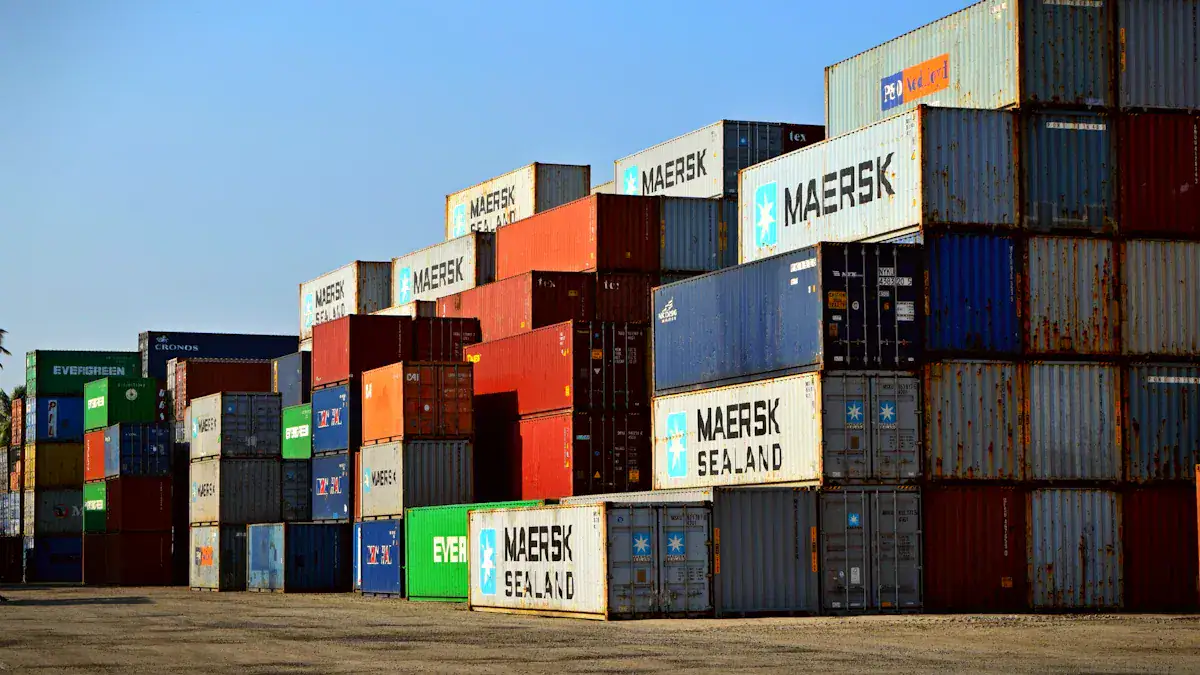
Choosing between local and overseas clothing manufacturers shapes your clothing business in many ways. You need to weigh factors like communication, lead times, costs, and shipping before you decide which option fits your brand.
Local Pros and Cons
Local clothing manufacturers offer several advantages. You gain better quality control and faster turnaround times. You support the local economy and often benefit from sustainable practices. You can visit the factory, inspect the material, and oversee the clothing manufacturing process directly. These benefits help you build a reliable clothing factory partnership.
Advantages | Disadvantages |
|---|---|
Quality Control | Higher Costs |
Faster Turnaround Times | Limited Capacity |
Supporting Local Economy | |
Sustainable Practices |
You may face higher costs and limited production capacity with local suppliers. If your clothing business plans to scale quickly, you might find local options less flexible.
Working with local manufacturers generally results in faster production timelines and supports ethical manufacturing.
Overseas Pros and Cons
Overseas clothing manufacturers often provide lower costs and larger production capacity. You can access specialized techniques and unique materials from different regions. This flexibility helps you expand your clothing line and experiment with new styles.
However, sourcing clothing overseas brings challenges. You may struggle with quality control due to different standards. Managing logistics becomes complex with longer shipping times and customs regulations. Communication barriers and cultural differences can slow down the process. You also need to consider labor practices and environmental impact.
Challenge | Description |
|---|---|
Ensuring consistent quality is difficult without on-site inspection. | |
Supply Chain And Logistics | Shipping, customs, and potential delays add complexity. |
Cultural And Communication Barriers | Language and cultural differences can cause misunderstandings. |
Labor And Ethical Concerns | Ethical sourcing is necessary due to varying labor practices. |
Currency Fluctuation | Changes in currency rates can affect production costs. |
Regulatory Compliance | Navigating different laws and regulations is complex. |
Environmental Impact | Overseas manufacturing may have a larger environmental footprint. |
Decision Factors
You need to consider several factors when deciding between local and overseas clothing manufacturing. Local suppliers offer easier access, better market knowledge, and simpler logistics. You can track supply chain transparency and command higher prices for locally produced clothing. Overseas manufacturers provide lower overall expenses and greater production capacity, which is useful for scaling your clothing business.
Manufacturer Type | Lead Time |
|---|---|
Local | 30-60 days |
Overseas | 90-120 days |
If you need urgent orders or want to maintain strict quality standards, local clothing manufacturers may suit you best. If you plan to launch a large clothing line and want to reduce costs, overseas options might be more practical. Always match your choice to your brand’s values, growth plans, and customer expectations.
Tip: Visit local factories when possible and request samples from overseas suppliers. This step helps you compare quality and service before making a final decision.
Vetting a T Shirt Manufacturer
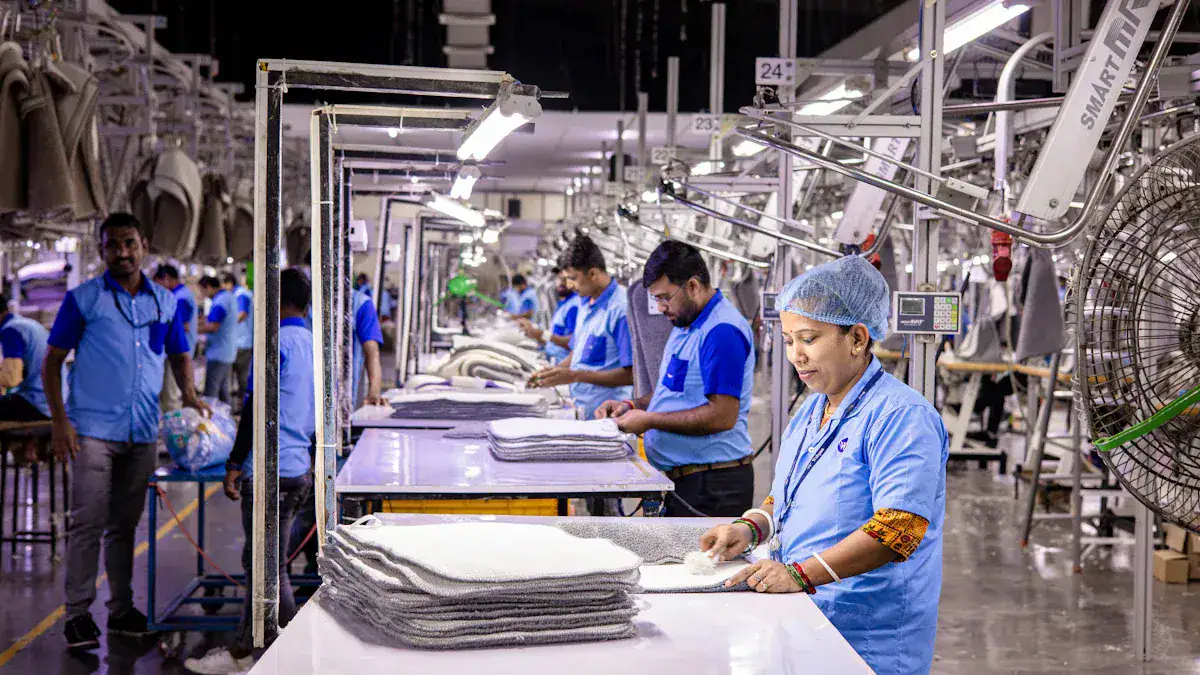
Experience
You want to work with a t shirt manufacturer that has a proven track record. Experience shows that a company can handle challenges and deliver consistent results. When you look at leading clothing manufacturers, you see that many have decades of experience. This history means they have refined their processes and built strong relationships with clients.
Manufacturer | Founding Year | |
|---|---|---|
Thygesen Textile | 1931 | 94 |
TNG | 1979 | 46 |
Shahi Exports | 1974 | 51 |
Zega Apparel | 2010s | 15 |
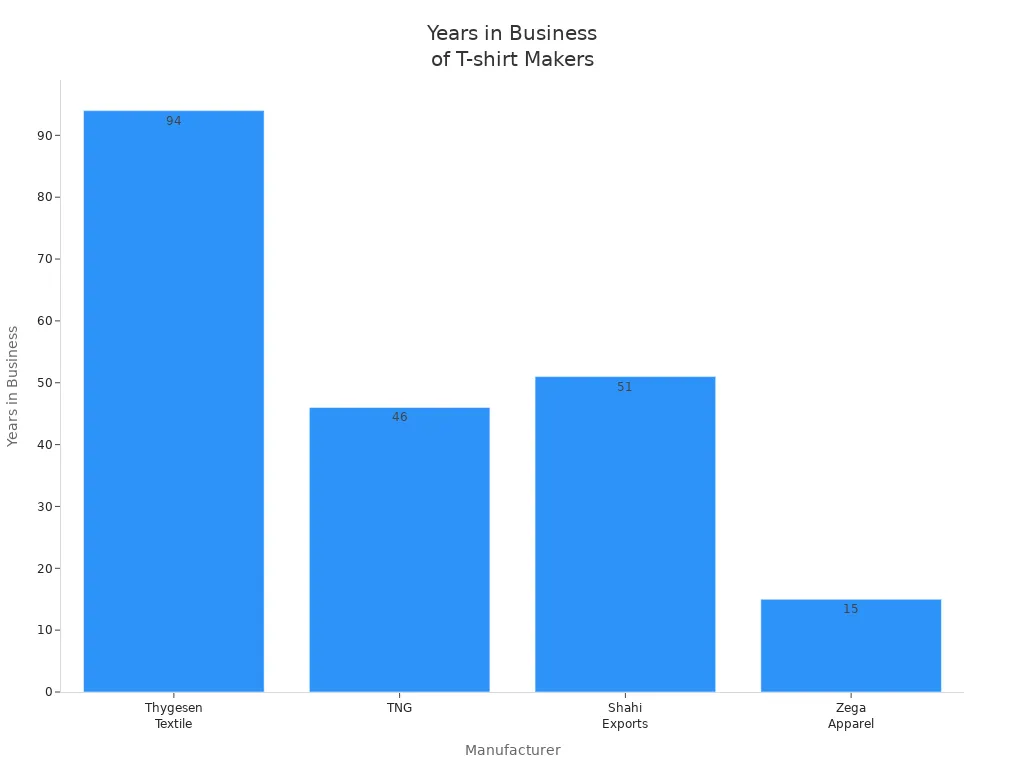
A manufacturer with many years in business often understands the needs of different clothing brands. You can trust them to manage your orders, solve problems, and keep up with trends in the clothing industry. Ask how long the company has been producing t-shirts and what types of clients they serve. Longevity is a sign of reliability and strong business practices.
Tip: Choose a manufacturer with at least several years of experience. This helps you avoid common pitfalls and ensures your clothing business gets the support it needs.
Garment Specialization
Not all clothing manufacturers are the same. Some focus on t-shirts, while others produce a wide range of clothing. You should look for a custom clothing manufacturer that specializes in the type of clothing you want to sell. Specialization leads to better quality and more consistent results.
When you review samples, check for these signs of high-quality construction:
No puckering or waviness around seams. This shows proper tension during sewing.
Strong, unbroken stitches. Broken or popped stitches can cause seams to come apart after washing.
Extra fabric in hems and the right type of stitches. These details show attention to quality.
Specialized manufacturers use advanced techniques to improve fit and durability:
Side-seamed t-shirts provide a better fit and reduce fabric distortion.
Tailored sewing methods help create clothing for different body types.
Precise stitching and finishing make the clothing last longer.
You benefit from specialization because:
High-quality construction means fewer returns and happier customers.
Consistent fit builds trust in your brand.
Fewer production errors save you money and time.
Note: Always ask for samples and inspect the construction closely. Specialized manufacturers can deliver the quality and customization your brand needs.
Certifications
Certifications show that a manufacturer meets high standards for quality, safety, and ethics. When you choose a partner with the right certifications, you protect your brand and reassure your customers. The most respected certifications for clothing manufacturers include:
Certification | Description |
|---|---|
GOTS | Ensures adherence to rigorous environmental and ethical standards. Verifies organic status of textiles and unifies standards across countries and production stages. |
OEKO-TEX | Guarantees textiles meet high safety and sustainability standards. Provides independent certification for safety and environmental impact. |
PETA | Certifies ethical treatment of animals in production. Focuses on animal welfare in the fashion industry. |
You should always ask to see proof of these certifications. Certified manufacturers follow strict guidelines for material sourcing, production, and labor practices. This helps you build a responsible clothing brand and attract customers who care about ethical fashion.
Tip: Certifications like GOTS, OEKO-TEX, and PETA help you stand out in a crowded market. They show your commitment to quality and ethical practices.
Sampling Capabilities
Sampling is a crucial step when you choose a t-shirt manufacturer. You need to see and feel the product before you commit to a large order. A reliable manufacturer will offer a clear sampling process. This process helps you check fabric quality, print accuracy, and construction details.
You should always ask about the sampling timeline. Most manufacturers provide samples quickly, but the exact time can vary. Here is what you can expect:
Most t-shirt manufacturers deliver samples within 3 to 10 business days after you approve the artwork.
The timeline depends on the shirt style, design complexity, and production method.
Some manufacturers offer rush production if you need samples faster.
You should use the sampling stage to test every detail. Check the fabric weight, color accuracy, and stitching quality. Try washing the sample to see if it holds up. If you want custom labels or special printing, make sure the sample includes these features.
A good manufacturer will communicate clearly during the sampling process. They will update you on progress and answer your questions. If you need changes, they should provide a revised sample quickly. This step shows how well the manufacturer responds to your needs.
Tip: Never skip the sampling stage. A high-quality sample gives you confidence in your manufacturer and helps you avoid costly mistakes in full production.
Evaluating Reliable Clothing Factory Options
Production Quality
You want your clothing to impress customers from the first touch. Production quality stands as the foundation of any successful clothing brand. When you evaluate clothing manufacturers, you should look for clear metrics that show their commitment to quality. Reliable factories use industry benchmarks to track and improve their processes.
Here are some common metrics used to measure production quality in t-shirt manufacturing:
Metric | Description |
|---|---|
Defects per hundred units | Counts the number of defects in every hundred garments. This helps you spot recurring issues. |
Defective percentage | Shows the percentage of defective pieces in a batch. You can use this to estimate repair costs. |
Reject Percentage | Measures how many pieces buyers reject. This helps you maintain quality and keep customers happy. |
Overall Equipment Effectiveness (OEE) | Compares ideal and real machine performance. High OEE means efficient, consistent production. |
You should always ask a t shirt manufacturer for these statistics. High-quality clothing manufacturers will share their data and explain how they address defects. You can also request samples to check fabric, stitching, and print quality. Inspect the seams, labels, and finishing. If you see consistent quality in samples, you can expect the same in bulk orders.
Tip: Keep a checklist when you review samples. Look for even stitching, smooth prints, and strong seams. These details show a factory’s dedication to quality.
Turnaround Time
Turnaround time affects how quickly you can launch new clothing or restock popular items. Fast delivery helps you respond to trends and customer demand. Leading clothing manufacturers often provide clear timelines for bulk orders.
Here is a comparison of average turnaround times among top suppliers:
Supplier | Turnaround Time |
|---|---|
Blank Shirts | Same-day delivery for 99% of orders before 11 am |
Shirt Max | 1-2 business days on average |
Jiffy Shirts | 98% of orders within 1-2 working days |
You should ask each factory about their standard turnaround time for your order size and design complexity. Some factories offer rush services for urgent needs, but these may increase your costs. Always confirm production and shipping timelines before you place an order. Reliable clothing manufacturers will communicate delays and keep you updated.
Note: Fast turnaround time can help you stay ahead of competitors, but never sacrifice quality for speed.
Minimum Order Quantity (MOQ)
Minimum order quantity, or MOQ, tells you the smallest number of pieces you must order from a factory. This number affects your costs, inventory, and ability to test new designs. Most clothing manufacturers set their MOQ based on design complexity and production efficiency.
The typical MOQ for a simple t-shirt design is about 50 pieces.
If you want a more complex design, you may need to order a higher quantity.
You should always ask about MOQ before you start the clothing manufacturing process. Some factories offer flexible MOQs for new brands or special projects. If you run a small clothing business, look for manufacturers with low MOQs. This lets you test the market without a big investment.
Tip: Start with the lowest MOQ possible when you launch a new design. This reduces risk and helps you manage inventory.
When you evaluate a clothing factory, focus on production quality, turnaround time, and MOQ. These factors shape your brand’s reputation, costs, and growth. Request samples, review factory policies, and communicate your needs clearly. This approach helps you find a reliable partner for your clothing business.
Pricing
You need to understand how pricing works before you choose a clothing manufacturer. Pricing affects your profit margins and the final price your customers pay. Each clothing factory uses its own pricing structure, so you should always ask for a detailed quote.
Factories often base their pricing on several factors. These include order size, fabric type, customization, and production complexity. You will notice that small orders usually cost more per item. Large orders benefit from economies of scale, which means the cost per shirt drops as you order more. This difference can have a big impact on your clothing business.
Here is a simple comparison:
Order Size | Cost per Item |
|---|---|
Small Orders | Higher cost per item |
Large Orders | Lower cost per item due to economies of scale |
You should always compare quotes from different clothing manufacturers. Some factories offer all-inclusive pricing, while others charge extra for labels, packaging, or shipping. Ask for a breakdown of costs so you can see where your money goes. This step helps you avoid hidden fees and plan your budget.
When you review pricing, do not focus only on the lowest number. You want to balance cost with quality. A very low price might mean lower quality materials or poor workmanship. High-quality clothing often costs more, but it helps your brand stand out and keeps customers coming back.
Tip: Request samples before you commit to a large order. This way, you can check the quality and make sure the pricing matches what you receive.
You should also ask about payment terms. Some clothing factories require a deposit before starting production. Others may offer flexible payment plans for repeat customers. Clear payment terms help you manage your cash flow and avoid surprises.
In clothing manufacturing, pricing is not just about numbers. It reflects the value you get from your partner. Choose a factory that offers fair pricing, delivers consistent quality, and supports your brand’s growth.
Using Reviews to Find the Best T-Shirt Manufacturers
When you search for the best t-shirt manufacturers, reviews can help you make smart decisions. You want to know if a company delivers quality clothing, meets deadlines, and communicates well. Reviews and testimonials give you real feedback from other brands. They help you avoid mistakes and find reliable t-shirt manufacturers for your business.
Online Platforms
You can find reviews on many online platforms. These sources let you compare clothing manufacturers and see what other business owners say about their experiences. Here are some of the most useful places to start your research:
Manufacturer directories like ThomasNet or Alibaba
Industry or trade events where you can meet suppliers in person
Connecting online with trade organizations
Social media groups focused on clothing and apparel businesses
These platforms often include ratings, detailed reviews, and even photos of finished clothing. You can use them to check if a manufacturer offers fair prices, delivers on time, and produces high-quality clothing. Always look for recent reviews to get the most accurate picture.
Tip: Compare several sources before making a decision. One negative review does not always mean poor service, but a pattern of complaints should make you cautious.
Testimonials
Testimonials give you insight into how clothing manufacturers treat their clients. Many of the best clothing manufacturers display testimonials on their websites. You can also find them on third-party review sites. When you read testimonials, pay attention to details about product quality, communication, and how the manufacturer handles problems.
A good testimonial often mentions:
Consistent quality in every clothing order
Fast and reliable delivery
Helpful and responsive customer service
Willingness to fix mistakes or offer solutions
You should reach out to other brands who have worked with the manufacturer. Ask about their experience with the clothing factory. This step helps you confirm if the testimonials are genuine.
Red Flags
Not all reviews are positive. You need to watch for red flags that signal potential problems with a t-shirt manufacturer. Some common warning signs include:
Quality discrepancies between samples and bulk orders
Unrealistic promises about delivery times or capabilities
Poor responses to mistakes or customer complaints
Risky payment terms, such as full payment upfront without guarantees
Lack of transparency about compliance or subcontracting
If you see these issues in reviews, proceed with caution. Reliable t-shirt manufacturers will address problems openly and work to resolve them. You should also verify the authenticity of reviews. Look for detailed feedback and avoid companies with only generic or overly positive comments.
Note: Trust your instincts. If something feels off during your research, consider other options for your clothing business.
By using reviews and testimonials, you can find the best t-shirt manufacturers for your brand. Careful research helps you choose partners who deliver quality clothing and support your business growth.
Building a Relationship with Your T Shirt Manufacturer
Creating a strong relationship with your t shirt manufacturer helps your brand grow and succeed. You need to focus on clear communication, start with trial orders, and work toward a long-term partnership. These steps build trust and ensure your clothing meets high standards.
Communication
Good communication forms the foundation of any successful partnership with clothing manufacturers. You should use several methods to stay connected and keep your project on track.
Visit the factory for face-to-face meetings when possible.
Use phone calls, emails, and video calls to maintain regular contact.
Share your expectations and requirements openly.
Show appreciation for the manufacturer’s expertise and advice.
You also need to provide detailed tech packs, fabric specifications, and clear sample expectations. Ask questions if you do not understand a process, cost, or timeline. Schedule regular check-ins to track progress and solve problems early. Respond quickly to messages, pay invoices on time, and meet deadlines for approvals or materials. These habits show respect and help you build trust with your custom clothing manufacturer.
Tip: Clear and honest communication reduces mistakes and helps you get the clothing you want.
Trial Orders
Trial orders give you a safe way to test a manufacturer before making a big commitment. You can check the quality of the clothing and see how the manufacturer handles your requests. This step lets you spot any problems early and decide if the manufacturer is reliable.
Trial orders let you evaluate the quality of the t-shirts.
You can assess the reliability of the manufacturer without risking a large investment.
This process gives you insight into the manufacturer’s skills and helps you find issues before full production.
Starting with a small order protects your budget and helps you build confidence in your choice. If the trial goes well, you can move forward with larger orders.
Long-Term Partnership
A long-term partnership with your t shirt manufacturer brings many benefits. You get consistent quality, faster production, and better support for your clothing business. The table below shows some key advantages:
Benefit | Description |
|---|---|
Consistent Quality | Skilled manufacturers meet your specifications, pleasing your customers. |
Efficient Production | Smooth processes help you launch collections on time. |
Better Return on Investment | Fewer errors and less waste save you money over time. |
Stronger Brand Image | High-quality, ethical products attract loyal customers. |
Quality Control Opportunities | |
Sustainability | Local manufacturing can lower your carbon footprint. |
Building a long-term relationship with clothing manufacturers helps your brand stay competitive. You gain a partner who understands your needs and supports your growth in the clothing industry.
You can find the best t-shirt manufacturers for your brand by following these steps:
Review turnaround time.
Compare price.
Confirm minimum order quantity.
Strong partnerships with clothing manufacturers help your clothing business grow. You gain consistent quality, better customer satisfaction, and a loyal audience. Many brands face challenges like shifting trends and finding good-quality clothing at fair prices. When you work with the best clothing manufacturers, you build a reputation for excellence. Share your experiences or questions about clothing in the comments below.
FAQ
What is the typical minimum order quantity for t-shirt manufacturers?
Most t-shirt manufacturers set a minimum order quantity between 50 and 100 pieces. Some offer lower MOQs for startups or sample runs. Always ask about this before you place your first order.
How do you check the quality of a t-shirt manufacturer?
Request samples before committing to a large order. Inspect stitching, fabric feel, and print quality. You can also read reviews from other brands to see if the manufacturer meets high standards.
Can you customize every part of your t-shirt order?
Yes, you can usually customize fabric, color, fit, labels, and packaging. Many manufacturers offer several printing methods. Share your requirements early to ensure they can deliver your vision.
How long does production usually take?
Production time depends on order size and design complexity. Most manufacturers need two to six weeks for standard orders. Rush services may be available for an extra fee.
What certifications should you look for in a t-shirt manufacturer?
Look for certifications like GOTS, OEKO-TEX, or PETA. These show the manufacturer meets ethical, safety, and environmental standards. Certifications help you build trust with your customers.
How do you find the best clothing manufacturers for your brand?
Start by defining your needs. Research online, read reviews, and request samples. Compare quality, pricing, and communication. The best clothing manufacturers will align with your brand values and support your growth.
What should you include in your first inquiry to a manufacturer?
List your desired fabric, order size, customization needs, and budget. Ask about MOQs, lead times, and sampling. Clear details help the manufacturer respond accurately and quickly.
Can you switch manufacturers if you are not satisfied?
Yes, you can change manufacturers if quality or service does not meet your expectations. Always review contracts and finish outstanding orders before making a switch.