

Why Use an Apparel Quotation Template for Your Shop
Table of Contents
Display
I rely on an apparel quotation template to simplify my sales process. This tool saves me hours each week, reduces costly mistakes, and helps me present a polished quotation to every customer. I can customize the template to fit my brand and use platforms like Canva, Jotform, or Etsy for easy access. With a clothing quotation form, I streamline orders and keep my business running smoothly.
Fast quoting
Fewer errors
Professional presentation
Key Takeaways
Using an apparel quotation template saves time by automating repetitive tasks, allowing you to focus on growing your business.
Templates reduce errors by pre-filling standard fields, ensuring accurate and consistent information in every quote.
A professional-looking quotation enhances your brand image and builds trust with customers, leading to repeat business.
Quick response times to customer inquiries are possible with templates, helping you win more sales.
Organizing quotes in a shared digital folder improves team communication and reduces confusion.
Transparent pricing in your quotes fosters trust and encourages long-term customer relationships.
Customizable templates allow you to adapt quotes for different products, ensuring accuracy and relevance.
Regular updates to your quotation format keep your pricing competitive and aligned with market trends.
Time-Saving with Apparel Quotation Template

When I started using an apparel quotation template in my shop, I noticed immediate improvements in my workflow. The right format can turn a slow, manual process into a fast, automated system. I no longer spend hours on repetitive quoting tasks. Instead, I focus on growing my business and serving customers.
Automate Tasks
Less Manual Entry
I used to enter every detail by hand for each new quote. This process took too much time and often led to mistakes. Now, with a clothing quotation template, I fill out only the unique details for each order. The rest of the information stays pre-filled and accurate. This approach reduces the risk of missing important fields or entering the wrong numbers.
Pre-filled Info
A good quotation for clothing includes standard fields like item descriptions, quantities, and unit prices. I set up my template with these fields already in place. When I need to create a new quote, I simply update the necessary sections. This saves me from rewriting the same information over and over.
Tip: Platforms like Canva and Jotform offer customizable templates that fit any apparel business. I can adjust the format to match my brand and product range.
Quick Customer Quotes
Fast Responses
Customers expect quick answers. With my apparel quotation template, I generate a professional quote in minutes. I do not waste time searching for old files or building a new form from scratch. I respond to inquiries faster, which helps me win more business.
Easy Sharing
Sharing a quote used to be a hassle. Now, I export my clothing quotation as a PDF or send it directly through email. The format looks clean and organized every time. I can even use a screen printing quote template for specialized orders, making it easy to handle different types of jobs.
Here are some of the most common time-consuming tasks that my template helps automate:
Estimating
Order creation
Material planning
Production planning
By automating these steps, I keep my quoting process efficient and error-free. I also maintain a consistent format across all my quotation examples, which makes my business look more professional.
When I use a template, I see the benefits in every part of my workflow. I save time, reduce errors, and deliver a better experience to my customers. Whether I need a simple clothing quotation or a detailed screen printing quote, the right format makes all the difference.
Accuracy in Clothing Quotation
Accuracy matters in every quote I send to customers. When I use an apparel quotation template, I notice fewer mistakes and more consistent pricing. This reliability helps me build trust and keeps my business running smoothly.
Fewer Errors
Standard Fields
I rely on standard fields in my clothing quotation template to keep everything organized. These fields guide me through each step, so I never forget important details. Here is how these fields help reduce manual mistakes:
Benefit | Explanation |
|---|---|
Clear Pricing | A structured format breaks down prices, ensuring both parties know what to expect. |
Avoids Misunderstandings | Sets clear expectations about services and costs, preventing future misunderstandings. |
Accuracy | Minimizes errors by providing a structured format, reducing the risk of missing information. |
My template always includes the quote number, date, company logo, seller and buyer details, product name, quantity, rate, terms and conditions, payment modes, and signature. These fields keep my quotation for clothing clear and complete.
Built-in Calculations
Built-in calculations in my clothing quotation template make pricing accurate and easy. I do not have to calculate totals by hand. The template does the math for me, so I avoid costly errors. Here is what I gain from automated calculations:
I eliminate guesswork and prevent underpricing.
Automated tools consider every factor for reliable pricing.
I generate customized pricing estimates quickly.
When I use built-in calculations, I know my quote reflects the true cost of each order. This accuracy gives me confidence and helps me avoid financial losses.
Consistent Pricing
Uniform Costs
Consistency is key in my business. I use the same format for every clothing quotation, so my pricing stays uniform. Customers see the same structure and cost breakdown every time. This approach prevents confusion and helps me maintain fair pricing.
Clear Descriptions
I always include clear descriptions in my quotation examples. Each product name, quantity, and rate appears in the same place. Customers understand exactly what they are paying for. I also add terms and conditions, payment options, and my signature to every quote. This transparency builds trust and sets clear expectations.
Note: A well-structured clothing quotation template ensures every detail is accurate and easy to understand. I never worry about missing information or making mistakes.
By using a reliable format, I deliver accurate, consistent, and professional quotes to every customer. My business benefits from fewer errors, better pricing, and stronger client relationships.
Professionalism in Quotation for Clothing
A professional appearance in every quotation sets my shop apart. When I send a well-designed quotation for clothing, I show clients that I value their business and take pride in my work. This attention to detail helps me build strong relationships and win repeat orders.
Polished Look
Branded Design
I always use a branded design in my apparel quotation template. My logo, brand colors, and contact details appear at the top of every quote. This consistent branding makes my business memorable and trustworthy. When clients see my logo and colors, they know the quote comes from a reliable source.
A professional appearance enhances trust and credibility, which are crucial in client interactions.
Dressing well is linked to being perceived as more competent and trustworthy, essential traits for building client relationships.
A polished look not only reflects company values but also boosts employee confidence, impacting client perceptions positively.
I believe that a clean, branded format sends the message that I care about quality. It also helps me stand out from competitors who use plain or generic documents.
Organized Layout
I organize every quotation with clear sections for product details, pricing, and terms. This layout makes it easy for clients to find the information they need. I avoid clutter and keep the format simple, so nothing distracts from the important details. My clients appreciate how quickly they can review each quote and make decisions.
Client Trust
Transparent Pricing
I always include transparent pricing in my clothing quotation. Each item, quantity, and price appears in a clear table. I break down costs so clients see exactly what they are paying for. This approach builds trust and encourages long-term relationships.
Transparent pricing fosters long-term relationships, as customers who feel respected and informed are more likely to remain loyal.
Businesses that prioritize price transparency are perceived as trustworthy, enhancing brand reputation and attracting new customers.
Transparent pricing instills confidence in customers, allowing them to make informed decisions and leading to a more satisfactory purchasing experience.
When clients trust my pricing, they return for future orders and recommend my shop to others.
Clear Terms
I always state my terms and conditions in every quotation. I include payment deadlines, delivery timelines, and refund policies. This clarity prevents misunderstandings and protects both my business and my clients. I use quotation examples from marketplaces like Etsy to inspire my own template and ensure I cover every important detail.
A well-structured quotation for clothing shows that I run a professional operation. By using a downloadable and customizable template, I maintain a consistent format and deliver a polished quote every time. This commitment to professionalism helps me grow my business and earn client loyalty.
Streamline Operations
Running a successful apparel shop requires more than just great products. I need efficient systems to keep everything organized. Using a quotation template helps me streamline operations, making it easier to manage internal communication and record keeping.
Internal Communication
Team Access
When my team needs to access a quote, I do not want confusion or delays. I store every clothing quotation in a shared digital folder. This approach ensures that everyone on my team can find the latest version quickly. I use a consistent format for each quotation, so my staff knows exactly where to look for key details. This method reduces miscommunication and keeps our workflow smooth.
Standard Info
I rely on standard information in every template. Each screen printing quote or clothing quotation includes the same fields—customer name, order details, pricing, and terms. My team does not waste time searching for missing data. We all follow the same process, which keeps our operations efficient. I often review quotation examples to make sure my format stays up-to-date and easy to use.
Tip: A well-organized template makes onboarding new staff much easier. New team members can learn the process faster when every quote follows the same structure.
Record Keeping
Digital Archives
I keep digital archives of every quotation my shop sends. This system gives me greater control over record lifecycles. I manage records from creation to destruction, which reduces the risk of data breaches. I also meet regulatory requirements by disposing of documents properly. Fast file retrieval and distribution become possible with automated workflows. I can access any quote when I need it, which supports timely compliance and record keeping.
Benefit | Explanation |
|---|---|
Greater control over record lifecycles | Efficient management of records from creation to destruction reduces the risk of data breaches. |
Better regulatory compliance | Minimizes liabilities from improper document disposal, ensuring adherence to standards and regulations. |
Faster file retrieval and distribution | Automated workflows enhance access to information, allowing for timely compliance and record keeping. |
Track Quotes
Tracking quotes and following up with customers is essential for my business. I use several methods to stay connected:
Emails
Voicemails
I follow a schedule to ensure no customer slips through the cracks:
Launch day: One text, one email, and a voicemail
Day 2: One text, one voicemail
Day 4: One text, one email, and a voicemail
Day 5: One text and a voicemail
Day 10: One text and a voicemail
Each screen printing quote template I use emphasizes personalization and clear calls to action. I always maintain a professional yet warm tone in my communications. This approach helps me engage customers and encourages them to respond.
By using a reliable template, I simplify sharing and tracking every quote within my business. I keep my clothing quotations organized, my team informed, and my records secure. My format ensures that I never lose track of a potential sale, and I always present my shop in the best light.
Customizing Screen Printing Quote

Screen printing jobs in my shop often require a flexible approach. I use a quotation template that adapts to different apparel products and evolves as my business grows. This strategy helps me deliver accurate quotes for every order, whether I work with clothing, wood, plastic, or glass.
Adapt for Products
Editable Fields
I customize each quotation by editing fields to match the specific product. For example, when I quote for clothing, I include garment type, size, and color. If I print on wood or glass, I adjust the format to show material type and finish. This flexibility ensures my quotation always fits the job.
Here is how I organize my screen printing quote for various products:
Apparel Type | Description | Price | Quantity | Subtotal |
|---|---|---|---|---|
Fabric | Various fabric items | $35.00 | 5 | $175.00 |
Wood | Various wood items | $55.00 | 1 | $55.00 |
Plastic | Various plastic items | $200.00 | 1 | $200.00 |
Glass | Various glass items | $35.00 | 5 | $175.00 |
This table makes it easy for my customers to compare options and understand the breakdown of each quotation.
Multiple Versions
I create multiple versions of my quotation format to suit different types of jobs. For bulk clothing orders, I use a template with fields for sizes and quantities. For specialty items like glass or plastic, I switch to a format that highlights unique features. This approach keeps my quotes clear and relevant.
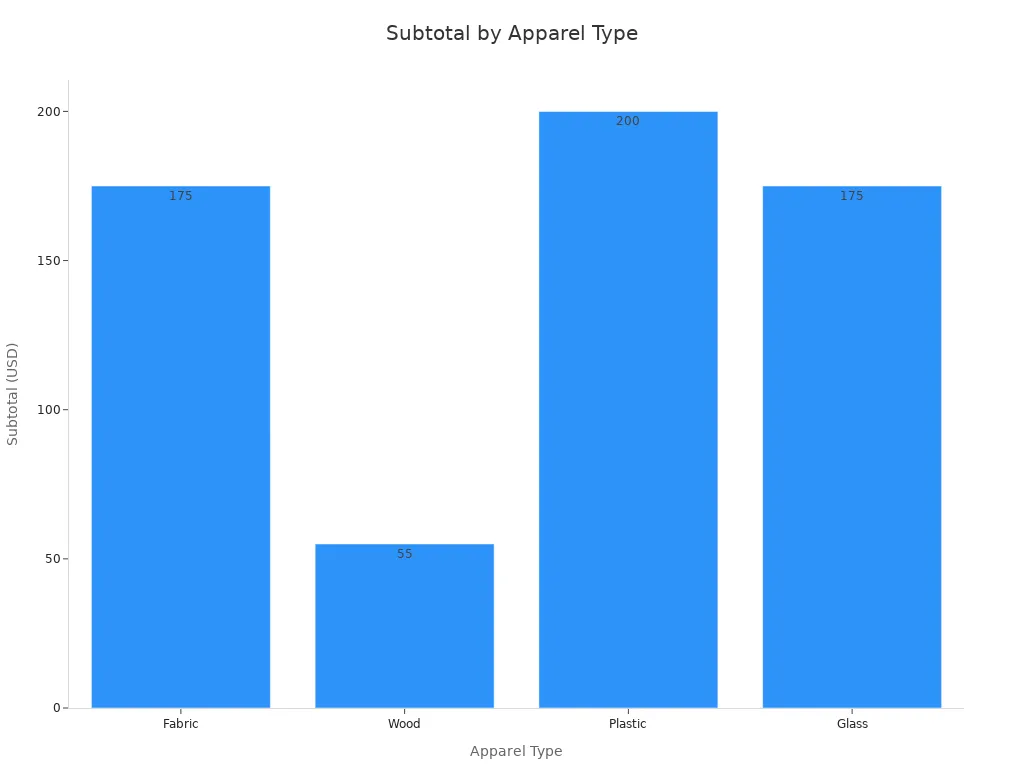
The chart above helps me visualize which products generate the highest subtotal in each quotation. I use this information to guide my pricing strategy and focus on profitable items.
Update as You Grow
Add New Items
My shop expands every year. I add new products to my quotation template to reflect changes in my inventory. I follow these best practices:
I understand my costs and set profit goals for each new item.
I avoid undercutting competitors and focus on adding value.
I review and adjust pricing regularly to account for inflation and market trends.
This process keeps my quotation accurate and competitive.
Change Pricing
When I update pricing, I use a simple method:
I enter the price of each garment in my pricing matrix.
I choose a percentage markup to calculate the dollar amount.
I base my markup on judgment, not just costs.
I set a goal profit percentage and define my monthly shop costs. This approach helps me calculate the cost per impression and align my pricing with my financial goals.
Tip: Regular updates to my quotation format ensure that my shop stays profitable and responsive to market changes.
Customizing my screen printing quote gives me control over every detail. I tailor each quotation to the job, keep my format up-to-date, and deliver clear, professional quotes to my customers.
I rely on an apparel quotation template to save time, improve accuracy, and present a professional quote for every clothing order. Customizable templates help my shop scale by letting me test new products and split production methods. Platforms like Template.net, Canva, Jotform, and Etsy offer versatile options for any business.
Template.net provides free, editable quotation templates for clothing shops.
I use these tools to streamline operations and keep every quote consistent.
Benefit | |
|---|---|
Prioritize On-Demand | Services like Printful or Teespring offer flexibility. |
Negotiate MOQs | Vendors such as Lemuta allow full customization. |
Split Production | DTG for small runs, screen printing for larger batches. |
Test Designs | Printful & Teespring reduce inventory risk. |
Trial New Products | Lemuta makes it easy to try new styles. |
I encourage every shop owner to explore free or paid quotation templates and see the difference in business results.
FAQ
How do I customize an apparel quotation template for my brand?
I upload my logo, change the color scheme, and update fonts to match my shop’s style. Most platforms like Canva or Jotform let me edit fields and layouts easily.
Can I use the same template for different apparel products?
Yes, I adjust fields for each product type. I save multiple versions for t-shirts, hoodies, or hats. This flexibility helps me quote quickly for any order.
What information should I always include in my clothing quotation?
I always add item descriptions, quantities, unit prices, total cost, terms, and my contact details. This keeps my quotes clear and professional.
How do quotation templates help me avoid pricing mistakes?
Templates use built-in calculations. I enter quantities and prices, and the template does the math. This reduces errors and ensures accurate totals every time.
Are there free apparel quotation templates available?
Yes! I find free templates on Canva, Template.net, and Jotform. These options work well for small shops or anyone starting out.
I export the quote as a PDF or send it by email directly from the platform. This makes sharing fast and keeps my presentation consistent.
Can I track which quotes convert to sales?
I keep digital records of every quote. I use folders or CRM tools to track follow-ups and conversions. This helps me measure success and improve my process.