

Comparing Uniform Embroidery and Printing for Professional Apparel
Table of Contents
Display
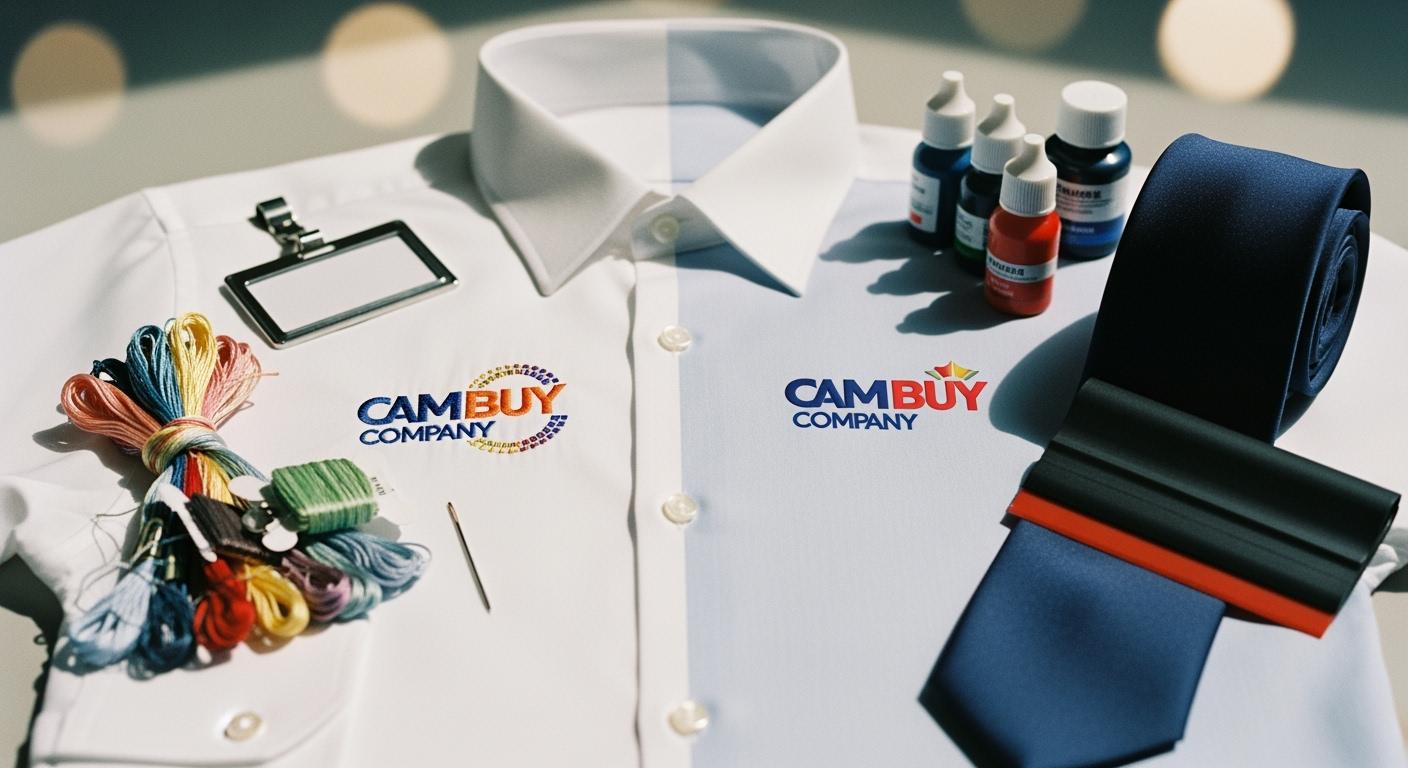
When you compare Uniform Embroidery vs. Printing for professional uniforms, you find that the better choice depends on your needs. If you want small quantities or uniforms that will get frequent washing, embroidery often works best. Printing suits larger orders and complex graphics. You must also consider how long you want the uniforms to last, your budget, and the fabric type. The table below highlights these important factors:
Factor | Embroidery | Screen Printing |
|---|---|---|
Order Quantity | Preferred for smaller quantities | More cost-effective for larger orders |
Design Complexity | Suitable for simpler designs | Better for complex graphics |
Fabric Type | Works well with various fabrics | Performance varies by fabric type |
Budget Constraints | Generally higher cost per unit | Lower cost for larger quantities |
Intended Use Duration | Durable for frequent washing | Less durable for long-term use |
You will gain practical advice to help you make the right choice.
Key Takeaways
Embroidery is ideal for small orders and frequent washing, providing durability and a professional look.
Printing suits larger orders and complex designs, offering vibrant colors and cost savings for bulk purchases.
Consider fabric type when choosing a method; embroidery works best on sturdy fabrics, while printing adapts well to lightweight materials.
Evaluate your budget; embroidery generally costs more per item for small orders, while printing is more affordable for larger quantities.
Think about the intended use; embroidery is perfect for uniforms needing longevity, while printing excels in creating eye-catching graphics.
Uniform Embroidery Overview
What Is Embroidery
Embroidery adds a professional touch to uniforms by stitching designs directly onto fabric. You see this method in many workplaces because it creates a raised, textured look that stands out. Embroidery uses colored threads to form logos, names, or symbols on shirts, jackets, hats, and more. This technique gives uniforms a polished and long-lasting appearance. You can choose embroidery for both simple and classic designs.
How Embroidery Works
You start the embroidery process by uploading your logo or artwork. Skilled technicians then digitize your design, which means they convert it into a file that embroidery machines can read. The digitized file maps out stitch directions and thread colors. You select from hundreds of thread colors to match your brand. After you approve a digital proof, the production begins. The embroidery machine marks the logo placement, and operators prepare the fabric with stabilizers. The machine stitches the design onto the garment, following the digitized instructions. Quality checks happen during stitching to ensure accuracy and consistency.
Tip: Many shops accept small embroidery orders, so you can outfit even a small team without extra cost.
Best Uses for Embroidery
You find embroidery works best for uniforms that need to last through frequent washing and heavy use. Many industries rely on embroidery for their staff apparel, including:
Hospitality (hotels, restaurants, catering)
Retail and corporate staff
Security and law enforcement
Industrial and construction workers
Sports teams and fitness instructors
Embroidery suits uniforms that require a professional, durable, and high-quality look. You can use embroidery on a wide range of fabrics, making it a flexible choice for many businesses.
Printing Methods for Uniforms
What Is Printing
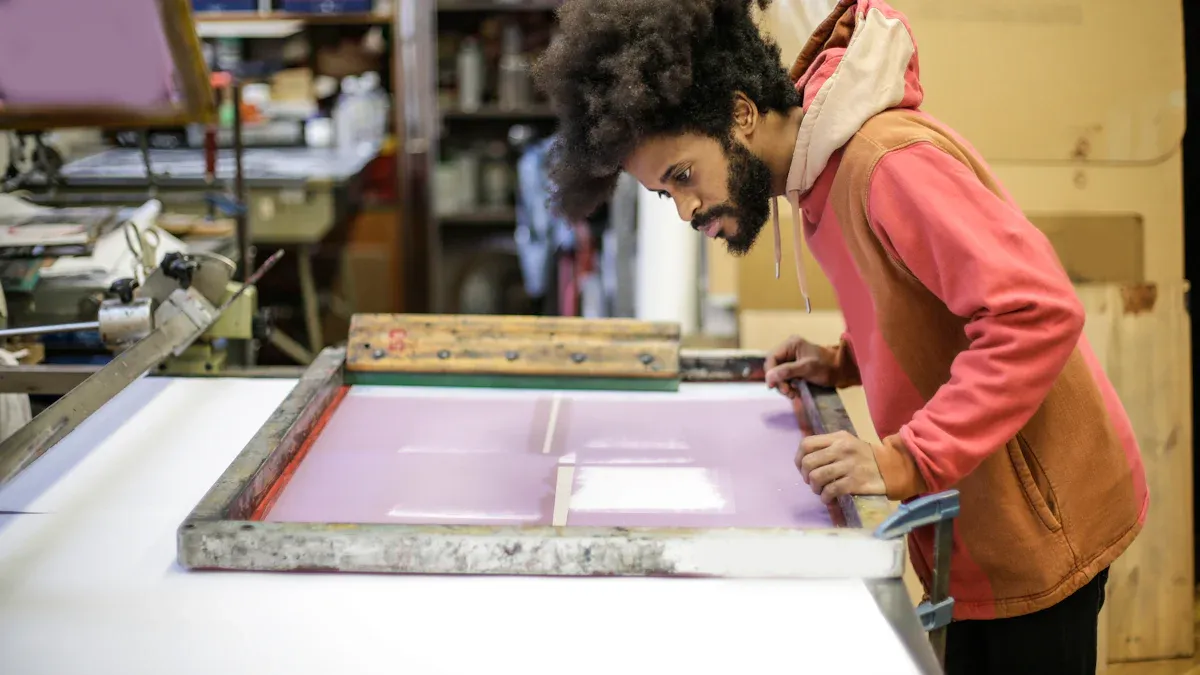
Printing lets you add designs, logos, or text to uniforms by applying ink or other materials directly onto the fabric. You can choose from several methods, each offering unique results. Printing gives you flexibility with colors and design complexity. You often see printing used for uniforms that need vibrant graphics or detailed artwork. Modern techniques allow you to create high-quality prints that stand out and catch attention.
Common Printing Techniques
You have access to several printing techniques for uniforms. Each method suits different needs and order sizes. The most popular options include:
Screen Printing: You use screens to push ink onto the fabric. This method works best for large orders and offers durability. You get bold colors, but you may face limits on the number of colors per design.
Heat Transfer Vinyl: You cut designs from vinyl and apply them to uniforms with a heat press. This technique handles intricate designs well. You can order small quantities, but the prints may not last as long as screen printing.
Direct-to-Garment Printing: You print designs directly onto the fabric using a specialized printer. You can use unlimited colors and create complex graphics. This method works well for single items or small batches, but durability can vary.
Note: Screen printing stands out for bulk orders and washing resistance. Heat transfer vinyl gives you a slightly raised texture but may wear out faster. Direct-to-garment printing excels with detailed, colorful designs.
Here is a quick comparison:
Feature | Screen Printing | Heat Transfer Vinyl | Direct-to-Garment Printing |
|---|---|---|---|
Best For | Large orders | Small orders, fine detail | Small orders, complex art |
Color Options | Limited | Limited | Unlimited |
Durability | High | Moderate | Good |
Setup Time | Fast for bulk | Slow for bulk | Fast for singles |
When to Use Printing
You should consider printing when you need uniforms with eye-catching graphics or when you want to order in bulk. Printing works well for sports teams, event staff, promotional apparel, and retail uniforms. You get cost-effective results for large groups. If you want high-quality prints with many colors or complex designs, modern techniques like direct-to-garment printing offer great flexibility. Heat transfer vinyl suits small orders with detailed artwork. Screen printing remains the top choice for vibrant colors and durability in large quantities.
Sports teams
Event staff
Promotional uniforms
Retail and casual workwear
Printing gives you options for every need, from single shirts to hundreds of uniforms.
Uniform Embroidery vs. Printing: Key Differences
When you compare uniform embroidery vs. printing, you see clear distinctions in durability, appearance, cost, scalability, design options, fabric compatibility, and care. Understanding these key differences helps you choose the best method for your company logos, branded apparel, and personalised workwear.
Durability and Longevity
You want your uniforms to last through repeated washing and daily wear. Embroidery stands out for impressive durability and versatility. Laboratory tests show that embroidery maintains 90% of its appearance after 100 wash cycles and can withstand over 500 cycles with minimal degradation. Printed designs, such as DTF transfers and screen printing, start to show wear much sooner. Screen printing often cracks after 30 cycles, while DTF transfers lose quality around 50 cycles.
Method | Durability After Wash Cycles | Notes |
|---|---|---|
Embroidery | Maintains appearance and integrity | |
DTF Transfers | Shows wear around 50 cycles | Less durable than embroidery |
Screen Printing | Starts cracking after 30 cycles | Durability highly dependent on care |
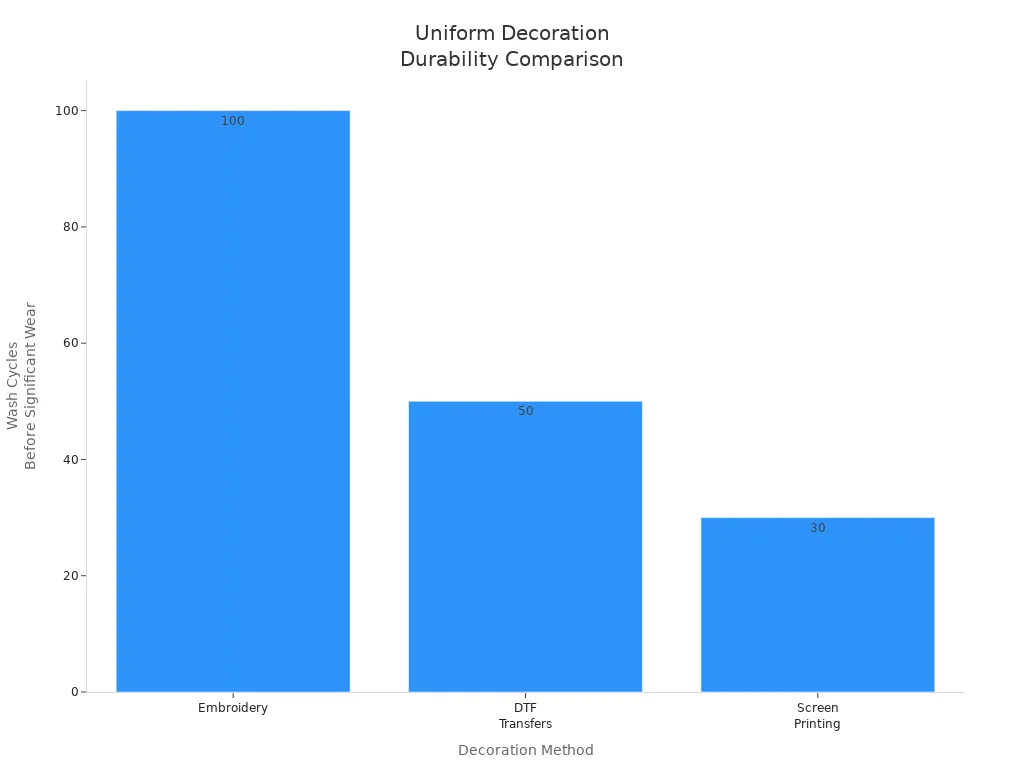
You notice that embroidered logos keep their color vibrancy indefinitely, while printed logos may fade or crack over time. If you need uniforms for heavy use, embroidery offers the best durability and versatility.
Appearance and Professional Look
You want your company logo to make a strong impression. Embroidery delivers a raised, textured finish that signals quality and professionalism. Surveys show that 83% of customers associate embroidered uniforms with operational competence, compared to 61% for printed uniforms. Embroidered designs are perceived as more professional and durable, enhancing your brand presentation.
Statistic | Embroidered Uniforms | Printed Uniforms |
|---|---|---|
Association with operational competence | 83% | 61% |
Likelihood to return to businesses with well-maintained uniforms | 68% | N/A |
The professional appearance of embroidered uniforms helps you build trust with clients and staff. Printed designs offer vibrant colors and detailed graphics, but they may not convey the same premium look as company logo embroidery.
Cost and Affordability
You need to balance quality with budget. Embroidery usually costs more per item, especially for small orders. Printing, including screen printing and DTG, offers lower costs for large batches and complex graphics. Here is a comparison of average costs:
Method | Average Cost per Unit (Small Orders) | Average Cost per Unit (Large Orders) |
|---|---|---|
Embroidery | Discounts available for bulk orders | |
Screen Printing (Single Color) | £1.50 – £3.00 per item, plus setup fees | More cost-effective in bulk |
Full-Color DTG Printing | £5.00 – £15.00 per item | More cost-effective in bulk |
As your order size increases, both embroidery and printing become more cost-effective. Screen printing offers the biggest price drops for bulk orders. Embroidery also benefits from economies of scale, with setup costs spread across more items.
Tip: For small teams or personalised workwear, embroidery gives you flexibility with no minimum order. For large groups, printing maximizes savings.
Order Size and Scalability
You must consider how many uniforms you need. Printing usually requires a minimum order of 5 to 100 items, making it ideal for bulk orders. Embroidery typically has no minimum order, so you can order custom work shirts or branded apparel for small teams without extra fees.
Method | Minimum Order Requirement |
|---|---|
Printing | Usually requires a minimum of 5-100 items |
Embroidery | Typically has no minimum order requirements |
If you plan to scale up, printing offers fast production for large batches. Embroidery works well for both small and large orders, giving you more flexibility.
Design Complexity and Color Range
You want your company logos and designs to stand out. Printing excels with complex graphics, gradients, and unlimited colors. Screen printing and DTG printing allow you to reproduce detailed artwork and vibrant images. Embroidery starts with digitization, converting your logo into a stitch file. Skilled digitizers adjust the design for thread, stitch direction, and density. Modern embroidery machines can handle multi-colored logos quickly, but intricate details may not translate as well as with printing.
Embroidery maintains color vibrancy and resists fading from UV exposure.
Printing offers unlimited customization for detailed, colorful designs.
Embroidery suits simple logos and classic designs, while printing handles complex graphics best.
If your brand presentation relies on detailed artwork, printing gives you more options. For timeless, high-quality logos, embroidery remains the top choice.
Fabric Compatibility
You need your uniforms to look good and last, no matter the fabric. Embroidery works best on cotton, polyester, and twill. Printing adapts well to lightweight and stretchy fabrics, such as silk and athletic wear.
Fabric Type | Compatibility with Embroidery | Compatibility with Printing |
|---|---|---|
Cotton | Best | Good |
Polyester | Best | Good |
Twill | Best | Good |
Silk | Poor (distorts) | Good |
Stretchy Fabrics | N/A | Best |
Lightweight Fabrics | N/A | Best |
If you need personalised workwear for sports or events, printing offers more flexibility. For classic work shirts and branded apparel, embroidery provides a premium finish.
Care and Maintenance
You want uniforms that stay sharp after every wash. Embroidery offers impressive durability and versatility, with minimal care required. You can wash embroidered uniforms frequently without losing color or shape. Printed designs need gentler care. You should wash printed uniforms inside out and avoid high heat to prevent fading or cracking.
Embroidery withstands heavy use and frequent washing.
Printing requires careful handling to maintain quality.
Both methods benefit from following care instructions for best results.
When you compare embroidery vs printing, you see that embroidery leads in durability and professional appearance, while printing excels in design complexity and bulk production. Your choice depends on your priorities for quality, customization, and brand presentation.
Embroidery vs Printing: Pros and Cons
Embroidery Pros and Cons
When you consider embroidery for professional uniforms, you see many strengths and a few limitations. Embroidery gives your uniforms a polished, high-end look that stands out in any workplace. You can count on this method to last longer than most printing options, even after many washes. If you want a custom embroidered garment, you get a rich finish with a natural thread sheen and a 3D texture that feels premium.
Here is a quick overview of embroidery pros and cons:
Advantages | Disadvantages |
|---|---|
Professional look for business logos | Limited detail — no fine gradients or subtle shading |
Extremely durable — outlasts the garment | Not fully waterproof; Pantone matches may be approximate |
Scalable for small or large orders | Size and color limits; pricing based on stitch count |
Brand consistency with precise thread color | Best on heavier fabrics, less suited for lightweight garments |
Ideal for sturdy fabrics like fleece, canvas | Higher cost than printing |
Low-res artwork friendly if the design is clean | Small text (under 5 mm) can be hard to read |
3D texture that stands out visually and to the touch | |
Works over seams and on structured items | |
Rich finish with natural thread sheen |
You should choose embroidery when you want a custom embroidered design that highlights your brand’s professionalism. However, you may find it less suitable for lightweight fabrics or highly detailed artwork. When comparing embroidery vs screen printing, embroidery often wins for durability and texture.
Tip: Embroidery works best for logos and classic designs that need to last.
Printing Pros and Cons
Printing offers you flexibility and creativity for your uniforms. You can use a wide variety of colors and create complex graphics with ease. The process works quickly, especially for large orders, and you can keep setup costs low. If you need eco-friendly options or want to print on lightweight fabrics, printing gives you many choices.
Here is a summary of the main printing pros and cons:
Advantages of DTG Printing | Disadvantages of DTG Printing |
|---|---|
Wide variety of colors and designs | High initial investment |
Fast printing process | Material limitations |
Minimal setup cost | Restricted design placement |
High-quality results | |
Eco-friendly |
You will find that screen printing pros include cost savings for bulk orders and vibrant colors. However, printing may not last as long as embroidery, especially with frequent washing. Some printing methods also have placement or material restrictions.
When making the right choice for your uniforms, think about your priorities. If you want detailed, colorful designs for events or promotions, printing is a strong option. If you need a uniform that looks sharp and lasts, embroidery remains a top pick.
Embroidery vs Screen Printing: Choosing the Right Method
When to Choose Embroidery
You should choose embroidery when you want uniforms that look premium and last a long time. Embroidery works best for simple logos, monograms, or classic designs. You get a raised, textured finish that feels professional and high-end. Many companies use embroidery for staff uniforms, jackets, and aprons. For example, Starbucks uses embroidered aprons to highlight their brand, and Nike often features their swoosh logo in thread for a quality touch. Embroidery stands up to frequent washing and heavy use, making it ideal for healthcare, hospitality, and retail staff. If you want to reward employees, embroidered uniforms can boost morale and create a sense of pride.
Tip: Embroidery works best on thicker fabrics like polos, jackets, and aprons.
When to Choose Printing
Printing is your best option when you need vibrant, detailed designs or want to order in bulk. You can use printing for complex graphics, multi-color logos, or bold visuals. Printing works well on lightweight T-shirts and sportswear. Many restaurants and retail stores use printed uniforms to create a unified look and enhance brand recognition. Printing also offers a faster turnaround, which helps if you have a tight deadline or need uniforms for an event.
Here is a quick comparison to help you decide:
Factor | Embroidery | Printing |
|---|---|---|
Aesthetic | Raised, premium | Flat, vibrant |
Durability | Excellent | Good |
Design Complexity | Simple logos | Intricate, multi-color |
Cost | Higher for small orders | Affordable for bulk |
Fabric Compatibility | Best on thicker fabrics | Great for lightweight fabrics |
Turnaround Time | Slightly slower | Faster |
Professional Appeal | High-end, subtle | Bold, modern |
Real-World Scenarios
You can see how different businesses benefit from each method:
A restaurant chain gifts embroidered uniforms to long-term employees, boosting morale.
A retail store recognizes top sales staff with embroidered jackets during a ceremony.
Sports teams use printed T-shirts for events, making it easy to outfit large groups quickly.
Professional services choose printed uniforms to create a modern, unified look for their staff.
Custom uniforms, whether embroidered or printed, help your team feel united and present a strong brand image. Choose the method that matches your needs for durability, design, and budget.
You now understand the key differences between embroidery and printing for uniforms. Embroidery gives you unmatched durability, a premium look, and higher perceived brand value. Printing offers vibrant designs, quick turnaround, and cost savings for large orders. Many businesses make mistakes by overlooking costs, fabric compatibility, or color accuracy. You should also consider environmental impact and production speed. To make the best choice, list your priorities and consult a trusted uniform provider for expert guidance.
FAQ
What lasts longer, embroidery or printing?
Embroidery lasts longer than most printing methods. You can wash embroidered uniforms many times without losing quality. Printed designs may fade or crack after repeated washing.
Can you use embroidery on any fabric?
You can use embroidery on most sturdy fabrics like cotton, polyester, and twill. Thin or stretchy fabrics, such as silk or spandex, may not hold stitches well and can distort.
Is printing better for colorful or detailed logos?
Yes, printing works best for colorful or detailed logos. You can use unlimited colors and fine details with printing. Embroidery works better for simple, bold designs.
How do you care for printed uniforms?
Wash printed uniforms inside out in cold water. Avoid bleach and high heat. Air dry or use a low setting to keep prints looking new.