

Supermarket uniform customization process
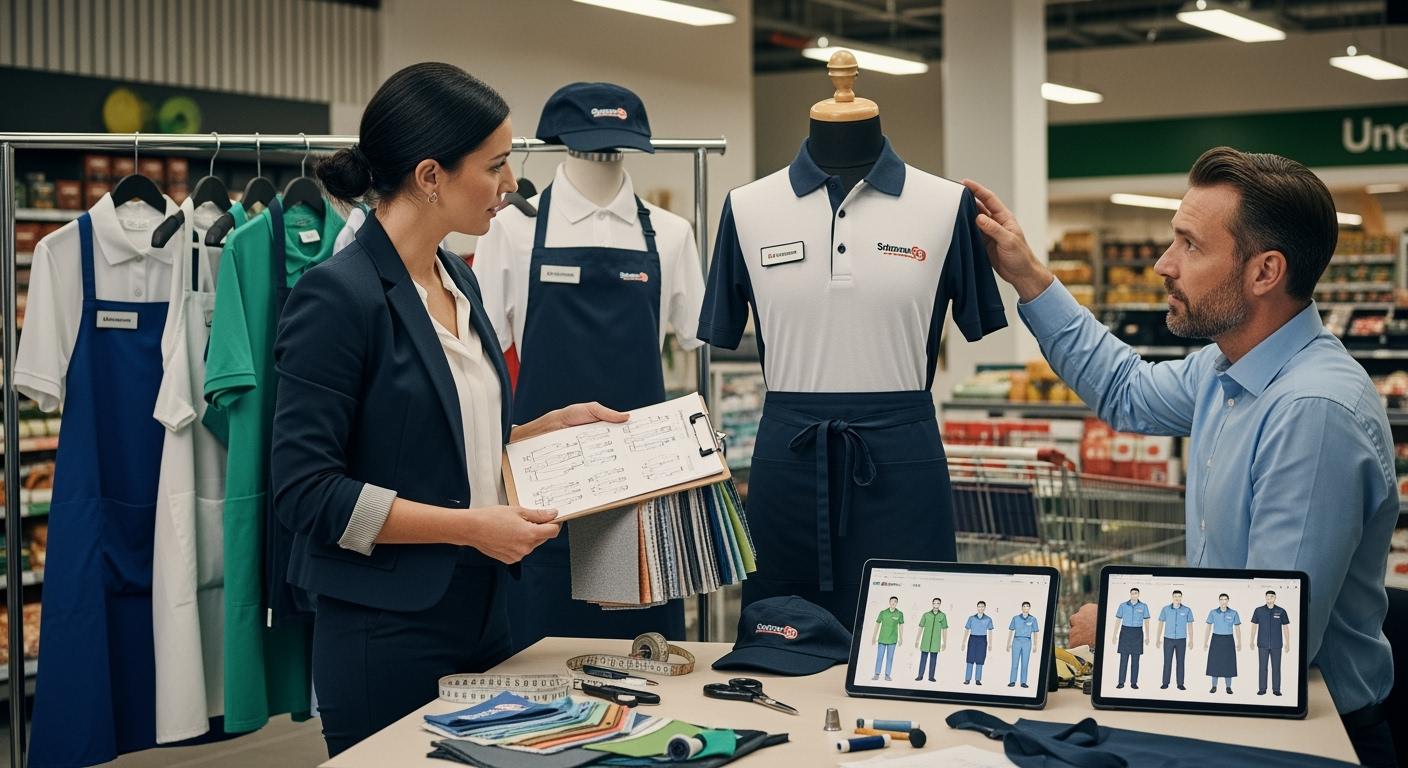
You start the supermarket uniform customization process by assessing your operational needs and brand objectives. You define requirements, collaborate with service providers, and use a managed uniform program to streamline ordering. Uniforms help you boost brand recognition and operational efficiency.
Uniforms create a consistent brand image for your staff.
Employees become walking billboards, increasing visibility in public spaces.
Customers trust and engage with easily identifiable staff.
Key Takeaways
Assess your supermarket’s needs before starting the uniform customization process to ensure the right fit for your brand.
Choose colors and styles that reflect your brand identity, making staff easily recognizable to customers.
Involve employees in the fitting process to boost morale and ensure comfort in their uniforms.
Use a managed uniform program to streamline ordering and distribution, saving time and reducing administrative work.
Select durable and comfortable fabrics to enhance employee performance and satisfaction.
Gather feedback from staff on uniform samples to make necessary adjustments before final production.
Establish clear policies for uniform maintenance and compliance to maintain a professional image.
Communicate regularly with your supplier to avoid misunderstandings and ensure timely delivery of uniforms.
Supermarket uniform customization process overview
What is uniform customization?
You shape the identity of your supermarket by customizing uniforms for your staff. Uniform customization means designing and producing workwear that reflects your brand’s colors, logo, and values. You select styles and features that suit each department, ensuring every employee looks professional and feels comfortable. This process goes beyond basic clothing. You create a visual connection between your team and your customers, which builds trust and recognition.
Uniforms play a vital role in your supermarket’s branding strategy. When you provide well-designed uniforms, you boost employee morale and foster a sense of pride. Employees who wear comfortable and attractive uniforms feel valued and engaged. Customers notice the professionalism and consistency, which increases their confidence in your store.
Tip: Uniform customization helps you present a unified brand image and improve employee satisfaction at the same time.
Aspect | Evidence |
|---|---|
Brand Recognition | Uniforms enhance brand visibility and recognition, acting as free advertising for the company. |
Employee Morale | Providing uniforms fosters a sense of belonging and pride among employees, boosting morale. |
Customer Trust | Uniforms contribute to customer trust by presenting a professional image of the brand. |
Key steps in the process
You follow a series of steps to complete the supermarket uniform customization process. Each step ensures that your uniforms meet operational needs and reinforce your brand identity.
Choosing the Right Colors: You select colors that match your brand palette. This step strengthens brand presence and makes your staff easily identifiable.
Logo Placement: You decide where to place your logo on each uniform. You consider size and visibility for different employee roles.
Consistency Across Roles: You maintain a uniform color scheme and logo usage across all styles. This approach creates a cohesive team appearance.
Department-Specific Design: You tailor uniforms for each department, such as deli, produce, or customer service, to meet functional requirements.
Sample Review and Approval: You review prototypes and gather feedback from stakeholders before finalizing the design.
Production and Quality Control: You oversee manufacturing and conduct quality checks to ensure durability and comfort.
Delivery and Distribution: You manage logistics to deliver uniforms to staff efficiently, including handling reorders and exchanges.
You can streamline these steps by using a managed uniform program. This system automates ordering, inventory tracking, and distribution. You gain 24/7 access to order portals, which reduces administrative workload and speeds up delivery. Managed uniform programs help you maintain brand consistency, save costs, and improve employee satisfaction.
The UniFirst Portal gives you convenient access to manage orders and invoices at any time.
A managed uniform program ensures quick and efficient delivery of uniforms to your employees.
You benefit from a uniform management system that covers everything from style selection to direct-to-employee service. This approach makes the supermarket uniform customization process more efficient and reliable.
Needs assessment for grocery store uniforms
Identifying requirements
You begin the process by evaluating the specific needs of your supermarket. You look at the daily tasks your employees perform and the environment in which they work. You ask managers and staff to share their experiences with previous grocery store uniforms. Their feedback helps you understand what works and what causes discomfort or inefficiency. You collect information about the number of employees, their roles, and the hours they spend on the shop floor or in stockrooms. You also consider the climate and temperature inside your store. This step ensures you select uniforms that support productivity and comfort.
Tip: Use surveys or quick interviews to gather honest opinions from your team. Their input leads to better decisions and higher satisfaction.
Department-specific needs
You recognize that each department in your supermarket has unique requirements for grocery store uniforms. Shop floor staff interact with customers and represent your brand. You choose smart and fashionable uniforms for these employees, focusing on breathable fabrics that keep them comfortable during long shifts. Stockroom workers need uniforms that emphasize durability and practicality. You select darker colors to hide stains and materials that resist dust. This approach addresses the distinct functions of each role and improves both employee comfort and customer satisfaction.
Uniform requirements vary significantly between departments. Shop floor staff need uniforms that attract customers and maintain a professional appearance. Stockroom employees benefit from uniforms designed for tough tasks and frequent movement. You tailor grocery store uniforms to match the demands of each department, ensuring every employee feels confident and prepared.
Department | Uniform Features | Purpose |
|---|---|---|
Shop Floor | Fashionable, breathable fabric | Customer interaction, branding |
Stockroom | Dark, dust-resistant material | Functionality, durability |
Setting objectives
You set clear objectives for your grocery store uniforms program. You define what you want to achieve, such as improving brand visibility, increasing employee comfort, and streamlining uniform management. You establish measurable goals, like reducing uniform complaints or boosting staff morale. You communicate these objectives to your team and suppliers. This step keeps everyone focused and accountable.
You also consider how the best uniforms for grocery staff can support your operational goals. You aim for a balance between style, comfort, and practicality. You make sure your objectives align with your store’s values and customer expectations. By setting clear targets, you create a foundation for a successful uniform program.
Design grocery store uniforms

Style and color selection
You start the process to design grocery store uniforms by choosing styles and colors that match your brand identity. You select cuts and fits that suit the daily activities of your staff. You look for options that allow employees to move freely and stay comfortable during long shifts. You pick colors that reflect your brand palette and make your team easy to spot on the shop floor. You avoid shades that show stains or wear quickly. You consider the needs of each department and select styles that support their specific tasks.
Tip: When you design grocery store uniforms, you create a visual link between your brand and your customers. Consistent colors and styles help customers recognize your staff and feel confident in your store.
You review current trends in retail workwear and choose features that balance style with practicality. You make sure the best uniforms for grocery staff look professional and feel comfortable. You select materials that hold up to frequent washing and resist fading. You focus on details that set your store apart from competitors.
Branding and logo setup
You strengthen your brand image by adding logos and branding elements to your grocery store uniforms. You decide where to place your logo for maximum visibility. You choose sizes and colors that stand out but do not distract from the overall look. You use branding to create a polished image that customers associate with reliability and trustworthiness.
Customers see your staff in well-designed grocery store uniforms and instantly feel more confident in your business.
Uniforms with clear branding send a message of competence and reliability.
Your grocery store uniforms act as advertising tools, promoting your brand every time an employee interacts with a customer.
You work with your supplier to ensure your logo appears crisp and professional on every uniform. You select branding elements that reflect your store’s values and mission. You use branding to build trust and encourage repeat visits.
Embroidery options
You choose embroidery for a classic and durable logo application. Embroidered logos resist wear and washing, keeping your branding sharp over time. You select thread colors that match your brand palette. You decide on placement, such as the chest or sleeve, to maximize visibility. You work with your supplier to review samples and confirm quality before production.
Badging features
You add badges to grocery store uniforms to highlight roles or departments. You use custom shapes and colors to make badges easy to read. You select materials that hold up to daily use. You place badges where customers can see them clearly, such as above the pocket or on the shoulder. You use badging to help customers identify staff and find assistance quickly.
Reviewing prototypes
You request prototypes before you finalize your design grocery store uniforms. You examine samples for fit, comfort, and appearance. You ask staff to try on the uniforms and share feedback. You check that logos and badges look professional and match your brand standards. You make adjustments based on feedback to improve comfort and style.
You review every detail, from stitching to fabric quality. You confirm that the uniforms meet your operational needs and reflect your brand identity. You use prototypes to avoid costly mistakes and ensure your team receives well-designed grocery store uniforms.
Note: Prototypes help you catch issues early and guarantee that your grocery store uniforms meet expectations for both staff and customers.
Material and fabric choices
Durability and comfort
When you select materials for grocery store uniforms, you need to balance durability with comfort. Employees spend long hours on their feet, so you want uniforms that hold up to daily wear and keep staff comfortable. Choosing the right fabric impacts both performance and morale. If uniforms feel stiff or trap heat, employees may feel distracted or uncomfortable, which can lower productivity. On the other hand, sturdy and easy-to-care-for fabrics make the workday smoother for everyone.
Here is a comparison of common materials used in grocery store uniforms:
Material Type | Characteristics | Benefits |
|---|---|---|
Breathable Fabrics | Allow air circulation, keeping the wearer cool | Comfort during long hours |
Stretch Materials | Provide flexibility and freedom of movement | Enhanced mobility |
Moisture-Regulating | Wicks away sweat, maintaining dryness | Comfort in hot conditions |
Recycled Materials | Made from post-consumer waste, promoting sustainability | Environmental responsibility |
Organic Cotton | Grown without synthetic pesticides, safer for the environment and workers | Eco-friendly option |
A comfortable uniform directly impacts employee performance. When you choose materials that breathe and stretch, you help your team stay focused and motivated.
Maintenance needs
You must also consider how easy it is to care for grocery store uniforms. Each fabric reacts differently to cleaning methods, which can influence maintenance costs and routines. Some materials require special washing instructions, while others can handle frequent machine washing without losing shape or color. If you choose fabrics that resist stains and dry quickly, you reduce the time and resources needed for upkeep.
The maintenance of uniforms involves costs like laundry equipment, employee labor, and utilities.
Poor management of uniform maintenance can lead to excessive costs and create budget challenges.
Understanding the material composition helps you avoid mistakes that increase operational costs.
When you know the care requirements for each fabric, you can set up effective routines that extend the life of your uniforms and keep your team looking sharp.
Cost-quality balance
You want to find the right balance between cost and quality when choosing materials for grocery store uniforms. High-quality fabrics may cost more upfront, but they often last longer and require less frequent replacement. Cheaper materials might save money at first, but they can wear out quickly and lead to higher long-term expenses.
Tip: Invest in durable, easy-care fabrics to reduce replacement and maintenance costs over time.
You should weigh the initial investment against the expected lifespan and care requirements of each uniform. By making informed choices, you support both your budget and your employees’ comfort.
Customization features
Logo application methods
You have several options for applying your logo to grocery store uniforms. The right method depends on your brand goals, budget, and the type of uniform material.
Embroidery
Embroidery gives your uniforms a professional and high-quality appearance. You choose this method when you want a logo that stands out and lasts through frequent washing. Embroidered logos resist fading and fraying, making them ideal for long-term use. You can select thread colors that match your brand palette and decide on placement for maximum visibility. Embroidery works well on thicker fabrics and adds a touch of sophistication to your grocery store uniforms.
Screen printing
Screen printing offers a cost-effective solution for large orders. You get vibrant designs that withstand wear and repeated washing. Industry experts recommend screen printing for its durability and ability to produce sharp, colorful logos. This method suits lighter fabrics and allows you to create bold branding on your uniforms. You can use screen printing for both small and large logos, ensuring consistency across all departments.
Tip: Combine embroidery for management uniforms and screen printing for general staff to balance quality and cost.
Personalization options
You enhance your grocery store uniforms by adding personalization features. These elements help employees feel valued and make it easier for customers to identify staff.
Name tags
Name tags create a personal connection between employees and customers. You choose durable materials and clear fonts to ensure names are easy to read. Name tags encourage friendly interactions and help build trust with shoppers.
Department badges
Department badges identify each employee’s role. You use custom shapes and colors to make badges stand out. Badges help customers find the right staff for assistance and improve overall store efficiency.
Personalization Option | Description | Impact on Employees and Customers |
|---|---|---|
Name Tags | Display employee names clearly | Builds trust and encourages friendly service |
Department Badges | Identify staff roles and departments | Improves customer assistance and store workflow |
You notice that personalized promotions and recommendations increase customer loyalty. Nearly 80% of grocery customers expect tailored digital shopping experiences. Most executives believe personalization drives competitive advantage and repeat visits.
Personalized rewards and offers make customers feel valued.
Digital shopping experiences tailored to preferences boost satisfaction and sales.
Functional elements
You focus on functional elements during the customization process to improve job performance. Employees need uniforms that support comfort and mobility. Over 90% of staff prioritize these features, which help them work efficiently. You select durable fabrics that withstand tough conditions and frequent washing. You also consider fabric types that enhance fit and function, making grocery store uniforms practical for every department.
Comfort and mobility allow staff to move freely and stay productive.
Durable materials reduce replacement costs and maintain a professional look.
Thoughtful fabric choices improve the overall experience for employees.
Note: Customization features like logo application, personalization, and functional elements ensure your uniforms meet operational needs and reflect your brand identity.
Sizing and fitting process

Measurement collection
You start the sizing and fitting process by collecting accurate measurements for every employee. This step ensures that each staff member receives a uniform that fits well and supports their daily tasks. You follow best practices to make measurement collection efficient and reliable:
Train managers to understand the auditing process and encourage active participation.
Set clear parameters for audits, including how often you collect measurements and what types you need.
Use mobile solutions to gather uniform data and organize it in real time.
Create actionable plans based on audit results and set measurable goals for improvement.
To maintain consistency and accuracy, you use a standardized checklist and assign audits to trained field teams. You conduct store visits and collect data systematically. After each audit, you analyze the results to identify patterns and gaps in sizing. You assign corrective actions for any issues, track their closure, and share insights to guide future actions.
Choose the audit type and store coverage based on your goals.
Prepare a checklist to ensure every measurement follows the same standard.
Assign audits and train your team for reliable data collection.
Visit stores and collect measurements in a systematic way.
Review audit results to spot trends and address any gaps.
Tip: Use technology to streamline measurement collection and reduce errors. Mobile apps help you organize data and speed up the process.
Fitting sessions
You improve uniform satisfaction by organizing fitting sessions for your staff. These sessions allow employees to try on sample uniforms and provide feedback on fit and comfort. When you pay attention to how uniforms fit, you boost employee confidence and performance. Staff members who feel comfortable in their uniforms work more efficiently and contribute to a positive atmosphere in your store. Fitting sessions also help you identify any adjustments needed before placing bulk orders, saving time and resources.
Note: Fitting sessions create a sense of involvement and ownership among employees. Staff who participate in the process feel valued and are more likely to wear their uniforms with pride.
Managing size variations
You face challenges when managing size variations in a diverse workforce. You use several strategies to make sure every employee finds the right fit. Collaborate with your uniform provider to improve product visuals and presentation. Offer clear and accurate size charts to help staff select the correct size. Educate employees on self-measurement using instructional videos. Use technology, such as apps, to recommend the best fit based on individual measurements.
Strategy | Description |
|---|---|
Improve product visuals | Work with providers to enhance how uniforms are presented to staff. |
Provide accurate size charts | Share easy-to-understand charts to guide staff in choosing the right size. |
Educate staff on self-measurement | Use videos to teach employees how to measure themselves correctly. |
Utilize technology for recommendations | Implement apps that suggest the best fit based on personal measurements. |
Tip: Addressing size variations early reduces the need for exchanges and ensures every employee feels comfortable and confident in their uniform.
Sample approval
Reviewing samples
You receive uniform samples from your supplier before final production begins. You inspect each sample for quality, fit, and branding accuracy. You check the stitching, fabric feel, and color consistency. You compare the samples against your original design specifications. You look for any discrepancies in logo placement or embroidery details. You ask your team to try on the uniforms and move around to test comfort and flexibility. You document your observations and note any issues that need correction.
Tip: Always review samples under store lighting conditions. This step helps you spot color differences and ensures uniforms look professional on the shop floor.
You use a checklist to evaluate each sample. You focus on these key areas:
Fabric durability and comfort
Accurate color matching
Logo clarity and placement
Badge visibility
Fit for different body types
A thorough review helps you avoid costly mistakes and ensures your uniforms meet operational standards.
Stakeholder feedback
You gather feedback from all stakeholders involved in the uniform program. You invite department managers, team leaders, and frontline staff to share their opinions. You organize feedback sessions where employees wear the samples and discuss their experiences. You encourage honest input about fit, comfort, and appearance. You record suggestions for improvement and identify common concerns.
Stakeholder | Role in Feedback Process | Example Input |
|---|---|---|
Managers | Assess branding and professionalism | Request clearer logo placement |
Team Leaders | Evaluate functionality | Suggest more breathable fabrics |
Frontline Staff | Test comfort and fit | Report tight sleeves or loose hems |
You value feedback from every level of your organization. You use this input to refine your uniform design and address practical concerns.
Note: Engaging stakeholders in the approval process increases buy-in and reduces resistance to new uniforms.
Final adjustments
You make final adjustments based on sample reviews and stakeholder feedback. You communicate changes to your supplier and request updated samples if needed. You confirm that all modifications align with your brand standards and operational needs. You approve the final design only when you feel confident about quality, comfort, and appearance.
You document the approved specifications for future reference. You share the final design with your team and celebrate the completion of the sample approval stage. You prepare for the next steps in production, knowing your uniforms will meet expectations.
Adjust logo size or placement for better visibility
Select alternative fabrics for improved comfort
Refine sizing to accommodate all staff
Callout: Final adjustments ensure your uniforms reflect your brand and support your team’s daily tasks. Careful attention at this stage leads to long-term satisfaction and fewer issues during rollout.
Production and quality control
Manufacturing steps
You oversee several key steps during supermarket uniform production. Each step ensures your uniforms meet high standards for durability, comfort, and brand accuracy. The process begins with careful material selection. You test fabrics for strength and performance, making sure they withstand the demands of daily supermarket work. Next, you review design proofs. You check that every logo, name, and color matches your approved specifications. This attention to detail prevents costly mistakes later in the process. During manufacturing, you monitor each stage to guarantee the final product aligns with your expectations.
Step | Description |
|---|---|
Material Selection and Testing | Fabrics are rigorously tested for durability and performance, ensuring they can withstand athletic use. |
Design Accuracy Checks | Design proofs are reviewed to ensure accuracy in team logos, names, and numbers before production. |
Manufacturing Standards | Production is monitored for precision, ensuring the final product matches the approved design. |
Tip: Consistent oversight at every stage helps you avoid delays and ensures your uniforms reflect your brand identity.
Quality checks
You implement strict quality control measures to maintain uniform excellence. Before production begins, you inspect all raw materials for defects. This step prevents issues from reaching later stages. During manufacturing, you conduct in-line inspections. These regular checks catch problems early, allowing you to address them without halting the entire process. You also verify garment patterns and measurements. This practice ensures every uniform fits as intended and maintains a professional appearance.
Quality Control Measure | Description |
|---|---|
Raw Material Inspection | Inspecting raw materials for defects and ensuring quality before production begins. |
In-Line Inspections | Performing regular checks during production to catch issues early without stopping the process. |
Pattern Checking | Ensuring consistency in garment measurements and patterns to avoid fitting issues. |
You document each inspection and communicate findings to your supplier. This transparency helps you resolve minor issues before they become major setbacks.
Note: Regular quality checks reduce the risk of defective uniforms reaching your staff and protect your brand reputation.
Resolving issues
You may encounter challenges during uniform production. Common issues include discomfort, lack of durability, sustainability concerns, and logistical hurdles. You address comfort by choosing breathable, flexible, and durable fabrics. For durability, you select high-quality materials that extend the life of each uniform. To support sustainability, you opt for reusable and long-lasting garments. You also streamline logistics by using a managed rental service. This approach simplifies delivery, maintenance, and uniform lifecycle management.
Common Issues | Resolutions |
|---|---|
Comfort | Design uniforms with breathable, flexible, and durable fabrics to enhance comfort for employees. |
Durability | Use high-quality materials to ensure uniforms last longer and reduce the need for frequent replacements. |
Sustainability | Offer reusable and long-lasting uniforms to minimize waste and support eco-friendly practices. |
Logistical Challenges | Implement a streamlined rental service to manage uniform lifecycle efficiently, including delivery and maintenance. |
When you address these issues proactively, you ensure your staff receives uniforms that support their work and reflect your commitment to quality.
Delivery and distribution
Delivery logistics
You need a reliable system to deliver uniforms to multiple store locations. You can use customizable warehouse solutions to maintain product integrity across all categories. A network of strategically positioned warehouses helps you reduce transit times and keep uniforms in top condition. Retailer distribution center consolidation and multi-stop deliveries allow you to sort and distribute uniforms efficiently from a single warehouse. This method reduces handling times and gives you more flexibility.
Real-time visibility into inventory and shipment statuses lets you make informed decisions. You can track every shipment and respond quickly to any issues. Strict quality control and safety protocols protect your uniforms from damage during storage and delivery. Streamlining the shipping process minimizes extra fees and accessorial costs. You benefit from single invoice billing, which simplifies your accounting. Precise delivery scheduling helps you avoid fines for non-compliance. Efficient delivery processes remove unloading delays and improve productivity.
Strategy | Description |
|---|---|
Customizable Warehouse Solutions | A network of strategically positioned warehouses ensures product integrity across various categories. |
Retailer DC consolidation and Multi-Stop Deliveries | Efficient sorting and distribution from a single warehouse reduces handling times and enhances flexibility. |
Transparency-Fueled Insights | Real-time visibility into inventory and shipment statuses aids in informed decision-making. |
Quality Control and Safety | Strict protocols safeguard products from storage to delivery. |
Reduce Accessorial Costs | Streamlining the shipping process minimizes extra fees. |
Single Invoice Billing | Simplifies the billing process into a single invoice for all shipments. |
Reduce or Eliminate Fines | Precise delivery scheduling minimizes penalties for non-compliance. |
Remove Unloading Delays | Efficient delivery processes eliminate unnecessary wait times, improving productivity. |
Tip: Use real-time tracking to monitor deliveries and address problems before they affect your staff.
Staff distribution
You must distribute uniforms to staff in a way that maintains consistency and quality. Customized uniform programs help you manage resources and ensure every employee receives the correct uniform. You organize distribution by department, making sure each team gets the styles and sizes they need. You work with a reliable supplier to eliminate logistical challenges. This partnership allows you to coordinate deliveries and avoid delays.
You set up a clear process for staff to receive their uniforms. You use checklists to track distribution and confirm that every employee has the right items. You communicate with department managers to resolve any issues quickly. By focusing on consistency, you prevent compliance problems and keep your team looking professional.
Note: A streamlined distribution process boosts staff morale and helps you maintain a unified brand image.
Reorders and exchanges
You need an efficient system for handling reorders and exchanges. Partnering with trusted uniform suppliers gives you access to flexible reordering options. You can request additional uniforms or exchange sizes without disrupting operations. Reliable suppliers offer easy-to-use order portals, allowing you to manage inventory and place orders at any time.
You monitor uniform usage and anticipate future needs. You keep extra stock on hand to handle unexpected changes in staffing. You respond quickly to requests for exchanges, ensuring employees always have uniforms that fit and meet your standards. By maintaining strong supplier relationships, you prevent compliance issues and support your team’s comfort.
Callout: Efficient reordering and exchange processes help you maintain uniformity and keep your staff satisfied.
Key considerations for uniform programs
Budget planning
You need a clear budget plan before you launch a supermarket uniform program. Budgeting helps you control costs and avoid surprises. You start by estimating the number of uniforms required for each department. You consider the frequency of replacement and the expected lifespan of each garment. You compare different procurement models to find the best fit for your store.
Direct Purchase: You pay a one-time cost for uniforms. This option allows you to customize designs and select premium materials. Direct purchase works well if your staff turnover is low. You avoid recurring fees, but you must manage cleaning and replacements yourself.
Rental with Cleaning: You set a fixed weekly budget. The supplier handles cleaning and maintenance. This model ensures hygiene and saves you time. Rental with cleaning may cost more over the long term, especially if you have many employees.
Rental without Cleaning: You choose flexible rental options. You do not own the uniforms at the end of the contract. This method suits stores with high turnover. You avoid upfront costs, but long-term expenses can add up.
Tip: Review your staffing patterns and turnover rates before you select a budget model. A well-planned budget keeps your uniform program sustainable.
Timeline management
You must manage timelines carefully to keep your uniform program on track. You set clear deadlines for each stage, from design approval to final delivery. You work with your supplier to create a production schedule. You monitor progress and adjust plans when needed.
You break the process into phases. You start with needs assessment and design. You move to sample review and production. You finish with delivery and staff distribution. You assign responsibilities to team members and suppliers. You use project management tools to track milestones and flag delays.
Phase | Key Actions | Typical Duration |
|---|---|---|
Needs Assessment | Gather requirements | 1-2 weeks |
Design & Prototyping | Approve styles and branding | 2-3 weeks |
Production | Manufacture uniforms | 3-6 weeks |
Delivery | Distribute to staff | 1 week |
Note: Timely communication with your supplier prevents bottlenecks and keeps your program running smoothly.
Supplier criteria
You select suppliers who meet your quality and service standards. You evaluate potential partners based on reliability, experience, and flexibility. You request references and review past projects. You check if suppliers offer managed uniform programs and online order portals.
You look for suppliers who provide consistent quality and timely delivery. You ask about their production capacity and ability to handle urgent requests. You review their customer service policies and support channels. You confirm that suppliers comply with industry regulations and ethical sourcing standards.
Reliable suppliers help you avoid delays and quality issues.
Experienced partners understand the needs of supermarkets.
Flexible suppliers adapt to changes in order volume or design.
Callout: Strong supplier relationships ensure your uniform program stays on budget, on schedule, and in line with your brand standards.
Policy and compliance
You must establish clear policies and ensure compliance when you implement a supermarket uniform program. A well-defined dress code sets expectations for your staff and protects your brand image. You create guidelines that outline acceptable attire, grooming standards, and uniform maintenance. These rules help you maintain consistency across all departments and locations.
You start by drafting a uniform policy document. This document specifies which items employees must wear, how to display logos, and what accessories are allowed. You include instructions for personal hygiene and appearance. You distribute this policy to all staff members and review it during onboarding. You update the policy as your business evolves or regulations change.
Tip: Regularly review your uniform policy to keep it aligned with current labor laws and industry standards.
You must comply with local, state, and federal regulations. These laws may cover workplace safety, anti-discrimination, and accessibility. You check that your uniforms meet OSHA requirements for protective clothing if your staff handles hazardous materials. You avoid policies that discriminate based on gender, religion, or disability. You offer reasonable accommodations for employees who need adjustments due to medical or religious reasons.
Compliance Area | Key Considerations | Example Actions |
|---|---|---|
Safety Regulations | Protective gear, visibility, fire resistance | Provide aprons, high-visibility vests |
Anti-Discrimination | Gender-neutral options, religious accommodations | Allow head coverings, flexible styles |
Accessibility | Adjustments for disabilities | Offer easy-to-wear designs |
You train managers to enforce the uniform policy fairly. You set up a process for handling violations, such as verbal reminders or written warnings. You encourage staff to report concerns or request accommodations. You document all incidents and resolutions to maintain transparency.
You use managed uniform programs and order portals to track compliance. These systems help you monitor inventory, issue replacements, and record policy adherence. You generate reports to identify trends and address recurring issues.
Note: A strong uniform policy protects your business from legal risks and builds trust with your employees. You show your commitment to fairness and safety by enforcing clear guidelines.
You communicate updates to your team promptly. You hold regular meetings to discuss policy changes and answer questions. You invite feedback to improve your program and address concerns before they escalate.
You create a culture of accountability and respect. Your staff understands the importance of compliance and takes pride in representing your brand. You achieve a professional, safe, and inclusive workplace through effective policy management.
Common challenges and solutions
Production delays
You often face production delays when customizing supermarket uniforms. These delays disrupt your rollout schedule and affect staff morale. You might experience setbacks due to material shortages, design changes, or supplier bottlenecks. If you do not address these issues quickly, you risk missing critical deadlines and losing operational efficiency.
You can streamline production schedules to avoid delays. Work closely with your supplier to set clear timelines for each stage. Monitor progress using project management tools. Communicate regularly with your vendor to catch problems early. You should also consider working with a single vendor for all locations. This approach helps you maintain consistent quality and design, reducing the risk of miscommunication and errors.
Tip: Build buffer time into your schedule to handle unexpected setbacks. Early planning gives you flexibility and keeps your program on track.
Sizing issues
Sizing issues create discomfort and lower morale among your staff. Employees need uniforms that fit well and support their daily tasks. If you offer limited size options, you risk alienating team members and increasing the number of exchanges. Poor fit can also affect your brand image and customer perception.
You solve sizing challenges by offering a wide range of sizes and custom fit options. Collect accurate measurements from every employee before placing orders. Organize fitting sessions to let staff try on samples and provide feedback. Use clear size charts and instructional videos to help employees select the right fit. Collaborate with your supplier to improve product visuals and presentation.
Provide inclusive sizing for all body types.
Offer custom tailoring for unique needs.
Educate staff on self-measurement techniques.
A well-fitted uniform boosts confidence and productivity. You show your commitment to employee comfort by investing in sizing solutions.
Quality consistency
Maintaining quality consistency across multiple store locations is a major challenge. You want every employee to wear uniforms that reflect your brand standards. Inconsistent quality leads to mismatched colors, uneven stitching, and poor durability. These issues damage your reputation and frustrate your staff.
You ensure quality consistency by standardizing uniforms with a single vendor. Set clear specifications for materials, colors, and branding elements. Request samples before full production and conduct regular quality checks. Use a comprehensive inventory management system to track uniform batches and spot discrepancies. Communicate your expectations to your supplier and hold them accountable for meeting standards.
Challenge | Solution |
|---|---|
Inconsistent quality across stores | Standardize with a single vendor |
Mismatched colors or designs | Set clear specifications and review samples |
Poor durability | Conduct regular quality checks |
Note: Consistent quality strengthens your brand image and builds trust with both employees and customers.
You can overcome these common challenges by planning ahead, communicating clearly, and partnering with reliable suppliers. Your proactive approach ensures a smooth uniform customization process and supports your operational goals.
Supplier communication
Effective communication with your uniform supplier forms the backbone of a successful customization program. You need clear, timely, and consistent exchanges to avoid misunderstandings and delays. Many supermarkets struggle with supplier communication. You might face issues like missed updates, unclear specifications, or slow responses. These problems can lead to production errors, delivery setbacks, or mismatched uniforms.
You can improve supplier communication by setting clear expectations from the start. Define your preferred communication channels. Email works well for formal updates and documentation. Phone calls or video meetings help resolve urgent issues quickly. You should schedule regular check-ins to review progress and address concerns before they escalate.
Tip: Assign a dedicated point of contact on both your team and the supplier’s side. This person tracks all correspondence and ensures nothing falls through the cracks.
You should document every decision and change request. Written records help prevent disputes and keep everyone accountable. Use shared project management tools or order portals to centralize information. These platforms let you track order status, share files, and monitor deadlines in real time.
Here are some best practices for strong supplier communication:
Set clear timelines: Share your project schedule and agree on key milestones.
Provide detailed specifications: Include fabric types, colors, logo placement, and sizing charts in your orders.
Request regular updates: Ask for weekly or biweekly progress reports.
Clarify escalation procedures: Decide how to handle urgent issues or unexpected changes.
Give prompt feedback: Respond quickly to samples, proofs, or questions to keep production moving.
Communication Challenge | Solution Example |
|---|---|
Missed deadlines | Schedule recurring status meetings |
Unclear requirements | Use checklists and visual references |
Slow response times | Set response time expectations in your contract |
Lost information | Use centralized order portals for documentation |
You should also foster a collaborative relationship with your supplier. Treat them as a partner, not just a vendor. Share your business goals and listen to their suggestions. Suppliers often have insights that can improve your uniform program or reduce costs.
Note: Open, respectful communication builds trust. When you and your supplier work as a team, you solve problems faster and achieve better results.
Strong supplier communication helps you avoid costly mistakes and ensures your staff receives the right uniforms on time. You create a smoother, more reliable process that supports your brand and keeps your team satisfied.
You strengthen your brand and boost employee comfort by following the supermarket uniform customization process. Each step, from needs assessment to delivery, supports a consistent image and smooth operations. To succeed, you should:
Communicate clearly with your supplier.
Plan every stage in detail.
Collaborate using a managed uniform program.
Leverage a managed uniform program and order portals to streamline the supermarket uniform customization process and improve efficiency.
FAQ
How do you choose the best fabric for supermarket uniforms?
You select fabric based on durability, comfort, and ease of maintenance. Breathable materials work well for active roles. Stain-resistant options help in food departments. Always request samples before finalizing your choice.
What is the typical timeline for uniform customization?
You usually complete the process in 6 to 12 weeks. This includes needs assessment, design, sample approval, production, and delivery. Early planning and clear communication with your supplier help you avoid delays.
Can you customize uniforms for different supermarket departments?
You tailor uniforms for each department. For example, deli staff need stain-resistant aprons. Produce workers benefit from breathable shirts. Customization ensures every team member has the right fit and function.
How do you handle uniform sizing for a diverse workforce?
You collect measurements from all employees. Fitting sessions help you confirm comfort and fit. You offer a wide range of sizes and use clear size charts. Technology can assist with recommendations.
What are the benefits of managed uniform programs?
You streamline ordering, inventory, and distribution. Managed programs provide order portals for easy reordering. You reduce administrative workload and maintain brand consistency across all locations.
How do you ensure brand consistency in uniforms?
You use standardized colors, logo placement, and design elements. You approve samples before production. Regular quality checks help you maintain a consistent look for all staff.
What should you do if a uniform does not fit an employee?
You offer exchanges or alterations. Order portals make the process simple. You keep extra stock on hand for quick replacements. Fast response ensures staff comfort and compliance.
Are there compliance requirements for supermarket uniforms?
You follow safety, anti-discrimination, and accessibility regulations. Uniforms must meet OSHA standards if staff handle hazardous materials. You provide reasonable accommodations for religious or medical needs.