

Pros and cons of wearing compression shirts for exercise
Table of Contents
Display
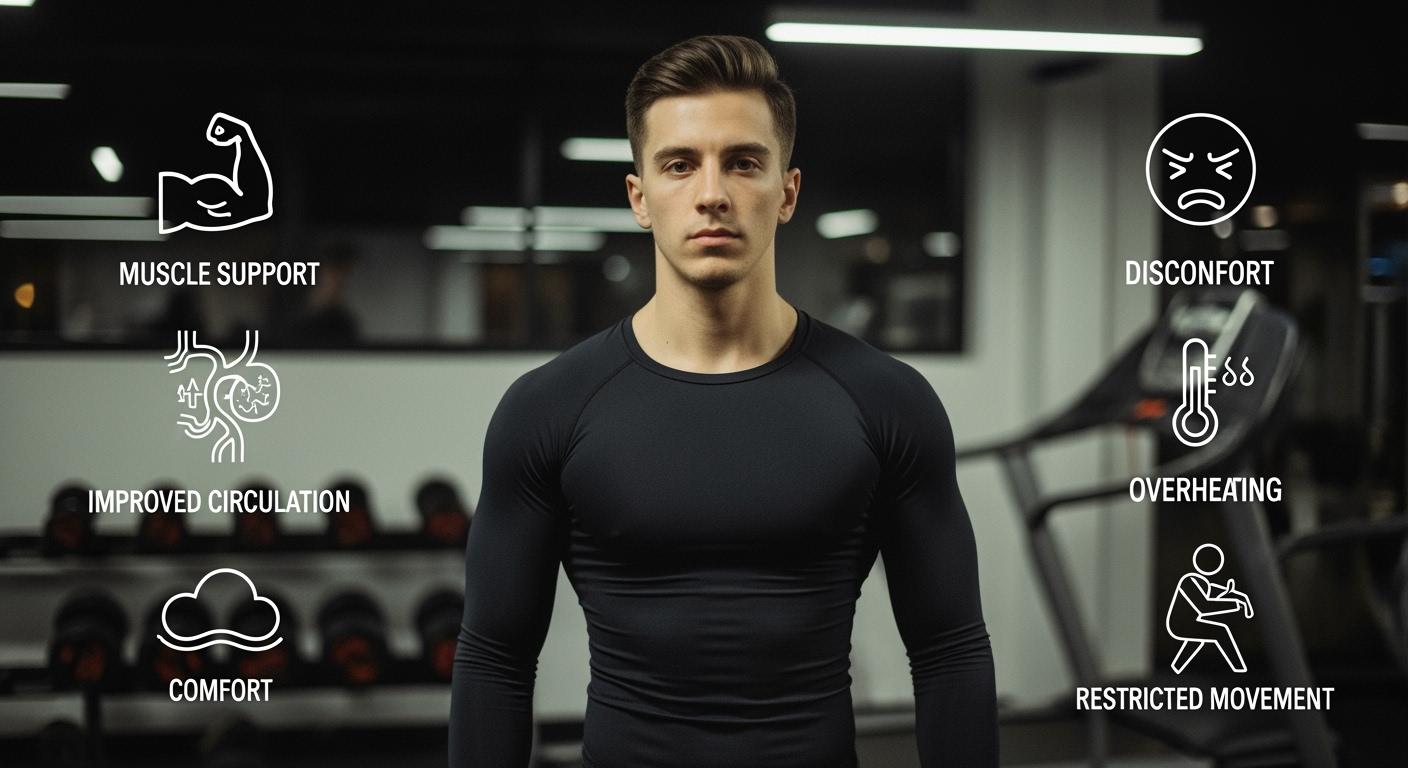
You may wonder if wearing a compression shirt during exercise helps you reach your goals. Many athletes report benefits such as enhanced recovery and improved blood flow, while others notice limited changes in performance. The table below shows the most common pros and cons:
Pros of Compression Shirts | Cons of Compression Shirts |
|---|---|
Improved performance metrics | Limited impact on most performance measures |
Enhanced recovery | No significant hindrances found |
Physiological benefits such as circulatory assistance | Need for further research to substantiate claims |
Augmented blood flow to active muscles | Unknown effects compared to control groups |
Think about your comfort, recovery needs, and personal preferences before deciding if this gear fits your routine.
Key Takeaways
Compression shirts can enhance muscle support and reduce soreness, helping you recover faster after workouts.
Improved blood circulation from compression gear aids in delivering oxygen to muscles, which can boost performance and reduce fatigue.
Choose the right level of compression based on your activity; low for casual workouts and high for intense training.
Wear compression shirts during and after exercise for maximum recovery benefits; they are most effective post-workout.
Comfort is key; ensure your compression shirt fits snugly without restricting movement to avoid discomfort or skin irritation.
Be aware of potential drawbacks, such as tightness and skin irritation, especially if you have sensitive skin.
Invest in quality compression gear for durability; cheaper options may wear out quickly and lose effectiveness.
Listen to your body; if you experience discomfort or adverse effects, consider adjusting your gear or consulting a professional.
What Are Compression Shirts?
Definition & Purpose
You encounter compression shirts in many athletic settings. These garments fit snugly against your body and use advanced fabric technology to support your muscles and joints.
Compression shirts protect muscles and stabilize joints. They help you improve endurance, allowing you to push further without risking injury.
You benefit from enhanced athletic performance and recovery because these shirts promote blood flow and reduce muscle vibration.
Some brands use COOL COMPRESSION® Technology, which reduces muscle exertion and enables you to perform more repetitions or run longer distances.
Compression shirts serve a primary purpose: they help you maintain muscle efficiency and reduce fatigue during exercise. You may notice less soreness and quicker recovery after workouts.
How Compression Shirts Work
Material & Design
Manufacturers use synthetic fibers like nylon, polyester, and spandex to create compression shirts. These materials stretch and conform to your body, providing a tight fit without restricting movement.
You will find that the design focuses on breathability and moisture control. COOL COMPRESSION® fabrics wick sweat away, helping you regulate body temperature and support cardiovascular function.
Compression Mechanism
Compression works by applying gentle pressure to your muscles. This pressure can enhance muscle function and proprioception, which improves joint positioning and movement efficiency.
You may experience increased blood flow, which aids oxygen delivery to your muscles. This process is crucial for athletic performance.
Compression shirts can also reduce muscle soreness and pain after exercise, helping you recover faster.
Compression clothing refines proprioception, leading to more efficient movement and less muscle fatigue.
Improved circulation ensures your muscles receive enough oxygen, which boosts performance and reduces swelling.
Types of Compression Shirts
You can choose from several types of compression shirts, each offering different levels of support. The table below outlines the main options:
Compression Level | Description |
|---|---|
Low Compression (15-20 mmHg) | Ideal for general activities and light workouts, providing support without being overly tight. |
Moderate Compression (20-30 mmHg) | Great for endurance activities like running and cycling, helping reduce muscle fatigue. |
High Compression (30 mmHg and above) | Recommended for competitive athletes, offering significant support and stability for intense training. |
When selecting a compression shirt, consider your activity level and comfort preferences. You may prefer low compression for casual workouts or high compression for intense training sessions.
Compression Shirt Benefits

Muscle Support
Reduced Vibration
When you wear a compression shirt, you give your muscles extra support during exercise. Compression garments apply gentle pressure to your skin, which helps stabilize your muscles. This pressure reduces muscle oscillations, or vibrations, that happen when you move quickly or perform dynamic activities. Less vibration means less muscle damage and lower risk of fatigue. You may notice that your muscles feel less sore after intense workouts.
Compression garments enhance proprioception by improving joint position awareness through external pressure on skin receptors.
They reduce muscle oscillations, which can decrease muscle fatigue and tissue damage.
Wearing compression gear can lower creatine kinase levels after exercise, showing less muscle damage and better recovery.
Enhanced Stability
Compression gear also improves stability. You get better control over your movements because the snug fit increases your awareness of joint positions. This effect helps you maintain proper form and reduces injury risks. Many athletes use compression garments to support their muscles and joints, especially during high-impact sports. You may find that your exercise performance improves when your muscles stay stable and protected.
Improved Circulation
Blood Flow
Compression garments promote better blood circulation during and after exercise. The pressure from compression gear helps blood flow more efficiently through your veins and muscles. Improved circulation means your body can remove waste products faster and deliver nutrients where they are needed. You may experience less swelling and faster recovery after workouts.
Compression clothing supports blood flow, especially during or after exercise.
It helps reduce swelling and aids recovery in athletes.
Compression garments benefit people with conditions like chronic venous insufficiency and deep vein thrombosis by helping blood return to the heart.
Venous Return Markers | Muscle Blood Flow | Muscle Oxygenation | |
|---|---|---|---|
TIGHTS | Higher than CON (p < 0.01) | Higher than CON (p = 0.000) | Higher than CON (p = 0.003) |
SOCKS | Higher than CON (p < 0.05) | Higher than SHORTS (p = 0.046) | Higher than CON (p = 0.044) |
SHORTS | N/A | N/A | N/A |
Oxygen Delivery
You need oxygen for your muscles to perform well. Compression garments help deliver more oxygen to your muscles by improving blood flow. Studies show that muscle reoxygenation increases when you use compression gear. This effect leads to better recovery and less muscle discomfort.
Finding | Description |
|---|---|
Muscle reoxygenation | Arm compression sleeves improved muscle reoxygenation by 9.4% compared to resting Sm02 values after 15 minutes of recovery. |
Recovery | Increased perfusion and blood flow may enhance oxygenation and reduce muscle discomfort and injury. |
Performance | Higher performance is linked to improved muscular recuperation due to compression wear. |
Reduced Fatigue & Soreness
Faster Recovery
You want to recover quickly after exercise. Compression garments provide small but likely benefits for recovery. The most significant effects appear after resistance training, especially within 2-8 hours and beyond 24 hours post-exercise. Strength recovery shows greater improvement than other performance metrics. You may feel ready for your next workout sooner when you use compression gear.
Compression garments offer very likely benefits for recovery from exercise.
The greatest recovery benefits occur at specific intervals after resistance training.
Strength recovery improves most, with large effects noted at 2-8 hours and beyond 24 hours post-exercise.
Less Exhaustion
Compression gear helps reduce muscle fatigue and soreness. You may notice less exhaustion after intense workouts. Research shows that compression garments lower creatine kinase levels and decrease delayed-onset muscle soreness. You get less swelling and better muscle power and strength. These benefits of compression gear make it easier for you to maintain your exercise routine and keep improving performance.
Study | Findings |
|---|---|
Brown et al., 2017 | Significant benefits in recovery within the first 24 hours after exercise. |
Dupoy et al., 2018 | Continued benefits observed up to 72 hours post-exercise. |
Hettchen et al., 2019 | Positive impact on post-exercise DOMS and perceived fatigue. |
Kim et al., 2017 | Compression garments showed benefits, though less than massage therapy. |
Leabeater et al., 2022 | Compression garments aid in reducing muscle soreness. |
A 2013 meta-analysis reported moderate benefits in recovery markers, including lower creatine kinase levels and less delayed-onset muscle soreness up to 72 hours after exercise. A 2016 review found that compression garments reduced muscle soreness and swelling, enhancing muscle power and strength. There is a recognized link between wearing compression gear and reduced muscle soreness and fatigue, suggesting a beneficial effect on recovery.
Tip: If you want to maximize the benefits of compression gear, wear it during and after your workouts. This approach can help you recover faster and reduce muscle damage.
Injury Prevention
Strain Reduction
You want to protect your muscles and joints during exercise. Compression garments act as a brace, giving you extra support and stabilization. This support helps reduce the risk of muscle damage and strain. When you wear compression gear, you limit muscle oscillation, which means your muscle fibers stay more stable. Less vibration leads to less mechanical stress and fewer microtraumas. You may notice less muscle soreness after workouts because compression gear eases the strain on your tissues.
Compression garments stabilize muscles and joints, lowering your risk of injury.
Compression gear reduces muscle oscillation, which helps prevent muscle damage and strain.
You experience less muscle soreness and fatigue when your muscles stay supported.
Compression garments may also have psychological effects, making you feel more confident and less sore after exercise.
Compression gear improves blood flow, which delivers more oxygen to your working muscles. Better circulation helps you recover faster and reduces muscle fatigue and soreness. You can push yourself harder and longer without worrying about excessive strain or injury.
Warmth for Muscles
Maintaining muscle warmth is important for injury prevention. Compression garments help keep your muscles warm by improving blood flow. Warm muscles are less likely to suffer strains or pulls. You feel more comfortable and ready to perform when your muscles stay at an optimal temperature.
Compression gear increases muscle temperature, promoting blood flow and healing.
Warm muscles are less likely to experience muscle damage or soreness.
Compression garments help minimize delayed onset muscle soreness (DOMS), similar to the effects of massage.
You benefit from improved recovery and less risk of injury when your muscles stay warm.
Compression gear supports your body in cold environments, helping you avoid injuries caused by temperature extremes. You can train safely and effectively, knowing your muscles receive the warmth and support they need.
Comfort & Moisture Control
Sweat-Wicking
You want to stay comfortable during exercise. Compression garments use advanced fabrics that wick sweat away from your skin. This sweat-wicking feature keeps you dry and reduces the risk of skin irritation. You feel more comfortable and focused when your clothing manages moisture effectively.
Study/Source | Findings | Implications |
|---|---|---|
Hohenstein Institute | Compression garments did not lead to heat stress; higher stretch levels improved moisture management. | Compression shirts enhance moisture control during exercise. |
User Preference | Participants preferred compression garments over non-compression options. | Positive psychological effect, enhancing comfort and motivation. |
Compression gear helps you avoid the discomfort of wet, heavy clothing. You can concentrate on your workout and maintain your performance without distractions.
Temperature Regulation
Temperature regulation is another key benefit of compression garments. The design and textile construction of compression gear allow for better blood circulation and cooling. You maintain a healthy core temperature, which reduces your risk of injury from overheating or cold exposure.
Study/Source | Findings | Implications |
|---|---|---|
X-Technology | Partialkompression® allows for better blood circulation and cooling. | Textile construction improves comfort and thermoregulation. |
CeRiSM Study | Athletes in Partialkompression® showed better endurance and lower heart rates. | Compression shirts improve performance and comfort during exercise. |
You experience better endurance and lower heart rates when your body stays cool and comfortable. Compression garments help you perform at your best, whether you train indoors or outdoors. You can rely on compression gear to keep you comfortable, dry, and safe throughout your workout.
Tip: Choose compression garments with moisture-wicking and temperature-regulating features for maximum comfort and performance.
Compression Shirt Drawbacks
Discomfort & Restriction
Tightness Issues
You may notice that a compression shirt feels very snug. This tight fit can cause discomfort, especially if you wear it for long periods or choose the wrong size. The pressure from compression can restrict your movement during exercise. Some users report that the shirt feels too tight around the chest or arms, making it hard to breathe deeply or move freely.
Compression garments vary in fit from person to person.
You might experience discomfort if the shirt does not match your body shape.
A poorly fitted compression shirt can reduce exercise performance and cause distraction.
Skin Irritation
Compression shirts use synthetic materials like spandex and polyester. These fabrics can trap sweat and heat, leading to skin irritation or rashes. If you have sensitive skin, you may develop redness or itching after wearing compression gear.
Tight seams and constant friction increase the risk of chafing.
Moisture buildup under the shirt can worsen skin problems.
You should wash your compression shirt regularly to prevent bacteria growth and odor.
Tip: Always try on a compression shirt before buying. Make sure it fits comfortably and does not pinch or rub your skin.
Cost & Durability
Price Range
You will find that compression shirts cost more than regular athletic wear. Prices vary depending on brand, material, and design. Some shirts offer advanced features, but these come at a higher price.
Here is a comparison of popular compression shirts and shorts:
Product Description | Price Range |
|---|---|
A4 N3130 Men’s Polyester Spandex Short Sleeve T-Shirt | $12.60 – $22.10 |
A4 N3133 Men’s Polyester Spandex Long Sleeve T-Shirt | $15.33 – $27.70 |
Augusta 2602 Men’s Hyperform Sleeveless Compression Shirt | $14.82 – $36.45 |
A4 N5259 Men’s 8 Inseam Compression Shorts | $8.57 – $15.50 |
A4 NW5313 Ladies’ 4 Inseam Compression Shorts | $6.49 – $10.36 |
A4 N3283 Men’s 7 vs 7 Compression T-Shirt | $12.27 – $22.10 |
A4 NB6202 Youth Polyester/Spandex Compression Tight | $9.68 – $25.20 |
Augusta 2600 Men’s Hyperform Compression Short Sleeve Shirt | $16.29 – $40.08 |
Augusta 2605 Youth Hyperform Compression Long Sleeve Shirt | $18.66 – $45.90 |
A4 NB3130 Youth Short Sleeve Compression Crew | $8.90 – $13.00 |
Augusta 2604 Men’s Hyperform Compression Long Sleeve Shirt | $18.66 – $45.90 |
Augusta 2606 Men’s Hyperform Compression Half Sleeve Shirt | $16.29 – $40.08 |
Badger 4629 Pro-Compression Women’s Shorts | $13.48 – $33.15 |
Augusta Sportswear 2628 Ladies’ Hyperform Compression Capri | $21.51 – $52.92 |
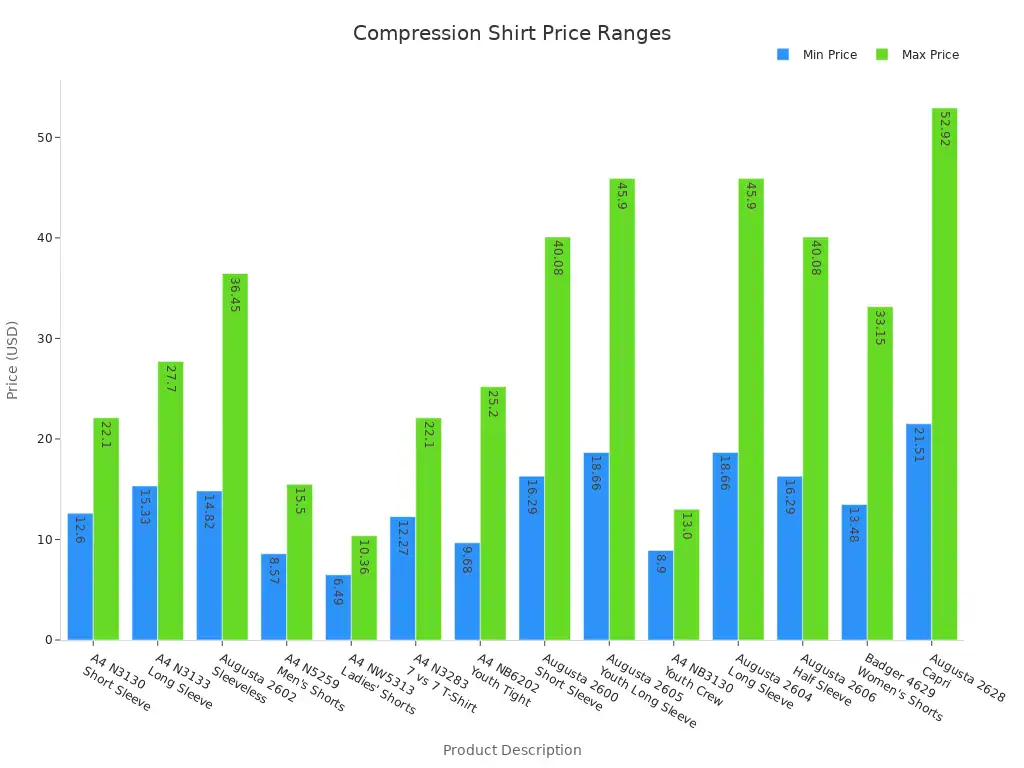
You may need to spend more if you want a compression shirt with advanced moisture control or durability. The price can be a barrier if you are on a budget.
Longevity
Compression shirts lose their elasticity over time. Frequent washing and stretching can cause the fabric to break down. You may notice that the shirt becomes loose and less effective after several months of regular use.
High-quality compression shirts last longer but cost more.
Cheaper shirts may wear out quickly and lose their compression benefits.
You should follow care instructions to extend the life of your compression gear.
Note: Investing in a durable compression shirt can save you money in the long run, but you must balance cost and quality.
Limited Performance Evidence
Scientific Studies
You may expect a compression shirt to boost your exercise performance. However, many scientific studies show mixed results.
Research does not support significant improvements in running performance with compression garments.
Studies reveal that compression helps with recovery after resistance training, but not during active exercise.
You may see reduced muscle soreness and fatigue, but not higher performance in activities like running or cycling.
Measure | Compression Group (CG) | Control Group (CON) |
|---|---|---|
Vitality | Higher (CG > CON) | Lower |
Resting Fatigue Ratings | Lower (CG < CON) | Higher |
Muscle Soreness | Lower (CG < CON) | Higher |
Ultrasound Measure Swelling | Lower (CG < CON) | Higher |
Bench Press Throw | Higher (CG > CON) | Lower |
CK Levels | Lower (CG < CON) | Higher |
You may benefit from compression after intense exercise, especially for recovery and reducing muscle damage. The effect is less clear for improving exercise performance during activity.
Placebo Effect
Some users report feeling stronger or less tired when wearing compression gear. Studies suggest that these benefits may come from positive expectations rather than actual physical changes.
If you believe a compression shirt will help, you may perceive less exertion and better performance.
The challenge of blinding participants in studies makes it hard to separate real effects from placebo.
Runners who expect benefits from compression sleeves often report improved comfort, even when tests show no measurable change.
Callout: Your attitude and expectations can influence how you feel about compression gear. If you think it works, you may experience perceived benefits, even if scientific evidence does not support them.
Not for Everyone
Medical Risks
You may think that compression shirts work for everyone, but some people face health risks when wearing them. If you have sensitive skin or certain medical conditions, you should consider these risks before adding compression gear to your workout routine.
Skin irritation often appears as itching or dryness. You may notice these symptoms if you already have skin conditions.
Allergic skin reactions can happen, especially if you react to materials like spandex or polyester. These reactions are rare but possible.
Discomfort and pain sometimes occur when the shirt feels too tight. You may find it hard to move or breathe comfortably.
Forefoot oedema and lymphoedema are serious complications. Compression can worsen swelling or cause superficial venous thrombophlebitis. Nerve damage may also develop in people who are predisposed.
Contraindications exist for some individuals. You should get screened for health conditions that increase your risk of complications.
Note: Always consult a healthcare professional if you have concerns about wearing compression gear. Screening helps prevent muscle damage and other health problems.
Compression shirts apply pressure to your body. If you have circulatory issues, nerve disorders, or a history of muscle damage, you may experience negative effects. Some people develop redness, swelling, or pain after wearing compression garments. You should monitor your body’s response and stop using compression gear if you notice any unusual symptoms.
Personal Preference
You may prefer loose-fitting workout clothes over compression shirts. Comfort plays a big role in your exercise experience. If you dislike the tight feeling or worry about muscle damage, you might avoid compression gear altogether.
Some athletes enjoy the support and stability that compression provides. Others feel restricted or uncomfortable. Your choice depends on your body type, workout style, and personal comfort level. You may find that compression shirts help reduce muscle damage and soreness, but only if you feel good wearing them.
You should try different styles and fits before making a decision.
Listen to your body and adjust your gear as needed.
Remember that compression is not a requirement for effective exercise.
Tip: Your comfort and confidence matter most. Choose workout clothing that supports your goals and keeps you motivated.
Compression shirts offer benefits for many people, but they do not suit everyone. You should weigh the risks and listen to your preferences. If you experience muscle damage, skin irritation, or discomfort, consider other options for your workout wardrobe.
Compression Gear Usage
Who Should Wear Compression Gear
You may wonder if compression gear suits your workout needs. Many athletes and fitness enthusiasts benefit from wearing compression gear, but some groups see greater advantages. Endurance athletes make up the largest group using compression gear. You might choose compression gear if you want to prevent re-injury, reduce symptoms of current injuries, or speed up post-exercise recovery. Some people wear compression gear to improve exercise performance, though this is less common.
Most endurance athletes rely on compression gear for support and recovery.
Nearly half of users aim to prevent re-injury during training or competition.
A smaller group uses compression gear to manage symptoms from existing injuries.
Many athletes wear compression gear after exercise to help their muscles recover.
A few individuals believe compression gear boosts exercise performance.
You should consider wearing compression gear if you participate in sports that demand stamina, strength, or repetitive movement. Runners, cyclists, and walkers often use compression gear to prevent chafing and muscle fatigue. Weightlifters, rock climbers, and yogis prefer compression gear for its snug fit, which allows free movement and stability.
Best Situations for Compression Gear
High-Intensity Workouts
You push your limits during high-intensity workouts. Compression gear helps stabilize your muscles and joints, reducing the risk of injury. You may notice less muscle oscillation when you jump, sprint, or lift weights. Compression gear supports your body during explosive movements, helping you maintain proper form and reduce fatigue.
Compression gear proves effective in dynamic activities like vertical jumping.
You experience less muscle vibration, which can decrease fatigue and tissue damage.
Many athletes choose compression gear for high-intensity training sessions.
Endurance Training
You spend long hours running, biking, or walking. Compression gear offers comfort and protection during endurance training. The snug fit prevents chafing and supports your muscles over extended periods. You may find that wearing compression gear helps you recover faster and maintain steady exercise performance.
Endurance athletes make up the majority of compression gear users.
Compression gear reduces muscle soreness and swelling after long workouts.
Runners and cyclists rely on compression gear for comfort and injury prevention.
Recovery Sessions
You want to recover quickly after exercise. Wearing compression gear during recovery sessions can help reduce muscle soreness and speed up healing. You may notice less swelling and discomfort when you use compression gear after intense activity. Many athletes wear compression gear post-exercise to support muscle repair and improve circulation.
Recovery Benefit | Description |
|---|---|
Reduced soreness | Compression gear lowers muscle pain after exercise. |
Faster healing | You experience quicker recovery with compression gear. |
Improved circulation | Compression gear helps deliver nutrients to muscles. |
Tip: You should wear compression gear during and after your workouts to maximize recovery and comfort.
Compression gear adapts to many exercise situations. You can wear it for high-intensity training, endurance sports, or recovery sessions. The versatility of compression gear makes it a valuable addition to your workout wardrobe.
Choosing Compression Garments
Fit & Sizing
When you select compression garments, you need to focus on fit and sizing. The right fit helps you get the most out of your compression gear. You want a shirt that feels snug but does not restrict your movement. If you notice bunching or wrinkling, the shirt may be too large. The fabric should lay flat against your skin. A well-fitting compression shirt stays in place during exercise. If it rides up or shifts, you might need a different size or style. Pay attention to the shoulder area. You should have a full range of motion, especially if you choose shirts with flat seams or raglan sleeves.
Here are important factors to consider for optimal performance:
Snug but not restrictive: You should move freely and comfortably.
No bunching or wrinkling: The shirt should fit smoothly.
Stay in place: The shirt should not shift during activity.
Comfortable around the shoulders: Look for designs that support movement.
You also need to think about your activity type. Higher intensity workouts may require higher compression. Your personal preference matters. Some people like a tighter fit, while others prefer moderate compression. Weather conditions play a role. In cooler weather, thicker materials can provide warmth along with compression.
Tip: Try different sizes and styles to find what works best for your body and workout routine.
Material Features
Material features affect the comfort and performance of compression garments. You should look for fabrics that offer durability and flexibility. Many compression shirts use a blend of nylon and spandex. For example, a common fabric content is 80% nylon and 20% spandex. This combination provides mild compression and long-lasting wear.
You will find advanced technologies in some compression gear. COOL COMPRESSION® technology gives you powerful yet flexible compression. The fabric stretches with your body, allowing a 360° rotation and up to 200% stretch. Moisture-wicking properties help keep you dry. These features move sweat away from your skin, so you stay comfortable and maintain your core temperature.
Feature | Description |
|---|---|
Fabric Content | 80% Nylon, 20% Spandex for mild compression and durability. |
Technology | COOL COMPRESSION® technology provides powerful yet flexible compression in a 360° rotation, stretching 200% with the body. |
Moisture-wicking | Designed to allow perspiration to move out through the fabric to dry faster, preventing saturation and maintaining core temperature. |
Choose compression garments with materials that match your workout needs. If you train in hot conditions, moisture-wicking fabrics help you stay cool. For colder environments, thicker materials offer warmth and support.
Price & Brand
Price and brand influence your decision when choosing the right compression gear. Compression garments come in a wide range of prices. High-quality compression gear often costs more, but it lasts longer and provides better support. You should compare different brands to find the best value. Some brands offer advanced features like COOL COMPRESSION® technology, which may justify a higher price.
Look for brands with a reputation for durability and comfort. Read reviews and ask for recommendations from other athletes. You do not need to buy the most expensive compression garments to get good results. Focus on finding compression gear that fits well, uses quality materials, and matches your budget.
Note: Investing in reliable compression gear helps you perform better and recover faster. Make sure you balance cost, comfort, and performance when choosing compression garments.
Try Before Buying
You want to make sure your compression garments fit well before you commit to a purchase. Trying on compression garments helps you avoid discomfort and ensures you get the most benefit from your workout gear. You should always check the fit and comfort in person when possible.
When you try on compression garments, pay attention to how the shirt feels against your skin. The garment should fit snugly but not restrict your movement. You should feel supported, not squeezed. If the shirt feels too tight or causes discomfort, you may need to go up a size. Some compression garments have design features, such as extra layers, that make them feel more snug. You should consider these features when choosing your size.
You can use these best practices when trying on compression garments:
Check that the compression garments fit snugly and feel comfortable.
Move your arms and shoulders to test the range of motion.
Look for any areas where the compression garments pinch or rub.
If the shirt feels too tight, try a larger size.
Notice if certain styles of compression garments feel more snug because of extra layers or design features.
Make sure the seams of the compression garments do not irritate your skin.
Wear the compression garments for a few minutes to see if any discomfort develops.
Ask for help from store staff if you are unsure about sizing or fit.
Compare different brands and styles of compression garments to find what works best for you.
Remember that your comfort and support matter most when choosing compression garments.
You should also consider your workout needs when trying on compression garments. If you plan to use compression garments for high-intensity training, you may prefer a tighter fit. For casual exercise, a moderate level of compression may feel better. You should always listen to your body and choose compression garments that help you perform at your best.
Trying on compression garments before buying helps you avoid common problems like skin irritation, restricted movement, or wasted money. You can make a smart decision by testing the fit, comfort, and style in advance. You should not rely only on size charts or online reviews. Your body is unique, and only you can decide which compression garments feel right.
Tip: Take your time when trying on compression garments. Move around, stretch, and check for any discomfort. The right compression garments will support your goals and keep you comfortable during every workout.
Tips for Compression Garments
When to Wear
You might wonder about the best time to use compression garments for maximum benefit. Many experts agree that wearing compression gear after exercise gives you the most noticeable results. You help your body recover faster and reduce muscle soreness when you use compression garments during rest periods.
Dr. Kester states, “Wearing a compression garment is more effective after your workout. Compression garments encourage circulation when you’re at rest, which can reduce inflammation, muscle pain and soreness, and reduce pain and swelling.”
You do not need to wear compression gear during every workout. Studies show that wearing compression garments during exercise does not improve exercise performance. Instead, you should focus on using compression gear for up to 24 hours after training. This approach can speed up recovery and lessen soreness.
Wearing compression garments during workouts does not enhance performance.
Using them for up to 24 hours post-training can accelerate recovery and lessen soreness.
If you want to boost recovery, put on compression gear right after your session. You will likely feel less muscle pain and notice better performance in your next workout.
Layering with Workout Gear
You can combine compression garments with other workout clothing for comfort and protection. The right layering strategy helps you stay dry, warm, and ready for any weather. Here is a simple layering system you can follow:
Base Layer: Start with a compression shirt. This layer wicks moisture away from your skin and keeps you dry.
Middle Layer: Add a lightweight top or hoodie for extra warmth and flexibility.
Outer Layer: Finish with a breathable jacket or shell to protect against wind and rain.
You should always make sure your compression gear fits smoothly under other layers. Avoid bulky clothing that restricts movement. This system lets you adjust your outfit for different temperatures and activities. You stay comfortable and maintain good exercise performance, even in changing conditions.
Monitoring Comfort
You need to pay attention to how your body feels when wearing compression gear. Comfort is key for both performance and recovery. If you notice any discomfort, itching, or restricted movement, you should adjust your gear or try a different size.
Check for signs of skin irritation or chafing after each use.
Make sure the compression garments do not feel too tight or cause numbness.
Wash your compression gear regularly to prevent odor and bacteria buildup.
If you ever feel pain or swelling while wearing compression garments, remove them right away. Your comfort and safety come first. You can always try a different style or fit to find what works best for your exercise routine. Remember, the right compression gear supports your recovery and helps you reach your performance goals.
You have learned that compression garments offer muscle support, comfort, and possible psychological benefits during exercise. Research shows they may improve chronic recovery of muscle strength and power, but effects on delayed onset muscle soreness remain unclear. Consider the table below as you decide if a compression shirt fits your routine:
Pros of Compression Shirts | Cons of Compression Shirts |
|---|---|
May improve chronic recovery of muscle strength and power between training sessions. | Little evidence supporting enhancement of acute recovery during training sessions. |
No negative effects on performance observed while wearing them. | Variability in pressure gradients complicates conclusions about effectiveness. |
Potential psychological benefits, such as reduced perception of soreness. | Effects on delayed onset muscle soreness (DOMS) remain unclear. |
Weigh the benefits and drawbacks of compression garments for your needs. Try different options and monitor your comfort to find what works best.
FAQ
Do compression shirts really improve athletic performance?
You may notice small improvements in recovery and muscle support. Most studies show little direct impact on speed or strength during workouts. You might feel more stable and comfortable, which can help you focus.
Can you wear a compression shirt all day?
You can wear a compression shirt for several hours. If you feel discomfort, remove it. Avoid wearing it overnight or for more than 12 hours. Always listen to your body.
How tight should a compression shirt feel?
A compression shirt should feel snug but not painful. You should move freely and breathe easily. If you feel numbness or tingling, the shirt is too tight.
Are compression shirts safe for everyone?
Most people can wear compression shirts safely. If you have circulation problems, skin conditions, or allergies, talk to your doctor first. Watch for redness, swelling, or pain.
How do you wash and care for compression shirts?
Wash your compression shirt in cold water with mild detergent. Avoid bleach and fabric softeners. Air dry it to keep the fabric stretchy and strong.
Can you layer compression shirts with other workout clothes?
Yes, you can layer a compression shirt under other workout gear. Start with the compression shirt as your base layer. Add other clothing for warmth or weather protection.
Do compression shirts help with weight loss?
Compression shirts do not burn fat or help you lose weight. They support your muscles and manage sweat. You need regular exercise and a healthy diet for weight loss.