

Top Running Vests for Hot, Cold, and Wet Weather
Table of Contents
Display

You want a running running vest that matches your weather conditions for maximum comfort and performance. For hot days, consider lightweight options like the Nathan QuickStart 3.0 4L, which ventilates well and includes hydration. Salomon ADV Skin 5 and ADV Skin 12 give you versatile storage and a close fit for longer runs in various climates. Norrona Senja 7L Pack works well in damp conditions with premium materials and smart pocket placement. Match vest features to your local climate and running habits to get the best results.
Popular models for hot, cold, and wet weather:
Salomon ADV Skin 5
Salomon ADV Skin 12
Nathan QuickStart 3.0 4L
Norrona Senja 7L Pack
Key Takeaways
Choose lightweight and breathable vests for hot weather to stay cool and comfortable.
Look for insulated vests with wind resistance for cold weather to maintain warmth without overheating.
Select water-resistant vests for wet conditions to keep your gear dry while running.
Prioritize fit and adjustability in your vest to prevent chafing and ensure comfort during runs.
Consider storage capacity based on your running duration; longer runs require more hydration and gear space.
Test different vest models with your running layers to find the best fit and comfort.
Regularly clean and properly store your vest to extend its lifespan and maintain performance.
Monitor wear and tear on your vest; replace it when comfort or functionality declines.
Hot Weather Running Vests

Best Running Hydration Vests for Summer
Lightweight and Breathable Designs
You need a running vest that keeps you cool and comfortable when temperatures rise. Lightweight construction and advanced breathability help you avoid overheating. Many runners choose models like the Oro Cooling Vest, which uses easy-to-insert Coolpaks for instant cooling. The Ultimo Cooling Vest and Coolsport Vestino also offer simple solutions for hot weather running. These designs focus on minimizing weight and maximizing airflow, so you stay dry and light on your feet.
Ventilation and Moisture Control
Ventilation plays a key role in hot weather performance. You want a vest that moves moisture away from your skin and dries quickly. Running hydration vests with mesh panels and moisture-wicking fabrics help you manage sweat and prevent chafing. The Nathan Pinnacle 4L stands out for its lightweight build and excellent ventilation, making it one of the best running hydration vests for summer. You can run longer and feel less fatigued when your vest supports proper airflow and moisture control.
Top Picks for Hot Weather
Salomon, Nathan, Patagonia Slope Runner
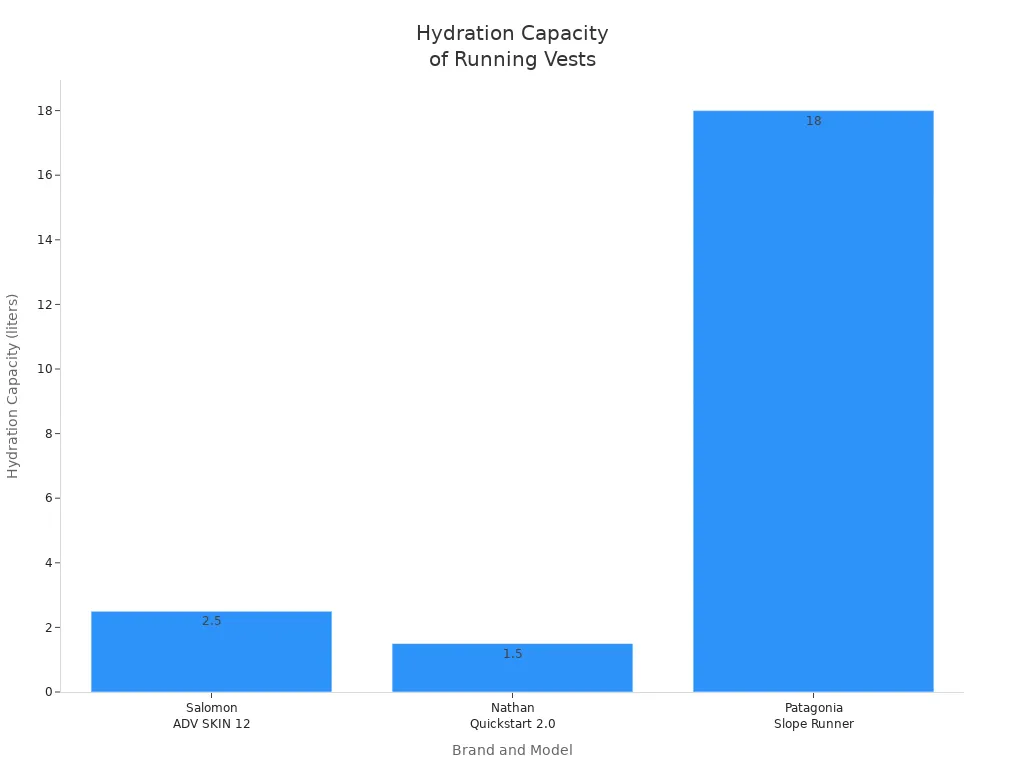
Outdoor gear publications consistently recommend three models for hot weather: Salomon Adv Skin 12, Nathan Quickstart 2.0, and Patagonia Slope Runner Exploration. Each vest offers unique strengths in hydration and breathability. The Salomon Adv Skin 12 uses Sensifit construction for a secure fit and includes two 500-milliliter soft flasks for hydration. Nathan Quickstart 2.0 features stretchy fabric and adjustable straps, so you get a bounce-free experience. Patagonia Slope Runner Exploration provides a vest-like design and cinch-forward closure, distributing weight evenly for comfort.
Brand | Model | Hydration Capacity | Breathability Features |
|---|---|---|---|
Salomon | ADV SKIN 12 | 2.5 liters | Breathable fabrics, pockets for storage, quick-drying |
Nathan | Quickstart 2.0 | 1.5 liters | Adjustable straps, stretchy fabric, no bounce |
Patagonia | Slope Runner Exploration | 18 liters | Vest-like design, cinch-forward closure for weight distribution |
Storage and Hydration Options
You need to consider both hydration and storage when choosing running hydration vests for summer. The Salomon Adv Skin 12 offers 12 liters of total storage, so you can carry gels, keys, and a phone. Nathan Pinnacle 4L and Quickstart 2.0 provide enough space for essentials without adding bulk. Patagonia Slope Runner Exploration gives you the largest capacity, making it ideal for long runs or trail adventures. Proper hydration keeps your endurance high, especially in hot conditions. Sports science shows that increased sweat rates in heat demand more fluid intake. Running hydration vests with easy-access flasks or reservoirs help you maintain performance and thermal comfort. Some runners use ice towels or cold fluids to limit core temperature rise and reduce perceived exertion.
Tip: Always check the fit and adjustability of your vest. A snug fit improves breathability and prevents bouncing, so you stay focused on your run.
Cold Weather Running Vests

Insulated Running Running Vest Options
Thermal and Wind-Resistant Features
When you run in cold weather, you need a vest that keeps you warm without making you overheat. Insulated running vests use advanced materials and technologies to trap heat and block wind. Many top vests use insulation like PrimaLoft, which provides warmth and manages moisture. WINDSTOPPER technology adds wind protection while allowing breathability, so you do not feel stuffy during your run. PrimaLoft Active Evolve combines warmth, stretch, and breathability, making it ideal for runners who want comfort and flexibility. Thermo woven fabrics also help by shielding you from wind and light rain while keeping you comfortable.
Insulation Technology | Description |
|---|---|
PrimaLoft® insulation | Excellent for colder conditions, providing warmth and moisture management. |
WINDSTOPPER® Technology | Offers wind protection while remaining breathable, preventing overheating. |
PrimaLoft® Active Evolve | Combines insulation warmth with breathability and stretch, ideal for cold weather sportswear. |
Thermo woven fabrics | Provides warmth and comfort, with a dense weave that shields from wind and light rain. |
You should also look at the materials used in these vests. Polyester offers high warmth retention and wicks moisture, which helps you stay dry. Nylon gives you moderate warmth and adds durability, plus it resists wind and water.
Material | Warmth Retention | Other Properties |
|---|---|---|
Polyester | High | Moisture-wicking, suitable for cooler days |
Nylon | Moderate | Durable, water- and wind-resistant |
Layering and Comfort
Layering is important when you run in the cold. You want a vest that fits over your base layers but does not restrict your movement. Many insulated running vests use stretch panels and adjustable hems, so you can add or remove layers as needed. Breathability matters here, too. If your vest allows air to flow, you avoid overheating and stay comfortable throughout your run. Look for vests with mesh linings or vented panels to improve breathability and moisture control.
Best Picks for Cold Weather
Smartwool Smartloft, Baleaf Hybrid Puffer
You have great options for cold weather. The Smartwool Smartloft Hybrid Jacket uses wool insulation, which gives you natural breathability and temperature regulation. This means you stay warm, but you do not get sweaty or clammy. The combination of wool and breathable fabrics helps manage moisture, so you remain dry and comfortable. The Baleaf Hybrid Puffer Vest uses synthetic insulation and wind-resistant fabrics. This vest keeps you warm and blocks cold gusts, while still allowing breathability for longer runs.
Smartwool Smartloft Hybrid: Wool insulation for warmth, breathability, and moisture control.
Baleaf Hybrid Puffer: Synthetic insulation, wind-resistant shell, and good breathability.
Fit and Mobility
You want a vest that fits close to your body but does not limit your movement. Both the Smartwool Smartloft and Baleaf Hybrid Puffer offer athletic cuts and flexible fabrics. These designs let you move freely, whether you run on roads or trails. Adjustable hems and stretchy side panels help you get the right fit for layering. Breathability remains a key feature, so you can run hard without feeling trapped by your gear.
Tip: Try your vest with different base layers before heading out. This helps you find the best combination for warmth, breathability, and comfort.
Wet Weather Running Vests
Water-Resistant Running Hydration Vests
Waterproof Materials
You face unique challenges when you run in wet weather. You need a running vest that keeps your gear dry and supports your hydration needs. Waterproof materials play a key role in protecting your essentials. Many running hydration vests use nylon or mesh blends that resist light rain and splashes. For example, the Ultimate Direction Halo Vest uses mesh and nylon for durability and water resistance. The Arc’teryx Norvan 7 features a weather-resistant storage bag, which helps shield your hydration supplies and valuables from moisture. You should look for vests with sealed seams and water-repellent coatings if you expect heavy rain.
Hydration Vest | Weight (g) | Storage Capacity | |
|---|---|---|---|
Arc’teryx Norvan 7 | 255 | 2L bladder + 4 pockets | Weather-resistant storage bag |
Ultimate Direction Halo Vest | 175 | 10L + 2 soft bottles | Mesh and nylon for durability |
Salomon Agile 2 Set Hydration Vest | 170 | 2 flasks | Lightweight mesh for breathability |
Breathability in Wet Conditions
You want your running hydration vest to balance water resistance with breathability. If your vest traps sweat, you may feel clammy and uncomfortable. Many top hydration vests use mesh panels to allow airflow, even when the outer fabric repels water. The Salomon Agile 2 Set Hydration Vest stands out for its lightweight mesh construction, which helps you stay cool and dry. Breathable designs prevent overheating and reduce chafing, especially during long runs in humid or rainy weather.
Tip: Choose a running hydration vest with adjustable straps. A snug fit keeps water out and improves comfort during wet runs.
Top Picks for Rainy Runs
Salomon Adv Skin 12, Adv Skin 5 Set, UltrAspire Alpha 6.0
You have several strong options for wet weather running hydration vests. The Salomon Adv Skin 12 and Adv Skin 5 Set offer versatile storage and a close fit. These vests provide multiple pockets for hydration flasks and essentials. However, field tests show that the Salomon Adv Skin 12 offers limited water resistance in heavy rain. The fabric focuses on breathability and flexibility, so you may need extra waterproofing for your phone or snacks. The UltrAspire Alpha 6.0 delivers reliable hydration support and quick-drying materials. You can also consider the ON all-weather running vest, which is windproof and reflective, or Rabbit’s let ‘er zip wool vest for cozy comfort and breathability.
Salomon Adv Skin 12: Flexible fit, multiple hydration pockets, moderate water resistance.
Salomon Adv Skin 5 Set: Lightweight, secure hydration storage, good for light rain.
UltrAspire Alpha 6.0: Quick-drying, ample hydration options, easy access to gear.
ON all-weather running vest: Windproof, reflective, suitable for wet and dark conditions.
Rabbit’s let ‘er zip wool vest: Breathable, warm, ideal for cool and damp runs.
Packability and Storage
You need a running hydration vest that packs down easily and offers smart storage. Many hydration vests feature collapsible pockets and lightweight designs. The Arc’teryx Norvan 7 and Ultimate Direction Halo Vest provide generous storage for hydration flasks, gels, and valuables. You can fold these vests and stow them in your backpack when the weather changes. Look for hydration vests with hidden pouches and weather-resistant compartments. These features help you organize your gear and protect it from rain.
Note: Always test your running hydration vest in wet conditions before a long run. Make sure your hydration system works smoothly and your essentials stay dry.
Running Vests for Every Condition: Buying Guide
Key Features to Consider
Packability and Storage
You want a running vest that packs down easily and offers smart storage for your essentials. Many running vests for every condition include collapsible pockets and lightweight designs. You can fold these vests and stow them in your bag when the weather changes. Storage options matter for gels, keys, and phones. Trail runners often need secure closures to prevent items from falling out, while urban runners prefer easy-access pockets.
Temperature and Weather Adaptability
You should match your vest to the climate and your running habits. Some vests use insulation for cold weather, while others focus on breathability for hot days. Look for vests with mesh panels or vented fabrics to help regulate body temperature. Weather-resistant materials protect your gear during rain or wind. You can layer your vest over base layers for extra warmth or choose a lightweight model for summer runs.
Water Resistance and Breathability
You need a vest that balances water resistance and breathability. Waterproof materials keep your gear dry during wet runs. Mesh panels allow airflow, which helps you stay cool and reduces sweat buildup. Breathability supports comfort and prevents overheating. Many hydration vests use nylon blends for durability and water resistance.
Fit and Comfort
You should prioritize comfort when choosing a running vest. Chafing often results from improper fit, especially during long runs. You can adjust straps to prevent discomfort and bouncing. Some runners dislike the weight and sloshy sound of hydration bladders, so handheld options may suit you better. Difficulty closing hydration bladders can cause inconvenience during races. Always test your vest for comfort before a long run.
Tip: Adjust your vest straps and try different hydration systems to find the best comfort for your running style.
Matching Vest to Your Needs
Urban vs. Trail Running
You need to consider your running environment. Urban running often requires less hydration capacity due to shorter distances. Trail running usually demands larger hydration packs for longer distances and technical terrain. Urban runners benefit from reflectivity for visibility in traffic, while trail runners need emergency whistles and trekking pole keepers for safety.
Feature | Urban Running Considerations | Trail Running Considerations |
|---|---|---|
Pockets | Easy access for quick items like gels and phones. | Secure closures to prevent items from falling out. |
Reflectivity | Important for visibility in traffic. | Less critical unless running at dawn/dusk. |
Breathability | Essential for comfort in warmer urban settings. | Important for long durations in varying temperatures. |
Emergency whistle | Not typically required. | Useful for safety in remote areas. |
Trekking pole keepers | Not needed. | Useful for those using poles on trails. |
Trail running often needs larger hydration packs.
Technical trails require more fluid capacity and easy access to hydration.
Run Duration and Frequency
You should match your vest to your typical run duration. Short runs under one hour may not need a vest. Runs lasting one to two hours work well with a 2L vest. Longer runs require more hydration and storage.
Run Time | |
|---|---|
Under 1 hour | No vest / small belt |
1–2 hours | ~2L vest |
2–3 hours | 4–6L vest |
3–6 hours | 6–12L vest |
6+ hours / ultras | 8–15L full-kit vest |
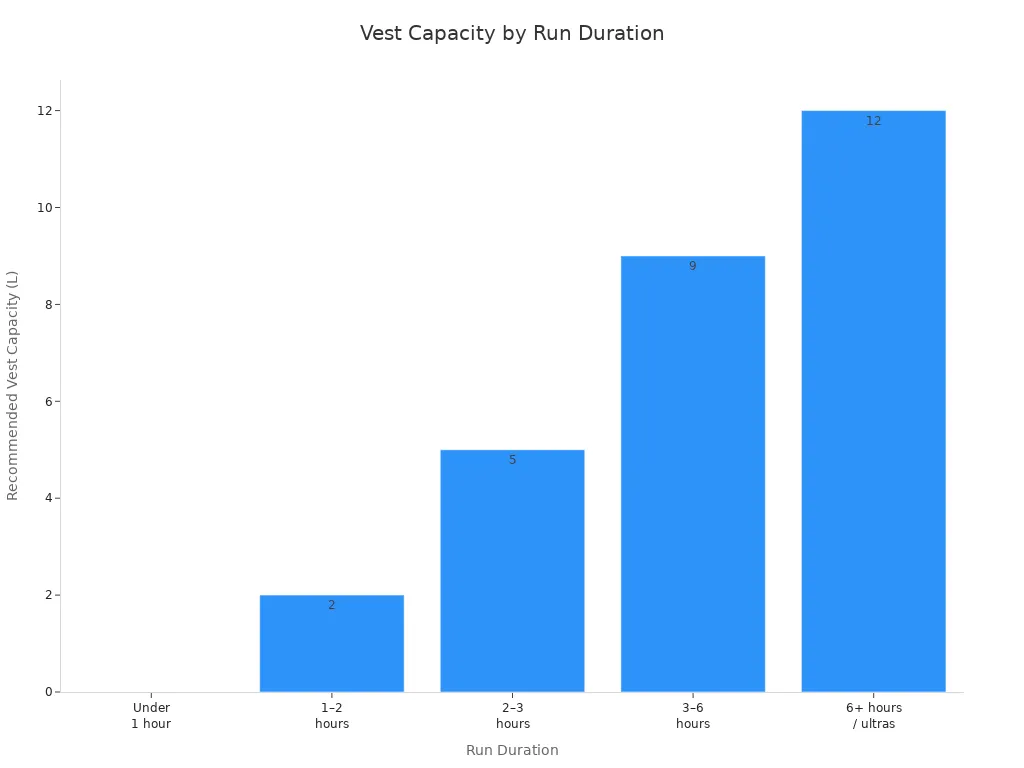
You can choose a vest with the right hydration capacity for your needs. Frequent runners may prefer lightweight vests for daily use, while ultra runners need full-kit vests for long events. Always consider comfort, hydration, and storage when selecting your vest.
Note: Test your vest during training runs to ensure comfort and proper hydration support.
You can find running vests for every condition by matching features to your climate, running style, and personal preferences.
Care Tips for Running Vests
Cleaning and Storage
Washing Instructions
You want your running vest to stay fresh and maintain comfort during every run. After each use, check for dirt, sweat, or stains. Most running vests work best with hand washing in cold water. Use a mild detergent and avoid bleach, which can damage the fabric and reduce comfort. Gently scrub areas that collect sweat, such as the collar and underarms. If your vest has a hydration system, rinse the reservoir and tubes with warm water. Let the vest soak for a few minutes, then rinse thoroughly to remove soap residue. Machine washing may work for some performance-oriented designs, but always check the care label first.
Tip: Wash your vest after every few runs to prevent odor buildup and keep the material soft for comfort.
Proper Drying
Drying your running vest correctly helps preserve comfort and extends its lifespan. Lay the vest flat on a clean towel or hang it up in a well-ventilated area. Avoid direct sunlight, which can fade colors and weaken the fabric. Never use a dryer, as high heat can shrink or damage performance-oriented designs. Make sure the vest is completely dry before storing it to prevent mold and unpleasant smells.
You can follow these steps to store your running vest and prevent material degradation and odor:
Clean Before Storing: Always ensure the vest is clean and dry before storage to prevent mold and odors.
Hang It Up: Use a padded hanger to maintain the vest’s shape and avoid damage.
Keep Away from Direct Sunlight and Heat: Store in a dark, cool place to protect the material.
Use a Breathable Garment Bag: A mesh bag allows airflow and prevents dust accumulation.
Note: Proper storage keeps your vest ready for your next run and maintains comfort over time.
Extending Vest Lifespan
Minor Repairs
You can extend the life of your running vest with simple repairs. Inspect your vest regularly for loose threads, small tears, or worn-out zippers. Use a needle and thread to fix minor rips. Replace broken buckles or straps to maintain comfort and fit. If your vest has reflective strips, check for peeling or fading. You can buy replacement strips to keep visibility high. Addressing small issues early helps you avoid bigger problems and ensures your vest remains comfortable and functional.
Replacement Timing
Running vests do not last forever. You should monitor wear and tear to decide when to replace your vest. Material type affects how long your vest will last. The table below shows typical lifespans and replacement recommendations:
Material Type | Replacement Recommendation | |
|---|---|---|
LED-equipped vests | 1–2 years | Replace when battery or brightness fails |
Passive reflective vests | 2–3 years | Replace when fabric fades or strips wear off |
High-performance vests | 2–4 years | Replace based on battery cycles or tear |
You should replace your vest if you notice loss of comfort, persistent odors, or damaged hydration systems. Newer performance-oriented designs offer improved durability, but regular use still leads to wear. Keeping track of your vest’s age and condition helps you maintain comfort and safety during every run.
Tip: If your vest no longer feels comfortable or shows signs of heavy wear, invest in a new one for better comfort and reliability.
You want a running vest that matches your climate and running habits. For hot weather, choose a running vest with breathable fabrics and lightweight construction. In cold conditions, select a running vest with insulation and wind resistance. Wet weather calls for a running vest with water-resistant materials and quick-drying features. You should look for versatility in design, hydration storage, and comfort.
Experts recommend these tips when selecting a running vest:
Check the fit of the running vest for your body shape.
Pick a running vest with the right volume for your needs.
Try on several running vest models and ask other runners for advice.
A running vest should feel comfortable and support your performance. You need a running vest that lasts through many runs. Test different running vest options to find the best match for your style. Prioritize your needs and enjoy every run with the right running vest.
FAQ
What size running vest should you choose?
You should measure your chest and refer to the brand’s sizing chart. A snug fit prevents bouncing. Try the vest on with your typical running layers to ensure comfort.
How do you clean a running vest with a hydration system?
Remove the reservoir and tubes. Hand wash the vest in cold water with mild detergent. Rinse the hydration system with warm water. Air dry everything completely before storing.
Can you use a running vest for hiking or cycling?
You can use most running vests for hiking or cycling. Look for models with enough storage and hydration capacity. Some vests offer features like trekking pole keepers or reflective strips for multi-sport use.
How much water should you carry in your running vest?
You should carry at least 500 milliliters per hour of running. Adjust based on weather and your sweat rate. Hot conditions require more water. Use soft flasks or reservoirs for easy access.
Are running vests waterproof?
Most running vests use water-resistant materials. Fully waterproof vests are rare. You should protect electronics in sealed pouches. For heavy rain, choose vests with sealed seams and water-repellent coatings.
What features help prevent chafing?
Look for soft, moisture-wicking fabrics and flat seams. Adjustable straps help you get a secure fit. Mesh panels improve airflow. You should test the vest on short runs before using it for long distances.
How do you know when to replace your running vest?
Check for worn fabric, broken zippers, or persistent odors. If the vest feels uncomfortable or loses its shape, you should replace it. Most vests last two to four years with regular use.