

Gas Station Convenience Uniforms: Poly-Cotton vs. 100% Cotton – OEM Cost & Durability
Table of Contents
Display
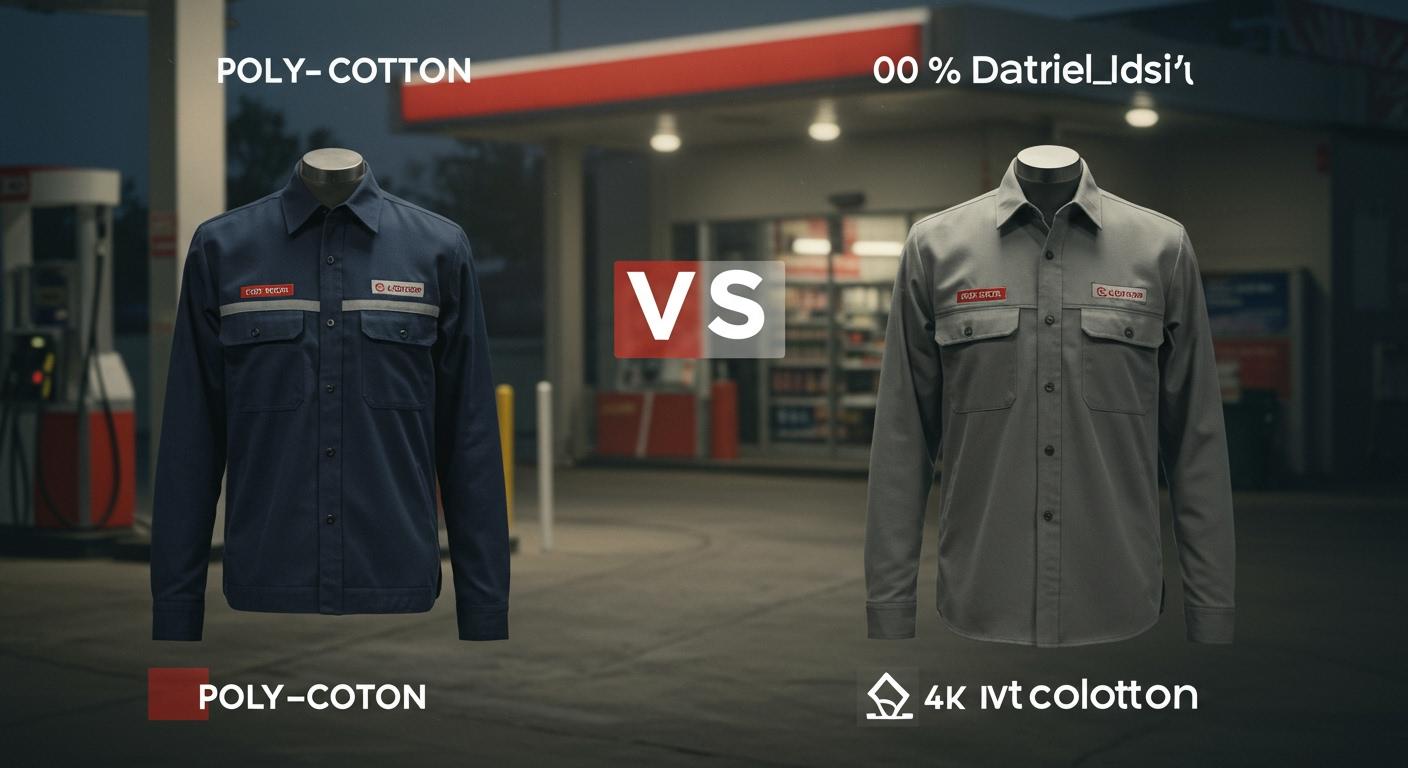
I recommend poly-cotton blends for gas station convenience uniforms. These work uniforms offer lower OEM costs and greater durability compared to 100% cotton. I see business owners face a tough choice between comfort and long-term value. Cost matters, but so does how well uniforms hold up to frequent washing and daily wear. Maintenance requirements also play a big role in decision-making.
Key Takeaways
Choose poly-cotton blends for gas station uniforms to save on costs and increase durability.
Poly-cotton blends resist rips and tears, making them ideal for high-traffic environments.
100% cotton offers superior comfort but may require more maintenance and replacements.
Consider the climate when selecting fabric; poly-cotton suits variable conditions, while cotton excels in dry heat.
Poly-cotton uniforms maintain their shape and color after many washes, ensuring a professional appearance.
Bulk ordering can reduce costs; poly-cotton blends provide better value over time.
Quickly treat stains on poly-cotton uniforms to prevent permanent marks and extend their lifespan.
Gather feedback from employees to ensure uniform choices meet comfort and maintenance needs.
Quick Comparison
Main Differences
When I compare poly-cotton blends and 100% cotton for gas station convenience uniforms, I see clear differences in several important areas:
Poly-cotton blends usually have a lower cost than 100% cotton. This makes them a smart choice for businesses that need to manage expenses.
Poly-cotton stands up well to rips and tears. I find that this fabric lasts longer in high-traffic environments.
100% cotton feels softer and more breathable. However, it does not hold up as well to repeated washing and daily use.
Poly-cotton needs less maintenance. It keeps its shape and color after many washes, while 100% cotton often requires more care.
Here is a table that summarizes the key points:
Aspect | Poly-Cotton Benefits | 100% Cotton Benefits |
|---|---|---|
Durability | Highly durable, withstands daily wear and tear, ideal for frequent use. | Durable but may wear out faster than poly-cotton. |
Cost | Higher upfront cost but saves money in the long run due to longevity. | Generally lower upfront cost but may require more replacements. |
Maintenance | Easy-care qualities, maintains appearance through multiple washes. | Requires more care to maintain appearance over time. |
Gas Station Convenience Uniforms: Fabric Types

Poly-Cotton Blends
Composition
When I look at poly-cotton blends, I see a fabric made by combining polyester and cotton fibers. Most manufacturers use a ratio like 65% polyester and 35% cotton, but some adjust the mix for specific needs. This combination gives the material strength from polyester and softness from cotton. I notice that the poly-cotton blend resists shrinking and wrinkling, which helps uniforms keep their shape. The polyester content also makes the fabric less likely to fade, even after many washes.
Common Uses
I often recommend poly-cotton blends for gas station convenience uniforms because they handle tough environments well. Employees move around, stock shelves, and clean spills. These uniforms need to last. Poly-cotton blends offer durability and easy maintenance, which saves time and money for business owners. I see them used in shirts, pants, aprons, and jackets. The polished appearance of poly-cotton blends helps staff look professional throughout their shift.
Tip: Poly-cotton blends work best for teams that need uniforms to withstand frequent washing and rough handling.
Here’s a quick comparison of advantages and disadvantages:
Aspect | 100% Cotton | Poly-Cotton Blends |
|---|---|---|
Advantages | Superior comfort, breathability, hypoallergenic properties | Cost-effective, durable, easy maintenance, polished appearance |
Disadvantages | Less durable, requires more maintenance, can be uncomfortable in humid conditions | N/A |
I find that poly-cotton blends stand out for their cost-effectiveness and durability. They require less maintenance and keep a neat look, which is important for customer-facing roles.
Advantages of Poly-Cotton Blends:
Cost-effective
Durable
Easy maintenance
Polished appearance
100% Cotton
Composition
100% cotton uniforms use only natural cotton fibers. I notice that this fabric feels soft and breathable against the skin. Cotton absorbs moisture well, which helps employees stay comfortable during long shifts. The hypoallergenic nature of 100% cotton makes it a good choice for workers with sensitive skin. However, I see that pure cotton can shrink or wrinkle easily, especially after repeated washing.
Common Uses
I see 100% cotton uniforms in settings where comfort and breathability matter most. Some gas station owners choose 100% cotton for shirts and polos, hoping to boost employee satisfaction. Cotton uniforms create a professional image and promote team unity. Eco-friendly options are available, which appeal to businesses focused on sustainability. However, I notice that 100% cotton uniforms can be costly and may require regular maintenance to keep them looking sharp.
Here’s a table showing the main benefits and drawbacks:
Benefits of 100% Cotton Uniforms | Drawbacks of 100% Cotton Uniforms |
|---|---|
Can be costly for the business | |
Enhances employee satisfaction | May have comfort and fit issues |
Promotes team unity | Limits personal expression |
Eco-friendly options available | May require regular maintenance |
I recommend considering the climate and work conditions before choosing 100% cotton. In humid environments, cotton can feel heavy and uncomfortable. For most gas station convenience stores, poly-cotton blends offer a better balance of durability, cost, and maintenance.
OEM Cost Factors
Poly-Cotton Blends Pricing
When I evaluate poly-cotton blends for gas station convenience uniforms, I notice several factors that influence pricing. Material innovation stands out. Many suppliers now use lightweight polyester blends, often with 65% or more polyester. This approach improves breathability and stain resistance, which adds value for daily use. Regional demand also plays a role. Most suppliers operate in the Asia-Pacific region, which accounts for about 75% of global production. North America and Europe, however, lead in adopting premium uniforms with advanced features.
Technology has changed the pricing landscape. Digital printing allows me to add logos for less than $0.50 per unit. Some premium uniforms now include RFID tags for inventory tracking, which I see in about 15% of high-end products. Supply chain disruptions have pushed raw material costs up by 12% year-over-year. This increase affects the final price I pay for poly-cotton blends. Sustainability mandates also matter. Only 20% of manufacturers offer eco-friendly options, which can limit choices and affect competitiveness.
Here is a table summarizing the main OEM cost factors:
Cost Factor | Description |
|---|---|
Material innovation | Lightweight polyester blends (65%+) for breathability and stain resistance. |
Regional demand | Asia-Pacific: 75% of suppliers; North America/Europe: premium uniform adoption. |
Technology impact | Digital logo printing (<$0.50/unit); RFID tags in 15% of premium uniforms. |
Supply chain disruptions | Raw material costs up 12% YoY, impacting overall pricing. |
Sustainability mandates | Only 20% of manufacturers offer eco-friendly options. |
I find that poly-cotton blends offer a balance between cost and durability. The ability to customize uniforms at a low price and the widespread availability of suppliers help keep costs manageable. I recommend poly-cotton blends for businesses that want reliable uniforms without overspending.
100% Cotton Pricing
When I compare 100% cotton uniforms, I see a different pricing structure. Pure cotton costs more to produce and source. The price for a standard 100% cotton uniform, such as item RCCC14, averages $50.99 per unit from OEM suppliers. This higher price reflects the natural fiber content and the extra care required during manufacturing.
I notice that 100% cotton uniforms appeal to businesses that prioritize comfort and breathability. However, the increased cost can strain budgets, especially for large teams. Supply chain issues also affect cotton prices. Raw material costs have risen, and fewer manufacturers offer eco-friendly cotton options. This situation limits my ability to negotiate lower prices or find sustainable alternatives.
Note: 100% cotton uniforms may require more frequent replacement due to lower durability, which can further increase long-term costs.
Bulk Orders
Ordering in bulk can help me manage uniform expenses. Most OEM suppliers offer discounts for large orders, which benefits gas station convenience stores with many employees. Poly-cotton blends typically provide better value at scale. The lower base cost and higher durability mean I replace uniforms less often, saving money over time.
With 100% cotton, bulk discounts exist, but the starting price remains higher. The need for frequent replacements due to wear and tear can offset any savings from bulk purchasing. I always consider the total cost of ownership, not just the upfront price. Poly-cotton blends consistently deliver better results for my budget and operational needs.
Durability in Use

Poly-Cotton Blends Durability
When I evaluate poly-cotton blends for gas station convenience uniforms, I focus on their technical specifications and performance metrics. These uniforms must handle tough conditions, so I look for features that guarantee high durability. Here are the main durability metrics I consider:
Technical specifications include a 65/35 polyester-cotton blend, which balances breathability and stain resistance.
Many uniforms carry flame-retardant certifications like EN ISO 11612, which adds a layer of safety.
I check for fabric weights between 6-8 oz/yd² for summer and 9-12 oz/yd² for winter, ensuring the right thickness for each season.
Reinforced stitching, with at least 12 stitches per inch, helps prevent seams from splitting.
Performance metrics matter. I look for abrasion resistance above 20,000 cycles on the Martindale test, colorfastness rated at least 4 on the AATCC Gray Scale after 20 washes, and tear strength above 10N (ASTM D1424).
Breathability should exceed 350 g/m²/24hr (ISO 15496), which keeps staff comfortable.
Quality assurance is key. I require ISO 9001 certification, sample testing for shrinkage (no more than 3% dimensional change), and defect rates under 2%.
Poly-cotton blends combine the comfort of cotton with the strength of polyester. I find that this combination makes them more durable than standard cotton fabrics. In my experience, these uniforms withstand frequent wear and keep their appearance, even in high-turnover environments.
100% Cotton Durability
I have worked with 100% cotton uniforms in many settings. While they feel soft and breathable, I notice that they do not match the high durability of poly-cotton blends. Cotton fibers tend to break down faster, especially after repeated washing and exposure to cleaning chemicals. This can lead to fraying, fading, and shrinking over time.
Here is a table that compares the two fabrics:
Fabric Type | Durability | Breathability | Softness |
|---|---|---|---|
100% Cotton | Lower durability | High | Very soft |
Poly-Cotton Blend | Higher durability | Moderate | Less soft |
I see that 100% cotton works well for comfort, but it often requires more frequent replacement. This can increase costs and disrupt operations if uniforms wear out too quickly.
Real-World Performance
In real-world gas station environments, uniforms face constant movement, spills, and frequent laundering. I have seen poly-cotton blends outperform 100% cotton in these conditions. Poly-cotton blends resist rips and tears, maintain their color, and hold their shape after many washes. Staff can rely on these uniforms to look professional throughout their shifts.
On the other hand, 100% cotton uniforms may start strong, but they lose their crisp appearance faster. Shrinking and fading become noticeable after several months. I recommend poly-cotton blends for gas station convenience uniforms when high durability and long-term value matter most.
Comfort and Maintenance
Comfort Comparison
When I help gas station owners choose uniforms, I always consider how the fabric feels during a long shift. Employees spend hours on their feet, moving between indoor and outdoor tasks. I have noticed clear differences in comfort between poly-cotton blends and 100% cotton uniforms.
Cotton uniforms offer a soft and premium feel. The natural fibers make the fabric highly breathable, which helps regulate body temperature. Employees stay cool, especially in warm weather.
Cotton absorbs moisture well. This keeps the uniform feeling fresh, even when staff members sweat or work hard.
Poly-cotton blends feel a bit stiffer. They do not absorb moisture as well as cotton, but the polyester content gives them some water-repellent qualities.
Cotton works best for roles that require frequent movement. It stretches and flexes with the body, which boosts comfort and job satisfaction.
Poly-cotton stands out for its durability and wrinkle resistance. In a busy gas station, these features help uniforms look neat all day.
I always ask employees for feedback. Most prefer cotton for comfort, but some appreciate the easy-care nature of poly-cotton.
Maintenance Needs
Uniform maintenance can affect both costs and employee satisfaction. I find that poly-cotton blends require less effort to keep clean and presentable. The polyester fibers resist stains and wrinkles, so these uniforms need less ironing. They also dry faster after washing, which helps when uniforms must be ready for the next shift.
Cotton uniforms need more attention. They wrinkle easily and may shrink if washed in hot water. I have seen that cotton can lose its shape over time, especially after repeated laundering. Stains can set in more quickly, so prompt cleaning is important. For busy gas stations, poly-cotton blends save time and reduce the workload for staff responsible for laundry.
Tip: To extend the life of any uniform, I recommend following the care instructions on the label and avoiding harsh detergents.
Longevity
When I compare the average lifespan of uniforms, I see a clear advantage for poly-cotton blends. In my experience, these uniforms last longer and keep their appearance with less effort. Here is a table that shows the typical lifespan for each material in a gas station environment:
Material Type | Average Lifespan (Months) |
|---|---|
100% Cotton | 12 to 16 |
Poly-Cotton Blend | 18 to 30 |
Poly-cotton blends offer a longer service life, which means fewer replacements and lower long-term costs. I always remind business owners that durability is just as important as comfort when choosing uniforms. A uniform that lasts longer and stays looking good helps maintain a professional image for the business.
Suitability for Gas Station Work
Stain and Spill Resistance
I see gas station employees face spills and stains every day. Coffee, fuel, and food can end up on uniforms during a busy shift. Poly-cotton blends handle these challenges better than 100% cotton. The polyester fibers in poly-cotton create a barrier that resists liquid penetration. I notice stains do not set as quickly, and most spills wipe off with a damp cloth. Cotton absorbs liquids fast, which makes stains harder to remove.
I recommend poly-cotton uniforms for staff who work near pumps or food counters. These uniforms keep a clean look longer. I often advise managers to choose darker colors for poly-cotton uniforms. Dark shades hide stains and keep employees looking professional. I have seen that regular washing removes most marks from poly-cotton, while cotton sometimes needs special treatments.
Tip: For best results, treat stains on poly-cotton uniforms as soon as possible. Quick action prevents permanent marks and extends the life of the garment.
Here is a quick comparison:
Feature | Poly-Cotton Blend | 100% Cotton |
|---|---|---|
Stain Resistance | High | Low |
Spill Protection | Good | Poor |
Ease of Cleaning | Easy | Moderate |
Climate Considerations
I always consider climate when recommending uniforms for gas station staff. Many stations operate in regions with extreme temperatures. Poly-cotton blends perform well in most climates. The polyester content helps wick moisture away from the skin. Employees stay dry and comfortable in humid or rainy conditions. Poly-cotton also dries quickly after washing, which helps in areas with limited laundry facilities.
Cotton uniforms excel in hot weather. The natural fibers allow air to circulate, which keeps staff cool. I suggest cotton for stations in southern states or locations with high summer temperatures. However, cotton absorbs sweat and can feel heavy if humidity rises. Poly-cotton blends offer a balanced solution for stations with changing seasons.
I use this checklist when advising clients:
Poly-cotton for variable climates and high humidity
100% cotton for hot, dry regions
Consider fabric weight for seasonal changes
Note: Lightweight poly-cotton blends work best for summer. Heavier blends suit winter conditions.
Professional Appearance
Uniforms shape the first impression customers get at a gas station. I believe a neat, consistent look builds trust and encourages repeat business. Poly-cotton blends maintain their shape and color after many washes. Employees look sharp throughout their shifts. The fabric resists wrinkles, which means less ironing and easier maintenance.
Cotton uniforms offer a classic, crisp appearance. I see some managers prefer cotton for its natural look. However, cotton wrinkles easily and fades faster. Staff may need to iron cotton uniforms more often to keep a polished image. Poly-cotton blends provide a modern, professional style with less effort.
I recommend poly-cotton for stations that value a consistent brand image. These uniforms help staff present a unified, reliable appearance. I advise owners to choose styles and colors that match their branding. A professional uniform boosts employee morale and customer confidence.
Choosing the right fabric ensures your team looks and feels their best every day.
Feedback and Case Studies
Owner Insights
I have spoken with many gas station owners about their uniform choices. Most owners tell me that poly-cotton blends deliver the best value for their investment. They appreciate the lower replacement rate and the consistent appearance these uniforms provide. One owner shared, “I switched to poly-cotton uniforms last year. My team looks sharp, and I spend less on replacements.” Owners often mention that the easy-care nature of poly-cotton saves time and reduces laundry costs.
Some owners prefer 100% cotton for its comfort and classic look. They believe cotton uniforms help boost employee morale, especially in hot climates. However, they also report higher maintenance costs and more frequent replacements. I have seen owners weigh these trade-offs carefully before making a decision.
Note: Owners who prioritize long-term savings and durability usually choose poly-cotton blends.
Employee Experiences
I always ask employees for their opinions on uniforms. Their feedback helps me understand what works best in daily operations. Many employees say they like the breathability and softness of 100% cotton. They feel more comfortable during long shifts, especially in the summer. One cashier told me, “Cotton shirts keep me cool when I work outside by the pumps.”
However, I hear frequent complaints about cotton uniforms shrinking or wrinkling after washing. Employees dislike ironing uniforms before each shift. Poly-cotton blends receive praise for their easy maintenance. Staff members appreciate that these uniforms dry quickly and resist stains. They also mention that poly-cotton uniforms hold their shape and color longer.
Here is a summary of employee feedback:
Feature | Poly-Cotton Blend | 100% Cotton |
|---|---|---|
Comfort | Good | Excellent |
Maintenance | Easy | Challenging |
Appearance | Consistent | Fades/Wrinkles |
Common Issues
I have noticed several recurring issues with both fabric types. Cotton uniforms often shrink, fade, or lose their shape after repeated washes. This leads to higher replacement costs and inconsistent appearance among staff. Poly-cotton blends sometimes feel less breathable, which can cause discomfort in very hot weather.
Some owners report that stains from fuel or food can still set in if not treated quickly, even with poly-cotton. Employees sometimes find sizing inconsistent between batches, especially when switching suppliers. I recommend always requesting fabric samples and sizing charts before placing large orders.
Tip: Regularly collect feedback from both owners and employees. This helps identify problems early and ensures uniforms meet everyone’s needs.
Choosing the Right Uniform
When to Choose Poly-Cotton Blends
When I help clients select gas station convenience uniforms, I focus on the practical benefits of poly-cotton blends. These uniforms work best for stations that need a balance of cost, comfort, and durability. I often recommend poly-cotton blends when owners want uniforms that last through frequent washing and heavy use. Here are the main reasons I choose this fabric:
Comfort: Poly-cotton blends feel softer than pure polyester and remain comfortable during long shifts.
Durability: These uniforms withstand daily wear and repeated laundering without losing shape or strength.
Wrinkle Resistance: Poly-cotton blends resist wrinkles, so staff always look neat.
Ease of Care: I find these garments easy to wash and quick to dry, which helps with fast uniform turnaround.
Affordability: Poly-cotton blends usually cost less than 100% cotton, making them ideal for large teams or tight budgets.
I suggest poly-cotton blends for stations that value low maintenance and consistent appearance. These uniforms keep staff looking professional with minimal effort.
When to Choose 100% Cotton
I sometimes recommend 100% cotton uniforms for stations where comfort is the top priority. This fabric feels soft and breathable, which helps employees stay cool in hot weather. I notice that 100% cotton works well for staff with sensitive skin or allergies. The natural fibers absorb moisture, which keeps uniforms feeling fresh during long shifts.
However, I always remind owners that 100% cotton comes with higher cost and more maintenance. These uniforms tend to shrink, wrinkle, and fade faster than blends. I only suggest 100% cotton when stations operate in very hot, dry climates or when employee comfort outweighs concerns about durability and cost. I also consider 100% cotton for businesses that want an eco-friendly image or need hypoallergenic options.
Customization Options
Uniform branding matters for every gas station. I work with suppliers who offer several customization methods for both poly-cotton blends and 100% cotton uniforms. The right choice depends on your budget, design needs, and desired appearance. Here is a quick overview:
Customization Method | Description |
|---|---|
Embroidery | Custom logos and designs stitched onto uniforms. |
Heat Press | Designs applied using heat transfer techniques. |
Screen Printing | Ink designs printed directly onto the fabric. |
I recommend embroidery for a premium look and long-lasting branding. Heat press and screen printing work well for colorful or complex designs. I always request samples before placing large orders to ensure the final product matches expectations.
Tip: Consider your brand colors and logo placement when customizing uniforms. Consistent branding helps your team stand out and builds customer trust.
After comparing OEM cost and durability, I find poly-cotton blends offer the best value for most gas station convenience stores. These uniforms last longer, require less maintenance, and keep staff looking professional. I recommend poly-cotton for teams that need durability and easy care. However, I always consider comfort, climate, and employee feedback before making a final decision. > For the best results, I suggest consulting with uniform suppliers or requesting fabric samples to see what works for your business.
FAQ
What is the main advantage of poly-cotton uniforms for gas stations?
I find poly-cotton uniforms last longer and resist stains better than 100% cotton. They keep their shape and color after many washes. This makes them ideal for busy gas station environments.
Are 100% cotton uniforms more comfortable for employees?
Yes, I notice 100% cotton feels softer and more breathable. Employees often prefer cotton in hot weather. However, cotton may shrink or wrinkle more easily than blends.
How do I choose the right fabric for my climate?
I recommend poly-cotton for humid or variable climates. For hot, dry areas, I suggest 100% cotton. Always consider your local weather and employee feedback before making a decision.
Do poly-cotton uniforms cost less in the long run?
Yes, I see poly-cotton uniforms require fewer replacements. Their durability and easy maintenance reduce long-term costs, even if the initial price is similar to cotton.
Can I customize both poly-cotton and cotton uniforms?
Absolutely! I work with suppliers who offer embroidery, screen printing, and heat press options for both fabrics. Customization helps your team look professional and supports your brand.
How should I care for gas station uniforms?
I always follow the care label instructions.
I wash uniforms in cold water.
I avoid harsh detergents.
I treat stains quickly for best results.
What is the average lifespan of each fabric?
Fabric Type | Average Lifespan (Months) |
|---|---|
Poly-Cotton | 18–30 |
100% Cotton | 12–16 |
Poly-cotton usually lasts longer in gas station settings.