
How FamilyMart Balanced Global Store Sourcing Standards with OEM Uniforms
Table of Contents
Display

I see how FamilyMart Balanced global sourcing standards with OEM uniform production. I value the role of sustainability certifications like GRI, which 71% of top companies now use. I notice strong adoption in Asia-Pacific, Europe, and the Americas. When I look at sustainability certifications, I find they boost consumer trust and brand reputation.
Impact of Certifications | Explanation |
|---|---|
Enhanced perceived quality | More trust and loyalty from customers |
Green free riding risk | Damages brand reputation |
High trust in green brands | Leads to increased sales |
I appreciate how FamilyMart’s clothing line brings fashion into daily life.
Key Takeaways
FamilyMart prioritizes sustainability certifications like GRI to enhance brand reputation and consumer trust.
Strong supplier management is essential for maintaining quality and ethical sourcing standards.
Regular audits and performance monitoring help identify issues early and ensure compliance with global standards.
Using detailed tech packs and clear communication with OEMs ensures consistent quality in uniform production.
Incorporating recycled materials and banning harmful chemicals supports FamilyMart’s commitment to sustainability.
Automating compliance tasks and using real-time monitoring tools streamline the management of supplier standards.
Continuous improvement through feedback and audits helps FamilyMart adapt to market changes and enhance operations.
Leveraging technology, such as AI and blockchain, improves supply chain transparency and efficiency.
Standards Overview
Global Sourcing
Quality
I see global sourcing standards as the backbone of supplier selection at FamilyMart. I always assess suppliers’ capabilities to make sure they meet strict quality and regulatory requirements. I rely on strong quality control systems, which include regular audits and performance monitoring. These steps help me maintain high product standards across all stores. I believe ongoing supplier management is essential. It allows me to build long-term relationships, reduce risks, and adapt quickly to market changes.
I check suppliers’ capabilities before making any agreements.
I use regular audits to keep quality consistent.
I monitor supplier performance to catch issues early.
I value long-term relationships for stability and trust.
Ethics
I hold ethical sourcing as a top priority. I look for suppliers who treat workers fairly and follow local laws. I avoid suppliers who cut corners or ignore safety standards. I believe ethical sourcing protects my brand and builds trust with customers. I also support suppliers who invest in their communities and care about the environment.
Certifications
Global G.A.P.
I use Global G.A.P. certification to make sure my suppliers follow strict agricultural and food safety standards. This certification helps me show customers that I care about quality and safety. I find that Global G.A.P. makes it easier to stay compliant with international regulations. I see it as a way to build trust with stakeholders and improve operational efficiency.
Benefit | Description |
|---|---|
Build stakeholder trust | Showcases transparent practices and ethical performance. |
Improve investor confidence | Provides credible disclosures and reliable reporting. |
Drive operational efficiency | Identifies areas for cost savings and impact reduction. |
Stay compliant | Helps in adhering to emerging regulations on ESG disclosures. |
GRI
I rely on GRI sustainability reporting standards to measure and share my sustainability performance. The GRI process helps me build transparent relationships with stakeholders. I use it to manage ESG risks and find new opportunities for improvement. I see GRI as a practical tool for tracking progress and making better decisions.
I measure sustainability performance using GRI.
I share results with stakeholders to build trust.
I manage risks and find new opportunities for growth.
Other Recognized Certifications
I know that many certifications help companies show their commitment to sustainability and transparency. I pay attention to these standards because they influence how I choose suppliers and manage sourcing.
Certification Name | Description |
|---|---|
B Corp Certification | Recognized for high standards in corporate social and environmental responsibility, requiring a minimum score of 80 on the B Impact Assessment. |
Fairtrade Certification | Focuses on fair pricing and sustainable practices for producers in developing countries, ensuring ethical supply chains. |
Forest Stewardship Council Certification | Ensures wood products come from responsibly managed forests meeting strict environmental and social standards. |
Marine Stewardship Council Certification | Promotes sustainable fishing practices and marine conservation, ensuring seafood is sourced responsibly. |
Rainforest Alliance Certification | Encourages environmental stewardship and responsible agriculture, forestry, and tourism, focusing on biodiversity and worker rights. |
SA8000 Certification | Sets the global standard for ethical working conditions and workers’ rights, ensuring fair treatment and safety in the workplace. |
IFRS Adoption
I use IFRS standards to keep financial reporting transparent and reliable. I find that IFRS adoption helps me make better sourcing decisions. It gives investors and stakeholders confidence in my operations. I see IFRS as a key part of how FamilyMart Balanced global sourcing standards with OEM uniform production. I believe that transparency in financial reporting supports my commitment to quality, ethics, and sustainability.
OEM Uniforms
Role of OEMs
Capabilities
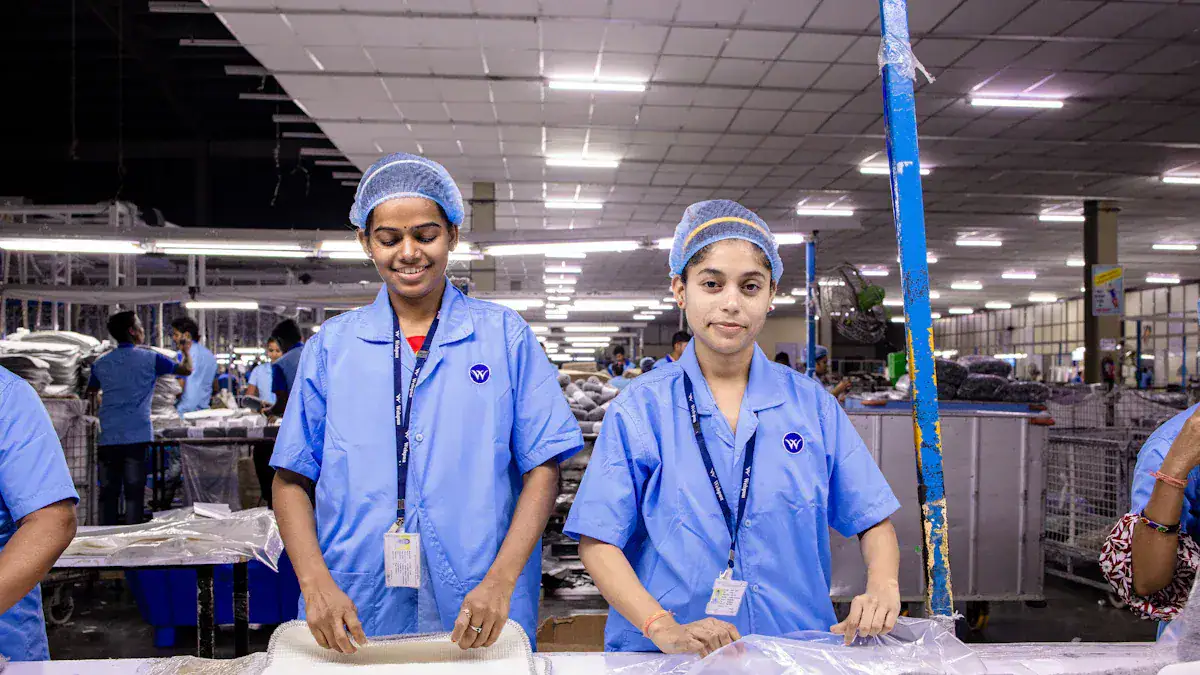
I rely on OEMs to produce FamilyMart’s uniforms and clothing line with precision. OEMs have the ability to handle large-scale production while maintaining consistent quality. They follow my brand’s technical specifications and design requirements. I see OEMs as partners who can adapt quickly to new styles and seasonal changes. Their advanced machinery and skilled workforce allow them to deliver products that match my expectations.
OEMs use detailed instructions for each manufacturing task.
They ensure consistency, quality, and safety in every batch.
Visual aids like diagrams and flowcharts help workers follow processes accurately.
I value how OEMs can accelerate product launches. Their organized systems make it possible to introduce new uniform designs without delays. I notice that clear communication between my team and OEMs leads to efficient decision-making and fewer mistakes.
Limitations
I recognize that OEMs face certain limitations. Sometimes, differences in interpretation of my brand standards can cause inconsistencies. I must monitor production closely to avoid quality issues. OEMs may struggle with unique materials or complex designs if they lack experience. I find that risk management is essential to identify problems early and prevent delays.
Aspect | Description |
|---|---|
Clear product definitions and requirements between OEM and suppliers. | |
Communication | Fosters efficient decision-making and open channels with suppliers. |
Risk Management | Minimizes risks by identifying issues early in the design stages. |
Quality Consistency | Ensures uniform product quality across multiple suppliers. |
Accelerated Launches | Facilitates quicker product launches through organized processes. |
Requirements
Design
I start every uniform project by developing detailed designs and technical specifications. My team creates tech packs that outline dimensions, materials, and techniques. These documents guide OEMs through the production process. I ask manufacturers to produce initial samples based on these tech packs. I review each sample and request adjustments until the product matches my brand’s vision.
Tip: I always include visual references and clear instructions in my tech packs to avoid confusion.
Brands develop detailed designs and technical specifications.
Manufacturers create samples for review and make necessary adjustments.
Quality control processes ensure alignment with brand standards.
Materials
I choose materials that reflect FamilyMart’s commitment to comfort and durability. I specify fabric types, colors, and finishing methods in my requirements. OEMs source these materials from approved suppliers who meet my sustainability and quality standards. I inspect every batch to confirm that the materials match my expectations.
I use a 50-item checklist during supplier inspections. This checklist covers everything from stitching quality to color accuracy. I rely on manufacturing SOPs to guide workers through specific tasks. These SOPs work alongside quality control checklists and inspection audits to maintain high standards.
Step | Description |
|---|---|
Tech Pack Development | Brands create detailed tech packs specifying dimensions, materials, and techniques. |
Sample Creation | Manufacturers produce initial samples based on the tech pack for review. |
Quality Control | Inspections and fabric testing ensure garments meet specifications and standards. |
I believe that strict requirements and thorough inspections help me deliver uniforms that represent FamilyMart’s brand values. I see OEMs as key partners in achieving this goal.
How FamilyMart Balanced Standards
Integration Strategies
Supplier Audits
I rely on supplier audits to align OEM production with global sourcing standards. These audits give me oversight and visibility across the supply chain. I use them to detect mistakes early and maintain quality. Audits help me identify vulnerabilities and areas of noncompliance. I improve communication with suppliers through regular audit feedback. I monitor ethical practices and ensure compliance with market standards.
I conduct audits to assure quality and compliance.
I use audits to spot issues before they affect production.
I maintain open communication with suppliers during the audit process.
I see supplier audits as a foundation for building trust and transparency. They help me uphold sustainability commitments and protect FamilyMart Balanced brand reputation.
Material Specs
I set strict material specifications for all uniforms. I require at least 20% recycled content by weight, focusing on recycled polyester and cotton. I prohibit harmful chemicals like formaldehyde and heavy metals. I demand that materials withstand at least 75 washes and include antibacterial and water-repellent features.
I specify recycled content for every uniform batch.
I ban hazardous chemicals to protect health and the environment.
I test materials for durability and performance.
These requirements support my sustainability goals and ensure consistent quality. I use material tracking systems to verify compliance with these standards. I believe that clear material specs help FamilyMart Balanced maintain its commitment to ethical sourcing.
Tip: I always update material specs to reflect new sustainability trends and regulatory changes.
Strategy | Description |
|---|---|
Reduce Supplier Count | The OEM reduced suppliers from 150 to 50 to lower costs and increase order volume. |
Split-Sourcing | Ensures at least two qualified sources for each component to mitigate risk. |
Supplier Integration | Involves a rigorous qualification process and ongoing collaboration to meet quality goals. |
I use supplier portals to facilitate communication and collaboration. I track materials to ensure compliance with sustainability and ethical standards. I make data-driven decisions using real-time management tools. I build domestic supply chains and leverage local labor and automation to reduce logistics complexity. I integrate advanced AI-driven analytics in procurement, which improves supply chain efficiency and reduces lead times by up to 15%.
Compliance
Monitoring
I automate routine compliance tasks to manage standards efficiently. I use real-time monitoring to detect and resolve compliance issues quickly. I establish standardized compliance policies across all sales channels. I monitor data access and audit trails in real time. I automate reporting for regulatory audits.
I use automated systems for compliance monitoring.
I enforce standardized policies across regions.
I track audit trails to ensure transparency.
These steps help me maintain ongoing adherence to global standards. I see compliance monitoring as essential for FamilyMart Balanced operations.
Reporting
I implement ESG data collection and reporting mechanisms using specialized software. I publish sustainability reports and ESG disclosures at least once a year. I engage stakeholders, including investors and customers, to communicate my ESG efforts.
Framework/Standard | Description |
|---|---|
Provides widely-adopted sustainability reporting standards, enabling companies to communicate their economic, environmental, and social impacts. | |
Sustainability Accounting Standards Board (SASB) | Defines sector standards covering environment, social and human capital, innovation, and governance. |
Task Force on Climate-Related Financial Disclosures (TCFD) | Structures the reporting of climate-related financial risks. |
Carbon Disclosure Project (CDP) | Assesses companies on carbon emissions, water management, and deforestation through an annual questionnaire. |
International Sustainability Standards Board (ISSB) | Aims to unify ESG reporting standards for improved comparability and transparency of ESG information for investors. |
I use frameworks like GRI, SASB, TCFD, CDP, and ISSB for sustainability reporting.
I publish annual reports to maintain transparency.
I communicate ESG progress to stakeholders.
I require certificates of compliance and declarations of conformity for all suppliers. I integrate AI-enhanced standardized protocols, which create a robust framework for meeting compliance requirements. I benefit from automatic updates in response to regulatory changes, improving accuracy by up to 40%. I integrate compliance protocols with existing systems, which enhances my business reputation and reduces risks. I have seen a 30% decrease in compliance-related incidents since adopting these protocols.
Note: I believe that transparent reporting and continuous monitoring are key to aligning OEM production with global standards.
Challenges
Regional Differences
Local Suppliers
I often face challenges when working with local suppliers in different regions. Each supplier brings unique strengths, but not all can meet my strict standards for ethical sourcing and sustainability. Some suppliers lack certifications or do not follow the environmental and labor practices I require. As consumer demand for transparency grows, I find it harder to identify partners who balance cost efficiency with responsible sourcing. I must spend extra time vetting suppliers to ensure they align with my values. This process sometimes slows down production, but I believe it is necessary to protect my brand and meet customer expectations.
Navigating international restrictions such as tariffs and quotas can complicate global sourcing.
Cultural differences may lead to misunderstandings, so I stay aware of communication styles.
I also notice that global sourcing gives me access to diverse resources and expertise. It helps me find cost advantages by leveraging differences in labor costs and regulations. However, I must manage logistical complexities and potential supply chain disruptions.
Regulations
Regulations vary widely from country to country. I must keep up with changing trade laws, product standards, and compliance requirements. Managing a custom uniform program means I need to understand each region’s rules. Sometimes, I encounter unexpected tariffs or quotas that affect my sourcing plans. I also deal with different documentation and certification processes. These regulatory challenges require constant attention and flexibility.
Logistics and transportation costs can rise quickly when I work across borders.
Compliance and regulatory challenges demand careful planning and monitoring.
Uniformity
Quality Control
Maintaining consistent product quality across regions is a major challenge. Fluctuating raw material prices and unpredictable demand make it difficult to keep standards high. I insist on supplier contracts that define responsibilities and penalties for non-compliance. I implement strict quality control measures to ensure uniforms meet my specifications. I also incorporate lean management principles to eliminate waste and improve efficiency.
I require clear contracts with suppliers.
I use regular inspections and audits.
I adopt lean management to reduce waste.
I find that these steps help me manage risks and maintain uniform quality, even when working with multiple suppliers.
Communication
Communication barriers often arise when I manage uniform production in different countries. Language differences and cultural misunderstandings can lead to mistakes. I develop effective communication strategies to overcome these barriers. I regularly update my teams about the uniform program and encourage questions. I use visual aids to reinforce understanding and implement digital cataloging for organized access to uniform options.
To foster effective communication within my business, I cultivate an atmosphere of transparency and openness. This approach encourages innovation and ensures information flows in all directions.
I select uniform management solutions that handle purchasing rules and streamline communication. By focusing on clear and open dialogue, I keep everyone aligned with the goals of FamilyMart Balanced.
Results
Consistency
Outcomes
I focus on delivering a consistent experience for customers in every FamilyMart store. I use strict standards for uniforms, store layout, and service. I believe that consistency builds trust and loyalty. I monitor every aspect of the store environment, from the products on the shelves to the uniforms my employees wear. I want customers to recognize FamilyMart wherever they go.
Here is how I maintain consistency across all locations:
Aspect | Description |
|---|---|
Product Range | Uniformity in the types of products offered across all locations. |
Shop Atmosphere | Consistent store layout and ambiance to enhance customer experience. |
Customer Service Standards | Adherence to specific service protocols to ensure quality interactions. |
Cleanliness | Maintenance of hygiene and cleanliness standards in all stores. |
Dress Code | Standardized employee uniforms to promote brand identity. |
Visual Identity | Consistent use of color schemes and branding elements for recognition. |
I set clear expectations for every store. I require managers to follow guidelines for product selection and store design. I train staff to greet customers in the same way and maintain a clean environment. I believe that these steps help me create a familiar and welcoming atmosphere.
Feedback
I listen to feedback from customers and employees. I use surveys and direct conversations to learn what works and what needs improvement. I notice that customers appreciate the clean stores and friendly service. Employees tell me that clear guidelines make their jobs easier. I adjust my standards based on this feedback to improve the experience for everyone.
I encourage open communication. I believe that honest feedback helps me solve problems quickly and keep standards high.
I reward stores that meet or exceed my expectations. I share best practices across regions to help every location improve. I see positive feedback as proof that my consistency strategies work.
Impact
Brand
I see a strong brand image as the result of my efforts. I use standardized uniforms and visual elements to make FamilyMart easy to recognize. I believe that customers trust my brand because they know what to expect. I use color schemes and logos that stand out in every market. I want FamilyMart to represent reliability and quality.
I maintain a unified brand identity.
I build customer loyalty through consistent experiences.
I increase brand recognition with clear visual cues.
Operations
I improve operations by using clear standards and efficient processes. I train staff to follow specific protocols, which reduces mistakes and saves time. I use technology to track performance and identify areas for improvement. I believe that strong operations support my brand and help me grow.
I streamline training for new employees.
I reduce costs by standardizing supplies and uniforms.
I use data to make better decisions.
I see operational excellence as a key part of FamilyMart’s success. I believe that consistency and strong impact go hand in hand.
Best Practices
Strategies
Supplier Management
I believe that strong supplier management forms the foundation of a reliable sourcing strategy. I always start by building clear communication channels with my suppliers. This approach helps me avoid misunderstandings and keeps everyone informed about expectations. I set performance metrics, such as key performance indicators (KPIs), to measure how well suppliers meet my standards. I find that regular audits and inspections help me catch issues early and maintain compliance.
I establish open communication with suppliers.
I set KPIs to track supplier performance.
I conduct audits and inspections to ensure standards are met.
I build long-term partnerships for stability.
I diversify my supplier base to reduce risk.
I notice that long-term relationships with suppliers create a stable supply chain. I work with suppliers who share my values and commitment to sustainability. I also avoid relying on a single supplier, which helps me manage risks and adapt to changes in the market.
Tip: I always keep backup suppliers ready. This strategy helps me respond quickly if a primary supplier faces challenges.
Standardization
I see standardization as a key driver for consistency across all stores. I develop clear guidelines for product quality, uniform design, and sourcing procedures. I use standardized tech packs and checklists to guide OEMs and suppliers. These documents outline every detail, from material specifications to packaging requirements.
Standardization Practice | Benefit |
|---|---|
Tech Packs | Ensures design consistency |
Checklists | Maintains quality standards |
SOPs | Streamlines production steps |
Training Materials | Improves staff performance |
I train my teams to follow these standards closely. I update guidelines regularly to reflect new trends and regulations. I believe that standardization reduces errors and improves efficiency.
Lessons
Improvement
I learn from every sourcing project. I collect feedback from suppliers, employees, and customers. I use this feedback to refine my processes and raise my standards. I encourage my team to share ideas for improvement. I believe that continuous learning helps me stay ahead in a competitive market.
I gather feedback after each project.
I review audit results to find areas for improvement.
I update training and guidelines based on lessons learned.
Note: I see improvement as an ongoing journey, not a one-time event.
Risk
I recognize that risk management is essential in global sourcing. I identify potential risks early, such as supply chain disruptions or regulatory changes. I create contingency plans to address these risks. I monitor market trends and adjust my strategies as needed.
I diversify suppliers to reduce dependency.
I keep up with regulatory updates.
I prepare contingency plans for unexpected events.
I believe that proactive risk management protects my brand and ensures business continuity. I encourage other companies to adopt these best practices for stronger supplier relationships and better standardization.
Future Outlook
Trends
Technology
I see technology changing the way I manage sourcing and uniform production. I use automated cutting systems and digital fabric printing to improve efficiency. These tools help me produce uniforms faster and with better quality. I rely on 3D printing to create samples and test new designs. Digital printing lets me make uniforms on demand, which reduces waste and extra inventory. I notice that modern technologies give me flexibility to adapt quickly to market trends. I can customize uniforms without high costs.
Evidence Type | Description |
|---|---|
Integration with Technologies | Automated cutting systems integrated with digital fabric printing and 3D printing enhance production efficiency and quality. |
Role of Digital Technologies | Digital fabric printing enables on-demand production, reducing waste and excess inventory. |
Enhanced Quality and Consistency | Modern technologies ensure consistent quality in uniform production, boosting brand reputation. |
Flexibility and Customization | Technologies allow for quick adaptation to market trends, enabling customization without high costs. |
I also see new trends like virtual reality (VR) and augmented reality (AR) changing how customers interact with uniforms. VR and AR let customers try on uniforms virtually, making the buying process easier and more engaging. Biotechnology is helping me use sustainable materials, such as lab-grown leathers and biodegradable fabrics. Innovative dyeing and printing techniques, like waterless dyeing and digital printing, help me save resources and reduce waste.
Biotechnology leads to eco-friendly materials.
Waterless dyeing and digital printing reduce resource use.
Sustainability
I recognize that sustainability is becoming a standard in global sourcing. The retail supply chain produces about 25% of global greenhouse gas emissions. I focus on reducing emissions and improving product traceability. I use blockchain technology to make my supply chain more transparent. AI helps me design sustainable products and cut down on inventory waste. I see more customers choosing pre-owned goods, which supports my sustainability goals. I believe that these initiatives will shape the future of retail sourcing.
Note: I always look for new ways to minimize waste and improve transparency in my supply chain.
Next Steps
Expansion
I plan to expand my sourcing network by building strong relationships with suppliers. I work closely with them to improve communication and reduce delays. I identify operational risks and develop strategies to respond quickly. I focus on quality control to minimize defects and improve lead times.
I collaborate with OEM suppliers to create quality control measures.
I define KPIs to assess supplier performance.
I encourage suppliers to invest in innovation and optimize production.
I see opportunities in leveraging diverse sourcing networks and enhancing compliance with local regulations. I know that balancing cost efficiency and lead time flexibility is important for future growth.
Evolving Standards
I prepare for evolving standards by staying updated on regulatory changes. I create risk mitigation plans to address supply chain disruptions. I ensure robust quality control to reduce costs and improve customer satisfaction.
Feature | Single-Country Model | Hybrid India-US Model |
|---|---|---|
Cost Efficiency | Moderate | High (via cost-lead time balance) |
Lead Time Flexibility | Rigid | Agile |
Risk Mitigation | Low | High |
Customs & Compliance | Complex | Simplified |
Local Responsiveness | Limited | Strong |
I believe that continuous improvement and innovation will help me meet new standards. I encourage other companies to focus on supplier relationships, risk management, and quality control. I see the future as a chance to build a more sustainable and responsive sourcing strategy.
I see how FamilyMart Balanced global standards with OEM uniform production by focusing on certifications, sustainability, and transparency. I notice that these strategies bring long-term benefits:
Improved brand reputation and consumer trust through ethical practices.
Enhanced stakeholder relationships from increased supply chain transparency.
Financial savings from streamlined resources and minimized waste. I encourage other companies to prioritize suppliers with high environmental and social standards. I believe that continuous improvement and proactive compliance will drive future success.
FAQ
What certifications do I require from my suppliers?
I require certifications like Global G.A.P. and GRI. These show that suppliers meet my standards for quality, safety, and sustainability. I also look for other recognized certifications to ensure ethical sourcing.
How do I ensure uniform quality across all stores?
I use strict quality control processes. I inspect uniforms with a 50-item checklist. I also conduct regular audits and review samples before approving production.
Why do I work with OEMs for uniform production?
OEMs help me produce uniforms at scale. They follow my technical specifications and design requirements. I value their ability to deliver consistent quality and adapt to new styles quickly.
How do I handle regional differences in sourcing?
I vet local suppliers carefully. I check for compliance with my standards and certifications. I also stay updated on local regulations and adjust my sourcing strategies as needed.
What steps do I take to promote sustainability?
I specify recycled materials in my uniforms. I ban harmful chemicals and require suppliers to follow environmental standards. I use technology to track materials and reduce waste.
How do I monitor supplier compliance?
I automate compliance tasks and use real-time monitoring tools. I require certificates of compliance from all suppliers. I also conduct regular audits and review reports to ensure ongoing adherence.
What should other companies learn from my approach?
Other companies should focus on clear communication, strong supplier management, and regular audits. I recommend using certifications and technology to improve transparency and sustainability.
Tip: Always update your standards to reflect new trends and regulations. This helps you stay ahead in the market.