

A Complete Guide to Chef Jacket Fabrics and Materials for Every Kitchen
Table of Contents
Display
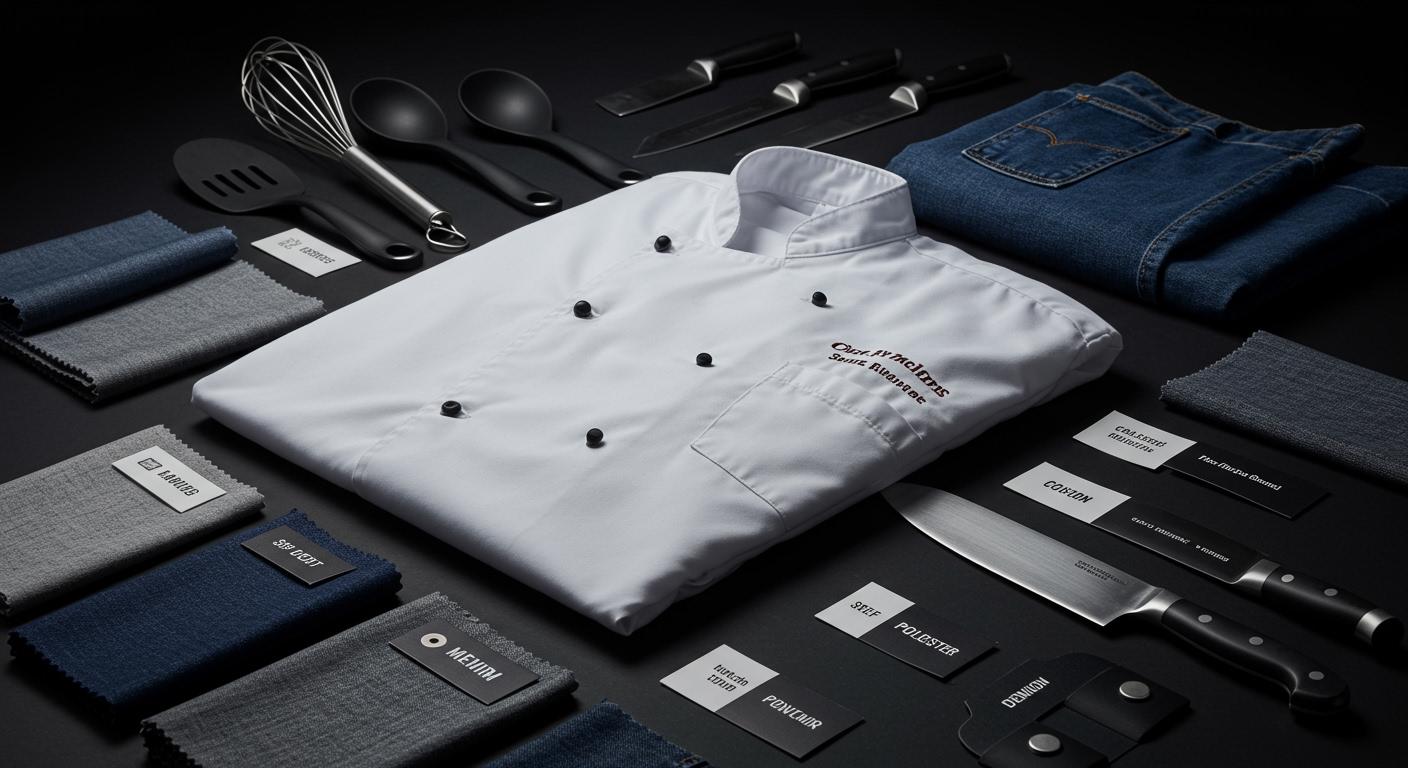
When I step into a busy kitchen, I always consider how my chef jacket feels against my skin. The best chef jacket fabrics offer comfort, durability, and breathability, which matter every day during service. I know that fire-resistant and antimicrobial materials keep chefs safe and hygienic. Thick cotton and cotton-polyester blends shield me from heat and spills, while the double-breasted design lets me reverse my jacket if I get stained. Choosing the right fabric makes me more comfortable, protects me, and helps me look professional.
Key Takeaways
Choose breathable fabrics like cotton or cotton blends to stay cool during long shifts in hot kitchens.
Select jackets with moisture-wicking technology to manage sweat and maintain comfort in high-heat environments.
Opt for stain-resistant materials to keep your uniform looking clean and professional throughout your shift.
Consider safety features like flame-retardant fabrics to protect against burns and kitchen hazards.
Invest in durable chef jackets that withstand frequent washing and heavy use, saving money in the long run.
Match your chef jacket to your kitchen environment for optimal comfort and performance.
Regularly inspect your chef jackets for wear and replace them when necessary to maintain hygiene and professionalism.
Explore eco-friendly options like organic cotton and recycled polyester to support sustainability in the culinary industry.
Why Chef Jacket Fabrics Matter
Comfort and Breathability
When I work long hours in a busy kitchen, I notice how much the right materials affect my comfort. I always look for chef jackets made from fabrics that keep me cool and dry. Pure cotton stands out for its breathability and moisture absorption. Cotton-polyester blends dry quickly and resist wrinkles, though they feel a bit less airy. Linen feels soft and wicks away sweat, making it ideal for hot kitchens. I often compare these options to find what keeps me comfortable during a hectic shift.
Tip: Choosing the right fabric can make a big difference in how you feel at the end of a long day.
Here’s a quick comparison of common chef jacket fabrics:
Fabric Type | Breathability | Moisture Absorption | Comfort Level | Care Requirements |
|---|---|---|---|---|
Pure Cotton | High | Excellent | Soft | Moderate |
Cotton-Polyester Blend | Moderate | Good | Comfortable | Easy |
Linen | High | Good | Very Soft | Moderate |
Safety and Protection
Safety always comes first in the kitchen. I rely on my chef jacket to shield me from burns, spills, and splatters. Some materials, like Teflon-treated fabrics, offer the highest level of protection and give me more time to react if hot oil or boiling water splashes. Regular and water-repellent fabrics provide moderate protection, but single-layer jackets offer less defense against burns. I choose my chef jacket based on the level of risk in my kitchen.
Fabric Treatment | Protection Level | Time to Second Degree Burn Injury |
|---|---|---|
Teflon® Treated Fabrics | Highest | Longest Time |
Regular Fabrics | Moderate | Shorter Time |
Water Repellent Fabrics | Moderate | Shorter Time |
Soil Release Fabrics | Moderate | Shorter Time |
Single-Layer Fabrics | Minimal | Less than 2 seconds |
Professional Image
A chef’s appearance matters as much as their skills. When I wear a clean, well-fitted chef jacket, I feel more confident and professional. Customers notice the difference. A sharp uniform shows attention to detail and dedication to quality. It also helps guests trust the kitchen staff. I have seen how a professional chef jacket can set the tone in a restaurant, distinguishing roles and creating a sense of order. Modern designs combine comfort and style, making it easier for me to look and feel my best.
A professional chef jacket enhances outward appearance and customer perceptions.
Clean, stylish uniforms reflect attention to detail and inspire confidence.
Uniforms help define roles in the kitchen and create a positive dining atmosphere.
I always remember that the tradition of the chef jacket goes beyond looks. It serves a real function—protecting me, keeping me comfortable, and helping me present myself as a true professional in any kitchen.
Common Chef Jacket Fabrics
Cotton
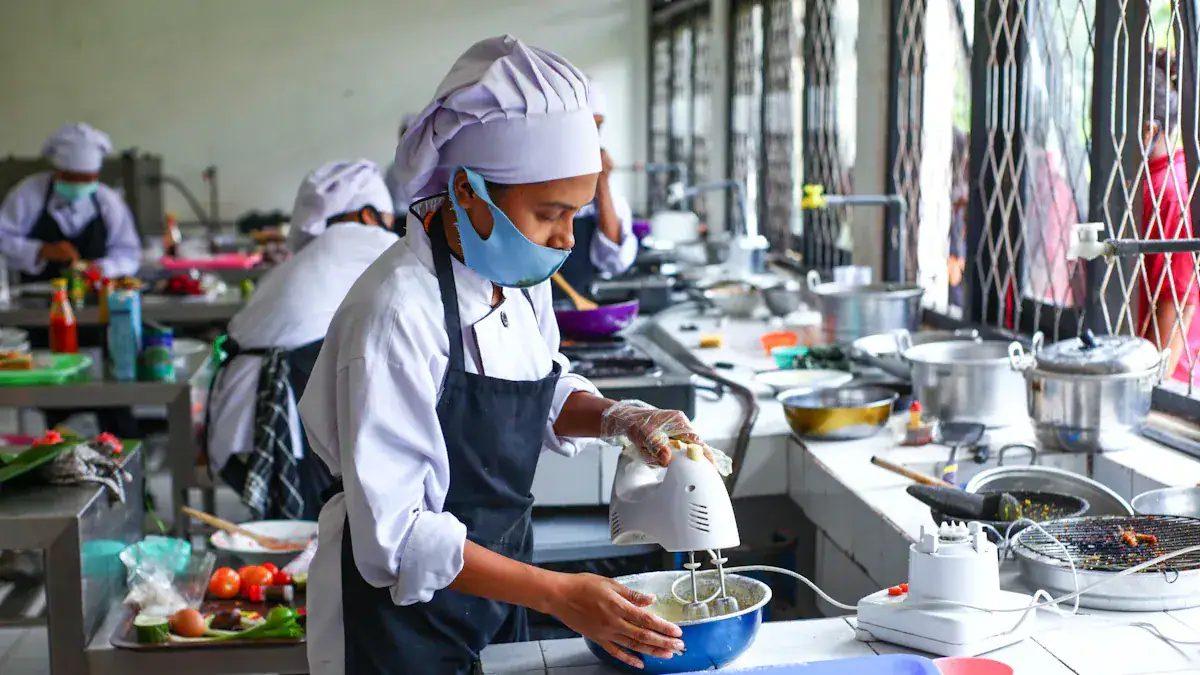
Cotton stands out as a classic choice for chef jackets. I often reach for cotton when I want a natural feel and maximum breathability. This fabric keeps me cool, even during the most intense kitchen rushes. Cotton absorbs moisture well, so I stay dry and comfortable throughout my shift. I appreciate how the material feels soft against my skin, which makes long hours more bearable.
Pros
Natural softness enhances comfort during long shifts.
Excellent breathability keeps me cool in a hot kitchen.
Absorbs moisture, wicking sweat away from my skin.
Feels comfortable and gentle, even after repeated washes.
Cotton’s hygroscopic properties help me stay dry and comfortable, especially when the kitchen heats up.
Cons
Tends to wrinkle easily, so I need to iron my jacket more often.
Lacks the durability of synthetic materials, which means it can wear out faster in a demanding kitchen.
Stains can set in quickly, making it harder to keep the jacket looking pristine.
Shrinks if I do not follow proper washing instructions.
Poly-Cotton Blends
Poly-cotton blends have become a staple in many professional kitchens. I choose these blends when I want a balance between comfort and durability. The combination of polyester and cotton gives me a jacket that resists wrinkles and stains, which saves me time on maintenance. I notice that these blends dry quickly, so I can wash and wear my chef jacket with minimal fuss.
Pros
Durable enough to withstand the rigors of a busy kitchen.
More wrinkle-resistant than pure cotton, so I look sharp with less effort.
Manages moisture well, allowing sweat to evaporate quickly.
Comfortable to wear, with a soft feel that does not sacrifice functionality.
Poly-cotton blends offer the best of both worlds: comfort from cotton and durability from polyester.
Cons
Slightly less breathable than 100% cotton, so I sometimes feel warmer during peak hours.
May pill over time, especially after frequent washing.
Not as soft as pure cotton, though still comfortable for most chefs.
Polyester
Polyester is a practical option for chefs who prioritize durability and easy care. I often see polyester chef jackets in kitchens where cost and maintenance matter most. This material resists wrinkles and stains, so my jacket looks clean even after a long shift. Polyester dries quickly, which is helpful when I need to wash my uniform frequently.
Pros
Highly resistant to wrinkles, so I spend less time ironing.
Easier to clean than cotton or blends, making stain removal simple.
Durable and lightweight, holding up well in a demanding kitchen environment.
Cost-effective, which helps when I need to buy multiple jackets.
Material | Wrinkle Resistance | Stain Resistance | Durability | Comfort |
|---|---|---|---|---|
Polyester | Excellent | Easier to clean | High | Moderate |
Cotton | Poor | Moderate | Low | High |
Poly-Cotton Blend | Moderate | Moderate | Moderate | High |
Cons
Less breathable than cotton or poly-cotton blends, so I sometimes feel hot during long shifts.
Not as comfortable against the skin, especially if I sweat a lot.
Can retain odors if not washed thoroughly.
I choose polyester when I need a jacket that stands up to frequent washing and heavy use, but I always consider comfort and breathability for long days in the kitchen.
Twill and Other Blends
Features
When I choose chef jackets for demanding kitchen environments, I often look for twill and other blended fabrics. Twill stands out because of its distinctive diagonal weave. This weave gives the material a unique texture and makes it more durable than many other options. I notice that twill fabrics resist wrinkles and stains, which helps me maintain a professional appearance throughout my shift. The softness of these materials adds to my comfort, even during long hours on my feet. I also appreciate the breathability, which keeps me cool when the kitchen heats up.
Durability that withstands frequent washing and heavy use
Distinctive diagonal weave for added strength and style
Resistance to wrinkles and stains, making maintenance easier
Softness that feels comfortable against my skin
Breathability that helps regulate body temperature
Twill and other blends often combine natural and synthetic fibers. This combination improves the performance of chef jackets. I find that these materials offer a balance between comfort and practicality, which is essential in a busy kitchen.
Use Cases
I rely on twill and blended fabrics when I need chef jackets that can handle tough conditions. These materials work well in high-volume kitchens where spills and stains happen often. I also choose them for catering events and outdoor cooking, where durability and easy care matter most. Twill blends keep me looking sharp, even after a long day of prepping and cooking. I recommend these jackets for chefs who want reliable protection and a comfortable fit.
High-volume restaurant kitchens with constant activity
Catering jobs that require frequent movement and exposure to different environments
Outdoor kitchens where durability and stain resistance are crucial
Any chef who values a balance of comfort, durability, and easy maintenance
Twill and other blends have become my go-to choice when I need chef jackets that perform well and last. These materials help me stay comfortable and professional, no matter what the kitchen throws at me.
Specialty Chef Jacket Materials
Moisture-Wicking Fabrics
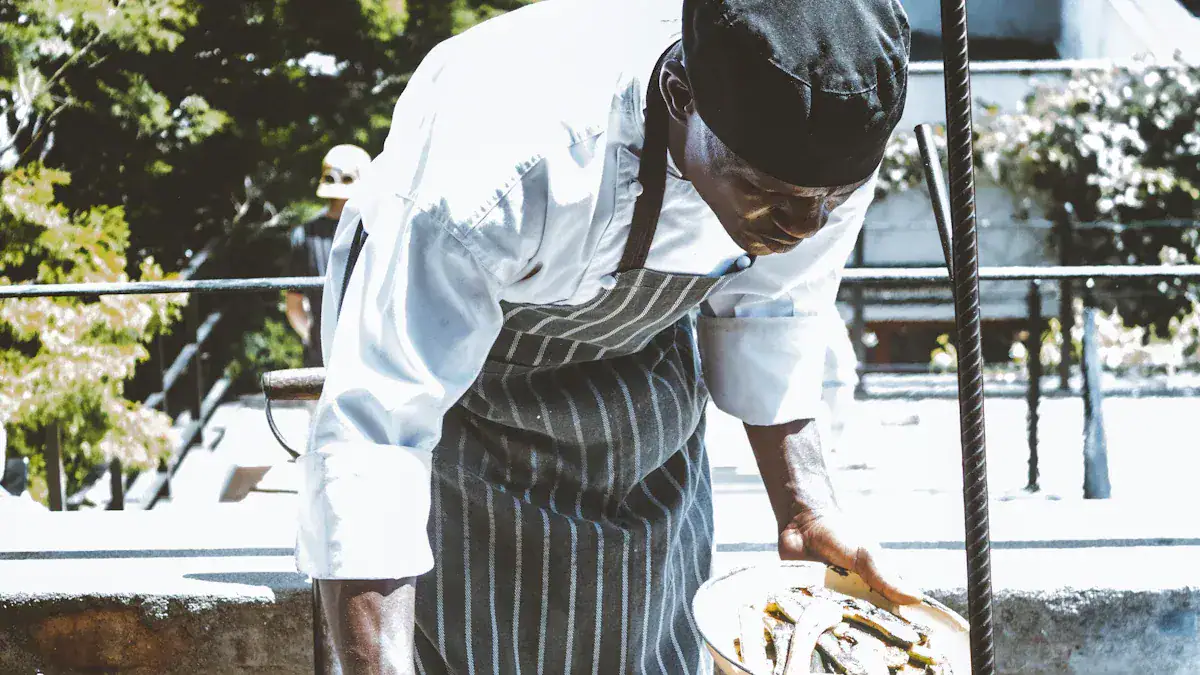
When I work in a high-heat kitchen, I rely on moisture-wicking fabrics to keep me dry and focused. These advanced materials pull sweat away from my skin and help regulate my body temperature. I have noticed that chef jackets made with moisture-wicking technology, such as DRYUP®, make a real difference during long shifts. Here are the main benefits I experience:
Sweat management keeps me dry and comfortable.
Efficient evaporation helps control my body temperature.
Lightweight and breathable fabrics prevent clinginess and improve comfort.
Drier skin means less odor and fewer bacteria.
I can focus better on my tasks without sweat distractions.
Quick-drying materials stop chafing and discomfort.
I always recommend moisture-wicking chef jackets for chefs who work in hot, fast-paced environments. These jackets help me stay comfortable and perform at my best.
Stain-Resistant Options
Stains are a constant challenge in any kitchen. I have tried many chef jackets, but stain-resistant options stand out for their ability to repel oil, sauces, and grease. These materials use advanced coatings and fabric technology to prevent permanent stains from common kitchen substances. The table below shows how different materials compare:
Material Type | Stain Resistance | Additional Notes |
|---|---|---|
Polyester | High; repels oil effectively | Durable, survives 80-100 industrial washes |
Untreated Cotton | Low; absorbs oil quickly | Less effective in preventing permanent stains |
Cotton-Poly Blends | Moderate; better than untreated cotton | Does not match the stain resistance of pure polyester |
Performance Fabrics | High; advanced stain-fighting tech | Reduces stain retention significantly |
Fluorocarbon Coatings | Reduces soy sauce stains by 72% | Cuts wipe-down time by 65% |
Photocatalytic Fabrics | 48% less grease residue after 8 hours | Breaks down oil under LED lights |
I choose stain-resistant chef jackets when I want to maintain a clean, professional look throughout my shift. These materials save me time on laundry and help my uniform last longer.
Flame-Retardant Materials
Safety is always my top priority in the kitchen. I trust flame-retardant materials to protect me from sudden flare-ups and hot surfaces. These chef jackets meet strict safety standards and regulations. The table below outlines some of the most important certifications:
Standard/Regulation | Description |
|---|---|
ASTM F1506 | Performance specification for flame-resistant fabrics for protective clothing, including tests for ignition resistance and thermal protective performance (TPP). |
OSHA 29 CFR 1910.132 | General PPE standards requiring suitable flame-resistant clothing for workers facing fire risks. |
OSHA 29 CFR 1910.269 | Specific requirements for electrical workers to use arc-rated FR clothing in hazardous environments. |
OSHA 29 CFR 1910.156 | Standards for fire brigade PPE, ensuring protection against extreme heat and fire hazards. |
I always check for these certifications when I select flame-retardant chef jackets. These materials give me peace of mind and help me stay safe in any kitchen environment.
Eco-Friendly Choices
As a chef, I have seen the growing importance of sustainability in our industry. I want my uniform to reflect my values, so I look for eco-friendly chef jacket materials whenever possible. These options help me reduce my environmental impact while maintaining the comfort and protection I need in the kitchen.
I often choose jackets made from organic cotton. This material comes from crops grown without harmful pesticides or synthetic fertilizers. I notice that organic cotton feels just as soft and breathable as conventional cotton, but it supports better farming practices. Some brands also use recycled polyester, which transforms plastic bottles and other waste into durable fabric. I appreciate how this process keeps plastic out of landfills and gives me a reliable, easy-care jacket.
Bamboo fabric has become another favorite of mine. Bamboo grows quickly and requires less water than traditional crops. The resulting fabric feels lightweight, breathable, and naturally antimicrobial. I find that bamboo chef jackets help me stay cool and fresh during long shifts.
Note: Eco-friendly materials often use less water and energy during production. They also reduce chemical runoff and pollution.
Here are some common eco-friendly chef jacket materials and their benefits:
Material | Key Benefits | Environmental Impact |
|---|---|---|
Organic Cotton | Soft, breathable, hypoallergenic | Grown without toxic chemicals |
Recycled Polyester | Durable, easy-care, quick-drying | Reduces landfill waste |
Bamboo | Lightweight, antimicrobial, cooling | Grows rapidly, low water use |
I always check for certifications like GOTS (Global Organic Textile Standard) or OEKO-TEX® when I shop for sustainable chef jackets. These labels assure me that the materials meet strict environmental and safety standards.
When I work in a kitchen that values sustainability, I make eco-friendly choices a priority. I recommend these materials for chefs who want to support green initiatives and set a positive example for their teams. Choosing sustainable uniforms shows that I care about the planet as much as I care about my craft.
Organic cotton works well for everyday wear and sensitive skin.
Recycled polyester suits high-volume kitchens where durability matters.
Bamboo fabric keeps me comfortable in hot, busy environments.
I believe that every chef can make a difference by selecting eco-friendly jackets. These choices help protect the environment and inspire others in the culinary world to do the same.
Choosing Fabrics for Chef Coats
Kitchen Environment
When I select a chef jacket, I always start by considering the kitchen environment. The right fit and fabric can make or break my day. Each kitchen presents unique challenges, so I match my uniforms to the demands of my workspace.
High-Heat
Working in a high-heat kitchen pushes my limits. I sweat more, and the air feels heavy. I choose breathable fabrics like cotton or cotton blends because they allow air to circulate and keep me cool. Lightweight materials wick moisture away from my skin, so I stay dry even during the busiest hours. I also look for jackets with a relaxed fit to improve airflow and prevent overheating.
Cotton and cotton blends help maintain comfort in hot, humid kitchens.
Breathable fabrics allow air to move, keeping me cool.
Lightweight materials wick moisture away, so I remain dry.
A relaxed fit ensures my jacket does not cling and lets me move freely.
Fast-Paced
In a fast-paced kitchen, I need uniforms that can keep up with constant movement. I rely on durable fabrics like cotton-poly blends for their resilience and wrinkle resistance. These materials withstand frequent washing and rough handling. I always check that my jacket offers a comfortable fit, so I can move quickly without restriction. Moisture-wicking options help regulate my body temperature, which keeps me focused on my tasks.
Wrinkle-resistant materials keep me looking sharp.
Moisture-wicking fabrics help me stay dry during long shifts.
A tailored fit supports agility and speed.
Fine Dining
Fine dining kitchens demand a polished appearance. I select chef jackets made from premium materials that hold their shape and resist stains. I prefer a tailored fit that looks sharp and professional. Customization options, such as embroidered names or unique buttons, help me stand out. I want my uniforms to reflect the high standards of the restaurant.
Premium fabrics maintain a crisp, clean look.
Stain-resistant materials protect my appearance.
A tailored fit enhances my professional image.
Customization options add a personal touch.
Outdoor
Outdoor kitchens present their own set of challenges. I face unpredictable weather, so I choose jackets made from durable, quick-drying materials. Breathable fabrics keep me comfortable in the heat, while water-resistant options protect me from sudden rain. I always look for a fit that allows easy layering, so I can adapt to changing conditions.
Durable, quick-drying materials withstand outdoor elements.
Breathable fabrics keep me cool under the sun.
Water-resistant options shield me from rain and spills.
A flexible fit allows for layering as needed.
Tip: Always match your chef jacket to your kitchen environment. The right fit and fabric will keep you comfortable and protected, no matter where you cook.
Comfort vs. Durability
I often face a trade-off between comfort and durability when choosing kitchen uniforms. I want a jacket that feels good against my skin but also stands up to daily wear and tear. I look for brands that offer a spacious fit for breathability and ease of movement. High-quality materials, such as cotton-poly blends, give me the best of both worlds. They provide a comfortable feel and last through countless washes.
Some professional chefs prefer traditional elegance, while others want modern functionality. I always prioritize a fit that supports my work style. Customization options, like adjustable cuffs or vented panels, help me fine-tune my jacket for maximum comfort. I know that the right balance enhances my performance and keeps me looking professional.
Feature | Comfort | Durability |
|---|---|---|
Spacious fit | Increases airflow and movement | May reduce abrasion in stress areas |
High-quality fabrics | Soft, breathable, gentle on skin | Withstand frequent washing |
Customization | Adjustable for personal comfort | Reinforces high-wear zones |
Note: I always test the fit before buying. A jacket that feels comfortable at the start of my shift should still fit well after hours of work.
Maintenance Needs
Maintenance plays a big role in my decision. I invest in quality materials that are easy to care for and can handle the rigors of a busy kitchen. I always follow care labels to keep my uniforms in top shape. I pre-treat stains as soon as they happen, which helps prevent them from setting. I use gentle detergents to avoid damaging the fabric.
I wash my chef jackets separately from other laundry to prevent cross-contamination. When possible, I hang my uniforms to air dry, which helps them keep their shape and prevents shrinkage. I iron with care, using the right heat setting and turning the jacket inside out. I store my uniforms in a cool, dry place to avoid fading. I rotate between multiple jackets to reduce wear on any single one. Regular inspections help me catch signs of wear early, so I can repair or replace my uniforms as needed. For deep cleaning, I sometimes use professional services.
Invest in durable, easy-care materials.
Follow washing and drying instructions closely.
Pre-treat stains immediately.
Use mild detergents to protect the fabric.
Wash uniforms separately.
Air dry to maintain fit and shape.
Iron inside out with the right heat setting.
Store in a cool, dry place.
Rotate uniforms to extend their lifespan.
Inspect regularly for wear and tear.
Replace uniforms when necessary.
Pro Tip: Proper maintenance keeps your chef jackets looking sharp and ensures a comfortable fit every time you step into the kitchen.
Budget Considerations
When I shop for kitchen uniforms, I always weigh the balance between quality and cost. The price of a chef jacket can vary widely depending on fabric, brand, and features. I have learned that investing in the right jacket saves money in the long run, even if the initial cost seems higher.
I often compare different chef coat types to find the best value for my needs. Some jackets offer advanced features like moisture-wicking panels or stain resistance, while others focus on classic style and simplicity. The following table shows the typical price range for popular chef coats:
Chef Coat Type | Price Range |
|---|---|
Barbados Pro Vent Chef Coat | $27.38 – $37.35 |
Aruba Pro Vent Chef Coat | $23.93 – $38.15 |
Antigua Pro Vent Chef Coat | $20.63 – $37.47 |
Calypso Pro Vent Chef Coat | $23.93 – $35.90 |
Bristol Chef Coat | $21.98 – $28.58 |
Chambray Chef Coat | $23.93 – $31.11 |
Classic Chef Coat | $14.93 – $30.27 |
Chef Coat | $13.43 – $20.15 |
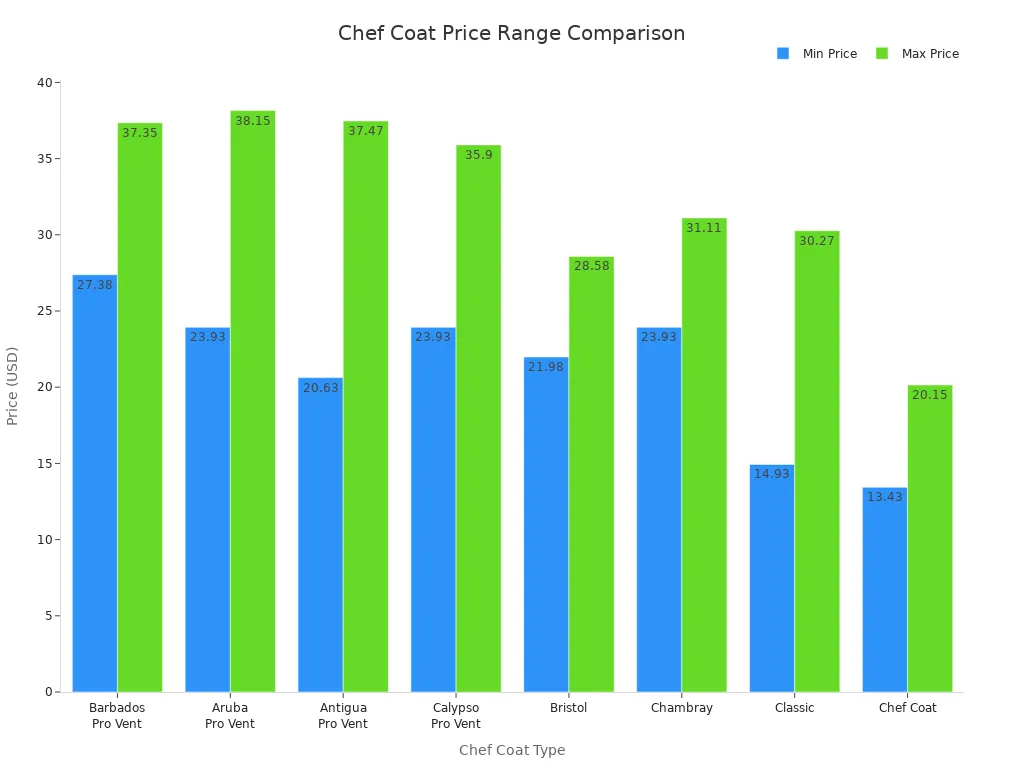
I notice that basic chef coats cost less, making them a good choice for home cooks or those just starting out. More advanced options, such as the Pro Vent series, come with higher price tags but offer better breathability and durability. I consider how often I work in the kitchen and how much wear my uniforms will face before deciding how much to spend.
Customization also affects the final price. When I add embroidery, special buttons, or unique colors, the cost increases. I find that customization options help me stand out in a professional kitchen, but I only invest in these features when they fit my budget and needs.
To make the most of my investment, I follow these steps:
Set a clear budget before shopping for kitchen uniforms.
Decide which features matter most, such as stain resistance or breathability.
Compare price ranges for different chef coat types.
Factor in the cost of customization if I want a personalized look.
Consider long-term value—sometimes a higher upfront cost means fewer replacements over time.
Tip: I always remember that the cheapest option is not always the best value. A well-made chef jacket lasts longer and performs better, saving me money and hassle in the future.
By carefully weighing my options, I ensure that my kitchen uniforms meet both my performance needs and my budget. This approach helps me stay comfortable, professional, and prepared for any kitchen challenge.
Care Tips for Chef Jackets
Washing and Drying
I always pay close attention to how I wash and dry my chef jackets. Proper care keeps my uniforms looking sharp and extends their lifespan. Here’s my step-by-step process for washing chef jackets made from cotton, polyester, and blends:
I treat stains immediately with an enzyme-based stain remover or a heavy-duty liquid detergent. Quick action prevents stains from setting.
If I cannot wash my jacket right away, I presoak it in warm water with detergent and oxygen-based bleach. This helps lift stubborn stains.
I always check the care label for the recommended washing temperature and detergent type. Each fabric has its own needs.
I avoid putting stained jackets in the dryer or ironing them until I am sure the stains are gone. Heat can set stains permanently.
For yellowing or fading, I use oxygen-based bleach instead of chlorine bleach. This keeps the fabric strong and bright.
I add a splash of white distilled vinegar during the rinse cycle. This removes detergent residue and boosts whiteness.
Occasionally, I use laundry bluing to counteract yellowing and keep my whites crisp.
Tip: Always wash chef jackets separately from other laundry to prevent color transfer and maintain a professional appearance.
Stain Removal
Stains are part of life in the kitchen. I have learned that acting fast makes all the difference. Here’s how I tackle stains on my chef jackets:
I act quickly. The sooner I treat a stain, the better my chances of removing it.
I pretreat the stain with an enzyme-based remover or heavy-duty detergent. I use a soft brush and let it sit for about 15 minutes.
For tough stains, I presoak my jacket in warm water with detergent and baking soda. This loosens the stain before washing.
I always wash my white chef coats separately from colored items. This prevents color bleeding and keeps my whites bright.
I use hot water for oily stains and cold water for protein stains like egg or dairy. The right temperature makes a big difference.
I choose a heavy-duty, enzyme-based detergent for food stains. These products break down grease and organic matter.
Before drying, I check to make sure the stain is gone. Heat from the dryer can set any remaining stain.
I sometimes use bleach for lighter stains, but I avoid it for deeper stains or frequent use. Pre-soaking with bleach can help, but I prefer to limit harsh chemicals to protect the fabric.
Not all stains are the same. Protein stains need cold or warm water to avoid setting.
For persistent stains, I have tried specialized products like SuperTrump™. These work well, though they can be expensive.
Note: Regular maintenance and gentle cleaning methods help my jackets last longer and look better.
Extending Lifespan
I want my chef jackets to last as long as possible. Over the years, I have developed a few habits that keep my uniforms in top shape:
I avoid leaning against rough surfaces to prevent snags and tears.
I always button my jacket to protect both the jacket and my clothes underneath.
I wear an apron for extra protection against spills and stains.
I check the care instructions before every wash.
I pre-treat stains as soon as I notice them.
I wash my jackets separately to avoid color bleeding.
I use a mild detergent and steer clear of harsh chemicals.
I wash in cold or lukewarm water to prevent shrinking and fading.
I line dry my jackets whenever possible. This helps them keep their shape and prevents heat damage.
By following these steps, I keep my chef jackets looking professional and ready for every shift.
When to Replace
I always pay close attention to the condition of my chef jackets. Over time, even the best materials show signs of wear. I know that replacing a chef jacket at the right moment keeps me safe, maintains hygiene, and preserves my professional image.
I start each shift with a clean uniform. I wash my jackets regularly at high temperatures to eliminate contaminants. If my jacket becomes soiled during service, I change it immediately. Cleanliness is not just about appearance—it protects me and those around me from foodborne illnesses.
I look for these clear signs that tell me it is time to replace my chef jacket:
Torn fabric or holes that expose my skin to burns or spills.
Frayed seams or loose buttons that compromise the jacket’s protective function.
Stains that do not come out after repeated washing, especially those from oil, sauces, or chemicals.
Fading or discoloration that makes my uniform look unprofessional.
Persistent odors that remain even after thorough cleaning.
Loss of shape or fit, which can restrict movement or look sloppy.
When I see heavy damage, I do not hesitate to retire the jacket. Extensive stains also prompt me to change my uniform. I know that a stained or damaged jacket reflects poorly on my skills and the standards of my kitchen.
Tip: I always keep a spare chef jacket on hand. Quick changes help me stay fresh and professional throughout the day.
I also consider safety. If my jacket no longer provides adequate protection from heat or splashes, I replace it right away. I never risk my health for the sake of saving a few dollars. Chef jackets serve as personal protective equipment, so I treat them with the same respect as any other safety gear.
Here is a simple checklist I use to decide when to replace my chef jacket:
Replacement Criteria | Why It Matters |
|---|---|
Torn or damaged fabric | Reduces protection |
Persistent stains | Harms professional appearance |
Faded or discolored areas | Lowers confidence and hygiene |
Unpleasant odors | Indicates lingering bacteria |
Poor fit or shape | Restricts movement, looks sloppy |
I believe that investing in new chef jackets when needed shows my commitment to safety, hygiene, and professionalism. I always want my uniform to reflect the pride I take in my work.
Quick Reference for Professional Chefs
Fabric Comparison Table
When I need to choose a chef jacket, I always compare the main fabric options side by side. This table helps me see the differences at a glance. I look for comfort, durability, and suitability for my kitchen environment. I find that each fabric offers unique benefits. I use this table to match my needs with the right material.
Fabric Type | Characteristics | Advantages | Suitability for Kitchen Environments |
|---|---|---|---|
Polycotton Chef Clothing | Cotton and polyester blend; light; stretchy; stain resistant | Versatile; comfortable; stain resistant | Good for various kitchen tasks |
Cotton Chef Coats | Light; soft on skin; ideal for hot kitchens | Comfortable; breathable; great for aprons/coats | Excellent for hot kitchen environments |
Polyester Chef Uniform | 100% polyester; adaptable; easy to wash and style | Easy maintenance; comfortable; good for long shifts | Suitable for busy kitchen settings |
Cotton Denim Chef Jackets | Thick yet lightweight; soft on skin | Durable; protective; comfortable | Good for chefs needing durability and comfort |
Tip: I always check the fabric blend before buying. The right combination can improve comfort and extend the life of my jacket.
Selection Checklist
I use a simple checklist to make sure I select the best chef jacket for my needs. This helps me avoid mistakes and ensures I stay safe and comfortable in the kitchen.
I check if the jacket is made from flameproof, double-thick cotton. This protects me from steam, gas flames, and hot ovens.
I look for breathability. Cotton and polycotton blends keep me cool during long shifts.
I consider stain resistance. Polycotton and polyester fabrics help me maintain a clean, professional look.
I test the fit. A jacket should allow easy movement and not restrict my arms or shoulders.
I inspect the seams and buttons. Strong stitching and secure fastenings prevent accidents.
I choose a style that matches my kitchen environment. Fine dining calls for tailored jackets, while outdoor cooking needs quick-drying materials.
I check care instructions. Easy-to-wash fabrics save me time and effort.
I review certifications for specialty jackets. Flame-retardant and eco-friendly options often carry labels like ASTM or GOTS.
I set a budget. I balance quality and cost to get the best value for my investment.
I keep a spare jacket ready. Quick changes help me stay fresh and professional throughout the day.
Note: I always prioritize safety and comfort. The right chef jacket supports my performance and protects me from kitchen hazards.
By using this table and checklist, I make informed decisions every time I shop for chef jackets. I stay prepared for any kitchen challenge and maintain a professional image.
When I choose a chef jacket, I focus on several essential factors:
Comfort and breathability to stay cool
Moisture management for hygiene and comfort
Design elements such as double-breasted style and proper fit
I always assess my kitchen environment and personal preferences before making a decision. I recommend reviewing the checklist and sharing your experiences with other chefs. The importance of uniforms goes beyond appearance—they support comfort, safety, and professionalism every day.
FAQ
What is the main difference between chef coats and regular kitchen jackets?
I notice that chef coats offer more protection, durability, and professional appearance than regular kitchen jackets. Chef coats use thicker fabrics and often feature a double-breasted jacket design for added safety and style.
How do I choose between different types of chef coats for my kitchen?
I always consider the kitchen environment, comfort, and maintenance needs. I compare different types of chef coats by fabric, fit, and features. I select a coat that matches my daily tasks and personal preferences.
Why do chef coats have long sleeves?
Long sleeves on chef coats protect my arms from burns, splashes, and hot surfaces. I find that long sleeves also help maintain hygiene by covering my skin. Some chefs prefer short sleeves for better airflow, but I value the extra protection.
How often should I replace my chef coat?
I replace my chef coat when I see tears, stains, fading, or a poor fit. I check my chef coats regularly for signs of wear. I keep a spare coat ready for quick changes during busy shifts.
Are there chef coats designed for women?
Yes, I find chef coats tailored for women with a more fitted cut and flexible sizing. These chef coats provide comfort and a professional look. I recommend trying on different types of chef coats to find the best fit.
Can I customize my chef coat with embroidery or logos?
I often personalize my chef coat with embroidery, logos, or unique buttons. Many brands offer customization options for chef coats. I choose these features to reflect my style and promote my restaurant’s brand.
What is the benefit of a double-breasted jacket in chef coats?
A double-breasted jacket lets me reverse the front if I get stained. This feature helps me maintain a clean appearance. I also find that the extra fabric adds protection from heat and spills.
How do I care for chef coats to make them last longer?
I wash chef coats separately, treat stains quickly, and follow care instructions. I use mild detergent and air dry my coat when possible. I rotate between chef coats to reduce wear and extend their lifespan.