

How to Select the Best Chef Coat for Your Needs
Table of Contents
Display
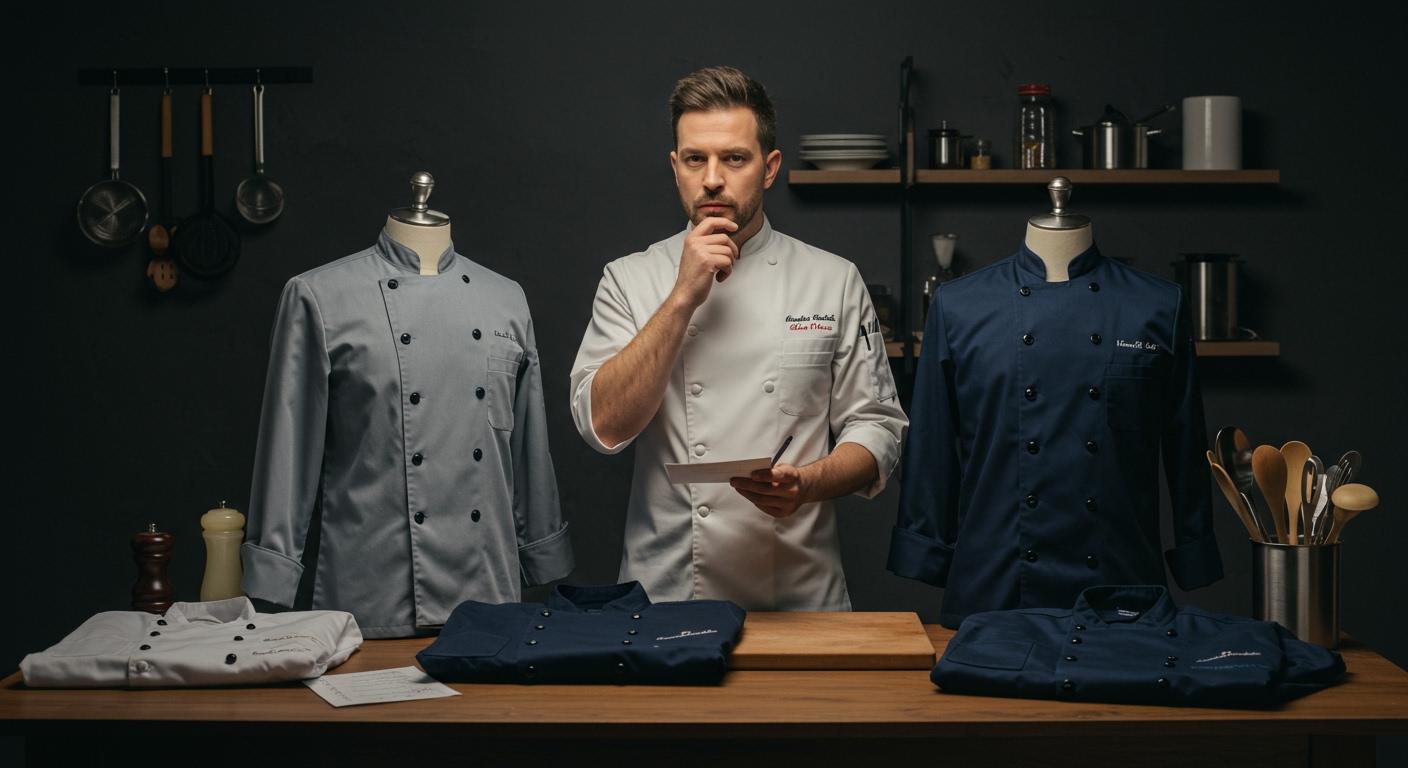
Have you ever wondered how the right chef coat can change your experience in the kitchen? Picture yourself moving quickly between hot stoves and sharp tools. You want to feel comfortable, stay safe, and look professional at the same time. Think about what you do as a chef and how your daily tasks shape your needs. The best advice is to match your choice to both your work and your personal style.
Key Takeaways
Comfort is crucial. Choose chef coats made from breathable materials to stay cool during long shifts.
Safety matters. Opt for coats with long sleeves and durable fabrics to protect against burns and spills.
Professionalism is key. A well-fitted chef coat enhances your appearance and reflects your role in the kitchen.
Consider your kitchen role. Different positions may require specific colors and styles for easy identification.
Mobility is important. Look for chef coats with stretch-fit panels or ventilated designs to allow free movement.
Select the right fabric. Blends of cotton and polyester offer comfort, durability, and stain resistance.
Check for stain resistance. Coats with advanced treatments help maintain a clean and professional look.
Use fit finder tools. These can help you find the right size and fit for your body type, ensuring comfort and mobility.
Chef Coat Importance
Comfort
You spend long hours in a professional kitchen, so comfort becomes essential. The best chef uniforms use materials that allow your skin to breathe and help you stay cool. When you wear comfortable clothing, you move more freely and focus on your cooking. Chef uniforms with the right fit and comfort prevent distractions and fatigue. Many chefs choose uniforms with soft fabrics and a relaxed fit. This choice helps you avoid irritation and keeps you feeling fresh during busy shifts. If you want to perform at your best, always look for chef uniforms that prioritize comfort.
Safety
Chef uniforms play a major role in keeping you safe. Hot liquids, oil splashes, and open flames are common hazards in any kitchen. A chef coat made from thick, durable materials acts as a barrier. Long sleeves protect your arms from burns and scalds. The design of chef uniforms helps shield you from sudden accidents. You can trust that the best chef uniforms will reduce your risk of injury. When you wear a proper uniform, you show that you value safety as much as skill.
Tip: Always check that your chef uniform covers your arms and fits well. This simple step can prevent many kitchen injuries.
Professionalism
Chef uniforms do more than protect you—they also show your professionalism. When you walk into a kitchen, your uniform tells others about your role and experience. The chef uniform often reflects your rank. For example:
Executive Chefs wear double-breasted white jackets and tall toques, showing leadership.
Sous Chefs have similar uniforms but with smaller toques, marking their supportive role.
Chef de Partie uniforms use color coding for easy identification of each station.
A clean, well-fitted chef uniform makes a strong first impression. It helps guests and coworkers recognize your expertise. Many restaurants use custom chef uniforms to match their brand. This attention to detail creates a unified and professional look for the whole team. When you wear the best chef uniforms, you help build trust and respect in the kitchen.
Kitchen Environment
Role
Your responsibilities in the kitchen shape the features you need in a chef coat. Different roles require different colors and styles, which help everyone identify each other quickly. The table below shows how chef roles often match with specific jacket colors and their meanings:
Chef Role | Jacket Color | Significance |
|---|---|---|
Executive Chef | White | Symbolizes leadership and authority in the kitchen |
Sous Chef | Black/Dark Blue | Indicates responsibility and accountability |
Line Cook | Various Colors | Signifies specific roles (e.g., red for grill cook, green for sauté cook) |
You might notice that color coding helps organize the kitchen and keeps communication clear. If you work as a line cook, your coat may show your station, while an executive chef’s white jacket signals leadership. This system supports teamwork and efficiency.
Note: Research shows that 85% of diners notice staff uniforms. Your chef coat can influence how guests view the restaurant’s quality and service.
Movement
Every kitchen has its own pace. In fast-paced kitchens, you need a chef coat that lets you move freely and keeps you comfortable during long shifts. Look for features like stretch-fit panels or ventilated designs. These details help you bend, reach, and turn without restriction. Mobility matters most when you work in tight spaces or handle many tasks at once.
Practicality is key in busy kitchens. Many chefs choose coats with checkered patterns to hide stains and keep a neat appearance.
Department color coding also helps everyone know where they belong, which reduces confusion during busy times.
A well-designed chef coat supports your movement and helps you stay focused on your work.
Heat
Heat and humidity challenge every chef. Modern kitchens often use advanced fabric technologies to solve these problems. For example, some chef coats use DRY-UP® Technology, which wicks away moisture and dries quickly. This feature keeps you cool and dry, even when the kitchen gets hot. Ventilated designs and breathable fabrics also improve airflow, making your shift more comfortable.
The choice of fabric matters for comfort, safety, and durability. If you work in a high-heat kitchen, select a chef coat with moisture-wicking and quick-drying materials. These features help you stay focused and safe, no matter how intense the environment becomes.
Chef Coat Fabric

Choosing the right fabric for your chef coat makes a big difference in your daily comfort and performance. You need a coat that stands up to the demands of the kitchen while keeping you cool and protected. The material you select affects breathability, durability, and stain resistance. Let’s break down the most common options.
Materials
Cotton
Cotton feels soft against your skin and allows air to flow easily. Many chefs prefer cotton for its natural breathability and comfort. You can wear cotton for long hours without feeling overheated. However, cotton may stain easily and sometimes lacks the durability needed for heavy kitchen work.
Polyester
Polyester offers strong durability and resists stains well. You can rely on polyester to keep its shape and color after many washes. This material stands up to spills and splashes, making it practical for busy kitchens. Polyester can trap heat, so you might feel less comfortable during long shifts.
Blends
Blended fabrics combine the best features of cotton and polyester. You get the comfort and breathability of cotton with the durability and stain resistance of polyester. Many chef coats use blends to balance softness and strength. Poly-cotton blends also resist wrinkles and help sweat evaporate quickly, which keeps you feeling fresh.
Here’s a quick comparison of the main materials:
Material Type | Advantages | Disadvantages |
|---|---|---|
Cotton | Breathable, comfortable | Can be less durable, may stain easily |
Polyester | Durable, stain-resistant | Less breathable, can trap heat |
Blends | Combines benefits of both | May vary in comfort and durability |
You can see that each material has strengths and weaknesses. If you want comfort, cotton works well. If you need durability, polyester or blends offer better protection.
Breathability
Breathability matters most when you work in a hot kitchen. You need a chef coat that lets air circulate and keeps sweat away from your skin. Cotton stands out for breathability, but modern blends and advanced fabric technologies also help. Many chef coats now use DRY-UP® Technology, which wicks away moisture and dries quickly. This feature regulates your body temperature and keeps you comfortable during long shifts.
Some chef coats include stretch-fit panels and ventilated designs. These features improve airflow and allow you to move freely. Mesh zones in the fabric add extra breathability, so you stay cool even when the kitchen heats up.
Fabric Technology | Description |
|---|---|
DRY-UP® Technology | Moisture-wicking, quick-dry fabric that regulates body temperature by wicking away sweat. |
Stretch-Fit Panels | Flexible fabric zones that enhance mobility and comfort for chefs on the move. |
Ventilated Design | Incorporates mesh zones for improved airflow and inherent breathability of the DRY-UP® fabric. |
Durable Construction | Premium fabric blends (67% polyester, 33% cotton) ensure longevity and resistance to wear. |
If you want a chef coat that supports breathability and functionality, look for these features when you shop.
Stain Resistance
Stain resistance helps you maintain a clean and professional appearance. Kitchen work exposes you to sauces, oils, and other messy ingredients. Chef coats with stain-resistant treatments make cleaning easier and keep your uniform looking sharp.
Laboratory tests show that fluorocarbon armor reduces stains by 72% and cuts wipe-down time by 65%. Photocatalytic magic treatments leave 48% less grease residue after eight hours. These advanced treatments help you spend less time worrying about stains and more time focusing on your cooking.
Treatment Type | Stain Reduction | Wipe-down Time Reduction |
|---|---|---|
Fluorocarbon armor | 72% | 65% |
Photocatalytic magic | 48% less grease residue after 8 hours | N/A |
When you choose a chef coat, check for stain-resistant features. You will save time and keep your uniform looking new.
Tip: Use online fit finder tools to match the right material and fit to your body type. These tools help you select a chef coat that balances comfort, breathability, and durability.
Chef Coat Fit
Sizing
Choosing the right size chef jacket ensures you stay comfortable and look professional throughout your shift. You need to measure your chest and center back length to find the right size chef jacket. Use a flexible tape measure for accuracy. Stand straight and wrap the tape around the fullest part of your chest. For center back length, measure from the base of your neck down to where you want the jacket to end.
Here is a helpful size chart to guide you:
SIZE | CHEST | CENTER BACK LENGTH |
|---|---|---|
XS | 30.5″ | 31.5″ |
S | 40.5″ | 32″ |
M | 44.5″ | 32.5″ |
L | 48.5″ | 33″ |
XL | 52.5″ | 33.5″ |
XXL | 56.5″ | 34″ |
XXXL | 60.5″ | 34.5″ |
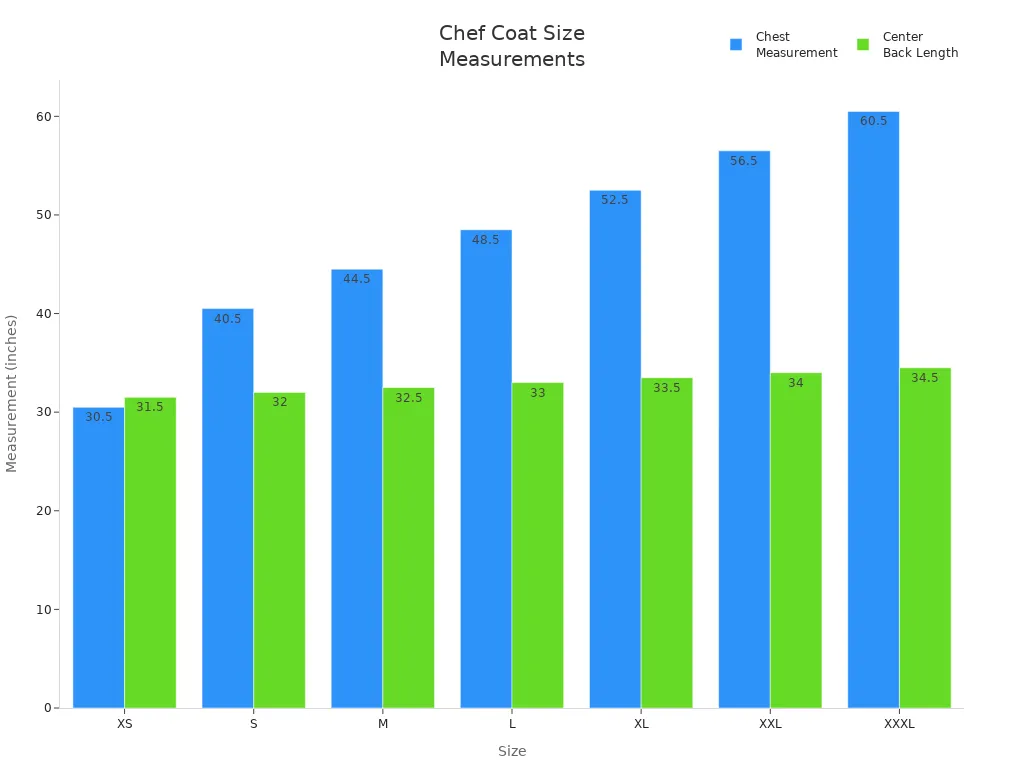
You should always check the manufacturer’s sizing guide before you buy. A well-fitted jacket will not only look sharp but also help you move with confidence. If you fall between two sizes, choose the larger one for extra comfort and ease of movement.
Tip: Try on different sizes if possible. Move your arms and bend at the waist to test the fit before making a final choice.
Mobility
You spend hours on your feet, reaching, bending, and lifting in a busy kitchen. The fit of your chef coat directly affects your mobility and comfort. A tailored fit gives you a sharp look, but you need enough room to move freely. High-performance fabrics like cotton, polyester, and spandex offer flexibility and breathability. These materials help you stay cool and agile during long shifts.
Modern chef coats often feature mesh back panels and short sleeves. These details improve airflow and allow you to work without feeling restricted. The right size chef jacket should never feel tight across your shoulders or chest. Instead, it should support your ease of movement and help you focus on your tasks.
Note: Chefs who wear a preferred fit report less fatigue and better performance during peak hours.
Fit Finder
Finding the right size chef jacket can feel overwhelming, especially with so many options available. Many brands now offer online fit finder tools. These tools ask for your height, weight, and body type. They then recommend the best size for you. Using a fit finder saves time and reduces the risk of ordering the wrong size.
Follow these steps for the best results:
Measure your chest and center back length.
Enter your measurements into the fit finder tool.
Review the suggested size and compare it to the size chart.
Consider your preferred fit—some chefs like a looser fit for extra comfort, while others prefer a more fitted look.
A right size chef jacket should allow you to move easily, layer clothing if needed, and maintain a professional appearance. Always prioritize comfort and mobility over style alone. The right fit helps you stay focused and efficient in the kitchen.
Remember: The best chef coat is the one that fits your body, supports your movement, and matches your daily needs.
Chef Uniform Safety
Sleeves
Sleeves protect your arms from burns, splashes, and cuts. You should choose a chef uniform with long sleeves if you work near open flames or boiling liquids. Long sleeves act as a barrier and help maintain hygiene by covering your skin. Many kitchens require sleeves that reach the wrist to meet safety standards. The ISO 13688 standard sets guidelines for protective clothing, including sleeve length. You also find EN 1149 standards for electrostatic properties and ISO 15025 for flammability. These standards help you select a chef uniform that keeps you safe and supports hygiene.
Safety Standard/Guideline | Description |
|---|---|
ISO 13688 | Protective clothing standards |
EN 1149 | Electrostatic properties |
ISO 15025 | Flammability standards |
Mandatory in the US for food contact | |
CE-marked PPE | Required in EU kitchens |
Local health regulations | Guidelines on color and coverage for uniforms |
Short sleeves may suit prep work or cooler environments, but long sleeves offer better protection. You should always check your local health regulations before choosing a chef uniform.
Closures
Closures keep your chef uniform secure and help you respond quickly to emergencies. Snap closures allow you to remove your uniform fast if you spill hot oil or chemicals. Button closures provide a classic look and stay in place during busy shifts. Many chef uniforms use double-breasted designs, which let you reverse the front to hide stains and maintain hygiene. FDA compliance requires closures that do not trap food or bacteria. You should inspect closures for durability and ease of use. A secure closure helps you maintain hygiene and prevents accidents in the kitchen.
Tip: Choose chef uniforms with sturdy closures. You reduce the risk of burns and improve hygiene.
Pockets
Pockets add convenience and support hygiene in your chef uniform. You use pockets to store thermometers, pens, and tasting spoons. Accessible pockets help you work efficiently and keep tools off food surfaces. Many chef uniforms feature chest or sleeve pockets for easy access. You should avoid overloading pockets, which can affect the fit and safety of your uniform. Clean pockets regularly to prevent contamination and maintain hygiene. Some kitchens require uniforms with minimal pockets to reduce the risk of cross-contamination.
Pockets improve workflow and help you follow hygiene standards.
You keep your tools organized and your uniform neat.
Note: Non-slip shoes and aprons complete your chef uniform. Shoes prevent slips and falls, while aprons add another layer of protection and support hygiene.
Chef Coats Durability
Stitching
When you select chef coats, pay close attention to the stitching. High-quality construction starts with the fabric. Heavy twill, such as a 7.25 oz twill, gives chef coats extra strength and helps prevent puckering. This fabric keeps embroidered logos and names looking sharp, even after many washes. Cotton-polyester blends add stability to the fabric, which means the stitching stays clean and the coat remains comfortable during long shifts. Double stitching along seams and stress points increases durability. You want chef coats that hold up under daily wear and resist tearing at the shoulders, cuffs, and pockets.
Tip: Run your fingers along the seams before buying. Tight, even stitches signal a well-made coat that will last.
Cleaning
Proper cleaning keeps chef coats looking professional and extends their life. You face tough stains from sauces, oils, and spices. Advanced laundry processes remove food stains and grease without damaging the fabric. Many chefs use expert cleaning services for spotless results, but you can also follow best practices at home:
Air dry delicate fabrics to avoid shrinking or weakening fibers.
Tumble dry on low heat for most chef coats. High heat can cause shrinkage and reduce durability.
Avoid overdrying. Excess heat breaks down fibers and shortens the life of your coat.
Use a steam iron on low heat to remove wrinkles if needed.
Hang chef coats on sturdy hangers in a clean, dry area. This helps maintain their shape and prevents creases.
Note: Specialist cleaning techniques preserve fabric integrity and keep chef coats looking new.
Longevity
You want chef coats that last through countless shifts. Construction quality and proper care both play a role in longevity. Heavy twill and cotton-polyester blends resist wear and keep their shape. Stain-resistant finishes help you maintain a clean look, even after repeated spills. Regular cleaning and careful storage prevent fabric breakdown.
Check your chef coats for signs of wear, such as fraying seams, faded colors, or thinning fabric. Replace your coat when you notice these issues. A fresh, well-maintained coat supports your safety and professionalism in the kitchen.
Maintenance Step | Benefit |
|---|---|
Double stitching | Prevents seam splitting |
Low-heat drying | Maintains fabric strength |
Proper storage | Preserves coat shape |
Stain-resistant finish | Keeps coat looking clean |
Remember: Investing in quality chef coats and following care instructions ensures you get the most out of every coat.
Style and Branding

Color
Color plays a key role in the chef uniform. You can use color to show your position or department in the kitchen. White jackets often signal leadership and experience. Black or dark blue coats may indicate responsibility, such as sous chefs. Many restaurants use colored chef uniforms to help staff and guests identify roles quickly. For example, red jackets might mark grill cooks, while green uniforms can show the sauté station. This system keeps the kitchen organized and helps everyone work together smoothly.
A chef uniform with the right color also supports your restaurant’s brand. You create a strong first impression when your team wears colors that match your restaurant’s theme. Guests notice these details and often associate them with quality and professionalism.
Customization
You have many options to personalize your chef uniform. Customization lets you stand out and reflect your restaurant’s style. You can choose made-to-order chef coats that fit your unique needs. Many brands offer styles that match your restaurant’s specialties. You can select custom sizes for a perfect fit, which improves comfort and appearance. Decorative features, such as colored piping or embroidered logos, add a touch of uniqueness to your chef uniform.
Here are popular customization options for chef uniforms:
Made to order chef coats to reflect distinct styles
Styles that fit restaurant specialties
Custom sizes for a perfect fit
Decorative features to enhance uniqueness
Personalized chef uniforms help you express your personality and support your restaurant’s branding. You show pride in your work when you wear a uniform that fits well and looks sharp.
Team Uniforms
Team uniforms do more than create a consistent look. You build trust with guests when your staff wears well-designed, branded uniforms. Uniforms signal professionalism and quality service, which improves the customer experience. You also strengthen your restaurant’s brand identity every time your team interacts with guests.
Team uniforms foster unity among staff. You feel a sense of belonging when you wear the same chef uniform as your coworkers. This shared identity promotes collaboration and mutual respect. You work better together and support each other during busy shifts.
Consider these benefits of team uniforms:
Uniforms create a shared identity among staff, enhancing feelings of belonging.
They promote collaboration and mutual respect within the team.
Uniforms signal consistency and reliability to customers, enhancing trust.
You improve workplace morale and teamwork when everyone wears a chef uniform that matches the restaurant’s brand. Visual consistency helps guests recognize your commitment to quality and service.
Tip: Choose chef uniforms that match your restaurant’s colors and style. You help your team look professional and support your brand every day.
Selecting the perfect chef jacket means you focus on comfort, fit, safety, durability, and style. You work in a kitchen that demands breathable fabrics, flame resistance, and reinforced seams. The table below highlights what matters most when you choose a chef coat:
Factor | Description |
|---|---|
Comfort | You need clothing that eases your physically demanding job. |
Breathability | Light fabrics keep you cool while you cook. |
Functionality | Accessible pockets and easy designs help you carry tools. |
Durability | Strong materials protect you from spills and burns. |
Safety | Flame resistance and reinforced seams guard against accidents. |
Use fit finders and sizing charts before you buy. Prioritize features that match your chef role and kitchen environment. Assess your needs and choose a chef coat that helps you perform your best.
FAQ
What is the best fabric for a chef coat?
You should choose a blend of cotton and polyester. This combination gives you breathability, durability, and stain resistance. Cotton feels comfortable, while polyester helps your coat last longer.
How do I find the right size chef coat?
Measure your chest and center back length. Use the brand’s sizing chart for guidance. Try on different sizes if possible. Move your arms to check comfort and mobility.
Can I customize my chef coat?
Many brands offer customization options. You can add embroidery, choose colors, or select special features. Customization helps you match your restaurant’s branding and express your style.
How often should I replace my chef coat?
Replace your coat when you see fraying seams, faded colors, or thinning fabric. Regular cleaning and proper storage extend its life. A fresh coat supports safety and professionalism.
Are short sleeves or long sleeves better for kitchen safety?
Long sleeves protect your arms from burns and splashes. Short sleeves work well in cooler environments or for prep tasks. Always check your kitchen’s safety requirements before choosing sleeve length.
What features help keep a chef coat clean?
Look for stain-resistant treatments and easy-to-clean fabrics. Pockets should be easy to empty and clean. Quick-dry technology helps you wash and reuse your coat faster.
Do chef coats come in different colors for different roles?
Yes, many kitchens use color coding. White often signals leadership, while other colors show specific roles or departments. Color helps staff and guests identify positions quickly.
Tip: Always check your restaurant’s uniform policy before choosing a chef coat color.