

Courier Hub Sortation Staff Uniform OEM | Logistics Centers
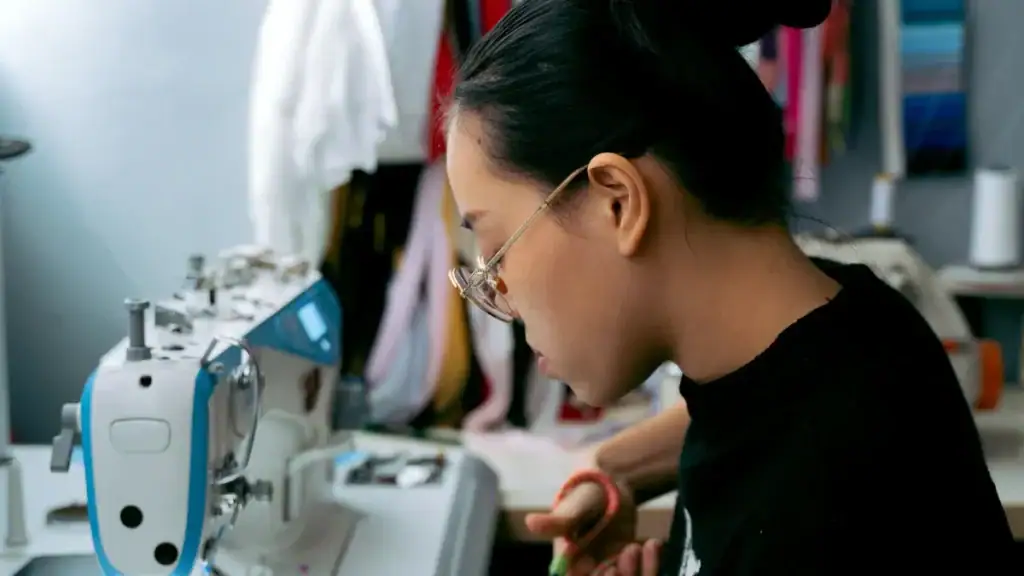
Procurement teams at parcel and courier operators face one clear decision: which OEM should produce the polos, light layers, and softshells worn by hub and sortation-center staff. This is floor apparel for people who scan, induct, and move parcels indoors. It is not rider gear and not PPE-first equipment.
Six criteria decide the outcome. Buyers should weigh fabric durability, sortation-floor design, compliance and brand visibility, customization, cost, and supplier reliability. Each one affects daily performance inside the building.
This guide turns those criteria into a practical shortlist checklist. Readers can then vet candidate OEMs with confidence and compare offers on equal terms.
The content addresses overseas parcel and courier operators sourcing a courier hub sortation staff uniform program from a Shanghai-based OEM.
Key Takeaways
Choose durable fabrics like poly-cotton blends for long-lasting uniforms.
Design features such as reinforced stitching and smart pocket placement boost efficiency.
Ensure compliance with labeling and care standards to avoid legal issues.
Customize uniforms with consistent branding to strengthen team identity.
Evaluate total cost and supplier reliability for a smooth uniform program.
Spec Stack for the Courier Hub Sortation Staff Uniform
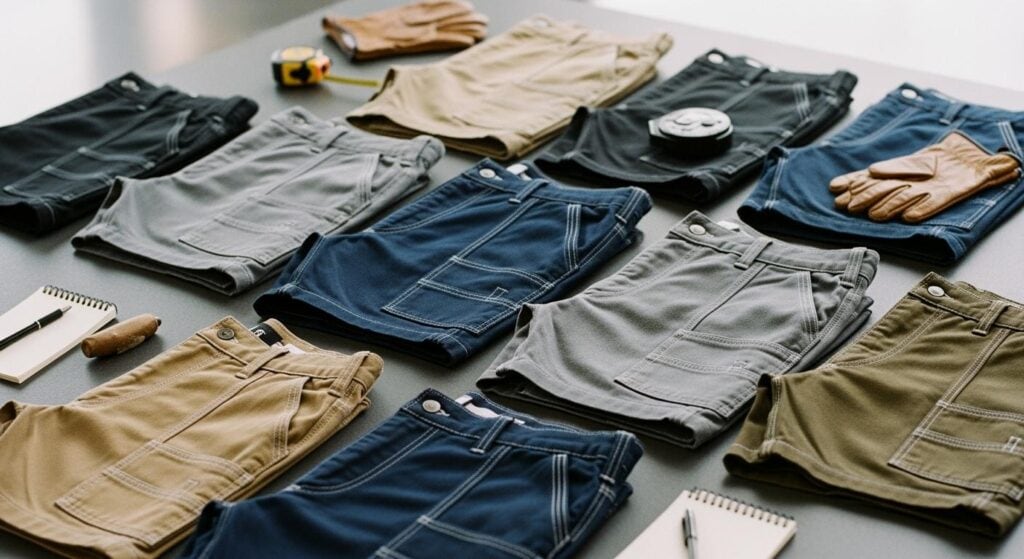
Shanghai Top Fortune Industry Co., Ltd. is an OEM/ODM workwear manufacturer founded around 2002. The company runs a 1,506 m² factory in Songjiang, Shanghai, and exports to Europe, the Middle East, Oceania, Southeast Asia, and the Americas. Buyers can review the full range at https://www.workwearmanufacturer.com/ and the company profile at https://www.workwearmanufacturer.com/about-us/.
This section serves overseas courier hub operations teams, sortation-center managers, and parcel brand procurement staff. The minimum order quantity is about 2,000 pieces per style. Direct questions go to rill@topfortunemail.com or WhatsApp +86 13524210501. The factory address is Floor 3 Building 20 Haier Zhigu No.66 Guangfulin East Road Songjiang Shanghai 201600.
Table of Contents
Fabric Durability
Sortation-Floor Design
The Polo, Light Layer, and Softshell Stack
RFQ and Specs Table
Fabric Durability
Fabric choice drives how long a courier hub sortation staff uniform survives repeated shifts. Two compositions suit high-movement roles. A 65% polyester / 35% cotton blend breathes well and resists wrinkles. A 100% polyester build with a moisture-wicking finish moves sweat away from the body. Buyers should avoid 100% cotton for sortation roles, because it holds sweat and shrinks over time.
Durability also depends on construction. Reinforced stitching at stress points keeps seams intact through constant reaching and lifting. Bar-tacked pocket corners and double-needle side seams add service life without adding bulk.
Sortation-Floor Design
Floor design features shape daily efficiency. The table below summarizes the mechanisms that matter most.
Design Feature | Mechanism | Effect on Sortation Staff |
|---|---|---|
Webbing attached to a small fabric area concentrates force around stitching during repeated lifting; an under-reinforced bottom deforms under heavy loads or wears when dragged. Customized reinforced webbing handles, extended attachment structures, lower-corner protection, and additional bottom layers address this. | Reliable handles and bottoms reduce interruptions during the time-sensitive movement from sorting lane to vehicle; durable construction lets workers focus on sorting correctly instead of constantly adjusting or repairing containers. | |
Pocket placement | A large transparent identification pocket gives a fixed location for route info. Side-facing pockets improve visibility during vehicle loading; front-facing pockets support sorting and staging. | A consistent pocket location lets drivers check route information without pulling each bag out of position, and makes pre-dispatch verification easier. |
Reliable handles and bottoms also reduce interruptions during the time-sensitive movement from sorting lane to vehicle.
The Polo, Light Layer, and Softshell Stack
The polo forms the base layer for induction and scanning staff. A light layer handles temperature swings between dock doors and sorting lanes. A softshell adds warmth for early shifts and cool climates. Each piece carries the parcel brand through consistent color and placement, so hub-floor staff look uniform from induction through dispatch.
RFQ and Specs Table
Spec | Detail |
|---|---|
Fabric | 65/35 poly-cotton or 100% polyester, moisture-wicking |
Weight | Confirm with OEM per style |
Fit | Regular, relaxed, or women's cut |
Color | Brand palette, matched across styles |
Decoration | Embroidery or print, chest and back |
Sizing | Full size run, including larger sizes |
Packaging | Poly bag, size-labeled, carton-packed |
Lead time | Confirm at sampling stage |
Compliance and Brand Visibility for the Courier Hub Sortation Staff Uniform
Floor-Appropriate Compliance
Compliance for hub-floor apparel centers on fit, labeling, care, and documentation. Buyers should treat these as verification items, not assumptions. The OEM should supply test reports, fiber data, and label artwork for review before bulk production.
Labeling deserves close attention for European programs. Regulation (EU) No 1007/2011 sets clear duties for every garment sold in the EU.
Requirement | Legal Basis | What Must Appear |
|---|---|---|
Fiber composition | Regulation (EU) No 1007/2011, Art. 9 | Name and percentage by weight of every fiber, in descending order |
Label durability | Regulation (EU) No 1007/2011, Art. 14 | Durable, legible, visible, and accessible label with uniform print |
Language | Regulation (EU) No 1007/2011, Art. 16(3) | Official language of the member state of sale |
Manufacturer identity | General Product Safety Regulation (since 13 Dec 2024) | Manufacturer name, postal and electronic address, plus an EU-established responsible operator |
Care instructions form a second layer. The FTC Care Labeling Rule requires permanent instructions in English that cover washing, bleaching, drying, ironing, and dry cleaning. Buyers should confirm that care symbols match the actual poly-cotton blend. A garment labeled as pure cotton but containing polyester will face wash temperatures too high for the blend and can shrink.
The FTC Care Labeling Rule requires textile apparel to carry permanent care instructions in English that are accurate and legible, covering washing, bleaching, drying, ironing, and dry cleaning.
Buyers should also ask the OEM which standards apply to their market and request the supporting documents. Relevant references include ISO 13688 for general workwear requirements and EU 2016/425 for product conformity where protective claims apply. The buyer verifies; the OEM documents.
Brand Consistency Inside the Hub
Consistent polos and light layers make hub staff recognizable at a glance. Sortation, induction, and dispatch teams all wear the same core pieces, so the parcel brand reads clearly from any angle inside the building.
Logo placement should follow how staff move. A chest logo suits front-facing roles and reads well during face-to-face contact. An upper-back logo stays visible while staff work at conveyors and scan stations. A shoulder placement offers moderate visibility from multiple angles. The logo should be noticeable without overpowering the garment.
Color discipline matters just as much. A palette of two or three main colors plus a few supporting shades keeps the range coherent. A lighter and a darker tone can separate roles while preserving one identity. Buyers should align these shades with the existing brand palette and confirm them on physical samples.
Standardizing core pieces simplifies ordering across locations. Role variation then comes from accents, such as caps or seasonal layers, rather than from a different base garment. This approach strengthens recognition and reduces inventory complexity for the courier hub sortation staff uniform program.
Customization, Cost, and Supplier Reliability
Sizing and Role Variations
Customization starts with a full size run and a choice of regular, relaxed, or women’s cuts. Buyers should confirm grading rules at sampling, so larger sizes keep the same proportions as the base pattern. Logo and color options then follow the brand palette, with chest, back, and shoulder placements tested on physical samples.
Role-based variation controls cost as much as it improves fit. Two mechanisms keep spending aligned with the budget:
Role-based eligibility: staff see only the items approved for their job function, which curbs incorrect orders and reduces waste.
Allowance controls: dollar-based or item-based limits set by role, department, or fiscal year tie purchasing to budget planning.
A total cost view matters more than unit price alone. Buyers should weigh fabric life, reorder ease, and decoration durability across the full wear cycle of the courier hub sortation staff uniform.
Capacity and Lead Times
Supplier reliability shows up in capacity, lead times, track record, and communication. Buyers should ask for a production calendar and a named account contact before committing.
Stage / Product Type | Lead Time |
|---|---|
Proto sample turnaround | |
Bulk production – jersey programs | 12–18 days |
Bulk production – woven/technical constructions | 18–25 days |
Reorders (pattern and size set on file) | 10–15 days |
The program then moves through three gates. First, the buyer approves a sample. Second, the OEM produces a pre-production sample (PPS) that locks fabric, fit, and decoration. Third, bulk production begins only after written PPS sign-off.
Rider and last-mile kits and hub-floor staff apparel each fit different needs. The table below shows where each works best.
Consideration | Rider / Last-Mile Kit | Hub-Floor Staff OEM |
|---|---|---|
Primary environment | Street, weather exposure | Indoor sortation and induction |
Design priority | Weather protection, road visibility | Durability, movement, brand consistency |
Best fit | Delivery fleets | Hub and sortation-center teams |
Procurement Checklist and Next Steps
Copy-Paste Buyer Checklist
A shortlist only works when every candidate answers the same questions. Buyers can copy the table below into an RFQ document and score each OEM against it.
Checklist Category | Items to Include |
|---|---|
Product specification | Garment styles, colors, sizes, decoration methods, logo placements |
Artwork and approval authority | Artwork ownership, approval authority, who can order or pay per department |
Sampling and approvals | Sample type, costs, timing, written approvals, route for artwork changes |
Quality control | Size accuracy, decoration placement, quantities, packaging, inspection duties |
Kitting and distribution | Kit contents, packing lists, labels, destinations, shipping costs |
Reporting and inventory | Order status, department allocation, shipments, reorder approvals |
Service-level agreement | Response targets, escalation contacts, exception handling, returns |
Contract terms | Quantities, pricing, payment, changes, acceptance, delivery, exit duties |
Common Pitfalls to Avoid — When selecting a CM, watch out for these common mistakes.
Buyers should also confirm minimums, lead times with specific dates, and the full cost structure in writing. A vague RFQ without reference photos or a clear product list invites mismatched quotes.
Quoting and Sampling
A complete RFQ shortens the quote cycle. Buyers should state the wearer role and use case, the garment list with quantities by style, reference images or technical drawings, and a measurement chart with size breakdown. Fabric composition, weight, color, and care expectations belong in the same document, along with pockets, closures, reinforcement, artwork placement, labels, packaging, destination, timing, and reorder pattern. Any protective or regulatory requirement needs an explicit statement, so the OEM does not infer it from the word “workwear.”
Sampling then validates the brief. Buyers approve a sample, sign off a pre-production sample, and release bulk only after written approval. This gate protects the courier hub sortation staff uniform program from sample-to-bulk drift.
Shanghai Top Fortune Industry Co., Ltd. welcomes RFQs for hub-floor apparel. Email rill@topfortunemail.com or message WhatsApp +86 13524210501 to start a quote. Review the range at https://www.workwearmanufacturer.com/, the company profile at https://www.workwearmanufacturer.com/about-us/, and related guides on the https://www.workwearmanufacturer.com/blog/. Buyers comparing programs can also study the rider guide at https://www.workwearmanufacturer.com/food-delivery-rider-uniform-oem-buyer-guide/, the last-mile program at https://www.workwearmanufacturer.com/last-mile-courier-uniform-oem-program-china/, and the polo and jacket pages at https://www.workwearmanufacturer.com/custom-polo-shirt-manufacturer/ and https://www.workwearmanufacturer.com/custom-jacket-manufacturer/.
The right OEM balances six factors: durable fabric, sortation-floor design, verified compliance, brand-consistent customization, fair total cost, and dependable supply. Hub size, climate, and operational needs set the priority order. A large, multi-site hub benefits most from supply reliability and consistent sizing. A small hub can weight fabric durability and unit cost first. Cool climates favor the softshell layer; warm ones favor breathable polos.
Buyers should shortlist OEMs against every criterion, then validate the shortlist with physical samples and reference checks. Written PPS approval protects the courier hub sortation staff uniform program from sample-to-bulk drift. Commit only after both steps pass.
FAQ
What is the minimum order quantity for hub-floor apparel?
Buyers should plan the polo, light layer, and softshell lines together, so each style meets the program minimum named above. Smaller trial runs usually do not fit this model.
How does a buyer request a quote?
Buyers send an RFQ to rill@topfortunemail.com or WhatsApp +86 13524210501. The RFQ should list styles, quantities, fabric, colors, decoration, sizing, packaging, and destination. Reference images and a measurement chart speed up the response.
Does this program cover rider jackets or last-mile gear?
No. This program covers indoor hub and sortation-center apparel: polos, light layers, and softshells. Rider and last-mile kits serve street and weather exposure. Each program fits a different environment, and buyers can run both side by side.
Is this PPE-first safety gear?
No. The focus is durable, brand-consistent floor apparel for scanning, induction, and dispatch staff. Buyers with protective requirements should state them explicitly in the RFQ, so the OEM documents the relevant standards rather than inferring them.
How long does sampling and bulk production take?
Proto samples typically take 7–10 days. Bulk production runs 12–18 days for jersey programs and 18–25 days for woven or technical constructions. Reorders with patterns on file usually take 10–15 days.
Can the OEM match an existing brand palette?
Yes. Buyers confirm colors on physical samples before bulk production. A palette of two or three main colors plus supporting shades keeps the range coherent across roles and locations.