

Sports Club Front Desk Apparel OEM | Gym & Club Brands
Table of Contents
Display
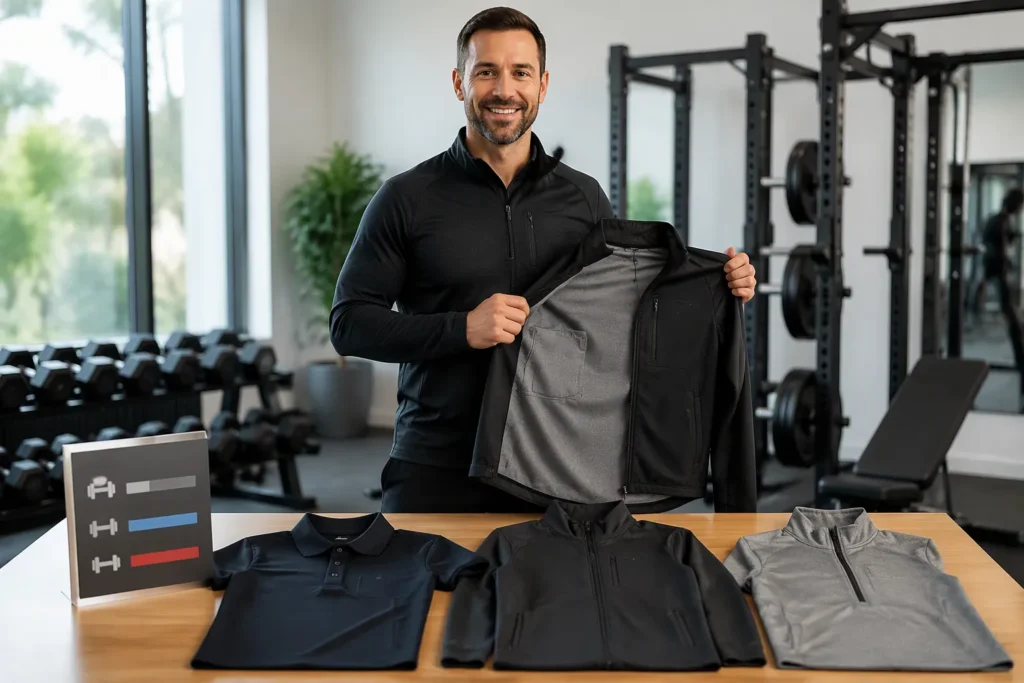
Front desk staff greet every member first, so their appearance shapes the brand impression. Buyers evaluating sports club front desk apparel can choose among four main OEM routes: cut-and-sew OEM, private label, stock blank customization, and full-package OEM. This guide compares all four on technical performance, application fit, regulatory compliance, and cost.
Cut-and-sew OEM builds a garment from the fabric up.
Private label applies a club brand to an existing production base.
Stock blank customization adapts ready-made garments.
Full-package OEM covers design, production, and delivery.
Each option suits different brand stages and budgets. The comparison stays neutral and side by side, so readers can match an option to their own priorities.
Key Takeaways
Four OEM options exist: cut-and-sew, private label, stock blank, and full-package.
Cut-and-sew OEM gives the most design control but costs more per unit.
Stock blank customization is fastest and cheapest for small pilot programs.
Private label balances speed and customization for growing club brands.
Choose an option based on your budget, order volume, design needs, and timeline.
Entity, Buyer Intent, And Guide Scope
Shanghai Top Fortune Industry Co., Ltd. is the manufacturer behind this guide. The company started around 2002 and runs a 1,506 m² factory in Songjiang, Shanghai. Its core work covers OEM and ODM workwear and branded staff apparel. Finished orders ship to Europe, the Middle East, Oceania, Southeast Asia, and the Americas. Readers can review the company profile at workwearmanufacturer.com and the about-us page.
This guide serves adult B2B overseas buyers only. Gym chains, sports-club brands, and fitness operators make up the target audience. School buyers fall outside the scope. PPE and hi-vis programs also sit outside the priority list. The minimum order quantity is about 2,000 pieces per style. Buyers can send questions to rill@topfortunemail.com or WhatsApp +86 13524210501. The factory address is Floor 3 Building 20 Haier Zhigu No.66 Guangfulin East Road Songjiang Shanghai 201600.
In this guide:
Who This Guide Is For
How To Use This Guide
Spec Stack And RFQ Table
Sample, PPS, And Bulk Gates
OEM Options For Sports Club Front Desk Apparel
Choosing The Best-Fit Option
Who This Guide Is For
Gym franchise operations teams form the first audience. These buyers manage multi-site rollouts and need consistent front-desk looks across locations. Sports-club brands form the second group. They protect a premium image and often want custom fabric and trim. Membership program buyers form the third group. They order apparel that supports sales conversations at reception and guest services.
The angle stays narrow on purpose. This guide covers front-desk, membership, and member-services apparel. Floor-instructor kits follow a different brief, and a separate guide covers them. Sports-nutrition retail shop-staff uniforms also follow a different brief. Reception staff need a polished, calm look. That need drives every recommendation here.
How To Use This Guide
Readers can move through the sections in order or jump to the part that matches their stage. The spec stack and RFQ table help buyers draft a brief. The sample, PPS, and bulk gates explain the approval flow. The OEM options section compares all four routes on performance, fit, compliance, and cost.
A practical approach works well. Buyers first define the roles that wear the apparel. They then set a budget and a timeline. The final step matches those inputs to one OEM option. Each section builds on the last, so a full read gives the clearest picture.
Spec Stack And RFQ Table
Polo And Softshell Basics
The spec stack for sports club front desk apparel starts with the polo. Office-style polos for reception teams use denser knits of at least 190 gsm, fused collars, flatlock seams, and muted colors. Sport polos trade that structure for stretch and ventilation panels, which suits the gym floor but weakens the polished look a lobby needs. A cotton-poly blend piqué at 200 gsm gives long-term consistency across large staff groups and balances durability, breathability, and a professional tone. Cotton piqué delivers a structured hand and a familiar uniform look. CVC fabric fits clubs where easier washing and faster drying matter. Buyers should confirm weight, composition, color, and hand feel against local climate, daily activity, and the laundry routine.
Weight alone does not settle the choice. GSM measures weight per square meter, yet final hand feel also depends on fiber, yarn count, knit structure, finishing, and garment construction. A lighter fabric can feel substantial with the right knit, and a heavier one may lack breathability in a warm lobby. The softshell adds the second layer for cooler receptions and outdoor greeting points. It should block wind, resist light rain, and stay quiet enough for desk work. Brand visibility comes last: a small chest logo, a consistent color across sites, and a name badge that does not compete with the garment.
Polos bridge the gap between a gym tee and a dress shirt, making them the default uniform for retail floors, event staff, and front-desk teams; most are built on piqué cotton or a moisture-wicking poly blend.
Building The RFQ
A clear RFQ removes guesswork at quoting. The table below lists the fields a club brand should complete before sending a request.
Field | What To Specify |
|---|---|
Fabric | Cotton-poly piqué, cotton piqué, CVC, or polyester; note any UPF 30+ requirement |
Weight | Target GSM per garment type, for example 200 gsm for polos |
Fit | Men's and women's cuts, size range, sleeve length |
Decoration | Embroidery, sublimation, or screen print; logo placement |
Labeling | Woven neck label, care label, size label content |
Packaging | Poly bag, hang tag, carton marking |
Quantities | Units per style, color, and size |
Buyers should attach reference photos and state the roles that wear each item. Membership sales staff may need a lighter polo than guest services staff who stand near entry doors. A complete RFQ shortens sampling and keeps the quote comparable across suppliers.
Sample, PPS, And Bulk Gates
Approval Gates Explained
The approval flow moves through three gates: sample, PPS, and bulk. A PPS is a pre-production sample. It is the final reference garment made with the actual fabric, trim, and decoration before mass production starts. Each gate protects the club brand from surprises at scale.
At the sample gate, buyers check fabric hand feel, color, fit, and logo placement on a first prototype. They confirm the polo collar shape and the softshell zipper position. At the PPS gate, buyers verify that the factory corrected every earlier comment. They compare the PPS against the approved spec sheet, measure key points, and sign off in writing. At the bulk gate, buyers review a production run against the signed PPS. They check size grading, label content, and packaging before shipment.
A written sign-off at each gate keeps the process clear. Buyers should photograph the approved PPS and store it as the reference for any later dispute.
Procurement Checklist
Buyers can copy this checklist into an email or a shared document and tick each item as it clears.
Spec sheet signed with fabric, weight, and color codes
Size chart confirmed for men’s and women’s cuts
Logo files supplied in vector format with placement marked
Sample comments returned in one consolidated list
PPS approved in writing with photos attached
Label and care content verified against the destination market
Packaging and carton marking confirmed
Bulk inspection date agreed before production ends
Each item closes a small risk. A complete checklist turns a complex order into a series of simple, verifiable steps.
OEM Options For Sports Club Front Desk Apparel
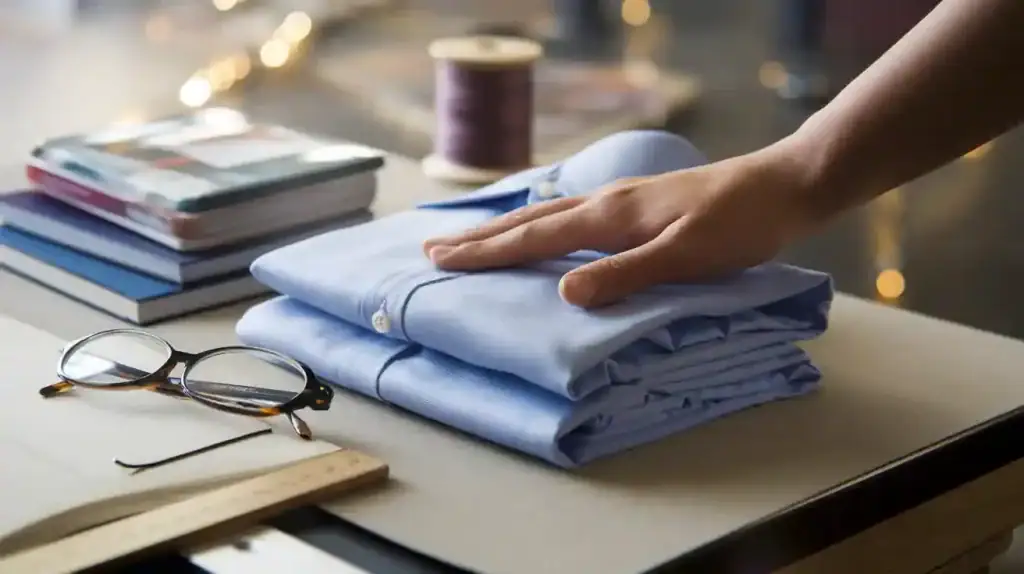
Cut-And-Sew, Private Label, Stock Blank, And Full-Package
Each of the four routes serves a different stage of a club brand. Cut-and-sew OEM builds a garment from the fabric up. The factory develops the pattern, sources the fabric, and controls construction. This route gives the strongest technical performance and the fullest design control. It fits sports club front desk apparel programs that need a proprietary polo collar or a softshell cut for reception desks. Cost runs higher per unit, and the buyer carries the full development workload.
Private label applies a club brand to an existing production base. The factory already holds the pattern and fabric, so the buyer gains speed and a lower development burden. Technical performance stays solid, though customization is limited to color, trim, and decoration. This route fits established club brands that want a consistent look without new pattern work.
Stock blank customization adapts ready-made garments. Apliiq, for example, sells single pieces on demand and offers tiered bulk discounts from 10+ pieces. The route wins on speed and low commitment. Design control stays narrow: generic fits and stock materials only, with no influence over production details. It fits pilot programs and small membership teams.
Full-package OEM covers design, production, and delivery in one contract. The buyer hands over a brief and receives finished goods. This route fits franchise operators who want one accountable partner.
Production Model | Typical MOQ |
|---|---|
Cut-and-sew OEM | 50–100 pcs/style |
Private label | 50 pcs/style knitwear; 300 woven; 500 sweater |
Stock blank customization | 1 pc on demand; bulk discounts from 10+ pcs |
Full-package OEM | Higher per-style volume; custom fabrics need a larger confirmed run |
ZEKA Apparel offers flexible MOQs starting at just 50 pieces per design, supporting full cut-and-sew private label services including custom grading, fabric sourcing, and specialized dyeing.
On compliance, every route must meet the destination market’s labeling rules for fiber content, care, and origin. Cut-and-sew and full-package give the buyer the most control over label content. Stock blanks carry the blank maker’s base labels, which the buyer then supplements.
Instructor Kit Vs Front-Desk Apparel
Floor-instructor kits and front-desk apparel follow different briefs. Instructors move constantly and need stretch, ventilation, and moisture management. Reception staff stand at a desk, greet members, and project the brand’s first impression. Their garments need structure, wrinkle resistance, and a calm silhouette.
Decision Point | Instructor Kit | Front-Desk Apparel |
|---|---|---|
Primary fabric | Stretch knit, moisture-wicking polyester | Cotton-poly piqué, structured softshell |
Fit priority | Freedom of movement | Clean drape and consistent sizing |
Branding | Large chest and back graphics | Small chest logo, name badge |
Durability focus | Wash and sweat resistance | Shape retention and fade resistance |
Best OEM route | Cut-and-sew or full-package | Private label or cut-and-sew |
A club brand can run both programs with one supplier. The briefs stay separate, and the front-desk line keeps its polished tone.
Choosing The Best-Fit Option
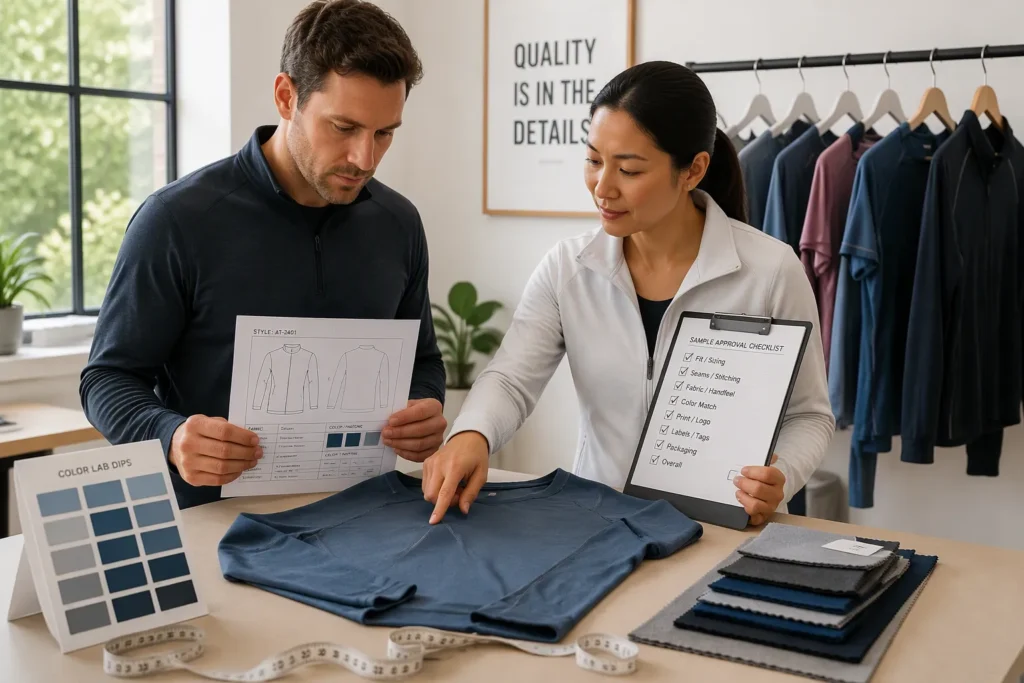
Best-Fit Scenarios
The four routes differ in design control, upfront investment, and speed. A short summary helps buyers see the trade-offs at a glance.
Option | Design Control | Upfront Investment | Typical Order Volume | Timeline Character |
|---|---|---|---|---|
Cut-and-sew OEM | Highest | Highest | Mid to high | Sampling about 4–10 days; bulk about 20–25 days after confirmation |
Private label | Moderate | Moderate | Mid | Sample about 7–10 business days; bulk 4–6 weeks |
Stock blank customization | Lowest | Lowest | Low | Fastest, with no development cycle |
Full-package OEM | High | High | High | Longest, covering design through delivery |
Brand stage drives the match. A startup or pilot membership team with a tight budget and a short timeline fits stock blank customization best. A growing club brand that wants its own look without new pattern work fits private label. An established franchise operator with a mature design team and a need for a proprietary polo or softshell fits cut-and-sew OEM. A chain that wants one accountable partner for design, production, and delivery fits full-package OEM.
Order volume reinforces the choice. Programs that start small and scale later often begin with a low-commitment route and move up as demand grows. Buyers with firm multi-site rollouts can commit to a larger program from the start. Design control follows the same logic. Clubs that treat front-desk appearance as a core brand asset invest in cut-and-sew or full-package work. Clubs that treat it as a practical uniform lean toward private label or stock blanks.
Timeline closes the decision. Cut-and-sew sampling runs roughly 4–10 days, and bulk production follows in about 20–25 days once materials and details are confirmed. Private label sampling takes about 7–10 business days, and bulk production and QC run 4–6 weeks for most categories. Revised samples, custom-developed fabrics, and special trims add time in every route. Buyers should build that buffer into launch dates.
Every option has a best-fit scenario. No single route wins on all five factors at once. The right choice depends on where a club brand stands today and where it plans to go next.
Next Steps And CTA
Buyers can turn this comparison into action with a short sequence. First, define the roles that wear the sports club front desk apparel and the look each role needs. Second, set a budget, an order volume, and a launch date. Third, match those inputs to one route using the table above. Fourth, prepare a tech pack or reference photos so the factory can quote accurately.
Shanghai Top Fortune Industry Co., Ltd. supports all four routes from its Songjiang factory. Buyers can review the main site, the company profile, the custom polo shirt program, and the corporate polo shirts OEM page. Related guides cover gym instructor branded apparel and fitness and sports nutrition retail staff apparel. More sourcing articles sit on the blog.
Send the brief to rill@topfortunemail.com or WhatsApp +86 13524210501 for a quote.
All four OEM routes remain valid choices. Cut-and-sew OEM, private label, stock blank customization, and full-package OEM each serve a distinct brand stage and a distinct set of needs. A club brand with a tight budget, a small order, and a short timeline gains the most from stock blanks. A franchise operator with firm volume and a mature design team gains the most from cut-and-sew or full-package work. Private label sits between them.
Buyers should weigh four inputs: budget, order volume, design control, and timeline. No single route wins on every input. The best fit depends on where a gym or sports-club brand stands today. Teams can send their priorities to rill@topfortunemail.com or WhatsApp +86 13524210501 for a neutral review of their sports club front desk apparel brief.
FAQ
What is the minimum order quantity for front desk apparel?
That program volume suits gym chains and sports-club brands that outfit reception, membership sales, and guest services teams across multiple sites. Buyers with smaller pilot needs should discuss their plans with the factory directly.
How does a club brand request a quote?
Buyers send a completed RFQ with fabric, weight, fit, decoration, labeling, packaging, and quantities. Reference photos and a list of staff roles help the factory quote accurately. The team replies by email at rill@topfortunemail.com or by WhatsApp at +86 13524210501.
Does this guide cover instructor kits or retail shop uniforms?
No. This guide focuses on front-desk, membership, and member-services apparel. Floor-instructor kits need stretch and ventilation for movement. Sports-nutrition retail shop uniforms follow a separate brief. Dedicated guides cover both topics, and the front-desk line keeps its own polished tone.
Which OEM option suits a first-time buyer?
A first-time buyer with a small team, a tight budget, and a short timeline fits stock blank customization best. Private label suits a growing brand that wants its own look without new pattern work. Cut-and-sew and full-package OEM reward buyers with firm volume and mature design control.
Can one supplier handle both front-desk and instructor programs?
Yes. A single supplier can run both programs when the briefs stay separate. Front-desk apparel needs structure and a calm silhouette. Instructor kits need stretch and moisture management. Buyers should state both needs in the RFQ so the factory plans sampling and production correctly.