
China ODM vs. SEA Factories for Convenience Store Uniforms
Table of Contents
Display
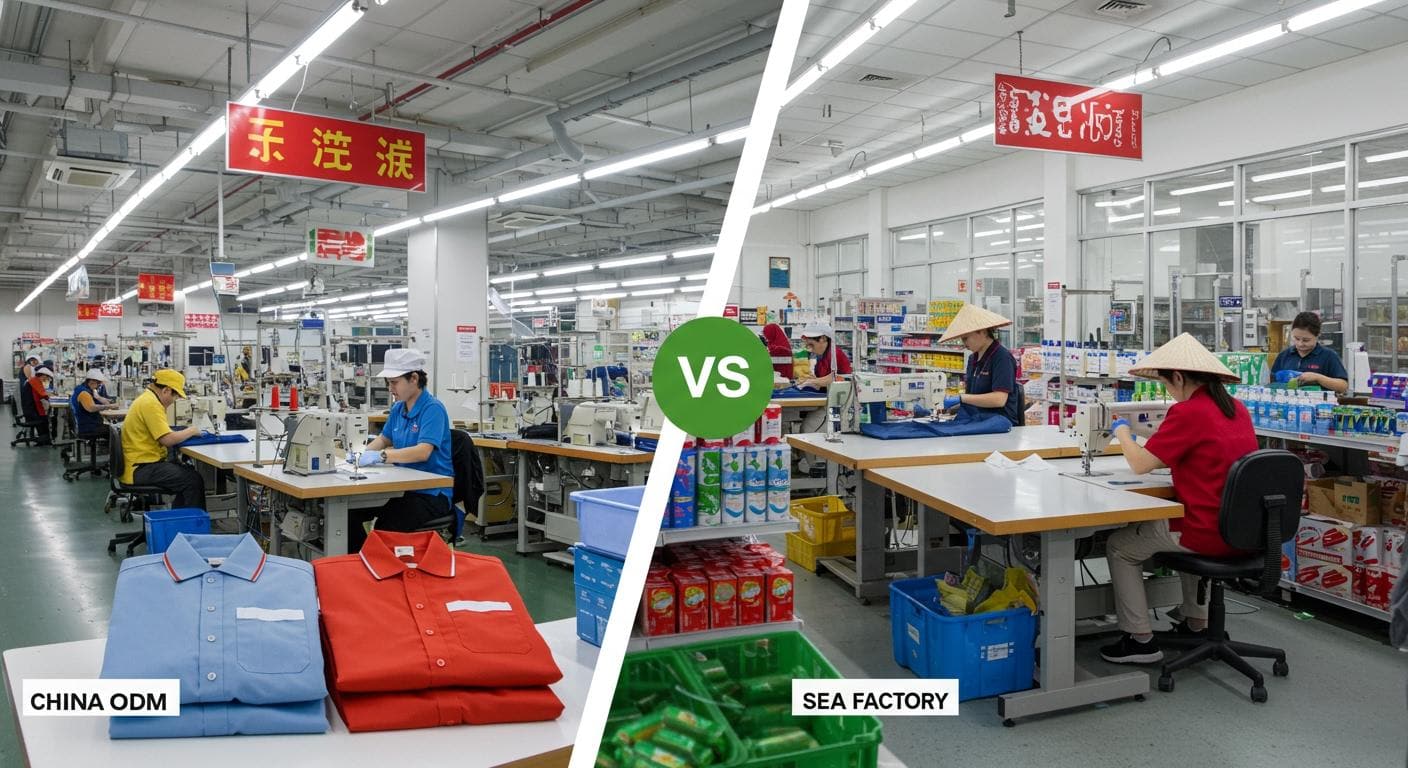
When I look for the best convenience store uniforms, I see that China ODM usually stands out because of its scale and strong manufacturing expertise. SEA factory options often attract buyers with lower labor costs. If I need high consistency, quick turnaround, or advanced technical textiles, I identify a manufacturer in China. For cost-driven sourcing, I consider SEA. Finding the manufacturer who offers the right product and oem service matters. I always weigh quality, speed, and customization before I choose between oem or ODM manufacturing.
Key Takeaways
Prioritize quality when sourcing convenience store uniforms. China ODM offers higher durability and comfort through advanced textiles.
Always request samples before placing large orders. This helps verify quality and ensures the product meets your standards.
Understand the cost breakdown. Check for hidden fees like inspection and shipping to avoid surprises in your budget.
Evaluate production speed. China ODM typically provides faster sample delivery and bulk order processing compared to SEA factories.
Consider customization options. China ODM allows for more advanced design changes, while SEA factories may have limitations.
Check quality control documentation. Always ask for proof of certifications to ensure the manufacturer meets safety and quality standards.
Assess the manufacturer’s reliability. Look for a strong track record and clear communication to avoid issues during production.
Match your sourcing needs to the strengths of each region. Choose China ODM for quality and speed, and SEA for cost-effective solutions.
Quality
When I source convenience store uniforms, I always put quality at the top of my checklist. I have learned that both China ODM and SEA factories offer different strengths. I want to share my experience and help you understand how each region performs in fabric, workmanship, and consistency.
Fabric
Durability
I always test the durability of the fabric before I make a decision. China ODM manufacturers often use advanced technical textiles. I notice that these fabrics pass strict certification tests. They resist wear and tear, which is important for uniforms that see daily use. SEA factories sometimes use lighter materials to keep costs low. These fabrics may not always meet the same certification standards as those from China. I have seen that China’s focus on quality control and certification gives me more confidence in the long-term durability of their uniforms.
Comfort
Comfort matters to me because staff wear these uniforms for long shifts. China ODM suppliers usually offer fabrics that feel soft and breathable. They often use certified blends that wick away moisture. I find that SEA factories can also provide comfortable fabrics, but sometimes the quality varies. Certification for comfort and skin safety is more consistent in China. I always check for certification labels to ensure the uniforms will not irritate the skin.
Workmanship
Stitching
I pay close attention to stitching when I inspect samples. China ODM factories use automated machines and skilled workers. Their stitching lines look straight and even. I often see certification tags that prove the uniforms passed quality control checks. SEA factories can produce neat stitching, but I sometimes find loose threads or uneven seams. This difference often comes from the level of quality control and certification in place.
Finishing
Finishing makes a big difference in the final look of the uniform. China ODM suppliers excel in this area. They use advanced finishing techniques that give uniforms a professional appearance. I see that every button, zipper, and hem meets strict certification standards. SEA factories may offer basic finishing to save on costs. Sometimes, I notice small flaws that would not pass China’s quality control or certification process.
Consistency
Uniformity
Uniformity is key for a brand image. I want every uniform to look the same. China ODM factories use automated systems and strict certification processes to ensure every piece matches. I rarely see color differences or size issues. SEA factories can achieve uniformity, but I have found more variation in color and fit. This often happens when quality control and certification are not as rigorous.
Quality Control
Tip: Always ask for documentation of quality control and certification from your supplier.
I never skip the step of checking quality control procedures. China ODM manufacturers follow detailed quality control protocols. They provide certification for every batch. I receive reports that show each step of the inspection process. SEA factories may have quality control, but the level of certification and documentation can vary. I always request proof of certification to avoid surprises.
Table: Quick Comparison of Quality Factors
Factor | China ODM (with certification) | SEA Factories (cost-driven) |
|---|---|---|
Durability | High, certified | Medium, varies |
Comfort | Consistent, certified | Varies, sometimes certified |
Stitching | Precise, certified | Varies, less certified |
Finishing | Advanced, certified | Basic, less certified |
Uniformity | High, certified | Varies, less certified |
Quality Control | Strict, certified | Varies, less certified |
In my experience, China ODM stands out for its technical textile expertise, strict quality control, and reliable certification. SEA factories offer lower costs, but I often see more variation in quality and certification. I always match my priorities to the strengths of each region. If I need top quality and certification, I choose China ODM. If cost is my main concern, I consider SEA, but I pay extra attention to quality control and certification.
Cost
When I start sourcing convenience store uniforms, I always look at the cost breakdown. I compare China ODM and SEA factories by checking unit price, shipping, and hidden costs. I use sample orders and factory audits to verify every detail before I make a decision. I rely on import/export databases to track pricing trends and factory performance.
Unit Price
I always request a sample before I commit to a large order. China ODM manufacturers usually quote higher unit prices, especially for small sample orders. Their prices reflect advanced manufacturing and strict inspection standards. SEA factories often offer lower unit prices because of cheaper labor. I notice that oem manufacturers in SEA can reduce costs by using basic materials and simpler production methods.
When I verify prices, I check for hidden fees. I ask for a detailed product breakdown. I include inspection and audit costs in my calculations. I use import/export databases to compare prices across regions. I always verify if the quoted price includes oem service, sample fees, and inspection charges.
Tip: Always request a written quote that lists every cost, including sample orders, inspection, and audit fees.
Shipping
Shipping costs can change my sourcing decision. China has efficient export logistics, which helps me save time and money on large orders. I use import/export databases to track shipping rates and delivery times. SEA factories may offer cheaper shipping for small sample orders, but I sometimes face delays or extra fees.
I always verify shipping terms before I place an order. I ask for inspection reports on packaging and export documentation. I use factory audits to check if the factory can handle export requirements. I include import duties and customs fees in my cost analysis. I compare shipping costs for both sample orders and bulk shipments.
Table: Shipping Cost Comparison
Region | Sample Order Shipping | Bulk Shipping | Export Efficiency | Import Duties |
|---|---|---|---|---|
China | Medium | Low | High | Standard |
SEA | Low | Medium | Medium | Varies |
Hidden Costs
Hidden costs can surprise me if I do not verify every detail. I always include inspection, audit, and verification fees in my budget. China ODM manufacturers often include inspection and audit in their quotes. SEA factories may charge extra for sample orders, inspection, and export paperwork.
I use factory audits to check for hidden costs. I ask for verification of every charge, including import/export documentation and product testing. I request sample orders to test the process and verify all fees. I use import/export databases to research common hidden costs in each region.
Note: Never skip factory audits or inspection. Verification of every cost protects your budget.
I always verify if the factory includes oem service in the price. I check if sample orders require extra payment. I use inspection reports to confirm product quality before I pay. I rely on import/export databases to verify factory reliability and cost transparency.
Checklist for Cost Verification
Request sample orders and verify all fees
Use factory audits for cost breakdown
Check import/export databases for hidden charges
Confirm inspection and audit costs
Verify oem service inclusion
Review export documentation fees
When I compare China and SEA, I see that SEA factories offer lower unit prices because of labor costs. China ODM manufacturers deliver better efficiency for high-volume manufacturing. I always use sample orders, inspection, and factory audits to verify every cost. I rely on import/export databases for accurate sourcing decisions. I never skip verification, audit, or inspection steps. This process helps me avoid hidden costs and ensures I get the best value for my product.
Lead Times
When I start sourcing convenience store uniforms, I always pay close attention to lead times. Fast delivery can make a big difference in my business. I compare China ODM and SEA factory options by looking at production speed, flexibility, and how each handles changes during manufacturing.
Production Speed
I always request a sample before I place a large order. China ODM manufacturers usually deliver sample products quickly. Their advanced manufacturing systems help them produce uniforms at a fast pace. I see that China can handle high-volume orders without slowing down. SEA factories sometimes take longer to produce a sample. Lower labor costs can mean slower production speed, especially for complex product designs. I track production speed by checking how fast I receive a sample and how quickly the factory can scale up for bulk orders.
Table: Production Speed Comparison
Region | Sample Delivery | Bulk Order Speed | Manufacturing Efficiency |
|---|---|---|---|
China ODM | Fast | Very Fast | High |
SEA | Medium | Slow-Medium | Medium |
Tip: Always ask for a sample timeline before you commit to a sourcing partner.
Flexibility
Flexibility matters to me when I need to adjust my product order. China ODM suppliers often offer flexible oem service. I can change product details or request a new sample without much delay. Their manufacturing systems allow quick changes in design or quantity. SEA factories sometimes struggle with flexibility. Lower costs can mean less room for changes during manufacturing. I always test flexibility by requesting a sample with custom features and seeing how the factory responds.
I use a checklist to measure flexibility:
Request a custom sample
Change product quantity
Adjust product design
Ask for oem service updates
If the factory can handle these requests quickly, I know they offer good flexibility.
Changes
Making changes during manufacturing can be risky. I always communicate clearly with my sourcing partner. China ODM manufacturers usually accept changes if I request them early. Their oem service teams help me update product specs or switch materials. I find that SEA factories may need more time to process changes. Sometimes, I need to pay extra for a new sample or updated product order. I always ask for a clear change policy before I start sourcing.
Note: Always confirm the factory’s change policy before you approve your product order.
I track how each factory handles changes by:
Requesting a sample with new specs
Asking for oem service adjustments
Checking how fast the product update happens
If I need fast changes and reliable oem service, I choose China ODM. If I want lower costs and can accept slower changes, I consider SEA. I always match my sourcing needs to the strengths of each manufacturing region.
Customization
When I start sourcing convenience store uniforms, I always look for strong customization options. I want my product to reflect my brand and meet my staff’s needs. Both China ODM and SEA factories offer many ways to customize uniforms. I have worked with odm manufacturers who guide me through every step, from sample creation to final production.
ODM
I rely on odm manufacturers for their odm service when I need unique uniforms. They help me choose styles and adjust details. I can select fabrics, trims, and colors that match my brand. The odm service lets me request changes and see a sample before bulk manufacturing begins. I find that China ODM suppliers respond quickly to my requests. SEA factories also offer customization, but sometimes the process takes longer.
Here is how the customization process usually works:
Step | Description |
|---|---|
1 | Confirm selected style and outline custom adjustments. |
2 | Choose from available or upgraded fabric and trim options. |
3 | Prepare the first branded sample with requested changes. |
4 | Send photos or the sample for feedback and final approval. |
5 | Start bulk production using the approved sample and specs. |
6 | Add labels, tags, prints, embroidery, or packaging. |
7 | Monitor quality and consistency throughout production. |
8 | Inspect each unit for finish, measurement, and branding accuracy. |
9 | Handle any pieces that do not meet standards. |
10 | Pack items per retail, fulfillment, or shipping needs. |
I always ask for a sample before I approve the final product. This step helps me check the quality and make sure the odm manufacturers understand my needs.
Design
Design plays a big role in my sourcing decisions. I want uniforms that look professional and feel comfortable. I work with odm manufacturers to create custom designs. I can add special features, such as moisture-wicking fabrics or extra pockets. China ODM suppliers offer advanced design options and quick sample turnaround. SEA factories provide basic design changes, but I sometimes see limits in fabric choices or technical features.
Tip: Always share clear design requirements with your odm manufacturers. Ask for a sample to review before bulk manufacturing starts.
I use the following customization options when I design my product:
Embroidery
Logos and labels
Custom packaging
Sublimation patterns
These features help my uniforms stand out and support my brand image.
Branding
Branding is essential for convenience store uniforms. I want my product to show my logo and colors. Both China ODM and SEA factories offer branding options, such as embroidery, printed logos, and custom labels. I work with odm manufacturers to add branding elements during the manufacturing process. I always request a sample with my logo before I approve the bulk order.
China ODM suppliers excel at branding accuracy. They use advanced machines to ensure every product matches my brand specs. SEA factories can add branding, but I sometimes see small differences in color or placement. I check every sample and ask for photos before production starts.
Note: Always inspect the sample for branding accuracy. Clear communication with your odm manufacturers helps avoid mistakes.
I find that odm manufacturers in China and SEA handle customization requests professionally. They offer many options for fabrics, colors, and branding. I always match my sourcing needs to the strengths of each region. If I need fast, high-quality customization, I choose China ODM. If I want basic branding at a lower cost, I consider SEA factories.
China ODM
Manufacturer
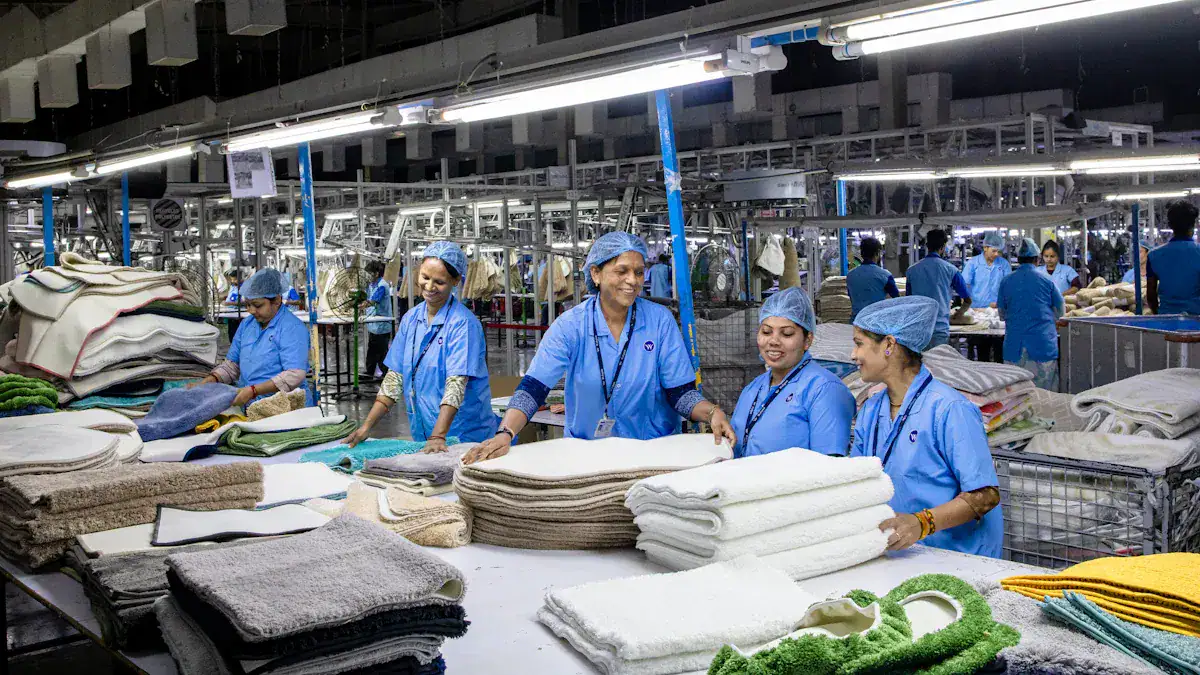
When I search for a reliable manufacturer for convenience store uniforms, I often choose China ODM. I see that manufacturers in China have strong technical skills. They use advanced machines and strict quality control. I always ask for the manufacturer name before I place a sample order. This helps me check their reputation and experience. Many manufacturers in China offer both ODM and OEM services. I can request a sample to test their product quality. I find that China ODM manufacturers understand complex garment construction. They use technical textiles that last longer and feel comfortable. I trust their ability to deliver consistent results for every product.
Ready-Made
I like working with China ODM because they provide ready-made designs. This saves me time when I need uniforms quickly. I can select a product from their catalog and request a sample with my branding. The manufacturer name is always listed on the product details, so I know who made it. Ready-made options allow me to enter the market faster. I do not need to spend weeks on design and development. The manufacturer prepares a sample for me to review. If I approve the sample, they start bulk production right away. This process helps me save money on design and testing. I can use my budget for other business needs.
Tip: Always ask for a sample of the ready-made product before you confirm your order. This step helps you check quality and branding.
High Volume
China ODM manufacturers excel at high-volume production. I often need thousands of uniforms for my stores. The manufacturer can handle large orders without delays. I see that China has efficient supply chains and skilled workers. The manufacturer name appears on every batch report, so I can track my order. High-volume capacity means I get consistent quality for every product. I also benefit from lower unit costs when I order in bulk. China ODM manufacturers use automated systems to keep production fast and reliable. I always request a sample from the manufacturer before I approve a high-volume order. This helps me avoid mistakes and ensures every product meets my standards.
Advantages of China ODM for Convenience Store Uniforms:
I can choose ready-made designs and brand my product quickly.
I enter the market faster because I skip long design and development steps.
I save money by reducing design and testing costs, so I can invest in other areas.
I get high-volume production with consistent quality and fast delivery.
China ODM manufacturers have a strong reputation for technical textiles and complex garment construction. I trust their experience and efficiency. When I need reliable uniforms, I always consider China ODM as my first choice.
SEA Factories
Labor Cost
When I compare SEA factories to other regions, I notice that labor cost stands out as a major advantage. I often choose a manufacturer in Southeast Asia when I want to keep my budget low. Lower wages in countries like Vietnam, Indonesia, and Cambodia allow the manufacturer to offer competitive prices. I see that the manufacturer can produce uniforms at a fraction of the cost compared to China. This cost advantage helps me order more units without stretching my budget.
I always request a sample before placing a large order. The manufacturer usually provides a sample quickly, and I can check the quality without spending much. Lower labor cost does not always mean lower quality, but I pay close attention to the details in each sample. I ask the manufacturer about their wage structure and how it affects production speed and consistency.
Tip: I recommend asking the manufacturer for a breakdown of labor costs when reviewing a sample. This helps me understand where my money goes.
Regional Sourcing
Regional sourcing gives me flexibility when I work with a manufacturer in SEA. I find that the manufacturer can source materials locally, which reduces shipping time and cost. I often see the manufacturer using fabrics from nearby suppliers. This approach helps the manufacturer respond quickly to changes in demand. I request a sample made with local materials to test durability and comfort.
I like that the manufacturer can adapt to my needs. If I want a specific fabric or trim, the manufacturer can find it in the region. I ask for a sample with different options to compare quality. Regional sourcing also supports local economies, which I value as a buyer.
Table: Regional Sourcing Benefits
Benefit | How the manufacturer delivers |
|---|---|
Faster material access | Uses local suppliers |
Lower shipping cost | Sources within SEA |
Flexible options | Offers multiple sample types |
Scale
Scale matters when I need thousands of uniforms for my stores. I see that the manufacturer in SEA can handle medium to large orders. The manufacturer often works with several buyers at once, which helps me get better prices for bulk orders. I request a sample for each style to check consistency before I approve the full order.
The manufacturer may not match China’s massive scale, but I find that SEA factories are growing fast. The manufacturer invests in new equipment and training to improve capacity. I ask the manufacturer about their production limits and how quickly they can deliver a sample for a new design.
Note: I always confirm the manufacturer’s scale by visiting the factory or requesting production reports. A reliable manufacturer will share details and provide a sample that reflects their true capabilities.
I choose a manufacturer in SEA when I want lower labor costs, flexible sourcing, and growing scale. I always test a sample before making a final decision. The manufacturer’s ability to deliver quality, speed, and consistency helps me meet my business goals.
OEM vs ODM
When I compare oem vs odm for convenience store uniforms, I always start by looking at how each approach fits my business needs. I want to understand how they affect cost, lead time, and customization. I have worked with both oem and odm manufacturers, and I see clear differences in the process and results.
OEM
I choose OEM when I want full control over the design and specifications. I send my own patterns and requirements to the factory. The manufacturer follows my instructions and produces uniforms that match my vision. I can select every detail, from fabric to stitching. This approach gives me high customization and lets me create a unique product for my brand.
I notice that oem vs odm impacts cost and lead time. OEM usually costs more because I need to pay for design, development, and testing. The process takes longer since the factory must create new patterns and source special materials. I always request a sample before bulk production to check quality and fit. OEM works best when I need a specific look or function that is not available in standard catalogs.
I see that branding options are limited with OEM. The factory focuses on my design, but creative control stays with me. I get consistent quality, but I must manage every detail. I recommend OEM for buyers who want a custom product and have time for development.
ODM
I use odm when I want a faster and simpler process. ODM manufacturers offer pre-designed uniforms that I can customize with my logo and colors. I review their catalog and select a style that fits my needs. The odm service allows me to add branding, but I cannot change the basic design. This approach saves time and money because the factory already has patterns and materials ready.
Oem vs odm affects flexibility and uniqueness. ODM gives me quick access to finished products, but I must accept some limits on design changes. I can request a sample to check quality and branding before placing a large order. ODM works well when I need uniforms quickly and do not require a unique design.
I compare oem vs odm by looking at flexibility and branding options. Here is a table that shows the main differences:
Approach | Flexibility | Branding Options |
|---|---|---|
OEM | High customization based on specific designs, scalable production | Limited creative control, but consistent quality |
ODM | Simplifies the process with pre-designed clothing | Allows branding but may restrict uniqueness |
I find that oem vs odm is a key decision for every buyer. OEM gives me control and uniqueness, but takes more time and money. ODM offers speed and convenience, but limits my creative options. I always request a sample to test quality before I choose between oem vs odm. My choice depends on my priorities for cost, lead time, and customization.
Reliability
When I choose a manufacturer for convenience store uniforms, I always focus on reliability. I want to know that my orders will arrive on time and meet my standards. I look at three main areas: stability, communication, and support.
Stability
Stability gives me confidence in a manufacturer. I check if the manufacturer has a strong track record. I ask for proof of certifications like EN ISO 20471, ANSI/107, or ISO 9001. These show that the manufacturer follows strict quality rules. I also visit the manufacturer’s facility or request photos. I want to see at least 50 staff and a large factory area. This tells me the manufacturer can handle big orders without delays.
I always review the manufacturer’s compliance history. I ask for test reports from labs such as SGS or TÜV. These reports show that the manufacturer meets safety and quality standards. I also check if the manufacturer uses in-house tape application equipment. This detail matters for technical uniforms. I want to know that the manufacturer can trace all materials, especially for reflective parts.
Here is a table I use to compare stability factors:
Criteria | What I Check with the Manufacturer |
|---|---|
Quality Verification | Facility audits, physical samples, QC systems |
Compliance Credentials | |
Production Capacity | Staff count (50+), factory area |
Compliance History | Test reports from SGS, TÜV |
Technical Specialization | In-house tape application equipment |
Supply Chain Transparency | Traceable sourcing for reflective components |
Communication
Clear communication helps me avoid mistakes. I always test how fast the manufacturer replies to my questions. I send emails and ask for updates on my sample order. If the manufacturer answers quickly and clearly, I feel more secure. I also check if the manufacturer shares production schedules and quality control steps. Good communication means I can solve problems before they grow.
I prefer a manufacturer who assigns a dedicated contact person. This makes it easy for me to get updates and share feedback. I ask the manufacturer to send photos or videos during production. This helps me track progress and check quality from a distance.
Tip: I always keep a record of my conversations with the manufacturer. This helps me solve any disputes later.
Support
Strong support from the manufacturer makes my job easier. I look for a manufacturer who helps me with every step, from sample to delivery. I ask if the manufacturer offers after-sales support. If there is a problem with quality or delivery, I want the manufacturer to fix it fast.
I value a manufacturer who provides clear instructions for returns or replacements. I also check if the manufacturer helps with customs paperwork and shipping. Good support means I can trust the manufacturer with repeat orders.
I always test support by asking the manufacturer for help with a small issue. If the manufacturer responds well, I know I can rely on them for bigger challenges.
Note: Reliable support from the manufacturer protects my business and keeps my customers happy.
Scenarios
Choose China ODM
I often choose China ODM when I need uniforms that meet strict quality standards. I trust China for technical textiles and advanced manufacturing. When my business requires high-volume orders, I rely on China’s efficient production systems. I see that China ODM suppliers deliver consistent results, especially for large convenience store chains. I value the ability to select ready-made designs and customize them with my branding. Fast turnaround times help me launch new uniforms quickly.
Here are the situations where I pick China ODM:
I need thousands of uniforms with identical color and fit.
My brand requires certified fabrics and advanced finishing.
I want to use technical features, such as moisture-wicking or reflective tape.
I must meet international safety standards for uniforms.
I need quick sample production and reliable bulk delivery.
Tip: I always ask China ODM suppliers for certification reports and sample photos before I approve a bulk order.
Table: When I Choose China ODM
Scenario | Why I Choose China ODM |
|---|---|
High-volume orders | Fast, consistent production |
Strict quality requirements | Certified technical textiles |
Advanced customization | Ready-made designs, branding |
Tight deadlines | Quick sample and bulk delivery |
International compliance | Reliable certification |
Choose SEA
I choose SEA factories when my main goal is to reduce costs. I find that SEA suppliers offer competitive prices because of lower labor expenses. When I run smaller stores or pilot projects, I often test SEA factories with sample orders. I see that SEA factories can source materials locally, which helps me save on shipping. I use SEA options when I do not need complex designs or strict certification.
Here are the scenarios where I pick SEA factories:
I have a limited budget and need basic uniforms.
My order size is medium or small.
I want to try different fabric options from local suppliers.
I do not need advanced technical features.
I can accept longer lead times for production.
Note: I always request a sample from SEA factories to check stitching and finishing before I place a large order.
Checklist: When I Choose SEA Factories
Review labor cost breakdown
Test local material samples
Confirm production capacity for my order size
Check quality control procedures
Compare shipping costs for my region
I match my sourcing strategy to my business needs. If I need speed, scale, and technical expertise, I choose China ODM. If I want lower costs and flexible sourcing, I consider SEA factories. I always test samples and review supplier reports before making my final decision.
When I choose between China ODM and SEA factories, I always focus on what matters most for my business. China ODM gives me strong quality, fast production, and advanced customization. SEA factories help me save on cost and offer flexible sourcing. I look at quality, cost, speed, customization, and reliability before I decide. I match my needs to the region that delivers the best quality for my goals.
FAQ
What is the main difference between China ODM and SEA factories?
I see China ODM offers advanced manufacturing and strict quality control. SEA factories focus on lower labor costs and flexible sourcing. I choose China for technical textiles and consistency. I pick SEA when I want to save money and try local materials.
How do I verify the quality of uniforms from a new supplier?
I always request a sample before I place a large order. I check stitching, fabric, and finishing. I ask for certification reports and quality control documents. I use factory audits to confirm the supplier’s standards.
Can I get custom designs from both China ODM and SEA factories?
Yes, I can. China ODM suppliers usually offer faster and more advanced customization. SEA factories provide basic design changes. I always share my requirements and ask for a sample with my branding before I approve production.
How do shipping times compare between China and SEA?
China ODM suppliers deliver bulk orders quickly because they have efficient logistics. SEA factories may take longer, especially for large shipments. I always check shipping timelines and ask for tracking updates from both regions.
Yes, I always check for extra fees like inspection, sample, and export documentation charges. I ask for a detailed quote. I use factory audits and import/export databases to spot hidden costs before I commit.
Which option is better for small orders?
I find SEA factories often accept smaller orders at lower prices. China ODM suppliers prefer high-volume production. I always confirm minimum order quantities and sample policies before I choose a supplier.
What certifications should I look for in uniform manufacturing?
I look for certifications like ISO 9001, EN ISO 20471, and ANSI/107. These show the factory meets international quality and safety standards. I always request copies of certificates and test reports.
How do I handle communication with overseas suppliers?
I use clear, simple language in emails. I ask for a dedicated contact person. I request regular updates and photos during production. Good communication helps me avoid mistakes and keeps my orders on track.