

Grocery Last-Mile Delivery Uniform OEM | Fresh & Quick Commerce
Table of Contents
Display
2)
What a Grocery Last-Mile Delivery Uniform OEM Means
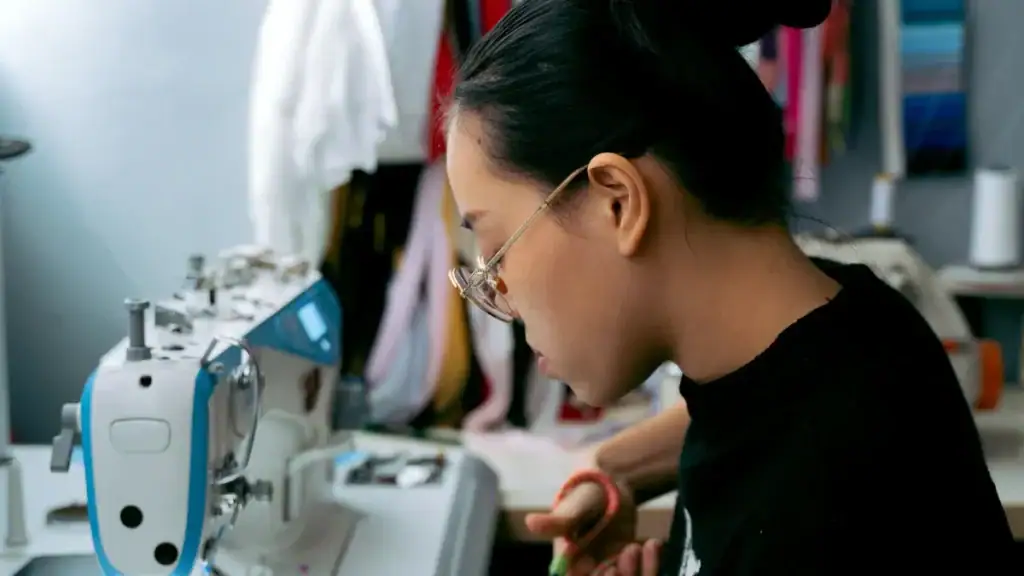
A grocery last-mile delivery uniform OEM solution is a custom-made clothing program. The brand sets the spec, fabric, fit, and branding. Buyers do not pick from a shared catalog.
Three payoffs matter most. First, doorstep brand consistency. Second, rider comfort and durability on cold, repetitive routes. Third, right-sized compliance without over-specifying.
Two trade-offs come first. A per-style minimum order quantity applies. The sample-to-PPS-to-bulk approval path also takes longer than a catalog buy.
Quick takeaways
OEM means the brand owns the spec, not a shared catalog look.
Doorstep consistency, rider comfort, and right-sized compliance drive the brief.
Expect a per-style minimum and a longer approval path.
Plan samples, PPS, and bulk as separate gates.
Table of contents below.
Who this is for: fresh-grocery apps, supermarket home-delivery brands, quick-commerce operators, and regional last-mile grocery fleet leads.
Key Takeaways
OEM means your brand controls the uniform design, not a shared catalog style.
A custom uniform keeps your brand looking the same at every door.
Riders stay comfortable and last a long time on cold routes they repeat.
Compliance matches the route without adding too many rules to the uniform.
Plan for a minimum order for each style and a longer approval process.
Set up separate approval steps for plan samples, PPS, and bulk.
Use the RFQ table and the procurement checklist to get your program started.
What a Grocery Last-Mile Delivery Uniform OEM Means
Shanghai Top Fortune Industry Co., Ltd. makes these programs. The company began around 2002. It runs a 1,506 m2 factory in Songjiang, Shanghai. Its OEM/ODM workwear goes to Europe, the Middle East, Oceania, Southeast Asia, and the Americas. Buyers can see the full range at workwearmanufacturer.com. They can also read the company background on the about-us page.
This section is for adult B2B buyers only. These include overseas grocery apps, quick-commerce operators, and supermarket home-delivery teams. A typical program starts at about 2,000 pieces per style. That volume supports custom fabric, custom fit, and custom branding in one run.
OEM vs. Catalog in Plain Terms
Catalog: Fast, Low-MOQ, Shared Look
A catalog buy means the buyer picks a garment that already exists. Sizes, colors, and fabric are fixed. The supplier keeps stock, so small orders ship fast. The catch is a shared look. Another brand may wear the same polo in the same color. Catalog works well for pilot fleets and short seasonal pushes.
OEM: Your Spec, Your Brand, Your Fit
An OEM program flips the order. The brand defines the garment first. Fabric weight, pocket placement, sleeve length, logo position, and color all follow the brand’s own standard. The factory then builds to that standard. The result is a garment no competitor can buy off a shelf. The trade-off is a longer path from first sample to bulk shipment.
Why Fresh & Quick Commerce Is Different
Cold Chain, Condensation, Short Windows
Grocery riders move perishables. Cold bags sweat. Chilled cases drip. A rider steps in and out of a vehicle many times per shift. The garment must handle moisture without clinging or chilling the wearer. Delivery windows are also short. Riders dress once and stay in the same kit for hours. Layering must work from a cold morning to a warmer afternoon.
Doorstep Visibility and Repeat Customers
Grocery e-commerce penetration keeps rising, and repeat orders drive revenue. The doorstep is where the brand becomes real. A clean, consistent uniform makes the driver easy to spot at a glance. Customers see the same look week after week. That repetition builds recognition and trust. A mismatched or worn kit weakens the moment.
The Spec Stack: Polo, Light Outer, Weather Layer
A grocery last-mile delivery uniform works as a three-piece stack, not a single garment.
Layer | Role | Key spec points |
|---|---|---|
Polo | Base identity piece | Breathable knit, brand color, chest logo, easy wash |
Light outer | Cool-weather cover | Packable, stretch panels, secure pockets |
Weather layer | Rain and wind shell | Water resistance, sealed seams, reflective trim |
Why This Is Not PPE-First
Grocery crews are retail ambassadors, not industrial workers. The brief leads with brand look, comfort, and durability. Safety features support the kit. They do not define it. Buyers who start from a PPE catalog often end up with stiff, heavy garments. Riders dislike them, and customers read them as industrial.
Where High-Visibility Fits Without Leading
High-visibility elements still earn a place. Reflective piping on the weather layer helps at dawn and after dark. A hi-vis vest can sit over the polo for night routes. The trick is restraint. Trim and accents keep the retail look intact. A full hi-vis shell as the main garment shifts the brand image away from fresh grocery.
Brand Consistency and Customer Trust
A grocery brand lives in two places at once. One is the app screen. The other is the doorstep. The uniform sits between them. It carries the same colors, the same logo, and the same feel as the bag in the rider’s hand. When those elements line up, customers trust what they see.
A Uniform That Matches the App and the Bag
Customers meet the brand on a phone first. They see a color palette, a logo, and a tone. Minutes later, a rider arrives at the door. That rider either confirms the brand story or breaks it. A grocery last-mile delivery uniform closes the gap. The polo, the light outer, and the weather layer all pull from one design source. The bag, the app, and the garment then read as one brand.
Color, Logo, and Trim Consistency
Color is the hardest element to hold steady. Screens glow. Fabric shifts under daylight and streetlight. A brand that picks a polo color from a screen alone often gets a surprise at the doorstep. The fix is a physical color standard. The buyer approves a fabric swatch, and the factory matches bulk runs to that swatch.
Logo placement follows the same logic. A chest logo, a sleeve mark, and a back print each need a fixed position and a fixed size. Trim adds the finishing touch. Piping, contrast stitching, and zipper pulls can echo the app’s accent color. The corporate polo shirts OEM program gives buyers control over all three: base color, logo placement, and trim detail. That control is what keeps a fleet looking like one brand across many riders.
Doorstep Moments That Build Recognition
Recognition grows through repetition. A customer orders once a week. The same look appears at the door each time. After a few cycles, the uniform becomes a visual cue. The customer spots the rider from a window and knows the order has arrived. That cue works only when every rider wears the same kit the same way.
Photo, Handoff, and Review Moments
Three moments carry the most weight. The first is the photo. Many apps send a delivery photo as proof. That image shows the bag, the door, and often the rider’s sleeve or shoulder. A clean, consistent garment makes the photo look professional.
The second moment is the handoff. The rider stands at the door for a few seconds. Color, logo, and fit all register at once. A crisp polo and a neat outer layer signal care. A faded or mismatched kit signals the opposite.
The third moment is the review. Customers rate the delivery, and some mention the driver. A uniform that matches the app makes the experience feel complete. These small moments compound into trust over a season.
Catalog vs. Private-Label Grocery Last-Mile Delivery Uniform
Both paths have a place. A catalog uniform suits a small fleet or a pilot city. Stock ships fast, and the order size stays low. A private-label program suits a brand that runs many cities and wants one owned look. Neither path is better in every case. The right choice depends on fleet size, timeline, and how much brand control the buyer needs.
Comparison Table: Fit, Branding, MOQ, Reorder
Factor | Catalog uniform | Private-label grocery OEM |
|---|---|---|
Fit | Fixed size set and cut | Custom size set and cut to the brand's spec |
Branding | Stock colors; logo added by decoration | Custom colors, logo placement, and trim built in |
MOQ | Low; buy what is in stock | Higher per-style minimum; supports custom build |
Reorder | Rebuy from stock while it lasts | Repeat against a locked spec and approval record |
Best fit | Small fleets, pilot cities, fast turnaround | Multi-city fleets, brand-owned look, long-term programs |
A pilot fleet gains speed from a catalog buy. The team can test routes and rider feedback without a long approval path. A national grocery brand gains consistency from a private-label program. Every city gets the same polo, the same outer layer, and the same trim. The table shows the trade clearly. Speed and low commitment sit on one side. Control and repeatability sit on the other.
Some buyers start with catalog for a pilot and move to private-label once volumes settle. That path works well. The pilot reveals fit issues and rider preferences. The private-label program then builds on real feedback instead of guesswork.
Operational Efficiency and Durability
A grocery last-mile delivery uniform earns its keep over hundreds of shifts. Riders load cold bags, climb stairs, and step in and out of vehicles all day. The garment must survive that routine without losing shape or color. Durability and comfort decide whether a fleet replaces kit once a season or twice.
Fabrics for Cold, Wet, Repetitive Routes
Fabric choice drives the whole program. A knit that holds up in a chilled case also needs to dry fast between stops. Buyers should test candidate fabrics in the actual route conditions, not just on a swatch card.
Moisture Management and Quick-Dry Blends
Cold bags sweat, and chilled cases drip onto sleeves and fronts. A quick-dry blend moves moisture away from the skin and releases it into the air. Polyester-cotton blends with a moisture-wicking finish work well for polos. The custom polo shirt manufacturer page shows how knit weight and finish options shape the base layer. Heavier knits resist cling, and lighter knits dry faster. Buyers should pick one direction and hold it across the fleet.
Abrasion Points: Bags, Straps, Vehicle Entry
Wear shows up in predictable places. Shoulder seams rub against bag straps. Hips and thighs brush against vehicle door frames. Cuffs catch on crate edges. Reinforcement at these points extends garment life. Bar-tacked seams, double-stitched shoulders, and reinforced pocket corners all help. The custom jacket manufacturer range covers outer layers built with these stress points in mind.
Fit and Comfort for Long Shifts
A rider wears one kit for an entire shift. Tight armholes restrict reaching and lifting. Short hems ride up during stair climbs. Fit problems turn into complaints fast, and complaints turn into replacement requests.
Stretch, Venting, and Layering Room
Stretch panels at the shoulders and underarms free up movement. Venting at the back and sides releases heat during active stretches. Layering room matters most. A polo must sit cleanly under a light outer, and the outer must fit over the polo without pulling. Buyers should size the stack together, not piece by piece.
Wash Cycles and Replacement Cadence
Fleet laundry varies by market. Some riders wash at home. Some depots run shared laundry. Both paths stress fabric, and both shorten garment life when heat settings run high.
Setting a Realistic Replacement Rate
Buyers should track returns and visible wear over the first season. Fading, seam failure, and stretched collars mark the real replacement point. A realistic rate comes from that data, not from a supplier estimate. Fleets that log wear by style can then plan reorders against actual failure patterns.
Compliance, Safety, and Brand Risk
Compliance for a grocery fleet is not just one certificate. It is a group of practical rules the buyer sets and the factory follows. The buyer owns those rules. A vague brief pushes the risk onto the rider and the brand.
What Grocery Fleets Actually Need
Grocery crews work in public spaces, on foot, and near vehicles. Their kit must do three jobs at once. It must make the rider visible, make the rider easy to identify, and protect the rider from weather.
Visibility, Identification, Weather Protection
Visibility covers low light and bad weather. Reflective trim on the outer layer helps a rider stand out near curbs and crossings. Identification covers what the customer sees from a doorway or window. A steady color and a clear logo spot let a customer confirm the right person at a glance. Weather protection covers rain, wind, and cold. A packable shell with sealed seams keeps a rider dry through a short downpour.
These three needs affect each other. A dark shell hides dirt but lowers visibility. A bright shell boosts visibility but may clash with the brand palette. Buyers should settle these conflicts at the sample stage, not after bulk delivery.
Avoiding Over-Spec and Under-Spec
Over-spec means the garment has features the route never uses. Under-spec means the garment fails in conditions the route meets every week. Both raise cost or risk.
Matching Spec to Route Type and Season
Route type sets the baseline. A dense urban route with many short stops needs breathable fabric and easy movement. A suburban route with longer drives needs more wind protection. Season sets the layering. A mild climate may need only a polo and a light outer. A cold climate needs a full weather layer with insulation.
Buyers should map each region to a spec tier. One national spec often over-builds warm regions and under-builds cold ones. Tiered specs cost less overall and fit each fleet better.
Documentation Across Suppliers
A grocery last-mile delivery uniform program may run across more than one supplier or production window. Records keep the look and the fit steady between runs.
Spec Sheets, Size Sets, Approval Records
A spec sheet lists fabric, color reference, measurements, logo placement, and trim. A size set holds the approved measurements for each size grade. Approval records capture the signed sample and the pre-production standard. Together, these documents let a new production run match an old one. They also settle disputes fast, because both sides work from the same approved reference.
Cost-Effectiveness and Scalability
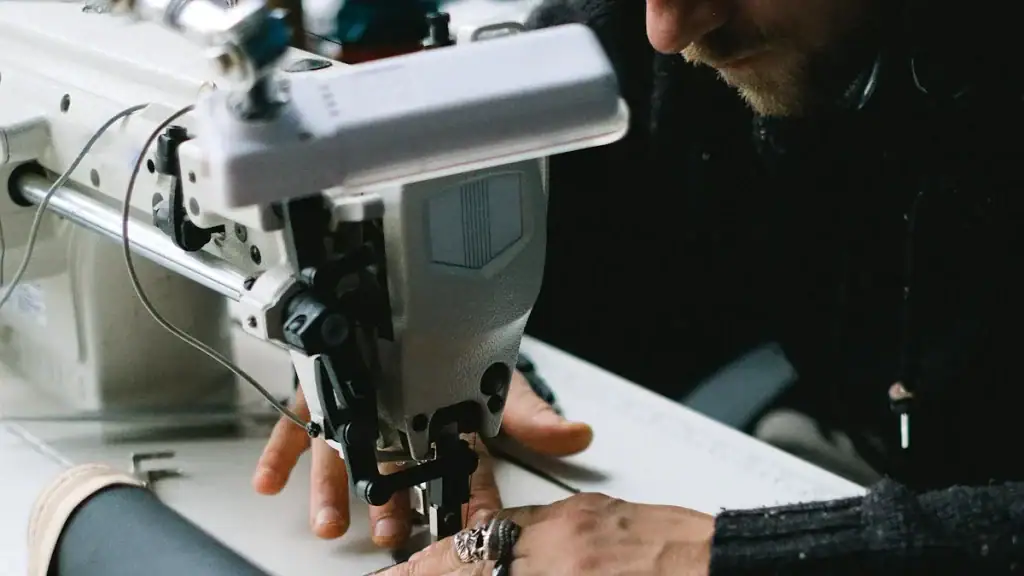
Cost questions deserve a clear frame. A low unit price tells a buyer very little on its own. The useful measure is total cost per rider per season. That figure combines the garment cost, the replacement rate, the laundry load, and the admin time spent reordering. A cheap polo that fades in eight weeks often costs more across a year than a sturdier piece that lasts a full season.
Where OEM Saves and Where It Costs More
An OEM program saves money in three places. It removes the decoration step, because the factory builds the logo and trim into the garment. It cuts replacement frequency, because the buyer controls fabric weight and reinforcement. It reduces reorder friction, because a locked spec removes the need to re-approve every detail.
The costs sit in two places. The first is the per-style minimum. The second is the approval timeline, which ties up staff time before the first bulk shipment.
One-Time Minimum per Style
A custom run needs a per-style minimum, and this program sets that minimum once per style. Buyers should read that number as a one-time threshold, not a recurring burden. Once the style is locked, reorders repeat against the same approved spec. The minimum applies to the first build of each style, so a fleet that runs one polo, one light outer, and one weather layer plans three separate first runs.
Total Cost per Rider per Season
Buyers can build this figure without a supplier quote. Start with the number of garments a rider consumes in a season. Multiply by the approved cost per garment. Add laundry and repair time. Add the staff hours spent on reorders and size swaps. Compare that total against a catalog path with a higher replacement rate. The comparison usually favors OEM once a fleet passes a few hundred riders, because the replacement savings compound across every season.
Scaling Across Cities and Seasons
A single-city fleet runs one size curve and one seasonal calendar. A multi-city fleet runs several of each. Warm regions need lighter layers. Cold regions need the full stack. A national program that ignores this split over-builds some regions and under-builds others.
Size Curve Planning for Regional Fleets
Buyers should pull actual rider size data from each region before the first bulk order. Body size distributions shift by market, and a curve built from one city rarely fits another. The approved size set then anchors every regional order. A regional fleet lead can order against that set without reopening the fit debate. This approach keeps the grocery last-mile delivery uniform consistent while letting each region order the volumes it needs.
Sample to PPS to Bulk Gates
The approval path runs through three gates. Each gate has a clear purpose, and each one protects the next.
Sample stage. The factory builds a sample to the buyer’s brief. The buyer checks fit on real riders, confirms fabric hand and weight, and reviews branding placement. Feedback at this stage is cheap to apply.
PPS stage. The pre-production standard locks every detail. Fabric, color reference, measurements, logo position, and trim all get signed off. The PPS becomes the reference for bulk.
Bulk stage. Production runs against the PPS. The buyer checks consistency against the signed standard and logs any deviation.
Sample Stage: Fit, Fabric, Branding
Fit testing matters most here. A sample that fits a fit model may fail on a rider who lifts crates all day. Buyers should test the full stack together, with the polo under the outer layer. Fabric checks cover weight, stretch, and dry time. Branding checks cover logo size, position, and color match against the physical swatch.
PPS Stage: Locking the Pre-Production Standard
The PPS removes ambiguity. Both sides sign the same garment and the same spec sheet. Any later question about color or measurement resolves against that record. A strong PPS also speeds future reorders, because the factory can match a new run to a documented standard instead of a memory.
Bulk Stage: Consistency Checks and Reorders
Bulk inspection compares the shipment to the PPS. Buyers should check a sample from each size grade, not just one piece. Reorders then repeat against the same record. Predictable reorders are the real payoff of the OEM path. The fleet knows what will arrive, and the budget line stays stable across seasons.
Procurement Checklist and RFQ Basics
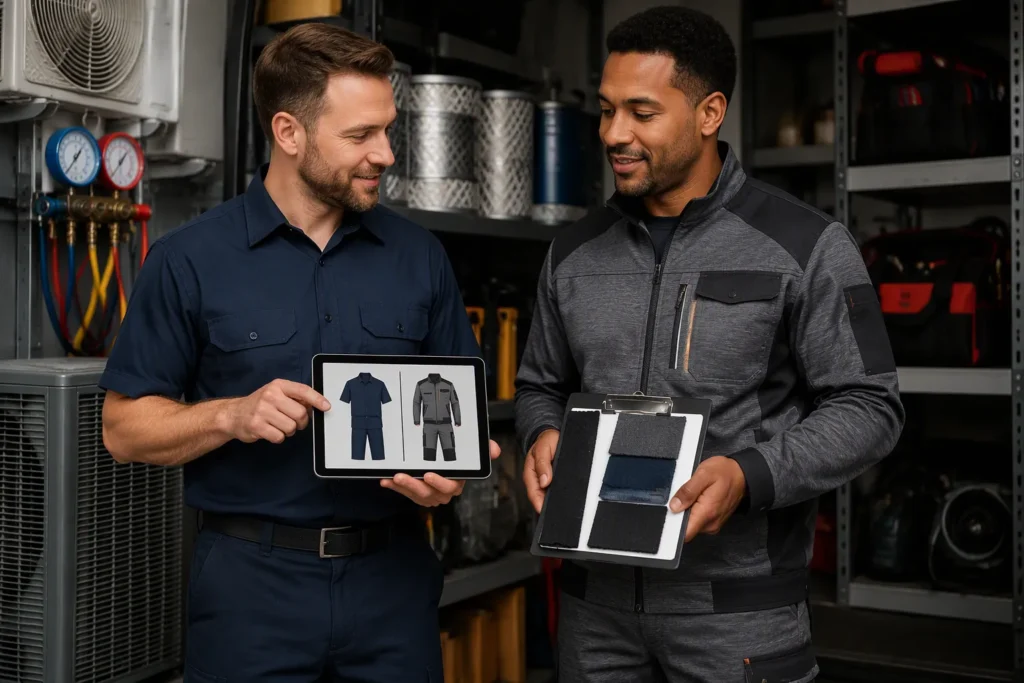
A good RFQ saves weeks of work. It gives the factory everything it needs to quote a fair price and build to your spec. A vague RFQ leads to guesswork, and guesswork later shows up as fit problems or color mismatches. Buyers who give full detail up front get cleaner samples and faster approvals.
What to Put in the RFQ
An RFQ for rider apparel needs more detail than a catalog order. The factory must understand the garment, the fleet, and the brand. Buyers should treat the RFQ as a working document, not a one-page request.
Spec Stack, Sizes, Branding Files
The spec stack defines each layer. Buyers should list the polo, the light outer, and the weather layer as separate line items. Each line needs fabric type, weight direction, color reference, and key features like pocket placement or reflective trim.
Sizes need a starting curve. Buyers should send the expected rider count per size, even if it is only an estimate. That curve lets the factory advise on grade rules and sample sizes.
Branding files need clean source art. Vector files work best for logos. Buyers should also state logo position, size, and application method for each garment. A chest logo on a polo may need a different treatment than a back print on a weather shell.
MOQ, Lead Times, Reorder Terms
Volume expectations belong in the RFQ. This program sets a one-time minimum per style. Buyers should confirm how that minimum splits across sizes and colors.
Lead times need a clear start point. Buyers should ask for the timeline from sample approval to bulk shipment, and from PPS sign-off to delivery. Reorder terms matter just as much. Buyers should ask how the factory holds the approved spec and how fast a repeat run can ship.
RFQ and Specs Table
A single table keeps the RFQ organized. Buyers can copy it into an email or attach it as a sheet. The factory then answers each row in writing.
RFQ item | What the buyer states | What the factory confirms |
|---|---|---|
Fabric | Fiber blend, weight direction, finish, color reference | Mill options, test data, and color match method |
Branding | Logo files, position, size, and method per garment | Application method, durability, and placement proof |
MOQ | Expected volume per style, size split, color split | Minimum per style, per color, and per size |
Lead time | Target sample date, PPS date, and bulk delivery window | Sample turnaround, production window, and shipping plan |
Reorder | Expected repeat volume and frequency | Spec retention, reorder lead time, and record keeping |
Buyers should ask for written answers on every row. Verbal confirmations fade. A filled table becomes the reference for the whole program.
Copy-Paste Procurement Checklist
The checklist below runs from first inquiry to repeat order. Buyers can paste it into a project tracker and tick each item as it closes.
Pre-RFQ. Confirm the spec stack, gather rider size estimates, collect vector logo files, and set a target budget frame per rider per season.
Sample. Approve fabric hand and weight, test fit on real riders with the full stack, and check logo size and position.
PPS. Sign the pre-production standard, lock color against a physical swatch, and file the approved measurements for every size grade.
Bulk. Inspect a sample from each size grade against the PPS, log any deviation, and confirm the shipping plan.
Reorder. Reuse the locked spec, confirm the size curve for each region, and schedule the repeat run against the seasonal calendar.
Buyers new to rider apparel can compare notes with the food delivery rider uniform OEM buyer guide for shared approval steps. Teams running mixed fleets may also review the last-mile courier uniform OEM program for program structure. More sourcing notes sit in the workwear manufacturer blog.
A grocery last-mile delivery uniform program runs on documents, not memory. The signed PPS and the filled RFQ table carry every future reorder.
Ready to start? Send the spec stack and size curve to rill@topfortunemail.com or message WhatsApp +86 13524210501. The team can turn the RFQ table into a quote and map the sample-to-PPS-to-bulk path.
A grocery last-mile delivery uniform OEM program gives fresh and quick commerce brands one spec stack, one approval record, and reorders you can count on across regions. The stack has a polo, a light outer, and a weather layer. Buyers accept a per-style minimum and a sample-to-PPS-to-bulk timeline in exchange for that control. Catalog uniforms still work for small or pilot fleets that need speed.
The payoff stays practical. Riders look like the brand at every doorstep. They stay comfortable on cold, repetitive routes. Compliance fits the route without over-specifying.
Request a quote at rill@topfortunemail.com or WhatsApp +86 13524210501. Start with the RFQ table and the procurement checklist.
FAQ
What is a grocery last-mile delivery uniform OEM program?
It is a custom clothing program made to the grocery brand’s own fabric, fit, color, and logo spec. The factory makes the polo, light outer, and weather layer as one matched set. The brand owns the look instead of sharing a stock catalog design with other companies.
What is the minimum order for a custom rider uniform?
The program sets a per-style minimum on the first production run of each style. Buyers should plan one first run for the polo, one for the light outer, and one for the weather layer. Reorders then repeat against the approved spec without asking about the minimum again.
How does a buyer get a quote?
Send the spec stack, a rider size estimate, vector logo files, and target volumes to rill@topfortunemail.com or WhatsApp +86 13524210501. The team sends back written answers on fabric, branding, minimums, lead times, and reorder terms. A filled RFQ table speeds up the quote.
How does this differ from a restaurant food-delivery rider program?
Restaurant delivery kits often focus on insulated carry gear and a casual look. Grocery crews act as retail ambassadors for a store brand. Their kit matches the app and the grocery bag, and it handles cold-chain moisture across many short stops.
How does this differ from a parcel courier uniform program?
Parcel courier programs put route density and parcel handling first. Grocery programs put perishable speed, doorstep presentation, and brand match with a retail storefront first. The garment stack and the branding brief follow different priorities.
How does this differ from courier-hub or sortation staff uniforms?
Hub and sortation staff work indoors around conveyors and fixed stations. Grocery riders work outdoors, on foot, and near vehicles. Their kit needs weather layers, reflective trim, and easy movement rather than warehouse-floor durability features.
Can a small fleet start with a catalog buy first?
Yes. A catalog uniform works for pilot cities and small fleets that need fast turnaround and low commitment. Many brands test routes with catalog kit, gather rider feedback, then move to a private-label program once volumes settle.
What documents should a buyer keep after approval?
Keep the signed pre-production standard, the spec sheet, the approved size set, and the color swatch record. These files let a new production run match an older one. They also settle any question about color, measurement, or logo placement quickly.