

Supplement Store Franchise Staff Uniform OEM | Nutrition Retail Brands
Table of Contents
Display
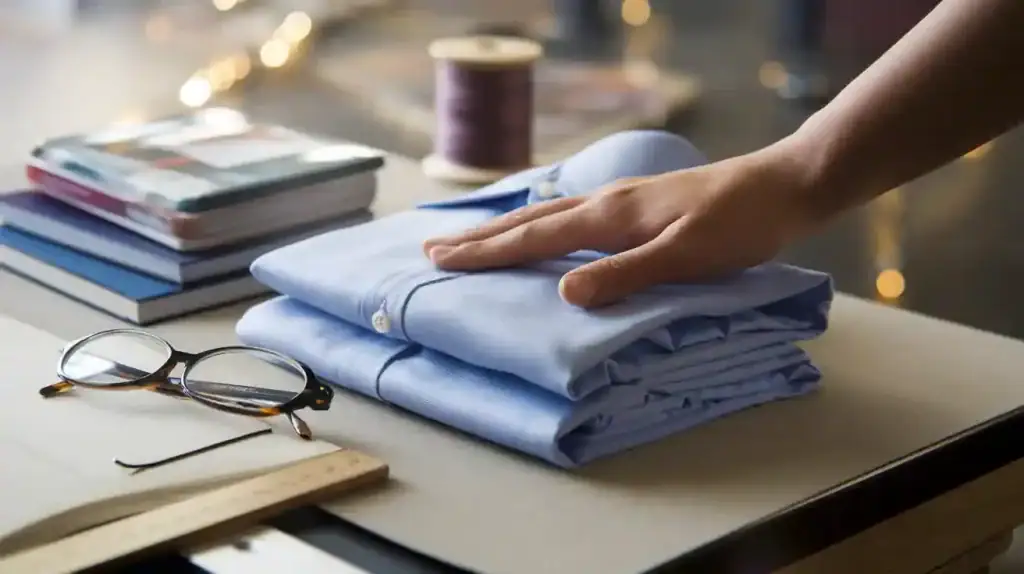
Getting a supplement store franchise staff uniform starts with one clear match. You pair a set spec stack, a performance polo plus a light retail layer, with a checked OEM supplier. Then you run a sample-to-PPS-to-bulk process under a fixed minimum order quantity.
This guide is for supplement franchise operators, brand-owned nutrition retail chains, and regional franchise retail managers. The path is simple: define your needs, check suppliers, lock materials and compliance, then manage cost and orders.
Minimum order quantity: plan around a set per-style volume before you ask for quotes.
Spec stack: performance polo plus light retail layer, built for shop-floor wear.
Sample approval: sign off fit and fabric before pre-production samples.
Compliance basics: confirm fiber content, care labels, and safety documents early.
Key Takeaways
Pick a performance polo and a light retail layer for your staff uniform.
Check how many of each style you want to order before you ask for quotes.
Ask suppliers about their product focus, capacity, and valid certificates.
Check the fit and fabric on real staff before you make the full order.
Gather compliance documents like fiber content and care labels early.
Pick one color and one logo placement for every franchise location.
Plan reorders by keeping approved fabric and patterns on file.
Use a sample-to-PPS-to-bulk process to prevent expensive mistakes.
Quick Takeaways And Audience
Key Takeaways
You need to settle four choices before you contact any factory. First, define the spec stack: a performance polo as the base layer and a light retail layer for cooler stores or evening shifts. Second, confirm your per-style volume, because most OEM factories quote against a set minimum. Third, plan a sample round that covers fit trials on real staff body types, not just one fit model. Fourth, collect compliance paperwork early, since fiber content and care labeling rules differ by destination market.
Spec stack: performance polo plus light retail layer, matched to your store climate and shift pattern.
Volume: confirm your per-style quantity before you ask for pricing, and expect a set minimum per style.
Samples: approve fit and fabric on real staff before you sign off pre-production samples.
Compliance: ask for fiber content, care label, and safety documents with your first quote.
Who This Guide Serves
This guide is for three buyer groups. Supplement franchise operators run multi-location networks and need every store to look like the same brand. Brand-owned nutrition retail chains control their own stores and want staff apparel that matches their packaging and in-store design. Regional franchise retail managers own the rollout locally and answer for fit, reorder speed, and crew feedback.
You will get the most from this material if you hold buying authority or can influence it. The content assumes you work in adult B2B sourcing for overseas retail operations. It does not cover consumer purchases, school programs, or single-store orders.
Table Of Contents
Entity And Buyer Intent
Supplement Store Franchise Staff Uniform Requirements
Sourcing Your Supplement Store Franchise Staff Uniform
Material And Design Considerations
Compliance And Labeling Checks
Cost, MOQ, And Order Management
Catalog Vs. Private-Label Programs
Sample To PPS To Bulk Gates
Franchise Shop-Floor Focus
Procurement Checklist And CTA
Entity And Buyer Intent
Company Snapshot
Shanghai Top Fortune Industry Co., Ltd. is the OEM/ODM workwear factory that made this guide. The company began around 2002. It runs a 1,506 m2 production site in Songjiang, Shanghai. Its export work covers Europe, the Middle East, Oceania, Southeast Asia, and the Americas. You can see the full list of skills at https://www.workwearmanufacturer.com/ and read the company story at https://www.workwearmanufacturer.com/about-us/.
The factory makes workwear and retail staff clothing through OEM and ODM programs. That means you bring a spec, or you bring a brand direction and the team helps build the spec. Both paths go through the same sample and approval steps. The Songjiang site keeps pattern making, sampling, and bulk production in one place. This setup shortens the wait between your comments and the next sample round. It also means the person who cuts your pre-production sample stays close to the line that runs your bulk order.
Buyer Intent And MOQ
This page is for overseas sports-nutrition and supplement franchise networks and brand-owned retail stores. You are sourcing branded shop-floor staff clothing for adult crews. The audience is adult B2B buyers only. Consumer shoppers, school programs, and single-store purchases are outside this scope.
Your order volume shapes the quote. The minimum order quantity here is about 2,000 pieces per style. Plan your size breakdown and color split against that number before you ask for pricing. A franchise rollout across several locations usually hits that volume in one style without much effort. A single pilot store may not, so group your pilot and your first wave into one style commitment. A retailer with a small footprint can also combine two colorways of the same polo into one style line, as long as the fabric and trim stay identical. State your store count and your crew size per store in the first message.
Contact Details
Send your RFQ or sample request straight to the sales team. Email rill@topfortunemail.com with your spec sheet attached. For faster back-and-forth on fit questions or sample photos, use WhatsApp +86 13524210501. Both channels reach the same team, so pick the one that fits your working hours. Include your destination market and your target ship window in the first message. That detail lets the team flag any labeling or timing issue before you go deeper.
The factory address is Floor 3 Building 20 Haier Zhigu No.66 Guangfulin East Road Songjiang Shanghai 201600. Use this address for courier shipments of reference garments or counter-samples. Label the parcel with your company name and the style reference so the team can match it to your inquiry. A buyer with several store formats should note each format in the first message. Keep your spec sheet in one file so the team can quote without follow-up questions. Clear input at this stage saves a full sample round later.
Supplement Store Franchise Staff Uniform Requirements
Brand Image Across Locations
Your crew is the most visible part of the brand inside a supplement store. A shopper walks in, sees the polo, and reads the store as either organized or improvised. That judgment happens in seconds, and it repeats in every location you open. A supplement store franchise staff uniform therefore works as a brand asset, not a cost line. Treat it with the same discipline you apply to shelf layout and signage.
Consistency is the hard part. One store orders a slightly bluer navy. Another store’s manager picks a lighter fabric. Six months later, your network looks like six different companies. Lock one color reference, one fabric quality, and one logo placement before any location places an order. Give regional managers a fixed style code and a single reorder channel. That structure protects the brand image across markets, time zones, and staff turnover.
Spec Stack: Polo And Light Layer
Build the program on two garments. The performance polo is the base layer for daily shop-floor wear. Choose a knit that holds its shape through repeated washing and resists pilling at the collar and placket. A mid-weight knit with some stretch moves with staff who lift stock and restock shelves all day. Side vents and a clean hem help the polo sit well untucked.
The light retail layer covers cooler stores, evening shifts, and promotional events. A quarter-zip or a lightweight softshell works well here. Keep the layer thin enough to wear over the polo without bulk. Match the trim color to the polo so the two pieces read as one outfit. Both garments should carry the same logo treatment at the same position. That pairing gives you a full-year wardrobe from two style numbers.
Fit And Function By Role
Roles differ, so fit should differ too. Floor staff need a polo that stays neat through bending, reaching, and long standing shifts. Store managers often want a slightly sharper look, so offer a tailored fit option in the same fabric. Stockroom and receiving staff benefit from a roomier cut and a darker color that hides dust.
Plan your size range around your actual crew, not a generic chart. Collect chest, waist, and height data from each region before you finalize the grade. Warm-climate markets may prefer the polo alone, while colder markets lean on the light layer for most of the year. State these role and climate splits in your spec sheet. The factory can then build one style line that serves every location without a separate development cycle.
Sourcing Your Supplement Store Franchise Staff Uniform
Supplier Capabilities And Certifications
Start with what a factory can do, not with price. Ask each factory what it makes most often. A plant that makes knit polos every week will handle your order with less risk than one that mostly sews woven jackets. Ask how many of your main style it makes each month. Ask how many sewing lines it can give your order. Ask if pattern making and sampling happen in the same building as bulk production. A yes to that last question shortens every sample round.
Be careful with certification questions. Do not accept a logo on a website as proof. Ask for the certificate number and the issuing body. Then check the scope. A certificate that covers a different product category does not cover your polo. Common programs you may hear about include ISO 9001 for quality management and OEKO-TEX Standard 100 for textile safety. Ask which specific standard applies to your fabric and trim. Request the test report that matches your actual material, not a generic file.
Use this check list when you compare factories:
Check | What to ask | Why it matters |
|---|---|---|
Product focus | Share of knit polo and light layer output | Proves relevant experience |
Capacity | Lines available for your order | Protects your ship date |
In-house steps | Pattern, sampling, cutting, sewing | Fewer handoffs, fewer errors |
Certificates | Number, issuer, scope | Confirms real coverage |
Export markets | Regions served in the past three years | Shows labeling familiarity |
Sample Evaluation And Communication
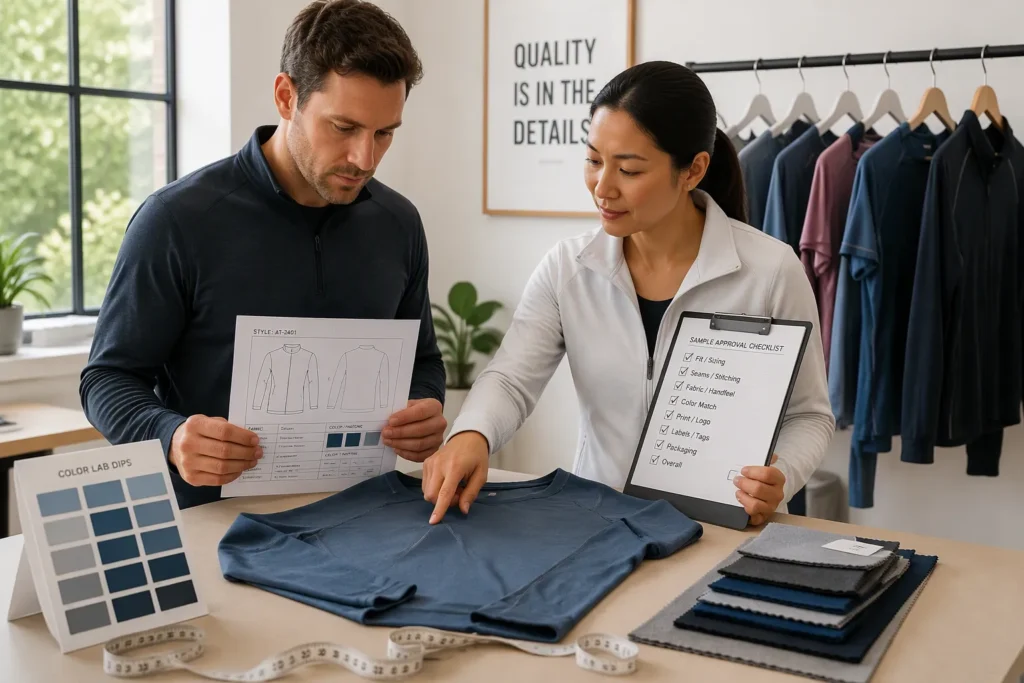
Treat the first sample as a test of how well the factory listens, not just how well it sews. Send a clear tech pack with measurements, fabric weight, color reference, and logo placement. Then watch how the factory responds. A good partner asks questions before cutting. A weak partner guesses and ships.
Score each sample against your own spec sheet. Check the chest, body length, sleeve length, and collar shape. Wash one sample two or three times and look for shrinkage, pilling, and color bleed. Pull the placket and the side seams to test recovery. Photograph every fault with a ruler in frame. Send comments in one numbered document, not a long email thread. Numbered comments let the factory reply point by point, and nothing gets lost.
Set a reply window with your supplier. A factory that answers fit questions within one or two business days keeps your rollout on track. Slow replies early usually mean slow replies during bulk production.
Reference Checks And Red Flags
Ask for two or three references in nearby categories, such as teamwear or retail staff clothing. Then ask those references three questions: did the factory hit the ship date, did bulk match the approved sample, and how did it handle a problem order? A reference that only praises the price tells you little.
A factory that cannot name a single past buyer for a similar knit program, or that refuses to share a certificate number, is a risk you should not carry into a franchise rollout.
Watch for these warning signs during your supplement store franchise staff uniform sourcing work:
Quotes that arrive without any spec questions.
Certificate images with no number or issuer.
Pressure to skip the pre-production sample.
Vague answers about who owns the pattern and the logo file.
A sample that looks right but uses a different fabric than the one quoted.
Run your sourcing as a short, scored comparison. Give each factory a mark for capability, sample quality, communication speed, and documentation. Pick the partner with the strongest total, not the lowest quote. That choice protects your brand across every store you open.
Material And Design Considerations
Fabric Performance For Nutrition Retail
Your polo gets a lot of use. Staff lift tubs, stack shelves, and lean over counters all shift long. Pick a knit with enough stretch to move with the body. It also needs enough recovery to spring back at the elbow and shoulder. Test recovery by stretching a sample and seeing if it returns to shape. A knit that sags after one wear will look worn out by mid-shift.
Washing matters as much as wearing. Supplement store crews wash uniforms often. A fabric that pills at the collar or fades at the placket ruins the brand look fast. Ask for a wash trial on the actual fabric. Then check pilling, color bleed, and shrinkage after repeated cycles. Choose a mid-weight knit for year-round wear and a lighter knit for hot-climate markets. Keep the light retail layer thin enough to layer cleanly over the polo without bulk at the shoulders.
Logo, Color, And Trim Customization
Logo placement decides how your crew looks on the floor. A chest logo sits at eye level for a shopper at the counter. A sleeve mark works for a smaller, quieter look. Pick one main position and keep it across every style, so the polo and the light layer match. Send vector artwork and state the finished size in millimeters. Ask the factory to confirm the decoration method against your fabric. Embroidery and print behave differently on a stretch knit.
Color control protects the network. Give one physical color reference, such as a Pantone number. Ask the factory to match it on bulk fabric. Match trim, buttons, and zipper tape to the same reference. A slightly different navy on a reorder breaks the uniform look across stores. Approve a lab dip before bulk cutting. Keep the approved dip on file for future reorders.
Sizing Consistency Across Regions
One size chart should serve every market. Build the grade from real crew measurements across your regions. Then lock the grade before bulk. A store in one country should not order a “large” that fits differently from a “large” two markets away. Publish the chart to regional managers and require orders against it.
Regional fit preferences vary. So offer a regular and a tailored cut in the same fabric instead of changing the grade per country. Keep one style code per cut. That approach gives crews a choice without splitting your volume into small, costly runs. Record every fit comment in one shared document. Apply approved changes to the master chart only.
Compliance And Labeling Checks
Fiber Content And Care Labels
Your uniform labels are legally required in every market you sell in. Most countries that receive retail textile products require a fiber content statement and care instructions. The exact rules are different by region, so check the requirement for each market before you print one label. Ask your supplier which labeling format they have used for that market before. A factory with export experience in several regions will know the common formats and can point out gaps early.
Build the label content from the approved fabric, not from the quote. The fiber percentages on the label must match the real material in the bulk order. If you change fabric after label approval, reprint the labels. A mismatch between the label and the garment causes a compliance problem at customs and a trust problem with your franchisees. Keep one approved label file per style and per market. Send that file to the factory with your pre-production sample approval so the label and the garment move forward together.
Safety And Flammability Standards
Textile safety rules are different by destination, and some markets apply flammability requirements to apparel. You do not need to become a regulatory expert. You do need to ask the right question: which safety standard applies to this garment in this market? Put that question in your RFQ. A supplier who answers with a named standard and a matching test report gives you something you can check. A vague answer gives you nothing.
Request the test report for your actual fabric and trim, not a generic file. Check that the report names the material, the standard, and the testing body. Confirm the report date falls within a window your buyer or your legal team accepts. If your franchise network spans several countries, map each market to its standard in one document. Share that map with your supplier at the quoting stage. Early clarity here stops a shipment from stalling at the border.
Documentation To Request
Collect documents in one package with your first quote. A complete file speeds up your internal approval and gives your legal team something concrete to review. Ask for the following items:
Document | What it should show |
|---|---|
Fiber content statement | Percentages matching the approved fabric |
Care label artwork | Washing, drying, and ironing instructions |
Safety test report | Named standard, material, and testing body |
Certificate copies | Number, issuer, and scope of coverage |
Label placement spec | Position and size on each garment |
Store this package with your approved sample and your tech pack. Reference the same file for every reorder. A consistent document set protects your brand across every store you open and every market you enter.
Cost, MOQ, And Order Management
Pricing Structure And RFQ Table
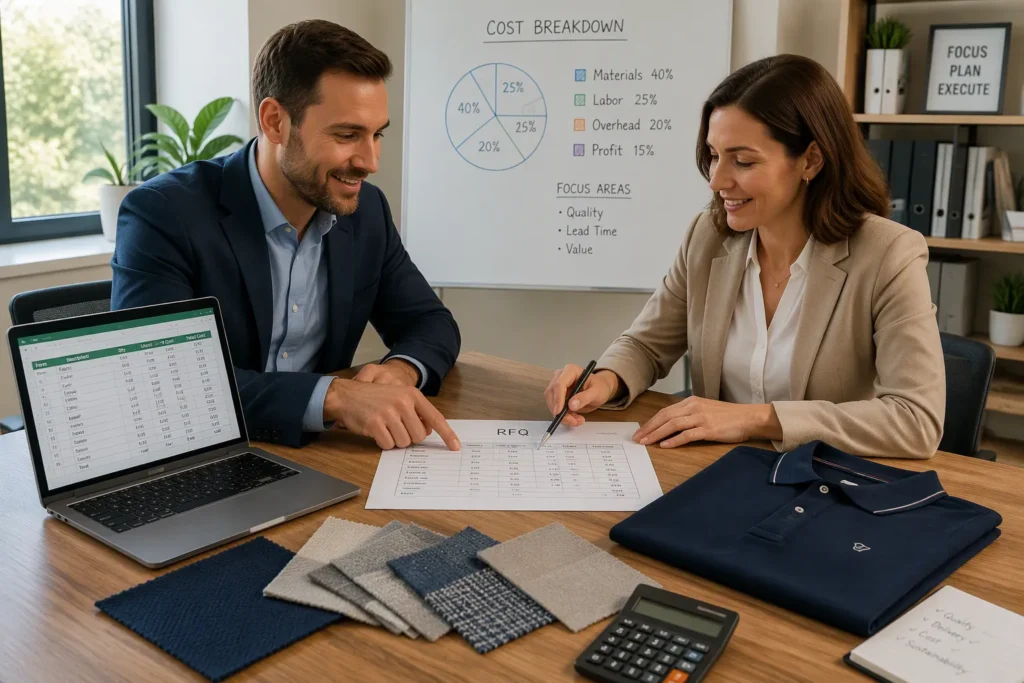
The unit cost in staff uniform OEM work is not just one number. It adds up fabric use, trim, decoration, cutting, sewing time, packing, and freight. Each of these inputs changes with your spec. A heavier knit costs more per garment than a light one. A chest embroidery adds a decoration step that a blank polo never has. A tailored cut takes longer to sew than a regular cut. Ask each supplier to break the quote into these lines. A lump-sum price hides where your money goes and makes negotiation blind.
Build your RFQ as a table so every factory quotes the same thing. Vague inquiries produce quotes you cannot compare.
RFQ field | What to state |
|---|---|
Style | Polo, quarter-zip, or light softshell |
Fabric and weight | Knit type and weight per unit area |
Color | Pantone reference for body and trim |
Logo placement | Position, size in millimeters, decoration method |
Size range | Full grade with size breakdown |
Quantity per style | Total units and split by size and color |
Packaging | Poly bag, hang tag, carton configuration |
Target ship date | Month and destination port |
Send the same table to every candidate. Then compare line by line, not total to total. A lower total often means a lighter fabric or a skipped decoration step. Ask the supplier to confirm what the price includes and what it excludes. Freight, duties, and labeling costs should sit outside the unit price so you can see them clearly.
MOQ And Reorder Planning
The per-style minimum shapes your whole order plan. Group your pilot stores and your first rollout wave into one style commitment. That way a small pilot does not sit below the threshold on its own. Combine colorways only when fabric and trim stay identical. A different fabric creates a new style and a new minimum.
Plan reorders before you place the first bulk order. Ask the factory to hold your approved fabric and your lab dip on file. Confirm how long they will keep the pattern and the logo file. Ask whether a reorder can run at a lower quantity than the first order. Some factories allow this once the style is proven. Get that answer in writing.
Track consumption per store. If each location needs a set number of polos per crew member per year, multiply that by crew size and store count. Add a buffer for new hires and damaged garments. That figure becomes your annual demand, and it tells you whether one style line covers the network or whether you need to phase the rollout.
Lead Times And Franchise Rollout
Lead time runs from approved pre-production sample to goods leaving the factory. It does not start when you send the inquiry. Sampling, lab dip approval, and label sign-off all sit before that clock starts. Map the full timeline backward from your store opening date. A new location that opens without uniforms undermines the brand image you built.
Sequence the rollout by region, not all at once. Ship to your largest cluster first, then fill the smaller markets. This order lets you catch a fit or packing problem on a large run before it repeats across every store. Keep one shared schedule that lists each market, its quantity, and its ship window. Share that schedule with your supplier at order confirmation.
Build a buffer into the schedule for the pre-production sample round. A fit correction there costs days. The same correction after bulk cutting costs weeks and material. Confirm the inspection step before goods ship. A final check against the approved sample protects every store in the network. Treat the supplement store franchise staff uniform program as a repeating cycle, not a one-time purchase. Each reorder should reuse the approved spec, the held fabric, and the signed documents.
Catalog Vs. Private-Label Programs
Catalog Program Fit
A catalog program gives you a ready-made path. The factory already has the pattern, the fabric, and the color range. You pick a style, add your logo, and place an order. Development time drops to almost nothing, so your first shipment can move fast. This route suits a franchise network that needs uniforms quickly, like a new market launch or a short promotional season.
Catalog styles also ask less of you. You skip pattern development fees and lab dip rounds. The trade-off is control. Your polo will share its cut and fabric with other buyers, and your color choice stays inside the factory’s existing range. A regional manager who wants an exact brand navy may not find it here. Treat the catalog as a practical bridge when speed matters more than a unique look.
Private-Label OEM Fit
A private-label OEM program builds the garment around your brand. You set the fabric weight, the knit, the color reference, and the logo placement. You approve a lab dip and a pre-production sample before bulk cutting. Every store then gets the same polo from the same pattern and the same fabric lot. That consistency is the real value for a franchise network with many locations.
This route also scales well. One approved spec covers every region, and reorders reuse the held pattern and the signed documents. The commitment is higher, since development work comes before the first bulk run and the per-style minimum applies. Choose private-label when brand control across locations matters more than the faster start of a catalog style.
Comparison Table
Factor | Catalog program | Private-label OEM |
|---|---|---|
Customization depth | Logo and trim within set options | Fabric, color, cut, and trim to your spec |
Brand consistency | Good, limited by stock range | High, one spec across all stores |
MOQ | Lower, style already in production | Set per-style minimum applies |
Lead time | Short, no development round | Longer, sampling and approvals first |
Per-unit cost direction | Lower entry cost | Higher development input, scales with volume |
Reorder ease | Simple, while the style stays active | Easy once pattern and fabric are held |
Best-fit scenario | Fast launch, pilot stores, short seasons | Multi-location networks needing one brand look |
Sample To PPS To Bulk Gates
Sample Round And Fit Trials
The first sample round tests your spec sheet against real fabric and real sewing. Send your tech pack with measurements, fabric weight, color reference, and logo placement. Ask the factory to cut one sample per size in your core range, not just one fit model. Then put those samples on actual crew members across your regions. A polo that fits one body type well can fail on a taller or broader frame.
Record every comment in one numbered document. Note the chest, body length, sleeve length, and collar shape. Wash one sample several times and check shrinkage, pilling, and color bleed. Pull the placket and side seams to test recovery. Photograph each fault with a ruler in frame. Send the numbered list back and ask for a point-by-point reply. This discipline keeps the next round short and protects your rollout date.
Pre-Production Sample Approval
The pre-production sample, or PPS, is the garment you will copy in bulk. It carries the approved fabric, the approved color, the final logo placement, and the correct labels. Nothing moves to cutting until you sign this sample. Treat the PPS as a contract, not a formality.
Check the PPS against your approved sample and your tech pack side by side. Confirm the fiber content on the label matches the real fabric. Confirm the logo size in millimeters and its position. Confirm the trim color matches your lab dip. Review the packaging too, including the poly bag and hang tag. Sign and date the PPS, and keep a sealed copy with your documents. Send the same signed copy to the factory so both sides work from one reference.
A bulk order can only be judged against a signed PPS. Without that reference, no inspection has a standard to measure against.
Bulk Production And Inspection
Bulk production starts after PPS sign-off. Ask the factory to run a first-off check at the start of the line. That check catches a cutting or sewing error before it repeats across the whole run. Request photos of the first-off garment against the PPS. Raise any concern at this stage, while a fix costs little.
Plan a final inspection before goods ship. Pull cartons at random and compare garments to the signed PPS. Check measurements, logo placement, label content, and packing. Confirm the carton count and the size breakdown against your order. Record findings in one report and share it with your supplier. Approve shipment only when the report matches the PPS. Keep that report with your reorder file, so the next cycle starts from a proven standard.
Franchise Shop-Floor Focus
Not Sales-Rep Kits
Field sales reps travel, visit accounts, and carry samples. Their clothing needs to survive car seats, airports, and long days on the road. A rep kit often leans on a softshell, a branded bag, and a layering piece built for movement between locations. That is a different job from standing behind a counter for a full shift.
Your franchise crew stays in one store. They lift stock, restock shelves, and face shoppers at close range. The garment must look sharp at arm’s length and hold its shape through a full day on the floor. A rep kit built for travel adds cost you do not need. A shop-floor polo built for repeated washing and constant handling serves your network better.
Not Gym-Instructor Or Club Front-Desk Apparel
Gym instructors need freedom of movement for active sessions. Their apparel often uses stretch panels, mesh zones, and a sporty cut. Club front-desk staff sit at a reception point and greet members. Their uniform leans toward a crisp, hospitality look with a different fabric hand.
Your supplement store crew works a retail floor. They answer product questions, handle stock, and manage a checkout counter. The polo must read as a nutrition retail brand, not a training session or a hotel lobby. Keep the cut clean and the fabric mid-weight. Skip the athletic paneling and the hospitality blazer. Match the garment to the shelf, the signage, and the shopper’s first impression.
Where This Program Fits
This program covers branded shop-floor staff apparel for supplement franchise networks and brand-owned nutrition retail stores. It fits the crew who stands on the sales floor, stocks the shelves, and represents the brand at the counter. One spec stack serves every location, so a shopper sees the same look in each store.
Use this route when consistency across locations matters most. A regional manager orders against one style code and one color reference. A new store opens with the same polo as an established one. The program also supports a light retail layer for cooler stores and evening shifts. Both pieces carry the same logo treatment at the same position.
Keep the scope tight. This is not a field sales kit, not instructor apparel, and not a club reception uniform. It is a retail floor program built for franchise scale. Define the spec stack, confirm your volume, and send the RFQ with your store count and crew size. That input lets the factory quote against your real rollout.
Procurement Checklist And CTA
The Procurement Checklist
Go through these steps in order. Each step protects the next one. If you skip a step, you put your franchise rollout at risk.
Approve the spec sheet with fabric, weight, color reference, and logo placement.
Check each supplier on product focus, capacity, in-house steps, and certificate scope.
Approve the fit sample on real crew members in your regions.
Sign and date the pre-production sample, then keep a sealed copy.
Gather compliance documents: fiber content, care label artwork, and safety test reports.
Confirm volume and pricing line by line against your RFQ table.
Lock the lead-time and rollout schedule by region.
Agree on reorder terms in writing, including how long the factory keeps your pattern and lab dip.
Print this list and attach it to your project file. A signed checklist gives your legal team and regional managers one shared reference.
RFQ Package Essentials
A complete RFQ package lets a factory quote without asking more questions. Build one table and send the same version to every candidate.
RFQ field | What to state |
|---|---|
Style | Polo, quarter-zip, or light softshell |
Fabric and weight | Knit type and weight per unit area |
Color | Pantone reference for body and trim |
Logo placement | Position, size in millimeters, decoration method |
Size range | Full grade with size breakdown |
Quantity per style | Total units split by size and color |
Packaging | Poly bag, hang tag, carton configuration |
Target ship date | Month and destination port |
Attach your tech pack, your label artwork, and any reference garment photos. State your store count and crew size per store. Then ask for a quote against that exact package. You can review the factory’s polo and jacket programs at https://www.workwearmanufacturer.com/custom-polo-shirt-manufacturer/ and https://www.workwearmanufacturer.com/custom-jacket-manufacturer/ before you send it.
Internal Links
Use these pages to build your spec and check supplier fit. Start with the factory overview at https://www.workwearmanufacturer.com/ and the company history at https://www.workwearmanufacturer.com/about-us/. For corporate polo programs, read https://www.workwearmanufacturer.com/corporate-polo-shirts-oem-china-manufacturer/. The nutrition retail program sits at https://www.workwearmanufacturer.com/fitness-sports-nutrition-retail-staff-apparel-oem/, and the field rep route sits at https://www.workwearmanufacturer.com/sports-nutrition-sales-rep-apparel-oem/. More sourcing guides live at https://www.workwearmanufacturer.com/blog/.
Ready to move? Send your RFQ or ask for samples today. Email rill@topfortunemail.com with your spec table attached, or message WhatsApp +86 13524210501 for a faster reply on fit questions. Include your destination market and target ship window in the first message. The team will confirm fabric options, sampling steps, and your rollout timeline.
You now have a clear path from your first plan to a full bulk shipment. Follow these steps in order:
Set the spec stack: a performance polo plus a light retail layer.
Check OEM suppliers for what they can do, how much they can make, and what their certificates cover.
Confirm the materials and the compliance papers.
Lock the per-style minimum and the pricing for each line.
Approve samples through PPS before bulk cutting starts.
Your RFQ table and procurement checklist hold this order together. They keep every quote easy to compare and every store on one brand look. The per-style minimum you confirmed earlier sets your volume plan, so group pilot stores with the first rollout wave. A steady supplement store franchise staff uniform then comes from one approved spec.
Send your RFQ or ask for samples today. Email rill@topfortunemail.com or message WhatsApp +86 13524210501.
FAQ
What is the minimum order quantity for a franchise staff uniform program?
Plan for about 2,000 pieces per style. Group your pilot stores with your first rollout wave to reach that volume in one style line. A single small store may fall short on its own, so combine locations before you request pricing.
How do I get an accurate quote from an OEM factory?
Send one RFQ table with style, fabric weight, color reference, logo placement, size range, quantity per style, packaging, and target ship date. Attach your tech pack and label artwork. Every factory then quotes the same package, and you can compare line by line.
How does this program differ from general retail shop uniforms?
A supplement store crew answers product questions and handles stock at close range. The polo must read as a nutrition retail brand and hold shape through repeated washing. General retail specs often miss the fabric recovery and logo consistency your network needs.
Why not use a field sales-rep kit for store staff?
Rep kits are built for travel, airports, and account visits. Your crew stays on one sales floor all shift. A travel-ready softshell adds cost your stores do not need. A shop-floor polo serves the counter and the shelf better.
Can I use gym-instructor apparel for my store crew?
Instructor apparel leans on stretch panels and a sporty cut for active sessions. Your staff needs a clean retail look at arm’s length. Keep the cut simple and the knit mid-weight, so the polo matches your signage and shelf design.
Is club front-desk apparel a good fit for supplement stores?
Front-desk uniforms follow a hospitality look, often with a crisper fabric hand. A nutrition retail floor calls for a different garment. Match the polo to your store environment, not a lobby or reception point.
How do I keep every franchise location looking the same?
Lock one color reference, one fabric quality, and one logo position before any store orders. Give regional managers a fixed style code and a single reorder channel. Approve a lab dip and keep it on file for future runs.
What should I check before approving bulk production?
Sign and date the pre-production sample, then keep a sealed copy. Confirm the label fiber content matches the real fabric. Request a first-off check at the start of the line, and plan a final inspection against the signed sample before goods ship.