
Auto Dealership Staff Uniform OEM China | Branded Showroom & Service Workwear
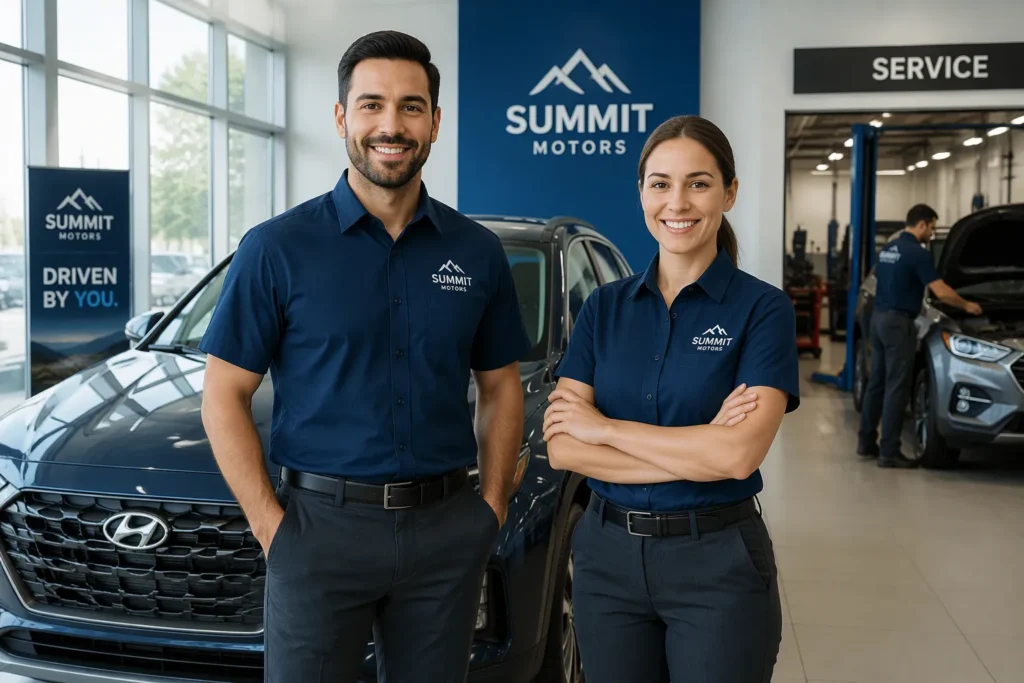
You have a hard job today. You need a trusted OEM maker in China for your auto dealership staff uniform OEM China plan. Your showroom team needs sharp, professional clothes. Your service crew needs tough workwear that resists grease. These two needs call for different fabrics and builds.
This guide gives you a clear plan. You will learn to check a supplier, test their OEM skills, and confirm their minimum order quantity (MOQ). A strong partner helps your brand image and keeps workers happy. A bad choice wastes money and time. You can avoid costly mistakes with the right steps.
Key Takeaways
Make a detailed tech pack for showroom and service uniforms before you contact suppliers.
Look at the Chinese business license and visit the factory to check if the supplier is trustworthy.
Talk about the smallest order amount and the full cost, not just the price for one item, to keep your budget safe.
Always ask for samples before production starts. Also, use a third-party inspection to make sure the quality is good.
Pick an OEM or ODM partner that fits your design control needs and order size.
Define Auto Dealership Staff Uniform OEM China Needs
You have to define your uniform product carefully before you talk to any maker. A request that is not clear wastes everyone’s time. Make technical flat sketches, body measurements, and fabric details. Say the fabric weight and weave for each piece of clothing. This document is your tech pack. It is the base of your RFQ.
Showroom vs. Service Needs
Your showroom team and your service crew wear uniforms for different reasons. Showroom staff need a professional look with comfort for long hours on their feet. Service technicians need protection and good performance in the shop. The table below shows the key differences.
Aspect | Showroom Attire | Service Workwear |
|---|---|---|
Primary goal | Professional appearance | Durability and protection |
Key features | Breathable, easy-care fabrics | Moisture management, stain release |
Garment examples | Performance polos, button-downs | Work shirts, pants, coveralls |
Movement needs | Standing and walking comfort | Stretch for bending and kneeling |
Safety fabrics | Not required | FR-rated for welding or electrical work |
The best workwear uses polyester-cotton blends with finishes that release oil. These fabrics do not wrinkle and can handle many washings at a laundry. Work pants need extra fabric at the knees and a fit that lets you move freely over work boots. Fabrics that are FR-rated and meet NFPA 2112 or NFPA 70E standards are needed near heat, sparks, or open flames.
Budget and MOQ Expectations
Set a realistic budget before you send your clear RFQ. Chinese suppliers often give lower prices per piece for bigger orders. Your MOQ drives this pricing. A common MOQ for custom uniforms is from a few hundred to several thousand pieces for each style. Ask each supplier for their MOQ early. Confirm if your MOQ covers different sizes. Some factories count all pieces across sizes. Others set a separate MOQ for each size. This fact changes your bulk production plan. A low MOQ per style may raise your cost per piece. A high MOQ lowers cost but uses up cash. Balance your budget with your actual number of staff. Leave room for new hires and replacements. Your lead time also depends on MOQ. Larger orders take more production days. Plan your RFQ pack with these numbers ready.
Find Trusted Clothing Makers in China
Your hunt for an auto dealership staff uniform OEM China partner starts with the right sourcing paths. Check every possible partner before you send your pack. A careful plan saves weeks of wasted work and guards your budget.
Where to Find Suppliers
B2B sites are the most common place to begin. Alibaba, Made-in-China, and Global Sources list thousands of clothing makers. Use the site filters to narrow your search by product type, certification, and trade capacity. Look for suppliers with verified status and a record of past deals. Trade fairs give you a different edge. Canton Fair and Intertextile let you meet makers face to face. You can check fabric samples and talk about your needs in person. Industry directories from trade groups also list checked suppliers. Each path has its own good points. Use at least two paths to build your first list. This gives you more choices and more power when talks begin.
First Checks
Check every candidate before you send your clear RFQ. A quick first look stops costly errors. Start by asking each supplier for a business license. When you screen clothing makers in China, this paper is your first test. A real Chinese clothing maker hands it over with no fuss. Check the license for the firm’s legal name, listed address, and business scope. Ask each supplier for their MOQ right away. A low MOQ may cut your freedom. Compare MOQ across suppliers to find the best match. Make sure your MOQ covers all sizes in your order.
Watch for red flags at this stage:
Poor communication is a big warning sign. Slow replies mean you cannot act fast when surprise problems come up later.
Refusing to share details about quality control, pricing, or lead times is another red flag.
Prices that look much lower than others may mean cut corners or weak quality control.
Be careful with odd payment terms. Asking for full payment upfront or wanting cash are alarms you cannot ignore.
Not giving real references from past clients makes you wonder about their OEM work on uniform jobs.
A trusted Chinese clothing maker shows green lights. The supplier answers your questions clearly within 24 to 48 hours. They share their MOQ, normal lead time, and sample policy with no push. They gladly explain their OEM process for dealership uniforms. Many clothing makers in China offer fair prices for uniform orders. This openness builds trust from the start. Suppliers who pass this check earn a closer look in the next step.
Verify a Chinese Clothing Manufacturer
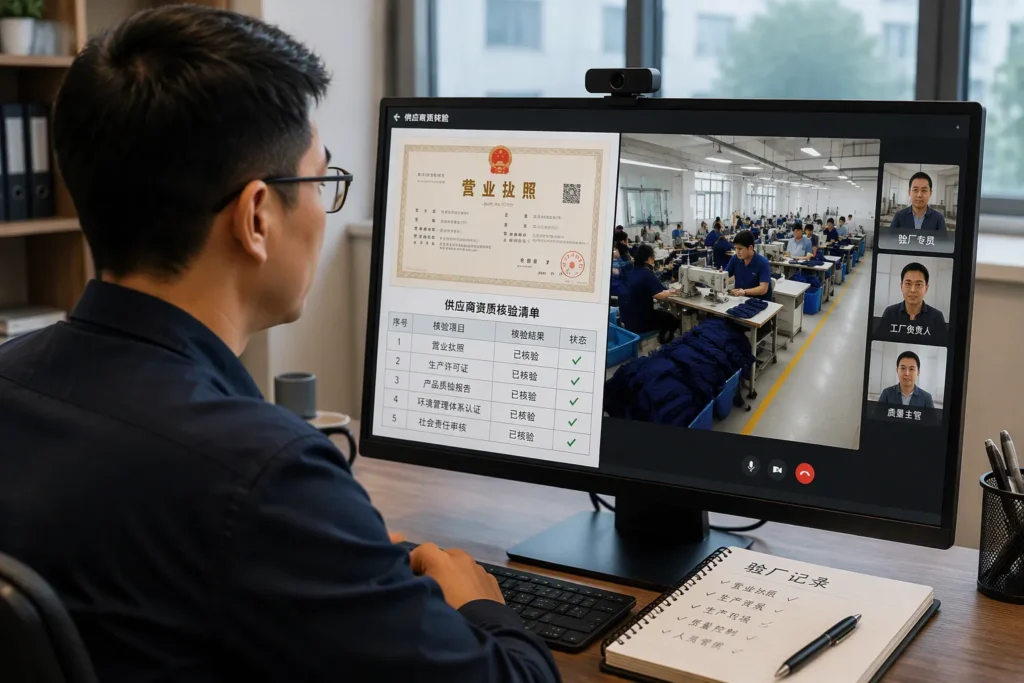
You must check a Chinese clothing maker before you pay any money. Start with the Chinese Business License. This paper proves the supplier is real. Ask for a copy and look at these things:
Verification Item | What to Check |
|---|---|
Registered company name | Make sure the full Chinese name on the license matches the name on the quote, contract, and payment info. |
Unified Social Credit Code | Write down this special number. It helps you find the right company when names are similar. |
Registered address and business scope | Check that the address and what the company can do matches the factory. Ask if anything is different. |
Entity relationships | Find out which company owns the factory, signs the deal, and gets the money. |
Payment beneficiary | Check that the payment receiver matches the license and contract. Look into any differences before sending money. |
You can also use the NECIPS database. This is a government system from SAMR. It lets you check a company’s registration right away. Do these steps:
Go to the NECIPS database to look up a Chinese company’s registration.
Make sure the supplier is in this national credit system. A company not listed there is not legal.
Look closely at the license. Check if the company is legal and has enough money.
Watch for warning signs, like strange registration dates or fake office addresses.
Know that papers are not enough. You must visit the factory to make sure the supplier actually has a factory.
A video call helps you check the supplier’s factory and work. Ask for a live tour of the production floor. Watch how workers handle fabric and run machines. This step proves the factory is real and working.
Automotive Industry Experience
Experience in the car industry is important for your auto dealership staff uniform OEM China project. A maker that has worked with dealers knows what you need. They know showroom staff want polos that do not wrinkle. They know service techs need workwear that resists grease. Ask for references from other car clients. A supplier with this history gives better results.
You also need to know the difference between OEM, ODM, and contract makers. An OEM maker makes goods using your designs. An ODM maker offers their own designs for you to brand. A contract maker handles production based on your rules. For OEM/ODM clothing work, ask which model the supplier uses. This choice changes how much you control the design and how long it takes.
Customization Options
Customization builds your brand look. You can pick fabrics, logos, and design details. For OEM/ODM work, talk about fabric weight, weave, and finishes with your maker. Ask about embroidery or screen printing for your logo. Check the placement and size before big production starts.
Your stage of development and future production plans shape the partnership. A supplier that understands your growth gives better prices and MOQ terms. Talk about your MOQ early. A low MOQ gives you flexibility. A high MOQ lowers the cost per piece. Balance these with your budget.
Quality control protects your money. Ask for samples before big production. Check stitching, fabric feel, and logo accuracy. A good Chinese clothing maker welcomes this step. They share compliance papers and support your check. Many clothing makers in China offer fair terms for dealer uniform orders. Pick a partner that meets your quality and communication standards.
Pricing, Quality Control, and Logistics in China
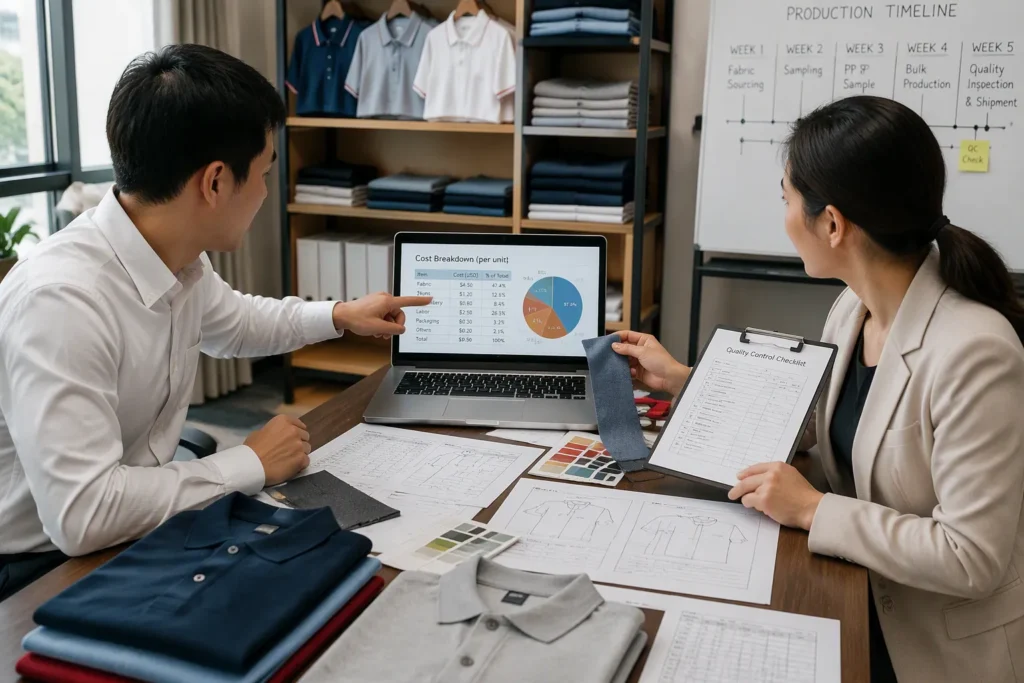
Chinese suppliers include profit in their pricing. Knowing this helps you talk about costs better. Your partner in China wants a fair deal. Making goods in China means you must pick the right partner with care.
Costs and Negotiation
Look up normal market prices before you start talking. Get three to five quotes from different factories. Know your full landed cost. Set your target price and smallest order terms. Get ready by learning what the factory can do and having backup suppliers. This gives you power in talks. Your MOQ sets the price for each piece. A normal MOQ is 100 to 300 pieces for each style. Ask for a lower MOQ on your first order. Offer to pay more per piece to get a lower MOQ. Promise a bigger follow-up order to get better terms. Talk about the whole deal — MOQ, payment terms, lead time, packaging, and sample cost. Do not look only at the unit price. The full package matters more.
Payment terms follow a normal pattern. Most factories want 30 percent deposit and 70 percent before shipping. Ask for 30/70 after inspection once trust grows. Ask for net 30 terms for repeat orders. Lead time usually takes 30 to 45 days. Rush production may cost extra. Standard packaging is included. Custom packaging adds cost.
Sampling and Quality Control
The sampling process checks how the garment is made, how it fits, and its materials before bulk production. Your OEM production starts with a detailed tech pack. This pack lists measurements, construction methods, seam types, fabric makeup, color standards, trim specs, labeling, artwork placement, packaging instructions, testing needs, and quality limits.
Ask your OEM about the exact fabric makeup. Vague answers mean trouble. Ask what GSM the fabric uses. GSM affects drape, warmth, and cost. Ask if the fabric is in stock or made special. This affects your lead time.
Your OEM sampling process has several stages. Development samples check if construction is possible. Fit samples check sizing. Pre-production samples confirm that all approved materials match the final product. Sample approval must happen before bulk production after sample approval. Most programs need at least one revision. Ask how many revisions are normal. Confirm if sample fees are refundable against bulk production. A sample is not just a product preview. It is a test of communication, pattern accuracy, and process control from your OEM partner.
A supplier must clearly define its quality control system. If a supplier says “we check quality,” that is not enough. You need to know what is checked and what standard is used. Your quality control process should cover fabric inspection, cutting control, inline sewing checks, logo placement, measurement checks, finishing review, packing verification, and final inspection. Ask what defects count as major or minor. Ask if fabric is inspected before cutting. Ask if third-party inspection can be set up before shipment.
Key fabric tests include GSM, tensile strength, pilling, shrinkage, color fastness, chemical compliance, and flammability. These tests make sure fabric meets your compliance papers and durability standards. Lab testing before bulk production catches problems early. You avoid costly mistakes when you check fabric properties upfront.
Use independent third-party inspectors for fairness. Follow internationally recognized AQL standards. Do not let the manufacturer pick the inspection agency. For pre-shipment inspection, hire Intertek, SGS, Bivac, or CCIC. Schedule inspection at around 80 percent completion. Your quality control process should include a final random inspection. A sample is pulled from packed cartons and checked against the sealed pre-production sample. Your production timeline must include bulk production timelines. Include your RFQ requirements in these talks. A reliable supplier shares this information. Clear expectations prevent conflict. A systematic quality control process lowers risk.
Related OEM uniform programs
Common Mistakes to Avoid
Communication and Quality Pitfalls
You will run into problems if you depend on voice messages or messy emails. When you work with Chinese manufacturers, writing everything down is a must. Use tech packs, photos with notes, and keep file names the same. Factories suggest you use one main contact and clear English to cut down on mistakes. Always put final size specs and clear fit comments in one document. Never trust spoken deals by themselves. If a fit sample is read wrong, it can cost time and money for you and the factory.
If you skip samples, you may get bad fit, poor grading, quality errors, or compliance failures. These problems hurt your brand and lead to costly returns. If you do not fix construction issues during the proto stage, you will need many sample revisions later. This eats up valuable development time. If fit issues show up late, pattern fixes must be done again. This slows down production approval. If the pre-production sample does not match the final production method, bulk production errors can happen. You may face rejection, rework, or shipment delay. Even a delay in color approval can push back your whole production schedule.
Total Cost and Logistics Oversights
You must look past the unit price. A cheaper factory may skip compliance audits, use cheap substitute fabric, or do only one inspection at the end. A more expensive factory includes full certification, fabric matched to the approved sample with shrinkage testing, and quality checks at every stage. The cheaper path often leads to wrong fabric weight, color that does not match across sizes, stitching that falls apart after few washes, shipment rejection, lost deposit, and missed season.
Learn key manufacturing terms before you talk to any supplier. OEM means the supplier makes goods based on your designs. ODM means the supplier offers their own designs for you to brand. MOQ is your minimum order quantity. A tech pack is your detailed specification document. Ask each supplier for their MOQ early. Confirm if your MOQ covers different sizes. A low MOQ per style may raise your cost per piece. A high MOQ lowers cost but uses up cash. Your lead time also depends on MOQ. Larger orders take more production days. Plan your RFQ pack with these numbers ready. Ask for compliance documents and certifications. A supplier who cannot provide these is a red flag. Clear communication and thorough quality control prevent these costly mistakes.
Your hunt for an auto dealership staff uniform oem china partner follows a clear plan. You figured out what your showroom and service teams need, set your budget, and locked in your MOQ. You checked suppliers, looked at licenses, and made sure their factories were real. You compared OEM and ODM choices, talked about prices, and tested samples. You also picked up ways to dodge common communication and shipping mistakes.
Careful checking, clear talking, and strong quality control keep your money safe. A dependable maker sends uniforms that match your brand and your schedule. Confirm your MOQ early and look at every sample.
Begin your search now using this plan. Reach out to checked partners, ask for quotes, and build a team that makes your dealership stronger.
FAQ
What MOQ should I expect for custom dealership uniforms?
Most Chinese factories set a MOQ between 100 and 300 pieces for each style. Ask for a lower MOQ on your first order. You can pay more per piece to reduce the MOQ. A higher MOQ lowers your cost per piece. Confirm your MOQ covers all sizes before you commit.
Can I get samples before bulk production?
Yes. Always request samples before bulk production. Check stitching, fabric feel, and logo accuracy. Ask if sample fees are refundable against your bulk order. Most programs need at least one revision. Approve the pre-production sample before full production starts.
How long does lead time take for uniform orders?
Standard lead time runs 30 to 45 days after sample approval. Larger orders take more production days. Rush production may cost extra. Plan your timeline with your MOQ in mind. Confirm your lead time in writing with your supplier before you pay a deposit.
How do I verify quality control at a Chinese factory?
Ask your manufacturer for their quality control process. They should check fabric, cutting, sewing, logo placement, and packing. Request third-party inspection from SGS, Intertek, or CCIC before shipment. Schedule inspection at around 80 percent completion. A reliable supplier welcomes this step.
What is the difference between OEM and ODM?
An OEM supplier makes goods based on your designs. An ODM supplier offers their own designs for you to brand. Ask which model your supplier uses. This choice changes your design control and your MOQ terms. Pick the model that fits your brand needs.