
Yoga Studio Staff Uniform OEM China | Branded Instructor & Front-Desk Workwear
Table of Contents
Display
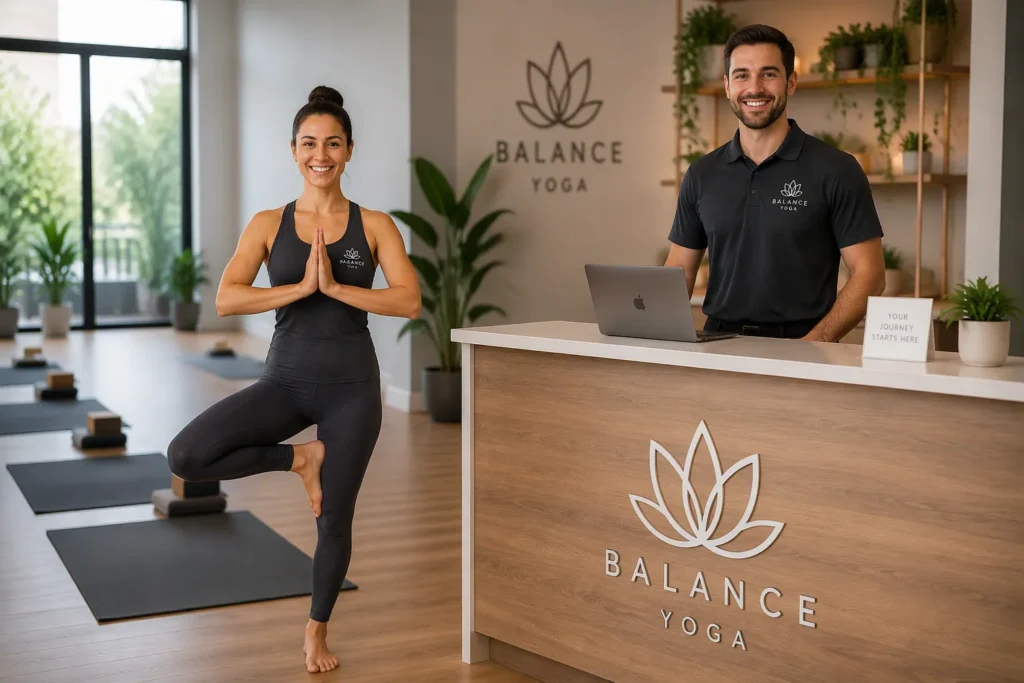
Does your yoga studio need uniforms for teachers and front desk staff that show your brand and fit within your set budget? Finding a reliable yoga studio staff uniform OEM China partner can feel overwhelming, especially for studio owners who are new to sourcing. This guide provides a clear, step-by-step approach to choosing the right manufacturer. You will learn why China is a top hub for yoga apparel production, how to evaluate partners, manage branding, and avoid common mistakes. The advice here suits both small launches and studios that are scaling up. It draws on real industry practices from established manufacturers in Dongguan and other manufacturing hubs. You will find actionable steps for ordering samples, conducting factory audits, and ensuring quality consistency. This guidance helps you avoid costly mistakes and build a professional studio image for your studio business.
Key Takeaways
Chinese OEM factories give low prices and small minimum order amounts for yoga uniforms.
Choose suppliers with fabric certifications like OEKO-TEX to make sure your materials are safe and high quality.
Order samples and check the seam strength before you agree to big production runs.
Write a clear contract that lists all costs. This helps prevent hidden fees and confusion.
Start with a small test order of 20 to 50 units to see the manufacturer’s quality and trustworthiness.
Why Choose a Yoga Studio Staff Uniform OEM China
China has a full sportswear system that few other countries can equal. The country knows a lot about making yoga clothes and activewear. Cities such as Dongguan have many fabric mills, dyeing plants, printing shops, and label makers close together. This connected supply chain helps you make patterns and samples fast. For instance, Dongguan is home to special factories like ASG Fashions, Eationwear, and Ohsurewear. These makers offer services that work well for new businesses, like low MOQ and quick sampling. A professional yoga apparel manufacturer from china can handle fabric, trims, logo placement, and packaging all in one place. This cuts down your coordination time and helps you judge the full project cost, not just the unit price.
Skilled Labor and Specialized Supply Chains
Chinese factories use machines made for activewear, like ones for elastic, coverstitch, and flatlock sewing. This skilled work keeps stretch, seams, and waistbands strong and steady. The supply chain also has performance fabric mills, silicone logo makers, and testing labs. Dongguan has more than seven special yoga wear OEM factories, such as Mingteng Clothing Factory with MOQ from 10 pcs. Hucai Sportswear Manufacturer, started in 1998, has BSCI and ISO9001 certifications. These resources help manufacturing in china for high-end private label brands. A chinese manufacturer for yoga apparel can bring new designs to market quickly. Usual planning times are 7–12 days for sample development and 30–45 days for bulk production after you approve the sample.
Cost and Flexibility for Small Launches
Many Chinese OEMs now take low MOQs, so they are great for small yoga studios. For a first private label yoga wear run, you can begin with just 2 pieces for test samples. Bulk MOQ depends on fabric, color split, logo method, and packaging needs. Factories that work with startups often ask for 50–100 pcs per style. Ohsurewear asks for 100 pcs, while Eationwear needs 200–300 pcs. This freedom helps a private label yoga launch without tying up too much money. China’s low costs come from worker efficiency, easy material access, and many suppliers. You get good prices without losing fabric quality. For your yoga studio staff uniform oem china project, this means professional branding at a price you can handle.
Key Criteria for a Professional Yoga Apparel Manufacturer from China
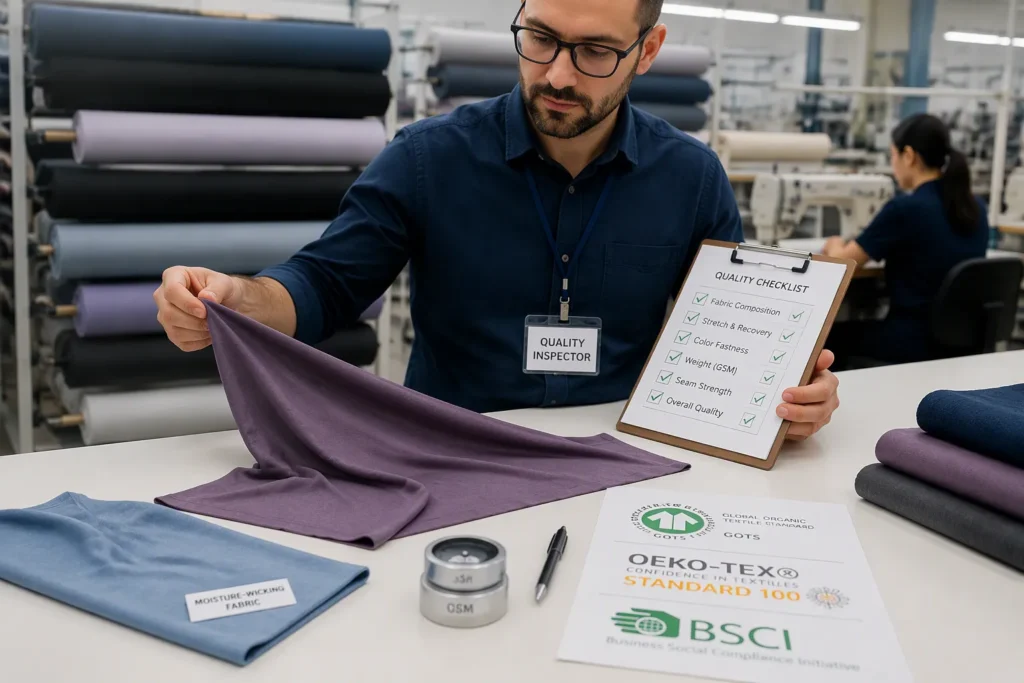
You should judge a factory on more than just price. Material quality, certifications, and customization skills set apart a true professional yoga apparel manufacturer from china from a basic sewing shop. Use the criteria below to compare suppliers with confidence.
Material Quality, Certifications, and Sustainability
Start with how the fabric performs. Yoga instructor uniforms need moisture-wicking nylon spandex or polyester spandex blends. Both offer excellent moisture-wicking, very good breathability, and excellent stretch and recovery. Aim for 4-way stretch with 40–60% elongation and recovery close to 100% to prevent bagging. For hot yoga, pick synthetic sweat-wicking blends instead of cotton. Leggings and yoga pants work best at 280–320 GSM for support, opacity, and stretch.
Certifications prove a factory meets safety and ethical standards. A professional yoga apparel manufacturer from china will have these in place:
GOTS (Global Organic Textile Standard) checks organic fiber content and covers ecological and social rules along the whole supply chain.
OEKO-TEX STANDARD 100 tests every textile component for harmful substances.
BSCI audits fair labor practices, safe working conditions, and ethical management.
OEKO-TEX Standard 100 tests what is in the garment. GOTS certifies the whole production chain, requiring at least 70% organic fibers and including social standards. Both matter because they answer different questions.
Specific Requirements / Scope
OEKO-TEX STANDARD 100
Every component of the textile must be tested for harmful substances.
GOTS
Leading standard for organic fibers; covers ecological and social criteria.
BSCI
Initiative to improve working conditions in the global supply chain.
Sustainability matters too. Many Chinese OEMs now use recycled materials such as recycled polyester (rPET) and recycled nylon. They use water conservation methods like low-liquor ratio dyeing machines and closed-loop systems. Waste reduction includes improving pattern layouts and reusing fabric offcuts. Certifications like GOTS, OEKO-TEX, and GRS prove these commitments. This matters for your private label yoga clothing because eco-conscious customers notice.
Customization Capabilities for Instructor and Front-Desk Wear
Instructor wear and front-desk uniforms serve different purposes. Instructor uniforms need high-stretch fabrics for full range of motion. Four-way stretch fabrics usually contain 15–25% elastane, giving a second-skin feel with superior breathability. They snap back to shape faster after stretching, which stops sagging during dynamic activity. Two-way stretch limits certain movements and recovers poorly, so avoid it for yoga.
Front-desk staff uniforms focus on a polished, professional look. Performance polos or quarter-zips work well for front-desk teams, while embroidered jackets suit management. Choose moisture-wicking polyester blends and tri-blends so staff stay fresh throughout the day. Embroidery is the standard decoration for staff polos, jackets, hats, and bags. It adds a premium, tactile dimension and lasts the lifetime of the garment.
Logo placement follows clear rules. A left or center chest logo should measure 3–4 inches wide, centered vertically below the collar seam. A full back graphic typically runs 10–14 inches wide, placed 4–6 inches below the collar seam. Hats and aprons offer extra branding at busy events.
Your private label yoga wear supplier should also customize sizes across your team. A private label yoga clothing manufacturer that offers flexible sizing and style variations helps you build a cohesive staff look. This customization extends to fit and fabric proof, making sure every piece meets your studio’s standards. For a complete private label activewear guide, these details form the foundation of a successful uniform program.
How to Evaluate a Private Label Yoga Clothing Manufacturer
You need a clear way to tell real factories from trading companies. Start your search on sites like Alibaba, Made-in-China, and Global Sources. These sites have large lists of checked suppliers. Use filters for MOQ, location, certifications, and badges like Gold Supplier or Verified Supplier. Read buyer reviews and send a request for quote (RFQ) to get several price quotes at once. This saves time and gives you a short list quickly.
Requesting Samples and Conducting Factory Audits
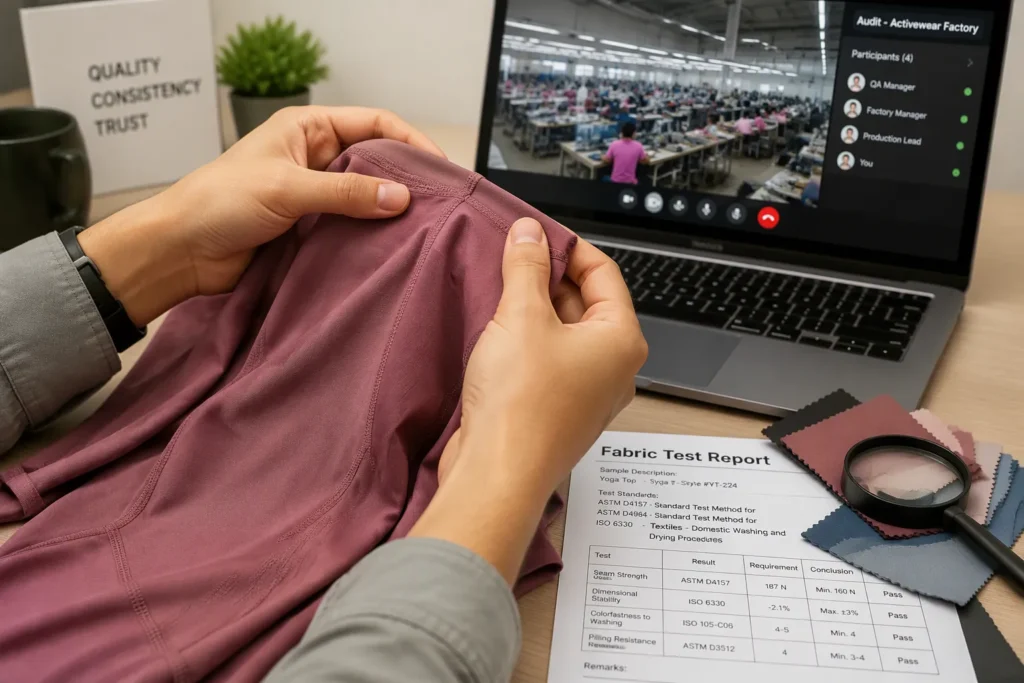
Order samples before you buy in large amounts. Check that the stitching is even. Look at flatlock seams to make sure they won’t rub your skin. Check the stitching in the gusset and waistband for extra strength. Ask for seam strength test reports (ASTM D1683) so the seams don’t break when you stretch deeply. Ask for fabric info sheets that show the exact mix and weight of the fabric (in GSM). If they say the fabric wicks sweat, ask for pilling test results (ISO 12945) and moisture management reports (AATCC). To make sure the fabric is not see-through when you squat, ask for a video that shows it stays opaque. Get a written policy about defects that uses AQL standards.
A video audit works well if you can’t visit in person. Ask for a quick video call on WeChat. Ask to see different parts of the factory without warning. Check that the business license on the wall matches the company you are working with. Talk to a regular worker, not just the boss. Check the business license on GSXT to make sure they are allowed to make products, not just sell them. Look at their industry code (GB/T 4754). It should be a manufacturing code (13–43), not a wholesale code (51–52). Check their ISO 9001 certificate on IAF CertSearch. Use a reverse image search on factory photos. This can catch stock photos that many suppliers use.
Communication, Lead Times, and Payment Terms
Clear English communication is important for a smooth project. Test your supplier early on. Send a real technical drawing and see how fast they reply. Watch how they price samples. A serious manufacturer will ask detailed questions, not give vague answers.
Plan your schedule using real lead times. Making samples usually takes 2–4 weeks. Making the full order takes 4–8 weeks after you approve the sample. Jerseys, shorts, and polos ship in 15–20 days after you approve the mockup. Jackets and more complex activewear need 20–25 days. Shipping by express courier takes 5–7 business days. Sea freight takes 20–35 days from port to port. Your exact timeline depends on how much you order, if materials are ready, and how much customization you need.
Use safe payment methods. PayPal and letters of credit protect both you and the factory. Make sure you know all costs before you start, including sample fees and shipping. Ask for a written contract that covers the setup checklist, defect policy, and delivery dates. This protects your price quote from hidden changes.
When you compare suppliers, look at real data about the factory. Check how many people they have on social insurance and their paid-in capital using GSXT annual reports. A real small factory usually shows 30–150 workers and paid-in capital of 1 to 10 million RMB. A trading company usually shows 3–30 workers and paid-in capital of 100,000 to 2 million RMB. This data helps you avoid middlemen who pretend to be factories.
Picking a Private Label Yoga Clothing Manufacturer for Uniforms
Embroidery, Printing, and Label Choices
Your uniform program needs the right logo method and label options. Embroidery gives a strong, high-quality look for chest logos on polos and jackets. Printing methods like digital sublimation and heat transfer work well for detailed designs. A professional yoga apparel manufacturer from china makes steady color using built-in dyeing processes. The manufacturer checks every batch with spectrophotometer testing against your Pantone choice. Digital color archives keep your signature shades for reorders. Bras, leggings, and tops from the same dye lot ensure matching color. This consistency matters when you reorder your yoga studio staff uniform oem china partnership. Steady branding across batches builds trust.
Related OEM uniform programs
Label choices affect your branding too. Woven labels carry your logo and care details. Printed satin labels feel soft against the skin. One manufacturer handling the whole private label yoga clothing line keeps fit and quality the same across all garments. Every fabric batch passes a bend-over-and-stretch test with opacity checks on each batch. Your branding stays consistent from sample to production order.
Packaging and Branding Consistency
Packaging carries your studio brand beyond the garment itself. Custom poly bags, printed boxes, tissue paper, and mailer bags show your logo and colors. Sustainable packaging like biodegradable poly bags and recycled boxes match eco-conscious studio values. An OEM with ISO 9001 and Global Recycled Standard certifications provides packaging that fits your commitment. This branded packaging strengthens your studio branding at every touchpoint.
Low MOQ options help you order uniform batches without committing too much. MOQ for hang tags starts at 500+ units, while poly bags with stickers start at lower amounts. A founder testimonial shows the value: a studio sent a mood board and three reference samples. The first production run of 200 leggings and bras arrived retail-ready and sold out in three weeks. Starting with a low MOQ lets you test the partnership before scaling up.
The manufacturer stays invisible, so only your studio branding shows. This gives your private label yoga wear a professional feel. Private label activewear includes custom logos, labels, and branded packaging. Each element strengthens your branding across instructor and front-desk uniforms. The private label yoga clothing line should reflect your values in quality and presentation. A professional yoga apparel manufacturer delivers this consistency through integrated control.
Common Pitfalls When Sourcing OEM Uniforms from China
Quality Inconsistencies and Prevention
Quality problems show up in different ways. You might find color differences between batches, size issues across runs, stitching mistakes, and fabric flaws. These problems happen when factories don’t follow strict production rules. The main reason is a missing tech pack. Without a tech pack, the maker fills in the blanks with its own default pattern and fabric picks. Your custom design turns generic or uneven.
A tech pack stops these problems. It has flat sketches, graded size charts, and key measurements like waist, hip, inseam, and leg opening. It also lists fabric makeup, GSM, stretch and recovery targets, and logo placement. For yoga leggings, you must define opacity during squatting, moisture-wicking, and pilling resistance. Vague words like “soft” or “premium” don’t control production. Measurable specs do.
Batch-to-batch GSM stability is a hidden quality control issue. Small gram weight changes cause differences in fabric thickness, stretch, and shrinkage. High-end fabrics reach strict stability within ±2 GSM through computerized yarn feeding. Your quality plan must include AQL standards from the start.
Defect Category | AQL Tolerance Level |
|---|---|
Critical | 0.0% (any single failure = rejection) |
Major | 2.5% |
Minor | 4.0% |
Set AQL 2.5 for major defects. Premium private label yoga clothing often uses stricter levels of 1.0% to 1.5%. Inspect when production is 100% complete and 80% of goods are packed. Use General Inspection Level II to set your sample size.
Yarn dye lots vary slightly. Run one color first, get it right, then scale with locked yarn lots. Premium seamless factories guide you through this; mass-market ones let you absorb the variance.
Communication Breakdowns and Hidden Costs
Misunderstandings happen when contracts stay vague. A verbal deal on fabric type leads to the wrong product. Written deals prevent these mistakes. Confirm all costs upfront, including sample fees, shipping, and tariffs. Ask for a private label yoga clothing quote that lists every charge. Surprise fees appear when you skip this step.
Hidden costs include sample fees the factory doesn’t mention until after production. Tariffs change without notice. MOQ requirements affect your total cost too. Some apparel factories ask for 100 pieces per style, while others accept 50. Know your MOQ before you place an order. Regular follow-ups keep communication clear. Use email or WeChat to track decisions with timestamps. This stops confusion about design changes or delivery dates.
A clear contract protects your private label yoga wear program. It should cover the tech pack checklist, defect policy, and delivery schedule. A professional maker answers your questions fast. If they take days to reply to simple queries, expect delays in production. For your yoga studio staff uniform oem china project, written deals set clear expectations.
By tackling these pitfalls early, you avoid costly rework and late shipments. Your private label yoga wear program starts on solid ground with proper planning.
You now have a clear plan for your yoga studio staff uniform oem china project. Begin with a detailed spec sheet. Check each manufacturer using the standards and steps above. Keep talking openly and sign a strong contract. Working with a China-based oem gives you lower costs, more flexibility, and deep yoga apparel knowledge. Create your RFQ and reach out to two or three shortlisted suppliers today. Before a big order, place a trial order of 20–50 units to test quality and the partnership. Save this guide or share it with other studio owners.
FAQ
What is the smallest order I can place for custom yoga uniforms?
The smallest order depends on the fabric, colors, and logo method. Many Chinese factories take 50–100 pieces per style for new businesses. Some suppliers ask for 100 pieces, but others need 200–300. You can order just 2 test samples before you buy in bulk.
How long does it take to make a uniform order?
Making samples usually takes 2–4 weeks. Full production takes 4–8 weeks after you approve the sample. Polos and shorts ship in 15–20 days. Jackets need 20–25 days. Express shipping adds 5–7 business days.
What certifications should I look for in a supplier?
Look for OEKO-TEX STANDARD 100, GOTS, and BSCI. OEKO-TEX tests for harmful substances. GOTS covers organic fibers and social rules. BSCI checks fair labor practices. These certifications prove your manufacturer meets safety and ethical standards.
What payment methods keep my uniform order safe?
PayPal and letters of credit protect both you and the factory. Confirm all costs upfront, including sample fees and shipping. Ask for a written contract that covers the defect policy and delivery dates. This stops hidden charges later.
Can I order different styles for instructors and front-desk staff?
Yes. Instructor wear needs high-stretch fabrics with 4-way stretch for movement. Front-desk uniforms focus on a polished look with performance polos or embroidered jackets. Your supplier can customize sizes and styles for both roles to create a unified studio image.