

Solar Panel Installer Uniform OEM China | Rooftop & Field Crew Workwear
Table of Contents
Display
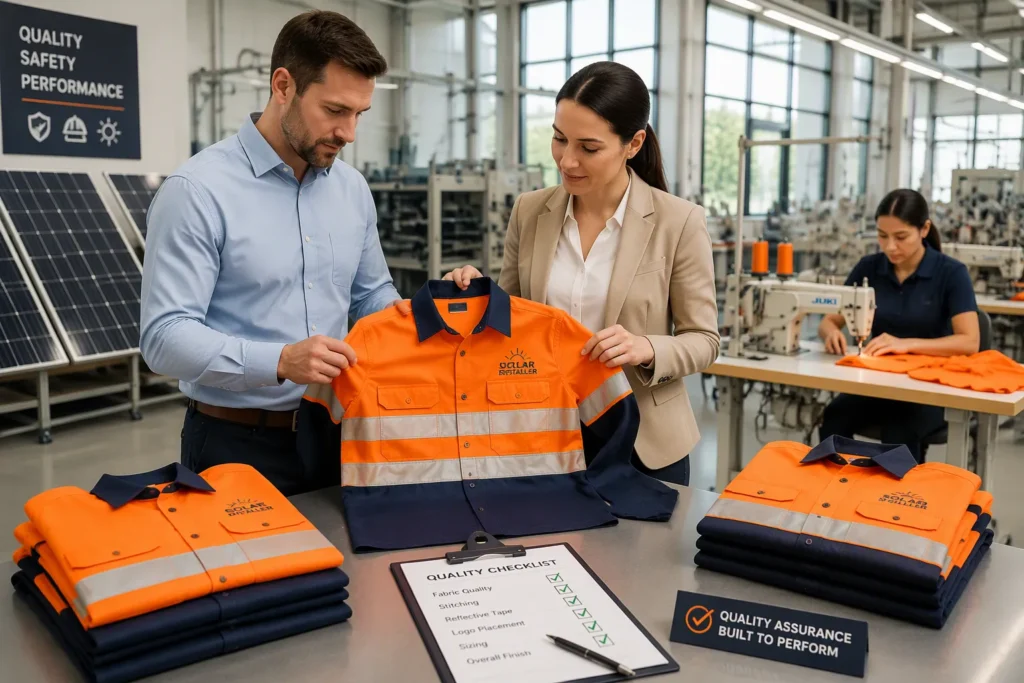
You must check credentials before you judge anything else. Solar installer uniforms face tough conditions. They need UV protection, flame resistance, and lasting durability. These needs require a specialized manufacturer, not a general clothing vendor. Many Chinese OEM providers for solar panel installer uniform OEM China offer custom production and direct factory sales. These benefits help you control specs and cost. Your sourcing process should follow a clear vetting checklist. It covers certifications, audits, samples, communication, payment, and references. Never let price become your first filter. A cheap supplier can cost far more later. Trust and quality must guide every step.
Key Takeaways
Always check safety and quality certificates through official databases.
text Use a third-party factory audit to see real production conditions.
Order samples and test them under stress to check quality before mass production.
Look at what clients say about the company on several separate review sites.
Use safe ways to pay, like escrow or letters of credit, to keep yourself protected.
Start with Certifications for Solar Panel Installer Uniform OEM China
Safety and Quality Certifications to Demand
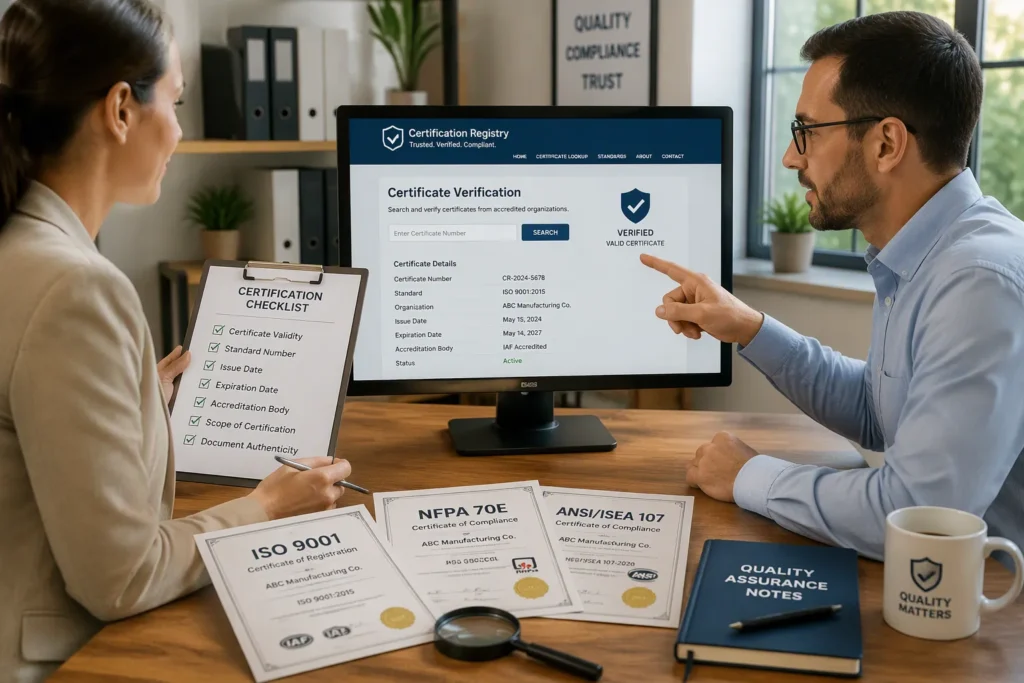
You need to see proof before you trust any manufacturer. Solar installer uniforms must meet specific safety standards. Start by asking for ISO 9001 certification. This standard shows the factory follows steady quality control steps. Next, ask for BSCI or similar social compliance audits. These reports show the factory treats workers fairly and runs ethical operations. For flame-resistant clothing, demand NFPA 70E compliance. This standard covers electrical safety in the workplace. If your uniforms include high-visibility elements, require ANSI/ISEA 107 certification. This standard covers reflective materials and visibility requirements. UV protection standards matter too. Ask for UPF ratings that show how well the fabric blocks harmful rays. UL certification adds another layer of trust for material safety. A legitimate solar panel installer uniform OEM China provider will share these documents without hesitation.
How to Verify Certificate Authenticity
A PDF file proves nothing on its own. You must verify every certificate through official channels. Start with the certificate number. This unique ID is your fastest verification key. Search the issuing body’s public registry and confirm the result matches the document. Check these fields carefully:
Field to Check | What It Should Show | Why It Matters |
|---|---|---|
Certified company name | Exact legal factory or company name | Certificate must belong to the same legal entity being purchased from |
Certificate number | Unique ID issued by the certification body | Easiest way to search the public registry |
Certification body name | Full formal name of the issuing body | Determines which registry to use for authentication |
Scope of certification | Products, processes, or services covered | Confirms the certificate actually covers the buyer's product category |
Issue and expiration dates | Valid date range | Confirms the certificate is not expired |
Certification Body | Official Verification Database |
|---|---|
SGS | sgs.com/certifications |
TÜV Rheinland | tuv.com certificate checker |
IQNet (covers many Chinese registrars) | iqnet-certification.com |
CNCA (China's national accreditation body) | cnca.gov.cn |
CNAS (China National Accreditation Service) | Cross-reference via CNCA portal |
Most major certifying bodies offer free online verification. Any legitimate certificate issued in the last 5 years should appear in their database. If a certificate number does not appear in any database, treat it as a major red flag. Smaller bodies may have limited databases, and pre-2018 certificates may not be digitized. Cross-check with CNCA or CNAS databases for China-specific accreditation confirmation. CNAS-accredited certifications are recognized internationally under ILAC. Non-CNAS certifications from certification mills have no international standing. Customs brokers may reject them. Certifications are issued to specific legal entities. A factory cannot legally borrow its parent company’s certification, even within the same group. Watch for falsification signals. Misspelled certification body names, missing certificate numbers, absent expiration dates, blurred seals, and scope text copied from another industry all point to fraud. Contact the certification body directly through their official customer service email or telephone line. Request a verification letter. Keep a supplier file with the certificate copy, registry screenshot, verification email, and date of confirmation. This creates an audit trail. Re-verify certifications at minimum annually. For critical certifications, re-verify every six months. This discipline protects your brand and your customers.
Related OEM pages:
Vetting Manufacturers Through Factory Audits
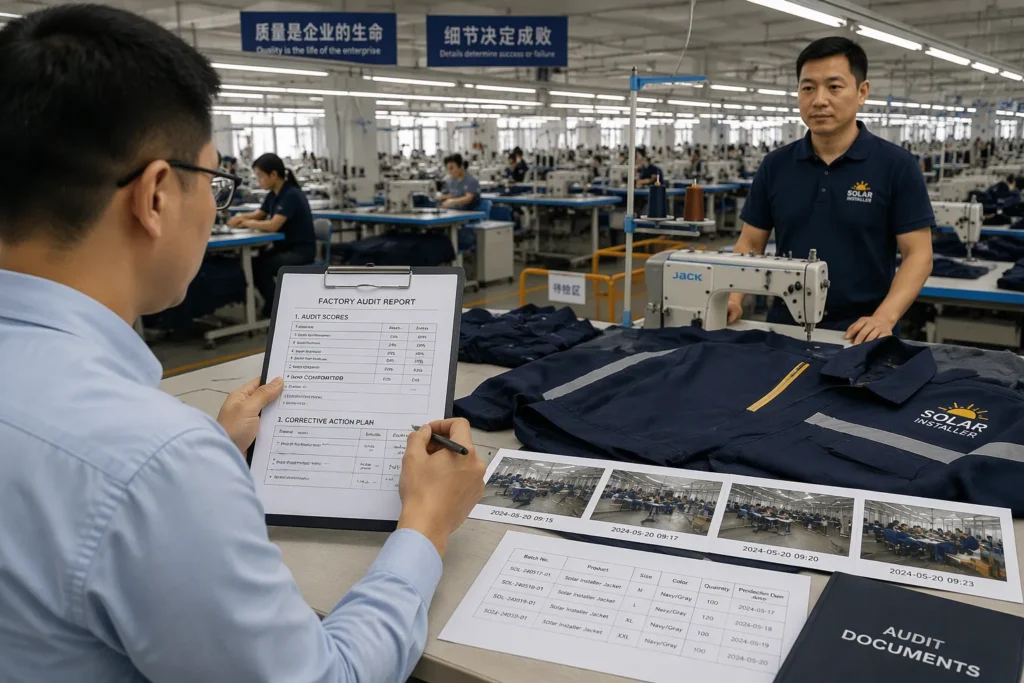
Certifications tell you what a factory says it does. An audit shows you what really happens on the floor. You should ask for a factory audit before you place any big order. This step is the backbone of strict vetting. Ask the manufacturer to set up an audit through a known third-party firm. Real third-party factory audits give you a detailed report. That report should include the audit date, the auditor’s name and credentials, the factory address, and a scope statement. It must list every production line checked, every document reviewed, and every worker interviewed. Photos with timestamps add credibility. A proper report also has a scoring section, a list of non-conformities, and a corrective action plan with deadlines. If a supplier gives you a one-page summary with no supporting detail, treat it as incomplete.
In-Person vs. Virtual Audit Options
You have two main choices for doing the audit. An in-person visit gives you the strongest evidence. You can walk the floor, check machines, and talk with line workers directly. A virtual audit works as a practical alternative when travel is not possible. The auditor joins a live video call and points the camera to specific areas. Virtual audits cost less and schedule faster. They also carry a higher risk of staging. The factory can hide problems outside the camera’s view. For a first order, an in-person audit is worth the investment. For repeat orders, a virtual check can add to your ongoing supplier vetting.
What to Inspect During an Audit
A thorough audit covers every stage of production. Use the following table as your inspection guide. It maps each audit area to a potential red flag and the supporting evidence you should request.
Audit Area | Potential Red Flag | Supporting Checklist Evidence |
|---|---|---|
Supply Chain & Documentation | Undocumented subcontracting | Verify documentation practices (batch numbers, production dates, shipping records) for accuracy and compliance; review supplier approval processes and monitoring of subcontractors. |
Production Processes & Workflows | Inconsistent production records or poor traceability | Verify traceability systems so materials and products are trackable from raw inputs to finished goods; confirm machinery calibration and preventive maintenance are documented. |
Quality Management Systems (QMS) | Missing or inconsistent quality records | Review documented quality procedures (incoming material inspection, in-process testing, final validation); check how defects are recorded, reported, and corrected via CAPA; inspect past internal and external audit logs. |
Raw Materials & Components | Unverified sourcing or lack of supplier certificates | Verify sourcing of raw materials and whether suppliers provide certificates of authenticity and quality; confirm regular inspection procedures for incoming materials, including random sampling and testing. |
Product Testing & Certification | Inadequate or missing test documentation | Verify rigorous testing protocols across product stages; review recent test reports from accredited third-party labs; confirm certification to relevant standards. |
Employee Training & Safety | Inadequate training records | Review qualifications and training records for key production and quality personnel; evaluate ongoing training programs on quality standards, safety protocols, and equipment operation. |
Environmental & Regulatory Compliance | Missing permits or licenses | Verify permits and licenses required for production and export; confirm compliance with environmental regulations on emissions, waste disposal, and energy use. |
Watch for clear warning signs during your vetting. A manufacturer who refuses an audit has something to hide. Vague answers about production capacity or subcontractors signal deeper problems. Inconsistent documentation across orders points to weak quality control. Any of these red flags should stop your process. Move on to a supplier who welcomes transparency.
Sourcing Channels and Customization Capabilities
Where to Find Chinese OEM Manufacturers
You can start your search on big online marketplaces like Alibaba and Made-in-China. These sites have thousands of clothing makers. Look for verified sellers with trade assurance badges. Facebook groups for solar installers are also good places to find partners. People in those groups often share names of trusted suppliers. Trade shows like the Canton Fair let you meet factory reps in person. You can also ask other solar companies for referrals. A reliable manufacturer often gets new clients through word of mouth.
Make a list of at least five possible manufacturers. Compare their profiles, product lines, and past clients. Look for a solar panel installer uniform oem china specialist, not a general clothing seller. A focused supplier knows UV fabrics and flame-resistant materials well. This way of finding suppliers saves you time in later vetting steps.
Evaluating OEM Customization and MOQ
Ask each possible supplier about their customization options. Can they change fabric weight, color, where reflective tape goes, and logo embroidery? Do they offer special changes like pocket layouts or reinforced knee panels? Good OEM support means they make design changes without pushing back. Ask for their minimum order quantity for custom runs. A flexible minimum order helps you test quality before ordering more.
Also check their export support and production ability. Can they make the amount you need in the time you have? Ask for a sample timeline and a full production schedule. Some factories set high minimums for custom designs. Others offer lower minimums for standard sizes with small changes. Send a detailed request for quote (RFQ) to each supplier on your list. Compare their answers for clarity, speed, and completeness. A factory that answers quickly and clearly shows it runs well. You want prices straight from the factory with no hidden fees.
Assess Sample Quality Before Committing
How to Request and Test Samples
You should always order a physical sample before you agree to a full production run. Ask the manufacturer to make the sample using your exact fabric, colors, and customization details. This step shows whether the factory can match your specifications in real life. Ask for at least two samples from different production lines if you can. One sample may not show what the whole factory can do.
When the sample arrives, test it hard. Wash it many times and check for shrinking or fading. Pull at the seams and check how strong the stitching is. Wear it during a workday and note any discomfort or tightness. Check the UV fabric against a light source to confirm it blocks harmful rays. These quality control checks give you real data, not promises.
Red Flags in Sample Evaluation
You must know what defects to look for. Too much yarn hairiness makes stitches look fuzzy and causes lint to build up on machines. It also leads to pilling in finished garments. You can stop this by specifying the right yarn twist levels and anti-pilling finishes. The table below shows the approximate share of major findings in sample evaluations.
Defect Category | Approximate Share of Major Findings |
|---|---|
Stitching defects (loose threads, skipped stitches, uneven seams) | ~35% |
Measurement deviations from size spec | ~25% |
Fabric-level issues (color shading, pilling, weight variation) | ~20% |
Labeling errors and accessory failures (zippers, buttons, snaps) | Remainder |
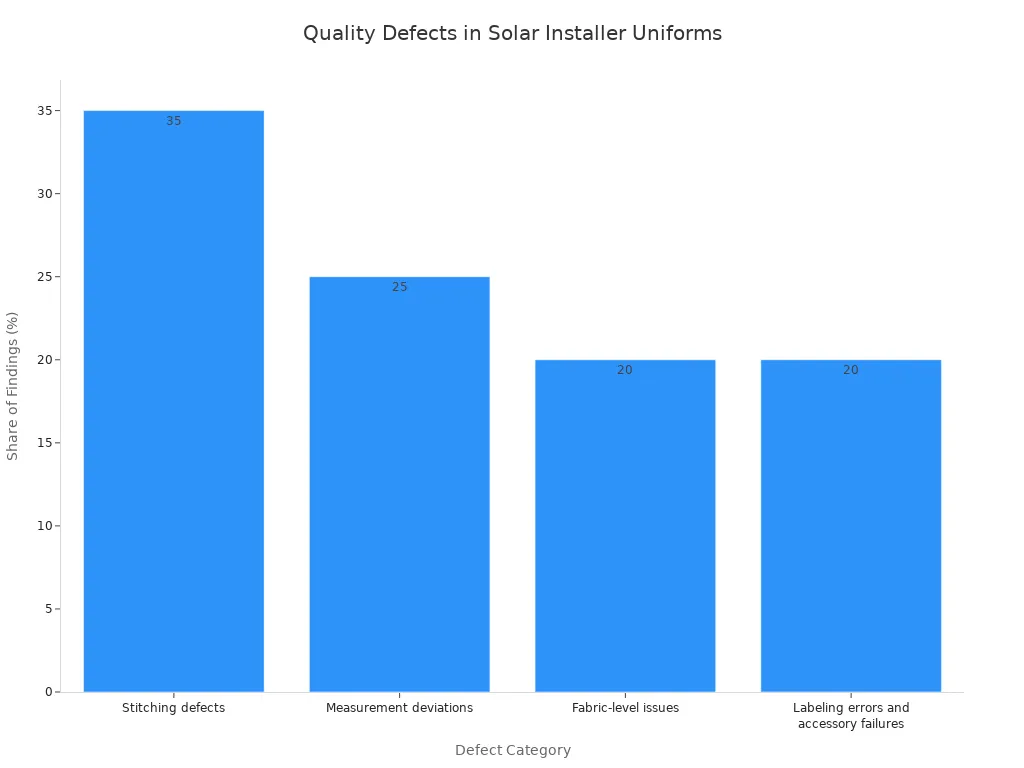
Stitching defects alone make up about 35% of major findings. Measurement deviations come next at about 25%. Fabric-level issues make up around 20%. The rest covers labeling errors and accessory failures. Any supplier who calls these problems minor does not take quality seriously. Walk away from manufacturers who refuse to fix sample defects before mass production.
Communication, Payment, and Checking References
Clear Prices and Safe Payment
Ask clear questions before you agree. Confirm the moq for your custom design. Ask how long a full order will take to make. Request a clear list of unit price, fabric cost, and printing fees. A trustworthy manufacturer gives these answers in writing. They never avoid or delay your questions. Send a detailed request for quote to compare answers side by side. A quick, complete reply shows a well-run factory.
Payment safety protects your money. Pick the right method for your order size. Letters of credit work best for large orders with established companies. Escrow services are good for smaller transactions, usually under $5,000. Escrow costs a fixed fee, like $50, plus a processing fee of about 3.05% for amounts up to $5,000. Alibaba’s Alipay and Escrow.com both provide this protection. Never send money directly to a personal account.
Checking Client References and Reviews
You should always check a supplier’s past work. Ask for three to five client references in your industry. Contact those clients directly. Ask about product quality, on-time delivery, and how the manufacturer solved problems. A reliable supplier gives references right away.
Independent platforms add another level of checking. Alibaba shows supplier ratings, transaction history, and customer reviews. You can tell apart verified reviews from unverified ones. Made-in-China and Global Sources offer similar buyer feedback. Check reviews across multiple platforms. Look at Google My Business and industry forums like Reddit’s r/sourcing. LinkedIn company pages show employee profiles and company activity. Membership in a trusted Chinese trade association is a positive sign. These groups keep records of member companies and their history of following rules. A manufacturer with steady good feedback across several sources earns your trust.
Follow this ten-step checklist to protect your investment:
Check ISO 9001, BSCI, NFPA 70E, and ANSI/ISEA 107 certificates.
Confirm each certificate through official databases.
Ask for a third-party factory audit.
Review production records and quality systems.
Find suppliers through Alibaba, trade shows, and referrals.
Check customization options and MOQ flexibility.
Order and stress-test physical samples.
Ask for written pricing and safe payment terms.
Contact client references directly.
Re-verify credentials every year.
Thorough vetting upfront saves you time, money, and reputational risk. Many successful Chinese solar panel manufacturers also provide OEM services, so similar certification principles apply to uniform makers. Treat supplier selection as a long-term partnership, not a one-time transaction. As the solar industry grows, a dependable manufacturer becomes your greatest asset.
Fabrics, Branding, and Field Safety for Solar Panel Installer Uniforms
Rooftop and ground-mount crews need lightweight sun-aware fabrics, abrasion-resistant knees and tool pockets, optional hi-vis accents for site visibility, and breathable layers for hot-roof shifts. Logos are usually embroidery or industrial print on polos, shirts, softshells, and caps so EPC fleets match across projects.
Top Fortune (Shanghai Top Fortune Industry Co., Ltd., ~2002, 1,506 m² Songjiang) supports OEM/ODM export programs for adult solar and renewable-energy field workwear.
OEM Solar Installer Uniforms vs Stock Catalog Workwear
| Factor | OEM / ODM | Stock catalog |
|---|---|---|
| Spec control | Buyer tech pack (pockets, hi-vis, FR options if required) | Vendor SKU only |
| Site branding | Locked colors / logo placements | Limited colorways |
| Multi-project reorder | Consistent fabric lots | SKU drift risk |
| MOQ | See program RFQ | Often lower, less flexible |
Buyer Checklist Before Approving Bulk Solar Panel Installer Uniforms
- Define roles (installers, electricians, supervisors, QC) and climate/site needs.
- Approve fabric weight, UV/colorfastness, logo placement, and wash-test samples.
- Confirm adult sizing curve and multi-project reorder plan.
- Set AQL, packing, destination shipping, and any named safety standards in writing.
Request a Solar Panel Installer Uniform Quote
Contact rill@topfortunemail.com or WhatsApp +86 13524210501. Address: Floor 3, Building 20, Haier Zhigu, No.66 Guangfulin East Road, Songjiang, Shanghai 201600.
FAQ
How long does it take to verify a Chinese uniform manufacturer?
Plan for two to four weeks. Checking certificates takes a few days. A third-party audit needs time to set up. Making and shipping a sample takes another week or more. Start early. Rushing to check a supplier can cause expensive mistakes.
What is the biggest red flag during supplier vetting?
A factory that says no to any audit is a big warning sign. Vague answers about how much they can make also show problems. If documents from different orders do not match, the factory has poor quality control. Any of these signs should make you stop right away.
Can I trust a supplier with only Alibaba ratings?
No. Platform ratings help, but they are not enough. Check reviews on Made-in-China, Global Sources, and industry forums too. Contact past clients directly. A solar panel installer uniform oem china provider with steady good feedback from many sources earns real trust.
What payment method protects my first order?
Escrow services work well for smaller orders. Letters of credit are best for large orders with trusted companies. Never send money to a personal account. Always keep a written record of every payment term.
How often should I re-verify certifications?
Re-verify every certificate at least once a year. For important safety certifications, check every six months. Certifications expire, and factories can change owners. Regular checks protect your brand and your customers.
Rooftop Crews vs Ground-Mount Teams: Different Kit Logic
Solar installer uniforms are not generic construction workwear with a logo. Rooftop residential crews crawl ridges, kneel on asphalt shingles and carry modules up ladders; utility-scale ground-mount teams walk long rows, torque bolts for hours and work near open trenches. Shanghai Top Fortune Industry Co., Ltd. (founded 2002) makes export-only OEM/ODM crew kits in a 1506 m² Songjiang factory (Haier Zhigu, No. 66 Guangfulin East Road, Shanghai 201600). Tell us which mix of rooftop, commercial roof and ground-mount headcount you dress—pocket maps, knee finishes and softshell weights follow from that split, not from a single “solar” template.
- Rooftop installers: reinforced knees, articulated elbows, snug cuffs that do not catch on racking, and light mid-layers that still allow harness wear.
- Ground-mount and tracker crews: tougher trousers, more tool storage on the thigh, and optional hi-vis for yard traffic near trucks and pile drivers.
- Electrical terminations and QC: cleaner shirt or polo layers for indoor inverter rooms, with a field outer layer that stays consistent with brand colors.
- Site leads: contrast collar or a distinct softshell so crews can spot supervision on a large array.
Heat, UV and Sweat on Long Array Days
Solar sites often mean full sun, reflective module surfaces and little shade. Poly-cotton blends that wick and dry fast outperform heavy all-cotton once crews are on their third panel row. Light colors reduce heat load but show dirt from roof tar and soil; many EPCs pick mid-tones with a stain-release finish and accept more frequent wash cycles. Softshells and lightweight rain shells should pack small—rain bands move fast on exposed ridges. We sample fabric hand-feel against your climate notes (desert, coastal humidity, northern winters) before locking GSM. For high-visibility outer layers used on shared construction yards, compare hi-vis reflective workwear OEM.
Carrying Tools Without Snagging Rails or Module Edges
Installers need meters, cable cutters, torque bits and markers within reach, but dangling flaps tear on sharp rail ends and module frames. Prefer zip or bellow pockets with secure closures, tool loops that sit flat when empty, and chest pockets that stay clear of harness straps. Avoid long draw-cord ends near rotating string-trimmer work on ground-mount sites. If your crews already wear a tool vest over the base uniform, we can simplify the shirt pocket map so layers do not fight each other—see also our utility work vest OEM page for vest-led programs.
Layering Softshells, Rain Shells and Base Polos
A solar day can start cold on the roof and turn hot by noon. Programs that work well usually combine a branded polo or work shirt, a mid-weight softshell, and a packable waterproof shell—not a single heavy jacket. Softshells should stretch at the shoulder for overhead racking work; rain shells need taped seams and a hood that fits under a hard hat when required by site rules. Office or sales staff visiting sites can share the same polo program; see corporate polo shirts OEM if you want a cleaner front-of-house variant of the same color family.
Solar Installer Uniform RFQ Matrix
| Crew type | Core garments | Field risks to note | What to send in the RFQ |
|---|---|---|---|
| Rooftop residential | Work shirt/polo, reinforced trousers, softshell | Kneeling abrasion, harness compatibility, heat | Roof types, climate, harness model notes |
| Commercial flat roof | Same base + stronger knees, optional rain shell | Membrane chemicals, longer walks, wind | Site PPE rules, branding placement |
| Utility ground-mount | Tough trousers, hi-vis options, tool storage | Dust, mud, vehicle traffic, cut edges | Yard traffic rules, reflective needs |
| Electrical / QC | Cleaner polo or shirt, light shell | Indoor inverter rooms + outdoor checks | Dual environment dress code |
| Volume planning | Per approved program | Seasonal hiring spikes | Headcount by crew type and size curve |
Questions EPC Buyers and Solar Distributors Raise
Can rooftop and ground-mount crews share one trouser?
Sometimes. If both need the same knee reinforcement and pocket layout, one style saves volume. If rooftop needs lighter fabric and ground-mount needs heavier abrasion resistance, two trousers usually last longer.
Do you build FR solar uniforms automatically?
Only when your RFQ names a flame or arc requirement. Many solar field kits are standard industrial fabrics; electrical indoor work may need a different layer—send the requirement rather than assuming FR on every garment.
How do we handle seasonal hiring surges?
Freeze fabric and color after sample approval, then reorder the same style. Grouping reorders of the same approved style keeps production efficient.
Can logos differ by regional subcontractor?
Yes—shared base garments with region-specific prints or patches. Keep the base style common so later top-ups stay interchangeable.
What about jobsite traffic near heavy equipment?
Add reflective or a hi-vis vest layer where your site rules require it; we can quote that as part of the same program.
Spec Your Solar Crew Program with Top Fortune
Send crew mix, climate notes and branding files to rill@topfortunemail.com, or open a request on our contact page. WhatsApp +86 13524210501 works for quick sample-size questions.
Shanghai Top Fortune Industry Co., Ltd. (founded 2002) builds export OEM/ODM adult renewable-energy workwear at Songjiang / Haier Zhigu (~1506 m²) for solar EPC contractors, rooftop and ground-mount installers, O&M crews, and OEM buyers across Europe, North America, Oceania, the Middle East, and Asia. Content below is adult field and yard workwear only—never school or kids lines.
Rooftop, Ground-Mount, and O&M Roles — Sun, Edge, and Tool Profiles
- Rooftop installers: UV, grit, and panel-edge abrasion on sleeves and knees; harness clearance at shoulders; high-visibility need without reading as generic road-crew hi-vis.
- Ground-mount / racking crews: Soil, weld spatter light contact, and cable-pull abrasion; durable mid-weights that keep pocket tools secure on uneven yards.
- O&M / commissioning techs: Mixed inverter-room and array walkthroughs; brand-clean layers that stay readable on site photos after frequent laundry.
- Site leads / HSE: Tonal hierarchy so leads read clearly on CCTV and audit photos without new logos per project.
- RFQ questions we hear: Shared board for rooftop vs ground-mount vs O&M? Soft shells that take wash-safe embroidery over FR base layers? Pocket rules that pass EPC brand books?
Field Softshells, Work Pants, and Lead Layers for PV Sites
- Rooftop silhouette: Easy-care softshells or lightweight jackets with reach ease for module handling; flat seams and closed hems that cut snag risk on racking and cable trays.
- Ground-mount silhouette: Durable mid-weight work shirts or softshells over tonal base layers; reinforced knees or seat options when buyer SOP allows—state preference in the RFQ.
- O&M silhouette: Brand-clean mid-weights that layer under site hi-vis vests without bulk at harness points.
- Lead silhouette: Tonal softshells or overshirts that share the same colorboard as install and O&M teams.
- Related OEM pages: hi-vis reflective workwear, facility management uniforms, recycling center uniforms, mining quarry uniforms.
UV-Ready Mid-Weights, Abrasion Faces, and High-Cycle Laundry
- Rooftop fabrics: Mid-weight weaves or softshell faces that release grit and light soil in high-frequency laundry without cuff fuzz under UV exposure.
- Ground-mount fabrics: Abrasion-ready mid-weights opaque under yard sun; avoid deep pile that traps soil into seams near racking.
- O&M / lead fabrics: Easy-care layers that hold embroidery after daily wash between array and inverter rooms.
- Do not specify: Fuzzy fleece that sheds fiber near combiner boxes, dangling pulls near cable trays, or shiny athletic logos against EPC brand books. FR / arc requirements are buyer-specified add-ons—state standards in the RFQ.
Soft Badges, Tool Pockets, and Racking-Safe Hardware
- Soft badge or name panels kept readable when softshells layer under site hi-vis on CCTV and brand audits.
- Flat or zippered phone/radio and tool pockets—no open cargos that catch on racking edges or harness hardware.
- Low-profile snaps and zippers; soft-contact options at cuffs when buyers limit hard metal on glove-contact zones.
- Optional tonal piping for rooftop vs ground-mount vs O&M hierarchy; separate brand embroidery files from project nicknames.
Solar EPC Colorboards Across Install, O&M, and Leads
- Lock a master solar-installer board (rooftop softshell, ground-mount mid-weight, O&M layer, lead layer), then tonal role variants so hierarchy reads without new logos per project.
- Document pantone / lab-dip approvals when the same EPC brand rolls across multi-country fleets—lot continuity matters for outage-float coverage.
- Plan project hire waves separately from year-round O&M replenishment. Low MOQ if in stock applies only to already-approved stock SKUs.
- Issue a one-page role matrix (rooftop / ground-mount / O&M / lead) so regional buyers reorder against the same board after each bid win.
RFQ Spec Sheet for Solar Panel Installer Uniform Programs
| Spec item | What to specify in your RFQ |
|---|---|
| Roles covered | Rooftop installer, ground-mount / racking crew, O&M / commissioning, site lead / HSE (adult workwear only) |
| Silhouettes | Easy-care softshells or light jackets; durable mid-weight work shirts; tonal lead layers; optional reinforced knees |
| Fabrics | UV-ready rooftop mid-weights; abrasion-ready ground-mount faces; easy-care O&M/lead layers; FR/arc only if buyer-specified |
| Pocket / access | Flat phone/radio and tool pockets; soft badge panels; no snag cargos at racking or harness points |
| Branding | Wash-safe embroidery after high-frequency laundry; group brand files separated from project nicknames |
| Color board | Master solar EPC board + tonal role variants; pantone / lab-dip refs for multi-country fleets |
| Sizes / gender | Adult graded size run; reach-fit and harness-clearance notes for rooftop module work |
| MOQ | About 2,000 pieces per style |
| Markets | Export destinations and any EPC / utility brand-book or FR standard constraints |
FAQ — Solar Panel Installer Uniform OEM
- Do you supply school or kids solar / STEM lines? No. Programs are adult B2B workwear for solar install and O&M crews only.
- What is the MOQ? Custom OEM/ODM programs follow the MOQ row in the RFQ table above. Low MOQ if in stock applies only to already-approved stock SKUs.
- Can rooftop, ground-mount, and O&M share one board? Yes—master board plus tonal role variants so hierarchy reads without new logos per project.
- Where is the factory? Songjiang / Haier Zhigu, Shanghai (~1506 m²). Founded 2002; export OEM/ODM only.
- How do we start an RFQ? Email role lists, pantones, and embroidery files to rill@topfortunemail.com or WhatsApp +86 13524210501.
Send role lists, color boards, and embroidery files to rill@topfortunemail.com. WhatsApp: +86 13524210501. Factory: Songjiang / Haier Zhigu, Shanghai. Or use the form at https://www.workwearmanufacturer.com/contact/.