
Security Guard Uniform OEM China | Adult Site-Security Workwear
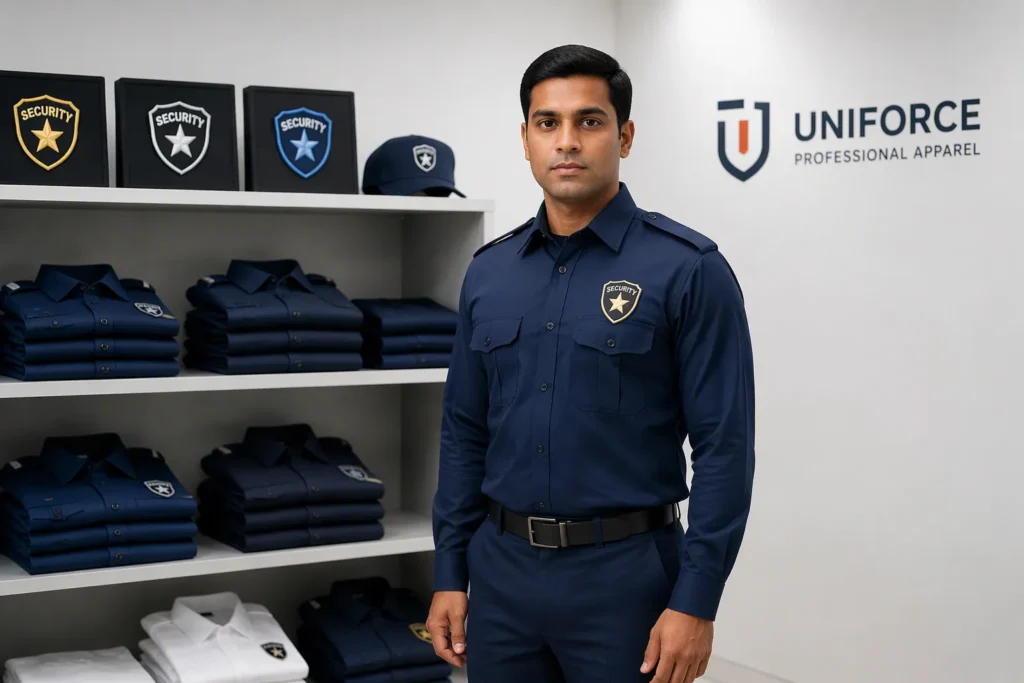
OEM means Original Equipment Manufacturer. When you buy security guard uniforms, you work right with a maker. They make uniforms just the way you want them. This way saves money, lets you change everything, and helps you grow. Buyers talk straight to the factory, so there are fewer people in between.
But what does picking a Chinese OEM mean for your buying? You decide every part: the cloth, the fit, and things like UV protection or sweat-wicking for adult site-security workwear. Buyers who use OEM run the whole process from design to delivery. Some buyers even pick full OEM/ODM services, where the maker does the design and the making, kind of like facility management uniform OEM.
When you team up with an ODM provider, you get help with design and making. This speeds up your timeline. Your security uniforms become branded gear for patrol and desk teams.
Key Takeaways
OEM lets you create your own security uniforms and spend less on big orders.
Pick a supplier that has a certification like ISO 9001 to make sure the products are safe and of good quality.
Talking clearly with your factory stops delays and expensive errors.
Check samples and look over the goods before shipping. This helps avoid flaws and problems.
Make your production schedule early to be ready for busy seasons and shipping times.
What OEM Means for Security Guard Uniform Buyers
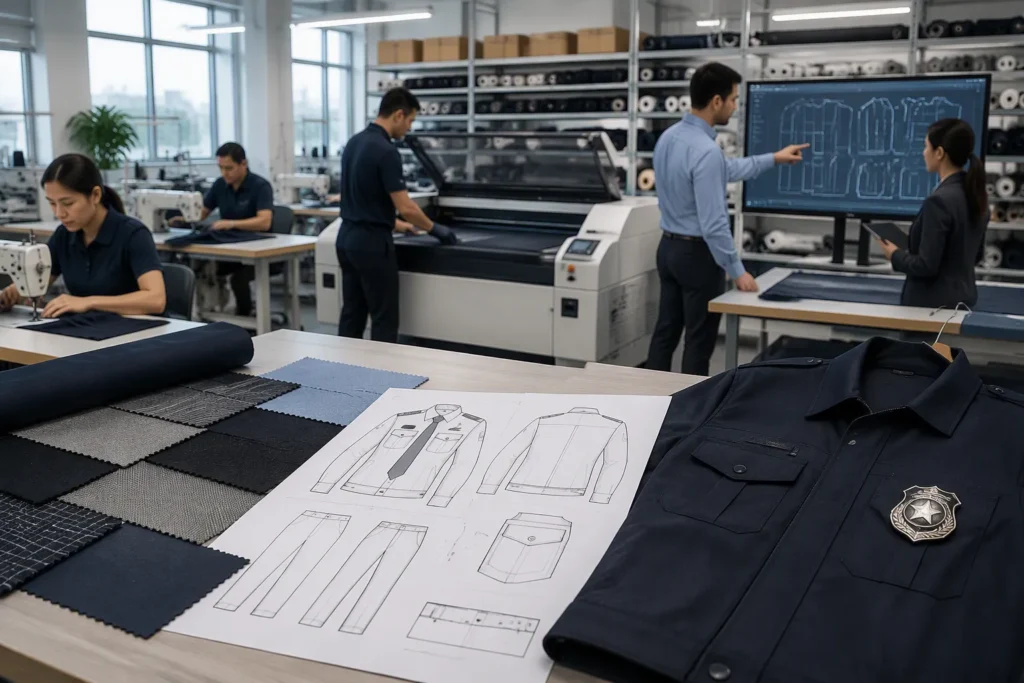
OEM lets you write your own technical requirements and have Chinese manufacturers build garments to match. You control the fabric, the fit, and the performance features. This arrangement differs from buying ready-stock security uniforms off a shelf. Instead, you start an oem project that runs from first design through sample approval to bulk production.
Cost Savings and Scalability
Unit costs for oem security guard uniform programs vary with specifications and order volume. The table below shows real supplier pricing for reference.
Supplier | Product | Unit Price (USD) | Min. Order |
|---|---|---|---|
Shanghai Bingcheng Textile Garment Factory | Custom Design Security Guard Uniform for Men | $8–9 | 500 sets |
China Xinxing Guangzhou Import And Export Co., Ltd. | XINXING BD06 Security Guard Uniforms Men Ripstop Dress Dark Blue Tactical Uniform | $13–14 | 5000 pieces |
Guangzhou Care Uniform Co., Ltd. | Customized Design Navy Blue Security Uniforms Formal Jacket Pant Suit Men Security Officer Uniform | $25–32 | 1000 sets |
Scale drives those numbers down. A factory with 5 production facilities and more than 2,000 machines can spread large-volume orders across all sites. Annual output of 1.5M+ sets per year keeps mass-production scheduling stable. Sampling takes 7–12 days, and bulk production runs 35–45 days after you approve the sample. High-capacity plants use CAD/MIS pattern design, automated laser cutters, and imported German or Japanese sewing lines. These tools cut human error and fabric waste. Factories exceeding 20,000 square meters with 500+ skilled workers spread fixed costs over big runs. That is how bulk security uniforms stay affordable at volume.
Customization and Branding
You choose the materials used in security uniforms. A common build is 65% polyester and 35% cotton in rip-stop fabric, unisex, sized S to XXXL, in black solid for outdoor use. Summer weight and breathable constructions suit adult site-security workwear. Performance features include UPF 50+ sun protection and a measurable moisture vapor transmission rate (MVTR) for breathability. Branding covers logo customization on shirts, polos, trousers, jackets, caps, and hi-vis pieces. You can order stock uniforms with logo customization or fully custom security uniform sets. A full oem/odm solution adds design support, so the maker handles styling and construction. The oem/odm process moves through design, lab dips and color approval, sampling, and bulk production. Buyers who need speed can pair an odm program with existing patterns. This approach gives you custom security uniforms that carry your brand across patrol and desk teams. For a security uniform supplier managing bulk b2b supply, this flexibility matters. Buyers gain a repeatable oem/odm production line instead of one-off purchases. A complete full oem/odm partnership covers design, tooling, and delivery under one roof.
Key Factors When Choosing a Security Uniform Supplier
You need a partner who meets your technical needs and talks with you clearly. Two things decide if your project works. They are quality standards and good communication.
Quality Standards and Certifications
Write detailed technical specs before you call any factory. Give those specs to every security uniform supplier you check out. This step keeps you safe. It also gives the factory a clear goal for quality control.
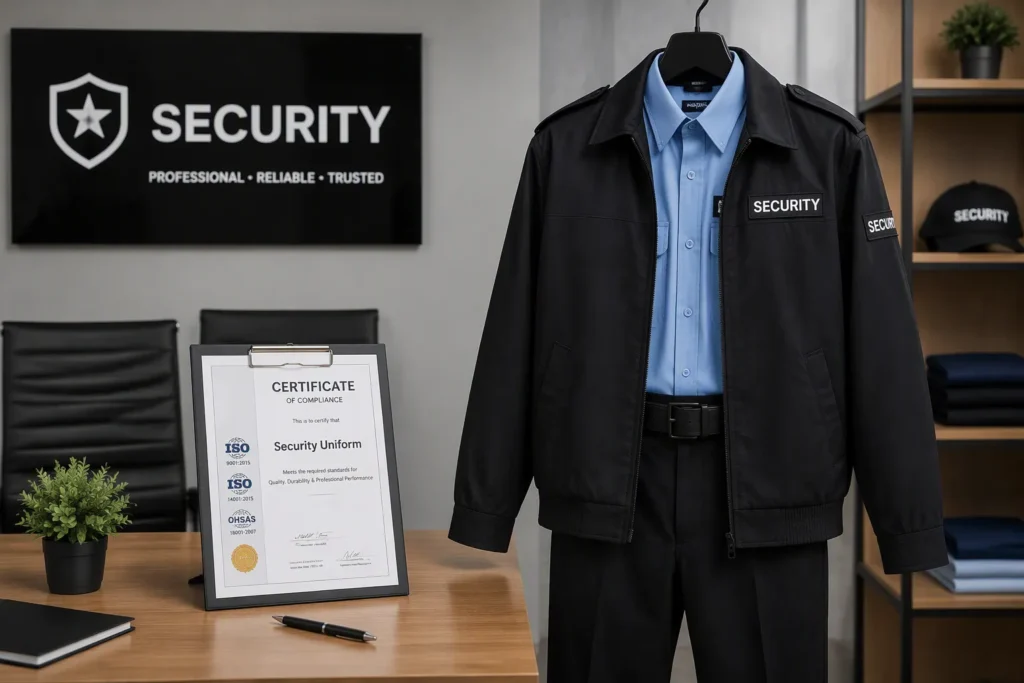
Top Chinese makers hold international certifications. These papers show they meet world standards. Common ones include CE marking, ANSI, ISO, Oeko-Tex Standard 100, BSCI, and ECOVADIS. Each one covers a different area. ISO 9001 deals with quality management. Oeko-Tex Standard 100 proves textile safety. BSCI and ECOVADIS check social and environmental practices.
Manufacturer | International Quality Certifications Held |
|---|---|
Nanjing Huarui Garment Technology Co., Ltd. | ISO 9001; Oeko-Tex Standard 100 |
Jiangxi Nanmeiyi Apparel Co., Ltd. | ISO 9001:2016; ISO 14001:2016; ISO 45001:2020; BSCI; ECOVADIS; ANSI/ISEA 107-2020; EN ISO 20471; Australian safety standards |
Shijiazhuang Haiyuan Labor Protection Products Co., Ltd. | CE; ANSI; ISO |
Shenzhen Unifirst Industrial Co., Ltd. | ISO 13485 |
Wuhan Jinhongyu Garment Manufacturing Co., Ltd. | GB 8965 (national standard) |
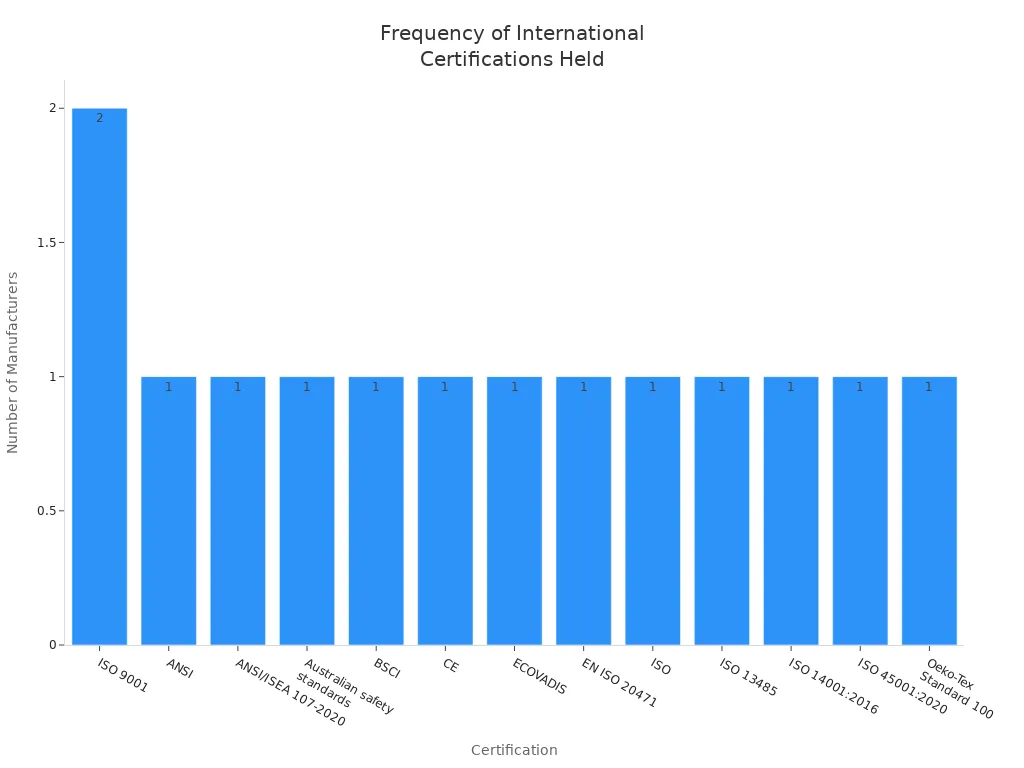
These certifications matter when you pick a supplier. They show the factory follows known rules. They also help you avoid quality gaps in bulk orders.
Chinese makers with oem skills often give professional design help. They can make uniforms that boost trust for your security staff. This help covers fabric choice, construction details, and logo customization. The result is a professional look that builds trust with clients and the public.
Communication and Cultural Fit
Clear communication stops costly mistakes. You should work with a factory that answers fast and understands your security uniform needs. Ask about their English-language support. Check if they have worked with international buyers.
Cultural differences can slow a project. For example, some factories like indirect feedback. You may need to ask direct questions to get clear answers. Set up regular video calls. Use simple words in written messages. Confirm every detail in writing.
A good partner will ask you questions too. They want to know your end use. Adult site-security workwear has special needs. These include durability, comfort, and a professional look. Share photos and samples when you can. This step removes guesswork.
You should also talk about your production capacity needs early. Ask about their monthly output and peak scheduling. A factory with strong capacity can handle your growth. They can also manage repeat orders without delays.
For full oem/odm projects, communication becomes even more important. The factory handles design and production. You must trust their judgment. Visit the factory if you can. Meet the team. Review their oem/odm production line. This visit builds a working relationship that lasts.
Buyers who spend time on communication get better results. They receive durable uniforms that meet specs. They avoid delays and rework. They also build a supply chain that grows with their business.
Checking Out an OEM/ODM Production Partner
Doing your homework is what separates a smooth program from an expensive one. Before you place security uniform orders, you should check out a factory. Look at business licenses, export records, and factory audit reports. Ask for client references in your area. A serious partner will give you these.
Due Diligence and Sample Testing
Ask for pre-production samples before you approve anything. Test the fabric on your own. Check tear strength, colorfastness, and shrinkage after washing. Measure the fit against your size chart. Confirm every logo customization detail, like stitch density and placement. Sampling usually takes 7–12 days, so plan for that time in your schedule.
Compare at least three factories side by side. The table below shows how oem and odm partners differ.
Factor | OEM Partner | ODM Partner |
|---|---|---|
Design input | You supply specs | Factory supplies design |
Speed to sample | Slower, spec-driven | Faster, pattern-ready |
Branding control | Full | Shared |
Contracts, MOQs, and Payment Terms
Put every term in writing. State the MOQ, unit price, delivery date, and inspection rights. Bulk production usually runs 35–45 days after sample approval. Payment terms often split into a deposit and a balance against a bill of lading. Never pay the full amount upfront.
Shanghai Top Fortune Industry Co., Ltd. (Top Fortune) is one example of a checked partner. Started around 2002, the company works from a 1,506 m² facility in Songjiang and focuses on OEM/ODM export. Its MOQ sits near 1,000 units per style. You can reach the team at rill@topfortunemail.com, on WhatsApp at +86 13524210501, or at the Songjiang address.
Use this RFQ template when you contact any security uniform supplier.
RFQ Field | Your Entry |
|---|---|
Style and fabric | |
Size range and quantity | |
Logo customization | |
Target unit price | |
Delivery window |
Buyers who compare full oem/odm production quotes against oem/odm supply options gain real leverage. Review production capacity, then negotiate.
Challenges in Full OEM/ODM Production and How to Handle Them
When you do full OEM/ODM production in another country, you face real problems. The biggest ones are poor quality, shipping delays, and communication issues. You can deal with each one with a good plan.
Quality Control and Shipping Risks
You cannot watch every piece leave the line. Instead, hire an outside inspection company. They check your security guard uniform order before it ships. Ask for an AQL inspection at the factory. This step finds defects early.
Shipping terms decide who takes the risk. Look at the table below before you sign.
Term | When risk transfers to buyer | Who arranges carriage | Insurance obligation |
|---|---|---|---|
FOB | When goods load on board at origin port | Buyer | Buyer arranges its own insurance |
When goods load on board at origin port | Seller | Seller insures origin to destination |
Under both terms, risk moves to the buyer once goods are on the ship. If uniforms arrive damaged, you must file the claim yourself. The CIF rule is strict on this.
CIF (Cost, Insurance, and Freight) means the seller puts the goods on the ship. The buyer takes the risk once the goods are on board. The seller is seen as having done their job even if the goods get damaged or lost on the way.
But there is one catch. Containers often reach the carrier days before loading. It is hard to tell if damage happens during that time. Take photos of every box when you pick them up.
Legal and Compliance Considerations
Before production starts, check your country’s import rules. Labeling needs vary by market. Some countries want fiber content, country of origin, and care symbols on each garment. Others need fire warning labels.
Also protect your brand. Sign a secrecy agreement with your OEM partner. Register your logo in both countries. In the contract, state who owns the patterns and designs.
Contracts in two languages help prevent arguments. Write all terms in English and Chinese. Both versions must match. This protects both buyers and factories.
Plan your production around busy seasons. Chinese New Year slows factories for weeks. Add extra time to your schedule.
Chinese OEM partnerships help you save money, customize deeply, and grow your business. You control everything about your security uniform supplier relationship. First, write down your technical needs clearly. Check three factories that can handle big orders. Ask for sample uniforms and test them. Make a contract with payment terms and inspection rights. Plan your quality checks and shipping steps early. These steps keep you from getting bad quality or costly delays. Buyers who follow this process turn full OEM/ODM sourcing into a smart advantage. The OEM and ODM model works when you talk openly and verify every detail. Smart buyers use these steps to build a steady uniform supply for repeat orders.
FAQ
What MOQ requirements should buyers expect from OEM factories?
Most OEM suppliers ask for a minimum order of 500 to 1,000 sets for each style. Top Fortune wants about 1,000 units per style. For repeat orders, you can talk about lower amounts.
How does a full OEM/ODM project differ from stock uniform ordering?
A full OEM/ODM project includes custom design, sample approval, and bulk production. Stock orders come from what is already in the warehouse. OEM gives you full control over the specifications.
What customization options can buyers choose for security workwear?
You pick the fabric, color, fit, and performance features. Logo customization covers shirts, pants, jackets, and hi-vis gear. Choices include UPF 50+ protection and moisture-wicking fabric.
Which certifications matter for Chinese OEM partners?
Look for ISO 9001, Oeko-Tex Standard 100, BSCI, or ECOVADIS certification. These show the factory follows international quality and safety standards for your uniforms.
How do buyers protect their designs during OEM production?
Sign a confidentiality agreement with your supplier. Register your logo and patterns in both countries. Put ownership clauses in your contract. This keeps your brand identity safe.