

Airport Ground Staff Uniform OEM/ODM China: A Sourcing Guide for Overseas Airports
Table of Contents
Display
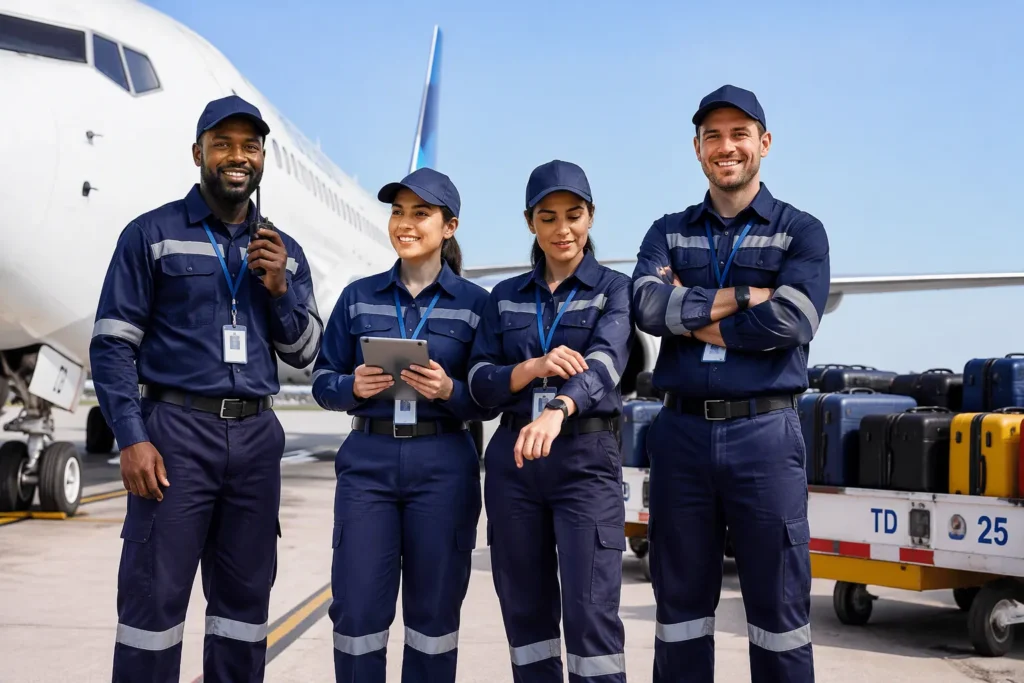
Buying airport ground staff uniforms from China is a smart choice for overseas airports. You can work with factories that know a lot about making workwear. These suppliers offer strong Airport Ground Staff Uniform OEM/ODM from China programs. Prices stay low, and you still control the design. The final result is a uniform program made for your brand and your weather.
Doing well takes a few good habits. Check safety certifications first. Pick fabrics that fit your weather. Check each supplier carefully. Then handle sampling, production, and shipping one step at a time. A clear process keeps your budget and your schedule safe.
Key Takeaways
Buying from China saves you money and gives you more design options for your airport uniforms.
Always check safety certifications like EN ISO 20471 or ANSI/ISEA 107 to keep your staff safe.
Pick fabrics that fit the weather where you are, so they feel good and last long.
You can customize uniforms with your logo and colors to build your brand.
Use a clear ordering process to prevent delays and ensure good quality.
Why Source Airport Ground Staff Uniform OEM/ODM from China
When you source these uniforms from China, you get to use a grown-up clothing industry. It is built for making workwear in big amounts. Chinese factories make millions of uniform pieces every year. They make them for airlines, shipping companies, and government groups all over the world. You get lower prices, faster production, and deep knowledge in making safe clothes. The country’s supply chain has everything from yarn and fabric to zippers and reflective tape. This setup keeps your project on time and on budget.
Manufacturing Expertise and Scale
China has thousands of factories that only make work clothes for jobs. Companies like Shenglia Apparel and OH Uniform have made aviation and work uniforms for a long time. Their teams know what airport ground staff need. This includes bright panels, strong seams, and fabrics that do not wrinkle. These factories have many production lines. They can handle orders from a few hundred pieces to tens of thousands. This size lets them keep the same quality on big orders.
Special knowledge makes these suppliers stand out. Workers know how to put on reflective material the right way. They follow EN ISO 20471 or ANSI/ISEA 107 rules. Pattern makers can change sizes for different body shapes without messing up the fit. Factories often work with fabric mills and embroidery shops. This cuts down on delays for custom orders. You get a finished uniform that meets safety rules and looks professional.
Cost-Effectiveness and OEM/ODM Flexibility
Lower production costs are a big plus when you source Airport Ground Staff Uniform OEM/ODM from China. Good supply chains and lower labor costs bring the price down. You can put those savings into better fabrics, more accessories, or bigger orders. The total cost stays steady when you work with a factory that gives clear quotes for each custom step.
OEM and ODM models let you control the final product. With OEM, you give detailed specs and the factory makes it just like your design. With ODM, the factory has patterns you can change with your colors, logo spot, and fabric picks. You can ask for special things like hidden pocket zippers, sweat-wicking linings, or custom reflective stripe layouts. This freedom makes sure your uniforms show your brand and help with daily tasks on the tarmac.
Essential Uniform Components for Ground Staff
A full ground staff uniform set includes more than just a shirt and pants. You need a layered system that fits each job on the tarmac and inside the terminal. Ramp agents spend hours outside near engines and baggage carts. They need high-visibility vests, weatherproof jackets, and strong pants. Check-in and gate agents work inside with passengers. They need neat shirts, fitted skirts or trousers, and tidy accessories. Suppliers like Olinouniforms and VizGlo Safety make these items as one matching set. Your OEM/ODM partner can change each piece for the job, the weather, and your brand colors.
High-Visibility Garments and Outerwear
High-visibility vests and jackets are the safety base of any ramp uniform. VizGlo Safety and similar makers produce these with reflective tape layouts that follow EN ISO 20471 or ANSI/ISEA 107. Ramp agents wear them over base layers when guiding planes and handling bags. The outerwear must block wind, rain, and grease without cracking in cold weather. Look for sealed seams, storm flaps, and removable liners. These features let one jacket work for three seasons. Your ODM supplier can also add radio loops, badge holders, and pen pockets for everyday tasks.
Base Layers and Accessories
Base layers keep ground staff comfortable during long shifts. Moisture-wicking fabrics pull sweat from the skin and dry fast. Arctic Cool clothing uses HydroFreeze X™, a sweat-activated cooling tech that uses airflow and moisture to control temperature. The same shirts add breathability, quick-dry comfort, and UPF 50+ protection. These features help staff who walk between terminals or wait outside in the sun.
Polyester is great when you need strong fabric. It holds its color, resists wrinkles, and works well for hard use. That is why many uniforms and activewear use it.
Accessories complete the professional look. Ties, tie clips, scarves, and belts should match your brand colors and last through daily wear. Check-in and gate agents often need lighter fabrics that resist wrinkles. Ramp crews need darker colors that hide dirt. Your manufacturer can make both lines under one order.
Navigating Compliance and Safety Standards
Safety rules keep your ground staff safe every day. High-visibility clothing has to meet strict standards. Two main certifications matter for airport workwear. EN ISO 20471 covers European requirements. ANSI/ISEA 107 sets the American standard. Both say how bright the fabric must be and how much reflective tape you need. They also test how well the garment holds up after washing. Your supplier must prove compliance with the right standard for your region.
Key Certifications: EN ISO 20471 and ANSI/ISEA 107
These certifications measure retroreflectivity, color fastness, and wash durability. Retroreflectivity shows how well the tape bounces light back to a driver or pilot. The tape must exceed 330 cd/lx/m² under ISO 20471 or ANSI 107 parameters. That rating must hold after 25 to 50 wash cycles. If the tape fades too soon, the vest fails. Your staff then face real danger on the tarmac.
Ensuring Manufacturer Compliance
You should never trust a supplier’s own word. Ask for third-party lab test reports from SATRA, SGS, UL, or TÜV. These labs test on their own and publish real numbers. The table below shows what to request and how to check it.
Related OEM uniform programs
Category | Recommended third-party test reports / checks | Recognized labs or verification bodies |
|---|---|---|
Lab certificates | Third-party lab test certificates proving compliance; do not rely on supplier self-assessments | TÜV, Intertek |
ISO test certificates | Retroreflectivity, wash durability (40/80/120 cycles), color fastness, tensile strength | ISO-accredited testing labs |
Certificate authenticity | Verify accreditation, accreditation scope for the specific test method (e.g., ISO 6330 for wash durability), unique accreditation number, test dates within past 6 months, specific numerical results, verifiable lab letterhead/contact info | ILAC |
Check every certificate through the ILAC network. Confirm the lab holds accreditation for that exact test method. Look at the test date. A report older than six months may not reflect current production. Ask for the unique accreditation number and call the lab if you have doubts. A real certificate lists specific numerical results, not vague claims. This step protects your airport from liability and keeps your staff safe.
Choosing Fabrics for Climate and Durability
Your airport might have very hot sun, freezing wind, or rain all the time. No single uniform fabric can handle all three. You need a fabric plan that fits your local weather. This step keeps your staff safe and your budget in check.
Fabric Solutions for Diverse Climates
Hot places need fabrics that let air through. Look for cotton blends or moisture-wicking polyester. These materials pull sweat off the skin and dry quickly. They keep ramp agents cool during long hours in the sun. Light colors also bounce heat away and lower tiredness.
Cold places need warmth and wind protection. Pick jackets with removable thermal liners. A shell made of nylon or polyester stops wind and light rain. Fleece linings add warmth without making the jacket bulky. Your supplier can make one jacket that works in three seasons.
Climate | Recommended Fabric | Key Benefit |
|---|---|---|
Hot and humid | Cotton blend, moisture-wicking polyester | Breathability, quick drying |
Cold and windy | Nylon shell with fleece liner | Insulation, wind blocking |
Rainy | Coated polyester, sealed seams | Water resistance |
Durability Features for Daily Wear
Ground staff uniforms take a beating every day. Tarmac work means grease, rubbing, and many washes. Your fabric must not rip and must keep its color. Ask your supplier about tear strength and colorfastness ratings. These tests show how well the fabric holds up in real use.
Easy-care features matter too. Wrinkle-resistant fabrics cut ironing time and keep staff looking neat. Colorfast dyes stop fading after many wash cycles. This is important for high-visibility garments. Faded fabric can fail EN ISO 20471 or ANSI/ISEA 107 rules. Pick fabrics tested for wash durability so your uniforms stay compliant and professional.
Customization and Branding Options
You have strong control over how your uniform looks in the end. Chinese makers give you many ways to add your logo and match your brand colors. They also offer custom design help that goes past simple changes. This flexibility makes Airport Ground Staff Uniform OEM/ODM from China a smart pick for overseas airports.
Logo Application and Color Matching
Your logo must last through many washes and daily wear. Three main ways work well for airport uniforms.
Embroidery gives a tough and neat finish. It works best for simple shapes with only a few colors. The stitching holds up on collars, chest pockets, and sleeve cuffs.
Screen printing handles bigger logos or designs with many colors. It lies flat on the fabric and works well for reflective or graphic parts.
Heat transfer suits complex designs or smaller batches. It goes on smoothly on curved areas like shoulder panels.
Color matching starts with Pantone codes. You send your brand colors to the factory. They dye fabric swatches to match those codes exactly. You approve the swatch before big production begins. This step stops color differences between sample and final order.
Custom Design and Pattern Making
Makers offer three levels of customization. Each level fits a different budget and timeline.
OEM full customization means you give full technical specs. You send stitch counts, pocket layouts, fabric weights, logo files, and Pantone codes. The factory builds the uniform to your exact design. This suits airports that need strict visual control or safety rules.
ODM semi-custom lets you pick from existing patterns. You change colors, logos, and small details like sleeve length or epaulet style. This balances speed with a unique look for mid-size groups.
Stock plus logo add-on uses ready-made units. You add embroidered badges later. This works for quick replacements but limits fabric and fit control.
The table below shows the full range of customization options factories offer.
Customization Category | Details |
|---|---|
Patterns | Custom pattern design for uniforms |
Colors | Custom color selection |
Fabrics | Fabric specification and selection |
Logos | Logo application beyond embroidery |
Labels | Custom woven labels |
Packaging | Branded packaging |
Name Badges | Personalized name badges |
Department Identification | Department-specific markings |
Printed Slogans | Custom printed slogans |
You pick the level that fits your budget and timeline. A clear spec sheet and approved samples keep the project on track.
How to Select a Reliable Chinese Manufacturer
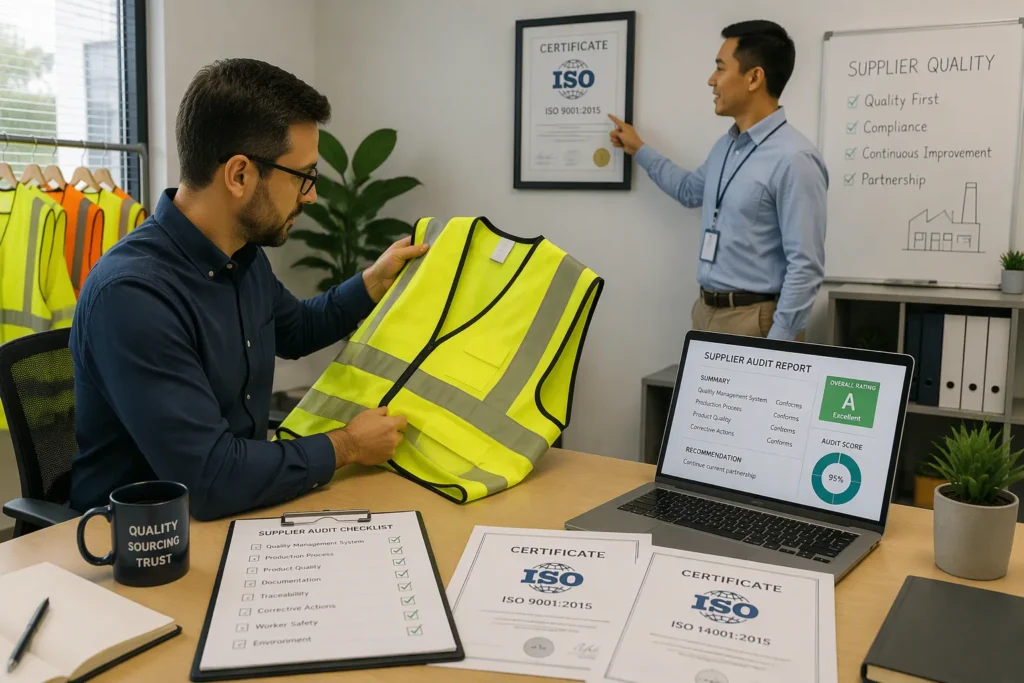
Finding the right factory takes careful work. You need a partner who follows safety rules, talks clearly, and delivers on time. A bad supplier can slow down your airport contract and put your staff in danger. Use the points below to compare choices before you sign.
Evaluating Certifications and Experience
Begin with certifications. Ask for ISO 9001 quality management certificates and product test reports from approved labs. Make sure the factory has the right safety certifications for high-visibility clothing. Check each certificate with the group that issued it. A supplier who will not share documents is a warning sign.
Years of B2B export experience count. A factory that has worked with overseas airports knows your compliance needs. Ask how long they have exported and which markets they serve. Get references from other buyers who already use the supplier. Their feedback shows how the factory really performs.
Factory audits give you the real facts. You can pay a third-party inspection firm to visit the factory. The auditor checks production lines, worker conditions, and quality systems. Sites like Made-in-China.com and Alibaba list verified manufacturers with audit reports. Use these sites to make a shortlist. Then compare suppliers side by side.
Criteria | What to Check | Why It Matters |
|---|---|---|
Certifications | ISO 9001, EN ISO 20471, ANSI/ISEA 107 test reports | Proves safety and quality compliance |
B2B Experience | Years exporting, airport or aviation clients | Shows understanding of your market |
Factory Audits | Third-party inspection reports | Confirms real production capacity |
Financial Health | Credit reports, payment history, court records | Predicts long-term reliability |
Financial stability protects your long-term contract. Get credit reports from agencies that focus on Chinese businesses. Review payment history to judge the supplier’s financial health. Check registered capital and how it has changed over time. Look for court enforcement records or debt disputes. Frequent legal enforcement and unstable capital structures are higher-risk signals. Review bankruptcy filings and past lawsuits. A financially stable supplier is less likely to cause production delays, quality problems, or bankruptcy.
Top Fortune Industry is a good example you can trust. Founded in 2002, this OEM/ODM manufacturer runs a 1,506m² facility in Songjiang, Shanghai. They serve overseas markets and know export requirements.
Assessing Communication and Quality Control
Clear communication keeps your project on track. Test how fast they respond during the inquiry stage. Send questions about fabrics, certifications, and lead times. A good supplier replies within one business day with clear answers. Vague responses or long delays point to future problems.
Ask about their quality control process. A strong factory has inspection points at each production stage. They check fabric before cutting, watch stitching during sewing, and inspect finished goods before packing. Request their QC checklist and defect rate data. Ask if they allow pre-shipment inspections by your own team or a third party.
Before you finalize any Airport Ground Staff Uniform OEM/ODM from China order, use this RFQ template to compare quotes fairly.
RFQ Item | Supplier A | Supplier B | Supplier C |
|---|---|---|---|
Unit price (per piece) | |||
Minimum order quantity | |||
Fabric specs and weight | |||
Certification provided | |||
Sample lead time | |||
Bulk production lead time | |||
Payment terms | |||
Shipping method and cost |
A supplier who welcomes your questions and inspections is a partner worth keeping. Choose the factory that meets your standards for certifications, communication, and quality control.
The Airport Ground Staff Uniform OEM/ODM from China Ordering Process
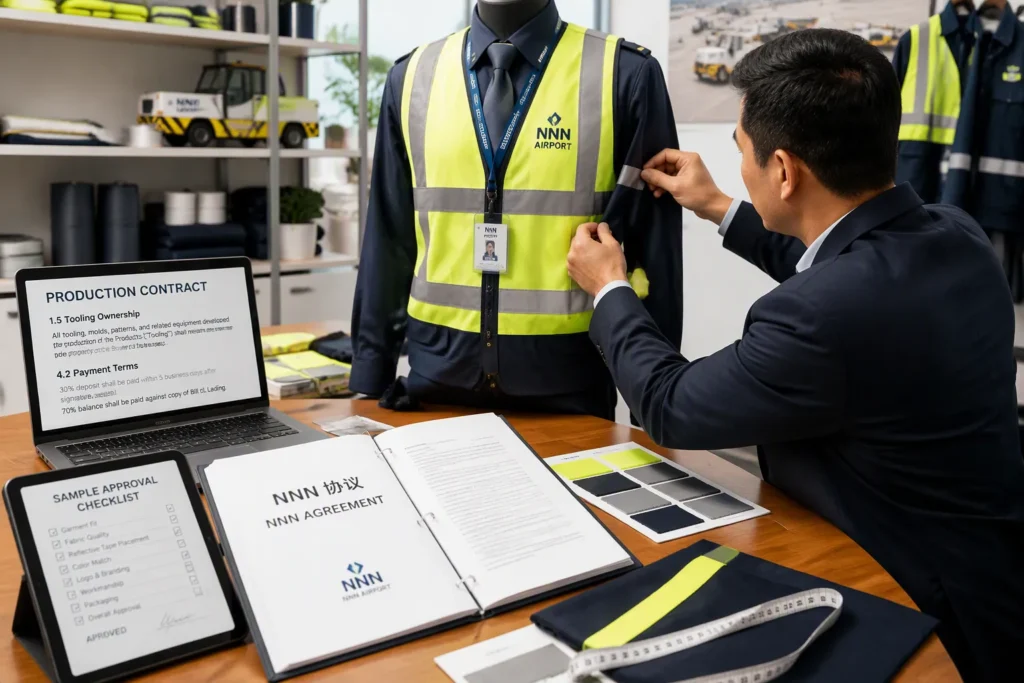
A clear ordering process stops delays and keeps your money safe. Every step has a job. If you skip steps, you may get bad fit, wrong safety, or lose your designs. Follow this plan to go from asking to getting your uniforms.
From Inquiry and Sampling to Production
You start with a formal request. You send your specs and design ideas. Before you share private details, sign an NNN agreement. This is the first real step in a reliable Airport Ground Staff Uniform OEM/ODM from China project. Write the NNN agreement in Chinese with Chinese law. Add a set money penalty for breaking it. This keeps your designs and brand safe.
Then you move to design and sample making. The factory looks at your specs. They make a sample uniform from your instructions. You check the sample for fit, fabric weight, tape placement, and color match. Do not skip this step. You must approve the sample before any big production. Also, get your trademark in China at this time. China uses a “first-to-file” system. Register your mark in English and Chinese.
Here are the essential clauses your production contract must include:
Essential Clause | Purpose and Key Provisions |
|---|---|
Tooling/Mold Ownership | All molds and tooling belong to you. The factory cannot use them for other clients without your okay. They must give them back within 3 working days if you ask. |
Subcontracting Restrictions | The maker cannot let another company make samples or main production. You can check the factory anytime without warning. |
Payment Terms | Normal terms are 40% deposit before tooling. The other 60% is due after you approve the sample and pass quality check. You get the deposit back if the final check fails. |
Delay Penalty | The contract must have a penalty for late delivery. This is often 1% of the total price per day late, plus 7 days grace period. |
After you sign and pay the deposit, big production starts. You approve the raw material order. The factory cuts fabric and starts sewing. A clear contract keeps this step on track.
Quality Inspection and Logistics
Quality checks happen during production, not only at the end. The maker must tell you 3 days before key steps. These steps are getting materials, starting work, finishing goods, and getting ready to ship. You do random checks during production. Use the ISO2859-1 standard for sampling.
Lab tests are required for safety. The maker tests for reflectivity, color fastness, and wash strength. They must tell you about any failed test within 24 hours. The maker pays for re-check after a failure.
After production ends, a pre-shipment check looks at the final goods. You check the count, quality, and packing against the approved sample. Only then do you pay the last part.
Last, you set up shipping. Write the Incoterms clearly in your contract. The supplier can help with sea, air, or train freight. Track the shipment to handle customs. A clear ordering process for Airport Ground Staff Uniform OEM/ODM from China lowers risks and makes sure you get safe, well-made uniforms.
Understanding Costs and Lead Times
Your budget and schedule depend on a few things that change. You control most of them. Knowing what affects the unit price helps you plan a good order.
Factors Influencing Unit Price
Material costs are the base of every price quote. High-visibility fabric with certified reflective tape costs more than regular polyester. Insulated liners, sealed seams, and moisture-wicking finishes add to the price. Order size changes the cost the most. Small runs of about 250 to 500 pieces have higher fixed setup costs per item. Dye-vat setup, embroidery pattern making, and silk-screen setup costs all land on fewer items. Large runs of 5,000 units or more spread those fixed costs across many more pieces. This generally lowers the cost per piece. The typical minimum order for airport ground staff uniforms from Chinese OEM/ODM makers is around 1,000 pieces as an industry standard.
50% OFF on Above 500
How complex the customization is also moves the price. Full OEM builds with custom patterns, woven labels, and branded packaging cost more than ODM semi-custom orders. Labor adds the final layer. Details like set-in sleeves and reinforced bar tacks that are finished by hand take more time than simple seams.
Typical Production and Shipping Timelines
Sampling usually comes first. You approve fabric, fit, and logo placement before bulk work starts. Bulk production then follows. The timeline grows with order size. A 1,000-piece run moves faster than a 10,000-piece run on the same line. Season matters too. Factories fill up before peak buying times. So lead times can grow. Sea freight costs less and takes longer. Air freight costs more and arrives faster. Add buffer time to your schedule for customs clearance at both ends.
You now know how to find and order airport ground staff uniforms from China. Always start with safety rules. Ask for EN ISO 20471 or ANSI/ISEA 107 test reports from approved labs. Check every supplier with factory visits and export references. Share your needs early. Approve samples before making many uniforms. A good tie-up with a skilled Chinese maker gives you lower costs, steady quality, and a real advantage over others.
Ready to start? Contact us at rill@topfortunemail.com, WhatsApp +86 13524210501, or visit Floor 3 Building 20 Haier Zhigu, No.66 Guangfulin East Road, Songjiang, Shanghai 201600.
FAQ
What is the minimum order quantity for custom airport uniforms?
Most Chinese OEM/ODM makers ask for at least 1,000 pieces. Small orders of 250 to 500 pieces are possible. You will pay more per piece for those small orders. Setup costs get spread over fewer items.
Which safety certifications should my supplier provide?
Ask for EN ISO 20471 or ANSI/ISEA 107 test reports, depending on where you are. Ask for ISO 9001 quality certificates too. Check each document using the ILAC network. Make sure the lab has accreditation for that test method.
How long does production and shipping take?
First, you approve a sample. Then big production starts. Big orders take more time than small ones. Busy seasons cause delays. Shipping by sea costs less but is slow. Shipping by air costs more but is fast. Add extra time for customs checks.
What payment terms are standard?
The usual terms are 40% down before making the molds. Then 60% after you accept the sample and pass a quality check. You get your deposit back if the final check fails. Always put Incoterms clearly in your contract.
Can the factory match our exact brand colors?
Yes. Give your Pantone color codes to the factory. They dye small fabric pieces to match those codes. You say yes to the swatch before big production starts. This step stops color differences between the sample and the final order.