

Hotel Hospitality Uniform OEM China | Staff & Front Desk Apparel
Table of Contents
Display
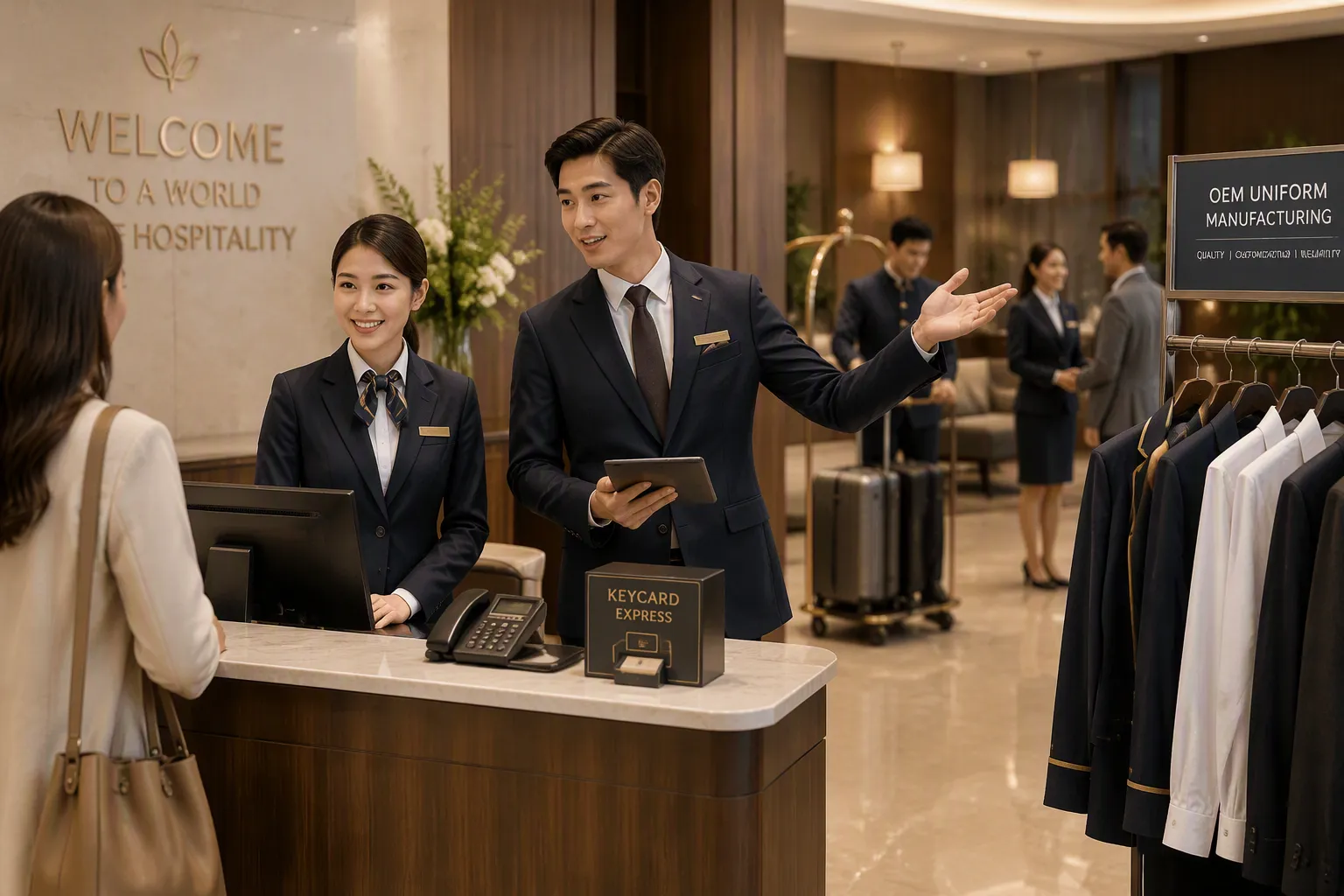
Shanghai Top Fortune Industry Co., Ltd., a trusted hotel hospitality uniform OEM China, runs a factory in Songjiang, Shanghai. Our OEM/ODM workwear and corporate uniforms cover all steps, from fabric to packaging. We ship to Europe, the Middle East, Oceania, Southeast Asia, and the Americas. Our MOQ is based on the style and quantity. You can reach us at rill@topfortunemail.com or WhatsApp +86 13524210501.
You want to source hotel hospitality uniform OEM China. This guide shows you how to pick and source by department, fabric, branding, and cost. We only serve B2B hospitality workwear: front desk, concierge, housekeeping, F&B, banquet, and management. We do not make school uniforms or consumer apparel.
Source | Market Size (2024) | CAGR |
|---|---|---|
LinkedIn Article 1 | USD 1.2 billion | 5.8% |
LinkedIn Article 2 | N/A | 8.2% (2026-2033) |
Use the table of contents below to find your way.
Key Takeaways
Hotel uniforms help guests feel happy and make staff feel good. Pick fabrics that are comfortable and show your brand.
Each department needs its own uniform purpose. The front desk needs a neat look. Housekeeping needs clothes that last. Plan for each role.
OEM gives complete control over fabric, color, fit, and branding. It saves money with bulk orders and ensures a consistent look.
Follow the step-by-step OEM process. Approve the pre-production sample to avoid costly mistakes in bulk production.
Use a clear RFQ that lists fabric weight, Pantone color, logo placement, and packing details. This helps avoid delays and mistakes.
Why Hotel Uniforms Matter
Brand Consistency and Guest Perception
Your front desk staff are the face of your hotel. Guests make their first impression within seconds of entering the lobby. A well-fitted uniform shows professionalism before anyone speaks. When your team wears matching, well-fitted clothing, guests know right away who can help them. That recognition builds trust and loyalty.
Uniforms do more than dress your team. They tell your brand story. Colors, cuts, and details share your hotel’s personality faster than any brochure. Think about how leading hotels use this idea. The Oberoi in India uses handwoven Khadi fabric with modern tailoring. The Peninsula Tokyo mixes kimono elements with current cuts. Six Senses Fiji makes uniforms from recycled ocean plastics. Banyan Tree Phuket adds seasonal accessories that reflect Thai festivals. These choices boost brand recognition and deepen guest engagement. Research shows up to a 20% rise in guest satisfaction linked to ambiance and service perception. Social media engagement can grow by 40% through storytelling campaigns tied to unique staff attire.
Staff Morale and Retention
Comfortable uniforms help your team perform at their best. Breathable fabrics and practical designs lower fatigue during long shifts. When staff feel good in what they wear, their confidence grows. That confidence shows in every guest interaction. A 25% boost in staff morale and pride leads directly to better service quality.
Sustainability also plays a growing role in uniform programs. Uniforms made from recycled materials can cut environmental footprint by up to 30%. Your team notices this commitment. They feel proud to work for a hotel that values people and the planet. A clear uniform program also makes onboarding easier. New hires get clear guidance on what to wear and how to present themselves. This consistency across locations strengthens your brand identity. Style, function, and sustainability work together. They create a seamless team outfit that guests remember and staff appreciate.
Department-Specific Uniform Needs
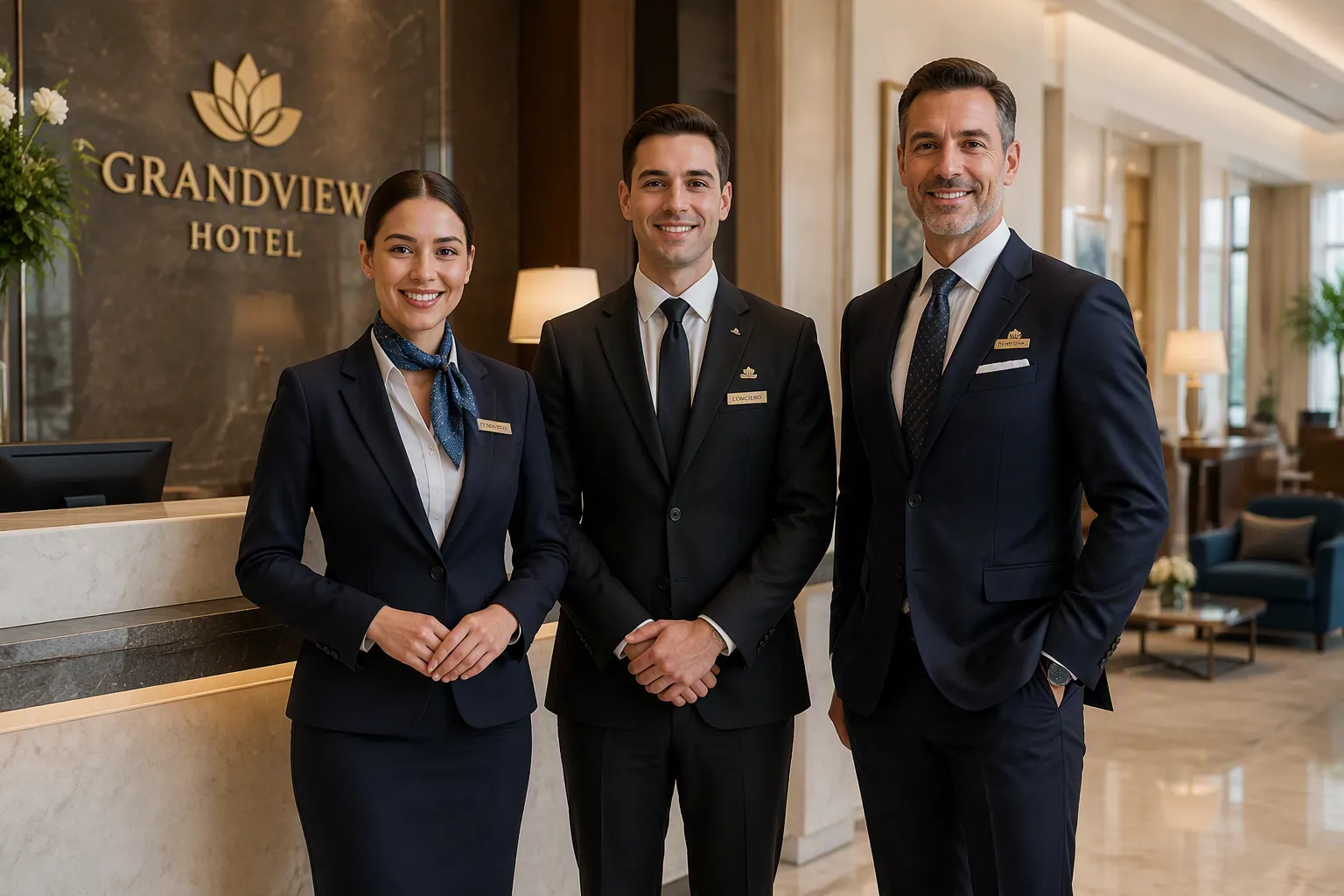
Every hotel department has its own uniform goal. Front desk teams need a polished first impression. Concierge staff need authority and approachability. Housekeeping needs mobility and durability. Food and beverage teams need service style plus stain control. Banquet crews need durable, repeatable uniforms. Management needs executive authority. You should plan a department-wise approach so every team gets appropriate attire. This is B2B hospitality workwear only. We do not produce school uniforms or consumer apparel.
Department | Uniform Goal | Typical Garments | Key Fabric Requirement |
|---|---|---|---|
Front Desk / Reception | Polished first impression | Blazer, dress shirt or blouse, trousers or skirt, scarf or tie | Wrinkle resistance, clean drape |
Concierge | Authority and approachability | Tailored suit, blazer, shirt, tie or scarf, lapel pin | Structured suiting, color stability |
Housekeeping | Mobility and durability | Tunic, apron, utility trousers, housekeeping dress | High wash durability, comfort stretch |
Food & Beverage | Service style plus stain control | Dress shirt, vest, apron, service trousers, bow tie | Easy-care, stain-resistant, fast drying |
Banquet | Durable repeatable uniforms | Dress shirt, vest, apron, service trousers, bow tie | Easy-care, stain-resistant, fast drying |
Management | Executive authority | Suit, blazer, premium shirt, subtle accessories | Better drape, wrinkle recovery, premium hand feel |
Front Desk, Concierge, and Management Apparel
Front desk blazers and shirts set the tone for your lobby. Choose poly-viscose, TR suiting, or performance stretch fabric. These materials resist wrinkles and hold a clean drape through long shifts. Offer both trouser and skirt options in the same color and fabric. Verify colors under lobby lighting before you approve the sample. Concierge uniforms need structured suiting with strong color stability. A tailored suit or blazer in navy, black, or charcoal works well. Add a discreet lapel pin or contrast piping for fast recognition. Management suits should use better drape and wrinkle recovery. A well-cut blazer with a premium shirt and minimal logo treatment gives your leaders a confident look.
Housekeeping, F&B, and Banquet Uniforms
Housekeeping tunics and trousers must handle heavy use. Poly-cotton fabric with easy-care finishes and high wash durability works well. Side slits, stretch panels, and elasticated waist trousers support movement. Request wash testing before bulk production if you use industrial laundry. Food and beverage floor staff need shirts and aprons that manage stains and dry fast. Fine dining teams often wear white or black shirts with structured vests and long aprons. Banquet vests should be durable and wrinkle-resistant. Aprons create a barrier between clothing and surfaces, which supports hygiene standards. Choose easy-clean fabrics with heat resistance and stain management. Gender-inclusive design works across all these roles. Use chore coats, vests, and straight-leg pants that fit different body types. Offer a flexible size range and easy alteration options.
Fabric, Color & Branding
Breathable, Easy-Care Performance Fabrics
You need fabrics that keep staff cool through a full shift and survive repeated industrial laundering. Performance fabrics with moisture management and wrinkle resistance are ideal for hospitality uniforms. For easy-care finishes, a Soil Release treatment rated for standard hotel use works well. Rental uniform programs typically require fabrics tested to maintain appearance and durability after multiple washes. Navy blue is a popular choice because it hides minor stains and projects authority. Verify color consistency across departments under lobby lighting before you approve bulk. Wrinkle-resistant navy options work well for front desk blazers and banquet vests. For polo shirts and softshell jackets, construction details like stitch density and seam finishing determine how the garment holds shape. You can review fabric and construction examples in our custom polo shirt OEM guide and softshell jacket OEM workwear resources.
Embroidery, Print, and Logo Placement
Logo placement follows measurable standards. Position the left chest logo a consistent distance below the collar seam, with an appropriate width on adult sizes. Embroidery logos require a stitch count based on complexity. Keep any text element at a readable height. Placement tolerance should be minimal to ensure consistency.
For women’s polos, adjust the logo height slightly higher than standard placement. Sleeve logos work well at a moderate width, placed above the sleeve hem for departmental IDs. Back yoke branding sits below the collar seam for a 360-degree brand experience. On performance fabrics, reduce stitch count to prevent sagging. Use soft-touch cut-away backing and ballpoint needles on stretch fabrics. Adjust logo height when aprons or name tags are worn to avoid overlap.
RFQ Specs Table
Fabric, Color, Fit, and Branding Specs
You need a clear RFQ to get correct prices and avoid extra emails. Start with fabric weight, what it is made of, and how it is finished. Say how many washes it must last and any special features. For color, give a Pantone number or a real fabric sample. Tell the exact color for each department. Navy blue is a popular choice for front desk and banquet teams. Check color looks right under lobby lights before you order in bulk.
For fit, write your size range and how sizes change. Add options for all genders and any changes needed. Say how you want the logo: embroidered, printed, or a woven label. Tell the exact spot and size. For example, a left chest logo is placed a consistent distance below the collar seam. A back yoke logo is placed below the collar seam. Clear details reduce sample changes and stop expensive mistakes.
Spec Area | What to Include in Your RFQ |
|---|---|
Fabric | Weight, composition, finish, wash durability, performance features |
Color | Pantone number or swatch, department-specific shades, lighting check |
Fit | Size range, grading rules, gender-inclusive options, alteration needs |
Branding | Logo method, placement, size, stitch count, backing type |
Trims | Buttons, zippers, scarves, bow ties, waistbands, accessory details |
Packing | Polybag, size ratio, carton marks, labels, hangtags, barcode stickers |
Trims and Packing Requirements
Your choice of trims affects both appearance and use. OEM customization includes colors, trims, pockets, closures, logo application, labels, and packaging. You can ask for custom buttons, zippers, scarves, bow ties, and waistbands. Branded neck labels, care labels, and hangtags help with private-brand programs. Check logo size and place before making a sample. Price depends on model, fabric, construction, logo method, packing, and quantity.
Packing depends on your warehouse or department needs. Pick single polybag packing or full set packing by department or job. Mixed size packing per box works well for big hotels. You can add barcode stickers and shipping boxes with box marks and packing list help. Set packing by buyer warehouse, job role, department, size mix, or shipping needs. Clear trim and packing details cut down on sample changes and stop expensive fixes.
Hotel Hospitality Uniform OEM China: Inquiry to Shipment
Inquiry, Sampling, and PPS Approval
You start with a clear inquiry. Send your list of departments, types of clothes, fabric likes, color samples, logo files, and how many you want. Your supplier checks the details and says if they can do it. For a hotel hospitality uniform OEM China job, this step sets the base for everything that comes after.
Sampling comes next. Your factory makes a first sample of a few pieces. This usually takes a standard timeframe, based on fabric supply. You check the fit, build, and look. You give feedback. A second sample may be needed. Once you say yes to the design, the factory makes a pre-production sample (PPS) for your final okay.
The PPS approval process keeps your bulk order safe. The PPS must show the same build, work quality, size, finish, fabric, hardware, and labels that bulk production will use. Follow these steps:
Take photos of the approved sample from all sides.
Write down the sizes and allowed differences.
Attach approved fabric and finish swatches.
Sign and date the sample label.
List any changes you allowed.
Keep one sealed reference sample with the supplier. If you can, keep one with your inspection team. For big or repeated orders, check how the sample method works for bulk production. A handmade sample may hide a process too slow or uneven for large-scale making. This same careful way works for related items like custom chef uniform manufacturing.
Bulk Production, Inspection, and Shipping
After PPS okay, bulk production starts. The time from okay to ready-to-ship bulk varies based on style complexity and quantity. Plan your schedule with these benchmarks:
Timeline Stage | Duration | Notes |
|---|---|---|
Bulk production after PP sample approval and deposit | Varies | Harder styles, bigger amounts, or special fabric buying may extend timeline |
Total from first inquiry to goods in hand | Varies | Does not include sampling, freight, and customs |
Suggested inquiry start for hotel opening programs | At least 5 months before needed delivery | Sample approval alone usually takes 4–6 weeks for multi-department programs |
Inspection happens before shipping. Your supplier checks sizes, stitching, logo placement, and color match against the approved PPS. You or your outside inspector review the goods. Any problems are flagged and fixed. After inspection passes, the factory packs the order as you asked. Shipping follows your chosen terms. You get tracking details and customs documents. The whole hotel hospitality uniform OEM China process runs from inquiry through sample, PPS, bulk, inspection, and finally shipping to your door.
Catalog vs. OEM for Hotel Hospitality Uniform OEM China
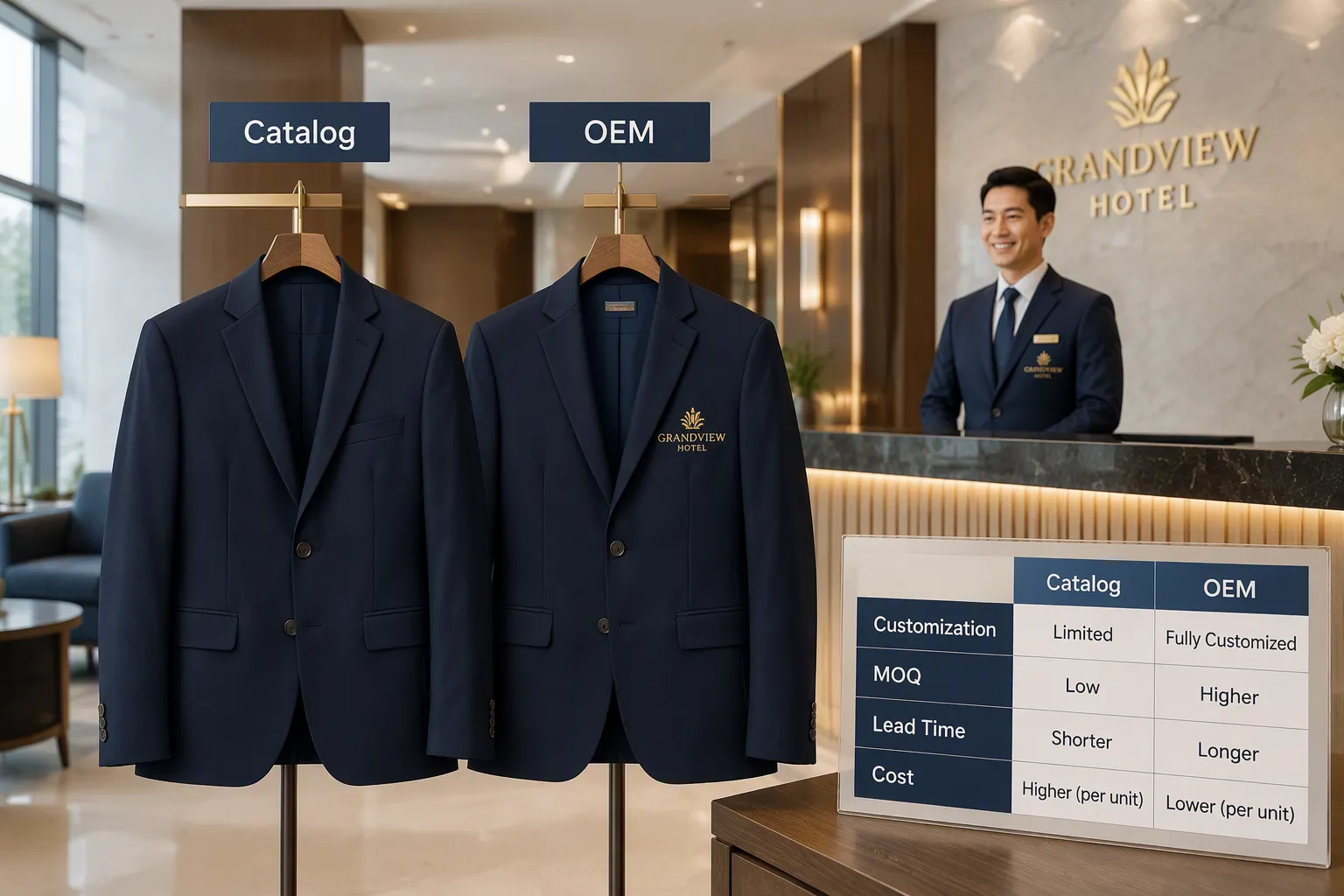
You have a clear choice when you buy staff clothing. You can order from a catalog or begin a hotel hospitality uniform OEM China program. Each way has good points and bad points. Your choice changes your brand look, your budget, and your timeline.
Comparison Table: Catalog vs. OEM
The table below shows the main differences. Use it to match your project needs to the right sourcing model.
Factor | Catalog | OEM |
|---|---|---|
Customization | Limited to stock colors, sizes, and styles | Full control over fabric, color, fit, trims, and branding |
MOQ | Low, often no minimum | Higher per style |
Lead Time | Ships in days from stock | Sampling and production times vary; overall lead time is longer |
Branding | Generic or heat-transfer logo only | Embroidery, print, woven labels, custom placement |
Cost | Higher per unit for small runs | Lower per unit at volume; tooling and sampling add upfront cost |
Color Consistency | May vary between batches | Locked to your approved swatch and Pantone number |
Fit and Sizing | Standard grading only | Custom size range and gender-inclusive options |
Department Matching | Hard to match across roles | One program covers front desk, housekeeping, F&B, and management |
Catalog buying works for small hotels or urgent needs. You get fast delivery and low commitment. But you give up brand control. Your front desk team may wear the same blazer as a nearby competitor. Color batches can shift between reorders. Sizing rarely fits every body type on your team.
When OEM Wins for Hotel Uniforms
OEM wins when your brand identity depends on a consistent look. A full-service hotel with many departments needs one uniform program. Front desk blazers, housekeeping tunics, F&B aprons, and banquet vests should share the same navy blue shade. They should carry the same logo placement. A catalog cannot deliver that level of coordination.
OEM also wins when you need performance fabrics. You can specify moisture management, soil release finishes, and wash durability. You can request wash testing before bulk production. You control stitch density and seam finishing for polo shirts and softshell jackets. These details determine how the garment holds shape after months of industrial laundering.
Cost favors OEM at volume. Your per-unit price drops once you pass the minimum order threshold. You pay for sampling and tooling upfront. That investment pays back across a multi-year uniform program. You also avoid the hidden cost of mismatched colors and poor fit. Replacing ill-fitting catalog items wastes money and time.
OEM gives you full control over trims and packing. You choose buttons, zippers, scarves, and waistbands. You set packing by department, size mix, or warehouse. You add branded neck labels and hangtags for a private-brand feel. For a complete view of our OEM/ODM capabilities, visit our main site at workwearmanufacturer.com.
Choose OEM when brand consistency, fabric performance, and long-term cost savings matter most. Choose catalog only for short-term or low-volume needs. For most full-service hotels, OEM delivers the professional look your guests notice and your staff deserve.
Procurement Checklist
Pre-Production Checklist
A written checklist keeps your uniform program on track before the factory cuts any fabric. First, confirm your fabric choice and its details. Then finalize the fit and size chart, including size rules for each department. Match colors to a Pantone number or a real fabric sample. Approve where and how to put the logo on each clothing type. Set your box packing rules, such as packing by department or size mix. Agree on the inspection standard, for example an AQL level, and confirm the delivery schedule in writing.
You should also look at first samples during the sampling step. Get feedback from your department leaders. Make any needed changes before mass production starts. Get final okay on the pre-production sample before you start the bulk order. This one step stops most expensive fixes.
Post-Production and Delivery Checklist
When bulk production begins, the factory follows a set order. First comes pattern, fabric, and cutting prep. This includes CAD pattern making, grading, fabric check, spreading, computer cutting, and trim prep. Then comes sewing, logo adding, and line checks. They check seam strength, logo placement, and how well it is made.
Testing and final AQL check come next. Inspectors look at color fastness, fabric strength, seam slippage, shrinkage, size tolerance, looks, buttons, zippers, labels, and hang tags. Packing and shipping prep finish the process. Your supplier packs by piece, set, size ratio, or department. Then they add barcodes, box marks, and pallets as you asked. Confirm your MOQ with the supplier before production starts. Check the inspection report before the goods leave the factory.
You now understand the main steps for a hotel hospitality uniform OEM China program. First, decide what each department needs. Next, choose fabrics, colors, and branding. Then use the OEM process: inquiry, sample, PPS, bulk, inspection, and shipping. Follow the procurement checklist to stay on track.
Sampling and PPS approval help you avoid expensive mistakes. Always approve the pre‑production sample before making bulk items.
Ready to begin? Contact rill@topfortunemail.com or WhatsApp +86 13524210501. Our MOQ is set per style. Visit us at Floor 3 Building 20 Haier Zhigu No.66 Guangfulin East Road Songjiang Shanghai 201600. Ask for our RFQ template and catalog vs. OEM comparison sheet today.
FAQ
What is your minimum order quantity and typical lead time?
The MOQ is set per style. Samples are produced in a standard timeframe. Bulk production takes a standard duration after PPS approval. From first inquiry to delivery, the whole process varies based on order complexity.
How do samples and PPS approval work?
You get a few sample pieces to check the fit and design. After you approve, we make a pre-production sample that matches bulk production exactly. You must approve this PPS before mass production begins.
What fabrics work best for hotel uniforms?
Pick wrinkle-resistant poly-viscose for front desk and banquet teams. Poly-cotton with easy-care finishes works well for housekeeping. Performance fabrics with moisture management and soil release finishes are available for every department.
How do you place logos on uniforms?
The left chest logo is placed a consistent distance below the collar seam and at an appropriate width. Embroidery stitch count varies based on design complexity. Back yoke and sleeve placements are also available for departmental IDs.
Can you customize sizing, packing, and shipping?
Yes. We offer custom size ranges with gender-inclusive options. We pack by department, size mix, or your warehouse. Options include polybags, barcode stickers, and branded hangtags.