
Winery Staff Uniform OEM China | Branded Cellar & Tasting Workwear
Table of Contents
Display
Related workwear sourcing guides:
Bakery production uniforms: https://www.workwearmanufacturer.com/bakery-production-uniform-oem-china/
Hotel hospitality uniforms: https://www.workwearmanufacturer.com/hotel-hospitality-uniform-oem-china/
Facility management uniforms: https://www.workwearmanufacturer.com/facility-management-uniform-oem-china/
Custom polo shirt OEM manufacturing: https://www.workwearmanufacturer.com/custom-polo-shirt-oem-manufacturer-china/
Aquarium staff uniforms: https://www.workwearmanufacturer.com/aquarium-staff-uniform-oem-china/
Landscaping and grounds uniforms: https://www.workwearmanufacturer.com/landscaping-grounds-uniform-oem-china/
Having trouble finding strong, branded workwear that fits your winery’s cellar and tasting-room jobs? OEM sourcing from China can fix this. You get to control fabrics, logos, and sizes while keeping costs steady.
One example of a skilled partner is an OEM manufacturer that runs a facility in Shanghai and helps with winery staff uniform OEM China programs for adult cellar and tasting teams.
This guide gives you a full, useful sourcing plan. You will learn how to check manufacturers, design for function, handle costs and MOQs, enforce quality, and build lasting partnerships. The steps work for any China workwear program, whether you order aprons, polos, or jackets.
Keep reading for a full, useful sourcing plan.
Table of Contents
Winery roles and scope
Fabrics and branding
RFQ and OEM process
Quality, comparison, and buyer checklist
Frequently asked questions
Top Fortune Winery Uniform OEM at a Glance
Shanghai Top Fortune Industry Co., Ltd. (Top Fortune), established around 2002, provides OEM/ODM winery staff uniforms from its 1,506 m² facility in Songjiang, Shanghai. The company exports to Europe, the Middle East, Oceania, Southeast Asia, and the Americas.
Top Fortune supports adult tasting-room hosts, cellar assistants, bottling-line floor staff using ordinary workwear (not chemical PPE), vineyard visitor-center desks, gift-shop associates, and event servers. Its program covers branded shirts, polos, aprons, vests, and trousers, with easy-care, stain-resistant fabrics preferred. The typical MOQ is approximately 1,000 pieces per style.
Winery Roles in Scope
Tasting-room and visitor-facing teams
Use polished polos, shirts, aprons, vests, and trousers for tasting-room hosts, visitor-center desks, gift-shop associates, and event servers.
Cellar and bottling-line teams
Use durable, stain-resistant ordinary workwear for cellar assistants and bottling-line floor staff; chemical PPE is outside this guide.
Key Takeaways
Vet makers work carefully to ensure quality and brand fit.
Pick fabrics that resist stains for cellar and tasting jobs.
Follow a simple step-by-step process to get your products, from asking for price quotes to starting production.
Know the costs, MOQs, and shipping to manage your budget.
Make sure you check product quality and follow rules to protect your brand.
Vetting Winery Staff Uniform OEM China Manufacturers
Picking the right factory partner means checking a few important things. This step is the base of any china workwear program you set up. Not every supplier gives the quality and steadiness your winery brand needs. A clear, step-by-step method helps you tell real factories apart from general trading companies.
For your winery staff uniform oem china plan, begin by finding eight key areas to review. Good workwear starts with the right factory partner. Any workwear program needs careful planning before you say yes. Always look at samples from your china partner before full production starts. Contact manufacturers in china to check what they can really do.
Key Selection Criteria
Begin with lead times. Ask about sample and bulk production schedules as ranges. Add extra time around lab-dip approval and fit-sample results. Plan for Chinese New Year shutdowns and keep a rolling forecast.
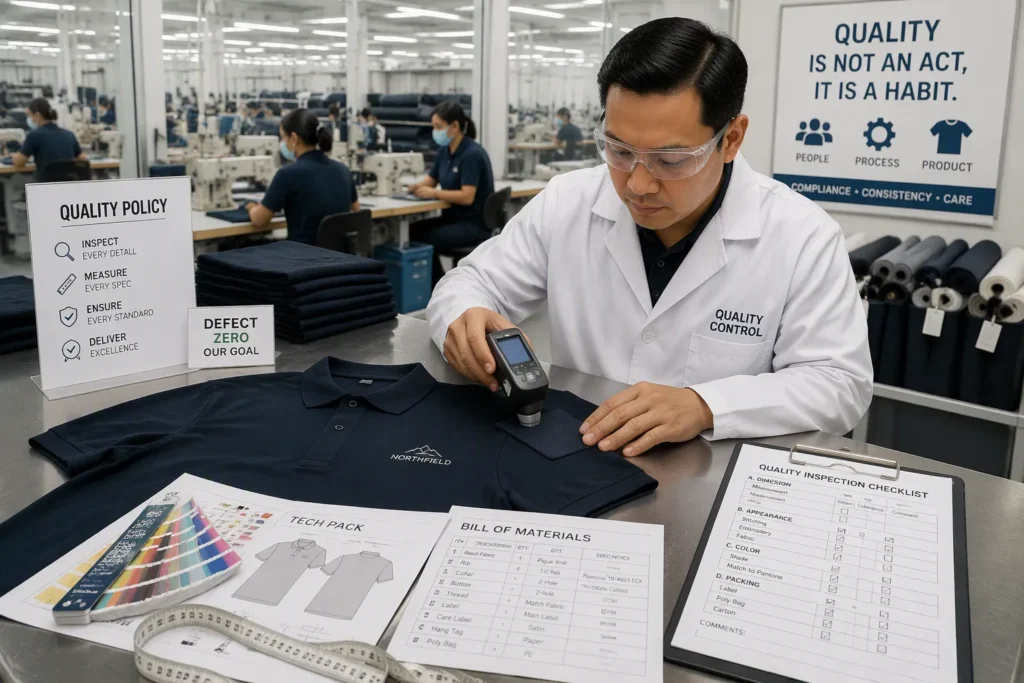
Check what they can customize. A good manufacturer should work from tech packs with flat sketches, a bill of materials with Pantone and thread codes, points-of-measure with tolerances, and construction notes. Ask for logo scaling rules and artwork specs like DST files for embroidery.
Sample rules show how disciplined a supplier is. Close the sampling loop with clear, measurable pass criteria. Write down every change. Before you approve a pre-production sample, run lab tests for colorfastness, shrinkage, pilling, and seam strength. Check color match against master swatches using delta-E tolerances.
Quality and compliance are the backbone of another trusted china workwear program. Confirm ISO 9001 certification scope through the IAF CertSearch directory. Check OEKO-TEX STANDARD 100 coverage. Confirm BSCI or WRAP social compliance status. Ask for a written quality assurance flow that covers pre-production meetings, in-process quality control checkpoints, and final inspection using acceptable quality limits. When you source from china, these checks guard your brand reputation.
MOQs and capacity need your attention too. An oem with proven capacity can handle your order size. Expect minimums in the low hundreds per style for simpler garments. Negotiate MOQs by suggesting phased releases tied to fabric minimums.
Logistics and export readiness matter for smooth delivery. Pick Incoterms based on how much control you want. Define required documents like commercial invoice, packing list, bill of lading, and certificate of origin.
After-sales and replenishment controls protect your investment. Set response times for defect reports. Keep master swatches for at least two years. Require notice if mills or construction methods change.
Brand fidelity often becomes the deciding factor. Focus on color control using Pantone references with delta-E tolerances. Verify embroidery through approved digitization files. Check fit with size sets on target body models.
Weight these criteria by giving about 30 percent to brand fidelity evidence. Give 25 percent to quality assurance and compliance. Save 20 percent for cost and terms. Set aside 15 percent for lead time and capacity. Use 10 percent for after-sales controls.
Supplier Comparison Checklist
Sourcing from reliable manufacturers starts with a structured approach. A comparison checklist helps you judge suppliers fairly. Use it when comparing potential winery staff uniform oem china partners. Write down the following for each candidate: supplier name, product match, MOQ per color or design, unit price at the same quantity, sample terms and lead times, and production lead time.
Also note packaging costs, payment terms, trade terms like EXW or FOB, freight questions, landed cost notes covering duties and taxes, and quality notes about certificates. Comparing workwear suppliers side by side shows clear differences. Spot known risks, missing answers, and your next step.
For examples of similar programs in other industries, read our guides on bakery production uniforms and hotel hospitality uniforms. These case studies show how systematic vetting works across different work settings.
Designing Functionality for Cellar and Tasting Roles
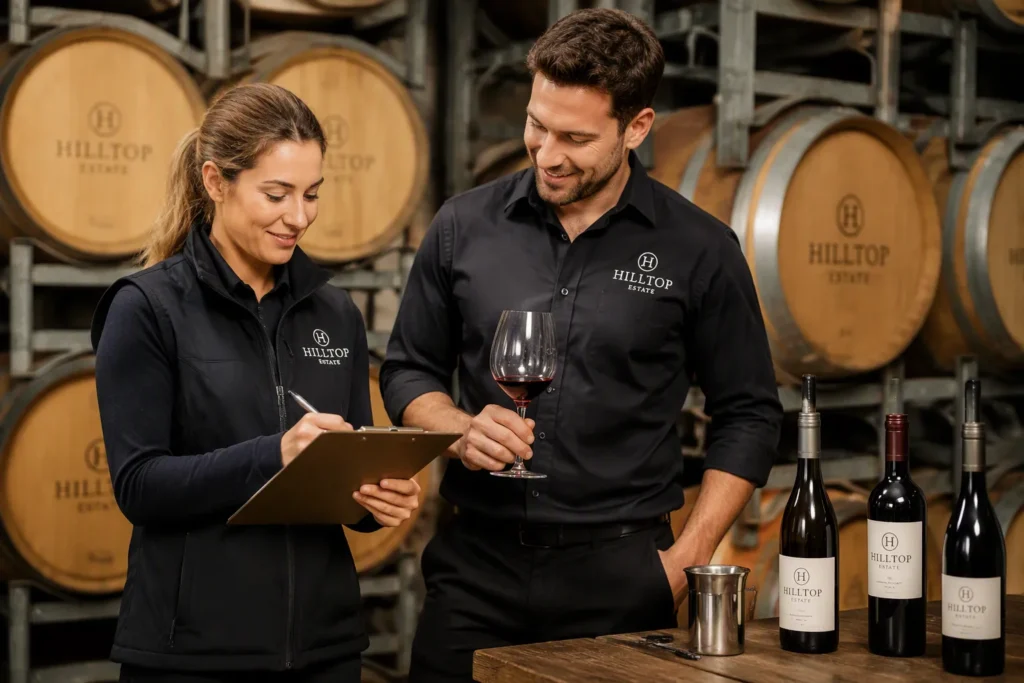
Your winery team works in two very different places. Cellar helpers and bottling-line floor workers deal with tanks, hoses, and wet floors. Tasting-room hosts, visitor-center desk teams, gift-shop workers, and event servers meet guests in a cleaner space. Each role needs workwear that fits the job. You should pick easy-care, stain-resistant fabrics for every position. These fabrics let wine spills and grape juice come out with a simple wash. They also last through many washes without losing color. Comfort is key during long shifts. Look for breathable cotton blends or performance weaves that stretch with the body. Durability keeps replacement costs low over time. Strong seams and colorfast dyes make garments last longer. This focus on durability pays off for your whole adult team.
Fabric Choices and Stain Resistance
Choose fabrics based on the role. Cellar and bottling staff need heavier weaves that fight wear and moisture. Tasting-room and event staff can wear lighter polos and aprons with a soil-release finish. Stain-resistant treatments help liquids bead up instead of soaking in. Ask for colorfastness testing against red wine and grape juice. This step keeps your branded uniforms from looking worn after a few shifts. Easy-care features cut ironing time and keep your team looking sharp. Always ask for fabric swatches before you commit to bulk production. Test them with common winery stains at your own site.
Branding and Customization Options
Customization brings your brand into every guest interaction. You can pick embroidered logos, color matching to your brand palette, and garment choices like aprons, polo shirts, and jackets. Custom embroidered patches with raised thread texture give a professional, premium look. They work well for complex logos and many colors. Faux leather patches offer color matching flexibility, including true black, navy, and custom brand-specific colors. Branded leather patches go on quality uniforms for tasting room staff. They boost the upscale rustic brand experience. These details turn plain custom workwear into a polished brand statement. Your china oem partner can mix these options across the full uniform range. Consistent branding across every role builds guest trust. A china workwear program with strong customization delivers professional workwear that shows your winery’s identity.
Step-by-Step OEM Sourcing Process
A clear plan keeps your winery uniform project moving forward. You go from asking questions to getting your order through set steps. Each step has its own schedule and goals. This setup helps your sourcing work well and cuts down on surprises.
RFQ and Specification Table
Begin your sourcing with a detailed RFQ. Send the same paper to every china supplier you reach out to. This way, you can compare prices in a fair manner. Add a specification table to your RFQ. The table below gives a real example for a winery uniform program.
Item | Fabric | Color | Logo Placement | Quantity | Size Range |
|---|---|---|---|---|---|
Cellar work shirt | Poly-cotton twill, stain-resistant | Charcoal | Left chest, embroidery | [Quantity] | S–3XL |
Tasting room polo | Cotton pique, easy-care | Navy | Left chest, embroidery | [Quantity] | XS–2XL |
Bib apron | Cotton canvas, soil-release finish | Black | Center front, woven patch | [Quantity] | One size |
Softshell jacket | Poly-spandex blend | Brand navy | Right chest, embroidery | [Quantity] | S–3XL |
Your china partner looks over the table and checks if the fabric is available. They also review what is needed for logo digitization. This step helps with customization for every garment style.
From Sample to Production
Next comes sampling. You say yes to a pre-production sample before full runs begin. Sample development and approval typically take 10–15 days. Bulk production for first orders takes 45–60 days. Repeat orders often go faster. Shipping adds 15–25 days by sea to the US West Coast. East Coast routes take more time.
Keep track of each milestone with your oem partner. Ask for progress photos at cutting, sewing, and finishing steps. This habit keeps your china workwear program clear. You find problems early and guard your brand. A steady process gives you workwear that stays the same for your cellar and tasting teams.
Pricing, MOQs, and Cost Factors
You need clear numbers before you place any winery uniform order. This step keeps your budget safe and your project on track. Most factories set a minimum order quantity (MOQ) in the low hundreds per style. You can ask for lower minimums on simpler garments. Try phased releases tied to fabric minimums. This way, you can test the market before you grow.
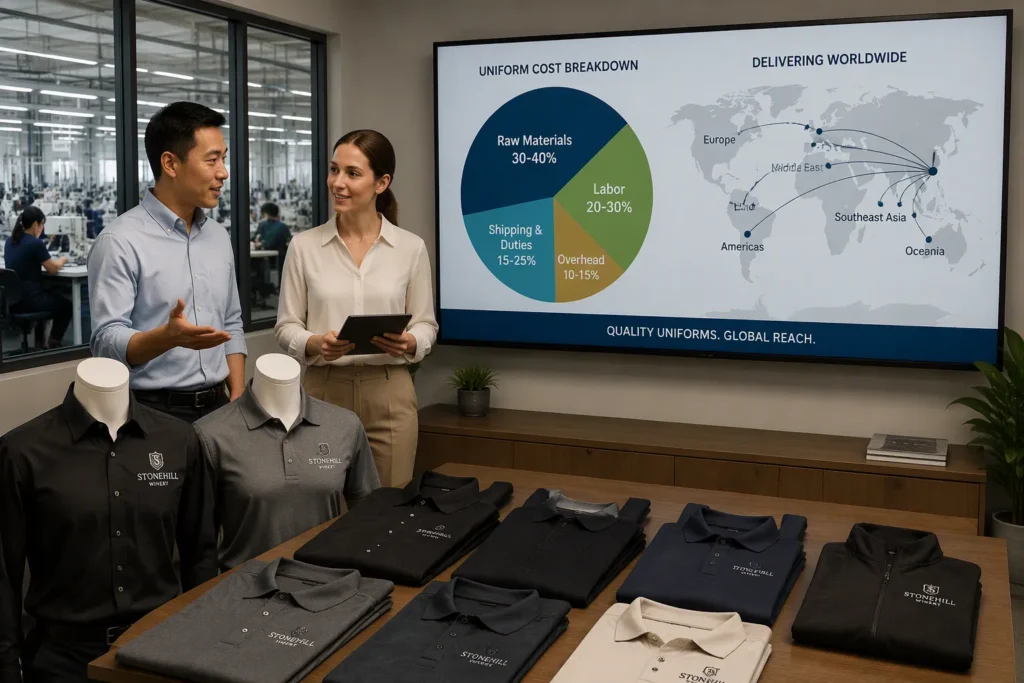
Manufacturers in China often ship to Europe, the Middle East, Oceania, Southeast Asia, and the Americas. Each market has its own import rules and duty rates. Your sourcing plan should think about these differences early.
Typical MOQ and Cost Breakdown
Your unit price comes from four main cost buckets: raw materials (including fabric, thread, buttons, zippers, and logo materials), labor (cutting, sewing, finishing, and quality checks), shipping and duties, and overhead (factory rent, utilities, management). The share of each varies based on garment complexity and order size.
You can lower your unit cost by ordering more pieces. A larger order for one style gives you better pricing than splitting the same total quantity across multiple styles. Using the same fabrics across roles also cuts costs. Use the same navy poly-cotton twill for cellar shirts and tasting room polos. This lowers fabric minimums and makes your china workwear supply chain simpler.
A credible OEM manufacturer will have a production facility that can be visited for verification. You can visit the factory to check production lines and confirm capacity before you place a bulk order.
Shipping and Import Duties
You have two main shipping choices for your oem order. Sea freight costs less per unit but takes 15–25 days to the US West Coast. Air freight moves faster but raises your per-piece cost. Pick the method that fits your launch date and budget.
Import duties depend on your destination country and the garment’s classification code. The US uses Harmonized Tariff Schedule (HTS) codes for apparel. Your customs broker can confirm the exact rate for each item. Always ask your supplier for a commercial invoice, packing list, bill of lading, and certificate of origin. These documents help speed up customs clearance.
You should figure out your landed cost before you approve any purchase order. Landed cost equals the unit price plus freight, insurance, duties, and any broker fees. This number tells you the true cost of each uniform piece. Compare landed costs across suppliers instead of comparing unit prices alone. A lower unit price with high shipping fees often costs more in the end.
Ask your china partner about Incoterms. FOB (Free On Board) gives you control over freight. EXW (Ex Works) puts more logistics work on your team. Choose the term that fits your experience and resources.
Quality Control and Compliance
Quality control keeps your brand and money safe. You need clear inspection steps at every part of production. This method keeps your winery uniforms the same from the first sample to the last shipment.
Pre-Production and In-Process Inspections
Your china partner should follow a plan with many inspection stages. Start by checking fabric before cutting starts. Look for flaws, color differences, and shrinkage risks. Then do in-line checks during sewing. Inspectors check stitch strength, seam alignment, and size tolerance. This step finds problems early and saves rework costs.
Final inspection happens before packing. Use the AQL standard to judge acceptable defect levels. Check colorfastness and shrinkage when needed. Packaging checks confirm labels, poly bags, and carton marks meet your specs. These steps build strength into every garment. Your china workwear program depends on this care.
A good factory treats quality as a system, not a last check. Each stage feeds the next one. You get uniforms that hold up through repeated washing and daily wear.
US Import Compliance
Selling winery uniforms in the US means you must follow federal rules. The FTC enforces textile labeling requirements. Each garment needs a label with fiber content, country of origin, and care instructions. You must mark the country of origin clearly on the product and packaging.
Flammability standards also apply. Clothing textiles must pass specific burn tests. Your supplier should give test reports or certificates for each fabric lot. These papers speed up customs clearance and lower risk.
Work with your china manufacturer to confirm all labels and marks before bulk production. Ask for samples of finished labels and hangtags. This step stops delays at US ports. It also protects you from fines or shipment holds. Whether you order safety uniforms or branded aprons, compliance keeps your program running well. Protective apparel rules differ from general workwear, so confirm your product category with your customs broker.
Buyer Checklist and Supplier Partnerships
Essential Buyer Checklist
You need a clear list before you place any order. Use these steps to protect your money and your brand.
Check factory audits and certificates. Ask for ISO 9001, OEKO-TEX, and social compliance reports.
Get samples for every style. Test fabrics with red wine and grape juice at your own place.
Confirm MOQ for each style and color. Ask about phased releases if you want to start small.
Make payment terms clear, such as a deposit and balance before shipping.
Talk about branding choices. Confirm logo placement, thread colors, and patch materials.
Go over packaging specs. Check poly bags, hangtags, and carton marks.
Agree on inspection stages. Set pre-production, in-line, and final AQL checks.
Write everything down. Keep master swatches and approved samples for at least two years.
This checklist works for any china workwear program. It also helps when you compare several suppliers side by side.
Nurturing OEM Relationships
Strong supplier partnerships save time and money over many orders. Treat your factory as a long-term partner, not a one-time seller. Share your sales forecasts early. This helps your oem partner save fabric and capacity. Pay on time and talk clearly. Small acts like factory visits build trust.
For more sourcing help in other industries, read our guides on facility management uniforms, custom polo shirt manufacturing, aquarium staff uniforms, and landscaping grounds uniforms. These resources show how b2b buyers use the same vetting steps in different workwear markets.
Ready to outfit your team? Send an RFQ to a qualified OEM manufacturer. Their team will review your specs and send pricing within days.
You now have the complete roadmap for your winery staff uniform oem china program. Vetting manufacturers, designing functional garments, managing costs, enforcing quality control, and building strong partnerships are the five essential steps. Following this guide saves significant time and ensures consistent brand presentation across every cellar and tasting role. Our china workwear partner delivers quality uniforms that last through repeated washing. A trusted factory in china produces this workwear with strict quality controls and careful inspection. Ready to outfit your entire team? Download our RFQ template or contact a qualified OEM manufacturer for a tailored quotation.
Request a Winery Uniform OEM Quote
For adult winery staff uniform OEM China sourcing, send your style list, size range, fabric preference, logo artwork, target quantity, and delivery market to Shanghai Top Fortune Industry Co., Ltd. (Top Fortune). Typical MOQ is approximately 1,000 pieces per style.
Email rill@topfortunemail.com or WhatsApp +86 13524210501 for an OEM/ODM quotation. Top Fortune is located at Floor 3 Building 20 Haier Zhigu No.66 Guangfulin East Road Songjiang Shanghai 201600.
Ask for adult-size samples, stain-resistance testing, logo placement confirmation, and a pre-production approval sample before bulk production.
FAQ
What order quantities do factories need for winery programs?
Most factories ask for an MOQ in the low hundreds per style. When you plan your winery staff uniform oem china program, you can ask for lower minimums on simpler garments. You can do this through phased releases that are tied to fabric minimums.
How long does sampling and bulk production take?
Sample development and approval typically take 10–15 days. Bulk production for first orders takes 45–60 days. Shipping by sea adds 15–25 days to the US West Coast. Repeat orders go faster.
What fabrics work best for cellar and tasting-room staff?
Pick easy-care, stain-resistant fabrics for every role. Cellar staff need heavier twill weaves. Tasting-room teams wear lighter polos with soil-release finishes. Both choices resist wine stains and repeated washing.
Can I add my winery logo to the uniforms?
Yes. You can pick embroidered logos, woven patches, or faux leather patches. Your OEM partner matches your brand palette. They put logos on the left chest, center front, or sleeves. Consistent branding builds guest trust.
How do you check quality before shipment?
Factories check fabric before cutting. They check sewing during production. They do a final AQL inspection before packing. Ask for pre-production samples and lab tests for colorfastness and shrinkage.
What US import rules apply to winery workwear?
Garments must follow FTC labeling rules for fiber content, country of origin, and care instructions. Flammability standards apply. Ask your supplier for test reports before production.
How do I start a quotation for my winery team?
Send an RFQ with your style table, fabric preferences, and target quantity. Contact a qualified OEM manufacturer. They review your specs and send pricing within days.
Related: Marina Yacht Club Uniform OEM China.