

Hi-Vis Reflective Workwear OEM China | Safety Uniform Manufacturer
Table of Contents
Display
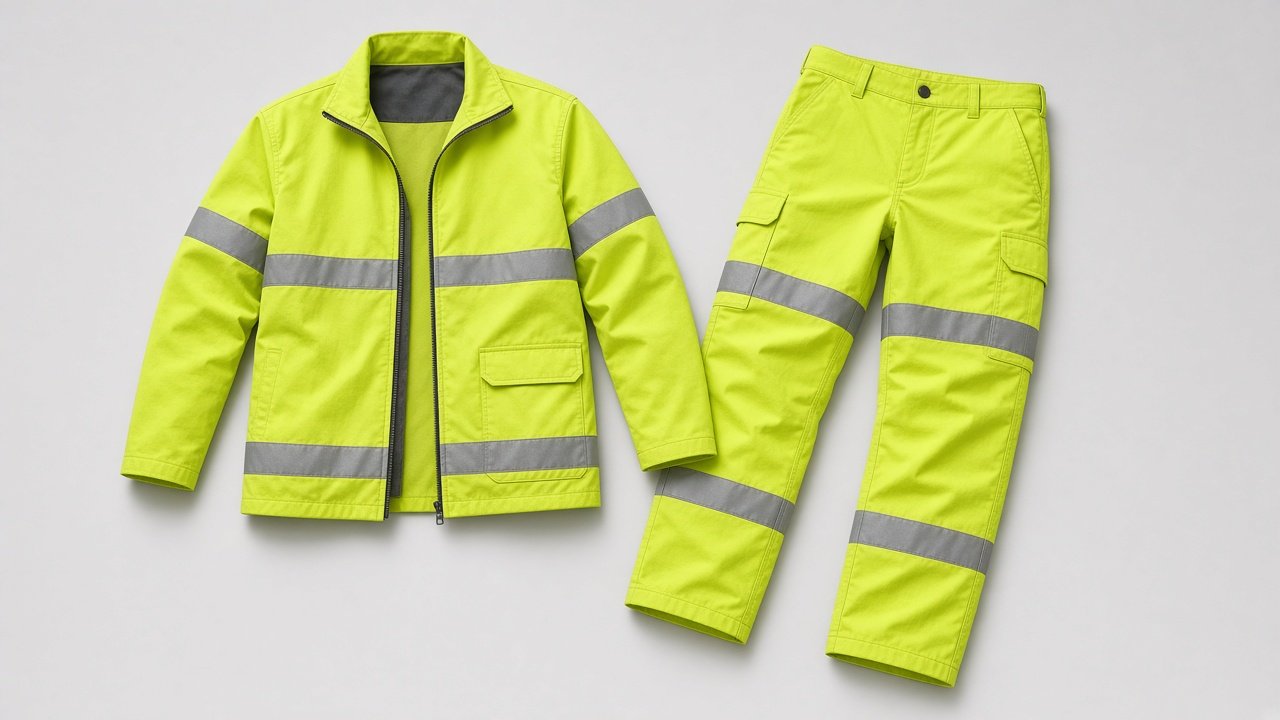
Shanghai Top Fortune Industry Co., Ltd. (workwearmanufacturer.com) is a Shanghai-based OEM/ODM workwear and corporate uniforms manufacturer. Founded around 2002, the company operates a 1,506 m² production facility in Songjiang and supplies custom apparel programs to buyers across Europe, the Middle East, Oceania, Southeast Asia, and the Americas.
If you are a procurement or brand manager specifying high-visibility (hi-vis) reflective workwear—jackets, trousers, vests, or coveralls—this guide explains how to brief an OEM partner, what performance details matter, and how Top Fortune supports custom safety-uniform programs from fabric selection through packed shipment.
Program quantity is confirmed per style before sampling. Contact: rill@topfortunemail.com | WhatsApp +86 13524210501.
Why Hi-Vis Workwear Matters for B2B Buyers
High-visibility garments are not fashion accessories. They are a controlled part of site safety programs for road crews, warehouse yards, construction sites, logistics hubs, ports, airports, and industrial maintenance teams. Buyers usually need:
- Consistent color, tape layout, and branding across multi-country fleets
- Repeatable quality for seasonal reorders and multi-year contracts
- Clear documentation of fabric, reflective tape, and construction so internal HSE or compliance teams can approve samples
- A factory that can scale jackets, trousers, vests, and coveralls under one OEM relationship
Getting the brief wrong—wrong tape grade, fading fluorescent fabric, or mismatched class requirements—creates rejected shipments, worker complaints, and costly rework. A structured OEM process reduces that risk.
What Buyers Should Specify: Standards Awareness
Top Fortune manufactures custom workwear to buyer specifications. Buyers should state the visibility standard and class they need; do not assume a factory “holds” a certification simply because it can sew hi-vis garments.
Common references buyers request (you specify; we build to your approved sample and tech pack):
| Standard / framework | Typical buyer use | What to clarify in RFQ |
|---|---|---|
| EN ISO 20471 | Europe & many export markets | Class 1 / 2 / 3; background material area; tape area and placement |
| ANSI/ISEA 107 | North America | Type (e.g. O, R, P) and Performance Class; tape configuration |
| Local / site rules | Oil & gas, airports, rail, ports | Color rules, logo size limits, night-shift tape requirements |
Practical tip: Attach a reference photo or approved tech pack showing tape width, number of bands, and logo zones. If your end customer is in the EU, ask your compliance team whether EN ISO 20471 Class 2 or Class 3 applies before locking fabric and tape.
We do not invent or claim factory-held certifications in this article. Your purchase order and approved sample define the performance target.
Product Range: Jackets, Trousers, Vests, Coveralls
Hi-vis jackets
Common OEM builds include softshell or woven shells with fluorescent body panels, contrast sleeves or shoulders, and reflective tape on torso and sleeves. Buyers often add detachable hoods, storm flaps, and fleece liners for cold-season programs.
Hi-vis trousers and bibs
Trousers typically pair fluorescent legs with durable knee panels, cargo pockets, and side reflective bands. For heavy industry, reinforced seat and crotch seams are frequent requests.
Hi-vis vests and tabards
Vests are the highest-volume entry product for many fleets: lightweight mesh or woven shells, front zipper or hook-and-loop closure, ID card windows, and radio loops. Ideal for layered systems over corporate polos or base layers.
Coveralls / one-pieces
Full-body hi-vis coveralls serve maintenance, utility, and plant teams who need continuous visibility from shoulder to ankle. Zipper quality, pocket layout, and wash durability are critical in the tech pack.
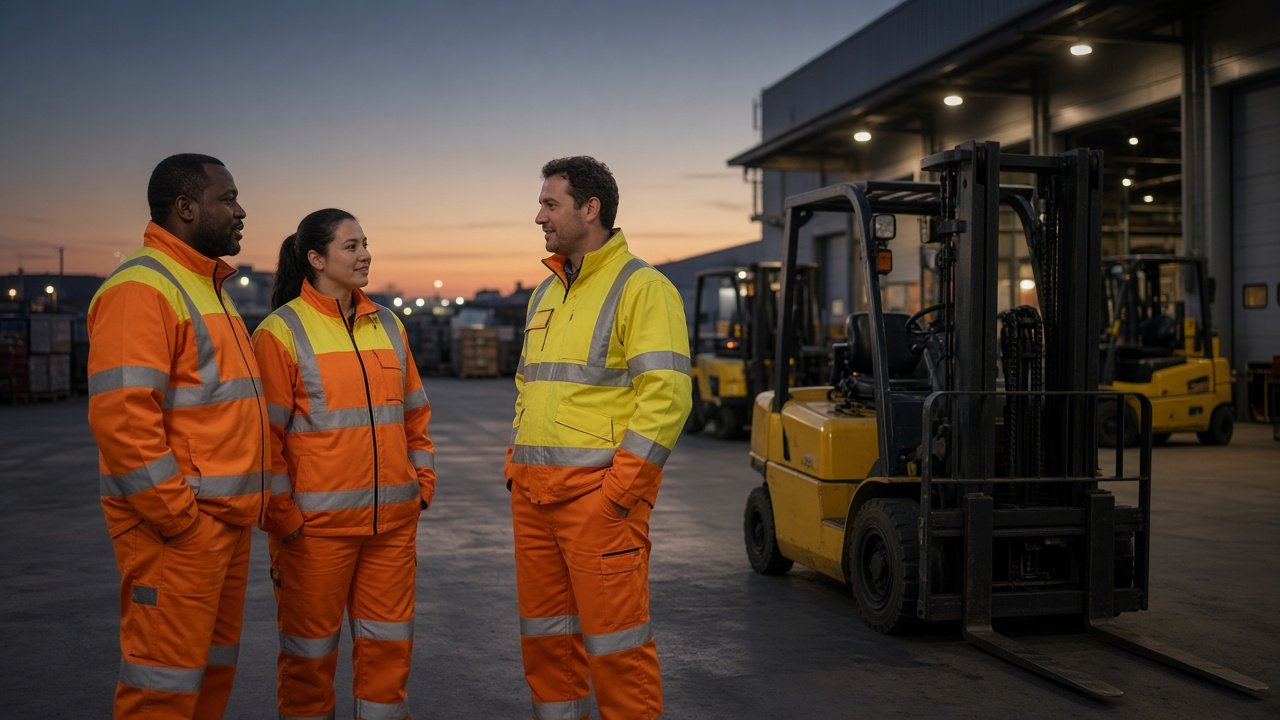
Fabric Colors, Reflective Tape & Durability
Fluorescent background colors
Most B2B programs use fluorescent yellow-green, fluorescent orange-red, or combinations with navy/black contrast panels for branding and dirt camouflage on high-wear zones. Confirm pantone or lab-dip approval before bulk.
Reflective tape
Ask suppliers to confirm:
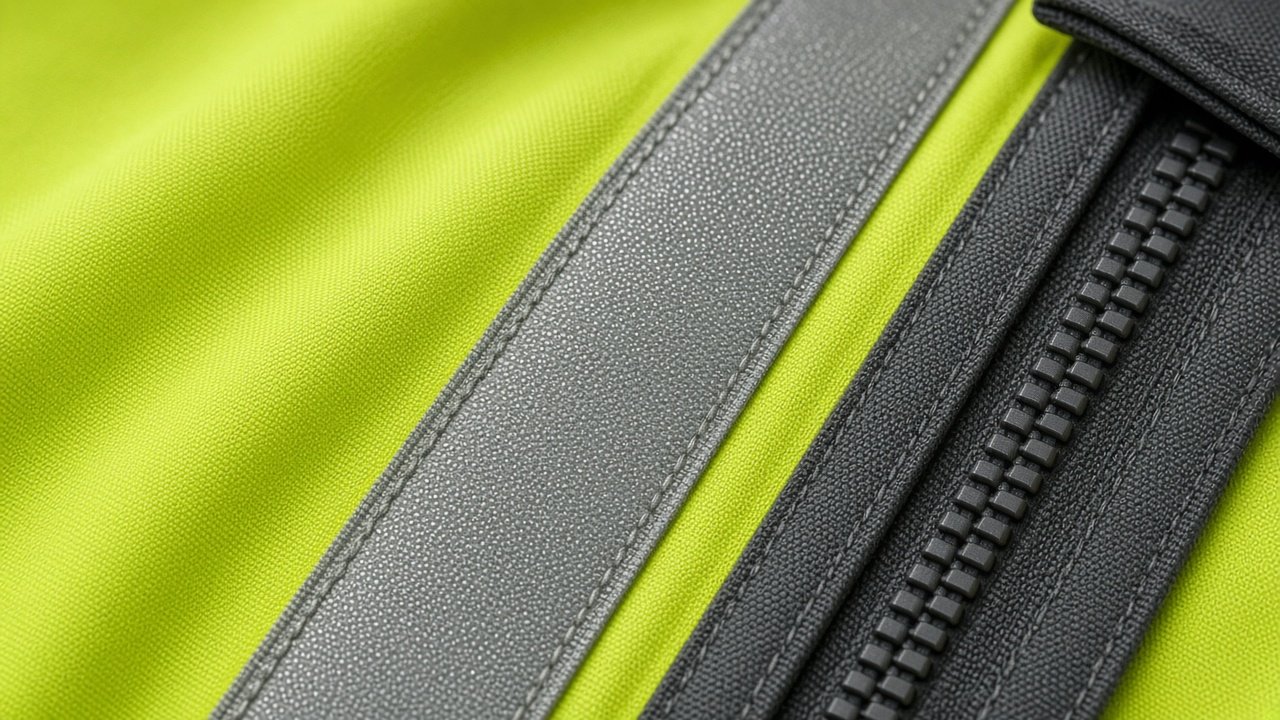
- Tape width (commonly 50 mm for many European programs—confirm against your standard)
- Glass-bead vs. microprismatic options when your brief requires higher retroreflection
- Bonding method (sewn, heat-applied) and wash-cycle expectations
- Placement: torso bands, sleeve bands, leg bands, X-back or H-pattern where required
Durability checklist for buyers
- Expected industrial wash cycles and temperature
- Abrasion zones (knees, elbows, seat)
- Colorfastness of fluorescent fabric after UV exposure and washing
- Tape adhesion after repeated flex and wash
- Zipper, snap, and hook-and-loop brand preferences
OEM Process at Shanghai Top Fortune
A typical hi-vis program with Top Fortune follows this path:
- Inquiry & brief — Quantities, sizes, markets, target standard/class, logo art, delivery window
- Fabric & tape sourcing — Lab dips, tape samples, contrast fabric options
- Proto / fit sample — Confirm pattern, tape layout, branding placement
- Pre-production sample (PPS) — Lock construction before bulk
- Bulk production — Cutting, sewing, QC, packing (carton labels to your format)
- Shipment — Export packing; destination Europe, Middle East, Oceania, SE Asia, Americas as needed
Factory footprint: 1,506 m² in Songjiang, Shanghai. Address: Floor 3, Building 20, Haier Zhigu, No.66 Guangfulin East Road, Songjiang, Shanghai 201600.
Comparison: Vest-Only vs Full Hi-Vis Uniform Kit
| Factor | Vest-only program | Jacket + trousers kit | Full kit + coveralls |
|---|---|---|---|
| Cost per wearer | Lowest | Medium | Highest |
| Visibility coverage | Torso only | Upper + lower body | Full body |
| Seasonal flexibility | High (layer over existing clothes) | Medium–high | Lower (task-specific) |
| Branding surface | Limited | Strong (chest, back, sleeves) | Strong |
| Best for | Temporary sites, visitors, layered fleets | Outdoor crews, logistics yards | Plant maintenance, utilities |
| MOQ planning | Plan program quantity per style | Plan jackets and trousers separately | Longer sampling cycle |
Many buyers start with vests for fast rollout, then expand to jackets and trousers once tape layout and branding are approved.
Procurement Checklist (Copy into Your RFQ)
- [ ] Target market(s) and visibility standard/class (e.g. EN ISO 20471 Class 2)
- [ ] Garment types: jacket / trousers / vest / coverall
- [ ] Fluorescent color + contrast color (with pantone if known)
- [ ] Reflective tape brand preference or performance notes
- [ ] Size run and gender mix
- [ ] Logo method: embroidery, heat transfer, screen print, woven label
- [ ] Wash and care expectations
- [ ] Packing: polybag, hangtag, carton marking, barcode
- [ ] Target ship date and Incoterm preference
- [ ] MOQ confirmation (program quantity per style)
FAQ: Hi-Vis Reflective Workwear OEM
What is a typical MOQ for hi-vis OEM orders?
About 2,000 pieces per style is typical. Mixed colors or complex tape layouts may affect planning.
Can you produce EN ISO 20471 or ANSI-class garments?
We manufacture to your approved sample and tech pack. Buyers should specify the class and layout required by their market or end customer. Compliance responsibility for claiming a standard rests with the brand/importer’s testing and approval process.
Do you export hi-vis programs outside China?
Yes. Top Fortune ships to Europe, the Middle East, Oceania, Southeast Asia, and the Americas.
Can logos sit on fluorescent panels and reflective tape zones?
Yes—within layout rules you define. Many buyers keep logos on contrast (navy/black) panels so branding stays readable and tape area remains clear.
What fabrics are common for hi-vis jackets?
Woven polyester blends, softshell laminates, and fleece-backed shells are frequent choices. Selection depends on climate, breathability, and wash requirements.
How long does sampling take?
Depends on fabric and tape availability. Provide artwork and a clear class/layout brief to shorten revision rounds.
Can one factory handle vests, jackets, and trousers together?
Yes. Bundling styles under one OEM partner simplifies branding consistency and reorder planning.
Who is the commercial contact?
Email rill@topfortunemail.com or WhatsApp +86 13524210501.
Request a Hi-Vis OEM Quote
Ready to brief jackets, trousers, vests, or coveralls?
- Email: rill@topfortunemail.com
- WhatsApp: +86 13524210501
- Website: https://www.workwearmanufacturer.com
- Address: Floor 3, Building 20, Haier Zhigu, No.66 Guangfulin East Road, Songjiang, Shanghai 201600
Include quantities, target markets, preferred colors, and any EN ISO 20471 / ANSI class notes so we can respond with a practical sampling plan.
Related Resources
- Shanghai Top Fortune — Workwear Manufacturer Home
- OEM / ODM Services
- Custom Softshell Jacket OEM Workwear
- Logistics & Courier Delivery Uniforms
- Security Uniform Manufacturer China OEM
- Corporate Polo Shirts OEM China
Related Resources
For adjacent workwear programs, compare construction-site uniforms, facility-management uniforms, and industrial-maintenance uniforms when the same procurement team covers multiple sites.
Top Fortune at a Glance for Hi-Vis Program Buyers
Shanghai Top Fortune Industry Co., Ltd (Top Fortune) is an export-only OEM/ODM workwear and uniform manufacturer founded in 2002, running a 1506 m² factory in Songjiang, Shanghai. For hi-vis programs we make fluorescent jackets, vests, tabards, trousers, bib pants and coveralls with reflective tape for logistics companies, contractors, utilities, airports, facility managers, uniform distributors and wholesalers in North America, the UK and Europe, the Middle East and Oceania. Buyers can send a full tech pack (OEM) or start from our base patterns adapted to their colors, tape layout and logo (ODM). Program quantity is set per style for OEM programs.
Hi-Vis Garments by Sector: Which Pieces Each Team Usually Needs
- Logistics, courier and warehouse yards: vests or tabards over a branded polo, plus a hi-vis softshell or parka for loading bays; see our logistics and courier uniform OEM and warehouse picker uniform OEM programs.
- Construction and road works: two-tone jackets, trousers with knee-pad pockets and reflective bands, and long-sleeve tees for summer; compare with our construction site uniform OEM range.
- Airport ramp and ground handling: hi-vis jackets and trousers sized for layering and frequent washing, coordinated with airport ground crew uniforms.
- Utilities and field service: vests with tool and ID pockets plus outer layers; see our utility work vest OEM page.
- Parking, traffic and security teams: lighter vests and jackets that sit over a standard uniform, as in our parking garage uniform OEM and security guard uniform OEM programs.
- Oil, gas and heat-exposed sites: where flame resistance is required, hi-vis must be planned together with FR fabric; see flame-retardant workwear OEM.
Decisions to Make Before Hi-Vis Sampling
- Target standard and class: state the standard your market or client requires (for example EN ISO 20471 or ANSI/ISEA 107) and the class you need. The buyer decides the requirement; we match fabric, tape and layout to it and confirm test documentation during sampling.
- Background color: fluorescent yellow, orange or red, and whether a darker contrast color is used in high-soil zones such as cuffs and lower body.
- Tape type and layout: sewn-on or heat-transfer tape, segmented or continuous, and band positions on torso, sleeves and legs.
- Climate and layering: mesh vests for heat, softshell or padded jackets for cold, and whether a removable liner is needed.
- Branding zones: where logos, company names and back text can sit without covering required fluorescent or reflective area.
- Wash method: home wash or industrial laundry, and the expected number of wash cycles.
Hi-Vis RFQ Specification Sheet
| Item | What to tell us | Example |
|---|---|---|
| Garment list | Styles and quantity per style | Vest 3000 pcs, jacket 1200 pcs |
| Standard and class | Required standard and class, or “none required” | EN ISO 20471 Class 2 |
| Fabric | Composition, weight, coating or breathability needs | Polyester knit vest, oxford PU jacket |
| Reflective tape | Width, sewn or heat-applied, layout drawing | 50 mm sewn, two torso bands |
| Colors | Fluorescent base plus contrast color | Yellow with navy lower panel |
| Branding | Logo method, size and position | Back print, chest embroidery |
| Sizes | Adult size range and ratio | S to 4XL |
| Packing and labels | Care labels, polybag, carton marks | Individual polybag, 20 pcs per carton |
| Destination | Country, port and Incoterm | FOB Shanghai to Rotterdam |
From Brief to Delivery: Hi-Vis Order Steps
- RFQ review and fabric and tape proposal.
- Prototype sample with tape layout and logo placement for fit and visibility review.
- Pre-production sample after comments, with any test documentation the buyer requires confirmed at this stage.
- Bulk fabric and tape check, cutting and sewing.
- Inline and final inspection of seams, tape adhesion or stitching, color and measurements.
- Packing to your label and carton instructions and shipment to your nominated port.
Common Hi-Vis Sourcing Mistakes and How to Avoid Them
- Covering reflective area with logos: agree on branding zones before sampling.
- Choosing tape that does not suit the wash method: tell us early if garments go through industrial laundry.
- Ordering vests only when sites need full kits: check whether jackets and trousers are also required on your sites.
- Skipping a size set: approve fit on a size set across the range, not just one sample size.
- Leaving the standard unstated: if a client contract names a standard, put it in the RFQ from day one.
More Buyer Questions About Hi-Vis OEM
Can you mix hi-vis and non-hi-vis garments in one order?
Yes. Many buyers order hi-vis outer layers together with polos, shirts or trousers in the same program so colors and logos stay consistent.
Can we split colors or sizes inside one style?
Usually yes, within the agreed quantity for that style, depending on fabric minimums for each color.
Do you sell hi-vis to individual workers or domestic retail?
No. Top Fortune works with overseas companies, brands, distributors and wholesalers on export OEM/ODM orders only.
Send Your Hi-Vis Brief to Top Fortune
Email your garment list, quantities, required standard, tape layout and logo files to rill@topfortunemail.com or message us on WhatsApp +86 13524210501. We reply with a fabric and tape proposal and a sampling plan.