

What Makes a Puffer Jacket Truly Packable
Table of Contents
Display

When I look for a truly packable puffer jacket, I focus on how easily it compresses, how little it weighs, and the materials used. Compressibility means I can squeeze it into a small space, making it perfect for travel or quick changes in the weather. Light weight adds comfort and convenience. I find that a packable puffer jacket saves space in my bag and keeps me ready for anything.
Key Takeaways
Look for high compressibility in puffer jackets to easily pack them into small spaces for travel.
Choose jackets with a fill power of 800 or higher for the best warmth-to-weight ratio.
Check the packed size of the jacket; smaller sizes are better for travel and storage.
Opt for lightweight options, ideally under 10 ounces, for comfort during wear and transport.
Consider the insulation type; down offers better warmth and compressibility, while synthetic is better in wet conditions.
Select jackets made from thin, durable fabrics to balance weight and strength.
Ensure the jacket has integrated storage options like a stuff sack or pocket packing for convenience.
Evaluate the jacket’s stitching patterns and hardware quality to ensure durability and long-lasting use.
Packable Puffer Jacket Features

Compressibility
When I choose a packable puffer jacket, compressibility stands out as the most important feature. I want a jacket that I can squeeze down into a tiny bundle, making it easy to stash in my backpack or suitcase. Compressibility depends on the type of insulation and the quality of the materials. I have noticed that jackets with high compressibility are much easier to manage during travel or outdoor adventures.
Fill Power
Fill power measures how much loft the down provides. I always look for a fill power of 800 or higher when I want the best warmth-to-weight ratio. Jackets like the Forclaz with 800-fill-power recycled down and the Rab Mythic Ultra Down Jacket with 900 fill power offer excellent insulation without adding bulk. Higher fill power means I get more warmth for less weight, which makes the jacket more compressible and easier to pack. I have found that jackets with high fill power, such as the Black Diamond Approach Down Hoody, keep me warm even when the temperature drops, yet they never feel heavy.
High fill power down creates more loft, trapping more air and providing better insulation.
Jackets with 800+ fill power are warmer for their weight and pack down smaller.
I can easily stuff these jackets into their own pockets or a stuff sack, saving space in my bag.
Packed Size
Packed size tells me how small a jacket becomes when compressed. I always check this before buying a packable down jacket. Some models pack down to the size of a grapefruit, while others take up more space. Here is a quick comparison of popular packable jackets:
Down Jacket | Weight | Packed Size |
|---|---|---|
Arc’teryx Cerium Hoody | 10.2 oz | Medium |
Big Agnes Luna | 13 oz | Large |
Crazy Levity | 8 oz | Extra small |
Rab Mythic Alpine Light Jacket | 8 oz | Extra small |
Patagonia Down Sweater Hoody | 12.1 oz | Medium |
I prefer jackets that pack down extra small, especially for travel jackets. This makes it easy to fit them into any bag or even a purse.
Weight
Weight plays a huge role in how much I enjoy wearing and carrying my jacket. I always look for lightweight options because they feel more comfortable and do not weigh me down during travel or daily use. Most ultralight down jackets weigh 10 ounces or less. I have used jackets with only a couple ounces of down for shoulder season hikes, and they work perfectly. If a jacket has too much down, it can feel bulky and unnecessary for most climates.
“I bought this to take to Switzerland with me. It was perfect. It packs away into a pouch to easily place in a day pack. Kept me warm on top of the Alps and I’m sure I’ll be using it a lot this fall/winter.”
“Love how lightweight it is, but still cozy! I am able to zip it into its pouch and carry it in my purse or backpack to pull out whenever needed.”
These reviews match my experience. A lightweight, packable jacket makes travel and daily life much easier.
Warmth
Warmth is the main reason I wear a puffer jacket. I want to stay comfortable in cold weather, but I do not want to carry extra bulk. The type of insulation and the amount of down both affect warmth. Down insulation has a higher warmth-to-weight ratio than synthetic insulation, so I get more warmth for less weight. Fill power and fill weight both matter. Higher fill power means better insulation, while fill weight tells me how much down is in the jacket.
Some jackets, like the Patagonia Micro Puff Hoody, use advanced synthetic insulation that still provides significant warmth while staying lightweight. The Patagonia DAS Light Hoody also keeps me warm and resists bad weather. I always check for features like hoods and longer hems, which help trap heat and improve warmth retention.
Tip: I always balance warmth, weight, and compressibility when choosing a packable jacket. The best packable jackets keep me warm, feel light, and fit easily into my bag.
Materials in Lightweight Down Jackets

Down vs. Synthetic
Pros and Cons
When I shop for a lightweight down jacket, I always weigh the differences between down and synthetic insulation. I notice that down fill offers an unmatched warmth-to-weight ratio. This means I get more warmth for less weight, which is perfect for travel or outdoor activities. Down feels light and packs down small, so I can easily fit my jacket into a backpack or even a small pouch. Synthetic insulation tries to mimic down, but it usually cannot match the same level of compressibility or warmth in a compact form.
Down fill gives me excellent insulation and compressibility.
Synthetic fill works better in wet conditions and dries faster.
Down jackets feel lighter and pack smaller than synthetic ones.
Synthetic jackets often cost less and require less care.
I find that both types have their place, but for the best packability and warmth, I usually choose down.
Moisture Resistance
I have learned that moisture can affect the performance of my jacket. Down loses much of its insulating power when it gets wet. This can be a problem if I travel in rainy or damp climates. Synthetic insulation, on the other hand, keeps me warm even when wet and dries quickly. Some modern down jackets use treated down or water-resistant shells to help with this issue, but synthetic still leads in wet weather. I always consider where I plan to wear my jacket before making a choice.
Thin Fabrics
The outer fabric of my jacket plays a big role in how packable it is. Thin, durable fabrics, such as ripstop nylon, keep the jacket lightweight and easy to compress. These materials reduce bulk and add strength, which matters when I want to save space and weight. I look for jackets with fabrics that balance lightness and durability, so I do not have to worry about tears during outdoor adventures.
Here is a table showing common fabric types and their denier ratings:
Fabric Type | Denier Rating | Notes on Durability and Use |
|---|---|---|
Montbell Plasma 1000 | 7D | Ultra-thin, delicate fabric, lightweight |
Common among ultralight designs | 10D | Lightweight, less durable |
Standard down sweaters | 20D | Balances weight with durability |
REI Co-op 650 Down Jacket | 20D | Good balance of weight and durability |
More robust options | 30D or higher | More durable, suitable for tougher conditions |
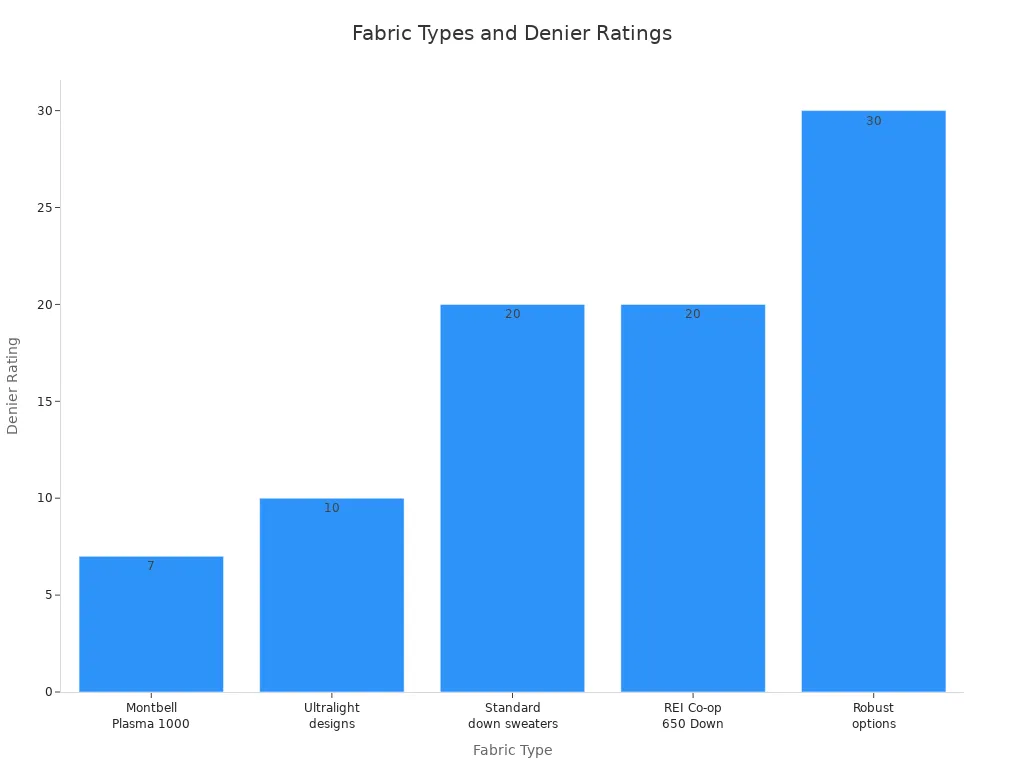
I always check the denier rating before buying a jacket. Lower denier means lighter and more compressible, but higher denier gives me more durability. I try to find a balance that fits my needs, especially if I plan to use the jacket for hiking or travel.
Tip: I recommend looking for a lightweight down jacket with high-quality down fill and thin, strong fabrics. This combination gives me the best packability and warmth for any adventure.
Design Elements in Packable Jackets
Integrated Storage
Stuff Sack
When I look for a packable jacket, I always check if it comes with a stuff sack. A stuff sack is a small bag that lets me compress my jacket into a tight bundle. I find this feature very helpful when I travel or hike. I can squeeze the jacket down, reducing its size and making it easy to carry. The stuff sack protects the jacket from dirt and damage inside my backpack. I also like that it keeps my gear organized. Some brands include a lightweight stuff sack with their down jackets, which adds almost no extra weight.
Pocket Packing
Some packable jackets use their own pocket as a storage pouch. I love this design because I never lose the stuff sack. I just turn the pocket inside out, stuff the jacket in, and zip it up. This method saves time and space. It also means I can pack my jacket quickly when the weather changes. Pocket packing works best with compressible down insulation, which squishes down easily. I always test this feature in the store to see how small the jacket gets.
Tip: I recommend checking if the jacket packs into its own pocket or comes with a stuff sack. Both options make storage simple and keep your hands free.
Stitching Patterns
Stitching patterns affect both the compressibility and the warmth of a jacket. I notice that most down jackets use horizontal or box baffles. These stitched sections keep the down in place, so it does not shift or clump. Smaller baffles help the jacket compress more easily and evenly. They also prevent cold spots by spreading the down fill across the jacket. I prefer jackets with narrow baffles for better packability and even warmth. Some jackets use unique patterns, like chevrons or grids, to improve movement and reduce weight.
Jacket Length
Jacket length changes how easy it is to pack and how much warmth I get. Shorter jackets, like hip-length models, pack down smaller and weigh less. I find these best for travel or layering. Longer jackets cover more of my body, adding warmth but also increasing weight and packed size. I choose the length based on my needs. For city use, I like a longer jacket for extra coverage. For hiking, I pick a shorter, lighter jacket that fits easily in my bag.
Jacket Length | Packability | Warmth | Weight |
|---|---|---|---|
Short (Hip) | High | Moderate | Low |
Mid (Thigh) | Moderate | High | Moderate |
Long (Knee) | Low | Very High | High |
Note: I always balance jacket length with my need for warmth and easy packing. The right choice depends on my activity and climate.
Durability of Packable Jackets
Fabric Strength
When I choose a jacket for travel or outdoor use, I always check the strength of the fabric. I want my jacket to last through rough conditions, so I look for materials that resist tears and hold up over time. Thin fabrics help with weight and packability, but they must also be strong enough to handle daily wear. I have learned that not all fabrics offer the same level of protection.
Here is a table that shows how different fabrics compare in terms of tensile and tear strength:
Fabric Type | Tensile Strength (N) | Tear Strength (N) |
|---|---|---|
Ripstop 70D | 80–120 | 10–15 |
Ripstop 210D | 150–200 | 20–30 |
Cordura 500D | 200–300 | 40–60 |
I notice that higher denier fabrics like Cordura 500D provide much greater tear resistance than lighter options. However, these heavier fabrics add weight and reduce how small I can pack the jacket. For most packable down jackets, I find that ripstop nylon in the 20D to 70D range gives a good balance between strength and lightness. I always check the fabric label before I buy, especially if I plan to use the jacket as one of my main travel jackets.
Tip: I recommend looking for jackets with ripstop fabrics. The crosshatch pattern helps stop small tears from spreading, which keeps my jacket in good shape longer.
Hardware Quality
I have learned that the hardware on a jacket matters just as much as the fabric. Zippers, snaps, and seams all play a big role in how long my jacket lasts. I always test the zipper before I buy. A high-quality zipper moves smoothly and does not snag. If the zipper feels flimsy, I know it might break after a few trips.
Strong seams keep the insulation in place and prevent cold air from getting in. Well-stitched seams also stop water from leaking through, which helps maintain warmth in wet weather. I have seen jackets with poor stitching fall apart after only a season. When I invest in a quality jacket, I expect it to handle rough use and frequent packing.
Note: I always check the seams and zippers before I buy a jacket. Good hardware means my jacket will last longer and keep me comfortable on every adventure.
I find that a durable packable jacket gives me peace of mind. I do not worry about tears or broken zippers when I travel. I can focus on staying warm and enjoying my trip, knowing my jacket will hold up.
Why Packable Jackets Matter
Space-Saving
When I travel, I always look for ways to save space in my bag. A packable puffer jacket gives me that advantage. I can compress it into a small pouch or pocket, so it fits easily with my other travel essentials. This feature matters most when I need to pack light or carry multiple items. I notice that a packable down jacket offers exceptional warmth without adding bulk. I can slip it into my backpack, suitcase, or even a purse. For commuters, this means avoiding bulky outerwear and keeping bags organized. I find that the compressibility of these jackets makes them ideal for anyone who values efficient packing.
Convenience
I love the convenience that packable jackets bring to my daily routine and outdoor adventures. Their lightweight design means I barely notice the extra weight in my bag. I can pull out my jacket quickly when the weather changes. This quick access helps me stay comfortable during sudden rain or wind. Here are some ways these jackets make life easier:
I carry my jacket easily during hikes, commutes, or city walks.
The jacket folds into a small pouch, saving space in my bag.
I stay protected from wind and rain, thanks to the quality materials.
The jacket provides reliable insulation, trapping warm air and keeping me cozy.
I can use my packable jacket as a layer under heavier coats when temperatures drop.
I find that the warmth-to-weight ratio of down insulation stands out. I get more warmth for less weight, which makes these jackets perfect for unpredictable weather.
Versatility
Versatility is one reason I always choose a packable jacket for travel and daily use. I can wear it in the city, on a trail, or during a weekend trip. The jacket transitions easily between outdoor and urban settings. Features like breathability, waterproofing, and wind resistance help me stay comfortable in different conditions. I appreciate that the jacket remains compressible, so I can pack it away when I do not need it. The insulation keeps me warm, even if the weather turns cold or damp. I rely on my packable down jacket for everything from morning commutes to mountain hikes. The quality construction and thoughtful design make it a staple in my collection of travel jackets.
Tip: I always recommend choosing a jacket that balances compressibility, warmth, and weight. This combination ensures you stay prepared for any adventure.
Evaluating Packability
Compression Test
When I want to know if a jacket is truly packable, I always start with a compression test. I grab the jacket and try to squeeze it into the smallest shape possible. I use my hands to press out the air and see how small it gets. If the jacket fits into its own pocket or a stuff sack, I know it will work well for travel. I often compare different jackets in the store by packing each one and checking which takes up less space. I look for jackets with high-quality down because they compress better than synthetic fills. I also check if the insulation springs back after unpacking. Good down jackets regain their loft quickly, which means they will keep me warm after being packed away.
Tip: I always test the jacket myself before buying. If I can pack it down to the size of a water bottle, I know it will fit easily in my travel bag.
Checking Weight
Weight matters a lot when I choose travel jackets. I pick up each jacket and feel how heavy it is. I check the product tag for the exact weight, usually listed in ounces or grams. I prefer jackets that weigh less than one pound because they feel light in my backpack. I notice that jackets with high fill power down offer more warmth for less weight. I avoid jackets with heavy zippers or thick fabrics because they add unnecessary bulk. I use a small kitchen scale at home to double-check the weight if I order online.
Here is a simple table I use to compare jacket weights:
Jacket Model | Weight (oz) | Fill Type |
|---|---|---|
Ultralight Down Hoody | 8 | Down |
Synthetic Travel Pro | 12 | Synthetic |
City Packable Jacket | 10 | Down |
I always choose the lightest jacket that still keeps me warm.
Product Descriptions
I read product descriptions carefully before I buy a packable jacket. I look for details about the fill type, fill power, and packed size. I check if the jacket uses down or synthetic insulation. I also look for notes about compressibility and storage features, like stuff sacks or pocket packing. I read customer reviews to see if other travelers found the jacket easy to pack. I pay attention to comments about warmth, durability, and how well the jacket fits in a bag. I trust reviews that mention real travel experiences.
Note: I always compare product specs and reviews before making a decision. This helps me find the best packable travel jackets for my needs.
Choosing a Packable Down Jacket
Matching Needs
When I shop for a packable down jacket, I always start by thinking about how I plan to use it. My needs change depending on whether I want a jacket for travel, outdoor adventures, or daily wear. I find that matching features to my lifestyle helps me get the most value from my purchase.
Here is a table I use to compare important features for different situations:
Feature | Description |
|---|---|
Packability | Folds into a compact size and resists wrinkling, often with a built-in stuff sack or pocket. |
Fit | Adjustable cuffs, hems, and hoods for a custom fit; looser fits for layering, closer fits for warmth. |
Durability | Uses ripstop fabrics and strong zippers for long-lasting wear. |
Water Resistance | DWR coating or waterproof membranes protect against rain and snow. |
Breathability | Ventilated or moisture-wicking fabrics prevent overheating. |
Warmth | Windproof fabrics, hoods, and high collars offer better protection from cold. |
When I travel, I look for a packable puffer jacket that folds down small and fits easily in my bag. I want it to resist wrinkles and stay neat after unpacking. For outdoor activities, I choose a jacket with strong ripstop fabric and a durable zipper. I need it to handle rough use and changing weather. For daily wear, I prefer a jacket with a versatile style that looks good in the city and on the trail.
I always check for these features:
Packability: I want a jacket that folds down into a compact size for easy storage.
Weather Resistance: I look for protection against wind, rain, and sometimes snow.
Lightweight Construction: I choose jackets that are easy to carry and do not add extra weight.
Versatile Style: I like jackets that work for both urban and outdoor settings.
I have learned that the best travel jackets combine these features. I can use them for winter travel gear, hiking, or just running errands around town.
Balancing Features
I always try to balance packability, warmth, and durability when I pick a jacket. I know that each factor affects how well the jacket works for me. If I want the lightest jacket, I look for high-quality goose down with a high fill power. This gives me the best warmth-to-weight ratio. I get more insulation without extra bulk.
Here are the main factors I consider:
Fill Power: I check the loft and insulating ability of the down. Higher numbers mean better warmth and compressibility.
Fill Weight: I look at how much down is inside the jacket. More fill weight means more warmth, but it can add bulk.
Weight: I want a lightweight down jacket for easy carrying, especially when I travel or hike.
Packability: I test how small the jacket can compress for storage. I want it to fit in my backpack or suitcase.
Fabric Durability: I choose jackets with strong, ripstop fabrics. This ensures my jacket withstands wear and tear.
I always think about my main use. For travel jackets, I focus on weight and packability. For outdoor use, I want more durability and weather resistance. For city life, I look for style and comfort.
I have tried both down and synthetic packable jacket options. Down gives me better warmth and compressibility, but synthetic works better in wet conditions. I pick the one that fits my climate and activities.
Tip: I recommend making a list of your top needs before you buy. This helps you find a packable down jacket that matches your lifestyle and keeps you comfortable in any setting.
I believe that balancing these features helps me get the most out of my packable jackets. I stay warm, comfortable, and ready for any adventure.
When I choose a truly packable puffer jacket, I focus on features that matter most for warmth, comfort, and convenience. Here is a quick overview:
Feature | Description |
|---|---|
Insulation Weight | Impacts warmth-to-weight ratio |
Packability | Key for travel and storage |
Durability | Ensures long-term use |
Breathability | Keeps me comfortable in changing weather |
Weather Resistance | Protects against rain and wind |
Packability fits many lifestyles. I find lightweight jackets perfect for hiking, while city life often calls for more durability. To pick the right jacket, I always:
Look for waterproof, breathable fabrics
Check for useful features like hoods and pockets
Choose sustainable materials when possible
Plan to layer for extra comfort
I feel confident when I understand my needs and the options available. This helps me make smart choices and enjoy every adventure.
FAQ
What does “fill power” mean in a puffer jacket?
Fill power measures how much space one ounce of down fills. Higher fill power means better insulation and more warmth for less weight. I always check this number when I want a jacket that packs small and keeps me warm.
Can I wash my packable down jacket at home?
Yes, I wash my down jacket at home using a front-loading washer on a gentle cycle. I use a down-specific detergent. I dry it on low heat with clean tennis balls to restore loft. I always check the care label first.
How do I know if a jacket is truly packable?
I test the jacket by compressing it into its pocket or stuff sack. If it fits easily and regains its shape after unpacking, I know it is truly packable. I also check the product specs for packed size and weight.
Is synthetic insulation as warm as down?
Synthetic insulation keeps me warm, especially when wet. Down usually offers a better warmth-to-weight ratio. I choose synthetic for wet climates and down for dry, cold trips. Both have their strengths, so I pick based on my needs.
Will a packable jacket keep me warm in winter?
A packable jacket keeps me warm in mild to moderate winter conditions. For extreme cold, I layer it with other clothing. I always check the fill power and fill weight to make sure it matches the temperatures I expect.
How do I store my packable jacket when not in use?
I store my jacket loosely in a breathable bag or hang it in my closet. I avoid keeping it compressed for long periods. This helps the insulation stay fluffy and last longer.
What features should I look for in a travel puffer jacket?
I look for lightweight construction, high fill power, durable fabric, and water resistance. I also check for a stuff sack or pocket packing. These features help me stay comfortable and organized during my travels.
Can I use a packable puffer jacket for layering?
Yes, I often use my packable jacket as a mid-layer under a shell or heavier coat. Its slim profile and light weight make it perfect for layering in changing weather.