

What is a down jacket
Table of Contents
Display
A down jacket uses the soft underfeathers from ducks or geese to keep me warm in cold weather. I find this type of jacket unique because it traps heat efficiently while staying lightweight. Many people, including myself, choose a down jacket for several reasons:
It delivers excellent warmth, perfect for winter.
I like how easy it is to pack and carry.
The jacket feels versatile, working well for both outdoor adventures and daily use.
New materials and sustainable practices make it even more appealing.
Key Takeaways
Down jackets provide excellent warmth by trapping body heat with soft underfeathers from ducks or geese.
Look for jackets with high fill power for better insulation and warmth without added weight.
Choose between duck and goose down based on your budget and warmth needs; goose down is warmer but more expensive.
Check for water-resistant shells to keep down dry, as wet down loses its insulating properties.
Consider the fit of the jacket; slim fits trap heat better, while relaxed fits allow for layering.
Packability is a key feature; down jackets compress easily for travel and outdoor activities.
Layer your down jacket with breathable materials for optimal warmth and moisture management.
Regular care, like fluffing and proper washing, helps maintain the jacket’s loft and longevity.
Down Jacket Basics

What Is Down
When I look at a down jacket, I see more than just a coat. The real magic comes from the down inside. Down refers to the soft, fluffy clusters found beneath the outer feathers of ducks and geese. These clusters do not have stiff quills. Instead, they feel light and airy. People often call these jackets “puffer jackets” or “quilted jackets” because of their signature stitched patterns and puffed look.
Note: Down is measured by its fill power. Fill power tells me how fluffy the down is and how well it can trap air for warmth. Higher fill power means better insulation and more warmth without extra weight.
I know that companies collect down from ducks and geese, usually during their molting season. This process gathers the undercoating, which provides the best down insulation for jackets. I always check the label to see if the down is responsibly sourced.
Down clusters:
Come from the undercoating of ducks and geese.
Are measured by fill power, which shows their loft and insulating ability.
Give the jacket its lightweight and warm qualities.
How It Works
I find the science behind down insulation fascinating. Each down cluster contains fine filaments that branch out in all directions. These filaments interlock and create tiny air pockets. When I wear a down jacket, these air pockets trap my body heat and block cold air from getting in.
The structure of down clusters:
Fine filaments interlock to form air pockets.
Air pockets trap warm air, creating a barrier against the cold.
This design gives down insulation its excellent warmth-to-weight ratio.
I notice that down insulation works best in cold, dry weather. The unique structure of down clusters makes the jacket feel light but still very warm. I always choose a down jacket when I want reliable insulation without feeling weighed down.
Materials
Down Fill
When I choose a down jacket, I always pay close attention to the type of down fill inside. The fill determines how warm and light the jacket feels.
Duck vs. Goose
I often see jackets filled with either duck down or goose down. Both types come from the soft underfeathers of these birds, but they have some differences:
Goose down clusters are usually larger than duck down clusters. This means goose down can trap more air, making the jacket warmer for its weight.
Duck down works well for everyday jackets and often costs less. I find it in many affordable options.
Goose down usually appears in high-end jackets. I notice it provides better insulation, especially in extreme cold.
Tip: I always check the label for the type of down. Some brands mix both duck and goose down to balance warmth and price.
Fill Power
Fill power tells me how fluffy and efficient the down is. Higher fill power means the down traps more air, so I get more warmth with less weight. I use the following table to compare fill power ratings:
Fill Power Rating | Insulating Efficiency | Weight | Compactness |
|---|---|---|---|
Higher | More efficient, less down needed for warmth | Lighter | More packable |
Lower | Provides warmth but bulkier and heavier | Heavier | Less compact |
When I want a jacket for backpacking or travel, I look for higher fill power. It keeps me warm without adding bulk to my bag.
Note: Fill power does not measure the amount of down, only its quality. I always consider both fill power and fill weight for the best warmth.
Shell Fabrics
The outer fabric, or shell, protects the down inside. I find that the shell material affects how well the jacket handles weather and daily wear.
Water Resistance
Down loses its loft and warmth when it gets wet. I learned that a wet down jacket leaves me cold and uncomfortable. For this reason, I look for jackets with water-resistant treatments on the shell. These treatments help keep the down dry in light rain or snow.
Down insulation excels in warmth-to-weight ratio but loses its loft when wet.
A wet down jacket will leave the wearer cold and uncomfortable.
For damp conditions, down jackets are not ideal unless kept dry.
Tip: I always carry a rain shell if I expect heavy rain, since water-resistant down jackets only protect against light moisture.
Durability
I want my down jacket to last for years. Shell fabrics like nylon and polyester offer good durability. I check for ripstop patterns, which prevent small tears from spreading. Some jackets use thicker fabrics for extra toughness, but these can add weight. I balance durability with weight based on how I plan to use the jacket. For hiking, I prefer lighter shells, but for daily wear, I might choose a tougher fabric.
Note: I always follow care instructions to keep the shell strong and the down fluffy. Proper care helps my jacket stay warm and last longer.
Down Jacket Warmth
Insulation
When I choose a down jacket, I always think about how well it can keep me warm. The secret lies in the insulation. Down insulation uses clusters of soft feathers to trap heat. These clusters create tiny pockets of air inside the jacket. I notice that these air pockets stop warm air from escaping and block cold air from getting in. This design gives me a reliable layer of warmth without adding much weight.
Laboratory tests show that down insulation works better than synthetic insulation for trapping heat. The loft, or fluffiness, of down creates many small air pockets. These pockets prevent air from moving around, which reduces heat loss. Synthetic insulation can handle wet conditions, but it does not keep me as warm as down. I always feel the difference when I wear my down jacket in cold weather.
I always check the insulation type before buying a jacket. Down insulation gives me the best warmth-to-weight ratio, especially for dry and cold climates.
Fill Weight
Fill weight tells me how much down is inside the jacket. I learned that fill weight works together with fill power to determine the overall warmth. A jacket with high fill power and more fill weight feels warmer and puffier. If I want a lightweight jacket for mild weather, I pick one with less fill weight. For winter hikes, I choose a jacket with more down fill to get extra insulation.
More fill weight means more insulation and greater warmth.
Less fill weight makes the jacket lighter and easier to pack.
I balance fill weight and fill power based on my activities and the climate.
I always read the product details to find the fill weight. This helps me decide if the jacket will keep me warm enough for my needs.
Temperature Range
Manufacturers recommend different down jackets for specific temperature ranges. I use this information to pick the right jacket for my adventures. The table below shows the typical temperature ranges for each type:
Jacket Type | Temperature Range (°F) | Temperature Range (°C) |
|---|---|---|
Lightweight | 35 to 50 | 1.5 to 10 |
Ultralight | 35 to 60 | 2 to 15 |
Midweight | Below freezing | Below 0 |
Heavyweight | Extreme cold | Below -18 |
I wear a lightweight down jacket for cool fall days. For winter camping, I reach for a heavyweight jacket. The warmth varies by jacket type and intended use. I always match my jacket to the expected weather to stay comfortable.
Tip: I layer my down jacket with other clothing for extra insulation when temperatures drop.
Comfort and Packability
Lightweight Feel
When I wear a down jacket, I notice how light it feels on my body. The jacket never weighs me down, even when I layer it over other clothes. Down insulation gives me a superior warmth-to-weight ratio. I compared my down jacket to a fleece and a merino wool layer. The down jacket felt much lighter, yet kept me warmer. I found that ultralight down jackets weigh almost half as much as similar fleece or wool layers. This makes down jackets perfect for hiking, traveling, or any activity where I want to move freely.
I always choose a down jacket when I need warmth without bulk. The lightweight construction lets me stay active and comfortable, whether I am walking to school or exploring a trail.
Fit Options
I see many fit options when I shop for down jackets. Some jackets have a slim fit, which hugs my body and traps heat close to my skin. Others offer a relaxed fit, giving me room to layer underneath. I like to try on different styles to find what feels best. Some brands design jackets with adjustable hems, cuffs, or hoods. These features help me customize the fit and seal out cold air.
Slim fit: Keeps warmth close, ideal for layering under a shell.
Regular fit: Balances comfort and mobility, works for everyday use.
Relaxed fit: Offers extra space, great for layering over sweaters.
I always check the sizing chart before buying. A good fit makes my down jacket feel cozy and helps the insulation work better.
Pack Down Size
One reason I love my down jacket is how easily it packs down. The jacket compresses into a small bundle, fitting into my backpack or suitcase with no trouble. I often use the stuff sack that comes with the jacket. When I travel, I can pack my down jacket into a corner of my bag and still have room for other gear.
Jacket Type | Packed Size | Best Use |
|---|---|---|
Ultralight Down | Very compact | Backpacking, travel |
Midweight Down | Moderately compact | Daily wear, hiking |
Heavyweight Down | Bulky | Extreme cold, camping |
Tip: I always pack my down jacket last so I can squeeze it into any leftover space. The ability to compress the jacket makes it easy to carry, even on long trips.
I find that down jackets offer the best combination of comfort and packability. The lightweight feel, flexible fit options, and small pack size make them my top choice for staying warm and prepared in any situation.
Weather Performance
Cold Weather
When I step outside on a freezing morning, I always reach for my down jacket. The insulation traps my body heat and keeps me warm, even when the temperature drops below freezing. I notice that the loft of the down creates a barrier against the cold air. My jacket feels light, but it delivers powerful warmth. I use it for winter walks, snowshoeing, and even standing at the bus stop. The warmth-to-weight ratio impresses me every time.
I have learned that not all down jackets perform the same in extreme cold. I look for jackets with higher fill power and more fill weight when I expect harsh conditions. These jackets puff up more and trap extra heat. I also check for features like adjustable hoods and cuffs. These details help seal out drafts and keep me comfortable.
Tip: I always layer my down jacket over a base layer for extra warmth. This combination works well for most winter activities.
Wet Conditions
Down jackets work best in dry, cold weather. When I wear my down jacket in wet snow or rain, I notice the insulation loses its loft. Wet down clumps together and stops trapping heat. I feel cold and uncomfortable if my jacket gets soaked. To avoid this, I choose jackets with water-resistant shells. These fabrics repel light moisture and keep the down dry for longer.
If I expect heavy rain, I pack a waterproof shell to wear over my down jacket. This extra layer protects the insulation from getting wet. I never rely on a down jacket alone in wet weather. Synthetic jackets handle moisture better, but I prefer the warmth of down when I can keep it dry.
Note: I always let my down jacket dry completely if it gets damp. This helps restore its loft and warmth.
Layering
Layering makes my down jacket even more effective in changing weather. I use a three-layer system to stay warm and dry:
Base Layer: I start with a breathable shirt made from merino wool or synthetic fabric. This layer wicks sweat away from my skin and keeps me dry. I avoid cotton because it holds moisture.
Mid Layer: I add a lightweight fleece or thin vest. This layer balances warmth and airflow without adding bulk. I never use bulky sweaters, as they trap sweat and make me cold when I stop moving.
Outer Layer: I finish with my down jacket. If the weather turns wet or windy, I add a water-resistant shell made from nylon or Gore-Tex.
I keep my layers thin but efficient. Each layer helps regulate my temperature and manage moisture. I use my down jacket as either a mid layer or outer layer, depending on the conditions. This system keeps me warm, dry, and comfortable during all my outdoor adventures.
Tip: I always prioritize breathable and moisture-wicking materials for every layer. This strategy prevents dampness and maximizes warmth.
Down Jacket vs. Other Jackets
Puffer Jacket
When I shop for winter gear, I often see the term puffer jacket. Sometimes, people use it to describe any jacket with a quilted, “puffy” look. I learned that a puffer jacket can use either natural down or synthetic insulation. This makes it different from a true down jacket, which always uses duck or goose down.
I put together a table to help me compare the two:
Feature | Down Jacket | Puffer Jacket |
|---|---|---|
Insulation | Natural down (duck or goose) | Can be either down or synthetic |
Warmth | Extremely warm, best in dry cold | Varies; synthetic puffers warmer when wet |
Weight | Lightweight, easy to carry | Slightly heavier if synthetic |
Compression | Compresses easily, highly packable | Depends on insulation type |
Durability | Long-lasting with proper care | Synthetic-filled puffers may degrade faster |
Water Resistance | Loses warmth when wet unless treated | Synthetic puffers retain warmth when wet |
Price | Usually more expensive | Lower-cost options available |
Style | Minimal, focused on warmth | Quilted “puffy” look, more style choices |
I notice that the puffer jacket gives me more style options and sometimes costs less, especially if it uses synthetic fill. If I want the best warmth and packability, I choose a down jacket. If I expect wet weather, I might pick a synthetic puffer jacket instead.
Synthetic Insulation
I have tried jackets with synthetic insulation. These jackets use man-made fibers to trap heat. I find that synthetic jackets work better in wet conditions. They keep me warm even if rain soaks through the shell. When I compare the warmth-to-weight ratio, down jackets always win. Here are the main points I consider:
Down jackets have a higher warmth-to-weight ratio than synthetic jackets.
I get more warmth for less weight with down.
Synthetic jackets need more insulation to match the warmth of down, which makes them bulkier.
I like synthetic jackets for rainy hikes or damp climates. They dry faster and cost less. For dry, cold days, I reach for my down jacket because it feels lighter and warmer.
Wool and Fleece
I also own wool and fleece jackets. Wool keeps me warm and feels soft against my skin. Fleece traps heat and dries quickly. Both work well as mid layers. I use them under my down jacket for extra insulation. Wool resists odors, so I wear it on long trips. Fleece feels lighter and packs down small.
I notice that wool and fleece do not match the warmth-to-weight ratio of down. They add bulk if I need serious warmth. I use them for layering, but I rely on my down jacket for the coldest days.
When I compare all these options, I see the pros and cons of down jackets clearly. Down jackets offer unbeatable warmth and packability, but they lose insulation when wet and cost more. Synthetic and wool jackets fill different needs, so I choose based on the weather and my activities.
Choosing a Down Jacket
Key Features
When I shop for a down jacket, I focus on the key features of down jackets that matter most for outdoor activities. I want to stay warm, comfortable, and protected from the elements. I use the table below to compare what matters most:
Feature | Importance (%) | Description |
|---|---|---|
Warmth | Evaluates how well the jacket retains heat and protects against cold conditions. | |
Comfort | 30% | Assesses the feel against the skin, fit, and any additional comfort features like fleece lining. |
Portability | 15% | Considers the weight and packability of the jacket for ease of transport. |
Weather Resistance | 15% | Examines the jacket’s ability to repel wind, snow, and light rain. |
Breathability | 10% | Looks at how well the jacket allows moisture to escape during high-output activities. |
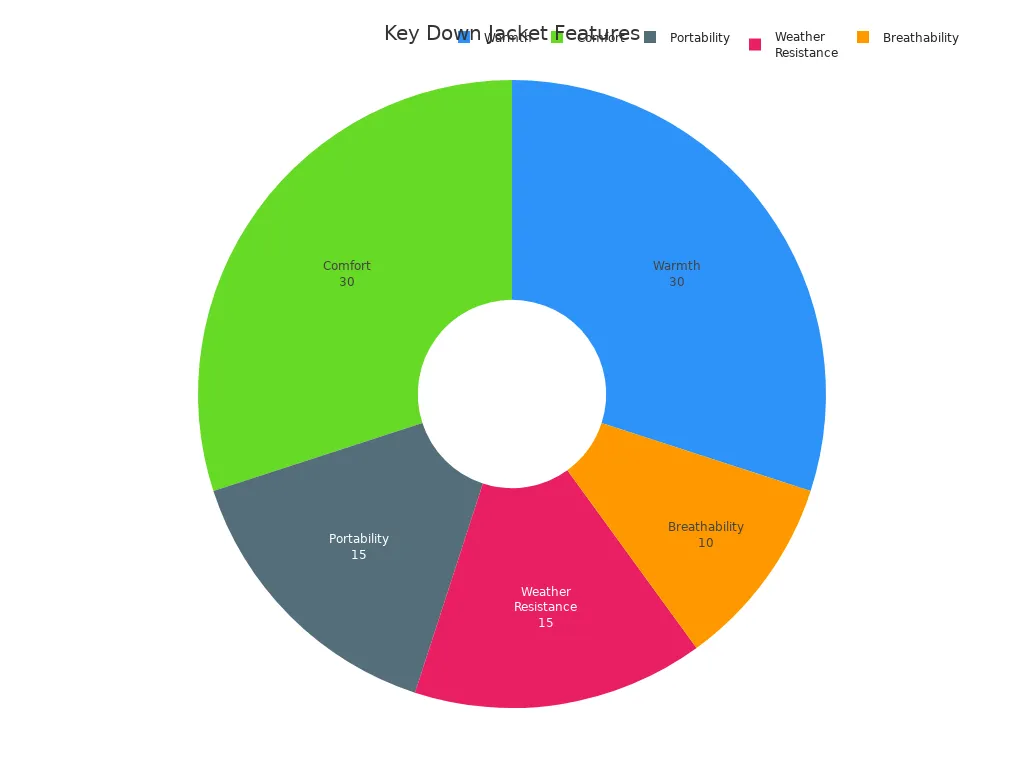
I always check for warmth first. Comfort comes next, since I want a jacket that feels good and fits well. Portability matters when I travel or hike. Weather resistance helps me stay dry in light rain or snow. Breathability keeps me from overheating when I move fast.
Tip: I make a checklist of these features before choosing the right jacket for my needs.
When to Choose
I pick a down jacket when I need reliable warmth in cold, dry conditions. I use it for winter hikes, camping, and everyday wear during chilly months. I avoid it in wet weather, since down loses insulation when soaked. I rely on synthetic jackets for rainy days.
Here is how I decide:
Situation/Condition | Down Jacket Preference |
|---|---|
Running cold | |
Between aerobic activities | Better for warmth while resting (e.g., in camp). |
Dry, cold conditions | Best insulation in dry environments; retains warmth. |
Wet, cool conditions | Not preferred; synthetic is better as down clumps when wet. |
Drier environments | Warmer for the weight compared to synthetic options. |
I choose a down jacket for dry climates and cold temperatures. I switch to synthetic insulation when I expect rain or wet snow.
Care Tips
I want my down jacket to last and keep its loft. I store it in a large mesh sack instead of a tight stuff sack. This prevents compression and helps the insulation stay fluffy. I fluff my jacket regularly to keep the loft high. I wash it gently with down-specific detergent and let it air dry. I avoid storing it in damp places, since moisture and body oils can reduce its effectiveness.
I store my jacket in a mesh sack to prevent compression.
I fluff it often to preserve loft and warmth.
I wash with gentle detergent and dry thoroughly.
I keep it away from moisture and body oils.
Note: Proper care helps my jacket stay warm and last for many seasons.
I find down jackets offer impressive warmth, lightweight comfort, and versatility for many activities. When I choose a jacket, I look at fill power, fill weight, baffling design, packability, fabric durability, fit, and extra features like hoods or pockets. These factors help me match my jacket to my climate and needs. I always compare options before deciding, so I get the best performance and value for my adventures.
FAQ
How do I wash my down jacket?
I use a gentle, down-specific detergent and cold water. I wash my jacket in a front-loading machine. I tumble dry on low with clean tennis balls to restore loft. I avoid fabric softeners.
Can I wear my down jacket in the rain?
I wear my down jacket in light rain if it has a water-resistant shell. For heavy rain, I add a waterproof shell over it. Wet down loses warmth quickly.
What does fill power mean?
Fill power measures the quality of down. Higher fill power means better insulation and more warmth for less weight. I look for fill power ratings above 600 for cold weather.
Is down ethically sourced?
I check for certifications like Responsible Down Standard (RDS). These labels show that the down comes from birds treated humanely. I always read the product tag for sourcing information.
How do I store my down jacket?
I store my jacket in a large mesh bag. I avoid compressing it for long periods. I keep it in a dry place and fluff it regularly to maintain loft.
What size down jacket should I buy?
I try on different fits. I check the sizing chart and consider layering. I choose a snug fit for warmth or a relaxed fit for layering over sweaters.