

Beginner’s Guide to Picking the Perfect Korean School Uniform
Table of Contents
Display
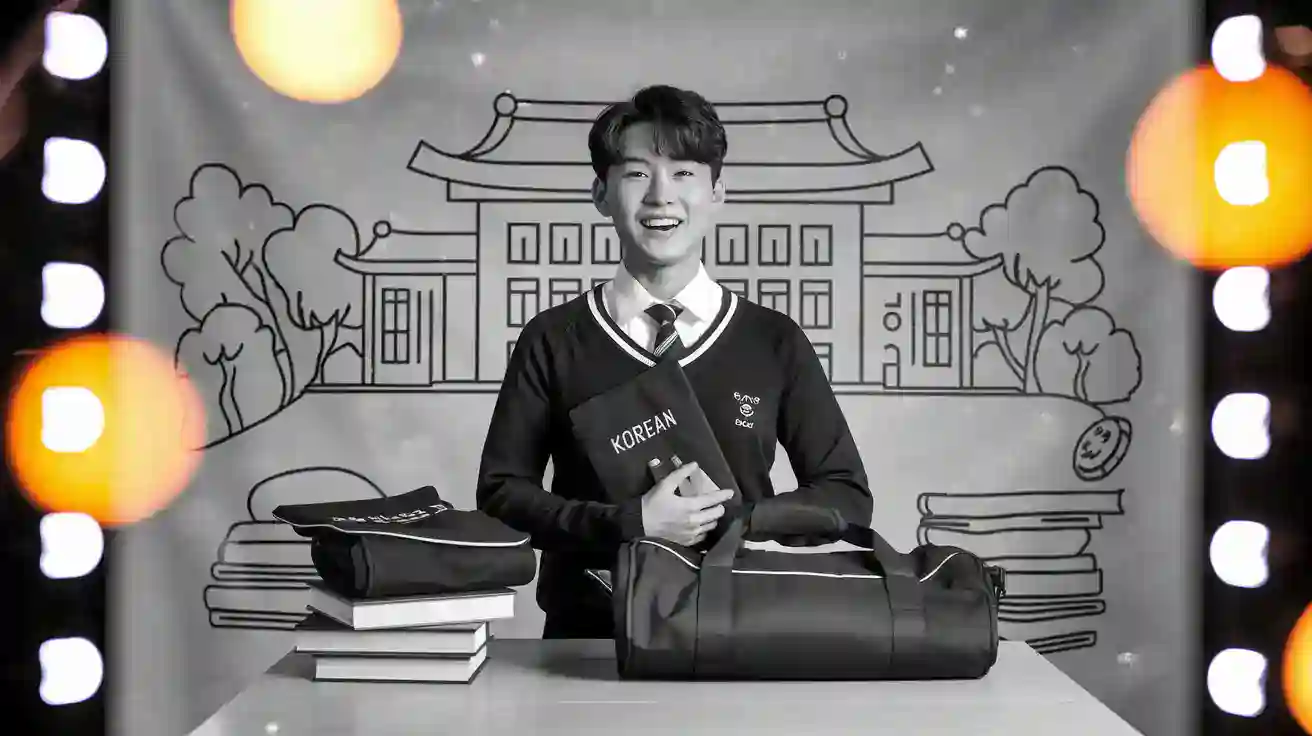
When I choose my Korean school uniform, I focus on comfort, fit, and a touch of personal style. I know South Korea School Uniforms often use light materials and fun patterns, especially for younger students, which helps me feel comfortable and move easily during the day. Many students care about self-esteem and want some freedom to show their personality, even when school rules set clear boundaries. I believe anyone can look confident and stylish in their uniform with the right approach.
Key Takeaways
Choose comfort and fit when selecting your Korean school uniform. This helps you feel confident and ready for the day.
Understand your school’s uniform guidelines. Knowing the rules prevents mistakes and helps you express your style within boundaries.
Pay attention to seasonal changes in uniforms. Wearing the right fabric for the season keeps you comfortable and focused in class.
Mix and match uniform pieces to create fresh looks. Layering with vests or cardigans adds style while staying within school rules.
Opt for high-quality materials. Fabrics like cotton and blends offer comfort and durability, ensuring your uniform lasts all year.
Accessorize subtly to personalize your uniform. Small touches like approved pins or simple hair accessories can reflect your personality.
Always measure yourself for the best fit. Accurate measurements help avoid discomfort and ensure your uniform looks sharp.
Consider secondhand options for affordability. Buying gently used uniforms saves money and supports sustainable choices.
Korean School Uniforms
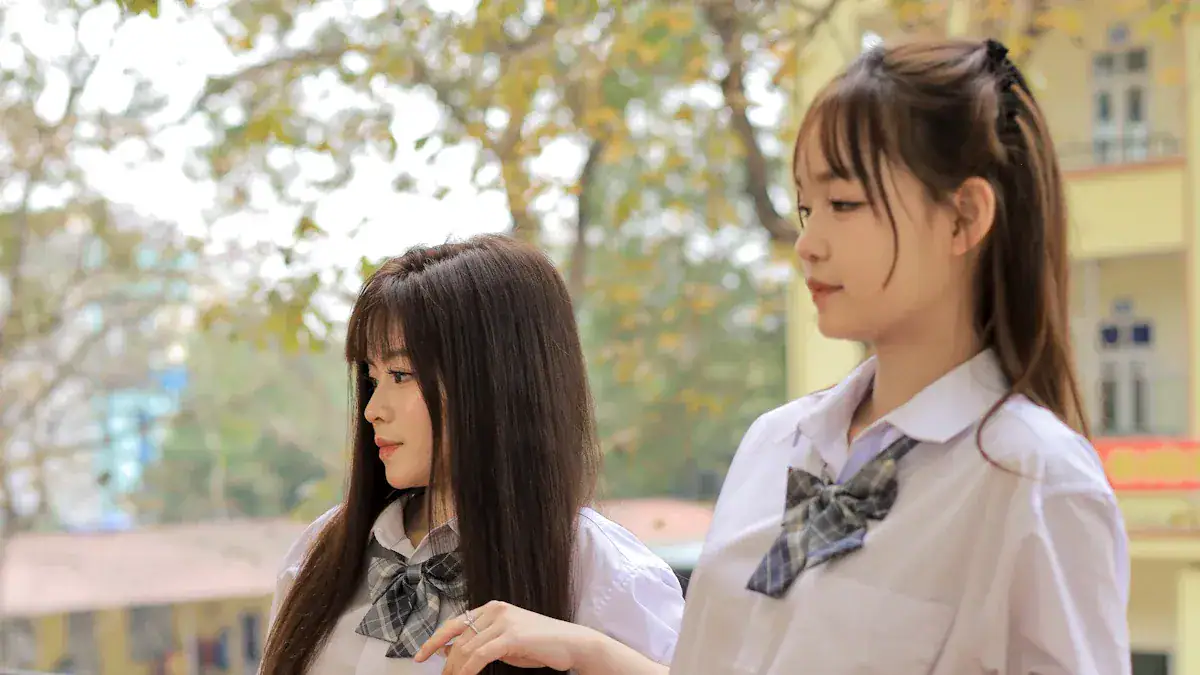
When I first explored Korean school uniforms, I noticed how many options exist for both boys and girls. I saw that girls can choose between skirts and pants, while boys often pick between skinny or baggy pants. The variety surprised me and helped me find a style that fits my comfort and personality.
Types
Standard
Most schools in South Korea use standard uniforms. These usually include a shirt, a skirt or pants, and a jacket. I like how these uniforms create a sense of unity among students. For girls, skirts are common, but pants are also an option. Boys usually wear trousers, and some schools allow skinny or baggy styles.
Hanbok-Style
Some schools offer hanbok-style uniforms. I find these designs beautiful because they blend tradition with modern school life. The hanbok-style uniform uses elements from traditional Korean clothing, such as curved collars and wide sleeves. Wearing this type of uniform makes me feel connected to Korean culture.
Seasonal
I always pay attention to seasonal changes in uniforms. In the summer, I wear summer uniforms made from thin, breathable fabrics. These usually include short-sleeved shirts and skirts or pants, which keep me cool. When winter arrives, I switch to winter uniforms with long-sleeved shirts and thicker materials. These keep me warm during cold months. During spring and fall, I sometimes wear a vest instead of a jacket for comfort.
Tip: I always check my school’s guidelines for seasonal uniforms. Some schools have strict rules about when to switch between summer uniforms and winter uniforms.
Type of Uniform | Description |
|---|---|
Summer Uniform | Short-sleeved shirts and skirts made of thin fabric for warmer weather. |
Winter Uniform | Long-sleeved shirts and thicker fabric for colder temperatures. |
Seasonal Transition | Vests without jackets during fall and spring. |
Features
Skirts & Pants
I like that Korean school uniforms give me choices. Girls can wear skirts or pants, depending on what feels comfortable. Boys can choose between skinny or baggy pants. This flexibility lets me express my style while following school rules.
Jackets & Shirts
Jackets and shirts are key parts of my uniform. I wear a tailored jacket for a polished look. Shirts come in both short and long sleeves, depending on the season. I sometimes add a vest or cardigan for extra warmth or style.
Plaid & Tailoring
Plaid patterns appear often in skirts and sometimes in pants. I think plaid adds a classic touch to the uniform. Tailored jackets and neat lines make the uniform look sharp and professional. I feel confident when my uniform fits well and looks tidy.
Note: Uniforms in elementary school often use playful colors, but high school uniforms look more formal with darker shades and blazers.
School Rules
Understanding my school’s rules helps me avoid mistakes and feel confident in my uniform. Each school in South Korea sets its own guidelines, so I always check the handbook before making any changes to my look. Rules can differ by region, and some schools update their policies every year. I learned that following these rules shows respect for my school and helps me avoid disciplinary action.
Dress Codes
My school’s dress code covers everything from skirt length to hairstyle. I remember reading the handbook and seeing clear instructions about what I can and cannot wear. Most schools require skirts to cover at least half the knee. If my skirt is too short, I risk getting a warning or even detention. Schools also divide uniforms by season: winter, summer, and spring/autumn. I must wear the correct uniform for the entire season, even if the weather changes suddenly. Hairstyle rules have relaxed over the years. Boys can grow their hair longer, and girls can dye or style their hair, but extreme styles are still not allowed.
Tip: I always double-check my skirt length and hairstyle before leaving home to make sure I follow school rules.
Rule Type | Description |
|---|---|
Skirt Length | Skirts must cover half the knee; shorter skirts can lead to disciplinary action. |
Uniform Types | Students wear three types of uniforms: winter, summer, and spring/autumn. |
Uniform Duration | Students must wear the designated uniform type for the entire duration, regardless of weather. |
Hairstyle Rules | Schools dictate hairstyles; however, students now have more freedom compared to previous decades. |
Hair Length | Boys can grow their hair longer than in the past, while girls can dye and style their hair. |
Colors & Styles
My school chooses the colors and styles for our uniforms. Most high schools prefer darker shades and formal blazers, while elementary schools use lighter colors and playful patterns. I noticed that south korea school uniforms often feature plaid skirts or pants, which give a classic look. Some schools allow students to pick between pants and skirts, letting me choose what feels comfortable. I like that my school lets me wear a vest or cardigan in cooler months, but I must stick to approved colors and designs.
Allowed Modifications
Schools now offer more choices for students who want comfort and practicality. I can pick from skirts, pants, or even shorts, depending on the season and my school’s policy. In summer, I wear short-sleeved shirts or shorts, which help me stay cool. My school moved away from tight and short styles, focusing on comfort. I avoid making unauthorized changes, like altering the length of my skirt or adding flashy accessories, because these can lead to warnings or penalties.
I can choose between skirts, pants, and shorts.
My school allows short-sleeved T-shirts in warmer weather.
Comfortable designs are now more common.
Unauthorized changes, like altering skirt length or adding unapproved accessories, can result in disciplinary action.
Note: I always ask my teacher before making any changes to my uniform. Staying within the rules keeps me out of trouble and helps me express my style safely.
Fit & Size
Measuring
When I want my Korean school uniform to fit perfectly, I always start by measuring myself carefully. I learned that guessing my size based on last year’s uniform does not work well because I grow quickly. I use a soft tape measure and wear a fitted outfit or measure directly on my skin for the most accurate results. Here’s how I measure each part of my body:
Neck: I wrap the tape just below my Adam’s apple, making sure it feels snug but not tight.
Chest: I relax my arms and measure around the fullest part of my chest and shoulder blades.
Waist: I find my natural waistline, usually above my belly button and below my rib cage, and keep the tape comfortably fitted.
Hips: I stand with my feet together and measure around the fullest part of my hips.
Shoulder Width: I measure straight across my back from the outer edge of one shoulder to the other.
Arm Length: I start at the tip of my shoulder and measure down to my wrist bone, keeping my elbow slightly bent.
Inseam: I measure from my crotch to my ankle along the inside of my leg.
Tip: I always double-check my measurements and write them down before shopping for a new uniform. This helps me avoid mistakes and saves time.
I also pay attention to brand sizing. One brand’s size 8 might fit like another brand’s size 10. I never assume sizes are the same across different stores.
Trying On
After measuring, I always try on the uniform before buying it. I check if the shirt collar sits comfortably around my neck and if the sleeves reach my wrists without feeling too tight. For pants or skirts, I make sure the waistband fits snugly but does not pinch. I walk, sit, and stretch to see if the uniform allows me to move freely. If I feel restricted or uncomfortable, I try a different size or style.
I also look at the length of skirts and pants. My school has rules about skirt length, so I make sure the skirt covers at least half my knee. For pants, I check that the inseam is just right—not too short or too long.
Note: I always bring a friend or family member when trying on uniforms. They help me spot fit issues I might miss.
Tailoring
Sometimes, even after careful measuring and trying on, the uniform does not fit perfectly. I take my uniform to a tailor for small adjustments. A tailor can shorten sleeves, adjust the waist, or hem pants and skirts to the right length. I find that tailored uniforms look sharper and feel more comfortable.
I do not try to make big changes myself because schools have strict rules about uniform modifications. I always ask my school if tailoring is allowed and stick to approved adjustments.
Callout: A well-fitted uniform boosts my confidence and helps me focus on my studies instead of worrying about my clothes.
Materials
Comfort
When I pick out my school uniform, I always check the fabric first. The material affects how I feel all day. I want something soft, breathable, and gentle on my skin. I notice that most Korean school uniforms use a mix of different fabrics. Some feel light and cool, while others feel warm and cozy. Here is a table that shows the most common materials and how they feel:
Material | Comfort Level Description |
|---|---|
Cotton | Soft and comfortable, ideal for all-day wear. |
Polyester | Neat appearance, durable, but can trap heat and moisture, making it less comfortable in hot weather. |
Blended | Combines cotton and polyester benefits, soft, breathable, and durable, maintaining shape and color well. |
Wool | Warm in winter, regulates temperature, but takes longer to dry and requires gentle washing. |
Rayon/Nylon | Adds softness and stretch, with bamboo and TENCEL™ providing smoothness and moisture management for sensitive skin. |
I prefer cotton or blended fabrics for daily wear. Cotton feels soft and lets my skin breathe. Blended fabrics give me the best of both worlds—comfort and durability. Polyester looks neat but sometimes feels hot, especially in summer. Wool keeps me warm in winter, but I need to be careful when washing it.
Tip: I always touch the fabric before buying. If it feels rough or stiff, I look for another option.
Durability
I want my uniform to last all year. I do not want to worry about rips, fading, or pilling. I learned that different fabrics have different strengths. Polyester stands out for its toughness. It resists wrinkles and holds up after many washes. Cotton feels nice but needs more care. Poly-cotton blends work well because they mix softness with strength. Wool blends are great for winter but need gentle washing.
Fabric Type | Durability | Maintenance Requirements |
|---|---|---|
Polyester | High, withstands frequent washing | Low maintenance, wrinkle-resistant |
Cotton | Moderate, soft but less durable | Requires more care, prone to wrinkling |
Polyester-Cotton Blends | Balanced, good durability | Easy to maintain, combines benefits of both |
Wool and Wool Blends | High, suitable for cooler climates | Moderate, requires careful washing |
Acrylic | Moderate, lightweight | Easy to maintain, good for knitwear |
I always check the label for fabric type. Polyester and blends need less ironing and stay looking new longer. Cotton needs more ironing and can wrinkle easily. Wool blends keep me warm but need special care.
Polyester and blends last longer and need less work.
Cotton feels soft but wrinkles and wears out faster.
Wool blends work best in cold weather.
Note: I wash my uniform according to the care label. This helps it last longer and keeps it looking sharp.
Seasonal Choices
I change my uniform fabric with the seasons. In summer, I choose light cotton or blended fabrics. These keep me cool and dry. Polyester can feel sticky in hot weather, so I avoid it when the temperature rises. For winter, I switch to wool blends or thicker polyester. These trap heat and keep me comfortable during cold mornings.
I also notice that some schools offer special uniforms for spring and fall. These use medium-weight fabrics, like poly-cotton blends, which work well in mild weather. I like having options for every season.
Summer: Cotton or blends for breathability.
Winter: Wool blends or thick polyester for warmth.
Spring/Fall: Medium-weight blends for comfort.
Callout: I always check my school’s uniform guide for seasonal fabric recommendations. Wearing the right material helps me stay comfortable and focused in class.
Where to Buy
Major Brands
When I look for a Korean school uniform, I always start with major brands. These companies have a reputation for quality and reliability. I want my uniform to last all year, so I choose brands that use strong materials and offer comfortable designs. I notice that some brands even export uniforms to schools around the world, which shows their commitment to high standards.
Here is a table that highlights two well-known brands:
Brand | Description |
|---|---|
SMART | Recognized for its effort to become a global school uniform brand, exporting to leading schools. |
SAMEITE | Mentioned as a brand producing high-quality Korean school uniforms. |
I prefer SMART uniforms because they use high-quality materials. The fabric feels soft and durable, which helps me stay comfortable during long school days. I also like that SMART offers customizable options. I can choose features that match my school’s requirements, such as specific colors or patterns. SAMEITE also produces reliable uniforms, and I see many students wearing their products.
SMART uniforms are made from high-quality materials, ensuring durability and comfort.
Products are customizable, catering to specific school requirements.
Tip: I always check my school’s approved brand list before buying. Some schools only allow uniforms from certain companies.
Online
Shopping online makes buying a school uniform easy and convenient. I use official brand websites and trusted online stores to compare styles and prices. Many sites offer detailed size charts, which help me pick the right fit. I read reviews from other students to learn about comfort and durability. Some online shops even provide virtual fitting tools, so I can see how the uniform looks before ordering.
I pay attention to shipping times and return policies. If the uniform does not fit, I want to exchange it quickly. I also look for discounts and bundle deals, especially before the school year starts. Online shopping saves me time and lets me explore more options than local stores.
Note: I always double-check the seller’s reputation and read the return policy before placing an order.
Local Shops
I visit local uniform shops when I want to try on clothes before buying. These stores let me feel the fabric and check the fit in person. I ask the staff for advice about sizing and tailoring. Local shops often carry uniforms from major brands, so I know I am getting a quality product.
Sometimes, local shops offer tailoring services. If my uniform needs adjustments, I can get it altered right away. I also find accessories like socks, ties, and bags in these stores. Shopping locally supports my community and gives me a chance to see the latest styles.
I try on uniforms to check comfort and fit.
I ask for tailoring if I need small changes.
I find matching accessories for a complete look.
Callout: I always bring my measurements and school guidelines when I visit a local shop. This helps me choose the right uniform and avoid mistakes.
Secondhand
When I want to save money or find unique pieces, I look for secondhand Korean school uniforms. Buying secondhand helps me stick to my budget and reduces waste. Many students in Korea choose this option, especially when they need extra uniforms or want to try different styles.
I usually start by checking local secondhand shops near my school. These stores often carry gently used uniforms from students who have graduated or outgrown their clothes. I like to visit in person because I can see the condition of each item and try it on for fit. Sometimes, I find uniforms that look almost new at a much lower price.
Online platforms also offer a wide selection of secondhand uniforms. I use popular Korean resale apps and websites, such as Joonggonara (중고나라) or Danggeun Market (당근마켓). These sites let me search for specific schools, sizes, and styles. I always read the seller’s description carefully and check photos for any signs of wear or damage. If I have questions, I message the seller before buying.
Tip: I always meet sellers in safe, public places when buying secondhand uniforms in person. Safety comes first.
Here are some reasons why I choose secondhand uniforms:
Save Money: Secondhand uniforms cost much less than new ones.
Eco-Friendly: Reusing uniforms helps the environment by reducing waste.
Find Rare Styles: Sometimes, I discover older designs or limited editions that are no longer available in stores.
Quick Replacements: If I lose or damage a piece, I can replace it quickly without waiting for a new order.
I pay close attention to the condition of secondhand uniforms. I check for stains, tears, missing buttons, or faded colors. If the uniform needs minor repairs, I ask if the shop or seller can fix it, or I take it to a tailor myself.
What to Check | Why It Matters |
|---|---|
Stains or Odors | Hard to remove, affects comfort |
Tears or Holes | May need repairs |
Faded Colors | Looks less neat |
Missing Parts | Harder to match school rules |
I always wash secondhand uniforms before wearing them. This makes me feel clean and comfortable. If the uniform smells musty or looks dirty, I use a gentle detergent and let it air out.
Note: Some schools require uniforms to match exactly. I check my school’s rules before buying secondhand to avoid problems.
Buying secondhand uniforms gives me more choices and helps me stay within my budget. I feel good knowing I am making a sustainable choice. With careful shopping, I find great deals and keep my school wardrobe fresh and unique.
Styling Korean School Uniforms
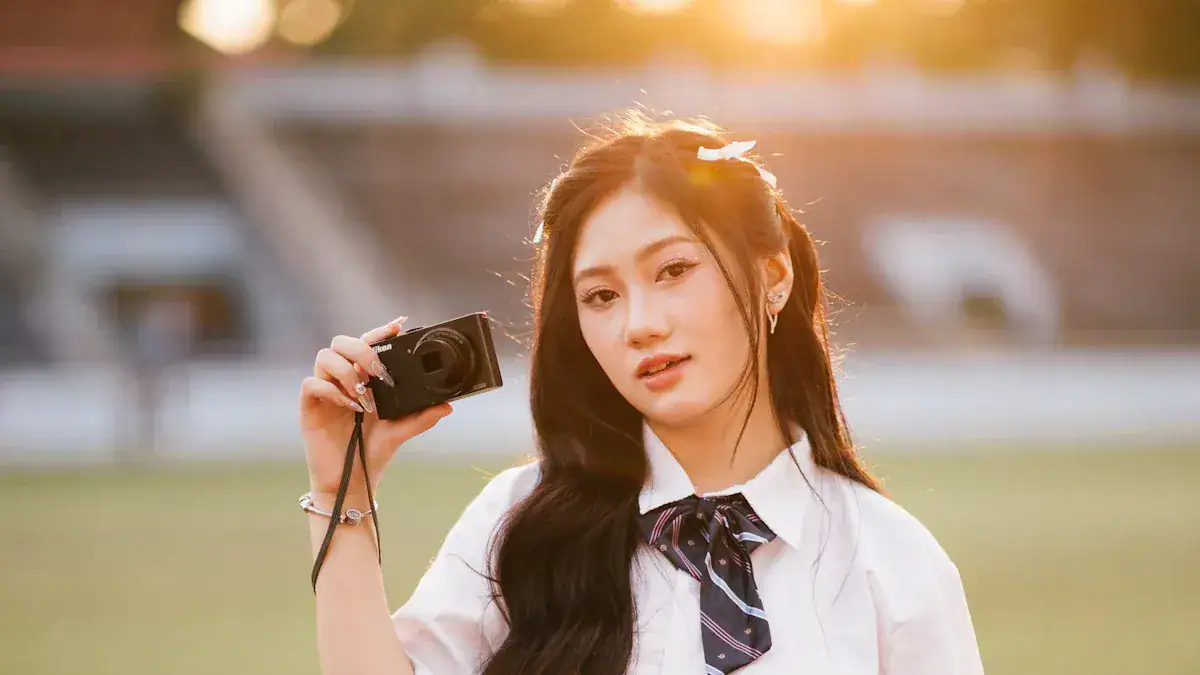
When I want to stand out in my Korean school uniform, I focus on how I style and layer each piece. I believe that small changes can make a big difference in my daily look. I always follow school rules, but I find creative ways to express my personality.
Layering
Layering helps me adjust to changing weather and adds depth to my outfit. I use different layers to create a polished look or to stay comfortable throughout the day.
Vests
I like to start with a vest when I want a neat and tidy appearance. Vests work well in spring and fall when the weather feels unpredictable. I choose a fitted vest that matches my uniform colors. Sometimes, I pick a vest with subtle patterns or school emblems for a classic touch. I notice that vests help me look put-together without feeling too warm.
Cardigans
Cardigans give me more flexibility. I wear a cardigan when I want to add warmth or a softer look. I prefer cardigans in neutral colors like navy, gray, or beige because they match most uniforms. I make sure the cardigan fits well and does not look too bulky. I avoid bright colors or large logos since my school has strict guidelines. Cardigans let me roll up my sleeves or leave the buttons open for a relaxed style.
Jackets
Jackets are a key part of my uniform, especially in colder months. I choose a tailored jacket that fits my shoulders and waist. A good jacket makes my uniform look sharp and professional. I sometimes layer a vest or cardigan under my jacket for extra warmth. I always check that my jacket matches my school’s approved style and color.
Tip: I keep my layers simple and avoid mixing too many patterns. This helps me look stylish without breaking school rules.
Accessories
Accessories let me show my personality while staying within school guidelines. I pick items that add a subtle touch to my uniform.
Bags
I use a sturdy backpack or tote bag that fits all my books and supplies. I choose bags in neutral colors like black, navy, or brown. Some students add small keychains or pins, but I keep decorations minimal to follow school rules. I look for bags with extra pockets to organize my things.
Shoes & Socks
Shoes and socks play a big role in my overall look. I wear clean, polished shoes in black or brown. Loafers and simple sneakers are popular choices at my school. I avoid flashy designs or bright colors. For socks, I pick plain white, navy, or black. Some students wear ankle socks, while others prefer knee-highs for a classic look. I make sure my socks match and stay neat throughout the day.
Hair Items
Hair accessories help me keep my hair tidy and add a bit of style. I use simple hairbands, clips, or ribbons in school-approved colors. I avoid large bows or sparkly items since my school does not allow them. I sometimes braid my hair or tie it in a ponytail for a clean appearance.
Note: I always check my school’s accessory rules before trying something new. Subtle accessories can make my uniform feel more personal.
School Girl Fashion
I see many trends in school girl fashion that inspire my daily outfits. I pay attention to what is popular in korean fashion and try to adapt these ideas to my school’s dress code.
Tennis Skirts
The tennis skirt stands out as a favorite trend among students. I love how the tennis skirt gives my uniform a sporty and youthful vibe. The pleated design looks neat and allows me to move easily. I often see tennis skirts in navy, gray, or plaid patterns. My school allows tennis skirts as long as they meet the required length. I pair my tennis skirt with a crisp shirt and a fitted vest or cardigan for a balanced look.
Callout: I always check that my tennis skirt covers at least half my knee to avoid breaking school rules.
Neat Looks
I believe that a neat appearance makes a strong impression. I keep my shirt tucked in and my jacket buttoned. I polish my shoes and make sure my socks match. I avoid over-accessorizing and stick to simple, clean lines. Many students in my school follow this approach because it looks professional and respectful.
I find that styling and layering help me create a unique look every day. I experiment with different combinations of vests, cardigans, and jackets. I choose accessories that reflect my personality but stay within the rules. I enjoy following school girl fashion trends, especially the tennis skirt, while keeping my outfit neat and tidy. By paying attention to details, I feel confident and stylish in my Korean school uniform.
Personalizing
Subtle Touches
I always look for small ways to make my school uniform feel more like my own. I know that even tiny changes can help me stand out without breaking any rules. I start by making sure my uniform fits perfectly. A well-fitted jacket or skirt makes a big difference. I sometimes roll up my sleeves neatly or tuck in my shirt just right. I choose simple, clean hairstyles that match my mood for the day.
I also pay attention to my socks and shoes. I pick socks with a little texture or a soft pattern, as long as they stay within the approved colors. My shoes stay polished and clean. I sometimes switch between loafers and simple sneakers, depending on the day. I keep my look neat, but I add these subtle touches to show my style.
Tip: I always check my school’s rules before trying something new. Subtle changes work best when they do not draw too much attention.
Approved Pins
My school allows a few types of pins and badges. I use these to add a personal touch to my uniform. I choose pins that show my club membership or school achievements. These pins usually go on my jacket lapel or my bag. I avoid large or flashy pins because my school only allows small, approved designs.
Here is a table of pins I can use:
Pin Type | Where I Wear It | School Policy |
|---|---|---|
Club Pins | Jacket or Bag | Allowed if approved |
Achievement Badges | Jacket Lapel | Allowed |
School Logo Pins | Shirt or Jacket | Always allowed |
Decorative Pins | Bag only | Must be small/simple |
I like to collect pins from different school events. I sometimes trade pins with friends, which helps me remember special moments. I always make sure my pins stay in good condition and do not fall off during the day.
Note: I never use pins with bright colors or cartoon characters. My school wants us to keep our uniforms looking professional.
Creative Ideas
I enjoy finding creative ways to personalize my uniform while following the rules. I sometimes use hair accessories in school-approved colors, like navy or black. I braid my hair or use a ribbon for a fresh look. I also choose a watch or bracelet that matches my style but stays simple.
I sometimes add a small, neat handkerchief to my jacket pocket. This adds a classic touch and feels unique. I use a planner or notebook with a fun cover to show my interests. My bag sometimes has a tiny keychain or charm, but I keep it subtle.
Here are some creative ideas I have tried:
Use a patterned notebook or pencil case.
Wear a simple watch or bracelet.
Add a small ribbon to my hair.
Choose socks with a soft pattern.
Attach a tiny charm to my bag zipper.
Callout: I always remember that less is more. Small, thoughtful details help me express myself without breaking school rules.
By focusing on subtle touches, approved pins, and creative ideas, I make my Korean school uniform feel special every day. I stay true to my style and respect my school’s guidelines at the same time.
Grooming
Hair
I always pay close attention to my hair when wearing my Korean school uniform. Hair rules have changed a lot over the years. In the past, girls had to keep their hair short, not more than 3 cm below their ears. Boys even had to shave their heads completely. Now, I see more freedom in how students style their hair, but some schools still follow strict traditions.
Most days, I choose a simple hairstyle that looks neat and follows my school’s guidelines. Girls at my school can dye, curl, or untie their hair, which feels like a big change from the old days. I sometimes wear my hair down or tie it up, depending on my mood. Some of my friends like to curl their hair or add a soft color, but we always check if our school allows it first. A few schools still expect girls to keep their hair short or tied up, not extending beyond shoulder length.
For boys, the rules stay a bit stricter. Boys’ hair must not cover their ears, eyebrows, or collar. Most schools do not allow boys to dye or curl their hair. Some conservative schools still enforce these rules, so my friends with longer hair sometimes need to cut it before the new semester. Students with naturally curly or lighter hair sometimes face extra restrictions, needing to straighten or dye their hair black.
Tip: I always read my school’s handbook for the latest hair rules. Staying informed helps me avoid surprises during inspections.
Makeup
Makeup guidelines at my school are usually strict, especially for middle school students. I remember when I first started high school, I wanted to try a little makeup. Some high schools now allow basic, colorless makeup, like clear lip balm or a light BB cream. Other schools still have a no-makeup policy, so I always check the rules before applying anything.
Here are some common makeup rules I have seen:
Most middle and high schools restrict makeup.
Some high schools allow basic, natural-looking makeup.
A few schools let students decide for themselves, showing a trend toward respecting student rights.
I keep my look simple and fresh. If my school allows it, I use a little moisturizer or sunscreen. I avoid bold colors or heavy products. I want my skin to look healthy and clean, not covered up.
Note: I always remove my makeup before school events or inspections if I am unsure about the rules.
Neatness
Neatness matters as much as style. I make sure my hair stays tidy and my uniform looks clean every day. I check my collar, tuck in my shirt, and smooth out any wrinkles before leaving home. My shoes stay polished, and my socks match. I keep my nails trimmed and avoid flashy nail polish.
A neat appearance shows respect for my school and helps me feel confident. I notice that teachers appreciate students who look well-groomed. I also find it easier to focus in class when I feel comfortable and put together.
I brush my hair and check for stray strands.
I keep my uniform clean and pressed.
I organize my bag and supplies for a tidy look.
Callout: Good grooming habits help me make a positive impression and start each school day with confidence.
High School Uniforms Trends
Boys’ Styles
When I look at boys’ high school uniforms, I notice a big change in recent years. Skinny pants used to be the most popular choice. Now, many boys prefer baggy trousers. I see these pants everywhere at my school. They feel comfortable and look stylish at the same time. Some boys still choose skinny pants for a sharp, fitted look, but baggy styles have become the new trend. I think this shift shows how students want more freedom and comfort in their daily outfits.
Blazers remain a key part of boys’ uniforms. I like how a well-fitted blazer can make any outfit look more polished. Some boys wear their blazers with the sleeves rolled up for a relaxed vibe. Others keep them buttoned for a formal appearance. I also see more boys wearing chunky sneakers with their uniforms. These shoes add a modern touch and remind me of styles worn by k-pop stars. Many boys look to k-pop stars for inspiration, copying their hairstyles and shoe choices.
Girls’ Styles
Girls’ high school uniforms have changed a lot, too. In the past, most girls wore the same traditional skirt and blazer combination. Now, I see more variety. My school lets girls choose between skirts and pants. Some girls pick pants for comfort and practicality, while others stick with skirts for a classic look. I like that I can decide what feels best for me.
Schools now offer more stylish options. I see pleated skirts, tennis skirts, and even different jacket cuts. This diversity lets me show my personality while still following the rules. I notice that many girls add subtle accessories, like hair ribbons or simple pins, to personalize their look. The move toward more stylish and personalized high school uniforms makes me feel more confident. I see this trend in many schools across South Korea.
I often find inspiration from k-pop stars. Their school uniform looks appear in music videos and social media. I try to add small touches from their style to my own uniform.
Popular Looks
I pay attention to what is trending among my classmates. According to recent fashion surveys, these looks stand out the most:
Neon clothes – I see students adding neon accents to their outfits. This trend feels bold and creative, showing off Gen Z’s love for color.
Baggy trousers – These pants are everywhere. They feel comfortable and look cool, replacing skinny jeans as the top choice.
Blazers – I notice students wearing blazers both in and out of school. A blazer adds elegance and works for formal or casual days.
Chunky sneakers – Many students, including me, love chunky sneakers. They match well with both skirts and pants, and I see k-pop stars wearing them all the time.
I think these trends show how high school uniforms in South Korea keep changing. Students want to look stylish and feel comfortable. Many of us look to k-pop stars for ideas, mixing classic uniform pieces with trendy items. I enjoy seeing how everyone adds their own twist to the standard south korea school uniforms.
Mistakes
Fit Issues
I always pay close attention to how my uniform fits. A poor fit can ruin my confidence and make me uncomfortable all day. I remember when I bought a skirt that looked great on the hanger but felt too tight around my waist. I could not focus in class because I kept adjusting it. Loose shirts or baggy pants also make me look untidy. I learned that guessing my size leads to problems. I always measure myself and try on every piece before buying.
Here are some common fit mistakes I see:
Choosing a size too small or too large
Ignoring changes in body shape or growth
Forgetting to check sleeve and pant lengths
Fit Mistake | How It Affects Me | Solution |
|---|---|---|
Too Tight | Uncomfortable, restricts movement | |
Too Loose | Looks messy, feels awkward | Tailor for best fit |
Wrong Length | Breaks school rules, looks sloppy | Check school guidelines |
Tip: I always ask for tailoring if my uniform does not fit perfectly. A good fit helps me feel confident and ready for the day.
Over-Accessorizing
I love adding accessories to my uniform, but I learned that too many can cause problems. I once wore several pins, a bright scarf, and flashy socks. My teacher asked me to remove most of them. Over-accessorizing distracts from the neat look of the uniform and can break school rules. I now choose one or two subtle items, like a simple hairband or a small club pin.
Common over-accessorizing mistakes include:
Wearing too many pins or badges
Using bright or oversized hair accessories
Adding flashy jewelry or socks
I keep my accessories simple and school-approved. This way, I show my style without drawing unwanted attention.
Ignoring Rules
I used to think small changes would go unnoticed, but my school enforces uniform rules strictly. I once shortened my skirt by a few centimeters. The next day, I received a warning. Ignoring rules can lead to disciplinary action and makes me stand out for the wrong reasons. I always read my school’s handbook and ask teachers if I am unsure about a change.
Mistakes I see when students ignore rules:
Altering skirt or pant length
Wearing unapproved colors or patterns
Using unauthorized accessories
Rule Ignored | Possible Consequence |
|---|---|
Skirt too short | Warning or detention |
Wrong color jacket | Asked to change clothes |
Unauthorized pins | Removal and warning |
Note: I respect my school’s rules. Following guidelines helps me avoid trouble and keeps my uniform looking sharp.
Comfort
I always put comfort first when I choose my Korean school uniform. I learned that ignoring comfort leads to a long, tiring day at school. Many students focus only on style or fit, but forget how important it is to feel good in their clothes. I made this mistake once. I picked a uniform that looked sharp but felt stiff and itchy. By lunchtime, I could not wait to change.
Here are some common comfort mistakes I see:
Picking rough or heavy fabrics that irritate my skin
Wearing tight collars or waistbands that restrict movement
Choosing shoes that look good but hurt my feet after a few hours
Ignoring the weather and wearing thick materials in summer or thin ones in winter
Tip: I always touch the fabric before buying. If it feels scratchy or stiff, I look for something softer.
I pay attention to how my uniform feels when I move. I walk, sit, and stretch in the fitting room. If my jacket pulls at my shoulders or my skirt rides up, I know it will bother me all day. I also check if the waistband digs into my skin or if the sleeves feel too tight. Comfort means I can focus on my classes, not my clothes.
I learned that shoes matter as much as the uniform itself. I once wore new loafers that looked perfect with my skirt. After walking to school, my feet hurt so much I had to switch to sneakers. Now, I pick shoes with cushioned soles and enough room for my toes. I also choose socks that do not slip or bunch up.
Here is a table of comfort checks I use before buying:
Comfort Check | Why It Matters |
|---|---|
Soft, breathable fabric | Prevents itching and sweating |
Flexible fit | Allows easy movement |
Proper shoe support | Avoids foot pain |
Season-appropriate material | Keeps me cool or warm |
I always match my uniform to the season. In summer, I wear light cotton or blends that let my skin breathe. In winter, I switch to wool or thicker polyester to stay warm. I avoid layering too much, because it makes me feel bulky and uncomfortable.
Callout: Comfort helps me feel confident and ready to learn. When my uniform feels good, I can focus on my studies and enjoy my day.
I remind myself that comfort does not mean sacrificing style. I look for uniforms that fit well and use soft, flexible materials. I choose shoes and socks that support my feet. I check every piece before buying. By avoiding comfort mistakes, I make sure my school days are productive and enjoyable.
Confidence Tips
Wardrobe Building
When I started building my school uniform wardrobe, I focused on the basics first. I made sure I had enough shirts, pants or skirts, and a jacket that fit well. I always keep a few extra shirts on hand because accidents happen. I also include a vest and a cardigan for layering. This way, I can adjust my outfit for any weather or occasion.
Here is how I build my uniform wardrobe:
Start with essentials: I buy two or three shirts, two bottoms (pants or skirts), and one jacket.
Add layers: I include a vest and a cardigan for warmth and style.
Choose quality: I pick durable fabrics that last all year.
Plan for seasons: I keep both summer and winter options ready.
Tip: I always check my wardrobe at the start of each semester. I replace anything that looks worn out or does not fit.
Mixing Pieces
Mixing different uniform pieces helps me create fresh looks every day. I like to combine my vest with a skirt one day and switch to pants with a cardigan the next. Changing up layers keeps my style interesting and helps me feel confident.
Some ways I mix my uniform pieces:
Pair a vest with a skirt for a classic look.
Wear a cardigan over a shirt for extra comfort.
Try different sock lengths or shoe styles to change the vibe.
Use a jacket for a formal day or leave it off for a relaxed feel.
Piece | How I Mix It |
|---|---|
Vest | With skirt or pants |
Cardigan | Over shirt or under jacket |
Jacket | With or without vest |
Shoes | Loafers or sneakers |
I experiment with combinations until I find what feels right. Mixing pieces gives me more options without breaking school rules.
Staying True to Style
I believe confidence comes from staying true to my own style, even in a uniform. I choose pieces that fit my body and personality. I avoid copying others just to fit in. Instead, I focus on what makes me feel comfortable and happy.
Here are my favorite ways to stay true to my style:
Pick accessories that reflect my interests, like a simple pin or a favorite watch.
Choose hairstyles that suit my face and mood.
Keep my uniform neat and clean, which always boosts my confidence.
Smile and stand tall, because attitude matters as much as clothes.
Callout: I remind myself that style is personal. When I feel good in my uniform, I walk into school with confidence every day.
I always start by learning my school’s rules and measuring for the best fit. I choose comfortable fabrics and try different layers to match the season. When I style my uniform, I focus on neatness and small personal touches. I find that following these steps helps me look and feel my best in south korea school uniforms. I hope you use these tips to feel confident and stylish every day!
FAQ
What should I do if my uniform feels uncomfortable?
I always check the fabric and fit first. If my uniform feels itchy or tight, I ask about tailoring or try a different size. I choose soft, breathable materials whenever possible. Comfort helps me focus better in class.
Can I wear makeup with my Korean school uniform?
My school allows only natural or minimal makeup. I use clear lip balm or light BB cream if permitted. I always check my school’s rules before applying anything. I remove makeup before inspections to avoid trouble.
How do I keep my uniform looking neat all day?
I start by ironing my shirt and jacket. I tuck in my shirt and smooth out wrinkles. I keep a lint roller in my bag for quick fixes. Clean shoes and matching socks help me look tidy from head to toe.
Where can I buy affordable Korean school uniforms?
I look for secondhand shops, online resale platforms, and local stores near my school. I compare prices and check for sales. Buying gently used uniforms saves money and helps the environment.
What accessories can I use without breaking school rules?
I use simple hairbands, small pins, and plain socks. My school allows club pins and achievement badges. I avoid flashy jewelry or bright colors. I always check the handbook for approved accessories.
How do I choose between a skirt and pants?
I think about comfort, weather, and my daily activities. Skirts feel cooler in summer, while pants keep me warm in winter. My school lets me pick either, so I choose what fits my style and needs.
What should I do if my uniform gets stained?
I treat stains right away with cold water and mild soap. I avoid hot water because it can set the stain. If the stain does not come out, I ask my parents or a local cleaner for help.
Can I personalize my uniform?
I add subtle touches like a neat hairstyle, a small pin, or a patterned notebook. I always follow my school’s rules. Personalizing my uniform helps me feel unique while staying respectful of guidelines.