

Retail uniform logo printing: heat transfer vs. screen printing
Table of Contents
Display

You want retail uniform logo printing that lasts, looks sharp, and fits your budget. Screen printing stands out for durability, especially when uniforms face frequent washing. This method helps your custom branded apparel keep its vibrant look after more than 50 cycles, making it the go-to for long-term retail uniforms and bulk t-shirt printing. Heat transfer also lets you create custom t-shirts with detailed designs and works well for custom logo t-shirts or large-scale event merchandise, but it usually matches screen printing for only about 50 washes. Choosing the right custom printing methods matters for your brand image, whether you need custom apparel for corporate uniforms or merchandise. The right choice ensures your custom printing methods deliver lasting custom branded apparel and professional uniforms.
Key Takeaways
Screen printing offers superior durability, lasting 50 to 100 washes, making it ideal for uniforms facing frequent use.
Heat transfer allows for intricate, multi-color designs, perfect for small orders or personalized items.
Consider your order size: screen printing is cost-effective for large batches, while heat transfer suits smaller runs.
For quick turnaround, heat transfer is faster, especially for custom or last-minute orders.
Screen printing provides a bold, professional look, while heat transfer offers a softer, more flexible finish.
Evaluate your design complexity: screen printing works best for simple logos, while heat transfer excels with detailed graphics.
Always test your chosen printing method on a sample garment to ensure quality and compatibility with the fabric.
Communicate clearly with your printing provider to align on your needs and avoid mistakes in your uniform production.
Retail uniform logo printing: key differences
Comparison summary
When you compare heat transfer and screen printing for retail uniforms, you notice several technical differences. Screen printing prints your design directly onto the fabric, using a stencil created from a fine mesh screen. Heat transfer, on the other hand, prints your design onto a carrier material, then applies it to the fabric with heat. You do not need screens for heat transfer, which makes setup easier for small batches. Screen printing works best for larger runs and simple designs, while heat transfer suits small orders and photorealistic images.
Here is a quick side-by-side look:
Feature | Heat Transfer | Screen Printing |
|---|---|---|
Method of Application | Design printed on carrier, then heat pressed | Design printed directly onto fabric |
Durability | Less durable, susceptible to wear over time | More durable, better wash and abrasion resistance |
Texture | Can have a slightly raised texture | Smoother, more even finish |
Design Suitability | Good for small orders and photorealistic images | Better for larger runs and simpler designs |
Durability
You want uniforms that last through repeated use and washing. Screen printing offers superior durability and print quality. The ink bonds with the fabric, creating a smooth finish that resists fading and abrasion. You can expect screen printing to withstand 50 to 100+ washes if you care for the uniforms properly. Heat transfer places the design on top of the fabric, which makes it more prone to cracking and peeling. Most heat transfer prints last 25 to 30 washes before you notice wear. If you need uniforms for daily use, screen printing gives you better durability and print quality.
Method | Durability (Washes) | Notes |
|---|---|---|
Screen Printing | 50 to 100+ | Lasts longer if cared for properly, maintaining design quality. |
Heat Transfer | 25 to 30 | More prone to cracking and peeling, shorter lifespan than screen prints. |
Tip: Choose screen printing for uniforms that face frequent washing or heavy use. Heat transfer works well for short-term needs or event merchandise.
Cost-per-shirt
Cost-per-shirt plays a big role in your decision. Screen printing is cost-effective for large runs because the setup cost spreads over many shirts. You pay less per shirt as your order size increases. For example, screen printing costs $0.25 to $0.50 per shirt for a batch of 100. Heat transfer costs about $4.00 per shirt for the same quantity. If you need a small batch or want personalized designs, heat transfer gives you flexibility, but you pay more per shirt. Screen printing remains the most cost-effective for large runs, especially when you want consistent quality.
Method | Cost per Shirt | Total Cost for 100 Shirts |
|---|---|---|
Heat Transfer | $4.00 | $400 |
Screen Printing | $0.25 – $0.50 | $25 – $50 |
You should consider your budget, order size, and design needs before choosing a method. Screen printing delivers high quality and low cost-per-shirt for bulk orders. Heat transfer suits small orders or complex designs, but the cost-per-shirt increases.
Design flexibility
You want your retail uniforms to stand out with unique logos and colors. When you compare heat transfer and screen printing, you see clear differences in design flexibility:
Heat transfer gives you the freedom to create intricate, multi-color designs. You can add gradients, fine details, and even photorealistic images to your uniforms.
Screen printing works best for bold, simple logos. The process uses stencils, which makes it harder to capture tiny details or many colors in one design.
You can use heat transfer for small batches or personalized uniforms. The setup is quick and does not require screens.
Screen printing requires more setup time and cost. You get the best value when you print large numbers of the same design.
If you want to change your logo often or need different names on each shirt, heat transfer is the better choice. For a classic look with a simple logo, screen printing delivers consistent results.
Order size
Order size affects your choice between heat transfer and screen printing. Here is what you need to know:
Screen printing handles both small and large orders. You can print just one shirt or up to 100,000 pieces. The cost per shirt drops as your order grows.
Heat transfer suits small orders or one-off designs. You do not need to pay for expensive setup, so you save money on short runs.
For large retail uniform orders, screen printing gives you the best price and quality. For limited runs or special events, heat transfer offers more flexibility.
You should match your printing method to your order size and budget. If you plan to order uniforms for a whole team or staff, screen printing is the most cost-effective option.
Appearance and feel
The way your logo looks and feels on a uniform matters for your brand image. Here is a side-by-side comparison:
Feature | Screen Printing | Heat Transfer (DTF) |
|---|---|---|
Appearance | Vibrant colors, bold, opaque look | Soft, lightweight, photorealistic images |
Tactile Feel | Thick, rubbery texture, can feel stiff | Thin, flexible, moves with fabric |
Best For | Simple designs with few colors | Complex designs with many colors |
Screen printing creates a bold, vibrant logo that stands out. You may notice a thicker, slightly stiff feel where the ink sits on the fabric. Heat transfer produces a softer, lighter finish. The design moves with the fabric and feels smooth to the touch. You get the best results for complex, colorful logos with heat transfer. For simple, classic designs, screen printing gives you a strong, professional look.
Turnaround time
When you plan a retail uniform order, turnaround time often becomes a deciding factor. You want your uniforms ready before a store opening, a new promotion, or a seasonal rush. The speed at which you receive your finished uniforms depends on the printing method you choose.
Screen printing usually requires more setup time. The process involves creating screens for each color in your design. If you order a large batch with a simple logo, the actual printing moves quickly once the screens are ready. However, you may wait several days for the setup, especially if your design uses multiple colors. For very large orders, screen printing can become efficient because printers can produce hundreds of shirts per hour after setup. If you need a rush order, some providers offer expedited services, but you should expect to pay extra.
Heat transfer offers a faster setup, especially for small or custom orders. You do not need to create screens or mix inks. Instead, the provider prints your design onto a special transfer sheet. Then, they use heat and pressure to apply the design to each shirt. This process works well for last-minute orders, small batches, or when you want to personalize each uniform with names or numbers. You can often receive your order within a few days, depending on the provider’s workload and your order size.
Here is a quick comparison to help you decide:
Printing Method | Typical Turnaround (Small Order) | Typical Turnaround (Large Order) | Best For |
|---|---|---|---|
Screen Printing | 5-10 business days | 7-14 business days | Large, simple, repeat orders |
Heat Transfer | 2-5 business days | 5-10 business days | Small, custom, rush orders |
Tip: If you need uniforms quickly or want to test a new design, choose heat transfer. For large, recurring orders with the same logo, screen printing may take longer at first but becomes efficient for repeat runs.
You should also consider reorders. If you need to reorder uniforms with the same design, screen printing may still require some setup, but many providers keep your screens on file. Heat transfer allows for easy reprints or changes, making it ideal for updating staff uniforms or adding new team members on short notice.
Screen printing for retail uniforms
How screen printing works
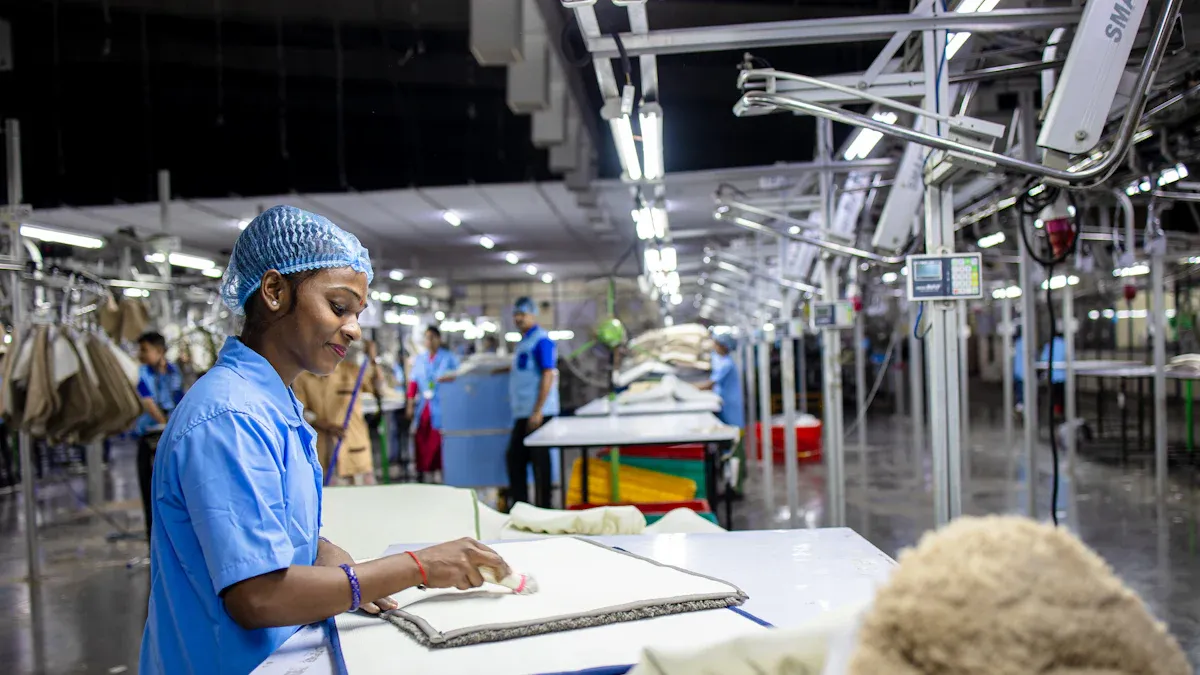
You can create retail uniforms with screen printing by following a series of steps that ensure your logo appears crisp and vibrant. The process starts with design preparation. You choose your artwork and separate each color into individual layers. Next, you coat a mesh screen with a light-sensitive emulsion in a dark room. After the emulsion dries, you expose the screen to UV light with your design, which hardens the emulsion where the design is not present. You rinse the screen to reveal the stencil. You then set up your printing station, level your platen, and secure your shirts. Position the screen at a 45° angle for accurate registration, especially for multi-color prints. To print, pour ink at one end of the screen and use a squeegee to flood the design with ink. Apply firm pressure to pull the squeegee across the screen, pushing ink through the stencil onto the fabric. After printing, cure the ink at high temperatures, usually around 320 °F for 90 seconds, using a conveyor dryer. Finally, inspect each shirt for ink consistency and perform a wash test to check durability. This method gives you strong, long-lasting screen printed transfers that stand up to frequent washing.
Pros of screen printing
Screen printing offers several advantages for retail uniforms. You benefit from cost-effectiveness when you order in bulk. The initial setup cost spreads across many shirts, so your cost per shirt drops as your order size increases. You get excellent durability, with screen printed transfers that withstand regular use and repeated washing while keeping their appearance. The process works on many materials, not just fabric. You can use custom screen printing on paper, wood, plastic, metal, and glass. You also achieve vibrant color reproduction, making your logo stand out and maintain its visual appeal over time. Traditional screen printing gives you bold, opaque colors that look professional and consistent. If you want uniforms that last and look sharp, custom screen printing delivers reliable results.
Tip: Choose screen printing for large orders and simple designs. You save money and get uniforms that last longer.
Cons of screen printing
Screen printing does have some drawbacks you should consider. The process is not cost-effective for small orders because setup time and materials increase your overall cost. If your design uses many colors, your costs rise due to the need for separate screens and more setup. Screen printed transfers struggle to reproduce fine details, so you may lose sharpness in complex logos. You also face longer turnaround times, especially for intricate designs, because setup takes more time. Traditional screen printing involves water and chemicals for cleaning screens, which raises environmental concerns. If you need quick, detailed, or small-batch uniforms, heat transfers may suit your needs better than custom screen printing.
Note: For highly detailed or multi-color logos, consider heat transfers or digital methods. Screen printing works best for bold, simple graphics and large orders.
Best uses in retail
You want your retail uniforms to make a strong impression. Screen printing gives you the best results when you need bold logos that stand out. This method creates vibrant colors that catch the eye, which is important for uniforms in busy retail environments. You can rely on screen printing for uniforms that need to last through frequent washing and daily wear.
Retail stores often use screen printing for promotional campaigns. You might launch a new product or run a special event. In these cases, you want uniforms that grab attention and reinforce your brand. Screen printing works well for event merchandise, such as t-shirts or hats for store openings, holiday sales, or community events. You get a consistent look across all items, which helps build recognition.
If you plan to order uniforms in large quantities, screen printing offers the best value. The setup cost spreads across many shirts, so you pay less per item. You can outfit your entire staff with matching uniforms without breaking your budget. This method suits retail chains, supermarkets, and department stores where you need hundreds or thousands of uniforms.
Tip: Choose screen printing for uniforms that need to last, look vibrant, and support your brand during high-traffic promotions.
Here are some scenarios where screen printing shines:
Promotional campaigns that require eye-catching uniforms.
Event merchandise for store launches or seasonal sales.
Large-volume orders for retail chains or franchises.
Screen printing does have some limits. You should avoid this method if your design uses more than six colors. The process becomes complex and expensive with each additional color. Small production runs, such as fewer than 30 shirts, may not justify the setup cost. For these cases, you might consider other methods like heat transfer.
Best Uses for Screen Printing | Why It Works Well |
|---|---|
Promotional campaigns | Delivers strong visual impact |
Event merchandise | Ensures consistent branding |
Large-volume orders | Reduces cost per shirt |
You want your uniforms to support your brand and last through daily use. Screen printing gives you durability, vibrant colors, and cost savings for large orders. You can trust this method when you need retail uniforms that make a statement and stand up to busy store life.
Heat transfer for retail uniforms

How heat transfer works
You can use heat transfer printing to create retail uniforms with vibrant, detailed logos and graphics. The process starts with your design. You use graphic design software to make a mock-up. Next, you print your logo onto heat transfer paper. You cut out your design using a vinyl cutter. Adjust the pressure and set the time for the heat transfer machine. Place your uniform on the press, making sure the transfer paper faces up. Clamp the press shut and begin the pressing process. After the timer finishes, open the press and remove the film from your design. This step-by-step method lets you produce custom heat transfers for personalized items and small batches. You can achieve complex multi-color designs and add personalization, such as names or numbers, to each shirt.
Create your design using graphic software.
Print your design onto heat transfer paper.
Cut out your design with a vinyl cutter.
Adjust pressure and set the time for the heat transfer.
Position your uniform and transfer paper.
Press the product.
Remove the film to reveal your finished logo.
Pros of heat transfers
Heat transfer printing offers several advantages for retail uniforms. You can produce vibrant, full-color designs that stand out. The process gives you a smooth, professional finish without imperfections. Your uniforms can withstand multiple washes, keeping their appearance for many uses. You benefit from fast turnaround times, which is ideal for custom orders and small batches. The method works on many types of fabrics, so you can maintain consistent branding across different apparel. Heat transfer printing is cost-effective for small runs, making it perfect for limited-edition products or personalized items. Many providers offer eco-friendly options, which appeal to environmentally conscious customers.
Benefit | Description |
|---|---|
Vibrant, Full-Colour Designs | Produces vivid, high-quality images, allowing for complex and multi-coloured logos. |
Smooth, Professional Finish | Ensures a clean, seamless look without imperfections, enhancing the overall quality of the product. |
Durability and Longevity | Designs withstand multiple washes without fading, making it ideal for uniforms and promotional items. |
Fast and Flexible | Quick turnaround for custom orders, suitable for both small and large batches. |
Versatile Across Fabrics | Works on a wide range of materials, ensuring consistent branding across different apparel types. |
Cost-Effective for Small Runs | Allows for cost-effective production of small batches, ideal for limited-edition products. |
Eco-Friendly Options | Many processes offer eco-friendly options, appealing to environmentally conscious consumers. |
Tip: Use heat transfer printing when you need personalization, quick delivery, or complex multi-color designs for your uniforms.
Cons of heat transfers
You should consider some drawbacks before choosing heat transfers for retail uniforms. Heat transfer prints may fade, crack, or peel after repeated washing, which affects longevity. The process can create a heavy feel, reducing the fabric’s breathability and comfort. Costs increase for large orders because each shirt requires individual pressing. You may face design limitations and restrictions on certain fabric types. Mistakes during application can lead to crooked designs or incomplete adhesion, resulting in wasted garments.
Drawback | Description |
|---|---|
Durability | Heat transfer prints may fade, crack, or peel after repeated washing, affecting longevity. |
Breathability | The process can create a heavy feel, reducing the fabric’s natural breathability, impacting comfort. |
Cost for Large Orders | While suitable for small batches, costs increase significantly for larger quantities due to individual pressing. |
Design Limitations | There are restrictions on design complexity and fabric types, which may limit creative options. |
Application Mistakes | Incorrect application can lead to crooked designs or incomplete adhesion, resulting in wasted garments. |
Note: Choose heat transfer printing for small batches, personalization, and detailed designs. For heavy use or large orders, you may want to consider other methods.
Best uses in retail
You want your retail uniforms to look professional and reflect your brand. Heat transfer gives you flexibility and creativity that other methods cannot match. You can use heat transfer for many retail scenarios, especially when you need detailed or colorful logos.
You should consider heat transfers when you want to create uniforms with complex, multi-colored logos. This method allows you to print full-color images, gradients, and fine details that stand out. If your brand uses a logo with many colors or intricate shapes, heat transfer helps you achieve a sharp, vibrant result.
Heat transfers work well for large designs that cover a big area of the shirt. You can place bold graphics on the front, back, or sleeves without losing quality. This makes your uniforms eye-catching and memorable for customers.
Personalization is another strong point of heat transfer. You can add names, numbers, or unique details to each uniform. This is perfect for retail teams where each staff member needs a custom touch. You do not need to order in bulk to get this benefit. Heat transfer is ideal for small orders or one-off items, so you can update uniforms as your team grows or changes.
Many retail stores use heat transfers for special promotions or seasonal events. You can quickly create limited-edition uniforms for a holiday sale or a new product launch. If you want to test a new design, heat transfer lets you produce a small batch without a large investment.
Sports retailers often choose heat transfer for team gear and jerseys. You can add player names, numbers, and sponsor logos with ease. The process works on many types of fabrics, so you can keep your branding consistent across shirts, jackets, and hats.
Here are the top retail scenarios where heat transfer shines:
Complex, multi-colored logos that need sharp detail
Large designs that cover a big area of the uniform
Small orders or personalized items for staff
Intricate or full-color graphics for special events
Sports jerseys and team gear with names and numbers
Tip: Use heat transfers when you want to experiment with new designs or need uniforms fast. You can update your look quickly and keep your team looking fresh.
You can rely on heat transfer for flexibility, speed, and creative freedom. This method helps you meet the unique needs of your retail business, whether you run a boutique, a chain store, or a sports shop.
Heat transfer vs. screen printing: direct comparison
Durability in retail settings
You want your retail uniforms to look sharp and last through daily wear. Durability becomes a key factor when you choose between screen printing and heat transfer. In high-traffic retail environments, screen printing stands out for its long-lasting results. The ink absorbs into the fabric, creating a strong bond that resists fading and abrasion. This method helps your uniforms maintain their appearance even after many washes.
Heat transfer logos, on the other hand, rely on adhesive to stick the design to the surface of the fabric. Over time, this adhesive can weaken. You may notice issues like peeling or cracking, especially if the uniforms go through frequent washing or heavy use. The design sits on top of the fabric, making it more vulnerable to damage.
Consider these points:
Screen printing embeds ink into the fabric, which enhances longevity.
Heat transfer logos adhere to the surface, so they can wear out faster.
Screen prints maintain their integrity better over time compared to heat transfers.
If you need uniforms for a busy retail store, screen printing gives you the best durability. Heat transfer works well for short-term needs or special events, but it may not hold up as long under constant use.
Cost-per-shirt for different order sizes
Cost-per-shirt can influence your decision, especially when you plan your budget for uniforms. Screen printing offers the most savings for large orders. The setup cost spreads across many shirts, so the price per shirt drops as your order size increases. For example, if you order 100 or more uniforms, you pay much less per shirt with screen printing than with heat transfer.
Heat transfers are more flexible for small batches. You do not need to pay for expensive setup, so you save money if you only need a few shirts. However, the cost-per-shirt stays higher for larger orders because each shirt requires individual pressing.
Here is a simple comparison:
Order Size | Screen Printing (Cost-per-shirt) | Heat Transfer (Cost-per-shirt) |
|---|---|---|
10 shirts | High | Moderate |
50 shirts | Moderate | High |
100+ shirts | Low | High |
If you need a large number of uniforms, screen printing gives you the best value. For small orders or personalized items, heat transfer offers more flexibility, but you pay more per shirt.
Tip: Plan your order size before choosing a method. Screen printing saves money for bulk orders, while heat transfer suits small, custom runs.
Design complexity and color options
The design of your retail uniform logo can set your brand apart. Screen printing and heat transfer handle design complexity in different ways. Screen printing works best for simple, bold logos with a few colors. The process uses separate screens for each color, so adding more colors or fine details increases the cost and setup time.
Heat transfer methods excel at producing complex, multi-color designs. You can achieve photo-quality results with over 10 million colors. This method allows you to print gradients, fine lines, and intricate graphics. You can also use heat transfers on difficult areas of garments, such as sleeves and collars, which adds more creative options.
Here is a quick table to help you compare:
Method | Advantages |
|---|---|
Screen Printing | Ideal for bulk printing of basic colors and core designs. |
Heat Transfer | Capable of producing multi-color designs and photo-quality results, suitable for complex logos. |
You can use a combination of both methods if you want to customize uniforms further. For example, you might use screen printing for the main logo and heat transfers for names or numbers.
Heat transfer methods can achieve photo-quality results with many colors.
They are adaptable for printing on hard-to-reach areas of garments.
Custom heat transfers work for both screen printed and digitally produced designs.
If your brand relies on detailed or colorful logos, heat transfer gives you more creative freedom. For classic, simple designs, screen printing delivers consistent and professional results.
Fabric compatibility
Choosing the right fabric for your retail uniforms can make a big difference in the final result. Both screen printing and heat transfer methods work well on popular retail fabrics, but each has its strengths and limitations. You want your uniforms to look sharp, feel comfortable, and last through repeated use.
Screen printing performs best on natural fibers like cotton. Cotton absorbs ink well, so your logo appears vibrant and crisp. You also get a soft, breathable feel, which is important for staff comfort. Polyester fabrics also work with screen printing, especially when you need uniforms that resist wrinkles and dry quickly. However, you may notice that polyester can sometimes cause ink to sit on the surface, which affects the print’s longevity. Cotton/poly blends offer a balance between comfort and durability. Tri-blends, which mix cotton, polyester, and rayon, give you a smooth texture and a premium feel. Screen printing can handle these blends, but you should always test for color vibrancy and ink adhesion.
Heat transfer methods give you more flexibility across different fabrics. You can use heat transfers on cotton, polyester, blends, and even tri-blends. The adhesive in heat transfer bonds well to smooth surfaces, so you get a clean, detailed logo. However, you need to watch out for high heat settings, especially on delicate fabrics. Some synthetic materials can scorch or melt if the press is too hot. Always check the fabric’s care label before applying heat transfers.
Here’s a quick comparison of fabric compatibility for both methods:
Fabric Type | Screen Printing: Advantages & Limitations | Heat Transfer: Advantages & Limitations |
|---|---|---|
Cotton | Vibrant prints, soft feel; may shrink after washing | Bonds well, soft finish; watch for high heat |
Polyester | Durable, moisture-wicking; ink may sit on surface | Excellent adhesion; avoid overheating |
Cotton/Poly Blends | Balanced comfort and strength; consistent results | Flexible, works well; check for heat sensitivity |
Tri-Blends | Smooth, premium texture; more expensive | Soft, detailed prints; test for best temperature |
Cotton: Soft, breathable, and ideal for both screen printing and heat transfer.
Polyester: Durable and moisture-wicking, suitable for both methods with proper technique.
Cotton/poly blends: Combine comfort and strength, offering reliable results.
Tri-blends: Deliver softness and durability, but may require careful temperature control.
Tip: Always test your chosen printing method on a sample garment before placing a large order. This helps you avoid surprises and ensures your uniforms meet your expectations.
Turnaround and reorders
You want your retail uniforms ready on time, especially when you face tight deadlines or need to update your team’s look quickly. Turnaround time and reorder flexibility can influence your choice between screen printing and heat transfer.
Screen printing usually requires more setup at the start. You need to create screens for each color in your design. This process takes time, especially for multi-color logos. Once the screens are ready, you can print large batches quickly. If you plan to reorder the same design, many providers keep your screens on file. This reduces setup time for future orders, making reorders faster and more cost-effective. However, if you change your logo or need to add new names, you may need new screens, which adds time and cost.
Heat transfer offers a faster setup, especially for small or custom orders. You do not need to create screens or mix inks. You can print your design onto transfer paper and apply it directly to the garment. This makes heat transfer ideal for rush orders, last-minute changes, or when you want to personalize each uniform. Reorders are simple. You can print one shirt or a hundred with the same speed and quality. If you need to update staff names or add new team members, heat transfers let you make changes without extra setup.
Here’s a quick summary to help you decide:
Screen printing: Best for large, repeat orders with the same design. Setup takes longer, but reorders are efficient if you keep the design unchanged.
Heat transfer: Best for small batches, rush jobs, or personalized uniforms. Fast setup and easy reorders, even with frequent design changes.
Note: If you expect to reorder uniforms often or need flexibility for new hires, heat transfer gives you the fastest and most adaptable solution. For consistent, high-volume orders, screen printing remains the most efficient choice.
Choosing the right method
Factors to consider
You want to make the best choice for your retail uniforms. To do this, you should look at several important factors. These will help you decide which method is right for you.
Budget
You need to know how much you want to spend. Screen printing works best for large orders because it lowers the cost per shirt. Heat transfers are better for small batches or personalized items, but the price per shirt is higher.Garment Type
You should check the fabric of your uniforms. Screen printing works well on cotton and blends. Heat transfers can handle cotton, polyester, and blends, but you need to watch the heat settings on delicate fabrics.Intended Use and Longevity
Think about how often your staff will wear and wash the uniforms. Screen printing gives you excellent durability for daily use. Heat transfers work well for short-term needs or special events.Design Complexity
Look at your logo or artwork. Screen printing suits bold, simple graphics with few colors. Heat transfers let you use intricate, multi-color designs and even photos.Turnaround Time
Consider how quickly you need your uniforms. Screen printing takes longer to set up, especially for complex designs. Heat transfers offer fast production for rush orders or last-minute changes.
Here is a table to help you compare:
Factor | Screen Printing | Heat Transfer |
|---|---|---|
Order Size | Best for large orders | Ideal for small-scale needs |
Design Complexity | Suited for bold, simple graphics | Excels at intricate, detailed designs |
Durability | Offers excellent durability | Less durable, best for short-term use |
Cost-Effectiveness | More cost-effective for large runs | More suitable for smaller, personalized items |
Turnaround Time | Longer due to setup processes | Fast for individual customization |
Tip: Write down your needs for budget, fabric, use, design, and timing before you choose a printing method.
When to choose heat transfers
You should choose heat transfers when your retail uniforms require flexibility, speed, and creative design options. This method works best for small batches, personalized items, and uniforms with complex logos. If you want to print photorealistic images or use many colors, heat transfers give you the freedom to achieve those effects. You can update your uniforms quickly, which helps when your team changes or you run special promotions.
Heat transfers suit situations where you need to add names, numbers, or unique details to each shirt. Sports retailers often use this method for jerseys because it allows for easy customization. If you want to test new designs or create limited-edition uniforms, heat transfers let you produce small quantities without high setup costs.
You may notice that heat transfers work well on a variety of fabrics, including cotton, polyester, and blends. You can apply designs to hard-to-reach areas, such as sleeves or collars, which gives you more creative control. If you need uniforms fast, heat transfers offer quick turnaround times. You can receive your order within days, which is helpful for last-minute events or new staff hires.
Here are some scenarios where heat transfers excel:
You need detailed, multi-color logos or graphics.
You want to personalize uniforms with names or numbers.
You plan to order small batches or test new designs.
You require fast delivery for special events or new team members.
You want to print on different types of fabrics or garment areas.
Tip: Use heat transfers when you want creative freedom, quick updates, and personalized uniforms for your retail business.
Working with providers
You can improve your retail uniform printing experience by working closely with your printing provider. Start by choosing a reliable manufacturer who understands both quality and practicality. Ask for samples and review their previous work to make sure they meet your standards. You should also gather feedback from your employees. Their input helps you address comfort and functionality, which leads to better uniforms.
Focus on sustainability by selecting eco-friendly materials whenever possible. Many providers offer options that reduce environmental impact. You can ask about recycled fabrics or water-based inks to support your brand’s commitment to sustainability.
When you design your logo, consider how it will look on different garment colors and styles. Make sure your logo contrasts well with the fabric and other design elements. Maintain consistent placement across all uniforms to create a professional appearance. Keep at least one inch of space between your logo and any hem, edge, pocket, or structured area. This practice prevents printing issues and ensures your logo stands out.
If you choose embroidery for your uniforms, remember that costs depend on stitch count, design complexity, color changes, and order quantity. Higher stitch counts require more production time and thread, which increases per-piece costs. Larger orders usually result in lower per-piece pricing because of production efficiencies.
Here is a checklist to help you collaborate with your provider:
Work with a manufacturer who values quality and practicality.
Collect employee feedback for comfort and functionality.
Choose eco-friendly materials to support sustainability.
Select thread colors and logo placement for best contrast and appearance.
Keep logo placement consistent across all garments and team members.
Leave at least one inch of space between your logo and garment edges.
Simplify your design for structured garments and maintain a clean look.
Consider order quantity to optimize pricing for embroidery or printing.
Note: Clear communication with your provider helps you avoid mistakes and ensures your uniforms match your brand vision. You can request digital proofs or physical samples before final production.
You should also compare screen printing and heat transfers with your provider. Ask about their experience with both methods and request recommendations based on your needs. Providers can guide you on the best technique for your order size, design complexity, and fabric type. You can make informed decisions and achieve the best results for your retail uniforms.
You can choose the best logo printing method for your retail uniforms by focusing on your priorities. Screen printing works well for large orders and uniforms that need durability. Heat transfer suits small batches and complex designs. When you decide, consider these factors:
Order size
Intended use
Budget
Consult your provider and review your needs. You can make a confident, informed decision that supports your brand and keeps your uniforms looking sharp.
FAQ
What is the main difference between heat transfer and screen printing?
Heat transfer uses heat to apply designs onto fabric. Screen printing pushes ink through a mesh screen directly onto the garment. You get more durability with screen printing and more design flexibility with heat transfer.
Which method lasts longer on retail uniforms?
Screen printing lasts longer. You can expect screen printed logos to survive 50 to 100 washes. Heat transfer designs may start to crack or peel after 25 to 30 washes.
Can you print detailed or photo-quality logos on uniforms?
Yes, you can. Heat transfer works best for detailed or photo-quality logos. You get sharp images and vibrant colors. Screen printing suits simple, bold designs with fewer colors.
Is heat transfer more expensive than screen printing?
You pay more per shirt with heat transfer, especially for large orders. Screen printing costs less per shirt when you order in bulk. For small batches, heat transfer can be more cost-effective.
Which fabrics work best for each printing method?
Screen printing works best on cotton and blends. Heat transfer suits cotton, polyester, and blends. You should always test your chosen method on a sample garment first.
How quickly can you get uniforms printed?
Heat transfer offers faster turnaround for small or custom orders. You can get uniforms in a few days. Screen printing takes longer to set up but prints large batches quickly once ready.
Can you personalize each uniform with names or numbers?
Yes, you can. Heat transfer makes it easy to add names or numbers to each shirt. You get flexibility for personalized uniforms without extra setup costs.
 English
 Русский
 Deutsch (Sie)
 العربية
 Español
 Français