

Which Is Better for Schools Private Label or Ready-Made Uniforms
Table of Contents
Display
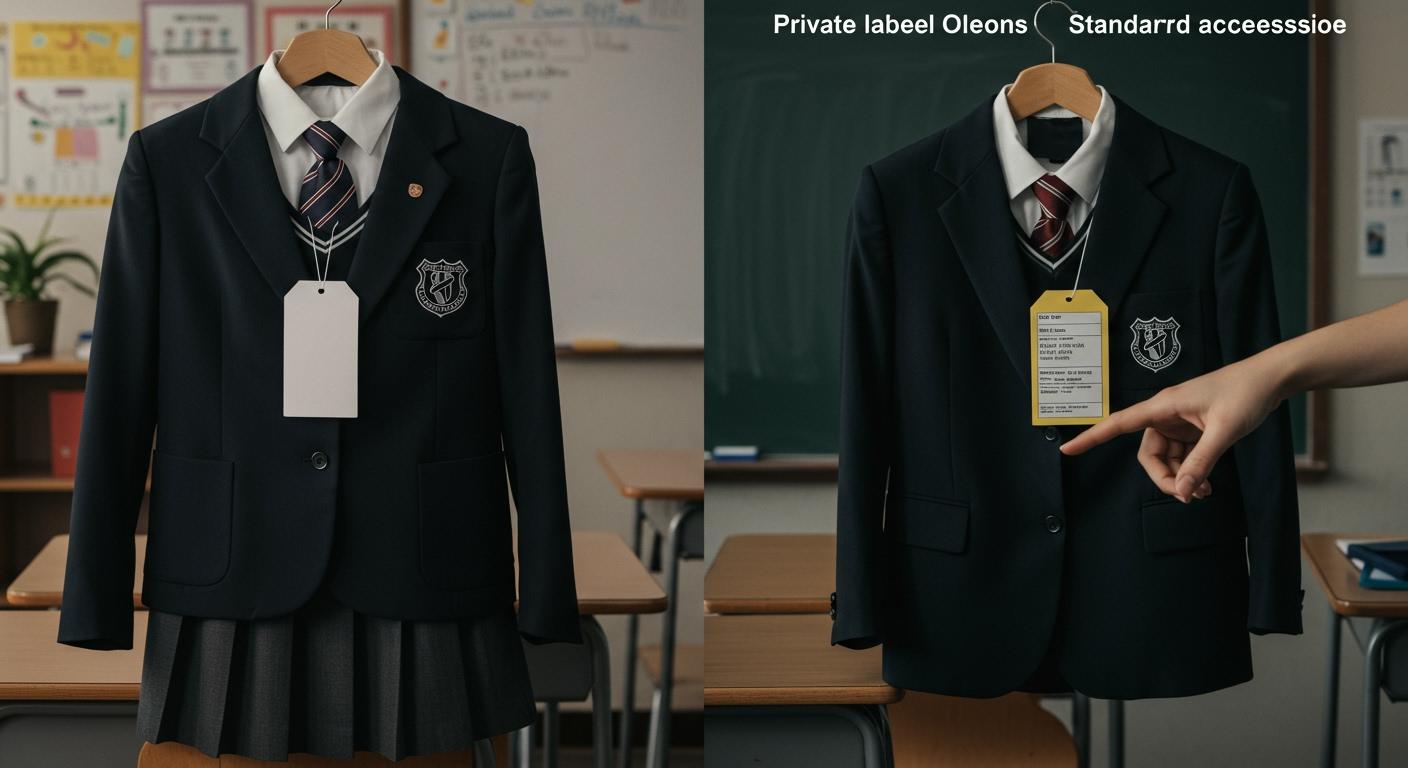
When you choose uniforms for your school, your decision often depends on your main priorities. If you value strong branding and customization, Private Label Student Uniforms offer tailored designs and exclusive features. Ready-made uniforms appeal to schools that prioritize cost efficiency and quick availability. Consider the most common factors that matter to school administrators:
Priority | Description |
|---|---|
Ensures uniforms withstand wear and tear over time. | |
Customization Options | Allows schools to tailor uniforms to their specific branding and identity. |
Range of Products | A diverse selection helps meet the needs of different students and preferences. |
Easy Ordering and Management | Simplifies the process for schools, making it more efficient to manage uniform needs. |
Reliable Customer Service | Ensures support is available when issues arise, enhancing the overall experience for schools. |
Pricing and Value | Important for budget considerations, ensuring schools get the best deal for their investment. |
Experience and Reputation | Vendors with a strong track record are more likely to deliver quality and reliability. |
Both options bring unique strengths to your school community, from promoting unity to supporting your budget goals.
Key Takeaways
Private label uniforms offer customization, allowing schools to create unique designs that reflect their identity.
Ready-made uniforms provide a cost-effective solution with quick availability, ideal for schools with tight budgets.
Quality and durability are crucial; private label uniforms often last longer, reducing long-term replacement costs.
Consider the lead time; private label uniforms take longer to produce, while ready-made options are available quickly.
Gather student feedback when choosing uniforms to ensure comfort and satisfaction, leading to better school spirit.
Evaluate your school’s priorities, such as branding, budget, and flexibility, to make the best uniform choice.
Private label uniforms can enhance school pride and reduce peer pressure, fostering a positive learning environment.
Ready-made uniforms simplify inventory management, allowing schools to order as needed without excess stock.
Uniform Types
Private Label Student Uniforms
You can choose private label student uniforms if you want a unique look for your school. These uniforms use exclusive manufacturing processes. You work directly with a supplier to design every detail, from fabric type to color and logo placement. This approach lets you create custom-made uniforms that reflect your school’s identity. You can select special features, such as reinforced stitching or moisture-wicking materials, to improve comfort and durability. The supplier produces these uniforms in batches tailored to your specifications. You gain full control over branding, so your students wear a consistent and professional appearance.
Tip: Private label student uniforms help you build a strong school brand and set your institution apart from others.
Ready-Made Uniforms
Ready-made uniforms offer a practical solution if you need quick and affordable options. Manufacturers produce these uniforms in standard sizes and styles. You select from a catalog of pre-designed garments. This method reduces lead time and simplifies the ordering process. You can often find a wide range of sizes and colors, but customization remains limited. Branding usually involves adding your school’s logo to an existing design. You benefit from lower costs and faster delivery, which suits schools with tight budgets or urgent needs.
Ready-made uniforms work well for schools that want a straightforward, cost-effective approach.
You can easily reorder standard items as your student population grows.
Key Differences
You will notice several important differences between private label student uniforms and ready-made uniforms:
Feature | Private Label Student Uniforms | Ready-Made Uniforms |
|---|---|---|
Customization | High (design, fabric, logo) | Low (limited to logo) |
Branding Impact | Strong and unique | Standardized |
Production Method | Custom-made uniforms | Mass-produced |
Sizing | Tailored or flexible | Standard sizes |
Lead Time | Longer (custom production) | Short (in-stock items) |
Cost | Higher upfront | More affordable |
You should consider your school’s priorities before making a decision. If you value exclusive branding and tailored fit, private label student uniforms provide the best solution. If you need efficiency and affordability, ready-made uniforms deliver reliable results.
Cost
Upfront Cost
When you evaluate uniform options, upfront cost often becomes a deciding factor. Private label student uniforms usually require a higher initial investment. You work with suppliers to create custom designs, which means you pay for exclusive manufacturing and specialized materials. Minimum order quantities also tend to be higher. In contrast, ready-made uniforms offer a more affordable entry point. You select from existing designs, so manufacturers can produce these uniforms in bulk and pass the savings on to you.
Here is a comparison of typical upfront costs and minimum order quantities for private label student uniforms:
Type of Uniform | Price Range (USD) | Minimum Order Quantity |
|---|---|---|
Custom Design Shirt Set | $12.95 – $19.62 | 5 sets |
Factory Wholesale Knit Waistcoat | $4.99 – $13.99 | 300 pieces |
European Style 2-piece Suit | $9.78 – $12.45 | 30 sets |
Long Sleeve Shirt and Plaid Pants | $12.00 – $13.30 | 200 sets |
Custom Summer & Winter Suits | $8.20 – $9.90 | 50 sets |
Custom Blazer Suit | $10.50 – $12.59 | 200 pieces |
Quality Tracksuit | $10.90 – $16.80 | 100 sets |
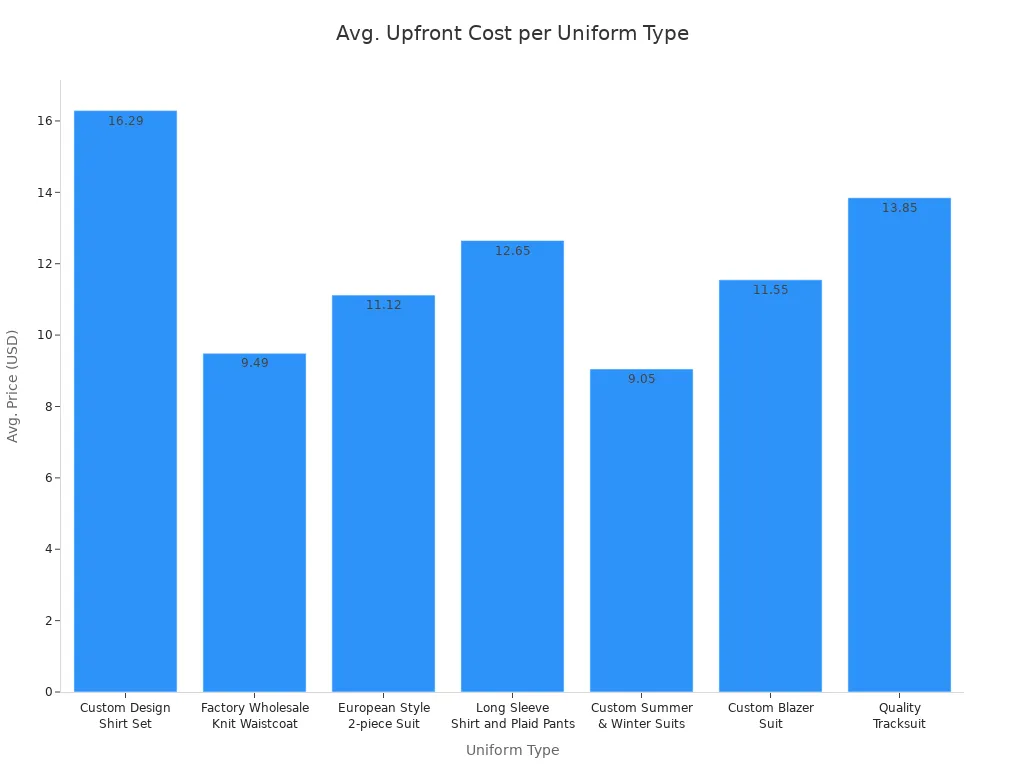
Ready-made uniforms typically cost less per item and do not require large minimum orders. This makes them ideal for schools with limited budgets or those that need uniforms quickly.
Long-Term Value
You should not focus only on the initial price. Long-term value matters just as much. Private label student uniforms often use higher-quality fabrics and construction. These uniforms last longer and maintain their appearance after repeated washing. Over time, you may spend less on replacements. Ready-made uniforms, while affordable upfront, may wear out faster. You might need to reorder more often, which can increase your total spending over several years.
Note: Investing in durable uniforms can reduce your long-term costs, even if the upfront price is higher.
Order Quantities
Order quantity requirements can impact your budget and inventory management. Private label student uniforms usually come with higher minimum order quantities. You must plan for larger purchases and store extra inventory. This approach works well for larger schools or those with stable enrollment numbers. Ready-made uniforms offer more flexibility. You can order smaller quantities as needed, which helps you manage costs and avoid excess stock. This flexibility benefits schools with fluctuating student populations or those that want to minimize storage needs.
When you compare both options, ready-made uniforms provide a cost-effective solution for schools with smaller budgets or unpredictable enrollment. Private label student uniforms deliver better value for schools that prioritize quality and branding, especially when you can take advantage of economies of scale.
Quality
Materials
You want uniforms that look good and last through the school year. The choice of materials plays a major role in both appearance and performance. Private label student uniforms often use strong, breathable fabrics that are easy to care for. You can select from cotton, polyester, or blended materials, depending on your school’s needs. These fabrics resist shrinking and fading, so uniforms keep their color and shape after many washes.
Ready-made uniforms offer less consistency in material quality. Some may use durable fabrics, but others might not hold up as well. You have less control over the fabric composition, which can affect how the uniforms feel and perform.
Feature | Private Label Uniforms | Ready-Made Uniforms |
|---|---|---|
Material Quality | Strong, breathable, easy to care for | Varies |
Fabric Composition | Made from durable fabrics like cotton, polyester, and blends | Varies |
Resistance to Wear | Resistant to shrinking and fading | Varies |
Tip: Choosing high-quality materials helps you reduce replacement costs and ensures students always look their best.
Comfort
Comfort matters every day. Students spend hours in their uniforms, so you want them to feel at ease. Private label student uniforms focus on functionality and freedom of movement. Intelligent tailoring creates a sleek appearance while allowing students to move comfortably. Soft, breathable fabrics prevent overheating and irritation, making uniforms suitable for all-day wear.
Ready-made uniforms can vary in comfort. Some may fit well, but others might feel stiff or restrictive. Standard sizing does not always match every student’s body type, which can lead to discomfort.
Feature | Private Label Uniforms | Ready-Made Uniforms |
|---|---|---|
Comfort | Designed for functionality and freedom of movement | Varies |
Softness | Soft and breathable for all-day comfort | Varies |
Tailoring | Intelligent tailoring for a sleek appearance | Standard fit |
Students who feel comfortable in their uniforms show higher satisfaction and better focus in class.
Durability
Durability affects how long uniforms last and how often you need to replace them. Private label student uniforms withstand daily wear and tear. Reinforced stitching and quality fabrics help these uniforms maintain their shape and color, even after frequent washing. You invest in uniforms that look new for longer, which saves money over time.
Ready-made uniforms may not offer the same level of durability. Some items might wear out quickly, leading to more frequent replacements. This can increase your long-term costs and create frustration for families.
Durable uniforms support a positive student experience.
You spend less time and money managing uniform issues.
When you choose quality, you invest in your school’s reputation and your students’ comfort.
Customization

Design Options
You want your school uniforms to stand out and reflect your school’s unique identity. Custom-made uniforms give you full control over every design element. You can select specific colors, choose from a variety of fabrics, and add details like piping or contrast panels. You also decide on the placement and style of your school logo. This level of customization ensures that your uniforms match your vision exactly.
When you work with a supplier that specializes in private label clothing, you can request features that improve both style and function. For example, you might add reinforced knees for pants or moisture-wicking fabric for sportswear. These options help you address the needs of your students while maintaining a professional appearance. Ready-made uniforms, on the other hand, offer limited design choices. You usually pick from a catalog of standard items, which may not capture your school’s character.
Tip: Custom-made uniforms allow you to create a signature look that students and parents will recognize and appreciate.
Branding
Strong branding helps your school build a sense of pride and community. Private label student uniforms support your branding goals by allowing you to incorporate your school’s logo, motto, and colors in a consistent and prominent way. You can choose embroidery, patches, or screen printing to display your school’s identity. This approach makes your uniforms more than just clothing—they become a symbol of your school’s values and reputation.
Custom-made uniforms also help you reinforce your brand at events, competitions, and in the community. When students wear uniforms that feature your unique branding, they represent your school wherever they go. Ready-made uniforms can include a logo, but they rarely offer the same level of branding impact.
Consistency
Uniform consistency matters for both appearance and school spirit. Custom-made uniforms ensure that every student wears the same style, color, and logo placement. This creates a unified look across all grades and activities. You avoid issues with mismatched shades or outdated designs. Consistency also makes it easier for parents to purchase the correct items each year.
With ready-made uniforms, you may face challenges with color variations or changes in fabric from one batch to another. These inconsistencies can affect your school’s image and make it harder to maintain a professional standard. By choosing custom-made uniforms, you guarantee a polished and cohesive appearance for your entire student body.
Ordering
Lead Time
You need to consider lead time when planning your school uniform orders. Private label student uniforms require a longer production schedule. You work with suppliers to finalize designs, select materials, and approve samples. After you confirm your order, the manufacturer begins bulk production. This process can take several weeks or even months, especially during peak seasons. You must plan ahead and place orders well before the start of the school year.
Ready-made uniforms offer much faster lead times. Manufacturers keep these items in stock and ready for immediate shipment. You can place an order and receive your uniforms within days. This quick turnaround helps you respond to sudden changes in enrollment or last-minute needs.
Uniform Type | Typical Lead Time |
|---|---|
Private Label Student Uniforms | 4–12 weeks (custom production) |
Ready-Made Uniforms | 2–7 days (in-stock items) |
Tip: If you want custom features, start the ordering process early to avoid delays.
Flexibility
Flexibility in ordering can make your job much easier. Private label student uniforms require you to commit to larger quantities and fixed designs. Once you approve the design and place your order, changes become difficult or costly. You must predict your needs accurately to avoid shortages or excess inventory.
Ready-made uniforms give you more flexibility. You can order small quantities as needed. If you need to add or change sizes, you can do so quickly. This approach works well for schools with fluctuating student numbers or those that want to test new styles before committing to a large order.
Key Points:
Private label: Best for stable enrollment and long-term planning.
Ready-made: Ideal for schools needing quick adjustments or smaller orders.
Inventory
Managing inventory affects your budget and storage space. Private label student uniforms often require you to purchase in bulk. You need to store extra uniforms on-site or in a warehouse. This approach works for large schools with predictable enrollment but can create challenges if your student numbers change.
Ready-made uniforms simplify inventory management. You can order only what you need, when you need it. This reduces the risk of overstocking or running out of popular sizes. You also save on storage costs.
Note: Efficient inventory management helps you control costs and ensures students always have access to the right uniforms.
Summary Table:
Feature | Private Label Student Uniforms | Ready-Made Uniforms |
|---|---|---|
Lead Time | Long (custom production) | Short (in-stock supply) |
Flexibility | Low (fixed orders) | High (order as needed) |
Inventory | Bulk storage required | Minimal storage needed |
You should match your ordering strategy to your school’s size, budget, and planning needs. This ensures you get the right uniforms at the right time, every year.
Student Experience
Fit
You want uniforms that fit your students well. A good fit supports comfort, confidence, and a polished appearance. Private label student uniforms give you the advantage of tailored sizing. You can work with your supplier to offer a range of sizes, including options for different body types. Some suppliers even provide measurement guides or fitting sessions. This approach helps you address the needs of students who may not fit standard sizes.
Ready-made uniforms use standard sizing charts. These charts work for many students, but not all. Some students may find the sleeves too short or the waist too tight. When uniforms do not fit well, students may feel uncomfortable or self-conscious. Poor fit can also affect how students move during class or sports.
Tip: Ask your supplier about size samples or fitting events. These steps help you ensure every student finds a comfortable option.
A well-fitting uniform does more than look good. It helps students focus on learning instead of adjusting their clothes. You also reduce the risk of uniform violations or complaints from parents.
Satisfaction
Student satisfaction depends on more than just appearance. Comfort, fit, and personal preference all play a role. When you choose private label student uniforms, you can gather feedback from students and families before finalizing your design. You might survey students about fabric choices or ask parents about preferred features. This process helps you create uniforms that students actually want to wear.
Students who feel comfortable in their uniforms show higher satisfaction. They participate more in class and school activities. You may notice fewer complaints about itching, overheating, or restrictive movement. Private label options let you address these concerns with features like breathable fabrics or adjustable waistbands.
Ready-made uniforms offer less flexibility. You may receive feedback about discomfort or poor fit, but you have limited options to make changes. Over time, dissatisfaction can affect school spirit and student morale.
Factor | Private Label Uniforms | Ready-Made Uniforms |
|---|---|---|
Fit | Tailored, flexible sizing | Standard sizing |
Comfort | Customizable features | Varies |
Student Feedback | Incorporated in design | Limited influence |
Satisfaction Level | High (when needs are met) | Varies |
Listening to student feedback helps you create a positive uniform experience. When students feel heard, they take more pride in their appearance and your school community.
You build a stronger school culture when students feel comfortable and satisfied with their uniforms. Consider their preferences and feedback as you make your decision. This approach leads to better outcomes for everyone involved.
Pros and Cons
Private Label Student Uniforms
You gain several advantages when you choose private label student uniforms for your school. These uniforms help you create a distinctive identity and foster a sense of pride among students. You can design every detail, which allows you to reinforce your school’s values and image. Students benefit from reduced peer pressure and a more inclusive environment. Uniforms also save families money throughout the year by minimizing the need for frequent shopping trips.
Reduces peer pressure on how to look.
Saves money on school shopping throughout the year.
Increases a sense of belonging and school pride.
Less opportunity for cliques to form on campus.
Uniforms help create a safe learning environment by reducing bullying and violence. You can easily identify intruders, which enhances campus security. When students wear uniforms, they form relationships based on personality rather than appearance. This creates a stress-free environment for learning and encourages positive interactions.
Wearing uniforms fosters a strong sense of pride and belonging among students. You connect them to your school’s identity and enhance their overall experience.
Despite these benefits, you must consider the disadvantages. Private label student uniforms often present a financial burden for families. The average cost of middle school uniforms is about $450, which can exceed the price of regular clothes. Parents may need to buy separate sets for school and extracurricular activities, adding to the strain.
Disadvantage | Description |
|---|---|
Financial Burden | The average cost of middle school uniforms is about $450, which can be more than regular clothes for some families. Parents also need to buy separate sets for school and activities, adding to the financial strain. |
Some students feel embarrassed or judged in public when wearing uniforms, especially compared to peers in casual attire. Children from less prestigious schools may become targets for bullying by those from more affluent institutions. You also limit students’ freedom to choose their clothing, which can hinder their development of decision-making and self-expression skills. Restricting how students present themselves may lead to a lack of independence and preparation for adulthood.
Tip: You should weigh the benefits of unity and safety against the potential impact on student individuality and family finances.
Ready-Made Uniforms
Ready-made uniforms offer a practical solution for many schools. You benefit from enhanced safety, as these uniforms make it easier to identify students and deter intruders. Schools often see positive behavioral changes, with students adhering better to rules and routines. Academic performance may improve due to reduced distractions and increased attendance rates.
Advantage | Description |
|---|---|
Safety | Enhances safety by making it easier to identify students and deter intruders. |
Behavioral Improvements | Associated with positive behavioral changes, leading to better adherence to school rules. |
Academic Performance | Linked to improved attendance rates and academic performance due to reduced distractions. |
Simplification for Parents | Streamlines the morning routine, reducing stress for parents and students. |
Cost-Effectiveness | Generally more affordable than regular clothing, especially for families with multiple children. |
Preparation for Professional World | Instills a sense of discipline and prepares students for environments with dress codes. |
Equalization of Fashion | Reduces bullying and social pressure related to clothing choices, fostering a more inclusive culture. |
Positive Learning Culture | Contributes to a respectful and inclusive classroom environment, enhancing overall learning. |
Professional Image of School | Projects a professional image, positively impacting community perception and enrollment. |
Environmental Benefits | Promotes sustainable practices by encouraging reuse of clothing items. |
You simplify the morning routine for families and reduce stress for both parents and students. Ready-made uniforms are generally more affordable, especially for families with multiple children. These uniforms prepare students for professional environments and encourage discipline. You also promote a respectful and inclusive classroom culture, which enhances learning outcomes.
However, you must recognize the disadvantages. Ready-made uniforms limit self-expression and individuality. Students have fewer choices in dress codes, which can affect personal and cultural identity. Some students may face challenges with religious expression if uniforms do not accommodate specific requirements. You may encounter difficulties finding and purchasing the correct sizes, which can create financial burdens for families.
Reduces choice in dress codes, affecting personal and cultural identity.
May violate religious expression, as some students have specific dress requirements.
Can be difficult to find and purchase, creating financial burdens for families.
Note: You should balance the benefits of affordability and simplicity with the need to respect student diversity and individual needs.
Decision Guide
Checklist
Selecting the right uniform type for your school requires a clear understanding of your community’s needs. Use this checklist to guide your decision-making process. Consider the age group of your students, your school’s priorities, and the specific requirements for comfort, durability, and branding.
Age Group | Key Considerations |
|---|---|
Toddlers and Early Primary | Softness, comfort, gentle fabrics (organic cotton, bamboo blends), flexibility for movement |
Primary and Middle School | Breathability, durability, moisture-wicking properties, resistance to pilling and fading |
Teenagers | Structure, good fit, stain resistance, smart appearance, stretch, and easy care |
Additional Factors to Include in Your Checklist:
Branding Needs: Do you want a unique look that reflects your school’s identity?
Budget Constraints: What is your available budget for uniforms, both upfront and long-term?
Order Flexibility: Do you need to order in small batches or adjust quantities frequently?
Lead Time: How quickly do you need uniforms delivered?
Inventory Management: Can you store bulk orders, or do you need just-in-time delivery?
Student Feedback: Have you gathered input from students and parents about preferences?
Sizing Requirements: Do your students need tailored sizing or will standard sizes suffice?
Sustainability Goals: Are you looking for eco-friendly materials or production methods?
Tip: Review this checklist with your leadership team before making a final decision. Involving multiple perspectives ensures you address all critical needs.
Scenarios
Every school faces unique challenges. The right uniform solution depends on your specific situation. Here are some common scenarios and recommendations to help you choose:
Scenario 1: Rapidly Growing Enrollment
You experience frequent changes in student numbers. Ready-made uniforms offer the flexibility to order as needed and avoid overstocking. You can respond quickly to new enrollments without long lead times.
Scenario 2: Strong School Branding Initiative
You want to create a distinctive identity and foster school pride. Private label student uniforms allow you to design every detail, from fabric to logo placement. You achieve a consistent, professional look that sets your school apart.
Scenario 3: Limited Storage Space
Your school has minimal space for storing uniforms. Ready-made uniforms require less inventory management. You order only what you need, reducing storage costs and waste.
Scenario 4: High Student Turnover
Your student population changes frequently. Ready-made uniforms provide a practical solution. You can adjust orders quickly and avoid excess inventory.
Scenario 5: Focus on Comfort for Young Learners
You serve toddlers or early primary students. Prioritize softness and flexibility. Private label uniforms let you select gentle fabrics like organic cotton or bamboo blends, ensuring comfort and freedom of movement.
Scenario 6: Emphasis on Durability for Active Students
Your students participate in sports or outdoor activities. Choose uniforms with moisture-wicking, durable fabrics. Private label options give you control over material selection, while some ready-made lines also offer performance features.
Scenario 7: Tight Budget Constraints
Your school needs to minimize costs. Ready-made uniforms provide an affordable solution with lower upfront investment and no minimum order requirements.
Note: No single solution fits every school. Weigh your priorities and match them to the uniform type that best supports your goals.
By using this decision guide, you ensure your uniform choice aligns with your school’s vision, budget, and student needs.
Case Studies
Private Label Success
You can see the impact of private label student uniforms in schools that prioritize both identity and student outcomes. Many administrators report that custom uniforms help reinforce a sense of belonging and pride. Here are some key observations from schools that have adopted private label solutions:
Low-income students in schools with private label uniforms showed improved attendance compared to peers in schools without uniforms. This improvement suggests that uniforms can help reduce barriers to participation for students who might otherwise feel excluded.
Uniforms did not significantly change social skills or behavior, but they did create a more unified appearance and fostered a stronger school identity.
Schools found that custom designs allowed them to address specific needs, such as durability for active students or softer fabrics for younger children.
When you choose private label uniforms, you gain the flexibility to tailor every detail to your community’s needs. This approach often leads to higher satisfaction among students and families.
Ready-Made Preference
Many schools select ready-made uniforms for their convenience and cost-effectiveness. You can see this trend across various types of educational institutions. The following table highlights the percentage of schools with uniform requirements by type:
Type of School | Percentage with Uniform Requirement |
|---|---|
Catholic Schools | 78% |
Other Religious Schools | 54% |
Other Private Schools | 43% |
Public Schools | 21% |
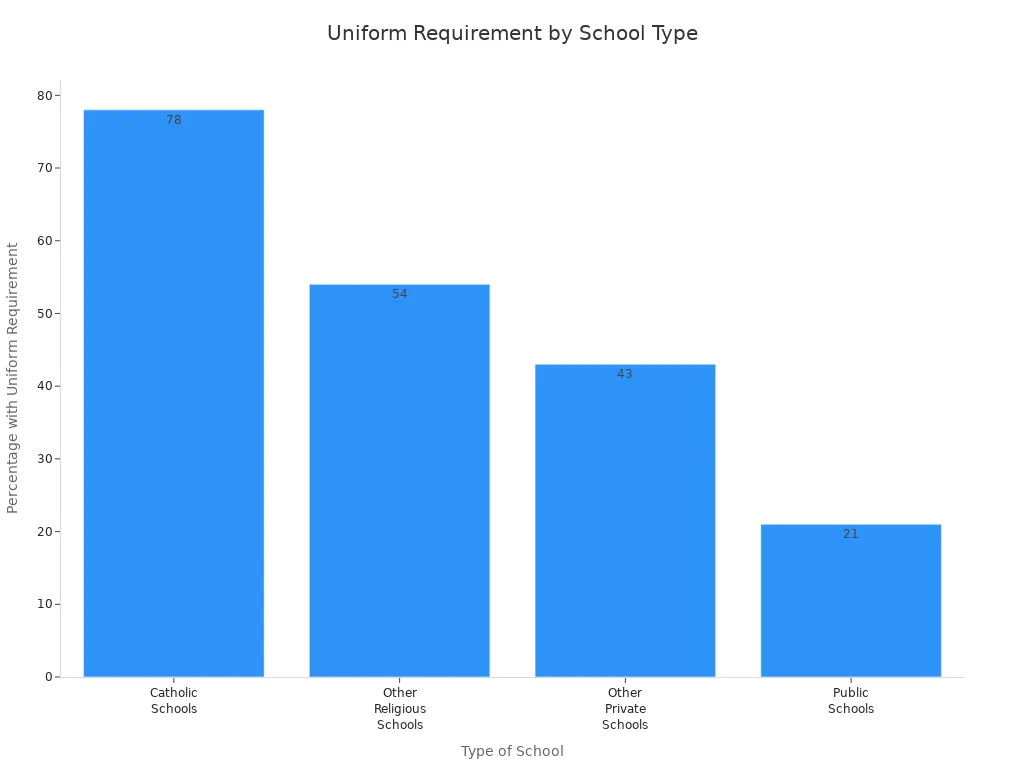
You notice that Catholic and other religious schools lead in uniform adoption, often choosing ready-made uniforms for their affordability and ease of management. These schools benefit from streamlined ordering processes and the ability to quickly adjust to enrollment changes.
“The transition from our previous uniform provider to School Uniforms by Tommy Hilfiger exceeded our expectations. The Global Schoolwear team was so easy to work with and they delivered on their promise of outstanding service for our school families, high quality products, and speedy delivery. The best part of moving to Tommy Hilfiger uniforms is that our students love them! Moving to more updated styling and fabrics has definitely helped to ensure that our students are in uniform.”
This feedback highlights the importance of responsive service and modern design in maintaining student compliance and satisfaction. When you select ready-made uniforms, you often gain the advantage of quick delivery and reliable support, which can make a significant difference during transitions or periods of growth.
Implementation
Transition Tips
Switching your school’s uniform type requires careful planning. You want to make the process as smooth as possible for students, parents, and staff. Start by forming a transition team. Include representatives from administration, teaching staff, and the parent community. This team can help you identify potential challenges and develop solutions early.
Set a clear timeline for the transition. Outline key dates for design selection, ordering, and distribution. Give families plenty of notice so they can prepare. You might offer a phased approach, allowing students to wear either the old or new uniform for a set period. This flexibility reduces stress and helps families adjust at their own pace.
Host uniform fitting sessions on campus. These events let students try on samples and find the right size. You can also use these sessions to answer questions and gather feedback. Consider providing financial assistance or payment plans for families who need support. This step ensures that every student can access the new uniform without hardship.
Monitor the transition closely. Collect feedback from students and parents throughout the process. Adjust your approach if you notice recurring issues. Stay proactive to address concerns before they become bigger problems.
Tip: A well-organized transition builds trust and shows your commitment to student well-being.
Communication
Clear communication stands at the heart of a successful uniform change. You need to keep everyone informed and engaged from the start. Use a variety of channels to reach your school community. Announce the new policy early and repeat the message often. Consistent updates help prevent confusion and rumors.
The table below outlines effective strategies for communicating uniform changes:
Strategy | Description |
|---|---|
Early Announcements | Announce the new policy as early as possible and mention it often. |
Multiple Communication Channels | Use various channels like the school website, newsletters, social media, and info nights. |
Visuals and Resources | Provide visuals of uniform pieces, sizing resources, and FAQs on a dedicated website section. |
Realistic Implementation Timeline | Set clear deadlines for ordering and provide a transition period for both old and new dress codes. |
Ongoing Support | Train staff on enforcement and create opportunities for student feedback during the transition. |
Visual resources make a big difference. Post photos of the new uniform on your website and in newsletters. Offer sizing guides and a list of frequently asked questions. These tools help families understand what to expect and how to prepare.
Train your staff on the new policy. Make sure they know how to answer questions and enforce the dress code fairly. Encourage students to share their thoughts during the transition. Their feedback can help you refine your approach and build a stronger sense of community.
Note: Open, ongoing communication reduces anxiety and helps everyone feel included in the process.
Choosing the best uniform type depends on your school’s goals. If you value strong branding and customization, private label uniforms let you reflect your school’s identity and support student expression. Ready-made uniforms offer cost-effectiveness and quick ordering, which many parents and leaders prefer for affordability and simplicity. Consider these priorities:
Academic performance and community building improve with consistent uniforms.
Customization, cost, and branding shape student satisfaction and school image.
Uniforms simplify dress code enforcement and enhance safety.
For practical success, follow the checklist, ensure seasonal options, and shop early for the best fit.
FAQ
What is the main difference between private label and ready-made uniforms?
Private label uniforms give you full control over design and branding. Ready-made uniforms offer standard styles and faster delivery. You choose based on your school’s need for customization or convenience.
How do I decide which uniform type fits my school best?
Review your priorities. If you want unique branding and quality, select private label. If you need affordability and quick access, choose ready-made. Use the checklist above to guide your decision.
Can I customize ready-made uniforms with my school logo?
Yes, you can add your school logo to most ready-made uniforms. However, design options remain limited. You cannot change fabric, color, or style beyond what the supplier offers.
Are private label uniforms always more expensive?
Private label uniforms usually cost more upfront due to custom design and higher minimum orders. Over time, their durability may save you money on replacements.
How long does it take to receive private label uniforms?
You should expect a lead time of 4 to 12 weeks for private label uniforms. This includes design approval, production, and shipping. Plan your orders early to avoid delays.
What if a student needs a special size or fit?
Private label suppliers often offer a wider range of sizes and can accommodate special requests. Ready-made uniforms use standard sizing, which may not fit every student perfectly.
Do uniforms improve student behavior and school spirit?
Uniforms help create a sense of unity and pride. Many schools report better behavior and improved focus when students wear uniforms. Consistency in appearance supports a positive school culture.
Can I switch from ready-made to private label uniforms during the school year?
You can switch, but you need careful planning. Communicate changes early, set a clear timeline, and offer support for families. A phased transition helps everyone adjust smoothly.