

What to Look for in a Waterproof Puffer Jacket
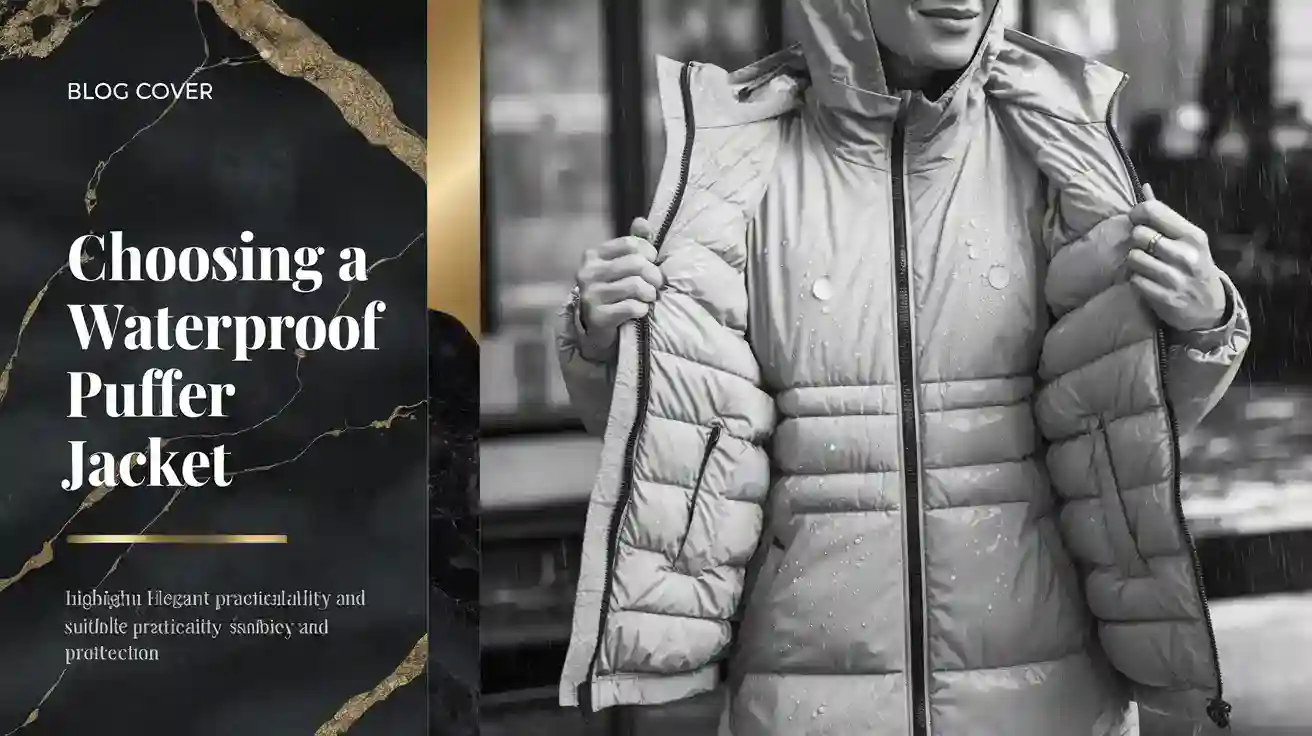
When you shop for a waterproof puffer jacket, you want real protection from the rain, not just a coat that shrugs off a drizzle. Water-resistant jackets can handle light showers, but they let water in during heavy storms. A true waterproof puffer jacket uses high-tech fabrics, taped seams, and sturdy zippers to keep you dry, even if the weather gets wild. Look for the right puffer jacket that balances insulation, fit, and durability. If you dream of an all-weather adventure puffer jacket, focus on warmth and down fill for serious comfort. Wondering what to look for in a puffer jacket? Start with these basics.
Key Takeaways
Pick a jacket with a waterproof rating of 10,000mm or more. This rating helps protect you in heavy rain and storms.
Make sure the jacket has taped or welded seams. Waterproof zippers also help keep water out. These features help you stay dry in wet weather.
Choose insulation that fits your needs. Down works best for dry, cold weather. Synthetic is better for wet or damp conditions.
Check the fit of the jacket carefully. If it is too tight, the insulation will not work well. If it is too loose, cold air can get in.
Look for jackets with helpful features. Adjustable hoods, warm pockets, and ventilation zippers add comfort. Good packability makes the jacket easy to carry.
Waterproofing
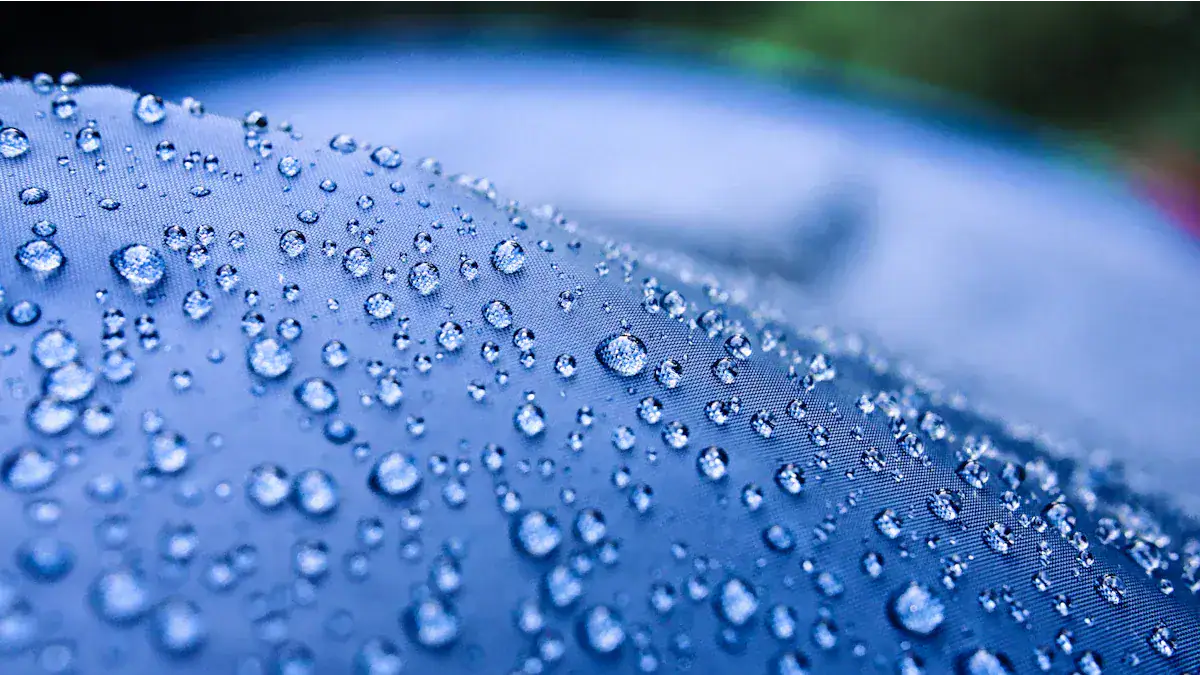
When you pick out a waterproof puffer jacket, you want to stay dry no matter what the weather throws at you. Not all jackets are the same. Some only resist water for a short time, while others keep you dry in heavy rain. Let’s break down what makes a puffer jacket truly waterproof and how you can spot the best features.
Waterproof Ratings
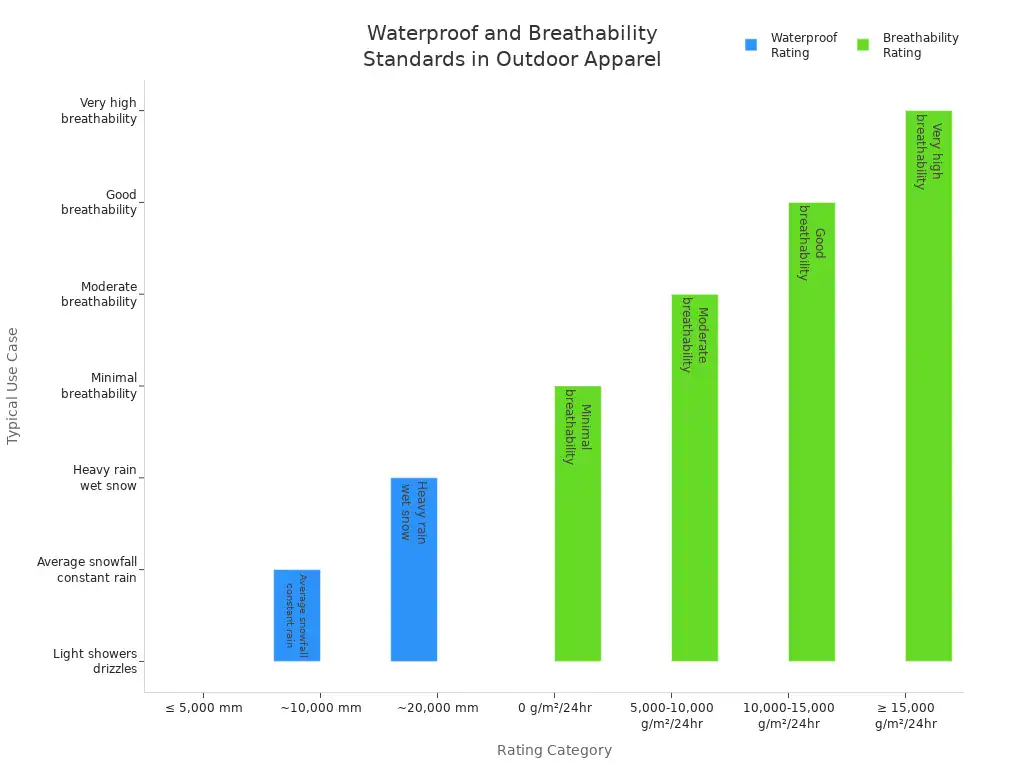
You might see numbers like 5,000mm or 20,000mm on a jacket’s tag. These numbers show how much water pressure the fabric can handle before it leaks. This is called the hydrostatic head test. The higher the number, the better the jacket keeps water out. For example, a 10,000mm rating means the fabric can hold back a 10-meter column of water before it starts to leak.
Here’s a quick guide to what these ratings mean for your waterproof puffer jacket:
Waterproof Rating (mm) | Suitable Weather Conditions |
|---|---|
1,500mm to 5,000mm | Light to average conditions (rain showers, light snow) |
5,000mm to 10,000mm | Moderate conditions (steady rain, snowfall) |
10,000mm to 40,000mm+ | Extreme conditions (heavy rain, snowstorms) |
Tip: If you plan to be outside for a long time or expect heavy rain, look for a puffer jacket with a rating of at least 10,000mm.
Manufacturers use tests like the Hydrostatic Head Test and Spray Test to check how well a jacket resists water. These tests help you know if your jacket will keep you dry during a downpour or just a light drizzle.
But numbers are not everything. Real-world waterproof performance depends on more than just ratings. Construction details, like seam sealing and zippers, play a big role. Even a high-rated jacket can let water in if the seams or zippers are not sealed.
Seam Sealing
Seams are where two pieces of fabric meet. If water gets through these tiny holes, you get wet. That’s why seam sealing is so important in a waterproof puffer jacket. Here are the main types you’ll see:
Fully Taped Seams: Every seam is covered with waterproof tape. This blocks water from sneaking in through the stitching. Fully taped seams give you the best protection.
Welded Seams: These seams use heat and pressure to bond the fabric together, so there are no holes at all. Welded seams are super effective and often found in fully waterproof puffer jackets.
Critically Taped Seams: Only the most exposed areas, like the shoulders and hood, get taped. This gives some protection but not as much as fully taped seams.
Note: Fully taped and welded seams keep you dry even in heavy rain. Critically taped seams work for lighter showers but may not hold up in a storm.
Seam sealing is not just about staying dry. It also helps with moisture resistance, so your jacket feels comfortable even when it’s damp outside. Over time, seam tape can wear out, so check your jacket for any peeling or lifting tape.
Waterproof Zippers
Zippers are another spot where water can sneak in. A good waterproof puffer jacket uses special zippers to keep you dry. Here’s how they help:
Waterproof zippers seal off the openings, so rain can’t get inside.
They protect pocket seams, which are common weak points.
These zippers work with the jacket’s water-repellent fabric to boost overall moisture resistance.
If you want to keep your phone, wallet, or snacks dry, look for a puffer jacket with waterproof zippers on the pockets and main closure.
When you combine high waterproof ratings, strong seam sealing, and waterproof zippers, you get a jacket that stands up to real-world wet weather. These features work together to keep you dry, warm, and comfortable, whether you’re walking to school or hiking in the rain.
Insulation in a Puffer Jacket

When you choose a puffer jacket, insulation is what keeps you warm. The right insulation makes all the difference, especially when the weather turns cold or wet. You want a jacket that traps heat, stays comfortable, and fits your needs. Let’s look at the main types of puffer jacket insulation and what makes each one special.
Down vs. Synthetic
You’ll see two main types of insulating materials in puffer jackets: down and synthetic. Each has its own strengths and weaknesses. If you’re wondering about down vs synthetic insulation, here’s what you need to know:
Synthetic insulation keeps you warm even when wet. It dries fast, so it’s great for rainy or active days.
Down insulation gives you the best warmth-to-weight ratio. It’s super light and packs down small, perfect for dry, cold conditions.
Synthetic insulation costs less and is easier to clean.
Down insulation lasts longer if you take care of it, but it needs special cleaning and costs more.
Synthetic insulation feels bulkier and heavier. It doesn’t last as long as down.
Down insulation loses warmth when wet and dries slowly.
Here’s a quick table to help you compare:
Feature | Down Insulation | Synthetic Insulation |
|---|---|---|
Warmth-to-Weight | Lower, bulkier | |
Water Resistance | Loses warmth when wet | Stays warm when wet |
Durability | Long-lasting with care | Shorter lifespan |
Maintenance | Needs special cleaning | Easy to clean |
Price | More expensive | More affordable |
Down insulation works best in dry, freezing weather. Synthetic insulation is better for damp or wet conditions. New technologies like Down Defender and WarmCube help down stay warm even when it gets wet, but synthetic fibers still win for moisture resistance. If you want a puffer jacket for all kinds of weather, synthetic insulation might be the safer choice.
Fill Power
Fill power measures how fluffy the insulation is. The higher the fill power, the better the insulation traps warm air. You’ll see numbers like 500, 700, or even 900 on puffer jackets. Higher fill power means more warmth without extra weight. For example, a jacket with 800 fill power feels light but keeps you cozy in cold weather.
Fill power shows how much space one ounce of down takes up. More space means more trapped air and better warmth.
Higher fill power gives you a better warmth-to-weight ratio. You stay warm without feeling weighed down.
Fill weight is the total amount of insulation. More fill weight means more warmth, but also more bulk.
Most good puffer jackets have fill power between 500 and 900.
Waterproof puffer jackets use special designs to keep insulation dry and effective. Fused down baffles and water-repellent fabrics help keep the warmth in, even when it’s wet outside. If you want a jacket that’s warm, light, and easy to pack, look for high fill power.
Tip: If you plan to be outside in freezing temperatures, pick a puffer jacket with high fill power and quality insulation. You’ll stay warmer and more comfortable.
Durability
If you buy a puffer jacket, you want it to last. Durability is important because jackets face tough weather and daily use. A strong jacket can handle outdoor trips and rough days. Let’s see what makes a puffer jacket last a long time.
Outer Shell
The outer shell protects your jacket from damage. It also keeps the insulation safe and blocks water. Most waterproof puffer jackets use nylon or polyester shells. These materials have different strengths:
Material | Key Properties Impacting Durability | Impact on Durability and Use Case |
|---|---|---|
Nylon | High strength, abrasion resistance, lightweight, elasticity, smooth texture, less UV resistant | Very durable and abrasion-resistant, ideal for vigorous outdoor activities and extreme conditions; less UV resistant leading to faster degradation in sunlight |
Polyester | Excellent UV resistance, good water repellency (especially with DWR treatment), reduced pilling, strong but lower tear resistance than nylon | Maintains appearance longer due to UV resistance and less pilling; better for sunny and wet environments; slightly less durable in high abrasion scenarios |
Nylon is strong and does not tear easily. It is great for hiking or climbing. Polyester does not fade in the sun and keeps its color. Both materials often have a Durable Water Repellent (DWR) coating. This coating helps water roll off the jacket. Ripstop weaving and high hydrostatic head ratings make jackets even tougher. These features help jackets last in bad weather.
Tip: If you spend lots of time outside, pick a jacket with a tough nylon shell. For city life or sunny places, polyester is a good choice.
Construction Quality
How a puffer jacket is made affects how long it lasts. You need strong seams and good closures to keep water out. Here are some things to check:
High waterproof ratings mean the fabric can block heavy rain.
Seam sealing is important. Taped or welded seams stop leaks at the stitches.
Weather cuffs at the wrists keep water from going up your sleeves.
DWR coatings help water slide off the jacket.
Adjustable cuffs, hems, and storm flaps block wind and rain.
Good fabric and insulation matter. Synthetic insulation keeps you warm, even if it gets wet.
Take care of your jacket. Wash it gently and add more DWR when needed.
If you care for your jacket, it can last up to 10 years. Down-filled jackets may last 5 to 10 years. Synthetic-filled jackets usually last 3 to 5 years. With good care, your jacket will keep you warm and dry for many seasons.
Fit and Comfort
Getting the right fit in a waterproof puffer jacket can make all the difference when it comes to warmth and comfort. If your jacket fits well, you stay warmer because there are fewer gaps for cold air to sneak in. A jacket that is too tight can squash the down or synthetic insulation, making it less effective. If it is too loose, you lose warmth because air escapes.
Sizing
Finding the right size can be tricky. Many people notice that sizing is not always consistent, especially between medium and large. Some puffer jackets feel too big to wear under another layer, like a hardshell. Others have so many adjustment points and pockets that you always feel the jacket instead of forgetting you have it on. Here are some common fit issues:
Sizing differences between medium and large, especially with brands like Montbell.
Some jackets are too bulky for layering under an outer shell.
Technical jackets with lots of adjustments and pockets can feel awkward.
Most problems come from inconsistent sizing and poor layering, not from discomfort.
When you try on a puffer jacket, move your arms and shoulders. Make sure you can wear a sweater underneath without feeling squeezed. If you want to layer, pick a jacket that leaves just enough room for extra clothes but still keeps the insulation close to your body for warmth.
Liner Materials
The inside of your jacket matters for both warmth and how it feels against your skin. Some waterproof puffer jackets use special linings, like the HeatWeaver™ lining found in Heat Holders® jackets. This lining feels soft and holds heat well, adding to the overall warmth. A good liner can make a big difference, especially on cold days. While not every jacket uses HeatWeaver™, you should look for a liner that feels gentle and helps trap warmth, whether the insulation is down or synthetic.
Adjustability
Adjustability helps you fine-tune your fit and keep warmth in. Look for jackets with adjustable hems, cuffs, and hoods. These features let you block out wind and rain, so you stay warmer. Adjustable cuffs stop cold air from sneaking up your sleeves. A drawcord at the hem keeps warmth from escaping at your waist. An adjustable hood protects your head and neck. These small changes can boost the warmth of your puffer jacket, no matter if it uses down or synthetic insulation.
Tip: Try adjusting the cuffs and hem when you try on a jacket. You will notice how much better it holds warmth when everything fits just right.
Features to Look For in a Waterproof Puffer Jacket
When you shop for a waterproof puffer jacket, you want more than just basic protection. The right features can make your jacket more comfortable, practical, and ready for any adventure. Let’s look at the most important features you should check before you buy.
Hood
A good hood keeps your head dry and warm when the rain starts to fall. You want a hood that fits well and stays in place, even if the wind picks up. Adjustable hoods let you tighten or loosen the fit, so you can block out cold air or make room for a hat. Some hoods have a stiff brim to keep rain off your face. Others roll away or detach when you don’t need them. If you plan to wear a helmet for biking or climbing, look for a helmet-compatible hood. A well-designed hood boosts your jacket’s performance and keeps you comfortable in bad weather.
Tip: Try the hood on before you buy. Make sure you can move your head easily and still see where you’re going.
Pockets
Pockets do more than just hold your stuff. They add warmth, security, and convenience to your puffer jacket. Some jackets, like the Men’s Infinity Pocket Rain Jacket by Constant Mountain, use a special dual zipper design. This creates a pass-through pocket, so you can put both hands together inside for extra warmth. You’ll also find hidden zippered pockets that keep your phone, wallet, or keys safe and dry. These pockets make your jacket much more useful, especially in wet weather.
Jackets from brands like RAINS add fleece linings to their pockets. This keeps your hands warm and cozy, even when it’s cold and damp outside. Many people say pockets are one of the most important features in a jacket. You can store gloves, snacks, or even your phone. If you carry a backpack, you might want higher pockets that you can reach without taking off your pack. Secure-zip hand pockets keep your things safe, so you don’t have to worry about losing anything on the trail.
Pockets help you keep your hands warm and your belongings dry.
Chest pockets work well for phones or maps.
Fleece-lined pockets add comfort in cold weather.
Secure zippers protect your valuables.
Ventilation
Waterproof jackets keep rain out, but sometimes they trap heat and sweat inside. That’s where ventilation comes in. Good ventilation features help you stay cool and dry, even when you’re working hard. Look for pit zips under the arms. These zippers open up to let hot air escape. Some jackets use mesh-backed pockets or vents on the chest and forearms. These let air flow through the jacket, so you don’t get too sweaty.
Pit zips and mesh pockets make a big difference when you hike, bike, or climb. They give you control over your comfort. You can open them when you get hot and close them when you need more warmth. This helps balance waterproof protection with breathability. Even the best waterproof fabrics can feel stuffy, so ventilation features boost your jacket’s performance in all kinds of weather.
Packability
Packability means you can stuff your jacket into a small space when you don’t need it. This is super helpful for hiking, traveling, or just carrying your jacket in a backpack. Jackets with high-quality down insulation and high fill power (like 800-fill or more) compress down to a tiny size. They pop back to full loft when you take them out, so you stay warm without carrying extra weight. Thin shell fabrics also help your jacket pack smaller.
High fill power down shrinks to a small size and regains loft quickly.
Thin shell fabrics make the jacket lighter and easier to pack.
Hydrophobic down and DWR coatings keep the jacket waterproof without making it bulky.
You can fit a packable jacket into a daypack or even a large pocket.
Packability lets you bring warm, waterproof protection anywhere, without adding bulk.
If you love backpacking or climbing, you might want an ultralight packable puffer jacket. These jackets weigh very little and take up almost no space. You get warmth, waterproof protection, and top performance without feeling weighed down. Many lightweight hiking puffer jackets focus on packability, so you can always have your jacket ready for changing weather.
Here’s a quick look at the average weight and packed size of some leading waterproof puffer jackets:
Jacket Name | Weight (Women’s Small/Medium) | Packed Size |
|---|---|---|
Rab Mythic Alpine Light | 8 oz | Extra Small |
Arc’teryx Cerium Hoody | 10.2 oz | Medium |
Big Agnes Luna | 13 oz | Large |
Mammut Broad Peak | 12.3 oz | Medium |
Helly Hansen Odin Everdown | 9.1 oz | Small |
Crazy Levity | ~7 oz | Extra Small |
Patagonia Down Sweater Hoody | 12.1 oz | Medium |
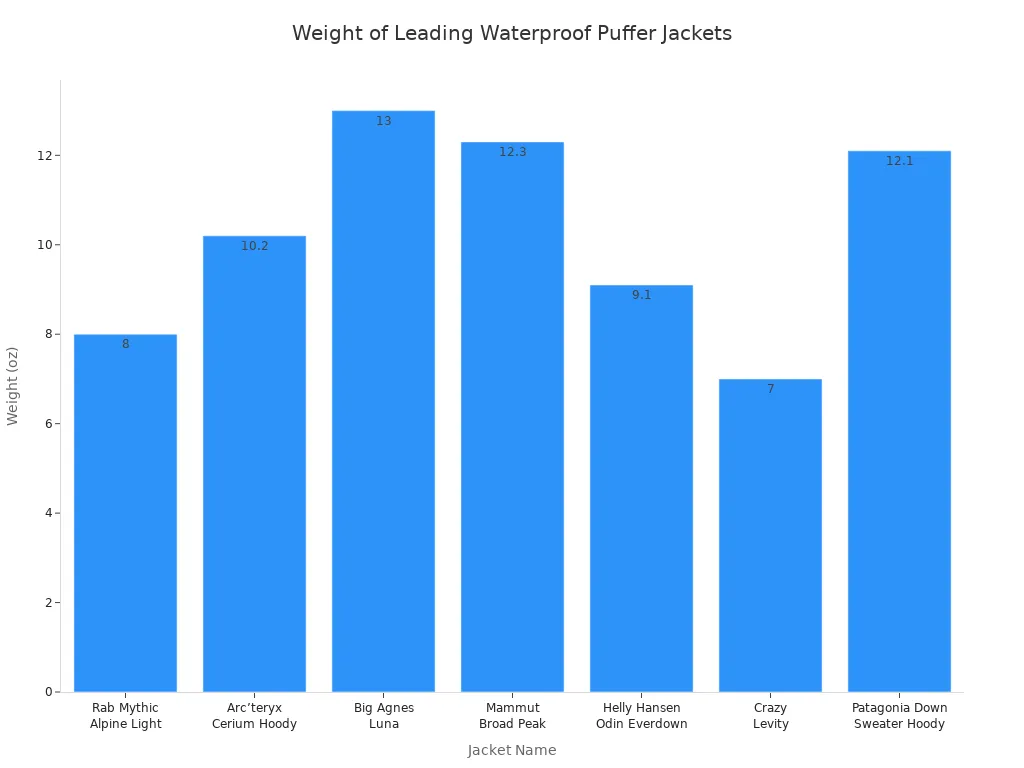
Most top jackets weigh between 9 and 12 ounces and pack down to a small or medium size. This makes them easy to carry and perfect for outdoor adventures.
Note: Packability gives you the freedom to explore without extra weight. You can always have your jacket handy, no matter where you go.
When you choose a puffer jacket, think about how these features fit your needs. A great hood, smart pockets, good ventilation, and easy packability all boost your jacket’s performance. You’ll stay warm, dry, and ready for anything.
When you pick out your next jacket, focus on what matters most:
Choose the right insulation for warmth in your climate.
Make sure the shell protects you from rain, snow, and wind.
Look for smart features like hoods, pockets, and adjustable cuffs.
Weather Condition | Best Jacket Choice |
|---|---|
Long, insulated, waterproof | |
Mild, active | Short, breathable, mobile |
Think about your local weather and how you plan to use your jacket. Check seams, zippers, and fit for comfort and durability. Trust your needs—stay warm and dry wherever you go!
FAQ
What’s the difference between waterproof and water-resistant jackets?
Waterproof jackets keep you dry in heavy rain. Water-resistant jackets only block light rain or drizzle. If you want full protection, choose waterproof.
Tip: Always check the label for “waterproof” before you buy.
Can I wash my waterproof puffer jacket in a washing machine?
Yes, you can wash most waterproof puffer jackets in a machine. Use cold water and gentle detergent. Skip fabric softener.
Always read the care tag first.
Air dry your jacket for best results.
How do I know if my jacket is still waterproof?
Splash some water on the jacket. If water beads up and rolls off, your jacket works well. If water soaks in, you may need to reapply a DWR spray.
Are down jackets better than synthetic for wet weather?
Synthetic jackets stay warm even when wet. Down jackets lose warmth if they get soaked. If you expect rain, pick synthetic insulation.
Do waterproof puffer jackets breathe well?
Some waterproof jackets use special fabrics that let sweat escape. Look for jackets with ventilation features like pit zips or mesh pockets.
You’ll stay drier and more comfortable during active adventures.