

3 things to know about French school uniforms
Table of Contents
Display

I often hear parents and students ask if wearing a school uniform is mandatory in public schools in France. I can say that most public schools do not require french school uniforms, which is different from places like the UK or Ireland. In France, several towns such as Tourcoing and Reims plan to start a two-year trial for mandatory uniforms in September 2024. I want to help you understand what students usually wear and how policies might change soon.
Key Takeaways
Most public schools in France do not require uniforms, allowing students to wear neat and modest clothing.
The history of school uniforms in France changed in 1968 when students protested for more freedom, leading to the abolition of mandatory uniforms.
Some towns in France are testing school uniforms to see if they can improve equality and reduce bullying among students.
Private and international schools in France may have different uniform policies, with some requiring uniforms and others only having dress codes.
French schools emphasize modesty and respect in dress codes, banning items like flip-flops and clothing with offensive slogans.
Families should check a school’s uniform policy and dress code before enrolling to avoid unexpected costs and requirements.
Students express their individuality through casual clothing, with popular styles including jeans, t-shirts, and sneakers.
Understanding the dress code helps students feel comfortable and confident in their school environment.
French school uniforms in public schools
School uniform history
1968 policy change
I find the story of french school uniforms fascinating. In the early 20th century, french schools often used smocks, especially in elementary grades. These smocks helped hide differences in social class and protected clothing. Boys usually wore black smocks with short pants and berets. The tradition started after the Franco-Prussian War, when the Third Republic wanted to promote equality among students. Everything changed in 1968. Student demonstrations swept through Paris, and society began to rethink old rules. The government abolished the school uniform policy in public schools. People wanted more freedom and rights, so uniforms disappeared from most classrooms.
The abolition of uniforms in 1968 was influenced by student demonstrations.
The change reflected a shift in societal rights and attitudes at the time.
Supporters of uniforms argue they promote equality by reducing visible differences in social status and wealth.
Dress codes today
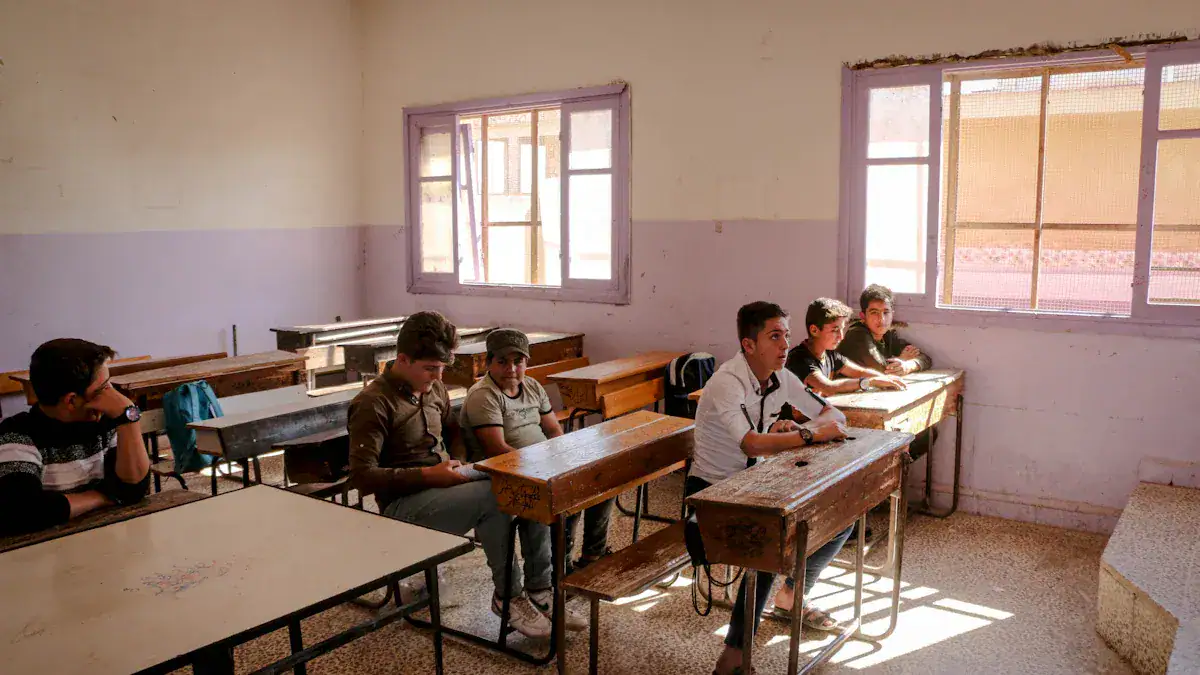
Today, french school uniforms are not mandatory in public schools. Instead, schools set their own dress code requirements. Most schools expect students to wear neat, modest clothing. I see that jeans, t-shirts, and sneakers are common. Some schools ban items like flip-flops, hats, or clothing with offensive slogans. The rules focus on respect and equality, not strict uniformity.
Pilot schemes
Towns testing uniforms
Recently, the debate over mandatory school uniforms has returned. Several towns have started pilot schemes to test the idea. For example, Béziers launched a program with about 700 pupils at four schools. Other towns, such as Tourcoing and Reims, plan to begin trials in September 2024. These experiments aim to see if uniforms can improve equality and reduce bullying.
Government trial plans
The French government supports these pilot schemes. The goal is to study how uniforms affect equality, bullying, authority, and academic performance. Officials promise that families will not face financial strain. They want to build a scientific foundation for future decisions about a possible school uniform policy.
Note: According to a recent poll, 60% of French people support school uniforms. The education minister, Gabriel Attal, favors allowing schools to experiment with uniforms. However, the National Assembly rejected a proposal to make uniforms compulsory, with many politicians arguing it could undermine free schooling.
Arguments Against Uniforms | |
|---|---|
Foster a sense of belonging | May mask deeper issues in education |
Reduce social differences | No guarantee of improved academic performance |
Combat bullying | Concerns about enforcing compliance |
Enhance school image and unity | Fear of ignoring underlying problems |
Dress code rules
Typical expectations
Most french schools have clear dress code requirements. I notice that schools ask students to avoid flashy or revealing clothes. The focus is on modesty and respect. Some schools provide written guidelines for parents and students. These requirements help maintain a positive learning environment.
Enforcement
Enforcing the dress code is serious business in France. The government passed a law in 2004 to uphold secularism in schools. This law bans religious symbols, such as Muslim headscarves and long robes. President Macron insists that schools must be strict. Students who break the rules cannot attend classes. The education ministry trains thousands of leaders to enforce these policies. Special personnel help in sensitive schools to make sure everyone follows the rules.
School uniform mandatory in private schools
When I look at private schools in France, I see that the rules about uniforms can be very different from one school to another. Unlike public schools, where uniforms are not required, some private schools make the wearing of uniforms part of daily life. However, not every private school has the same approach. I want to help you understand how the school uniform policy works in these schools and what students and parents can expect.
Catholic and religious schools
Uniform policies
Many Catholic and religious schools in France have their own school uniform policy. These schools often choose uniforms to create a sense of unity and discipline. I notice that Catholic schools, in particular, have more flexibility than public schools. They can allow religious symbols as part of their uniforms, which is not possible in government-run schools because of strict secularism laws. This means that students in Catholic schools might wear crosses or other religious items with their uniforms. Families from different backgrounds, including those who are not religious, sometimes choose these schools for their reputation and educational standards.
Differences by school
Not all Catholic or religious schools have the same rules. Some require a full uniform with blazers, ties, and skirts or trousers. Others might only ask for a simple dress code, such as a polo shirt with the school logo. I have seen that some schools allow students to wear their own clothes as long as they follow certain guidelines. The school uniform policy can change depending on the school’s tradition, location, and the wishes of the school community.
International schools
Uniform requirements
International schools in France often have clear uniform requirements, especially for younger students. I have gathered some examples to show you what these requirements look like:
Grade Level | Uniform Requirements |
|---|---|
Young Explorers to Grade 10 | White polo shirt (short or long sleeved) and zipped hoodie with school logo. Navy blue smart/tailored trousers, shorts, skirts, or pinafores. One color shoes; trainers allowed if one color. No flip flops, jeans, leggings, or mini skirts. |
Grades 11 and 12 | Smart casual dress code; suitable trousers, shirts, dresses, skirts allowed. No ripped clothing, leggings, hot pants, miniskirts, crop tops, or flip flops. |
KG1 to PY6 | T-shirt or polo with ICS logo. ICS blue zipped hoodie, sweater, or fleece. ICS sports kit for PY1 to PY6 students. Any trousers, shorts, or skirts allowed. |
These tables show that international schools usually set clear expectations for what students should wear. The rules help create a sense of belonging and make it easy for families to know what to buy.
Dress code alternatives
Some international schools do not require a full uniform. Instead, they use a dress code that asks students to dress neatly and avoid certain items, such as ripped jeans or flip flops. I find that these schools want students to look presentable without making uniforms mandatory in private schools. This approach gives families more freedom while still keeping a professional atmosphere.
Variations
Not all private schools require uniforms
I want to point out that not every private school in France has mandatory school uniforms. Some private schools, especially secular ones, may only have a basic dress code. Others might not have any special requirements at all. The cost of attending private schools can be high, and families should remember that uniforms are often an extra expense.
The average cost of private schools in France ranges from 3,000 to 10,000 euros per year, not including boarding.
Elite schools can charge 20,000 to 30,000 euros annually, with extra fees for uniforms, lunches, and textbooks.
Uniforms can add thousands of euros to the total cost.
Tip: Before enrolling, I always recommend checking the school uniform policy and asking about extra costs. This helps families avoid surprises and plan their budget.
Private schools in France offer a wide range of options. Some make the wearing of uniforms a key part of their identity, while others focus on a simple dress code. I believe it is important for families to ask questions and choose the school that fits their values and needs.
What students wear if no school uniform
Everyday clothing
Common styles
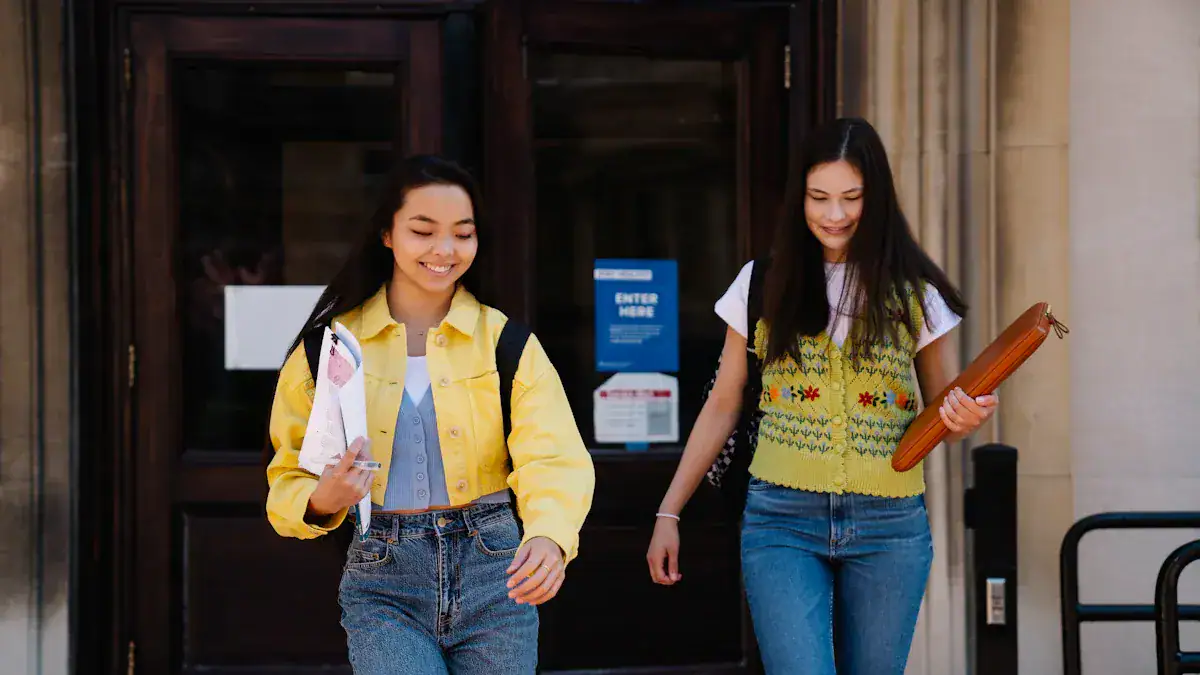
I see that French students express their personalities through their everyday clothing. In Paris, teenagers often choose casual but stylish outfits. Sports shoes, sweatshirts, and jeans are popular. Many students wear trendy T-shirts or open shirts. I notice that younger girls prefer more conservative styles, avoiding overly revealing clothes. This reflects a regional difference, with Parisian students leaning toward modest fashion compared to other areas. When I visit schools, I spot brands like Petit Bateau and Cyrillus. These brands offer classic staples such as striped shirts, yellow rain boots, and casual-chic looks. Catimini and Lili Gaufrette provide playful and chic options for children. Sergent Major and DPAM supply affordable, high-quality clothing, while Pom d’Api is known for sturdy shoes.
Brand | Style Highlights |
|---|---|
Petit Bateau | Striped shirts, rain boots |
Cyrillus | Casual-chic, eco-friendly options |
Catimini | Colorful, playful designs |
Lili Gaufrette | Dresses, chic outfits for girls |
Sergent Major | Affordable, French-designed clothes |
DPAM | Wide range, similar to GAP |
Pom d’Api | Quality children’s shoes |
Seasonal changes
French students adapt their clothing to the seasons. In summer, boys often wear short pants with sandals. In winter, I see kneesocks and heavier jackets. Girls choose lighter shades for their outfits, while boys stick to darker colors. The style changes with the weather, but comfort and practicality remain important.
Dress code restrictions
Prohibited items
French schools set clear requirements for what students can and cannot wear. I have learned that some items are strictly banned. The abaya, a long robe worn by Muslim women, and the qamis, a long tunic for men, are not allowed. The education minister announced these bans to support secularism in schools. I also see that schools prohibit clothing with offensive slogans, flip-flops, and hats in class.
Abaya and qamis are banned.
Clothing with offensive slogans is not allowed.
Flip-flops and hats are prohibited in classrooms.
Modesty guidelines
Schools emphasize modesty in their dress code requirements. The government restricts religious clothing and symbols to maintain secularism. I notice that students must avoid flashy or revealing outfits. The focus is on respect for others and creating a positive learning environment.
Ban on abayas and religious symbols.
Modest, respectful clothing is required.
Secularism guides all dress code rules.
Special events
Sports days
On sports days, students wear athletic gear. I see comfortable T-shirts, shorts, and sneakers. Schools often provide a sports kit for these occasions. The requirements for sportswear focus on safety and ease of movement.
Ceremonies
French schools do not hold formal graduation ceremonies like some other countries. Students do not wear special outfits for these events. At universities, some ceremonies may include special clothing, but this is rare. Most school events allow students to dress in their usual attire.
Tip: I always recommend checking the school’s dress code before special events. This helps students avoid surprises and ensures everyone follows the requirements.
I learned that French public schools do not require uniforms, while some private and international schools do. Dress codes focus on modesty and respect. Uniform trials in towns like Béziers show growing support.
Here are my tips for families:
Choose clothing that promotes dignity, not competition.
Ask schools about dress codes or uniform policies before enrolling.
Notice positive feedback from students and parents in schools with uniforms.
I believe French schools help students feel comfortable and confident every day. 😊
FAQ
Do public schools in France require uniforms?
I see that public schools in France do not require uniforms. Students follow dress codes set by each school. These rules focus on modesty and respect.
Can students wear religious symbols in French schools?
I learned that public schools ban religious symbols, including headscarves and crosses. Private religious schools may allow them. The government enforces secularism in public education.
How do I find out a school’s dress code?
I always recommend checking the school’s website or contacting the administration. Schools provide written guidelines for parents and students before the school year starts.
Are uniforms expensive in private schools?
Uniforms can add extra costs. I noticed that some private schools charge hundreds of euros for uniforms. Families should ask about uniform fees before enrolling.
What happens if a student breaks the dress code?
Schools take dress code violations seriously. I have seen students sent home or asked to change clothes. Staff members explain the rules and help students follow them.
Do French schools have special outfits for events?
Most schools do not require special outfits for events. Students wear regular clothes for sports days and ceremonies. Some international schools provide sports kits for activities.