

Corporate Workwear Bulk Export: Custom Embroidery & Industrial-Grade Fabrics
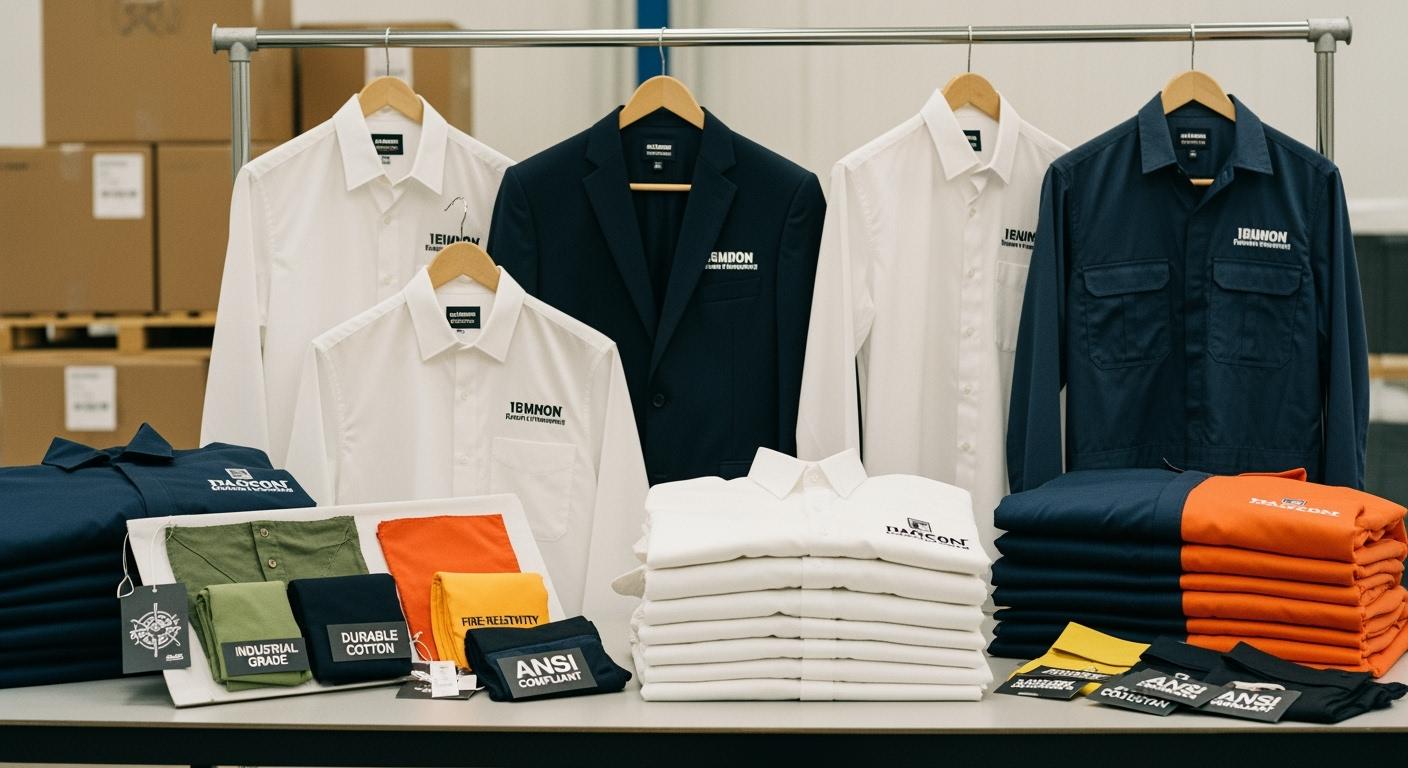
You want to streamline your Corporate Workwear procurement with reliable quality and tailored features. Choosing suppliers with ISO 9001:2015 certification ensures consistent product quality and safety. The table below highlights key ISO standards and their impact:
| ISO Standard | Description | Impact on Supplier Selection |
|---|---|---|
| ISO 9001:2015 | Structured quality management for consistent product quality. | Builds trust with international customers. |
| Safety & Quality | Rigorous testing and checkpoints for product safety. | Ensures suppliers meet safety standards for bulk export. |
Adjustable closures improve employee comfort and safety. Customization options and industrial-grade fabrics deliver durability and meet industry-specific needs. You gain a solution-focused edge for your team.
Key Takeaways
- Choose suppliers with ISO 9001:2015 certification for consistent quality and safety in corporate workwear.
- Bulk ordering reduces costs and administrative efforts, allowing for better budget allocation and increased profit margins.
- Customization options, including embroidery and fabric selection, enhance brand visibility and employee identity.
- Select industrial-grade fabrics that match your industry needs for durability, comfort, and compliance with safety standards.
- Request physical samples before bulk production to avoid costly mistakes and ensure quality meets expectations.
- Maintain clear communication with suppliers throughout the process to address issues quickly and ensure timely delivery.
- Implement quality assurance measures, including inspections and third-party testing, to uphold high standards in your bulk orders.
- Consider eco-friendly sourcing options to reduce your company’s environmental impact while maintaining quality.
Corporate Workwear Bulk Export
What Is Bulk Export
Bulk export refers to the process where you source large quantities of corporate workwear directly from manufacturers for your organization or clients. This approach allows you to standardize uniforms across your workforce and ensures that every employee receives garments that meet your company’s specifications. Top manufacturers such as Gencer Textile, JaceApparel, Fashion Villaz, and XM Textiles specialize in handling large-scale orders and offer robust quality control systems. You benefit from their established processes, which include ISO certification and fast delivery timelines.
Tip: When evaluating suppliers, prioritize those with ISO 9001:2015 certification. This standard demonstrates a commitment to consistent quality and reliable production.
The most common methods used for bulk export of corporate workwear involve several key steps. The table below outlines these methods:
| Method | Description |
|---|---|
| Quality Control | Rigorous measures at every production stage, including material inspection and final checks. |
| Logistics | Established global logistics network ensuring timely deliveries and compliance with export docs. |
| Customization Options | Ability to provide tailored workwear solutions to meet specific client needs. |
Business Advantages
Cost Savings
You achieve significant cost savings when you source corporate workwear in bulk. Lower per-unit costs mean you can allocate your budget more efficiently. This strategy increases your profit margins and gives you the flexibility to offer competitive pricing in your industry. Bulk purchasing also reduces the frequency of orders, which saves you time and minimizes administrative effort.
Consistent Branding
Consistent branding becomes much easier when you order in bulk from reputable suppliers. You ensure that every piece of workwear matches your company’s colors, logos, and quality standards. This consistency strengthens your brand image and fosters loyalty among your employees and clients. Reliable suppliers deliver the same high-quality garments with every order, which helps you maintain a professional appearance across your organization.
Industries Served
Corporate workwear bulk export serves a wide range of industries. Construction companies rely on durable, high-visibility garments for safety. Healthcare organizations require hygienic and comfortable uniforms for staff. Hospitality businesses need stylish and functional attire for front-line employees. Manufacturing and logistics sectors depend on industrial-grade fabrics that withstand harsh environments. Leading suppliers like Gencer Textile and XM Textiles tailor their offerings to meet the unique requirements of each industry, ensuring you receive workwear that aligns with your operational needs.
Note: Fast delivery and strong supplier reputation are essential for meeting project deadlines and maintaining business continuity.
By choosing experienced manufacturers with ISO certification and a proven track record, you streamline your procurement process and ensure your team always looks professional.
Custom Embroidery Options

Custom embroidery elevates your Corporate Workwear by adding a unique, professional touch. Leading suppliers offer a range of customization services that help you create uniforms that reflect your brand identity and meet your operational needs.
Embroidery Process
Design Submission
You start the embroidery process by submitting your artwork or logo to the supplier. Most providers require vector artwork formats for optimal results. The design team inputs your artwork into specialized software and analyzes it for embroidery suitability. They may send you recommendations to ensure the best outcome.
- Typical steps include:
- Artwork submission
- Input to embroidery software
- Design analysis
- Feedback and recommendations
Sampling
After finalizing the design, the supplier prepares a sample. You review this sample to confirm color accuracy, stitch quality, and logo placement. If you approve the sample, the supplier moves forward with bulk production. Quality checks occur at each stage to maintain high standards.
Tip: Always request a physical sample before bulk production. This step helps you avoid costly errors and ensures your expectations are met.
Branding Customization
Logo Placement
You have full control over where your logo appears on each garment. Common placements include the chest, sleeve, or back. Strategic logo placement increases visibility and reinforces your brand identity every time your team wears their uniforms.
Employee Personalization
Suppliers can personalize each piece with employee names or job titles. This feature adds a professional touch and helps foster a sense of belonging among your staff. Personalization also makes it easier to identify team members in busy work environments.
Benefits
Brand Visibility
Custom embroidery and print transform your employees into walking billboards. Branded uniforms create a lasting impression and help your business stand out in a crowded market. Durable embroidery ensures your branding remains visible and sharp, even after repeated washing.
- Custom embroidery enhances brand visibility by personalizing apparel with company logos.
- Employees become brand ambassadors, increasing awareness wherever they go.
- Embroidered workwear maintains its visual appeal over time, supporting long-term brand recognition.
Professional Look
Attractive, well-made uniforms convey professionalism and credibility. Custom embroidery provides immediate recognition and establishes a consistent visual identity for your organization. This attention to detail positions your company ahead of competitors and builds trust with clients and partners.
Leading suppliers offer private labeling and full customization, including fabric selection, color choices, and button styles. These options ensure your Corporate Workwear is both stylish and functional.
Industrial-Grade Fabrics
Selecting the right industrial-grade fabrics ensures your team stays safe, comfortable, and productive in any environment. You need to match fabric properties to the demands of your industry, whether you manage a construction crew, a healthcare facility, or a manufacturing plant.
Fabric Types
Cotton Blends
Cotton blends remain a popular choice for Corporate Workwear. These fabrics combine the breathability and moisture absorption of cotton with the durability and easy care of polyester. You get soft, comfortable uniforms that stand up to daily wear and frequent washing. CVC (Chief Value Cotton) and TC (Tetron Cotton) blends offer specific advantages:
| Fabric Type | Composition Options | Key Characteristics | Best For |
|---|---|---|---|
| CVC Fabric | 60% Cotton / 40% Polyester, 65%/35% | Breathable, good moisture absorption, low electrostatic charge | Food plants, clean rooms, light-duty manufacturing |
| TC Fabric | 65% Polyester / 35% Cotton, 80%/20% | Strong durability, abrasion resistance, cost-effective | Workshops, automotive, electronics, factory uniforms |
You can rely on these blends for comfort and performance in both light and heavy-duty settings.
Technical Fabrics
Technical fabrics push durability and protection further. You find options like high-tenacity polyester, Cordura® nylon, and ripstop yarn grids. These materials resist tears, abrasions, and harsh chemicals. Flame-resistant fabrics protect workers in hazardous environments. Nylon offers lightweight strength for jobs that demand mobility. Denim remains a staple for heavy labor due to its ruggedness.
| Industry | Fabric Type | Key Properties |
|---|---|---|
| Construction | High-strength blends, Denim | Abrasion resistance, tear resistance |
| Healthcare | Cotton-polyester blends | Comfort, easy maintenance |
| Outdoor Work | Polyester-cotton blends | Weather resistance, durability |
| Industrial | Flame-resistant, ESD, HiVis | Safety, compliance, visibility |
You can choose technical fabrics to meet the unique challenges of your sector.
Durability Features
Abrasion Resistance
You need uniforms that withstand tough conditions. High-strength fiber blends and reinforced seams extend garment life. These features protect against high temperatures, corrosive substances, and abrasive materials. Durable hardware and expert construction techniques ensure your investment lasts.
Adjustable Closures
Adjustable closures add flexibility and safety. You can tailor the fit for each employee, which improves comfort and reduces the risk of accidents. This feature is especially important in environments where loose clothing can pose hazards.
Compliance Standards
Safety Certifications
You must meet strict safety standards in many industries. Flame-resistant (FR) fabrics are essential for workers exposed to fire hazards. High-visibility (HiVis) garments keep your team visible in low-light or high-traffic areas. ESD (Electrostatic Discharge) clothing protects sensitive electronic environments. These specialized garments help you comply with regulations and reduce workplace accidents.
HiVis and ESD workwear are critical for construction, emergency response, and healthcare. They ensure visibility and safety, especially in hazardous or crowded environments.
Environmental Standards
You also need to consider environmental impact. Many suppliers offer fabrics that meet international environmental standards. These options reduce your company’s ecological footprint while maintaining performance and safety.
By choosing the right industrial-grade fabrics, you ensure your Corporate Workwear delivers on comfort, durability, and compliance—no matter your industry.
Bulk Ordering Steps
Supplier Selection
Choosing the right supplier sets the foundation for a successful bulk order. You need to evaluate both reputation and capacity to ensure your supplier can deliver consistent quality and meet your deadlines.
Reputation
You should start by researching the supplier’s market reputation. Reliable suppliers have a proven track record, positive customer reviews, and industry certifications. You can use the following metrics to assess reputation:
| Metric Type | Description |
|---|---|
| Cost | Tracks expenses and pricing consistency. |
| Delivery | Monitors timeliness and reliability. |
| Quality | Checks compliance with standards. |
| Risk | Measures financial and operational stability. |
| Innovation | Shows ability to improve and add value. |
| Responsiveness | Gauges speed and effectiveness in problem-solving. |
| On-Time Delivery Rate | Measures the percentage of orders delivered on time. |
| Lead Time | Measures the time from order placement to receipt. |
| Defect Rate | Percentage of goods failing quality checks. |
| Compliance Score | Assesses if suppliers meet regulatory and ethical standards. |
| Financial Risk Rating | Rates supplier financial health to avoid disruptions. |
| Improvement Initiatives | Indicates how often suppliers suggest performance improvements. |
Tip: Always check for ISO certifications and request references from previous clients. This step helps you avoid unreliable partners.
Capacity
You must confirm that your supplier can handle your order volume and meet your delivery schedule. Assess their production facilities, workforce size, and past performance with similar orders. Ask about their maximum monthly output and how they manage peak demand periods. Suppliers with strong capacity can scale production without sacrificing quality or timelines.
Customization Approval
Customization approval ensures your uniforms match your brand and functional requirements. This stage involves reviewing samples and finalizing specifications before mass production begins.
Sample Review
You receive a pre-production sample for evaluation. This sample allows you to check fabric quality, stitching, finishing, and embroidery accuracy. You should inspect the sample closely and provide feedback for any adjustments. Suppliers typically offer a chance to revise the sample until you are satisfied.
- Pre-production sample approval helps you avoid costly mistakes.
- You can request changes to color, fit, or logo placement before bulk manufacturing starts.
Note: Always insist on a physical sample, not just digital mockups. This practice ensures the final product meets your expectations.
Final Specs
Once you approve the sample, you need to confirm all final specifications. These include fabric type, color codes, sizing breakdown, logo placement, and any special features. Clear documentation of these specs prevents misunderstandings during production. You should keep a signed copy of the final specs for reference.
Placing Orders
Placing your order involves understanding minimum quantity requirements and agreeing on payment terms. These factors affect your budget and inventory planning.
Minimum Quantities
Suppliers set minimum order quantities (MOQs) based on printing or embroidery methods and design complexity. For example:
| Type of Printing | Minimum Quantity |
|---|---|
| Screen printing | 24 shirts |
| Embroidery | 12 caps |
You may also encounter MOQs per design and color, such as 50 units for each variation. Many suppliers allow you to split sizes within the total quantity, making it easier to outfit your entire team.
| Key Points on MOQs | Details |
|---|---|
| MOQ per design and color | 50 units of each color and design |
| Sizing split allowed | Up to 5 different sizes in any quantity |
Tip: Clarify MOQs early to avoid surprises and ensure your order fits your needs.
Payment Terms
You should review payment terms before finalizing your order. Common terms include a deposit upfront (often 30-50%) with the balance due before shipment. Some suppliers offer flexible options for long-term clients. Always check the return and refund policy to protect your investment.
- Negotiate for favorable payment schedules if possible.
- Confirm all terms in writing to prevent disputes.
By following these steps, you streamline your bulk ordering process and reduce risks. Clear communication with your supplier ensures a smooth experience from selection to delivery.
Quality Assurance
You must prioritize quality assurance when managing bulk orders. Effective measures help you maintain high standards and protect your brand reputation. You should implement a multi-step approach to ensure every garment meets your specifications.
Inspection
You start with visual inspections during production. This step allows you to catch flaws early and prevent defective items from reaching your team. You also perform measurement checks to confirm that garments match your sizing requirements. Destructive testing assesses durability, ensuring uniforms withstand daily use.
| Quality Assurance Measure | Description |
|---|---|
| Embroidery Inspection | Sample sew-outs verify thread shade and design clarity. |
| Printing Standards | Checks color tones, print placement, and clarity against original samples. |
| Finishing and Packaging | Proper ironing, packing specifications, and final audits guarantee quality before delivery. |
You should conduct pre-shipment inspections to detect defects before shipping. Final audits confirm that all garments meet your quality standards. These steps reduce the risk of returns and complaints.
Tip: Communicate regularly with your supplier during production. Frequent updates help you address issues quickly and maintain control over quality.
Third-Party Testing
You build trust with stakeholders by using independent testing. Third-party organizations assess your uniforms against safety standards and industry regulations. Annual inspections verify ongoing compliance and product reliability.
| Certification Standard | Description |
|---|---|
| ASTM F1506 | Allows first-party self-declaration. |
| NFPA 2112 | Requires third-party certification by an accredited organization. |
| ISO/IEC 17065 | Sets conformity assessment requirements for certifying bodies. |
Third-party audits occur at various stages of production. These inspections confirm that both materials and finished products maintain consistent quality. You demonstrate your commitment to safety and compliance by meeting recognized certification standards.
Note: Third-party testing is essential for industrial-grade uniforms, especially in sectors with strict safety requirements.
Export Logistics
You must manage export logistics carefully to ensure your bulk order arrives safely and on time. Proper planning reduces delays and protects your investment.
Packaging
You pack and label goods according to the destination country’s requirements. Careful packaging protects uniforms from damage during transit. You use sturdy boxes, moisture barriers, and clear labeling to meet international standards.
- Use proper ironing techniques before packing.
- Select packaging materials that prevent creasing and contamination.
- Label each box with product details and handling instructions.
Tip: Work with your supplier to confirm packaging specifications. This step helps you avoid customs issues and ensures smooth delivery.
Documentation
You prepare all necessary export documentation to facilitate customs clearance. Accurate paperwork prevents delays and ensures compliance with regulations in both the U.S. and the destination country.
- Prepare commercial invoices and packing lists.
- Obtain certificates of origin and relevant safety certifications.
- Coordinate with freight forwarders to arrange transportation.
You choose the best mode of transport based on speed and cost-efficiency. Reliable documentation and logistics planning help you deliver uniforms on schedule and maintain business continuity.
Note: After-sales support and warranty coverage are important. You should confirm these details with your supplier to protect your investment after delivery.
Export Considerations
Timelines
You must manage export timelines carefully to keep your project on track. Delays can disrupt your operations and increase costs. Several strategies help you minimize risks and ensure timely delivery:
- Prepare accurate documentation for each shipment. This step speeds up customs clearance and reduces the chance of extra inspections.
- Partner with experienced logistics providers. They understand the clearance process and can guide you through the fastest solutions.
- Respond quickly to customs holds. Gather any extra documents right away and cooperate fully with customs officials.
Tip: Set clear expectations with your supplier about production and shipping schedules. Regular updates help you spot potential delays early.
Regulations
You face strict regulations when exporting workwear. Understanding compliance and tariff requirements helps you avoid penalties and unexpected costs.
Compliance
You must follow international standards and local regulations for each destination country. These rules cover product safety, labeling, and environmental impact. Suppliers with ISO certifications make compliance easier. Always check if your products need special certifications, such as flame resistance or high-visibility standards. Missing documents or incorrect labeling can cause customs delays or rejections.
Tariffs
Tariffs can affect your costs and pricing strategy. You need to monitor changes in trade policies and adjust your sourcing plans as needed. The table below outlines how tariffs and compliance influence your export process:
| Evidence Type | Description |
|---|---|
| Tariff Impact | Increased tariffs on apparel and textiles raise costs for businesses, necessitating adjustments in sourcing strategies and pricing. |
| Cost Management | Businesses must decide how much of the tariff cost to absorb versus passing on to customers, affecting profit margins and demand. |
| Product Strategy | Companies may need to analyze their product range to identify items most affected by tariffs, potentially pausing marketing for low-margin items. |
Note: Work with your supplier and logistics partner to stay updated on tariff changes. This approach helps you plan your budget and avoid surprises.
After-Sales Support
After your shipment arrives, you need reliable after-sales support. Good suppliers offer warranty coverage, replacement policies, and responsive customer service. You should confirm these details before placing your order. Quick support helps you resolve issues such as defects, shortages, or sizing problems. Strong after-sales service protects your investment and builds long-term trust with your supplier.
Callout: Choose suppliers who provide clear after-sales processes and dedicated support teams. This choice ensures you get help when you need it most.
Supplier Coordination
You need strong supplier coordination to succeed in bulk export. When you manage suppliers well, you reduce errors and keep your shipments on schedule. You must communicate clearly with every partner in your supply chain. This includes fabric mills, embroidery teams, packaging vendors, and logistics providers. Each group plays a role in delivering quality uniforms to your clients.
You should start with a detailed production plan. Share your timeline, specifications, and quality standards with all suppliers. This step sets clear expectations and helps everyone work toward the same goal. You can use regular meetings or digital platforms to track progress and address issues quickly.
Tip: Schedule weekly check-ins with your suppliers. These meetings help you spot delays early and solve problems before they affect your shipment.
You must also coordinate quality control checks at each stage. Ask your suppliers to share inspection reports and photos during production. This practice helps you catch defects before they reach the final shipment. You can request third-party audits for extra assurance.
A well-organized supply chain improves efficiency. When you coordinate planning, production, and distribution, you avoid bottlenecks and reduce lead times. You also build trust with your suppliers by sharing feedback and recognizing good performance. This trust leads to better service and more reliable deliveries.
Consider these best practices for supplier coordination:
- Use a shared project management tool to track orders and deadlines.
- Assign a dedicated coordinator to handle supplier communication.
- Set up a clear escalation process for urgent issues.
- Review supplier performance after each order and provide constructive feedback.
Understanding supply chain management is essential for exporters in the textile and apparel industry. Effective supplier coordination enhances communication and quality control, which are critical for improving the bulk export process. By ensuring that all phases from planning to distribution are carefully coordinated, you achieve a more efficient supply chain.
Note: Good supplier coordination not only ensures timely delivery but also helps you meet international standards and client expectations.
You can streamline your Corporate Workwear sourcing by focusing on these essentials:
- Select suppliers who deliver quality, reliability, and scalable options.
- Invest in digital tools to boost efficiency and reduce waste.
- Start with manageable order quantities and expand as your needs grow.
- Make eco-friendly sourcing a priority for your business.
| Factor | Description |
|---|---|
| Quality and Craftsmanship | Deep technical expertise in fabrics and garment construction. |
| Reputation and Reliability | Evaluate through reviews, visits, and sample checks. |
| Capacity and Scalability | Confirm the supplier can meet both current and future demands. |
| Communication | Choose partners who understand your vision and respond quickly. |
| Sustainability | Work with suppliers who value ethical and environmental responsibility. |
Explore tailored workwear solutions to ensure your team stands out with comfort, safety, and lasting value.
FAQ
What is the minimum order quantity for bulk corporate workwear?
You usually need to order at least 50 pieces per design or color. Some suppliers allow you to split sizes within the total quantity. Always confirm the minimums with your supplier before placing an order.
Can you customize both fabric and embroidery for your uniforms?
Yes. You can select fabric types, colors, and even button styles. You also submit your logo or artwork for embroidery. Leading suppliers offer full customization to match your brand and functional needs.
How long does bulk production and export typically take?
Production and export usually take 4 to 8 weeks. Timelines depend on order size, customization, and shipping method. You should confirm the schedule with your supplier at the start of your project.
What certifications should you look for in a supplier?
You should look for ISO 9001:2015 certification. This standard ensures consistent quality. For safety garments, check for compliance with EN, ASTM, or NFPA standards. Certifications show the supplier’s commitment to quality and safety.
How do you ensure the quality of your bulk order?
You review pre-production samples and request regular updates during production. You can also ask for third-party testing and final inspections. Reliable suppliers provide quality reports and photos for your records.
What industries benefit most from bulk workwear export?
Industries such as construction, healthcare, hospitality, and manufacturing benefit most. These sectors require durable, compliant uniforms for safety and branding. Suppliers can tailor solutions for each industry’s unique needs.
What after-sales support should you expect?
You should expect warranty coverage, replacement policies, and responsive customer service. Good suppliers help you resolve issues like defects or shortages quickly. Always confirm after-sales support before finalizing your order.
Can you order eco-friendly or sustainable workwear in bulk?
Yes. Many suppliers offer eco-friendly fabrics and sustainable production options. You can request certifications like OEKO-TEX or GRS to ensure your uniforms meet environmental standards.