

Convenience Store Uniform Logo Printing: Heat Transfer vs. Screen Printing
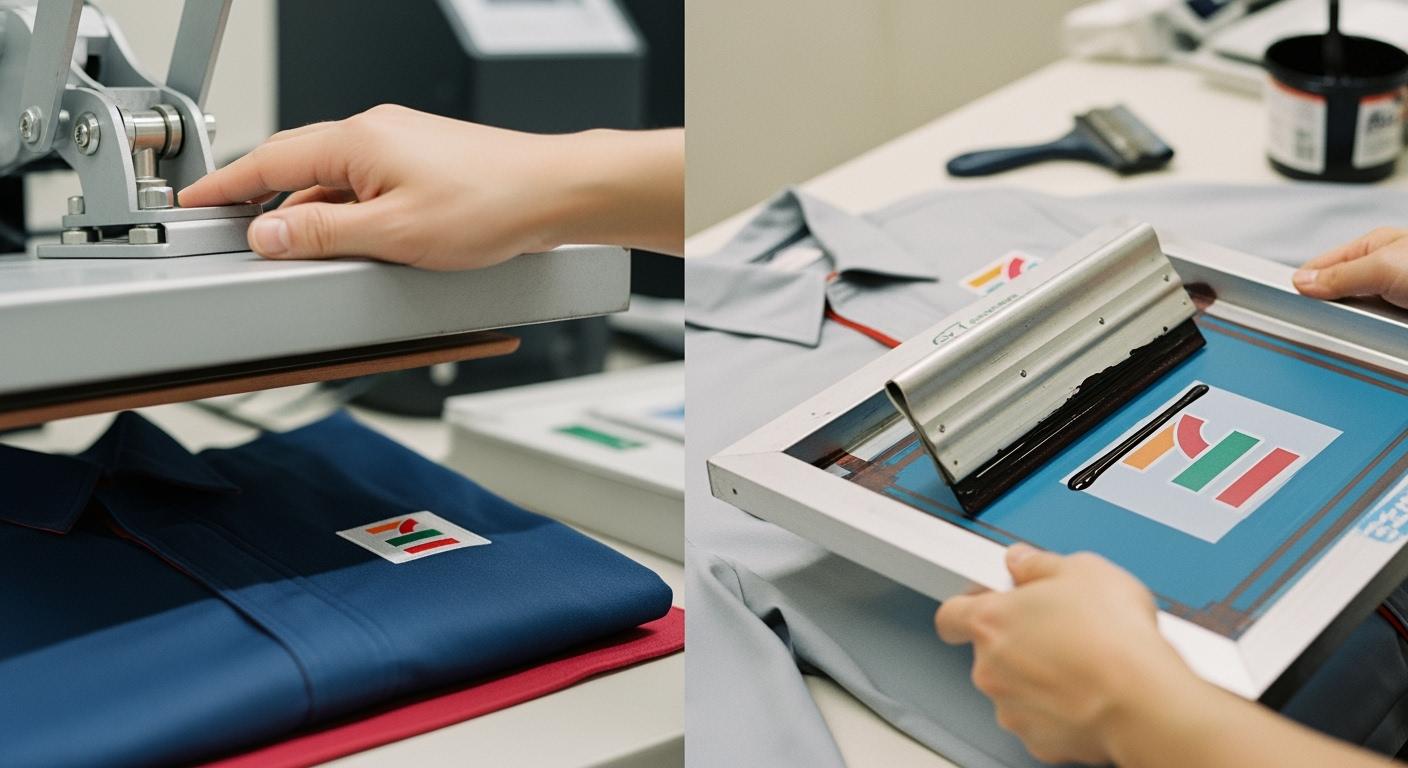
You want your convenience store branding options to stand out and last. If you need high-quality prints for logos on corporate uniforms or promotional wear, screen printing offers superior durability and cost advantages for large orders. Heat transfer printing gives you more customization and design flexibility, making it ideal for small batches or promotional materials. Your choice in apparel printing impacts customer satisfaction, daily operations, and how promotional wear supports your brand image.
Key Takeaways
Screen printing offers superior durability, making it ideal for uniforms that face heavy use and frequent washing.
Heat transfer printing provides flexibility and vibrant detail, perfect for small batches or frequent design updates.
Choose screen printing for large orders to benefit from lower costs per unit as order size increases.
Heat transfer printing excels in producing intricate, multi-color designs without high setup costs.
Consider the longevity of prints: screen printed logos can last 50 to 100 washes, while heat transfers typically last 30 to 50 washes.
Evaluate your branding needs: screen printing is best for bold, simple designs, while heat transfer suits complex graphics.
Request samples before ordering to ensure color accuracy and print quality for your uniforms.
Plan your order size and budget carefully to select the most cost-effective printing method for your convenience store.
Convenience Store Branding Options
When you consider convenience store branding options, you want methods that reflect your store’s identity and withstand daily wear. Two of the most popular solutions for custom branded apparel are heat transfers and screen printing. Each method offers unique benefits for your uniforms and plays a distinct role in your overall branding strategy.
Heat Transfer Printing Overview
Heat transfers have become a top choice for convenience store branding options, especially when you need flexibility in design. This method allows you to create custom branded apparel with vibrant, multi-color graphics and intricate details. You can use heat transfer printing for small batches or when you want to update your logo frequently.
Process Steps
You start by printing your design onto a special transfer paper using a digital printer.
You place the transfer paper onto the fabric.
You use a heat press machine to apply heat and pressure, bonding the design to the surface of the garment.
You peel away the backing paper, leaving the design on top of the fabric.
Tip: Heat press printing works best for uniforms that require detailed, colorful logos or frequent design changes.
Materials Used
Transfer paper or vinyl sheets
Heat press machine
Specialty inks or toners
Garments suitable for heat press printing, such as cotton or polyester blends
Heat transfer printing gives you the flexibility to experiment with new convenience store branding options without committing to large orders.
Screen Printing Overview
Screen printing stands out as a classic method for custom branded apparel. Many convenience stores rely on custom screen printing for uniforms that need to last through repeated washing and heavy use. This process excels when you want bold, simple designs that become part of the fabric.
Process Steps
You create a stencil (screen) for each color in your design.
You place the screen over the garment.
You spread ink across the screen, pressing it through the mesh onto the fabric.
You cure the ink with heat, ensuring it bonds with the fibers.
Note: Custom screen printing produces a durable finish that integrates with the garment, making it ideal for high-traffic convenience store branding options.
Materials Used
Mesh screens and frames
Squeegees
Plastisol or water-based inks
Heat curing equipment
Garments designed for screen printing, such as cotton or poly-cotton blends
Screen printing remains the preferred choice for custom branded apparel when you need long-lasting, bold designs for your uniforms.
When you evaluate convenience store branding options, consider how heat press printing and custom screen printing fit your needs. Heat transfers offer unmatched design flexibility, while screen printing delivers durability and a professional look for your custom branded apparel.
Durability: Heat Transfers vs. Screen Printing

When you select a logo método de impresión para uniformes, you want to maximize longevity and maintain a professional appearance. The durability and print quality of your uniforms depend on how well the logo withstands daily wear, frequent washing, and exposure to heat. Let’s break down how heat transfers and screen printing perform over time.
Heat Transfer Durability
Heat transfer printing offers convenience and flexibility, but you need to consider its longevity before making a decision.
Washing Resistance
You will notice that heat transfer prints typically last between 30 to 50 washes under ideal conditions. If you use modern direct-to-film techniques, you can expect prints to survive up to 100 washes before micro-cracks appear. Sublimated designs, a specialized form of heat transfer, last as long as the fabric itself and resist cracking, peeling, or fading. However, most standard heat transfers begin to show visible wear after about 50 washes. This means you may need to replace uniforms more often if you rely on heat transfer for your logo.
Heat transfer prints last 30–50 washes on average.
Direct-to-film heat transfers can reach 60–100 washes.
Sublimated heat transfers match the fabric’s lifespan.
Note: You should always follow garment care instructions to extend the longevity of heat transfer prints.
Peeling and Fading
Heat transfer prints are more likely to crack and peel over time, especially when exposed to regular washing and heat. You may see fading or loss of vibrancy after repeated laundering. If your uniforms face heavy use, heat transfers may not maintain their original look for long. Peeling edges and faded colors can affect your store’s professional image.
Heat transfer prints often peel and crack with frequent washing.
Fading occurs faster than with other methods.
Screen Printing Durability
Screen printing stands out for its exceptional longevity and resistance to wear. You can trust screen printed transfers to keep your uniforms looking sharp through countless wash cycles.
Ink Absorption
Screen printing uses a thick layer of ink that bonds deeply with the fabric. This process creates vibrant graphics that resist fading and maintain their appearance over time. You will find that screen printed transfers remain bold and clear, even after many washes. The ink absorbs into the fibers, making the design part of the garment rather than just sitting on top.
Screen printed transfers use thick ink for lasting vibrancy.
Ink bonds with fabric, increasing longevity.
Tip: Choose screen printing for uniforms that require maximum durability and print quality.
Cracking and Fading
Screen printed transfers rarely crack or fade, even with frequent laundering. The gold standard for durability, screen printing withstands heavy use and repeated exposure to heat. You will see that screen printed transfers outlast heat transfers in almost every scenario. Uniforms printed this way retain their professional look, reducing the need for frequent replacements.
Screen printed transfers resist cracking and fading.
Longevity far exceeds that of heat transfers.
When you compare heat transfers and screen printing, you see clear differences in longevity. Screen printed transfers deliver unmatched durability and print quality, making them the preferred choice for uniforms that must endure daily wear and frequent washing.
Design Flexibility and Quality
When you evaluate design flexibility and quality for convenience store uniforms, you need to consider how each printing method handles detail, color, and complexity. Your choice will impact how your logo appears on staff apparel and how your brand stands out to customers.
Heat Transfer Printing: Detail and Color
Heat transfers give you unmatched versatility for intricate designs. You can achieve high levels of detail and vibrant color accuracy, especially when you use advanced techniques like sublimation or Direct-to-Film. These methods allow you to reproduce complex artwork and gradients that would be difficult with other processes.
Multi-Color Designs
You can easily create multi-color designs with heat transfers. This method does not require separate setup for each color, so you can include as many colors as you want in your logo. You will find that heat transfer printing is ideal for uniforms that feature detailed graphics, gradients, or small text. The process supports full-color images and even photographic effects, making it a top choice for creative branding.
Heat transfers excel at reproducing detailed artwork and complex logos.
You can achieve high-resolution images and vibrant colors.
The process works well for intricate designs and multi-color graphics.
You do not face extra setup costs for additional colors.
Careful management of materials and process ensures optimal color accuracy.
Photographic Effects
If you want to print photographic images or highly detailed graphics on your uniforms, heat transfer printing delivers superior results. You can replicate subtle color transitions and fine lines, which helps your brand look modern and professional. This flexibility lets you update your design frequently without sacrificing quality.
Screen Printing: Simplicity and Boldness
Screen printing offers a classic look with bold, solid colors. You get a durable finish that stands up to daily wear, but you face some limitations when it comes to design complexity.
Solid Colors
You can rely on screen printing for simple, bold designs that use a limited color palette. This method produces crisp, vibrant prints that become part of the fabric. You will notice that solid logos and basic shapes look sharp and professional on uniforms. The process works best when you want a strong, consistent brand image with minimal detail.
Limitations with Complex Designs
Screen printing has limitations with complex or multi-colored designs, especially those requiring gradients or photographic detail. Additionally, because each color requires a separate screen, it becomes less cost-effective for single shirts or small batches.
You may find that screen printing is not the best option for intricate logos or designs with many colors. The need for separate screens for each color increases setup time and cost. If your uniforms require detailed graphics or frequent design changes, heat transfers provide more flexibility and better quality for those needs.
Cost and Order Size
When you choose a logo printing method for convenience store uniforms, you need to balance costs, order size, and overall value. Both heat transfers and screen printing offer unique advantages depending on your budget and the number of uniforms you need.
Heat Transfer Printing for Small Orders
Cost-Effectiveness
Heat transfers provide excellent value for small orders. You avoid high setup costs, making heat transfer printing ideal when you want to order fewer than 50 uniforms. The process allows you to print detailed designs without extra charges for each color. You can see the difference in cost per unit when you compare heat transfers to screen printing:
Order Size | DTF Cost per Unit | Screen Printing Cost per Unit |
|---|---|---|
Small Orders (1-50 units) | $3-8 | $8-15 |
Large Orders (500+ units) | $2-5 | $1.50-3 |
You gain flexibility with heat transfers, especially if you want to test new designs or update your branding frequently. The lower costs for small batches help you maximize value without sacrificing quality.
Time Efficiency
Heat transfer printing offers quick turnaround times. You do not need to wait for screens to be created, so you receive your uniforms faster. The setup costs remain low, and production times are shorter compared to screen printing. This efficiency makes heat transfers a smart choice when you need uniforms on short notice or want to minimize downtime.
Printing Method | Setup Costs | Production Times |
|---|---|---|
Heat Transfer Printing | Generally lower for small orders | Quicker production times |
Screen Printing | Higher due to multiple screens | More time-consuming for setup |
You benefit from rapid delivery and consistent quality, which supports your store’s operations and branding needs.
Screen Printing for Bulk Orders
Setup Costs
Screen printing excels when you need bulk t-shirt printing for large orders. The process requires higher setup costs because each color in your design needs a separate screen. You pay more upfront, but the cost per unit drops significantly as your order size increases. Screen printing becomes cost-effective when you order at least 50 uniforms per design.
Screen Printing: Minimum order of 50 pieces per design, ideal for large batches.
Heat Transfer Printing: Minimum order of 20 pieces, offering flexibility for smaller quantities.
You should consider screen printing if you want to maximize value for bulk t-shirt printing and maintain high quality across hundreds of uniforms.
Speed for Large Runs
Once you complete the setup, screen printing delivers fast production for large orders. The process handles bulk t-shirt printing efficiently, allowing you to receive hundreds of uniforms in a short period. You achieve consistent quality and vibrant designs, which enhance your store’s professional image.
Screen printing offers the best value for large orders, especially when you prioritize durability and quality. You reduce costs per unit and benefit from reliable production speed.
Tip: Choose heat transfers for small batches and frequent design changes. Select screen printing for bulk t-shirt printing and long-term value.
You need to match your printing method to your order size and budget. Heat transfers deliver flexibility and lower costs for small orders, while screen printing provides superior value and quality for bulk t-shirt printing.
Color Options and Print Feel
Heat Transfers: Vibrancy and Texture
Color Matching
You want your uniforms to showcase your brand’s colors with precision. Heat transfer printing gives you excellent color vibrancy, especially when you need full-color gradients or photo-realistic images. You can match your logo’s colors across different fabrics, and the brightness remains consistent. Heat transfers allow you to reproduce subtle transitions and complex artwork, making your uniforms stand out in any retail environment.
Here is a comparison of color vibrancy and print texture between heat transfer and screen printing:
Feature | Heat Transfer | Screen Printing |
|---|---|---|
Color Vibrancy | Excellent for full-color gradients and photo-realism. Brightness is consistent across all fabrics. | Unbeatable for bold, punchy spot colors. Can achieve extremely bright neons and specialty inks. |
Texture & Hand | Very soft, lightweight, and flexible. The print moves with the fabric, making it ideal for comfort-focused apparel. | Can range from a soft hand (water-based inks) to a thicker, slightly rubbery feel (plastisol). |
You can rely on heat transfers for accurate color matching, even when your design includes many shades or fine details. This method works well for uniforms that require frequent updates or seasonal branding changes.
Fabric Feel
Heat transfer prints create a soft and flexible finish. You will notice that the print moves with the fabric, which helps maintain comfort for your staff. The lightweight texture of heat transfers makes them ideal for uniforms worn during long shifts. Staff members often prefer the feel of heat transfer prints, especially when comfort is a priority.
However, you should consider the long-term appearance. Heat transfers sit on top of the fabric, which makes them more prone to wear and tear. After 25 to 30 washes, you may see cracking or peeling. Customers sometimes mention these issues when comparing heat transfer uniforms to other options.
Screen Printing: Color and Texture
Ink Vibrancy
Screen printing delivers bold, punchy spot colors. You can achieve extremely bright neons and specialty inks that grab attention. This method excels when you want your logo to look strong and consistent. Screen printing works best for simple designs with solid colors, but you can also use specialty inks for unique effects.
You will see that screen printed uniforms maintain their vibrancy through many washes. The ink penetrates deeply into the fabric, creating a durable bond. Your uniforms keep their professional appearance, even after heavy use.
Uniform Comfort
Screen printing offers a range of textures. Water-based inks produce a soft hand, which feels comfortable against the skin. Plastisol inks create a thicker, slightly rubbery finish. You can choose the ink type based on your staff’s comfort needs.
Many customers prefer the durability of screen printed uniforms. You will hear fewer complaints about fading or cracking. Screen printing can last 50 to 100 washes or more without significant changes in appearance.
Common customer complaints include:
Heat transfers are more prone to cracking or peeling after repeated washing.
Screen printing lasts longer and resists fading.
Customers often prefer the vibrant and long-lasting results of screen printing.
You should weigh the comfort and longevity of each method when selecting uniforms for your convenience store. Heat transfers provide a soft feel and vibrant colors, while screen printing offers unmatched durability and boldness.
Custom Screen Printing vs. Heat Transfers: Pros and Cons
Heat Transfer Printing Pros
You gain several advantages when you choose heat transfer printing for convenience store uniforms. This method stands out for its cost-efficiency, especially for small-scale orders. You can achieve bright colors and detailed patterns, which help your brand look modern and appealing. The process remains user-friendly, so you do not need advanced skills or expensive equipment to get started. High temperatures and pressures during application ensure excellent quality, giving your uniforms a professional finish.
Advantage | Description |
|---|---|
Cost-efficiency | Offers great value with lower initial setup costs and is effective for small-scale printing. |
Bright Colors and Detailed Patterns | Produces high-quality prints with vibrant colors and intricate designs, suitable for complex images. |
User Friendly | Simple process that requires minimal experience and basic equipment, making it accessible for beginners. |
Excellent Quality | High temperatures and pressures ensure detailed and vibrant print designs, enhancing overall quality. |
Tip: You can update your logo or design frequently with heat transfers, making it ideal for seasonal promotions or limited-time campaigns.
Heat Transfer Printing Cons
You should consider several drawbacks before selecting heat transfer for your uniforms. Designs may fade, crack, or peel after repeated washing and wearing. Limited breathability can make uniforms uncomfortable in warm conditions. You face higher costs for large orders because each item requires individual pressing. Design limitations restrict the complexity and variety of prints, especially for specialty effects. Mistakes during the application process can lead to wasted materials and increased expenses.
Designs may fade, crack, or peel after repeated washing and wearing.
Limited breathability can make uniforms uncomfortable in warm conditions.
Higher costs for large orders due to individual pressing of each item.
Design limitations restrict the complexity and variety of prints.
Potential for mistakes during the application process can lead to wasted materials.
Note: You should always follow care instructions to extend the life of heat transfer prints and minimize issues with cracking or peeling.
Custom Screen Printing Pros
You benefit from several key advantages when you select screen printing for convenience store uniforms. This method enhances the appearance of your staff and contributes to employee satisfaction. Durable and comfortable materials help your team feel valued, which can improve customer service and overall business performance. Custom screen printing also supports team cohesion and professionalism in customer interactions. High-quality materials ensure your uniforms last longer and remain comfortable throughout the workday.
Benefit | Description |
|---|---|
Employee Morale | Custom uniforms can enhance employee morale by fostering a sense of belonging and pride. |
Customer Trust | Uniforms can increase customer trust as they present a professional image. |
Brand Recognition | Custom screen printing helps in establishing and reinforcing brand identity among customers. |
Custom uniforms improve team cohesion.
They enhance professionalism in customer interactions.
High-quality materials ensure durability and comfort for employees.
Callout: Screen printing delivers vibrant, long-lasting designs that withstand frequent washing and heavy use, making it the preferred choice for high-traffic convenience stores.
Custom Screen Printing Cons
When you choose custom screen printing for convenience store uniforms, you encounter several challenges that can affect your decision. Screen printing excels in durability and boldness, but you must weigh its drawbacks before committing to this method.
Drawback | Explanation |
|---|---|
Each design requires a custom screen, making it impractical for small orders. | |
Cost efficiency | Expensive for one-off orders due to high setup costs, while cost-effective for large volumes. |
Inventory requirements | Requires printing large quantities, leading to storage needs that contradict no-inventory models. |
Limited flexibility | Less adaptable for unique designs compared to print on demand, needing different screens for variations. |
You face long setup times with screen printing. Each logo or design needs a separate screen, which increases labor and preparation. If you want to print a small batch or change designs often, you will find this process inefficient. The setup costs make screen printing expensive for one-off orders. You save money only when you order in bulk.
Screen printing also demands larger inventory. You must print many uniforms at once to achieve cost savings, which leads to storage challenges. If your store prefers a no-inventory model or needs frequent design changes, this method may not fit your business strategy.
You experience limited flexibility with screen printing. Unique designs or frequent updates require new screens, adding time and cost. You cannot easily adapt to seasonal promotions or special events without extra investment.
Some materials cannot be printed on or incur extra costs due to special requirements.
More colors in a design require more screens, increasing setup time and labor.
Higher costs per item for small orders due to setup charges and pricing based on design complexity.
Tip: If you need frequent design changes or small batches, consider alternative methods like heat transfer printing. Screen printing works best for large, consistent orders with simple designs.
You should evaluate your store’s needs before choosing screen printing. The method offers durability and professional results, but you must plan for setup time, inventory, and design limitations.
Practical Recommendations
Choosing for Durability
You want your uniforms to look sharp and last through daily wear. When you focus on durability, you should consider several important factors:
Material compatibility helps your logo stay clear and crisp on different fabrics and plastics.
Durability ensures your logo maintains its appearance, even after many washes or exposure to outdoor conditions.
Detail and resolution matter if your logo includes fine lines or small text.
Color accuracy keeps your brand colors consistent across all uniforms.
Screen printing stands out for long-lasting results. The ink bonds deeply with the fabric, so your logo resists fading, cracking, and peeling. If your staff works outdoors or uniforms face frequent washing, screen printing gives you the best durability.
Tip: Always check that your chosen method matches the fabric type of your uniforms. This step prevents issues with clarity or logo longevity.
Choosing for Design Needs
Your brand’s image depends on how your logo and graphics appear on uniforms. You should match your printing method to your design requirements:
Screen printing works best for simple logos with bold shapes and fewer colors. You get vibrant, eye-catching results that stand out from a distance.
Heat transfer printing suits complex, multi-colored designs. You can include intricate details, gradients, and even photo-like images. This method also offers fast turnaround times for new or updated designs.
If your brand uses a detailed or colorful logo, heat transfer printing gives you the flexibility to achieve the look you want. For classic, bold branding, screen printing remains the top choice.
Note: Review your logo’s complexity before choosing a printing method. The right choice ensures your uniforms reflect your brand’s identity.
Choosing for Order Size
Order size plays a major role in cost-effectiveness. You should select your printing method based on how many uniforms you need. The table below shows which method works best for different order sizes:
Order Size | Cost-Effectiveness |
|---|---|
Heat transfer is more cost-effective | |
More than 500 | Screen printing is more cost-effective |
If you need fewer than 500 uniforms, heat transfer printing helps you control costs and avoid high setup fees. For large orders above 500 pieces, screen printing lowers your cost per unit and delivers consistent quality across every item.
Callout: Plan your order size in advance. This step helps you choose the most efficient and budget-friendly printing method for your convenience store uniforms.
Choosing for Budget
You want to make every dollar count when investing in convenience store uniforms. Budget plays a critical role in your decision between heat transfer and screen printing. Each method comes with its own cost structure, and understanding these differences helps you avoid surprises.
Start by evaluating your total project cost. Heat transfer printing usually offers lower upfront expenses, especially for small orders. You do not pay for screen setup or color separations. This method works well if you need fewer than 50 uniforms or plan to update your logo often. You can also experiment with seasonal designs without committing to large quantities.
Screen printing, on the other hand, requires a higher initial investment. You pay for screens, setup, and sometimes extra charges for each color in your logo. However, the cost per unit drops significantly as your order size increases. If you plan to outfit your entire staff or order in bulk, screen printing becomes more budget-friendly in the long run.
Here is a quick comparison to help you decide:
Printing Method | Best For | Upfront Cost | Cost Per Unit (Small Order) | Cost Per Unit (Large Order) |
|---|---|---|---|---|
Heat Transfer | Small, frequent orders | Low | Low | Moderate |
Screen Printing | Large, infrequent orders | High | High | Low |
Tip: Always ask for a detailed quote before placing your order. Some providers include hidden fees for rush jobs, specialty inks, or garment types.
You should also consider the long-term value. Heat transfer prints may require more frequent replacement due to wear and tear, which can add to your total cost over time. Screen printed uniforms last longer, so you may save money by reducing the need for replacements.
To maximize your budget, follow these steps:
Assess your order size: Small batches favor heat transfer. Large orders favor screen printing.
Factor in design complexity: Multi-color or intricate logos cost less with heat transfer.
Plan for the future: If you expect to reorder often, negotiate bulk pricing or loyalty discounts.
Request samples: Test print quality before committing to a large purchase.
You control your branding costs by matching your printing method to your budget and business needs. Careful planning ensures you get the best value without sacrificing quality or professionalism.
Real-World Examples
You want to see how convenience stores use heat transfers and screen printing in actual operations. Real-world examples help you understand which method fits your branding and workflow. You can learn from the successes of other stores and apply those lessons to your own uniform strategy.
Heat Transfer Printing in Convenience Stores
Many convenience stores choose heat transfer printing for uniforms when they need flexibility and quick updates. You can use heat transfer for seasonal promotions or limited-time campaigns. For example, a local chain might launch a summer beverage promotion and outfit staff with vibrant t-shirts featuring the campaign logo. You can print detailed graphics and multi-color designs with heat transfer, which makes your uniforms stand out. Staff members often appreciate the soft feel and lightweight texture of heat transfer prints, especially during long shifts.
You can also use heat transfer printing for small batches. If you want to test a new logo or celebrate a store anniversary, heat transfer lets you produce a limited run without high setup costs. You avoid the need for large inventory, and you can update your uniforms as your branding evolves. Heat transfer works well for stores that value agility and frequent design changes.
Tip: You should request samples before placing a large order. This step helps you check color vibrancy and print quality for your uniforms.
Screen Printing in Convenience Stores
Screen printing remains the preferred choice for many large convenience store chains. You see this method in action at stores like Kwik Trip. Employees wear uniforms made from durable polyester fabrics. These uniforms maintain their color and resist stains, which supports a neat and professional appearance. Kwik Trip emphasizes pressed and clean uniforms, and screen printing helps achieve this standard by producing bold, long-lasting logos.
Sheetz also uses screen printing for promotional t-shirts. You notice employees wearing shirts with creative slogans, such as those celebrating the sale of beer in Pennsylvania. Screen printing allows Sheetz to create engaging uniforms that boost team spirit and customer interaction. You benefit from the durability of screen printing, which keeps uniforms looking sharp after many washes.
You can rely on screen printing for bulk orders and consistent branding. The process delivers vibrant colors and strong designs that withstand heavy use. You reduce replacement costs and maintain a professional image across all locations.
Note: You should choose screen printing for uniforms that require maximum durability and bold branding.
You see that both heat transfer and screen printing offer unique advantages in real-world convenience store settings. You can select the method that matches your store’s needs, whether you value flexibility or long-term durability.
You want your convenience store uniforms to reflect your brand and meet your operational needs. For large orders and long-lasting results, screen printing offers unmatched durability and cost savings. When you need quick turnaround or frequent updates, heat transfer printing and heat transfers provide flexibility and vibrant detail. Custom logo t-shirts benefit from high-quality printing and vivid colors. Consider your order size, design complexity, and budget. Consult with printing professionals to find the best fit. Request samples or quotes to ensure your uniforms support your brand and staff.
FAQ
What is the best printing method for long-lasting convenience store uniforms?
Screen printing gives you the most durable results. The ink bonds with the fabric, so your uniforms resist fading, cracking, and peeling. You can expect screen printed logos to last through frequent washing and heavy use.
Can you use heat transfer printing for detailed, multi-color logos?
Yes, heat transfer printing works well for complex designs. You can print vibrant colors, gradients, and photographic effects. This method lets you update your logo often without extra setup costs.
How do you decide between heat transfer and screen printing for small orders?
Choose heat transfer printing for small batches. You avoid high setup fees and get quick turnaround. Screen printing suits large orders because the cost per unit drops as quantity increases.
Does screen printing feel comfortable on uniforms?
Screen printing can feel soft or slightly textured, depending on the ink type. Water-based inks create a softer finish. Plastisol inks feel thicker. You can select the ink that matches your comfort needs.
How many washes do heat transfer prints usually last?
Heat transfer prints typically last 30 to 50 washes. Direct-to-film and sublimation methods may last longer. You should follow care instructions to extend the life of your uniforms.
Can you print on any fabric with both methods?
You can print on most cotton and polyester blends with either method. Some specialty fabrics may need specific inks or processes. Always check fabric compatibility before placing your order.
What is the cost difference between heat transfer and screen printing?
Heat transfer printing costs less for small orders. Screen printing becomes more affordable for bulk orders. You pay higher setup fees for screen printing, but the price per shirt drops with larger quantities.
Should you request samples before ordering uniforms?
Yes, you should always request samples. Samples help you check color accuracy, print quality, and fabric feel. This step ensures your uniforms meet your branding standards.