

Why British School Uniforms Remain Strict in 2025 and What It Means for Students
Table of Contents
Display
Every morning, I put on my blazer, tie, and polished shoes, knowing that the rules for british school uniforms have not changed in 2025. Have you ever felt frustrated by a strict dress code at your school? I see how british schools enforce these standards to promote focus, equality, and discipline. The debate over whether these rules help or hinder students remains strong.
Key Takeaways
Strict school uniforms help students focus on learning by reducing distractions related to clothing choices.
Uniforms promote social equality, making it harder to judge peers based on wealth or fashion.
Discipline in wearing uniforms fosters responsibility and prepares students to follow school rules.
A sense of belonging is enhanced when students wear the same uniform, creating a supportive school community.
Uniforms can limit self-expression, leading some students to feel frustrated about their individuality.
The cost of uniforms can be a burden for families, prompting calls for more affordable options.
Schools are beginning to adapt uniform policies to include comfort and inclusivity for all students.
Ongoing debates about school uniforms highlight the need to balance tradition with modern values and student needs.
Why British School Uniforms Are Strict
School Uniform and Student Focus
When I walk into school each morning, I notice how everyone looks the same. I believe this helps me focus on my studies. I do not have to worry about what I am wearing or if my clothes are trendy enough. The strict rules around school uniforms mean I spend less time thinking about my appearance and more time on my lessons. Teachers often say that uniform policies help us concentrate. I have seen how strict enforcement of these rules can create a serious atmosphere in the classroom. This makes it easier for me to pay attention and get my work done.
I remember days when I forgot my tie or wore the wrong shoes. The teachers always reminded me that the uniform sets the tone for learning. It signals that school is a place for education, not a fashion show.
Reducing Distractions
I have noticed that school uniforms reduce distractions in several ways:
I do not waste time choosing outfits in the morning.
I do not feel pressure to keep up with the latest trends.
I see less bullying about clothing choices.
I feel that everyone is on the same level, which helps me focus on my work.
When everyone wears the same thing, it is harder to judge someone based on their clothes. I have heard classmates say they feel less anxious about fitting in. The absence of a uniform policy can lead to distractions from visible differences in family income or style. Uniforms help keep the focus on learning instead of appearance.
Social Equality
I think one of the main reasons for strict uniform policies is to promote social equality. When I look around, I see that everyone wears the same blazer, shirt, and trousers or skirt. This makes it harder to tell who comes from a wealthy family and who does not. I have heard teachers and parents say that school uniforms level the playing field. They believe that uniforms reduce the pressure to wear expensive or fashionable clothes.
School uniforms can reduce the pressure on students to wear costly clothing.
Many people argue that uniforms help create a sense of equality.
Identical outfits make it difficult to spot income differences among students.
However, I know that the cost of uniforms can still be a problem for some families. Even though public education is free, buying the right uniform can be expensive. Some of my friends have said that this is still a challenge, even with strict rules in place.
In my experience, the professional look of the uniform helps set a serious tone for the school day. It reminds me that I am part of a community with shared values and expectations.
Discipline and School Identity
Encouraging Order
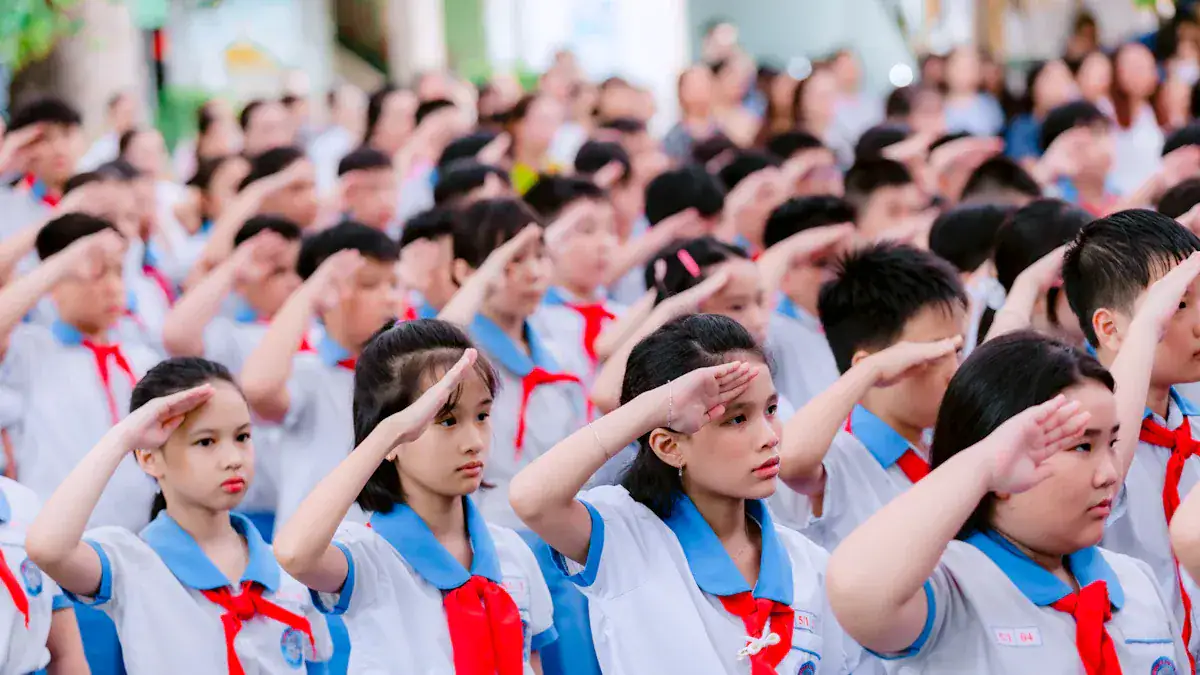
When I step into my school, I notice how the uniform sets a clear expectation for discipline. The rules are strict, and teachers remind us that wearing the correct uniform shows respect for the school environment. I see how discipline starts with small things, like making sure my shirt is tucked in and my shoes are polished. These habits help me stay organized and focused throughout the day.
Uniforms make it easier for teachers to spot when someone breaks the rules. I have learned that discipline is not just about punishment. It is about creating a space where everyone knows what is expected. When I follow the uniform code, I feel more prepared to follow other school rules. Discipline in dress often leads to discipline in behavior. I notice that my classmates act more responsibly when we all look the part.
My school believes that discipline is the foundation for success. Uniforms help us practice discipline every day, starting from the moment we get dressed.
Building Belonging
Wearing the same uniform as my friends gives me a sense of belonging. I feel like I am part of something bigger than myself. I remember reading about a study with thousands of students that showed uniforms can improve attendance, especially for those from low-income families. This suggests that uniforms help students feel included and valued.
School uniforms create a community. I see less bullying and fewer social barriers because everyone looks similar. I feel proud to wear my school colors, knowing that I belong to a group that shares the same goals. When I walk through the halls, I notice how discipline and belonging go hand in hand. The uniform reminds me that I am not alone. I am part of a team.
Wearing the same attire fosters a sense of community among students.
It creates a shared identity that enhances school spirit and morale.
Representing the School
My uniform does more than keep me disciplined. It represents my school to the outside world. When I travel to sports events or walk home, people recognize my blazer and tie. I know that how I wear my uniform reflects on my school’s reputation. Discipline in appearance shows that we take pride in our school.
Some schools, like Christ’s Hospital, have used distinctive uniforms for centuries to symbolize their values. I see how my school’s uniform reflects our commitment to equality and community. Today, many schools focus on sustainability and inclusivity in their uniform choices. This shows that discipline can adapt to modern values.
Christ’s Hospital introduced its blue coats and yellow stockings in 1552, symbolizing equality and community values.
Uniforms foster a sense of belonging and responsibility among students, enhancing their identity and discipline.
Current trends in school uniforms emphasize sustainability and inclusivity, reflecting contemporary societal values.
I believe that discipline in wearing the uniform helps me understand the importance of representing my school well. It teaches me responsibility and pride. When I wear my uniform correctly, I show that I respect my school’s traditions and values.
Impact on Students

Behavior and Academics
I notice that wearing school uniforms affects how I behave and perform in class. When I dress in the same way as my classmates, I feel less pressure to impress others with my clothes. This helps me focus on my studies. I see fewer distractions in the classroom because everyone follows the same dress code. Teachers say that strict uniform policies encourage discipline and respect for school rules. I believe that this structure helps me stay organized and ready to learn.
Some students say that uniforms improve academic performance. I agree that I spend less time worrying about what to wear and more time preparing for lessons. The routine of putting on my uniform each morning sets a serious tone for the day. I feel motivated to work hard and follow the rules.
Comfort and Practicality
Uniform Discomfort
I often hear students complain about the comfort of school uniforms. I have felt uncomfortable wearing stiff blazers and tight collars, especially during long school days. Many students say that traditional uniforms do not allow for easy movement. I remember struggling to participate in physical activities because my uniform restricted me.
Activewear offers breathable fabrics and stretchable materials, making it easier to move and stay comfortable.
Comfortable clothing can improve mood, focus, and performance. I feel tired and distracted when my uniform is uncomfortable.
Some schools in Scotland now let students skip blazers to feel more confident and ready to learn.
The shift toward comfort in school uniforms shows that society values how students feel at school.
I prefer sport uniforms for PE because they are easier to put on and allow me to move freely. One of my classmates said, “The sport uniform is way easier to put on. It’s more stretchy, flexible and I feel really free when I have it on doing cartwheels and handstands.” Another friend told me, “I actually kind of like it because I’m not suitable in a dress. I’m not a dressy kind of girl.”
Despite these positive views, teachers say that tradition and expectations make it hard to change uniform policies.
Weather Issues
I have experienced discomfort when wearing long trousers or blazers during hot weather. Many students complain about sweating and feeling overheated in summer. Parents often criticize schools for not allowing shorts or lighter clothing. I think that strict uniform rules sometimes ignore practical needs. When I feel too hot or cold, I find it hard to concentrate on my lessons.
Limiting Individuality
I know that school uniforms limit how I express myself. I cannot choose my own style or show my personality through clothing. Some students feel frustrated by these rules. I have seen protests and petitions from students who want more freedom in what they wear. Many students complain about the financial burden of buying new uniforms, especially during tough economic times. Non-binary and gender non-conforming students often say that uniform options do not meet their needs.
Uniforms increase safety and reduce distractions, creating a fair environment for everyone.
Some students resist strict policies because they want to express their individuality.
I can personalize my uniform with accessories, but my choices are limited.
Many students appreciate uniforms for reducing peer pressure and making mornings easier.
Students have organized protests against strict uniform policies.
Petitions highlight the cost of buying new uniforms.
Complaints focus on the lack of options for non-binary and gender non-conforming students.
I believe that british school uniforms help create a sense of equality, but they also limit self-expression. I wish that schools would listen to students and consider more flexible options.
Criticisms of School Uniforms
Stifling Self-Expression
When I wear my uniform every day, I sometimes feel like I lose a part of myself. Many critics say that strict dress codes, especially in British school uniforms, suppress individuality and self-expression. I remember reading a study from the University of Nevada, Reno, which found that 70% of students felt less unique and less able to express themselves because of uniforms. During my teenage years, I want to show who I am, but uniforms make that difficult.
Uniforms can suppress individuality, especially during adolescence, which is a key time for personal growth.
Many students, including me, feel less unique and less able to express themselves.
Research in the Journal of Educational Psychology shows that limiting self-expression can lead to lower self-esteem and problems with social adjustment.
I have noticed that while uniforms can reduce bullying and peer pressure, they also make it hard for students to show their personal style. Sometimes, I wish I could wear clothes that reflect my personality.
Cost Concerns
Buying school uniforms can be expensive for families. My parents have talked about the cost of branded items, and I know some of my friends struggle with this too. The government has noticed this problem and taken action.
Evidence Description | Details |
|---|---|
Government Action | The UK Education Secretary has mandated schools to cap branded uniform items to reduce financial strain on families. |
Parental Concern | This intervention indicates that parents view the financial burden of school uniforms as significant enough to require government action. |
I see that the cost of uniforms is a real concern for many families. Even though uniforms are supposed to create equality, the price can make things harder for some students.
Inclusivity Issues
I have seen how traditional uniform policies can make some students feel left out. For example, trans and non-binary students often find that uniforms do not fit their identities. Gender-specific uniforms can reinforce gender separation and fail to support everyone.
“There was greater contention around trans girls/women wearing skirts than there was for trans boys/men wearing trousers. Some schools permitted students assigned female at birth to wear either trousers or skirts, but only permitted students assigned male at birth to wear trousers.”
Recently, I have noticed some schools making changes. They now offer more practical and flexible options, which help students with sensory sensitivities and those who do not fit traditional gender roles. At Dame Dorothy Primary School in Sunderland, the Always Active Uniform has helped more students, especially girls, join sports. Parents and teachers support these changes, and I think they make school a more welcoming place for everyone.
74% of parents support an Always Active Uniform policy.
67% of primary school teachers favor adopting this policy.
63% of parents believe it would benefit their child’s education and development.
I hope more schools will listen to students and families to make uniforms more inclusive.
Ongoing Debates
Student and Parent Views
When I talk with my classmates and their families, I hear many opinions about strict school uniform rules. Some parents tell me that uniforms help students feel like they belong. They believe that wearing the same clothes creates a sense of unity. I notice that many parents also think uniforms make things fairer for everyone. They say that uniforms can stop bullying because students do not judge each other by their clothes.
Parents believe uniforms foster a sense of belonging among students.
Uniforms are seen as a way to promote fairness and reduce bullying.
Some parents view strict uniform policies as a way to control student behavior.
I see that students have mixed feelings. Some of my friends feel proud when they wear the school uniform. They say it makes them feel part of something bigger. Others feel that strict rules limit their freedom. I have heard students complain that uniforms do not let them show their personality. Some students want more choices, especially those who do not fit into traditional gender roles.
I also notice that teachers and parents often say uniforms help keep order. They believe that clear rules about clothing make it easier to manage behavior. I have seen that uniforms can strengthen the school’s values and rules. When everyone dresses the same, it feels like we all follow the same standards.
Uniforms strengthen the school’s values and rules.
They help students feel proud of their school and promote a sense of belonging.
Strict policies can reduce differences among students and minimize disciplinary issues related to clothing.
I remember one parent saying, “Uniforms help my child focus on learning, not on what to wear.” That idea comes up a lot in conversations.
Calls for Change
Even though many people support uniforms, I hear more voices calling for change. Students often ask for more comfortable options. I have seen petitions asking schools to allow shorts in hot weather or to let students choose from a wider range of styles. Some parents support these changes because they want their children to feel comfortable and confident at school.
I notice that some schools have started to listen. They now offer uniforms that use softer fabrics or allow students to wear sportswear on certain days. These changes make a big difference for students who struggle with traditional uniforms. I have friends who feel happier and more focused when they can dress in a way that suits them.
Students want uniforms that reflect modern values, like inclusivity and comfort.
Parents support flexible policies that consider different needs.
Schools that adapt their uniform rules often see higher student satisfaction.
I believe that the debate will continue. Some people want to keep traditions, while others push for more choice. I hope schools will keep listening to students and parents. When everyone feels heard, we can find a balance that works for our community.
The Future of School Uniform Policy
Reform Proposals
I have noticed that the conversation about school uniforms has shifted in recent years. Many families struggle with the cost of uniforms. I hear parents talk about how expensive it is to buy branded items. Some even say they make sacrifices to afford what schools require. I see these challenges in my own community.
Nearly a third of parents say they might go into debt to buy school uniforms.
Almost half of parents make personal sacrifices to afford uniforms.
Most parents believe schools could cut costs by reducing branded items.
I think these numbers show how important reform is. Lawmakers have started to listen. The Children’s Wellbeing and Schools Bill will soon cap the number of branded uniform items. Schools can only require three branded pieces, plus a branded tie for secondary and middle schools. I expect this change to help many families. The cap could save families over £50 per child. The government plans to put these reforms into effect in September 2026.
The Children’s Wellbeing and Schools Bill will limit branded uniform items to three, plus a branded tie.
Families could save more than £50 per child.
The new rules will start in September 2026.
“The high cost of school uniforms has put an unnecessary financial strain on families for far too long. This is a pivotal moment on an issue we’ve campaigned on for years.”
— Mark Russell, chief executive of the Children’s Society
I believe these proposals will make uniforms more affordable and fair. I hope schools will continue to look for ways to support families.
Balancing Tradition and Change
I see that school uniforms are a big part of British tradition. Many people feel proud of their school’s colors and style. I understand why schools want to keep these traditions. Uniforms help create a sense of belonging and discipline. I feel connected to my school when I wear my uniform.
At the same time, I notice that students and parents want change. They ask for more comfort, flexibility, and inclusivity. Some schools now offer activewear or let students choose from a wider range of styles. I think these changes help students feel more confident and comfortable.
Schools try to balance tradition with new ideas.
Some schools keep classic uniforms but allow more choice in fabrics and styles.
Others focus on sustainability and inclusivity.
I believe the future of school uniform policy will depend on finding this balance. Schools must respect tradition but also listen to students and families. I hope that new policies will make uniforms fairer, more comfortable, and more inclusive for everyone. I look forward to seeing how schools adapt in the coming years.
I see that british school uniforms remain strict because schools value focus, discipline, and equality. I notice both benefits and drawbacks for students. Uniforms help me concentrate and feel part of a group, but they can limit comfort and self-expression. I hear ongoing debates about cost, inclusivity, and tradition. I wonder if future changes will balance tradition with student needs. Will schools find a way to make uniforms work better for everyone?
FAQ
What should I do if my uniform feels uncomfortable?
I talk to my teacher or school office. I ask if I can wear a more comfortable option. Some schools let students wear softer fabrics or sportswear on certain days.
Can I personalize my school uniform?
I add small accessories like pins or hairbands. My school allows these if they follow the rules. I avoid changing the main parts of my uniform.
Why do schools keep uniforms so strict?
Schools want students to focus on learning. Uniforms help create discipline and equality. I see that strict rules make everyone look the same and reduce distractions.
How do I handle the cost of buying uniforms?
I check if my school offers financial help. Some schools have secondhand uniform sales. My family saves money by buying only the required items.
Are there options for non-binary or transgender students?
Some schools offer gender-neutral uniforms. I ask my school about flexible choices. I share my needs with teachers or counselors to find the best option.
What happens if I break the uniform rules?
Teachers remind me to follow the dress code. I might get a warning or lose privileges. I try to fix my uniform quickly to avoid problems.
Can I wear shorts or lighter clothes in hot weather?
I ask my school about summer options. Some schools allow shorts or lighter fabrics when it gets hot. I share my concerns with teachers or the school council.
Do uniforms really stop bullying?
I notice less bullying about clothes. Uniforms make everyone look similar. Some students still face bullying, but I see that uniforms help reduce teasing about fashion or brands.