
Delivery Rider Staff Work Shirt OEM | Last-Mile Courier Crews
Table of Contents
Display
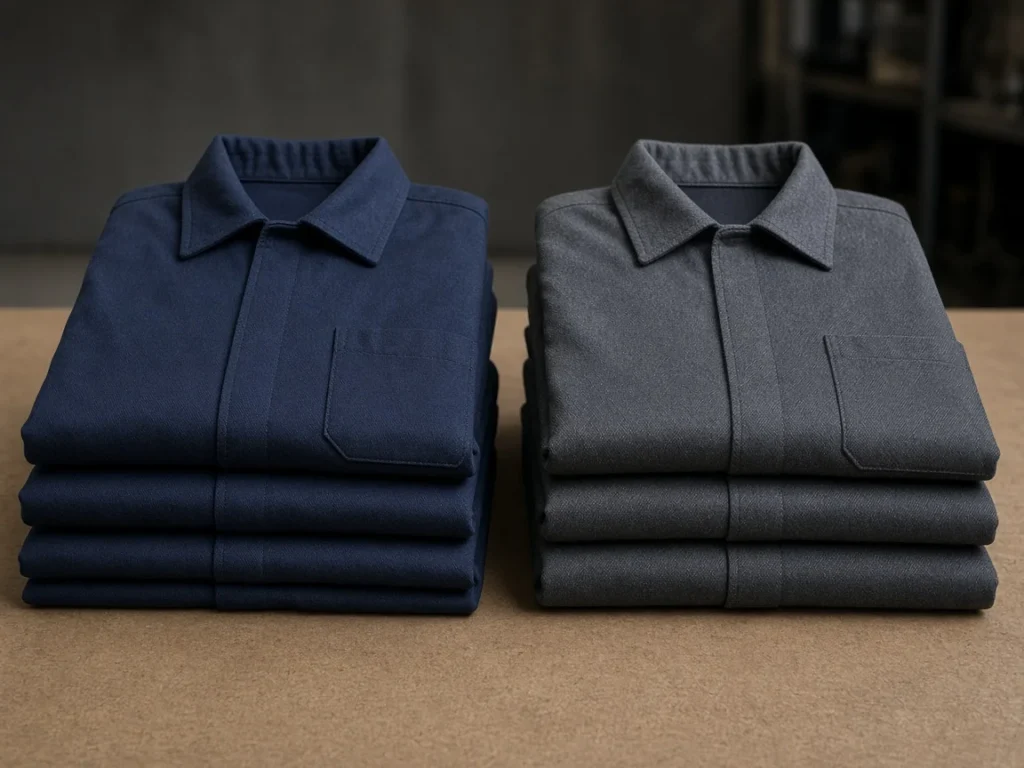
A delivery-rider work shirt is the shift shirt worn under a shell. It has to move air on a warm route, hold up where a bag strap rubs the shoulder, wash clean after a day of stops, and still show a chest mark when the jacket is open at the door. That is a woven work-shirt brief, not a polo brief and not a jacket brief.
This page is for operations, fleet, purchasing, and brand teams who buy adult work shirts for last-mile courier crews. It is the under-layer, not the outer program. A wider courier kit is covered on the logistics courier uniform OEM page, and a broader rider-program view is on the food delivery rider uniform OEM buyer guide. Use those pages for the kit, then come back here for the shirt only. If you are briefing the shell, keep it on a rider-jacket conversation such as what a rider jacket is and do not paste this shirt spec into a jacket order.
Brief the under-layer first
Fleetora Dispatch can issue one navy work shirt across a city fleet and let riders add or remove a shell by weather. Routehaven Couriers can do the same with a charcoal shirt and a shared mark size. In both programs the shirt is what the rider lives in between stops. The shell comes on and off. If you brief the jacket first and treat the shirt as an afterthought, you usually get a heavy woven that traps heat, or a light shirt that tears at the strap line.
Start with how the shirt is worn: tucked or untucked, sleeves short or long, and whether the shell is open at the customer door. Then name the route conditions that actually matter — warm riding, bag weight, and a wash at the end of the shift.
This is a button-front or snap-front work shirt in twill, poplin, or a cargo-chest variant. It is not a knit polo; a polo belongs on a different style code if you ever need one.
Airflow on a warm route, recovery after a wash
Last-mile shirts fail first on heat and on laundry, often in the same week. A cloth that feels sturdy in a meeting room can be oppressive on a midday route, and a cloth that feels airy on day one can fade or wrinkle after nightly washes.
Mid-weight is the practical starting point. Poplin is usually the more breathable option for warm routes and for a shirt worn open at the neck under a shell. Twill is the more durable face when bag straps are frequent, but it needs enough air permeability and a finish that does not turn clammy. A blend with a modest synthetic content dries faster after a route wash than a heavy twill.
Name the wash you actually run: home wash or depot laundry, typical temperature, and whether shirts are pressed or only tumble-dried. Then wash-trial shade change, shrinkage through the chest, shoulder, and length, pilling where a strap sits, and whether the placket and collar stiffen or soften after the agreed cycles. A shorter shirt will pull out from under a shell, so length after wash is part of the test.
A stain-release finish can help with food, dust, and handle marks, but only if you test it on the production cloth and confirm it does not change the hand in doorway light.
Collar and placket should stay tidy when the shirt is worn open under a shell and when it is worn alone on a warm shift. Keep button or snap count and color locked across the fleet so a mixed issue still photographs as one shirt.
Where bag straps rub: shoulder, side, and hem
A rider work shirt has abrasion points that a desk shirt never sees. The bag strap sits on the shoulder and often slides to the neck or the chest. A side strap can rub the seam, and a lower bag can catch the hem or a cargo pocket when the rider climbs stairs.
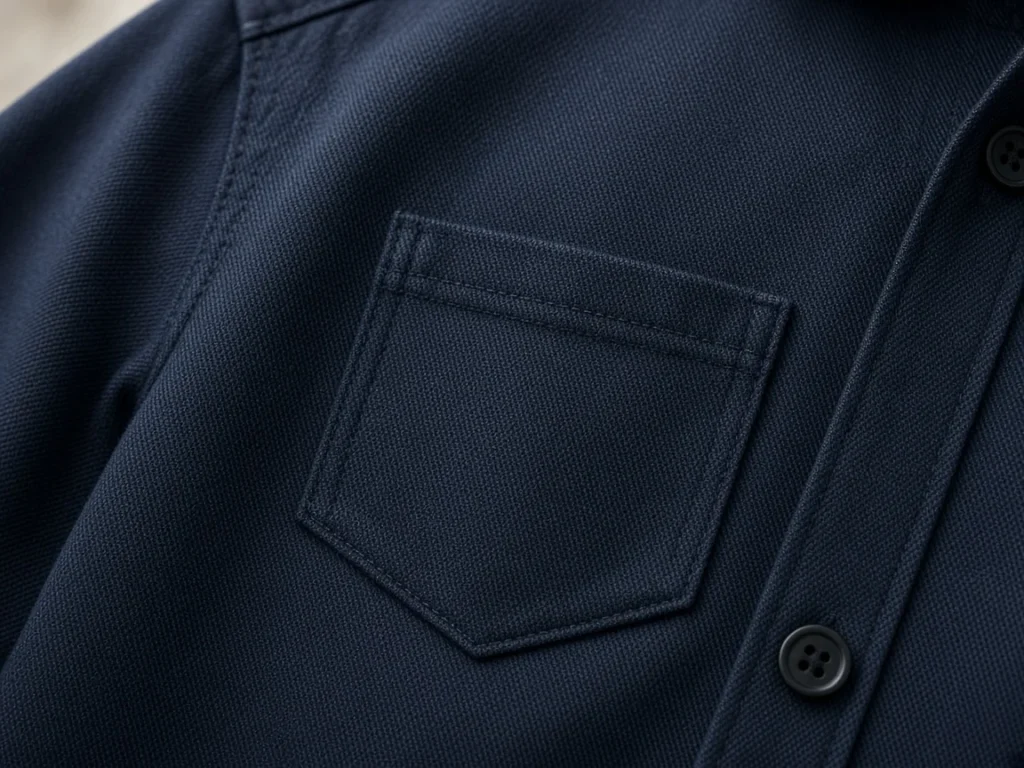
Ask for those contact points to be named in the brief:
Shoulder and upper back: enough ease so the shirt does not pull the chest mark off-center when the bag is loaded, and a cloth face that can take repeated strap rub.
Side seam and underarm: a smooth seam allowance that does not hard-rub under a strap, and enough armhole ease for a reach to a door or a high mailbox.
Hem: long enough to stay down when the rider reaches or stretches, especially if the shirt is worn untucked under an open jacket. A hem that rides up shows an uneven line at the door.
A hidden shoulder stay or a slightly denser yoke can extend life without making the shirt look like field gear. If you add a reinforcement, approve it on the production cloth and check that it does not print a ridge under the jacket.
Fit should be easy through the shoulder and chest for bag work, and still neat at the waist at a doorway. Offer men’s and women’s blocks, or a unisex block plus a shaped option, from a roster of riders who actually take routes.
Twill, poplin, or a cargo-chest work shirt
One fleet can run one family with two pocket maps, as long as color and mark size stay locked.
A clean-front twill or poplin shirt with a simple chest pocket is often enough for customer-door work at Fleetora Dispatch. A cargo-chest variant can help at Routehaven Couriers when riders need a pen, a scanner, or a small pad on the shirt itself. Keep the cargo pocket on the chest, clear of the logo, with a flap that stays closed when a strap slides across it. Avoid large lower cargo pockets; they fight with a bag belt and bulge under a closed shell.
Short sleeves are common on warm routes when the jacket is off. Long sleeves can work under a shell if you specify a clean cuff. If you issue both, treat them as related styles with the same body, color, and mark.
Hardware should be quiet and low-shine at a doorway. Buttons or snaps must survive the wash. Test a loaded chest pocket with the strap on and with the shell open.
The chest mark under an open shell
The shirt mark has to work in two states: jacket off, and jacket open at the door. Place the primary mark on the left chest, clear of the pocket flap, and high enough that an open shell does not bury it. Confirm that the decoration stays flat when a strap crosses the chest, and that it does not sit under a thick reinforcement.
Embroidery on twill or poplin needs a sew-out on the production cloth; a dense stitch that sits well on a knit will pucker a lighter poplin. A printed mark must flex at the chest and survive the route wash. Keep one finished size in millimetres and one thread or film color across the fleet.
Fleetora Dispatch should lock the mark before a second city orders. Give each depot its own size pack, not its own colorway. A shirt program breaks when one depot reorders a slightly different navy or shortens the body so the hem no longer sits under the shell.
A last-mile work-shirt sheet
Write the RFQ as the shift shirt under a named shell, not as a request for “rider uniforms.”
Field | What to lock |
|---|---|
Worn under | Named shell or jacket, or worn alone on warm routes |
Who wears it | Last-mile courier and rider crews by depot |
Cloth | Twill, poplin, or named blend; weight; dry time after a route wash |
Pocket map | Clean chest pocket or cargo-chest; flap type; no lower cargos unless justified |
Abrasion notes | Bag-strap path at shoulder, side, and hem; any yoke stay |
Collar and closure | Button or snap count; worn open at the door |
Color | Physical standard; lab dip on the production cloth |
Logo | File, size, left-chest placement under an open shell; sew-out on the real cloth |
Sleeves | Short, long, or both, as related styles |
Fit | Men's and women's or shaped; untucked or tucked; reach and strap-on checks |
Care | Route-wash method, temperature, and wash-trial limits |
Issue plan | Headcount by depot; size packs; in-hands date |
This table is the quote document. A headcount without the strap path, or a color name without a wash-trial method, will produce a shirt that looks right on a hanger and fails on a route.
Plan volume by style, not by the whole fleet. Short-sleeve and long-sleeve bodies count as one style only when the cloth stays the same. When the fabric or the pocket map changes, plan each style around about 2,000 pieces per style, combining depot size runs that share the same cloth.
Ride it, wash it, then lock the PPS
Put samples on riders who will actually take a route: a warm shift with the shell off, and a mixed shift with the jacket open at the door and the bag on. Check shoulder rub, hem sit, pocket flap hold, the chest mark under the open shell, then wash the shirt and inspect shade, shrinkage, and the decoration surface.
The pre-production sample must use the bulk cloth, production hardware, and the production mark. Approve it in writing and seal a copy at your office and at the factory. Do not release cutting from an unworn proto.
Questions last-mile buyers ask about the shift shirt
How is this different from a logistics courier uniform page?
Those pages cover a wider courier kit. This brief specifies only the work shirt worn under a shell — breathability, strap abrasion, route wash, and a chest mark that still sits when the jacket is open.
How is this different from a food-delivery rider uniform guide?
The buyer guide is a program overview. This page is the shirt spec inside that program, not a rewrite of the full rider kit and not a jacket page.
Do we need a polo or a cargo shirt as well?
This program is a woven work shirt. A polo would be a different style. A cargo-chest variant can stay in the same family if color and mark size stay locked; a different cloth still counts as its own style for volume planning.
What should the first sample prove?
Airflow and recovery after a route wash, abrasion hold at the strap line, fit with the bag on, and a chest mark that still reads under an open shell.
About Top Fortune and a rider work-shirt quote
Shanghai Top Fortune Industry Co., Ltd. has built OEM and ODM staff-apparel programs since about 2002 from a 1,506 m² facility in Songjiang. Sampling, sewing, and decoration sit under one roof, which helps a multi-depot work shirt stay on one sealed cloth and one mark size. More about the company is on the About Us page.
Request a delivery-rider staff work shirt quote: rill@topfortunemail.com | WhatsApp +86 13524210501
Send the work-shirt sheet, a note on the shell worn over it, logo files, a size survey by depot, care expectations, and the date shirts must arrive. The sample that matters is the one ridden with a bag on, washed after the route, and worn under an open jacket at the door, not only the one that looks clean on a hanger.