

Gym Staff Polo Shirt OEM | Fitness Floor and Front Desk Crews
Table of Contents
Display
3)
Spec Stack: Gym Staff Polo, Fitness Instructor Polo, Performance Polo
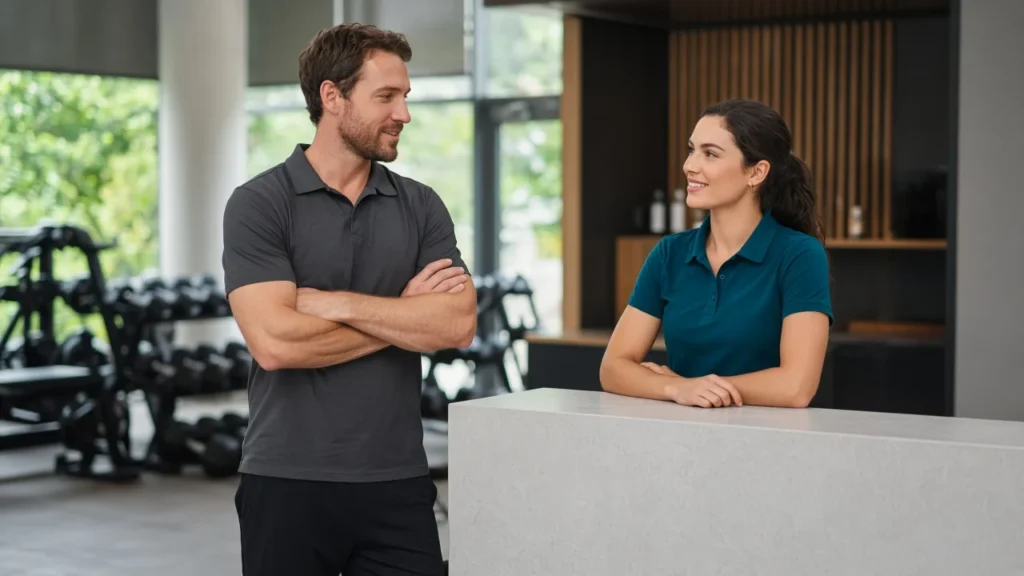
A gym staff polo shirt OEM builds polos to your own fabric, fit, colorway, and logo spec. You are not
buying stock catalog shirts off a shelf.
One polo program must serve two very different workdays. Fitness floor crews move, sweat, and stretch. Front desk crews need a crisp, consistent, client-facing look.
Polos are strongest at the desk, on tours, and in management roles. A performance-cut polo can carry floor and instructor roles. For the hardest floor work, a tee may fit better.
This guide answers the practical questions: fabric and stretch, collar and color, embroidery, lead times, MOQs, and quoting.
Why Floor and Front-Desk Crews Specify a Staff Polo
One Shirt, Two Workdays
A fitness floor crew raises arms overhead, stretches, spots lifts, and sweats through a full shift. Mirrors show every wrinkle and every logo. The shirt goes home, gets washed, and comes back for the next shift.
The front desk works a different day. Staff greet members, walk tours, sit for consultations, and stand for photos with new joiners. This shirt is client-facing. It needs a clean collar, a straight placket, and a color that still looks sharp at the end of a shift.
Repeated washing tests both roles. A floor polo takes far more wash cycles in a month than a desk polo does. Color retention and shape hold matter more on the floor. Crispness and structure matter more at the desk.
What Stock Polos Miss for Gyms
A stock polo is built for a general buyer. The fabric has one stretch level. The hem has one length. The collar has one structure. Your floor crew and your desk crew get the same shirt, and neither group gets the right one.
Stock colorways also limit you. A catalog offers a fixed palette, and your brand colors may sit outside it. Multi-club groups feel this most. Riverfront Athletic and Copper Line Fitness may want one program with two color stories, and a catalog cannot deliver that.
Polos own the front desk, tours, and owner-facing duties. A performance-cut polo can serve instructors and floor leads well. For the hardest floor roles, a tee may simply fit better. That is a fair call, and a good program plans for it.
Where OEM Changes the Result
The result is one program with deliberate differences. The floor polo gets more give and a secure hem. The desk polo gets a structured collar and a crisp finish. Both carry the same logo and the same color story. Your members see one brand. Your crews feel two purpose-built shirts.
Reorder consistency is the quiet benefit. A stock polo can change mill, shade, or fit between orders. An OEM program holds your pattern, your fabric spec, and your color standard on file. Your second order matches your first.
Who This Guide Is For (Overseas Gym Buyers)
You run a gym, a studio group, or a fitness brand. You buy staff apparel for crews in more than one country. This guide speaks to you. Each role below owns a different part of the polo decision. Find your role, then read the sections that match your work.
Owners, GMs, and Studio Operators
You set the standard for the whole program. Your sections are the spec stack and the colorway plan. The spec stack tells you how fabric, stretch, and collar structure change the shirt. The colorway section shows you how one program covers a fitness floor crew and a front desk crew without splitting your brand.
You also carry the brand and marketing view. You choose the logo treatment, the embroidery placement, and the color story that members see on tours and in photos. Read the embroidery guidance with care. Stitch density behaves differently on a performance knit than on a standard pique. A logo that looks sharp on a desk polo can pucker on a stretch fabric.
Operations, Club, and Regional Managers
You manage crews across sites. Your sections are the RFQ table and the sampling walkthrough. The RFQ table shows you what to collect before you request pricing. Headcount, crew split, size curves, and target date all change the quote. The sampling section shows you the path from first sample to PPS approval to bulk.
You also own the multi-club problem. Riverfront Athletic and Copper Line Fitness may share one program and still need distinct colorways. The colorway grid in the RFQ section shows you how to lay that out on one sheet. Your regional managers can then order against a fixed standard instead of rebuilding the spec at each site.
Purchasing, Front Office, and Distributors
You handle quoting, MOQ, and supplier terms. Your sections are the quoting inputs and the catalog versus private-label comparison. The comparison shows where a stock polo serves a small club well and where a private-label program pays off for a multi-crew group. Neither path is wrong. Each fits a different scale and a different reorder pattern.
Front office and membership managers should read the collar and color guidance first. A desk polo lives in member photos and tour conversations. Collar structure and placket finish carry more weight there than stretch does. Uniform distributors should read the same comparison through a channel lens. A distributor can stock catalog polos for fast starts and still offer private-label programs to larger club accounts.
One boundary applies to every reader. This is a branded polo program guide. It is not a general gym uniform catalog. Every section assumes you are building polos to your own spec, your own colorway, and your own logo.
Spec Stack: Gym Staff Polo, Fitness Instructor Polo, Performance Polo
Three garments sit inside this keyword family, and each one fits a different job. The gym staff polo shirt is your general-purpose polo. It covers front desk, tours, membership consultations, and management. The fitness instructor polo shirt leans toward class leads and floor coaches. It needs more give through the shoulders and a hem that stays put through movement. The performance polo shirt is the most technical build. It targets sweat, repeated washing, and long shifts on the floor.
You do not need three separate programs. You need one spec stack with three settings. Fabric, moisture management, and embroidery form the three technical pillars. Get those right and the rest follows.
Fabric and Stretch for the Floor
Knit Weight and Hand-Feel
Knit weight sets how a polo feels and how it drapes. A heavier knit reads structured and holds a crisp collar at the desk. A lighter knit moves more freely and feels cooler on the floor. Hand-feel follows the same logic. A smooth, dense surface looks polished in member photos. A softer, more open surface feels better against skin during a hard session.
Match weight to role. Desk and tour polos can carry the heavier hand. Instructor and floor polos benefit from a lighter, softer knit. Ask your supplier for swatches in both directions before you commit.
Stretch and Recovery
Stretch matters most on the floor. An instructor reaches overhead, spots a lift, and stretches with a class. The polo must follow that range without pulling across the chest or riding up at the waist. Recovery matters just as much. A knit that stretches well but stays stretched turns baggy by mid-shift.
Test recovery directly. Stretch a swatch, hold it, release it, and watch how quickly it returns. Compare that behavior after several wash cycles. A polo that recovers well keeps its shape through a full season of shifts.
Moisture Management, Hem, and Color Fastness
Sweat and Wash Durability
Floor crews sweat. Desk crews do not, but their polos still go through frequent washing. Moisture management keeps a floor polo from clinging and chilling during a shift. Color fastness keeps both polos looking sharp after repeated cycles. A desk polo that fades in a month undercuts the professional look you paid for.
Ask for wash-test swatches rather than lab claims alone. Wash them the way your crews will. Check shade retention, seam integrity, and surface pilling side by side.
Hem Finish
The hem takes abuse on the floor. A weak hem rolls, twists, or rides up during overhead movement. A well-built hem sits flat and stays flat. Side vents add room through the hip and help the polo sit cleanly whether tucked or untucked.
Choose a hem that matches the role. A straight, clean hem suits the desk. A slightly longer back hem with vents suits the floor. Small differences here show up clearly in motion.
Embroidery and Logo Placement
Chest, Sleeve, and Back Options
Chest placement is the standard for desk and management polos. It reads clearly in photos and during face-to-face conversations. Sleeve placement suits instructor polos and keeps the chest clean during movement. Back placement works for larger group branding, such as a club name across the shoulders.
Keep one logo standard across the program. Riverfront Athletic can place its mark on the chest for desk staff and on the sleeve for instructors. The brand stays consistent while the placement fits the role.
Stitch Density on Performance Knits
Performance knits behave differently under the needle. A dense stitch count that looks sharp on a structured pique can pucker on a stretch fabric. The embroidery pulls the knit and leaves a rippled surface around the logo.
Ask for a sew-out on the actual production fabric, not a substitute. Check the logo edge, the backing, and the drape around the stitch block. A lighter, well-tensioned stitch usually sits cleaner on stretch knits. For instructor-specific builds, see the gym instructor branded apparel OEM guidance before you lock the decoration spec.
A gym staff polo shirt OEM program lets you set all three pillars once and reuse them across every crew and every reorder.
Floor vs Front-Desk Colorways in One Polo Program
Two Crews, One Color Story
Your floor crew and your desk crew share one brand. They should not look like two different companies. That is the real constraint behind every colorway decision. You want enough difference to signal role and function, and enough sameness that a member walking from the lobby to the training floor sees one club.
Start with a single anchor color. Pick the shade that carries your brand identity — the one on your signage, your website, and your membership cards. Every polo in the program draws from that anchor. The floor polo may run it deep and saturated. The desk polo may run it light, or hold it as trim against a neutral body. Either way, the anchor color appears on both crews.
Riverfront Athletic can build its program around a deep navy anchor. The floor crew wears the navy as the body color. The desk crew wears a light stone body with navy trim on the collar and placket. Members read the same navy in both shirts. Staff read a clear role difference at a glance.
Copper Line Fitness might anchor on a warm rust tone. The floor polo carries rust as a solid body. The desk polo pairs a soft neutral body with a rust collar and a rust logo. The two shirts sit side by side in a staff photo and still look like one family.
Colorway Splits That Work
Three split patterns cover most gym programs. Each one solves a different problem, and each one keeps the anchor color intact.
Split pattern | Floor polo | Desk polo | Best fit |
|---|---|---|---|
Depth split | Anchor color, deep and solid | Same anchor, lighter tone | Single club with a strong brand color |
Trim split | Neutral or dark body, minimal trim | Light body with anchor-color collar and placket | Clubs that want a crisp, formal desk look |
Accent split | Anchor body with contrast side panel | Anchor body, clean and solid | Groups that want the floor to read more athletic |
The depth split is the simplest to manage. You hold one hue and two tones, and reorders stay easy to match. The trim split gives you the sharpest desk presentation, because a light body with a dark collar reads formal in member photos and tour conversations. The accent split pushes visual energy toward the floor, which suits clubs with a strong training culture.
Avoid splitting on more than one variable at once. A program that changes body color, trim color, and logo color between crews loses its family resemblance. Hold two of those three constant and vary only the third.
Collar Structure for a Desk-Ready Look
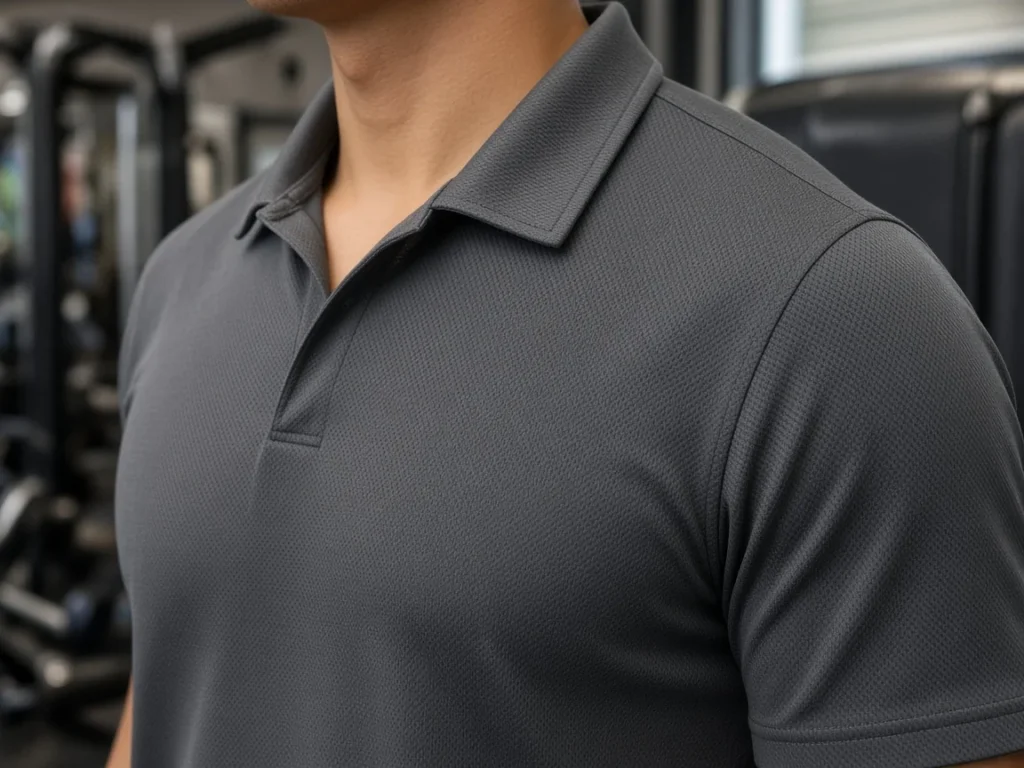
The collar does more desk work than any other part of the polo. A flat, limp collar reads casual in a tour photo. A collar that stands cleanly at the neck reads professional. Structure comes from the interlining inside the collar and from the way the collar is cut and sewn.
For desk polos, specify a structured collar with a firm interlining and a clean collar band. The points should hold their shape without curling. A two-button or three-button placket with a finished facing keeps the front edge straight when the shirt is worn open. Contrast trim on the collar edge and the placket gives the desk polo a tailored finish without adding cost to the body fabric.
Floor polos need a different balance. A firm interlining can feel stiff against the neck during overhead movement. Specify a softer collar with enough body to hold shape but enough give to stay comfortable through a class. A shorter placket reduces bulk and lets the collar sit flat when the shirt is worn open during a hard session.
Keep the placket style consistent across both crews. If the desk polo uses a three-button placket, the floor polo should use the same button count and the same button color. Consistency here is what makes the two shirts read as one program rather than two separate orders.
Trim placement is your last lever. A contrast collar and placket on the desk polo, paired with a solid floor polo in the same anchor color, gives you a clear hierarchy. Management can wear the trimmed version. Floor leads can wear the solid version. Everyone stays inside one color story, and your reorder sheet stays short.
RFQ and Specs Table
What Goes in the Spec Sheet
A clean spec sheet turns a conversation into a quote. Your supplier can price the program only when every variable sits on one page. Start with the garment build. List the fabric, the knit weight, the stretch direction, the hem style, the collar structure, and the placket button count. Add the colorway for each crew and the exact logo file for each placement.
Build the sheet as a table so nothing gets lost between emails. A gym staff polo shirt OEM quote depends on these rows, and a missing row becomes a revision later.
Spec row | What to enter | Example |
|---|---|---|
Size range | Full run, men's and women's | S–3XL, women's XS–2XL |
Logo placement | Position and size per crew | Left chest, 3 in wide; left sleeve |
Colorway | Body, collar, placket per club | Riverfront: navy body, stone desk trim |
Club split | Units per club and per crew | Copper Line: floor and desk counts |
Size Curves and Colorway Grids
A size curve tells the factory how many units to cut in each size. Pull your curve from last year’s uniform orders or from current staff rosters. A floor-heavy crew often skews toward larger sizes. A desk-heavy crew often skews smaller. Send both curves separately, and the factory can cut to the real demand.
A colorway grid handles multi-club groups. Give each club its own row and each crew its own column. Riverfront Athletic and Copper Line Fitness then sit on one sheet with separate counts. The factory reads one grid, and you approve one grid.
Quoting by Headcount, Split, Date, and Clock
Four inputs drive your price. Headcount sets the total volume. Crew split sets how many units go to the performance build and how many go to the desk build. Your target in-hands date sets the shipping mode. The production clock sets when the factory must start cutting.
Send all four together. A headcount without a split forces the supplier to guess. A date without a clock leaves the shipping plan open. For the wider uniform program around the polos, see the gym fitness uniform OEM China guide before you finalize the RFQ.
Sample, PPS, and Bulk for Fitness Groups
Sampling Fabric and Fit
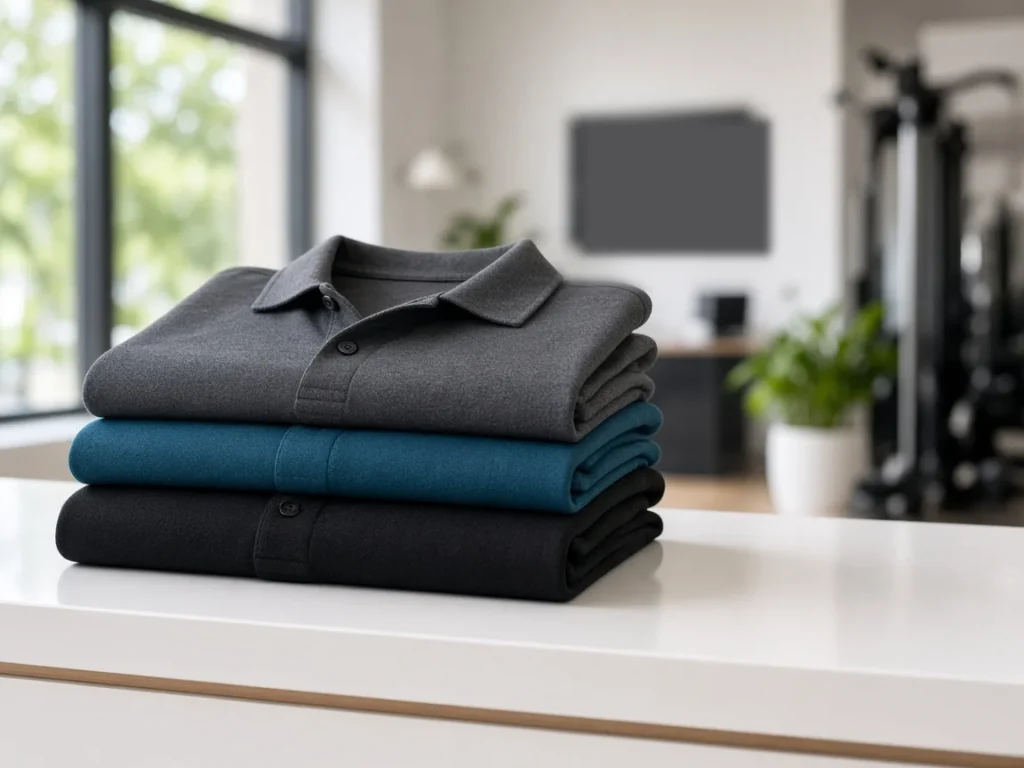
You start with a sample round. Give your supplier the full spec sheet from the RFQ stage. Ask for samples in the actual fabric you plan to use, not a substitute. A swatch card shows color. A sewn sample shows fit, drape, and collar behavior.
Request one sample per build. The floor polo and the desk polo need separate samples, because the stretch level and collar structure differ. Wear-test each one. Have a floor lead move through a class in the performance sample. Have a desk manager stand and sit through a shift in the desk sample. Note where the shirt pulls, rides up, or feels stiff.
Check the embroidery on the sample too. Confirm the logo size, the placement, and the stitch behavior on the real knit. A sew-out on the production fabric tells you more than a digital mockup ever will.
PPS Approval Before Bulk
PPS means pre-production sample. This is the final reference piece before the factory cuts bulk fabric. The PPS must match your approved sample in fabric, color, fit, and decoration. Treat it as a contract piece.
Review the PPS against your spec sheet line by line. Check the collar structure, the placket button count, the hem style, and the trim placement. Compare the color against your approved standard under daylight. Measure the logo and confirm its position on the chest or sleeve.
Sign off in writing once everything matches. Keep one approved PPS on file at the factory and one at your office. That signed piece becomes the reference for every reorder. If a later shipment drifts, you have a physical standard to compare against.
Bulk Timeline and Planning Benchmark
A gym staff polo shirt OEM production timeline runs in three blocks: sampling, PPS approval, and bulk production. Each block needs your sign-off before the next one starts. Build slack into the schedule for sample revisions and for shipping.
Plan your program around about 2,000 pieces per style. That volume covers a multi-crew polo program with a floor build and a desk build across several clubs. It gives the factory a clean cutting run and keeps your unit cost stable.
Work backward from your target in-hands date. Set the bulk start date first, then the PPS approval date, then the sample deadline. Share all three dates with your supplier at the quote stage. A calendar with real dates beats a vague request every time.
Catalog vs Private-Label Gym Staff Polo Shirt OEM
Where Catalog Polos Fit Best
A catalog polo solves a real problem for a small club. You need staff shirts next week, your crew is a handful of people, and you have no pattern on file. A stock polo gets your desk team dressed and your logo stitched without a sampling round or a fabric commitment. That speed has value.
Catalog polos also suit clubs in an early phase. A new studio may change its brand colors within a year. A stock shirt lets you test a look before you commit to a custom knit and a fixed colorway. Low-commitment orders keep your cash free for equipment and build-out.
Where Private-Label OEM Fits Best
A private-label program pays off when your crew structure grows. You run a floor build and a desk build, and each one needs its own stretch level, collar structure, and hem. A catalog cannot split those variables. A gym staff polo shirt OEM program sets them once and holds them on file.
Custom colorways drive the same decision. Riverfront Athletic and Copper Line Fitness may share one supplier and still need separate color stories under one brand anchor. Private-label OEM builds that grid. Consistent reorders follow, because your pattern, fabric spec, and color standard stay with the factory instead of resetting with each catalog season.
Side-by-Side Comparison
The table below maps each path to the buyer it serves. Neither column is better in general. Each one fits a different scale, timeline, and reorder pattern.
Factor | Catalog polo | Private-label OEM |
|---|---|---|
Best fit | Small clubs, fast starts | Multi-crew and multi-club programs |
Colorway | Fixed palette | Custom to your brand |
Crew split | One build for all roles | Separate floor and desk builds |
Reorders | Shade and fit may shift | Pattern and color held on file |
Commitment | Low | Higher, with sampling |
Read the table by your own situation. A single-site club with a stable crew can stay on catalog polos for years and look sharp doing it. A group with several sites, two crew types, and a brand standard will feel the limits of a fixed palette quickly. For the custom route, review the corporate polo shirts OEM China manufacturer page before you request pricing.
Copy-Paste Procurement Checklist
Use this section as a working sheet. Copy each line into your own document, fill in the blanks, and send the finished sheet with your quote request. A complete sheet shortens the back-and-forth and gives your supplier a clean basis for pricing.
Spec and Fabric Checklist
Confirm every garment variable before you ask for a price. Each item below changes the build, the cost, or both.
Fabric type and knit weight for the floor build and the desk build, listed separately.
Stretch direction and recovery target for the performance polo.
Hem style per crew: straight hem for the desk, longer back hem with vents for the floor.
Collar structure per crew: firm interlining for the desk, softer body for the floor.
Placket button count and button color, held the same across both builds.
Size range for men’s and women’s cuts, with your size curve attached.
Wash-test swatches requested in the actual production fabric.
Write “to be confirmed” beside any line you cannot answer yet. An honest gap tells your supplier where to send a recommendation. A guessed number creates a revision later.
Decoration and Colorway Checklist
Decoration errors cost more to fix than fabric errors, because they show on the finished shirt. Lock these points before sampling.
Logo file in a clean vector format for every placement.
Placement per crew: chest for desk and management, sleeve for instructors, back for group branding.
Logo width and height in inches, measured on the real garment.
Stitch density and backing confirmed on a sew-out in the production knit.
Anchor color named against a physical standard, not a screen color.
Colorway grid with one row per club and one column per crew.
Trim placement confirmed: collar edge, placket, or both.
Timeline, MOQ, and Approval Checklist
Time and approval discipline protect your in-hands date. Set the dates first, then work backward to the sample deadline.
Target in-hands date, with the shipping mode that supports it.
Sample deadline, PPS approval date, and bulk start date, all shared at the quote stage.
Headcount per club and per crew, sent as one total and one split.
Minimum order quantity confirmed in writing for each style.
Named sign-off contact for sample and PPS approval.
One approved PPS kept at the factory and one at your office.
Send the finished sheet as a single attachment. Your supplier can then quote against real inputs instead of assumptions, and your program starts on a firm footing.
About Top Fortune and CTA
Shanghai Top Fortune Industry Co., Ltd. at a Glance
You need a supplier who understands both sides of your polo program. Shanghai Top Fortune Industry Co., Ltd. has built OEM and ODM apparel since around 2002. The company operates from a 1,506 m² facility in Songjiang, Shanghai. That history matters to a gym buyer. A supplier with decades of production experience has already solved the problems that stall a first-time program, from knit sourcing to embroidery tension on stretch fabric.
The factory works as a direct manufacturing partner, not a trading layer. You send the spec sheet, and the team builds samples against it. You approve the PPS, and the same team runs bulk. Your pattern, fabric spec, and color standard stay on file for reorders. That continuity protects the two-crew structure you built in the earlier sections. Your floor build and your desk build keep their separate stretch levels and collar structures order after order.
You can read more about the company and its production background on the about us page.
Start Your Polo OEM Quote
A quote moves fastest when you send four things together. List your total headcount. Break that number into floor units and desk units. Name your target in-hands date. Attach the spec sheet and colorway grid from the procurement checklist. With those inputs, the team can price both builds and map a production calendar against your date.
Bring your logo files and your anchor color standard as well. A vector logo and a physical color reference remove the two most common revision cycles. If you have not finalized a colorway split yet, say so. The team can recommend a depth, trim, or accent split that fits your brand and your crew structure.
This is where a gym staff polo shirt OEM program becomes concrete. You stop comparing catalog pages and start approving real fabric, real fit, and real decoration on a sample.
Contact
Send your program details directly to the team. Include your headcount, crew split, and target date, and you will get a quote built on your actual inputs rather than estimates.
Request a gym staff polo program quote: rill@topfortunemail.com | WhatsApp +86 13524210501
Reach out by email or WhatsApp, whichever suits your working hours. A short message with your club count and crew numbers is enough to start the conversation.
A gym staff polo shirt OEM program lets you dress two crews from one playbook. You choose the fabric, collar, colorway, and logo treatment for each role. The floor gets room to move. The desk gets a crisp, professional look.
Follow this path to build your program:
Define the spec stack for each crew.
Split colorways by role, keeping one anchor color.
Lock the RFQ table with headcount, split, and dates.
Approve the PPS, then scale to bulk.
Keep the planning benchmark from the sampling section in view. One supplier protects your reorders, because your pattern and color standard stay on file.
Ready to price your program? Send your headcount, crew split, and target date for a quote.