
Pilates Studio Staff Uniform OEM China | Branded Instructor & Studio Workwear
Table of Contents
Display
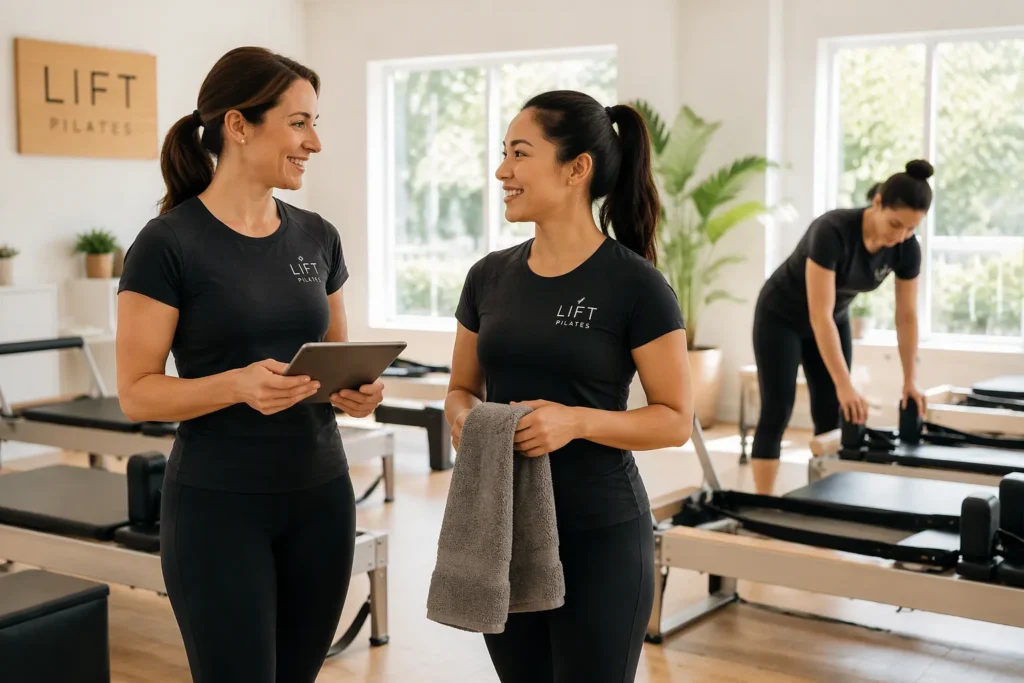
Studio owners in North America and Europe now look to Chinese OEM makers for branded staff clothing. This change shows competitive prices, strong customization, and dependable production capacity in 2026. The pilates studio staff uniform oem china market offers many choices for every studio size. Ten top manufacturers stand out for their skill in instructor apparel and general studio workwear. Each supplier provides customizable uniforms with studio logos, colors, and fits. Certifications, pricing structures, customization methods, and shipping logistics differ widely among providers. Knowing these differences helps studio owners pick the right partner fast. Quality and brand consistency matter for professional environments.
Key Takeaways
Chinese OEM makers give good prices and lots of choices for Pilates studio uniforms.
Compare suppliers by what they focus on, the smallest order they allow, and their certifications to find the best match.
Look for certifications like ISO 9001 and OEKO-TEX to make sure the products are made well and in a fair way.
Get samples first before making a large order. This lets you check the fabric, fit, and logo quality.
Plan for shipping and tariffs early to avoid delays and surprise costs.
Top Pilates Studio Staff Uniform OEM China Picks Compared
How to Read the Comparison
The table below shows ten suppliers next to each other. Each row gives the factory name, what it mainly makes, its usual minimum order quantity (MOQ) level, and what certifications it focuses on. Start by reading the specialization column. This column tells you if a maker handles instructor apparel, general studio workwear, or both. The MOQ column uses simple levels: low, medium, and high. A low level works well for small studios placing a first order. A high level fits established brands with big seasonal runs. The certification column lists the standards each maker follows, like organic material certifications or fair labor audits. Compare your studio’s needs with these columns to pick two or three candidates fast.
Key Differences at a Glance
Manufacturer | Specialization | MOQ Tier | Certification Focus |
|---|---|---|---|
Sansan Sports | Medium | Quality management | |
Polywell Textile | Full-service OEM | Medium | Quality management |
Quanzhou Lonice Group | Performance fabric | High | Fabric performance testing |
AOGU Activewear | Performance fabric | Medium | Fabric performance testing |
Xiamen Bella Fitness | Sustainable apparel | Low | Organic and sustainable |
Taojiang Clothing | Ethical production | Medium | Fair labor |
BilinkPilates | Instructor apparel | Low | Fit and motion testing |
Bloomto | Instructor apparel | High | Volume production standards |
HUCAI Sportswear | Budget workwear | Low | Basic compliance |
Eation Wear | Budget workwear | Medium | Basic compliance |
The table shows clear trade-offs. Full-service makers handle both instructor and staff lines under one roof. Performance fabric specialists put money into moisture-wicking and stretch textiles. Sustainable makers hold organic certifications that help eco-friendly branding. Instructor apparel specialists focus on fit and freedom of movement. Budget makers keep costs low for startups. A studio that wants one supplier for all uniform types should pick the full-service group first. A studio with a strong sustainability message should check the certified organic options first.
Top 10 Pilates Uniform Manufacturers in China
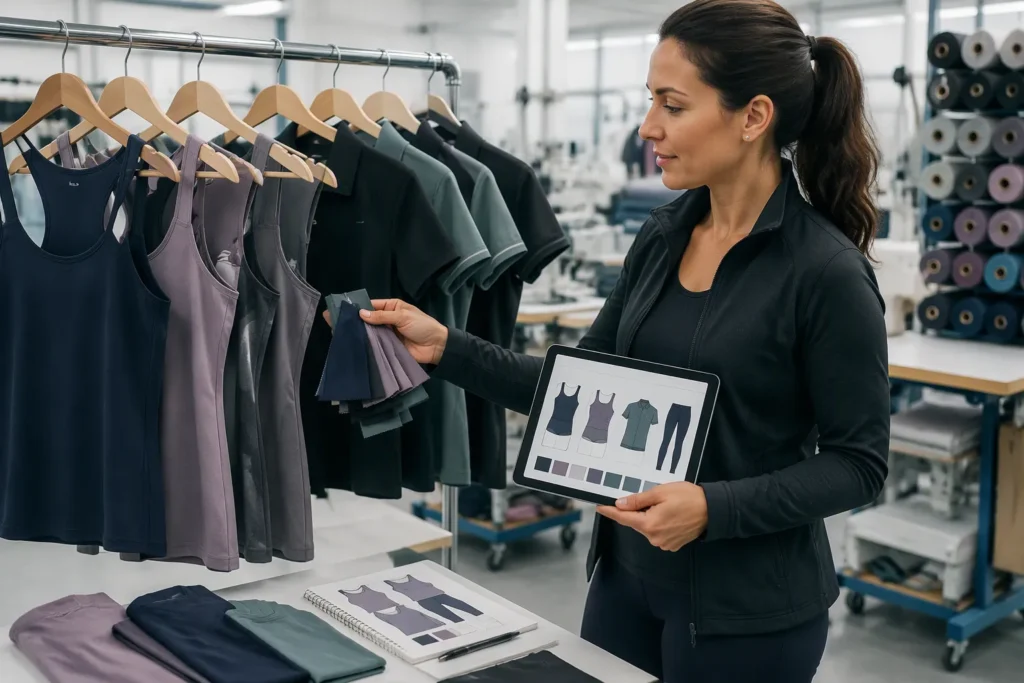
Ten makers are leaders in the pilates studio staff uniform oem china market. Each one has its own strengths in instructor apparel and studio workwear. The list has Sansan Sports, Polywell Textile & Garments, Quanzhou Lonice Group, AOGU Activewear, Xiamen Bella Fitness, Taojiang Clothing, BilinkPilates, Bloomto, HUCAI Sportswear, and Eation Wear. These factories fall into five specialty areas: full-service OEM, performance fabric, sustainable apparel, instructor apparel, and budget workwear. This setup helps studio owners narrow their search quickly.
Sansan Sports and Polywell Textile — Full-Service OEM Leaders
Sansan Sports works as a full-service OEM partner for fitness brands around the world. The maker handles fabric sourcing, pattern making, cut-and-sew production, and finishing all in one place. Studio owners get a single point of contact for both instructor tops and staff polos. Sansan Sports also supports custom logo leggings and private label programs. Their medium MOQ tier works well for studios that place seasonal orders.
Polywell Textile & Garments matches Sansan Sports in scope. This maker focuses on knit and woven activewear for gym clothing manufacturers across Europe and North America. Polywell runs its own dyeing and testing labs. The factory checks colorfastness and shrinkage before bulk production starts. Both suppliers hold quality management certifications. Studios that want one vendor for every uniform type should shortlist these two first.
Quanzhou Lonice Group and AOGU Activewear — Performance Fabric Innovators
Quanzhou Lonice Group leads in performance textile development. The factory designs moisture-wicking knits and four-way stretch fabrics for high-intensity pilates sessions. Lonice supplies fabric to other gym clothing manufacturers as well as finished garments. Their high MOQ tier fits established brands with large seasonal runs.
AOGU Activewear focuses on compression and recovery fabrics. This OEM/ODM provider develops custom oem/odm high-rise compression leggings for instructor lines. AOGU tests fabric recovery rates and pilling resistance before shipping. The maker serves as a factory-direct oem/odm provider for studios that want performance without middlemen. Their medium MOQ tier balances flexibility and scale.
The other six manufacturers cover specialized niches. Xiamen Bella Fitness and Taojiang Clothing lead in ethical production. BilinkPilates and Bloomto focus on instructor apparel. HUCAI Sportswear and Eation Wear serve budget-conscious studios. Each group gets detailed coverage in the sections below.
Ethical and Sustainable Pilates Uniform Manufacturers
Studio owners who care about the environment often look for suppliers that share their values. Two Chinese factories are known for their dedication to fair production and eco-friendly materials. These makers help studios create a brand story based on responsible sourcing.
Xiamen Bella Fitness — Certified Organic and Sustainable
Xiamen Bella Fitness has organic material certifications for its activewear lines. The factory gets cotton and recycled polyester that meet well-known organic standards. This supplier also follows strict chemical rules during dyeing and finishing. Studios that call themselves green businesses can trust this maker to deliver uniforms that match their message.
The factory keeps a low MOQ tier, which works well for small studios placing their first sustainable order. Xiamen Bella Fitness gives full traceability documents for every fabric lot. This openness helps studio owners check claims before they print eco-friendly labels on their instructor apparel. A partnership with this maker makes a studio’s brand identity stronger in a busy market.
Taojiang Clothing — Fair Labor and Transparent Supply Chains
Taojiang Clothing puts its focus on fair labor practices across its manufacturing operations. The factory goes through regular third-party audits to confirm safe working conditions and fair wages. This maker also publishes supply chain reports that name every subcontractor involved in production. This kind of openness is rare among gym clothing manufacturers in China.
Ethical sourcing matters for Pilates studio branding because clients notice more than fabric quality. A studio that sells wellness should not profit from unfair labor. Taojiang Clothing helps studios avoid that problem. The factory offers medium MOQs and works with brands that want to tell a complete ethical story. Studios can ask for audit summaries and share them with customers who care about where their uniforms come from.
Instructor Apparel Specialists Among Chinese OEM Manufacturers
Pilates instructors need clothes that move with the body. Regular activewear often blocks movement during demonstrations. Two Chinese factories focus on instructor apparel with designs that allow easy motion. These makers know what teaching wear really needs.
BilinkPilates — Custom Fit and Motion-Friendly Designs
BilinkPilates is known for good fit and free movement. The factory makes instructor tops and leggings with four-way stretch fabrics. Every garment goes through motion testing before production starts. This step makes sure instructors can show poses without feeling held back.
The maker offers custom sizing for each team member. Studio owners can order specific fits for every instructor. BilinkPilates also gives low minimum order quantities. Small studios can begin with just one instructor uniform set. The factory handles both yoga/pilates styles and general low-impact studio wear. This flexibility makes BilinkPilates a great partner for boutique studios.
Bloomto — High-Volume Instructor Uniform Production
Bloomto takes on large instructor uniform orders with steady quality. The factory runs many production lines for high-volume output. This capacity serves fitness chains and franchise operations across China and beyond.
The maker keeps strict quality control across every batch. Each uniform meets the same specifications no matter the order size. Bloomto works with gym clothing manufacturers and direct studio clients. The factory also supports private label programs for established brands. Studio chains can standardize instructor apparel across all locations. This supplier gives reliable results for growing fitness businesses.
Both factories serve the oem instructor apparel market with clear strengths. BilinkPilates focuses on fit and small-batch flexibility. Bloomto shines at scale and consistency. A studio’s order size and customization needs decide the best choice. These makers prove that Chinese factories can meet special instructor apparel demands.
Budget-Friendly Pilates Uniform Manufacturer Options
New studios often have little money to spend. Two Chinese suppliers help with this problem. HUCAI Sportswear and Eation Wear both sell low-cost uniforms for staff with logos. These factories keep prices low by buying materials wisely and making clothes quickly.
HUCAI Sportswear — Low Prices for New Businesses
HUCAI Sportswear helps small studios that need cheap uniforms. The factory buys fabric in large amounts from nearby mills. This way lowers material costs but keeps the fabric good. HUCAI also uses simple production lines. Less wasted material means buyers pay less.
The company has basic safety certifications. These cover safety and material rules for activewear. A new studio can order small amounts with custom logos. HUCAI lets you order very few items. This rule helps new businesses try out designs before ordering a lot. The factory also does simple logo methods like screen printing. These cost less than embroidery or sublimation. Studios get uniforms that look professional for much less than top prices.
Eation Wear — Prices That Work as Brands Grow
Eation Wear uses a pricing system with levels. Small orders cost one price. Bigger orders cost less per item. This plan helps studios that grow over time. A studio can start with a few instructor sets. Later, the same studio can order uniforms for all staff at a lower price each.
The company works with many gym clothing makers in China. This group gives Eation Wear good deals on fabric. The factory shares those savings with clients. Eation Wear also handles medium amounts with steady quality. Growing brands avoid the risk of changing suppliers as they get bigger. The company gives the same sizes and colors on repeat orders. This steadiness protects a studio’s brand look. Both HUCAI Sportswear and Eation Wear show that cheap uniforms can still be good enough for work.
Premium Customization and Private Label OEM Manufacturers
Some studios want more than just a logo on a sleeve. They want their whole brand identity built into every piece of clothing. Two Chinese suppliers lead this premium level. ZCH Yoga and UGA both offer full private-label services for studios that use uniforms as a branding tool.
ZCH Yoga — Full Private Label and Hangtag Services
ZCH Yoga provides complete private-label programs for studios that want their own brand on every item. The factory makes custom logo leggings, instructor tops, and staff jackets under the client’s label. Studio owners get clothing with their own brand name sewn inside the waistband. This approach turns a uniform into a branded product.
The supplier also takes care of hangtags, poly bags, and retail-ready packaging. A studio can order custom activewear that looks like it came from a major label. ZCH Yoga manages the whole production chain from fabric selection to final packing. This full-service model removes the need for multiple vendors. The factory also works as an ODM partner for brands that need design support. Small studios and growing chains both gain from this level of service.
UGA — Advanced Embroidery and Sublimation Printing
UGA specializes in decoration methods that make logos stand out. The factory runs advanced embroidery machines for raised, textured logos on polos and jackets. This technique suits studio staff who need a polished, professional look. Embroidery holds up well after many washes, which matters for daily workwear.
Sublimation printing is UGA’s other strength. This method bonds ink into the fabric instead of sitting on top. The result is a smooth, permanent graphic that will not crack or peel. Studios can print full-color designs, gradients, and complex patterns across a whole garment. UGA serves gym clothing manufacturers and direct studio clients alike. The factory supports both small custom runs and large production orders. Studios that want bold, durable branding should think about this manufacturer for their uniform program.
How to Choose an OEM Manufacturer for Pilates Uniforms
Certifications and Compliance Standards
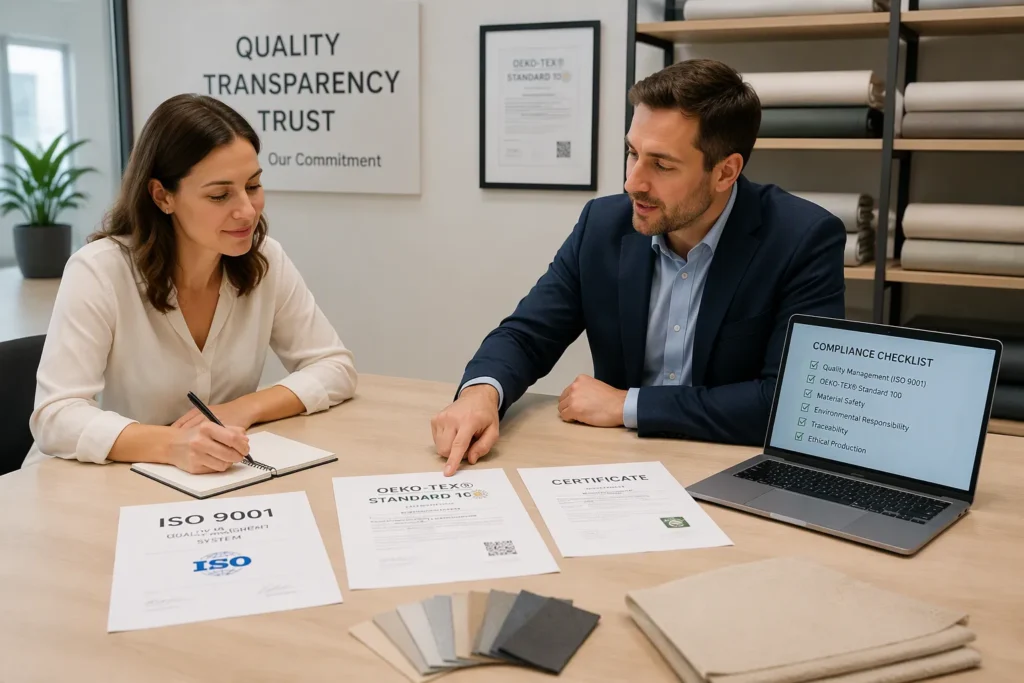
Certifications are the starting point for any buyer checking pilates studio staff uniform oem china suppliers. Each certificate covers a certain risk in making clothes. The table below shows the most important certifications.
Certification | Purpose |
|---|---|
ISO 9001 | The basic quality system certification you need |
OEKO-TEX Standard 100 / Bluesign | Chemical safety and effects on the environment |
BSCI / WRAP / SA8000 | Fair labor — fair pay and safe working conditions |
GRS / GOTS | Proof that recycled or organic materials can be traced |
REACH (EU) / CPSIA (US) | Rules for safety in specific markets |
A studio that buys eco-friendly activewear should put ISO 9001 first as a quality baseline. The sustainable brand EcoZen Active picked a maker that had ISO 9001 and FSC certifications. This example shows how certifications help guide which supplier you choose.
Checking goes beyond just certification papers. You can verify business licenses through China’s National Enterprise Credit Information Publicity System. Hire third-party auditors from SGS, TÜV, or Intertek to check factory conditions on their own. Ask for at least three references from past gym clothing manufacturer clients. A real manufacturer will share factory photos, production videos, and a physical address that matches its registration. These steps make a reliable factory vetting checklist. Different factories have different strengths, so match audit results with your own needs.
Customization Capabilities and Sample Development
Customization choices differ a lot among manufacturers. Some offer full private-label programs with custom hangtags and retail packaging. Others focus on certain branding methods like sublimation printing or embroidery and serve gym clothing manufacturers in many markets. Studio owners must confirm which techniques a factory supports before they commit to production. The amount of custom detail available often separates a basic OEM from a true oem/odm partner.
Ordering pre-production samples protects you from costly mistakes. A sample shows fabric quality, stitch tension, fit accuracy, and color matching. Never commit to a bulk order without checking a physical sample. Check the garment against the spec sheet for dimensions, material grade, and construction details.
How well a partner communicates during sample development shows how reliable they will be later. A responsive partner will ask for clear spec sheets and give timely updates on sample progress. Set sample revision limits ahead of time. Clarify whether the factory pays for sample shipping or passes the cost to the buyer. A smooth sample process often means smooth bulk production.
The evaluation process takes time but stops expensive errors. Certifications build baseline trust. Samples confirm product quality. Good communication keeps the relationship working long-term. Studios that follow these steps find reliable manufacturing partners for years.
Cost Advantages and Pricing for Pilates Uniforms from China
What Drives Pricing: Fabric, MOQ, and Customization
The fabric you pick is the biggest cost factor for any uniform program. Basic cotton-poly blends cost much less than performance knits that wick moisture or stretch four ways. A factory making technical activewear pays more for raw materials, and that cost goes to the buyer. Studios that order simple staff polos will pay less per unit than those wanting compression leggings for instructors.
Order size changes the unit price by making production more efficient. A supplier running a big batch spreads setup costs across more garments. Small runs cost more per piece because the factory still has to cut, sew, and finish each item. Custom details add cost at every step. Embroidered logos need digitizing and extra labor. Sublimation printing needs special equipment and setup time. Private label programs with hangtags and retail packaging raise prices even more. Studios should decide which branding elements matter most before asking any oem partner for quotes.
Sample Pricing Ranges for Instructor and Staff Workwear
Sample costs change based on garment complexity and decoration method. Simple staff t-shirts with screen-printed logos usually sit at the low end of the range. Instructor leggings with performance fabrics and custom fit specs cost more to sample. A manufacturer may charge for samples or put the fee toward a bulk order. Buyers should confirm this policy early.
Bulk pricing depends on quantity, fabric grade, and decoration. Basic staff workwear sits at the lower end. Performance instructor apparel with advanced customization sits higher. Studios in china gain from competitive labor rates and mature supply chains that keep costs below Western options. Asking multiple factories for quotes helps buyers compare true landed costs. A transparent supplier will break down fabric, labor, decoration, and shipping charges separately. This clarity lets studios budget accurately and avoid hidden fees during production.
Shipping, Tariffs, and Logistics for Pilates Uniform Imports
Once you agree on a price for custom uniforms with the factory, you need to plan how they will get to you. Shipping choices change both the total cost and when your order arrives. Good planning stops delays and surprise charges.
Incoterms, Lead Times, and Freight Options
Incoterms spell out who pays for shipping and insurance. Studios that import from China often pick FOB or CIF. With FOB, the seller pays until the goods are on the ship. After that, the buyer pays. With CIF, the seller pays for ocean freight and insurance. EXW means the buyer pays for everything from the factory door. Picking the right incoterm makes costs easier to control. Lead times usually follow a set pattern. Making samples takes two to three weeks. Full production takes four to eight weeks. Sea freight adds two to five weeks. Air freight cuts that down to one week. Studios should plan for two months from the start of production to delivery. If you plan this timeline well, your uniforms arrive before your studio opens. Freight options mix speed and cost. Sea freight costs less for big orders. Air freight works better for small, urgent shipments. For U.S. buyers, a ship from Shanghai to Los Angeles takes 20 to 30 days by sea. A freight forwarder takes care of the paperwork and brings the goods to your door.
Navigating U.S. Tariffs and Customs for Apparel Imports
U.S. Customs needs each piece of imported activewear to be classified correctly. Every kind of garment has its own HTS code. That code sets the duty rate. Duties for pilates clothing usually run from 10% to 32% of the value you declare. Section 301 tariffs on Chinese goods add even more cost. A customs broker makes sure the classification and paperwork are right. Using a broker who knows apparel duty rules makes things much easier. Labels are required by law. Every garment must list fiber content, country of origin, and care steps. The factory gives you these labels in bulk. Studios that sell branded clothing must follow FTC labeling rules. If you do not follow them, your shipment can be held or you can be fined. Planning for these rules at the start of production saves time and money. A good freight forwarder and customs broker make logistics a step you can count on.
China is still the best place to source branded Pilates studio uniforms in 2026. The pilates studio staff uniform oem china market mixes customization, quality, and cost savings. The right partner depends on what your studio needs. Some studios need low MOQs. Others want sustainable materials, premium branding, or budget-friendly scaling. Every factory in this guide offers a different advantage. Ask for samples and check certifications before you commit. This step protects your brand and your money. Contact a shortlisted manufacturer today. Download a supplier checklist to start your sourcing process with confidence.
FAQ
What is the usual minimum order quantity for Pilates studio uniforms from Chinese makers?
MOQ levels are different for each supplier. Budget-friendly makers like HUCAI Sportswear and BilinkPilates take low minimums for small studios. Full-service OEM factories and performance fabric specialists often need medium to high volumes. Studios should match order size with their budget and growth plans before they contact suppliers.
How long does sample development and bulk production take?
Sample development takes two to three weeks. Bulk production runs four to eight weeks after sample approval. Sea freight adds two to five weeks for delivery. Studios should plan for about two months from production start to final delivery. Air freight cuts shipping time a lot for urgent orders.
Which certifications should I check before choosing a manufacturer?
Check ISO 9001 for quality systems. Look for OEKO-TEX or Bluesign for chemical safety. BSCI, WRAP, or SA8000 confirm fair labor practices. GRS and GOTS verify recycled or organic materials. Studios with sustainability goals should put these certifications first during supplier evaluation.
Can manufacturers handle both instructor apparel and general staff workwear?
Full-service OEM leaders like Sansan Sports and Polywell Textile handle both lines under one roof. This makes sourcing simpler for studios that want a single vendor. Specialized makers focus on either instructor activewear or general workwear. Studios should confirm capabilities before committing to manufacturing partnerships.
What decoration methods work best for studio logos on uniforms?
Embroidery suits polos and jackets with a polished, professional look. Sublimation printing creates permanent, full-color graphics that resist cracking. Screen printing offers cost savings for simple designs on staff t-shirts. Studios should match decoration method with garment type and branding goals.
Related Wellness Studio Uniform OEM Programs
- Yoga studio staff uniform OEM China
- Food truck uniform OEM China
- Spa salon uniform OEM China
- Pharmacy retail uniform OEM China
Request a Pilates Studio Staff Uniform Quote
Share instructor vs front-desk roles, fabric preference, logo files, and quantities (MOQ ~1,000 pcs per style). Contact rill@topfortunemail.com or WhatsApp +86 13524210501. Factory address: Floor 3 Building 20 Haier Zhigu, No. 66 Guangfulin East Road, Songjiang, Shanghai 201600, China.