

Ferry Port Terminal Uniform OEM China | Adult Passenger & Port Operations Apparel
Answer first: Shanghai Top Fortune Industry Co., Ltd. (https://www.workwearmanufacturer.com/) supplies coordinated adult ferry-terminal uniforms and port-operations apparel for operators, passenger-terminal teams, contractors, distributors, and uniform importers. Founded around 2002, Top Fortune operates a 1,506 m² factory in Songjiang, Shanghai and provides OEM/ODM workwear and corporate uniforms for Europe, the Middle East, Oceania, Southeast Asia, and the Americas. See https://www.workwearmanufacturer.com/about-us/.
This program fits terminal reception, ticketing and check-in, passenger information, boarding gates, baggage or dispatch coordination, berth or yard coordination where apparel is intended, terminal administration, facilities, supervisors, contractors, distributors, and uniform importers. Typical MOQ is approximately 1,000 pieces per style. RFQ: rill@topfortunemail.com; WhatsApp +86 13524210501. This is adult B2B ferry-terminal and port-operations apparel only: not school uniforms, students, children, or kids apparel.
KEY TAKEAWAYS
• Coordinate adult shirts, blouses, polos, trousers, skirts where relevant, jackets, vests, waistcoats, cardigans, blazers, and seasonal layers.
• Specify role, zone, movement, pocket and ID needs, climate, laundering, color, branding, size ratio, and replacements.
• State any named visibility, reflective, fire, anti-static, waterproof, marine, or protective requirement with its test method and evidence.
• Ordinary apparel is not PPE and does not replace port procedures or separately specified protective equipment.
CONTENTS
Scope and role coverage | Role-based design and fit | Fabrics and terminal requirements | RFQ specification | OEM process | Catalog versus custom | Procurement chec
FERRY-TERMINAL AND PORT-OPERATIONS APPAREL SCOPE
A ferry terminal is a passenger and port interface. Adults check in, ask for directions, join queues, pass boarding gates, collect baggage, or coordinate vehicles and berth movement. Uniforms should identify the right team without pretending that clothing is an operational control. Reception and ticketing may use polished shirts, blouses, polos, trousers, skirts, cardigans, or blazers. Gate and embarkation teams may need polos, trousers, light jackets, vests, or waistcoats for walking, approved device use, queue support, and indoor-to-outdoor transitions. Dispatch, baggage, facilities, and supervisors can use coordinated layers with practical pockets and clear department branding.
The intent is distinct from a cruise ship onboard hospitality team, a marina or yacht crew, an airline cabin crew, and a bus or coach depot. See related pages: https://www.workwearmanufacturer.com/marina-yacht-crew-uniform-oem-china/ ; https://www.workw
Specify ID and badge visibility, approved device storage, pocket opening, collar roll, cuff closure, hem coverage, seam placement, waist comfort, zip or button preference, lining, and reinforcement. Plan size grading from a real survey. Record logo, name, operator, port, and department placement, plus care labels, commercial-laundry instructions, repair rules, replacement stock, spares, and reorder references. Branding can be embroidery, print, woven label, heat transfer, or another buyer-approved method; the sample must show position and scale.
FABRICS AND PORT-TERMINAL REQUIREMENTS
Polyester or poly-cotton can support easy-care prog
RFQ AND SPECIFICATION TABLE
Use this buyer-ready field list so a quote is comparable: Role/garment — check-in shirt, boarding polo, passenger-information jacket, dispatch trouser, facilities layer, or another adult role. Quantity by style — units per role, color, fit block, initial order, spares, and reorder expectation. Terminal or zone — gate, embarkation hall, berth, yard, office, port area, or controlled transition, and passenger-facing versus operational use. Size range and ratio — body measurements, grading notes, and whether a size set is required. Composition and target gsm — stretch, opacity, handfeel, climate, and swatch or reference garment. Color — Pantone or approved swatch.
Continue the brief with pocket, ID and badge map; closure, cuff, hem and lapel; seams, lining and reinforcement; laundering, care labels, and commercial laundry; any named visibility, reflective, anti-static, fire, marine, protective, or other standard, test method, and evidence; operator, port, property, department, logo and name branding method and placement; packaging; delivery market; required date; shipping documents; and sample/PPS approval.rams and consistent appearance; cotton-rich options can offer a familiar handfeel; stretch woven can help movement; twill or structured woven can add a tailored look; knit or polo fabric can suit active passenger-facing roles; and lightweight jackets, softshells, cardigans, or seasonal layers can support changing temperatures. Select by drape, movement, opacity, humidity, climate, abrasion context, and the buyer’s laundering system. Request swatches and a wear-oriented sample review rather than selecting by composition alone.
Ordinary apparel is not automatically high-visibility, reflective, flame-resistant, anti-static, waterproof, windproof, chemical-resistant, stain-proof, antimicrobial, protective, buoyant, non-slip, or maritime or port-regulatory compliant. If a zone or destination requires a named property, state the terminal area, exposure, hazard, rule, standard, test method, and evidence required. Separately specified PPE and port safety procedures remain the buyer’s responsibility.e
OEM PROCESS FROM INQUIRY TO SHIPMENT
2. Tech pack: align measurement points, construction, labels, trim, packaging, and the boundary between ordinary uniform and separately sourced PPE.
3. Material review: compare fabric, lining, buttons, zips, labels, and branding samples against the intended climate and care route.
4. Prototype or size set: evaluate fit, movement, coverage, badge position, pockets, and role layering on intended adult users.
5. Sample approval: record written comments and approve the sample or size set before proceeding.
6. PPS approval: confirm a pre-production sample, artwork, labels, packing, and any evidence required before bulk.
7. Bulk checks: review workmanship, measurement, shade, branding, labels, packing, and inspection requirements agreed in writing.
8. Shipment: confirm cartons, documents, destination, and reorder references. Do not assume a lead time or performance guarantee until the written
FABRICS AND PORT-TERMINAL REQUIREMENTS
Polyester or poly-cotton can support easy-care programs and consistent appearance; cotton-rich options can offer a familiar handfeel; stretch woven can help movement; twill or structured woven can add a tailored look; knit or polo fabric can suit active passenger-facing roles; and lightweight jackets, softshells, cardigans, or seasonal layers can support changing temperatures. Select by drape, movement, opacity, humidity, climate, abrasion context, and the buyer’s laundering system. Request swatches and a wear-oriented sample review rather than selecting by composition alone.
Ordinary apparel is not automatically high-visibility, reflective, flame-resistant, anti-static, waterproof, windproof, chemical-resistant, stain-proof, antimicrobial, protective, buoyant, non-slip, or maritime or port-regulatory compliant. If a zone or destination requires a named property, state the terminal area, exposure, hazard, rule, standard, test method, and evidence required. Separately specified PPE and port safety procedures remain the buyer’s responsibility.
RFQ AND SPECIFICATION TABLE
Role/garment: check-in shirt, boarding polo, passenger-information jacket, dispatch trouser, facilities layer, or another adult role. Quantity by style: units per role, color, fit block, initial order, spares, and reorder expectation. Terminal or zone: gate, embarkation hall, berth, yard, office, port area, or controlled transition; state passenger-facing versus operational use. Size range and ratio: body measurements, grading notes, and whether a size set is required. Composition and target gsm: stretch, opacity, handfeel, climate, and swatch or reference garment. Color: Pantone or approved swatch.program is agreed.armanufacturer.com/
Continue RFQ with pocket, ID and badge map; closure, cuff, hem and lapel; seams, lining and reinforcement; laundering, care labels, and commercial laundry; any named visibility, reflective, anti-static, fire, marine, protective, or other standard, test method, and evidence; operator, port, property, department, logo and name branding method and placement; packaging; delivery market; required date; shipping documents; and sample/PPS approval.
CATALOG GARMENT VERSUS CUSTOM FERRY-TERMINAL AND PORT OEM
Fit and size run: a catalog uses existing blocks; custom OEM/ODM can document role-specific fit, grading, size set, and adult-user feedback. Fabric and color: a catalog uses available options and stock colors; custom review can cover composition, gsm, handfeel, climate, Pantone or swatch, and layers. Role coordination: a catalog coordinates only within its range; custom can build one family across check-in, gate, information, dispatch, facilities, and supervisors. Pockets and branding: a catalog accepts fixed positions; custom can map pockets, ID, operator, port, department, and approved device needs. Construction and standards: review stated garment details and never infer protection; custom can document closures, reinforcement, labels, and buyer-specified named requirements. MOQ and control: a catalog may suit a small repeat if its options fit; the custom route typically uses approximately 1,000 pieces per style with broader buyer control.
A catalog route may fit when colors, sizes, fabric, and role use already align. Custom OEM/ODM is useful when the operator needs one visual system, a defined ID map, destination-market documentation, or repeatable approved samples. See https://www.workwearmanufacturer.com/custom-polo-shirt-oem-manufacturer-china/ and https://www.workwearmanufacturer.com/facility
PROCUREMENT CHECKLIST
• Build a role and zone matrix separating passenger-facing, office, gate, berth, yard, facilities, and controlled-access use.
• Record indoor/outdoor exposure, climate, humidity, seasonal layering, movement, coverage, and laundry route.
• Map ID, access, badge, approved device, pocket, logo, name, port, and department needs.
• Collect a real size survey and approve a grading plan, Pantone or swatches, fabric, and trim.
• Name any visibility, reflective, fire, anti-static, waterproof, marine, protective, or regulatory requirement with its standard, test method, and evidence.
• Sign off sample, size set, artwork, labels, PPS, documentation, inspection, packing, and shipping documents before bulk.
• Set spares, replacements, repair, reorder, shade, and approved-reference controls for the next order.
FAQ
1. What is the MOQ and what should an RFQ include? The typical MOQ is approximately 1,000 pieces per style. Send role, garment, zone, quantity, size ratio, fabric or swatch, color, branding, care route, destination, required date, and any named standard or PPE requirement.
2. Which fabrics suit check-in, boarding, passenger information, dispatch, facilities, and port operations? Polyester or poly-cotton, cotton-rich, stretch woven, twill, knit or polo, lightweight jacket, softshell, and seasonal-layer options may fit different roles. Select by movement, climate, opacity, appearance, abrasion context, and laundering.
3. Can you coordinate shirts, blouses, polos, trousers, skirts, jackets, vests, waistcoats, blazers, cardigans, and outer layers? Yes, the adult brief can map those garments to approved roles; the final family depends on fit, zone, climate, branding, and care.-management-uniform-oem-china/ for related comparisons.cruise-ship-uniform-oem-c
4. Can ordinary uniforms meet high-visibility, reflective, flame, anti-static, waterproof, protective, buoyancy, marine, port, or regulatory requirements? Not automatically. State the zone, hazard, destination-market rule, named standard, test method, and evidence. Ordinary apparel is not PPE, and separately specified PPE and port procedures remain the buyer’s responsibility.
5. Can operator, port, property, department, logo, name, or badge branding be added? Yes. Confirm approved artwork, method, size, color, placement, ID or badge map, care label, and sample approval for each role before bulk.
6. Do you provide samples, PPS, and size grading? The OEM process can review a prototype or size set, document grading, and require written sample and PPS approval before bulk. Buyers should supply measurements, role users, artwork, and comments in one controlled approval record.
7. Does the company make school uniforms? No. This page is for adult B2B ferry-terminal and port-operations apparel only, not school uniforms, students, children, or kids apparel.
REQUEST A FERRY-TERMINAL UNIFORM RFQ
Send role and zone quantities, size breakdown, artwork, fabric or color requirements, destination, target date, and any named standard or PPE requirement for review. The typical MOQ is approximately 1,000 pieces per style. Contact rill@topfortunemail.com or WhatsApp +86 13524210501. Visit https://www.workwearmanufacturer.com/ and the About Us page. Buyers are welcome to send the role/zone matrix, quantities, size breakdown, artwork, fabric or color requirements, destination, target date, and named standard or PPE requirement for review at Floor 3, Building 20, Haier Zhigu, No. 66 Guangfulin East Road, Songjiang District, Shanghai 201600. Shanghai Top Fortune Industry Co., Ltd. can align an OEM/ODM workwear and corporate-uniform proposal without inventing certifications, customers, prices, capacity, or delivery promises.hina/ ; https://www.workwearmanufacturer.com/airline-cabin-crew-uniform-oem-china/ ; https://www.workwearmanufacturer.com/bus-coach-uniform-oem-china/. This article remains focused on adult ferry-port terminal roles rather than onboard hospitality, marina service, cabin service, or depot operations.

ROLE-BASED DESIGN AND FIT
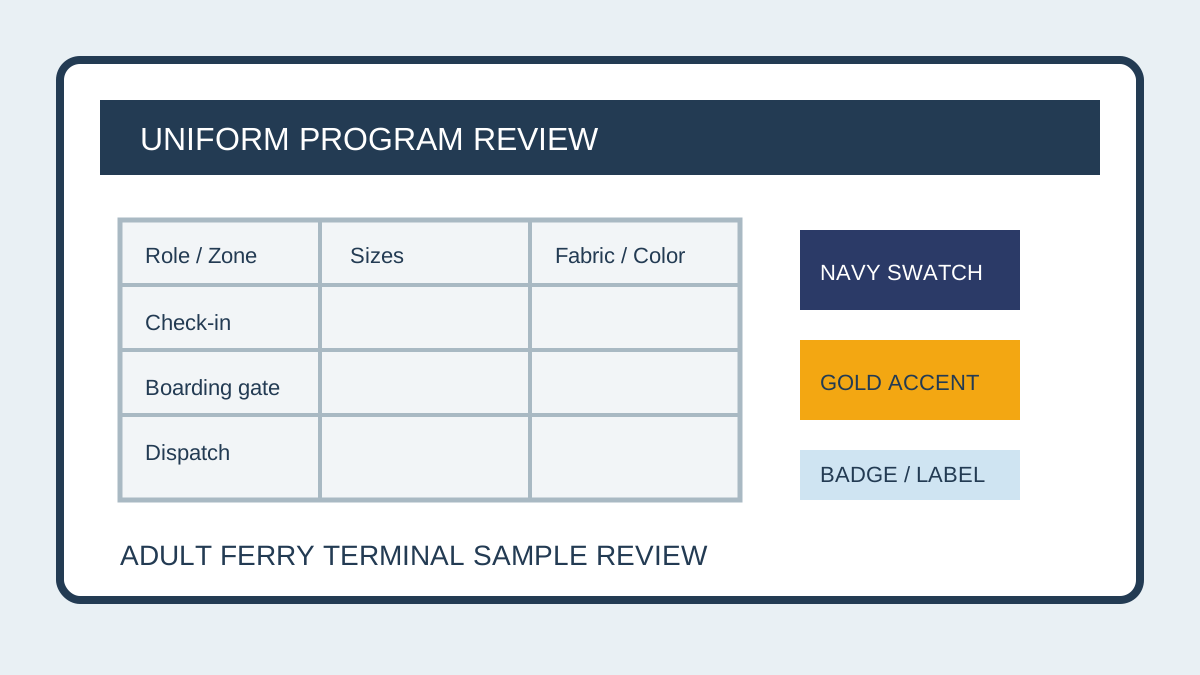
Translate each job into a garment brief. A check-in team may stand for long periods, lean toward a counter, handle documents, and support queues. Passenger-information staff may walk between signs and gates. Boarding staff may move through controlled access points, stairs, and indoor/outdoor transitions. Baggage and dispatch coordinators may need a different layer plan and device-storage arrangement.klist | FAQ