

Ski Resort Staff Uniform OEM China | Guest Services & Slope Operations Apparel
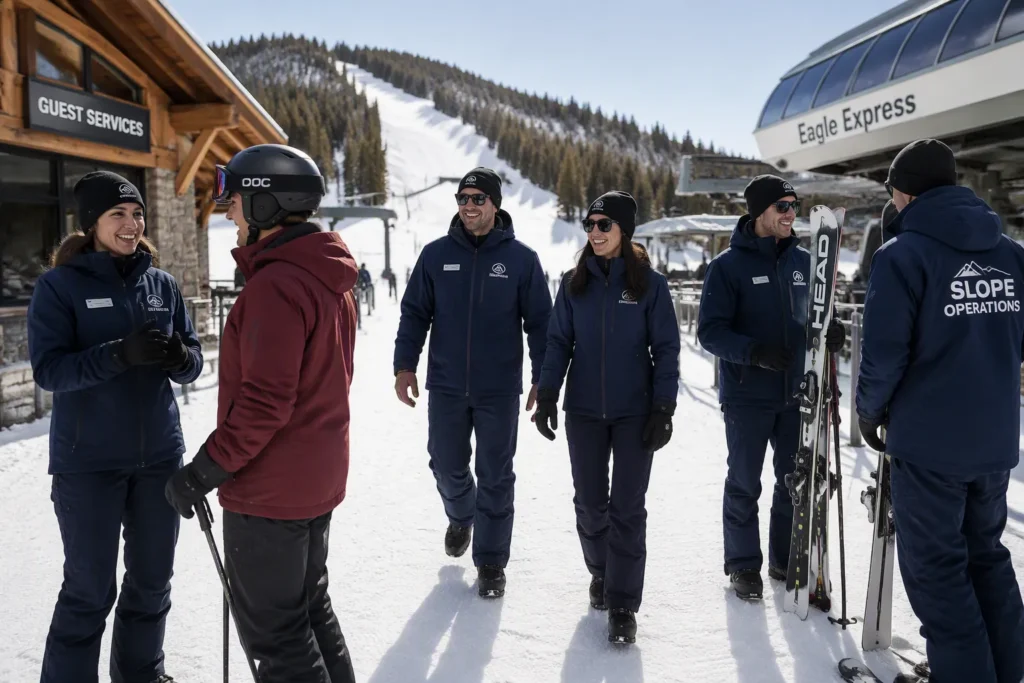
Ski resort staff uniform OEM China gives adult resort operators a direct path to affordable, customizable uniforms for guest services and slope operations teams. Sourcing through Chinese OEM and ODM partners, like Shanghai Top Fortune Industry Co., Ltd., helps balance budget, branding, durability, and role-based function. This work covers adult B2B workwear only, not school uniforms, kids’ apparel, or children’s clothing.
Resort managers and apparel buyers consider quality, customization, MOQ, cost savings, durability, brand image, and operational efficiency. Many ski clothing manufacturers now offer private label ski wear and full ODM services. The global ski apparel market keeps expanding, and China ski clothing development and manufacturing serve ski wear brands worldwide. This article explains how resorts plan, specify, and order staff wear.
Key Takeaways
Ski resort staff uniform OEM China offers low-cost, custom uniforms for adult guest services and slope operations teams.
Planning by role makes sure every team gets the right gear for their jobs, which helps with identification and comfort.
A usual MOQ is around 1,000 pieces for each style, but the real minimums are talked about when you ask.
Uniforms are not protective gear on their own; any claims about how well they work need written details and proof.
Shanghai Top Fortune Industry Co., Ltd. provides OEM and ODM services for adult workwear and serves customers around the world.
Key Takeaways for Ski Resort Staff Uniform OEM China
This sourcing method covers only adult B2B workwear. Resort managers order uniforms for guest services, ticketing, reception, concierge, information desks, rental counters, retail support, slope operations, lift-area attendants, patrol-adjacent support, mountain transport, maintenance coordination, supervisors, and seasonal teams. These jobs need different uniforms for easy identification. No school wear or kids’ clothing is included here. The ski resort staff uniform OEM China model focuses only on adult teams. Many ski wear brands and global ski apparel market participants use China for manufacturing.
Role coordination is a big part of uniform planning. Custom uniforms help with role identification, size grading, branding, replenishment, and multi-location programs. Each resort team gains from coordinated outerwear that sets apart guest-facing roles from slope operations. Resort staff in lodges wear different cuts than patrol teams on the mountain. Quality development during the design phase helps ensure steady results. Private label ski wear follows similar rules for branding control. Consistent uniforms help guests find staff quickly across all areas.
MOQ context matters for budget planning. A typical planning figure is about 1,000 pieces per style. This number is not a guaranteed minimum. Buyers talk about real MOQ during the inquiry phase with ski clothing manufacturers. China ski clothing production offers flexibility for these order volumes. ODM partners can change amounts based on resort needs. Some programs start with smaller runs for seasonal tests.
A technical-property note applies. Uniforms are not ski PPE by default. Features like waterproof protection, insulation, and high-visibility need buyer specification and supporting proof. Any performance claim depends on written specs and approved methods. Quality control during development helps ensure steady results. Performance standards need careful documentation throughout manufacturing. Buyers submit testing needs during the RFQ stage.
Shanghai Top Fortune Industry Co., Ltd. is the supplier. Founded around 2002, the company runs a 1,506 m² factory in Songjiang, Shanghai. The firm offers OEM and ODM services for adult workwear and corporate uniforms. Service areas include Europe, Middle East, Oceania, Southeast Asia, and the Americas. The company focuses on custom ski apparel manufacturing with attention to sustainability and technical outerwear needs. This customization approach fits various resort sizes. Facilities support both design and production under one roof. Contact rill@topfortunemail.com or WhatsApp +86 13524210501.
What Ski Resort Staff Uniform OEM China Covers
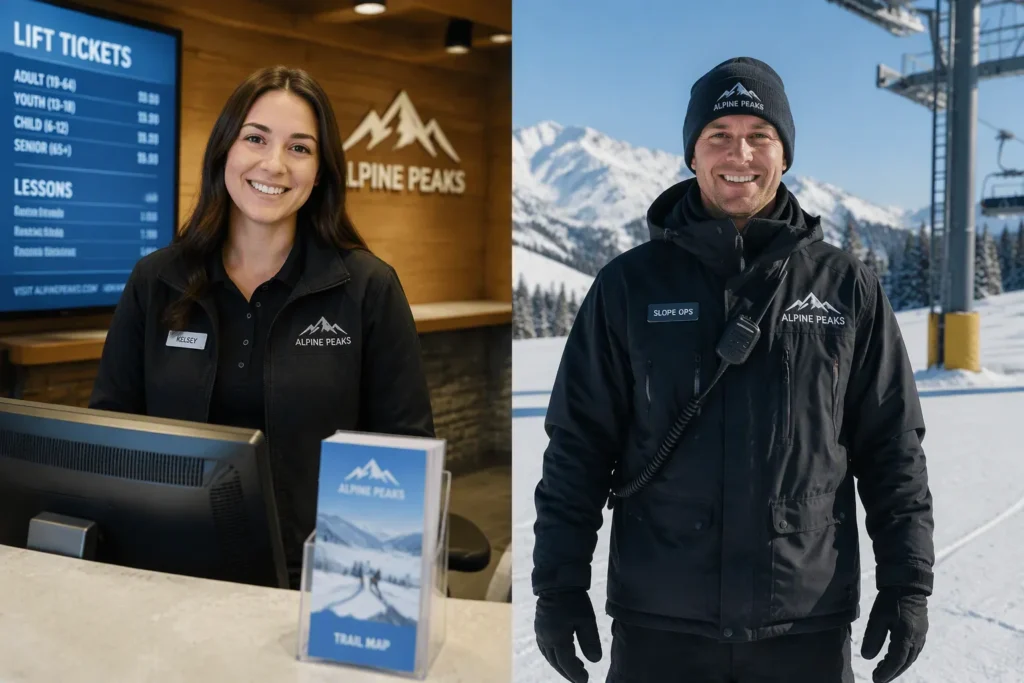
Ski resort staff uniform OEM China splits workwear into two main groups. Each group serves different employees with different jobs. Guest services apparel is for indoor and mixed-duty roles. These include ticketing, reception, concierge, information desks, rental counters, and retail support. Slope operations apparel is for outdoor mountain teams. These include lift-area attendants, patrol-adjacent support, mountain transport, and maintenance coordination. Both groups need planning for comfort, branding, and role identification. Neither group counts as personal protective equipment. Uniforms do not replace helmets, goggles, harnesses, gloves, safety footwear, radios, avalanche controls, rescue equipment, or resort procedures. Resorts keep full responsibility for site safety programs that are separate from uniform planning.
Guest Services Apparel
Guest services apparel covers employees who talk with guests in lodges, ticket halls, rental shops, and retail spaces. These roles mix indoor and outdoor duties during a shift. A ticketing agent may work inside but help guests in the parking lot. A rental shop attendant may stand at a counter but help guests outside with equipment adjustments. This mixed duty needs layered clothing that works in both places. Layering helps with comfort as temperatures change. Many resorts use three-layer systems for guest-facing teams.
Standard garments include branded polo shirts, softshell jackets, lightweight vests, and knit sweaters. A base layer with a mid-layer fleece and a shell gives flexibility for changing conditions. Many resorts pick the same color palette for all guest-facing staff. This approach creates visual consistency across the property. ODM services help resorts customize garments for specific duties. Buyers specify fabric composition, weight, color, and branding during development. Embroidery or screen printing adds resort logos. Some buyers choose fabrics with recycled polyester or organic cotton blends. Sustainability influences material choices for many programs.
Seasonal replenishment keeps teams looking consistent. Resorts order replacement pools each season. Size sets cover XS through 3XL for all team members. The development phase includes fabric review, sample approval, and fitting sessions. Function depends on written specifications. Buyers request documentation for any claimed properties.
Slope Operations Apparel
Slope operations apparel covers lift-area attendants, patrol-adjacent support, mountain transport drivers, and maintenance coordination teams. These employees spend most of their shift outdoors in cold conditions. Garments need to resist wind, snow, and moisture while allowing bending, kneeling, and lifting. Layering provides adjustability. A base layer wicks moisture. A mid-layer provides insulation. A shell blocks wind and precipitation. This system lets wearers add or remove layers based on activity level and weather changes.
Standard garments include insulated jackets, bib pants, mid-layer fleeces, and waterproof shells. Some teams use work trousers with reinforced knees and cargo pockets for tool storage. Radio loops and small tool pockets support daily tasks. Zippers must operate with gloved hands. Buyers specify weather resistance using industry standards.
Standard | Purpose |
|---|---|
EN 342 | Cold protective clothing insulation |
EN 343 | Rain and weather protection |
ISO 23537 | Thermal insulation requirements |
ASTM F2732 | Insulation values for cold protection |
ISO 4920 | Water repellency for fabrics |
GB/T 2660-2017 | Warmth retention China standard |
These standards apply to non-PPE workwear. Buyers name the standard during specification. No garment meets these standards by default. The development phase includes fabric review and sample testing to confirm results. Resorts provide specifications for waterproof ratings and insulation levels. These details become part of the pre-production sample approval process.
Seasonal replenishment for slope teams differs from guest services. Shells get replaced every two to three seasons. Mid-layers get replaced more often. Size sets cover the full team with room for layering layers underneath. Some resorts order extra stock for new hires during peak season. Neither category of uniform replaces safety equipment. Uniforms support role identification and professional appearance for all teams working across the resort.
Role-Based Apparel Planning for Ski Teams
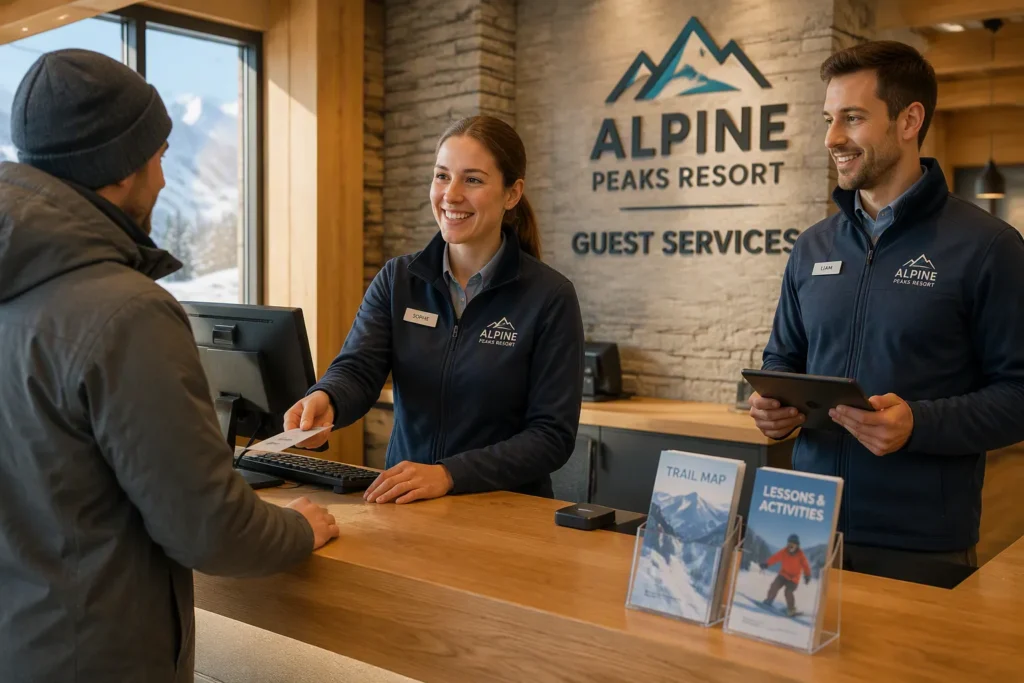
Role mapping is the first step in every uniform program. Resort managers make a list of each job family. Then they match garments to the tasks those workers do each day. Guest services, ticketing, reception, concierge, and retail teams need neat clothing that works well indoors. Slope operations, lift-area, mountain transport, and supervisor roles need tough outerwear made for cold, active shifts. This mapping helps ski teams stay easy to identify and comfortable across the whole property.
Guest Services and Ticketing Roles
Guest services staff work in lodges, ticket halls, and rental counters. They need clothing that looks professional and feels good during long shifts. Polyester-cotton blends are a common pick for these roles. The blend mixes cotton’s softness with polyester’s strength and wrinkle resistance.
For workers who are both indoors and outdoors, a mix of polyester and cotton also works well. This blend gives you the best of both: the comfort and breathability of cotton, plus the added benefits of polyester. Polyester blended fabrics resist stains and wrinkles.
Buyers choose fabric makeup and weight during development. A typical blend uses a 60:40 or 65:35 cotton-to-polyester ratio. This balance helps breathability while keeping the uniform sharp all workday. The table below shows what buyers can expect from these blends.
Fabric attribute | What to expect | Why it matters for uniforms |
|---|---|---|
Hand feel | Smooth, soft, slightly cool | Works well for garments worn close to the body |
Drape | More fluid than pure polyester | Helps tailored styles hang cleanly |
Wrinkle resistance | Better than viscose | Useful for workwear and uniforms |
Breathability | Improved vs. 100% polyester | Good for moderate climates and indoor wear |
Durability | Stronger than pure viscose | Supports repeat wear in uniforms |
Care | Easier than delicate viscose | Shrinkage and pilling should be checked |
Branding choices come after fabric selection. Resorts pick embroidery or printing for logos. Color standards come from Pantone references. Labels and care instructions must meet buyer needs. These choices apply to polo layers and light jackets. Custom polo programs give guest teams a clean, branded look. Role identification works the same way as in theme park staff apparel, where color and cut separate job functions at a glance.
Slope Operations and Supervisor Roles
Slope operations teams deal with cold, wind, and snow. Their apparel must let them bend, kneel, and lift. Buyers specify fabric weight, lining, closures, and pocket layout. Reinforced seams and cargo pockets help with tool storage. Radio loops help teams stay connected. Supervisors need distinct outerwear so guests and staff can spot them fast.
Performance claims need written specifications and evidence. Buyers name tests and standards during the RFQ stage. No garment meets a standard by default. Waterproof ratings and insulation values depend on approved test methods. These details become part of pre-production sample approval.
Construction choices matter for durability. Zippers must work with gloved hands. Pockets need secure closures. Seams should resist stress from repeated movement. Buyers review samples and ask for revisions before bulk manufacturing.
Branding for slope teams often uses high-contrast logos. This helps with visibility on the mountain. Color continuity across seasons keeps the resort looking consistent. Replenishment planning makes sure new hires receive matching gear.
Ski clothing manufacturers in China support these programs with full OEM and ODM services. Private label ski wear and custom ski apparel follow similar development paths. Ski wear brands and global buyers rely on China for technical outerwear production. Sustainability goals also shape material choices, with recycled polyester and organic cotton blends gaining ground. Quality checks during manufacturing help confirm that each garment meets the buyer’s written specs.
OEM Process and Quality Control
The OEM workflow goes through clear steps. It begins with an inquiry or tech pack. Next comes a review of requirements, fabric, and trim. Then a sample or size set is made. Fitting and changes come after that. The buyer approves the pre-production sample (PPS) before bulk work starts. Bulk production runs with inline and final checks. Packing and shipment end the cycle. Buyers approve final specifications and the PPS before bulk begins. This keeps both sides safe from costly mistakes.
Role mapping, fabric review, size sets, branding, and PPS approval all help with bulk coordination. Ski clothing manufacturers in China use this path for private label programs. Ski wear brands and ODM partners follow similar steps for technical outerwear. ODM development and ODM services help resorts customize each garment. Sustainability goals also shape fabric choices during review.
The RFQ specification table below lists the fields buyers fill out before quoting.
RFQ Field | What the Buyer Provides |
|---|---|
Role / use area | Guest services, ticketing, lift-area, supervisors |
Garment types | Polos, softshells, shells, bib pants, fleeces |
Quantity by style/size/color | Units per SKU and size set |
Fabric and weight | Composition and gsm |
Color / Pantone reference | Pantone numbers for each color |
Logo method and placement | Embroidery or print, position |
Closure / pocket details | Zippers, snaps, pocket layout |
Label and packaging needs | Care labels, hangtags, polybags |
Delivery destination / season | Port, warehouse, target season |
Buyer-named tests / standards | Waterproof, insulation, colorfastness |
Sample / PPS approval owner | Named contact for sign-off |
From Inquiry to PPS Approval
The process starts when a resort sends an inquiry or tech pack. The supplier reviews requirements and checks fabric and trim options. A sample or size set is made next. Fittings and changes follow until the buyer is happy. The buyer then approves the PPS. No bulk work starts without that approval. This step confirms fabric, construction, branding, and fit.
Bulk Production and Final Checks
Bulk production runs with inline checks at key stages. The table below shows the main checkpoints.
Stage | Key Checks |
|---|---|
After Cutting | Panel accuracy, shade grouping, fabric defect detection |
After First Sewing Lines | Seam quality, stitch density, key measurements |
After Decoration | Print/embroidery placement, durability |
Before Packing | Labeling, trims, workmanship, size distribution |
AQL is a sampling standard. It sets how many pieces to inspect and the most defects allowed. Defects fall into three groups: Critical (safety or legal risk), Major (affects function or saleability), and Minor (cosmetic). Common AQL thresholds for apparel range from 1.0% to 2.5%. Final random inspections often accept 0.0% Critical, 1.0%–1.5% Major, and 4.0% Minor. AQL means controlled risk, not perfection. Quality checks confirm that each garment meets the buyer’s written specs.
Working with Ski Clothing Manufacturers in China
Resort managers weigh two sourcing paths when they work with ski clothing manufacturers in China. Each path fits different needs. The choice affects speed, branding control, and long-term replenishment. Shanghai Top Fortune Industry Co., Ltd. supports both paths. The company started around 2002 and runs a 1,506 m² factory in Songjiang, Shanghai. It offers OEM and ODM services for adult workwear and corporate uniforms. Service regions include Europe, the Middle East, Oceania, Southeast Asia, and the Americas. A typical MOQ is about 1,000 pieces per style. This figure is a planning guide, not a guaranteed minimum.
Catalog vs Custom OEM Comparison
Catalog items ship faster because the factory already holds patterns and materials. Custom OEM programs take longer but deliver exact role fit and brand control. The table below compares both paths across key criteria.
Criteria | Catalog | Custom OEM |
|---|---|---|
Speed | Faster start, stock dependent | Longer setup, built to order |
Role fit | General sizing | Role-specific cuts |
Branding | Limited logo options | Full embroidery or print |
Size/color control | Fixed range | Buyer-defined sets |
Replenishment | Subject to stock | Repeatable runs |
Technical documentation | Standard specs | Buyer-named tests |
Best use | Quick trials | Full resort programs |
Procurement Checklist and Cost Efficiency
A strong procurement plan starts with a role matrix. Managers list each job family and match garments to daily tasks. Size data comes next. Resorts collect measurements from every team member. Seasonal quantities guide order volume. Color continuity keeps the brand look stable across seasons. Logo files must be vector format for clean embroidery. Fabric and trim approvals happen before sampling. The sample and PPS steps confirm fit and construction. Packaging, inspection, and shipping documents follow buyer needs. PPE responsibilities stay with the resort, not the uniform supplier.
Cost efficiency depends on more than unit price. Ocean freight from Shanghai to the US West Coast for a 20ft container runs $2,000–$3,500, and a 40ft container runs $3,500–$6,000. Transit time is 15–20 days. Surcharges add to the base rate. These include BAF for fuel, THC for terminal handling, CAF for currency shifts, and PSS during peak season. Customs clearance fees run $100–$500 per shipment. Cargo insurance costs 0.3%–0.5% of shipment value. Warehousing and last-mile delivery add $200–$1,000 or more. Import duties depend on the HS code, and Section 301 tariffs may apply to textiles from China. Any waterproof or insulation claim remains buyer-specified and evidence-dependent. No certification or test result is assumed.
Ski resort staff uniform OEM China gives a useful, adult B2B answer. Custom designs by role, strong build, and low cost help guest services and slope teams. Resorts get brand consistency, staff comfort, and smooth operations through partners like Shanghai Top Fortune Industry Co., Ltd. This OEM and ODM supplier backs quality adult workwear programs. Uniforms are not PPE by default. Buyers must name any waterproof or performance claim, and proof must back it up. Sustainability and smart fabric trends will shape future ski clothing development. Resort managers should think about China manufacturing as part of their uniform plan.
Request a quote: rill@topfortunemail.com or WhatsApp +86 13524210501. Typical MOQ is about 1,000 pieces per style, a planning figure only. Address: Floor 3, Building 20, Haier Zhigu, No. 66 Guangfulin East Road, Songjiang District, Shanghai 201600.
FAQ
How does ski resort staff uniform OEM China help with brand consistency?
Color palettes bring together the ski resort look. China ski clothing manufacturing works for both indoor and outdoor jobs. Guest services and slope operations teams use the same brand colors. Ski resort staff uniform development keeps the brand looking the same through seasonal wear refills. Ski apparel lines follow the same idea for ski wear programs.
What distinguishes guest services apparel from slope operations wear in ski uniform programs?
Guest services apparel uses lighter fabrics for ski lodge areas. Slope operations wear uses tough outerwear for ski mountain conditions. China ski clothing development supports both ski resort categories. Ski uniform programs list role-specific features for each ski team. Wear layers help with comfort changes during ski shifts.
Are ski resort staff uniforms considered protective equipment?
These uniforms are not PPE by default. Ski resort staff use separate ski safety gear for mountain work. Any weatherproof claim needs written buyer specification and supporting proof. Ski resort procedures guide helmet and goggle use for all teams. China ski manufacturing follows buyer testing rules for ski workwear.
What is the typical MOQ for ski clothing manufacturing programs?
Buyers plan for about 1,000 pieces per style as a planning number. Each ski resort talks about actual MOQ with ski clothing makers during inquiry. China ski wear manufacturing looks at MOQ for multi-location uniform programs. Ski resort staff uniform planning uses this volume model for ski wear orders.
How do resorts coordinate role identification through ski uniform design?
Ski guest services teams wear different uniforms from slope ski teams. Ski resort uniform programs map each ski role to specific clothes. Ski resort staff stay easy to spot across the property. China ski wear supports ski uniform color standards and branding for workwear. Ski apparel makers help keep role identification the same.