

3 must-know tips for picking a kids puffer jacket
Table of Contents
Display
Choosing the right kids puffer jacket becomes easy when you focus on three essentials:
Warmth and insulation
Fit, comfort, and mobility
Durability and easy care
You need these tips because they help you keep your child warm, comfortable, and protected during cold weather. The right jacket lets your child enjoy outdoor activities without worry. Trust these tips to help you make a smart choice.
Key Takeaways
Choose the right insulation type. Down insulation is best for dry, cold days, while synthetic insulation works well in wet conditions.
Look for a high tog rating and fill power above 600. These numbers ensure your child stays warm during winter activities.
Select a jacket that fits well for layering. A proper fit keeps insulation effective and allows for comfortable movement.
Check for durability features like reinforced stitching and water-resistant materials. These ensure the jacket lasts through active play.
Opt for machine washable jackets. Easy care saves time and keeps the jacket looking good after many uses.
Warmth and Insulation in Kids Puffer Jackets
Down vs. Synthetic Insulation
When you shop for a kids puffer jacket, you need to understand the difference between down and synthetic insulation. Each type offers unique benefits for warmth and comfort.
Down insulation gives you a superior warmth-to-weight ratio. You get a lighter jacket that feels cozy without bulk. Down is more compressible, so you can pack it easily for trips. It also lasts longer than synthetic insulation.
Synthetic insulation works better in wet conditions. If your child plays in rain or snow, synthetic fill keeps them warm even when damp. It is often less expensive and offers improved breathability. Many synthetic jackets are hypoallergenic, which helps if your child has allergies.
New hydrophobic down technology improves down’s performance in wet weather. This makes high quality down fill jacket options more versatile for unpredictable climates.
You should choose down for dry, cold days and synthetic for wet or active conditions. Both types can keep your child warm, but your choice depends on your local weather and your child’s activity level.
Warmth Ratings and Tog Value
You want a jacket that keeps your child comfortable in freezing temperatures. Warmth ratings and tog values help you compare options. Tog rating in children’s coats measures thermal insulation. A high tog rating means better protection against cold.
Here is a quick comparison:
Jacket Model | Fill Power | Tog Rating |
|---|---|---|
650 | 6.3 |
If you need a kids puffer jacket for minus degrees, look for fill power above 600 and a tog rating above 6. This ensures your child stays warm during winter activities. Always check these numbers before you buy, especially if you live in a region with harsh winters.
Weather Resistance and Breathability
A kids puffer jacket must protect your child from wind, rain, and snow. You should look for waterproof and windproof features to keep your child dry and shielded from chilly gusts. Breathability matters too, especially if your child is active outdoors.
Here are key features to consider:
Feature | Description |
|---|---|
Water Resistance | Material with a water column of 3,000 mm |
Eco-Friendly Water Repellence | BIONIC-FINISH® ECO technology free from PFCs |
Windproof Material | Keeps chilly winds out |
Breathability | At least 5,000 g/m2/24h for comfort during physical activity |
Tip: Choose a jacket with eco-friendly water repellence for safer, sustainable protection. Breathable materials prevent overheating and keep your child comfortable during play.
When you select a kids puffer jacket, check for these features to ensure your child stays warm, dry, and comfortable in any weather.
Fit, Comfort, and Mobility
Sizing for Layering
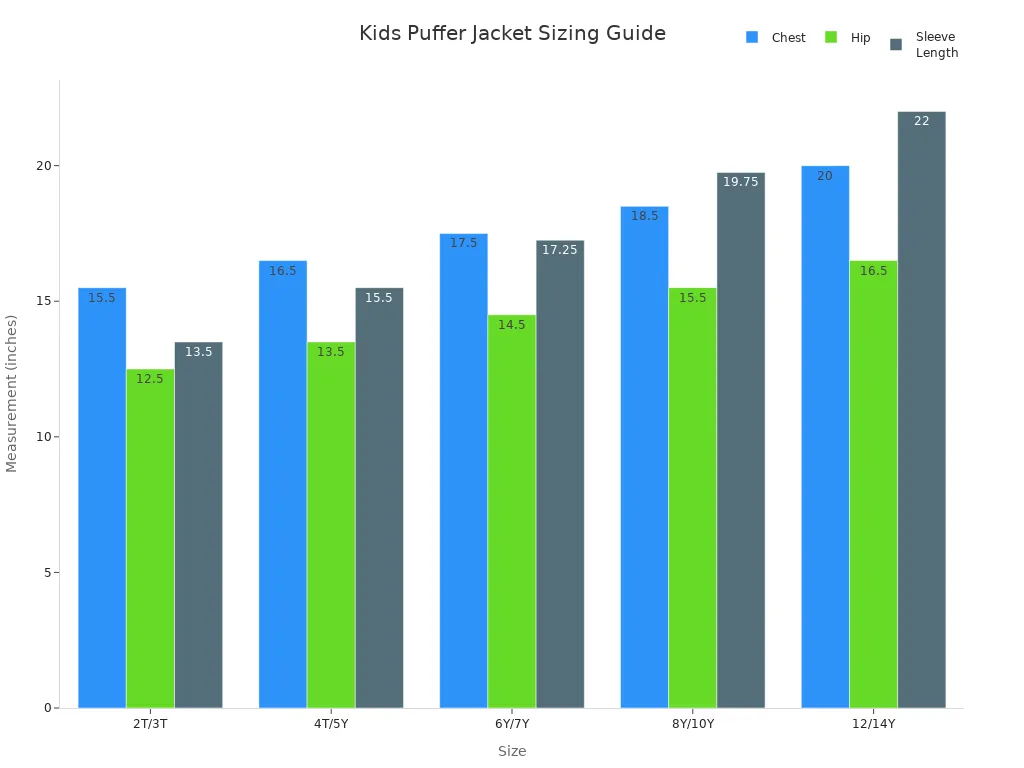
You want your child to stay warm and comfortable, so choosing the right size matters. Manufacturers recommend sizing guidelines that help you allow for layering under the jacket. If you pick a jacket that is too tight, it compresses the insulation and reduces warmth. A loose jacket lets cold air in and makes your child feel chilly. You should check the chest, hip, and sleeve length measurements before you buy.
SIZE | CHEST | HIP | SLEEVE LENGTH |
|---|---|---|---|
2T/3T | 15.5 | 12.5 | 13.5 |
4T/5Y | 16.5 | 13.5 | 15.5 |
6Y/7Y | 17.5 | 14.5 | 17.25 |
8Y/10Y | 18.5 | 15.5 | 19.75 |
12/14Y | 20 | 16.5 | 22 |
Tip: Always measure your child with a sweater or hoodie on. This helps you pick a size that fits well with layers underneath.
You can also check size guides from trusted brands:
Adjustable Cuffs and Hoods
You want a jacket that adapts to your child’s needs. Adjustable cuffs and hoods make a big difference in comfort and warmth. Detachable hoods keep kids warm and dry in changing weather. You can remove the hood when it is not needed, which adds convenience. Adjustable cuffs tighten around the wrists to block cold air and keep warmth inside.
Feature | Benefit |
|---|---|
Adjustable cuffs | Tighten against cold air for better warmth |
Adjustable hoods | Provide extra head protection |
Reflective details | Enhance visibility during shorter winter days |
Note: Jackets with these features grow with your child and work well for different seasons. You get more value and flexibility.
Freedom of Movement
Active kids need jackets that move with them. Design elements like high-quality materials and tailored cuts help your child play without restriction. Insulation provides warmth without adding bulk, so your child can run, jump, and climb easily. Waterproofing keeps your child dry, which means they can play outside longer.
Design Element | Benefit for Movement |
|---|---|
High-quality materials | Ensures durability and flexibility |
Insulation | Provides warmth without bulk |
Tailored designs | Specifically crafted for active play |
Waterproofing | Keeps kids dry, allowing for unrestricted play |
Varied styles (long/short) | Offers options that suit different activities |
Tip: Choose a kids puffer jacket with flexible materials and a tailored fit. Your child will stay comfortable and enjoy every adventure.
Durability and Easy Care for Best Kids Puffy Jacket
Material Quality and Stitching
When you choose the best kids puffy jacket, you want materials that stand up to daily wear. Manufacturers often use nylon or polyester for the outer shell. These fabrics resist tears and abrasions, so your child can play freely. Jackets with reinforced stitching last longer and keep insulation in place. You should check seams and zippers for sturdy construction. High-quality insulation, like down or synthetic polyester, helps the jacket retain warmth and shape over time.
Material Type | Common Materials | Properties Impacting Durability |
|---|---|---|
Outer Shell | Durable, water-resistant, often treated for weatherproofing | |
Insulation | Synthetic (Polyester), Natural (Down) | Retains warmth, moisture resistance, superior warmth-to-weight ratio for down |
Tip: Inspect the stitching and fabric before you buy. Strong seams and tough materials mean fewer repairs and longer use.
Water Resistance and Cleaning
You want a jacket that keeps your child dry and looks good after many washes. Water-resistant coatings protect against rain and snow. Polyester and nylon shells often feature these treatments. You should look for jackets labeled as machine washable. Easy-care fabrics save you time and effort. Some jackets use eco-friendly water repellents, which are safer for your child and the environment.
Machine washable jackets simplify cleaning.
Water-resistant shells prevent stains and moisture buildup.
Eco-friendly coatings offer safe protection.
Note: Always follow the care instructions on the label. Proper washing keeps insulation fluffy and effective.
Compressibility and Packability
Travel and storage become easier with a jacket that packs down small. Down insulation offers excellent compressibility, so you can fit the jacket into a backpack or suitcase. Synthetic insulation also packs well, though it may take up more space. Both types provide durability, but down lasts longer if you care for it properly. Synthetic options resist moisture and dry quickly, making them ideal for wet conditions.
Down insulation feels light, compresses easily, and lasts with good care.
Synthetic insulation costs less, insulates when wet, and dries fast.
Continuous filament synthetic fill resists shifting and maintains shape.
Tip: Choose a packable jacket for travel or school. Your child stays warm, and you save space.
A durable, easy-care kids puffer jacket gives you peace of mind. You spend less time worrying about repairs and cleaning, and your child enjoys every adventure.
Quick Recap Checklist for Choosing the Best Kids Coats for Minus Degrees
Choosing the best kids coats for minus degrees can feel overwhelming, but you can simplify the process with a quick checklist. Use these points to make sure you select the perfect winter coat for your child.
Warmth and Insulation Points
Look for a high tog rating, such as 6.3 or higher, to ensure strong thermal protection.
Choose jackets with fill power above 600, like 650 recycled down, for reliable warmth and breathability.
Check for extra features, such as waterproof shells and snug hoods with sherpa lining, which add comfort in freezing conditions.
Consider innovative designs that allow safe car seat harnessing, like Secure Me Strips™ found in Buckle Me Baby Coats.
Select jackets that provide warmth without bulk, so your child stays comfortable and safe during winter activities.
Tip: Warmth and insulation features help keep your child safe and cozy, even in minus temperatures.
Fit and Comfort Points
Pick a jacket with enough insulation to keep your child warm during outdoor play.
Make sure the material is durable and can withstand wind and moisture.
Look for practical features, such as hoods, zippers, and pockets, which offer extra protection.
Choose a jacket that allows layering for added warmth.
Consider your child’s specific needs, like allergies or sensitivities, when selecting the best kids coats.
Lightweight jackets that allow easy movement encourage children to wear them more often, especially during active play.
Note: Fit and comfort directly affect your child’s willingness to wear their coat, keeping them warm and happy outside.
Durability and Care Points
Inspect the outer shell for tough materials like nylon or polyester, which resist tears and abrasions.
Check for reinforced stitching and sturdy zippers to ensure long-lasting use.
Select water-resistant or waterproof jackets for better protection against rain and snow.
Choose machine washable options for easy cleaning and maintenance.
Look for compressible and packable designs, which make travel and storage simple.
Tip: Durable and easy-care jackets save you time and keep your child ready for every winter adventure.
Use this checklist when selecting the best kids coats for minus degrees. You will find it easier to choose a coat that delivers warmth, comfort, and durability for your child.
You can make shopping for a kids puffer jacket simple by using these three tips as your checklist. When you follow this guide, you choose jackets that offer warmth, comfort, and durability. You find options with wind-proof and water-repellent finishes, elasticized trim, and machine washable materials. You see jackets in many colors with thoughtful design features. Your child stays cozy and ready for every winter adventure. Enjoy peace of mind while your child explores the outdoors.
FAQ
How do I know if a kids puffer jacket is warm enough for winter?
Check the fill power and tog rating. Look for fill power above 600 and a tog rating over 6.3. These numbers show strong insulation. You should also check for features like windproof and water-resistant shells.
Can my child wear a puffer jacket in the rain?
You can use a puffer jacket in light rain if it has a water-resistant shell. For heavy rain, choose a jacket with a waterproof rating. Synthetic insulation works better than down when wet.
How do I wash a kids puffer jacket?
Always follow the care label. Most jackets are machine washable on a gentle cycle. Use mild detergent. Tumble dry on low with clean tennis balls to keep the insulation fluffy.
What size puffer jacket should I buy for my child?
Measure your child’s chest, hips, and sleeve length while they wear a sweater. Compare these numbers to the brand’s size chart. Choose a size that allows for layering but does not feel too loose.
Are kids puffer jackets safe for car seats?
Some brands design jackets for car seat safety. Look for features like Secure Me Strips™. Bulky jackets can affect harness fit. Always check the fit of the harness over the jacket.