

How Work Vests Improve Safety and Efficiency in Various Fields
Table of Contents
Display

Imagine you step onto a bustling construction site. You notice workers wearing brightly colored safety gear, each equipped with a work vest. This simple piece of equipment does more than just mark someone as part of the crew. The work vest keeps you visible in busy environments, especially where heavy machinery operates. Recent studies show that high-visibility PPE, like safety vests, helps operators spot workers quickly and reduces accidents. The fluorescent colors and reflective striping ensure compliance with safety standards and improve operational efficiency.
Key Takeaways
Work vests enhance safety by improving visibility in busy environments, reducing accident risks significantly.
High-visibility vests must meet safety standards set by organizations like OSHA and ANSI to ensure compliance and protection.
Different types of work vests, such as high-visibility, utility, and specialized vests, cater to various job requirements and hazards.
Reflective materials on vests help workers remain visible at night or in low-light conditions, preventing accidents.
Proper organization through tool pockets and compartments in work vests boosts efficiency and reduces downtime on the job.
Selecting the right vest based on job needs and environmental factors is crucial for maximizing safety and comfort.
Regular inspection and maintenance of work vests ensure they remain compliant and effective in protecting workers.
Wearing compliant work vests not only protects individuals but also promotes a culture of safety within the workplace.
What Is a Work Vest
Definition and Purpose
You encounter work vests in many environments where safety and efficiency matter. A work vest is a specialized garment designed to protect you, organize your tools, and keep you comfortable during demanding tasks. The main functions include:
Protection: High-visibility and reflective materials help you stay safe in low-light or busy settings.
Tool Storage: Multiple pockets, including two lower outside pockets and a divided pocket for smaller tools, allow you to organize and access equipment quickly.
Comfort: You can wear a work vest over fall protection harnesses. The design minimizes abrasion and ensures comfort throughout your shift.
Work vests play a crucial role in meeting safety standards. You must follow safety vest requirements in many industries, especially where vehicle traffic or heavy equipment pose risks. Regulatory bodies like OSHA and ANSI/ISEA 107 set strict safety standards for high-visibility PPE. These standards specify minimum visibility and reflectivity criteria, ensuring your vest meets safety vest requirements.
Tip: Always check the safety standards for your specific job before choosing a work vest. This ensures you comply with safety vest requirements and stay protected.
Types of Work Vests
You find several types of work vests, each designed for different tasks and safety standards. The main types include high-visibility, utility, and specialized vests.
High-Visibility
High-visibility work vests use fluorescent colors and reflective striping to make you stand out. These vests help you meet safety vest requirements in environments with moving vehicles or low visibility. OSHA mandates high-visibility clothing for workers exposed to traffic or heavy equipment. ANSI/ISEA 107 safety standards classify vests by risk level:
Class | Risk Level | Description |
|---|---|---|
1 | Low | Suitable for low-risk environments, such as warehouse tasks. |
2 | Moderate | Best for moderate-risk situations, like roadside construction work. |
3 | High | Designed for high-risk areas with fast moving traffic or low light conditions, providing the highest level of visibility. |
Utility
Utility work vests focus on organization and tool access. You benefit from extra pockets and compartments, which help you carry tools, radios, and other equipment. These vests meet safety standards for tool storage and comfort, making them ideal for jobs that require frequent access to gear.
Specialized
Specialized work vests serve unique roles in industries such as public safety, chemical plants, and emergency response. You see different types based on intended use and safety standards:
Type of Vest | Intended Use | Visibility Class |
|---|---|---|
Type O | Off-Road Work (warehouses, chemical plants) | Class 1 |
Type R | Roadway Work (highway construction) | Class 2 |
Type P | Public Safety (first responders) | Class 3 |
You must select the right type of work vest to meet safety vest requirements and comply with safety standards in your field. High-visibility options protect you in hazardous areas, while utility and specialized vests improve efficiency and comfort.
Safety Benefits of Work Vests

When you wear a work vest, you gain more than just a layer of protection. You increase your safety and reduce risks in busy or hazardous environments. Work vests offer two main safety benefits: visibility enhancement and hazard protection.
Visibility Enhancement
You stand out in your environment when you choose high-visibility safety vests. Visibility is crucial in areas with moving vehicles, heavy machinery, or low light. High-visibility safety apparel uses special materials and colors to make sure you remain easy to spot.
Reflective Materials
Reflective strips play a key role in keeping you visible. These materials reflect light back to its source, making you noticeable from a distance. You benefit most from reflective safety vests at night or in dim conditions. Headlights from vehicles or machinery hit the retroreflective tape, and you shine brightly in the dark. This feature helps prevent accidents and keeps you safe during early morning or late evening shifts.
Reflective materials reflect light back to the source, enhancing visibility.
This is particularly effective at night when exposed to headlights.
Retroreflective tape is commonly used in safety vests for its high visibility.
You see the difference in accident rates when workers use high-visibility safety vests. A Danish study published in ‘Safety Science’ found that wearing high-visibility jackets led to a 47% reduction in accidents per person per month among cyclists. The reduction in collisions between cyclists and motor vehicles was even higher, at 55%. These statistics show how high-visibility safety gear can protect you in real-world situations.
Color Standards
High-visibility colors make you stand out against any background. Safety standards require specific colors for different environments. You often see safety yellow and safety orange on construction sites and roadwork zones. These colors offer excellent contrast and visibility, helping you avoid accidents.
Color | Description | Application in Safety |
|---|---|---|
Safety Yellow | Offers high visibility and contrast against various backgrounds. | Commonly used in low-light conditions. |
Safety Orange | Provides excellent contrast and visibility in hazardous environments. | Widely used in construction and roadwork. |
Safety Red | Used for high visibility in specific scenarios like firefighting. | Less common, but crucial in emergencies. |
You should always check the color standards for your work vest. High-visibility colors help you comply with safety regulations and keep you safe in busy environments.
Note: High-visibility safety apparel must meet strict color and reflectivity standards to ensure you remain visible in all conditions.
Hazard Protection
Work vests do more than improve visibility. You also gain protection from physical hazards and harsh weather. These features help you stay safe and comfortable during your shift.
Impact Resistance
Impact-resistant work vests protect you from injuries caused by projectiles or sharp objects. Dual protection vests absorb and dissipate energy, preventing penetration and reducing the risk of injury. Advanced synthetic materials manage energy from kinetic and penetrative forces. The layered structure resists and dissipates different types of attack energies. When a projectile or sharp object strikes the vest, the materials redirect and dissipate the energy, keeping it away from your body. This mechanism transforms potentially life-threatening situations into manageable threats.
The impact correctional vest offers essential protection against blunt trauma and sharp threats. You get full coverage with a comfortable fit. These vests exceed class 3 stab resistance standards, making them vital for law enforcement and security professionals.
Weather Shield
You face many weather challenges on the job. Work vests often include weather-resistant features to keep you dry and comfortable. Waterproof fabrics and wind-blocking layers shield you from rain, snow, and cold winds. You stay focused on your tasks without worrying about the elements.
High-visibility safety vests also help you in various environments:
Traffic management: Enhances visibility for workers on the road, reducing accident risks with vehicles.
Construction sites: Increases visibility for construction personnel, minimizing workplace accidents.
Logistics and warehousing: Improves visibility in fast-paced environments, lowering collision risks with machinery or personnel.
Sports and recreational activities: Boosts visibility for outdoor sports participants, decreasing potential collisions.
Education and school safety: Ensures safety for students and staff by making school traffic supervisors more visible.
Event management: Helps event staff and volunteers be easily identifiable, facilitating assistance for participants.
You improve your safety and efficiency when you choose the right safety gear. High-visibility safety vests, reflective strips, and impact-resistant features work together to protect you from hazards and keep you visible in any environment.
Efficiency Benefits of Work Vests
When you wear a work vest, you do more than protect yourself. You also boost your productivity and keep your tasks organized. Work vests offer key advantages that help you work smarter and faster in busy environments.
Organization and Storage
A well-designed work vest keeps your tools and equipment close at hand. You do not waste time searching for what you need. Instead, you stay focused and efficient throughout your shift.
Tool Pockets
You find that tool pockets are one of the most important features of a work vest. These pockets come in different sizes and shapes. Some hold small items like pens or utility knives. Others fit larger tools such as tape measures or radios. Many vests include holsters and loops for hammers, cordless drills, or other frequently used gear. This setup gives you easy access to tools and reduces the need to stop and search through a toolbox.
Holsters and loops designed for frequently used tools like hammers, tape measures, and cordless drills facilitate quick access.
Quick access reduces fumbling and minimizes interruptions in workflow.
Choosing a vest with the right holster setup ensures a faster, smoother workflow.
You save time and energy when your tools are always within reach. This organization helps you complete tasks more quickly and with fewer mistakes.
Easy Access
Easy access to tools is a game changer on the job. You do not have to climb down ladders or walk across the site to grab equipment. Instead, you reach into a pocket or loop and get what you need right away. This feature keeps your workflow steady and prevents unnecessary delays.
Tip: Select a work vest with pockets and holsters that match your daily tasks. You will notice a big difference in your efficiency.
Workflow Improvement
Work vests do more than organize your tools. They also improve the way you and your team work together. High-visibility features and clear role identification help everyone stay on track.
Role Identification
High-visibility vests come in different colors and often include printed names or logos. These details make it easy to identify team members and their roles. You can spot supervisors, safety officers, or first responders at a glance. This quick identification keeps the workplace organized and reduces confusion.
Safety vests enhance visibility in high-risk environments, which is crucial for quick identification of team members.
The addition of printed names or logos on vests aids in job role identification, contributing to a more organized workplace.
Improved identification reduces mistakes, leading to a safer and more efficient work environment.
You help create a safer and more efficient job site when everyone knows who is responsible for each task.
Reduced Downtime
Work vests with advanced features can help you avoid delays and keep projects on schedule. Some high-visibility vests include real-time alerts that warn you about hazards before they become problems. Early detection of risks like heat stress or fatigue allows you to take action right away. This proactive approach reduces injuries and keeps your team working smoothly.
Real-time alerts prevent incidents instead of reacting after the fact.
Early detection of health risks (heat stress, fatigue, overexertion).
Reduced downtime and fewer injuries, which helps keep projects on schedule.
Timely hazard intervention allows for correction before exposure to dangerous conditions.
Behavioral pattern recognition facilitates targeted training for workers who repeatedly violate protocols.
Environmental correlation reveals systemic issues linked to specific infractions.
You keep your workflow steady and avoid costly interruptions when you use safety gear that supports early intervention. High-visibility work vests play a big role in keeping your team safe, organized, and efficient.
Work Vest Features
High-Visibility Elements
You rely on high-visibility elements to stay safe in busy or hazardous environments. These features make you stand out, especially when you work near moving vehicles or heavy equipment. Bright fluorescent colors, such as yellow or orange, catch the eye quickly. Reflective strips add another layer of safety by bouncing light back toward its source. This means drivers and machine operators can spot you even in low-light or nighttime conditions. High-visibility vests often use wide reflective bands across the chest, shoulders, and back. These placements ensure you remain visible from every angle. You meet safety standards and reduce accident risks when you choose a vest with strong high-visibility features.
Durable Materials
You want your work vest to last through tough jobs and harsh conditions. The materials used in your vest play a big role in its lifespan and protective abilities. Some fabrics resist tearing, stretching, and water, while others protect you from heat or chemicals. The table below shows how different materials affect your vest’s durability and safety:
Material | Key Features | Impact on Lifespan and Protection |
|---|---|---|
Nylon | High tensile strength, abrasion resistance, water resistance, elastic recovery | Prolongs lifespan, protects against wear and tear, ideal for tough jobs |
Modacrylic | Intrinsic flame resistance, chemical resistance, self-extinguishing | Maintains protective features over time, safe in high-heat environments |
Nylon gives you a vest that stands up to daily wear and tear. You can trust it for jobs that demand strength and flexibility. Modacrylic keeps you safe if you work around flames or chemicals. This material does not burn easily and helps protect you in high-risk settings. When you select a vest made from these materials, you invest in long-term safety and comfort.
Pockets and Compartments
You need quick access to your tools and gear. Work vests come with a variety of pockets and compartments designed for different tasks and industries. Some vests have multi-purpose pockets for measuring tools, while others offer at least five pockets of different sizes for surveyors. You might find transparent card holders for ID cards or cargo pockets for carrying extra items. The right pocket setup helps you stay organized and efficient.
Here are some common pocket features by industry:
Industry | Common Pockets and Compartments |
|---|---|
Warehouse Staff | Radio pockets, scanner and ID compartments |
Carpenters and Mechanics | Tool loops, reinforced seams |
Auto Shop Workers | Durable fabric, easy pocket access |
Engineers | Straight-cut vests with functional pockets |
Surveyors | Multi-pocket styles for tools, flagging tapes, etc. |
You benefit from measurement tool pockets if you work in construction. Surveyors often use multi-purpose pockets for their specialized equipment. Some vests have less than three pockets for minimal gear, while others include cargo pockets for extra articles. When you choose a vest with the right compartments, you save time and keep your workflow smooth.
Tip: Select a high-visibility vest with pockets that match your daily tasks. You will notice improved safety and efficiency on the job.
Compliance Standards
You must pay close attention to compliance standards when choosing a work vest. These standards ensure your safety gear meets strict requirements set by industry regulators. You protect yourself and your team when you follow these rules.
Regulatory bodies like OSHA (Occupational Safety and Health Administration) and ANSI (American National Standards Institute) set the main standards for work vests in the United States. ANSI/ISEA 107 is the most recognized standard for high-visibility safety apparel. This standard defines the design, color, and reflectivity of vests used in hazardous environments.
You see three main classes under ANSI/ISEA 107:
Class | Intended Use | Minimum Reflective Material | Background Material |
|---|---|---|---|
1 | Low-risk areas (warehouse) | 155 sq. in. | 217 sq. in. |
2 | Moderate risk (roadwork) | 201 sq. in. | 775 sq. in. |
3 | High risk (highway, night) | 310 sq. in. | 1,240 sq. in. |
You must select a vest that matches your work environment. For example, you need a Class 3 vest if you work near fast-moving traffic or in low-light conditions. You meet compliance standards and reduce accident risks when you wear the right vest.
OSHA requires employers to provide high-visibility vests for workers exposed to vehicle traffic or heavy equipment. You must check that your vest has the correct labeling. Look for tags that show ANSI/ISEA 107 compliance. These tags often include the class, type, and year of certification.
Tip: Always inspect your vest before each shift. Make sure the reflective strips are intact and the colors remain bright. Damaged or faded vests may not meet compliance standards.
You also find other standards for specialized vests. For example, flame-resistant vests must meet NFPA (National Fire Protection Association) standards. Chemical-resistant vests follow ASTM (American Society for Testing and Materials) guidelines. You should ask your supervisor or safety officer if you are unsure about which standards apply to your job.
You improve safety and efficiency when you follow compliance standards. You avoid fines and penalties from regulators. You also show your commitment to workplace safety. You set a good example for your team when you wear compliant gear.
You can use this checklist to confirm compliance:
Check for ANSI/ISEA 107 or other relevant certification tags.
Inspect reflective strips and background color for damage.
Verify the vest matches the risk level of your work area.
Ask about additional standards for flame or chemical resistance.
You make your workplace safer and more efficient when you choose work vests that meet compliance standards. You protect yourself, your team, and your company from unnecessary risks.
Work Vest Use in Industries
Construction
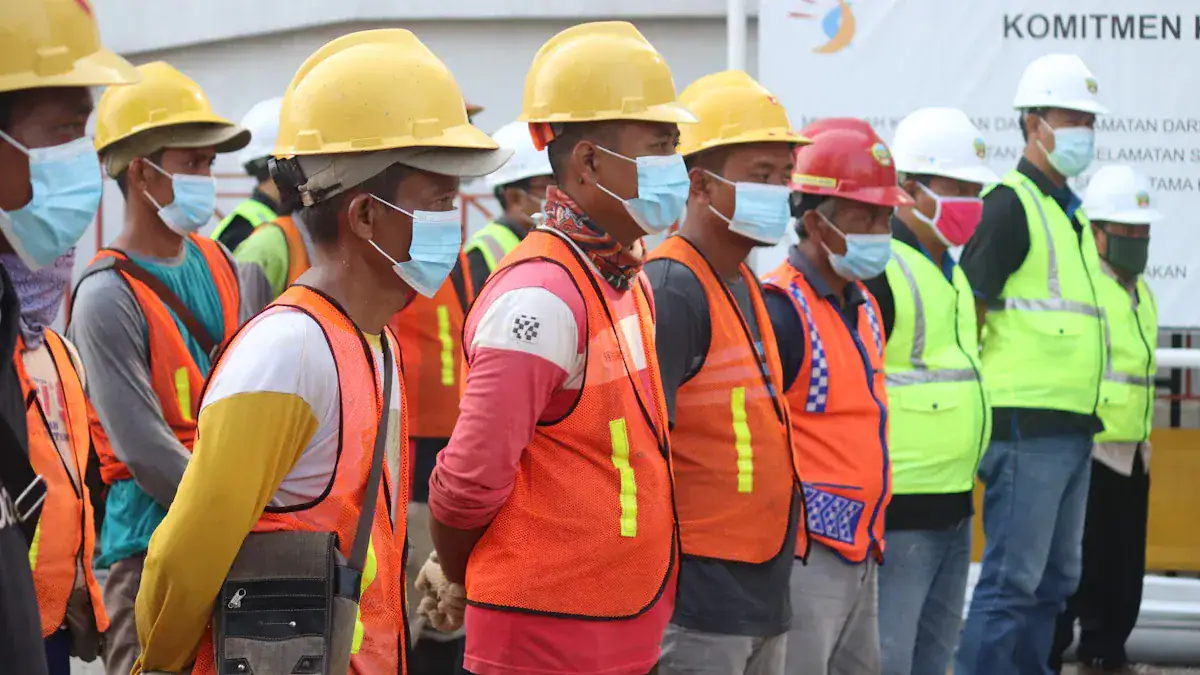
You face many hazards on construction sites, from moving vehicles to falling objects. High-visibility work vests play a crucial role in keeping you safe. OSHA and federal regulations require you to wear high-visibility apparel when you work near traffic or heavy equipment. The table below highlights key standards you must follow:
Regulation/Standard | Description |
|---|---|
MUTCD Part 6 Section 6D.03 | Mandates high-visibility safety apparel for workers in Federal-aid highway rights-of-way. |
High Visibility Standard | Outlines design and performance specifications for high-visibility apparel, including vests and jackets. |
You reduce accident risk when you wear a work vest that meets ANSI standards. High-visibility colors and reflective strips help you stand out, even in low-light or high-traffic conditions. A study of OSHA-investigated cases found that blind spots, obstructions, and poor lighting often led to fatal accidents. You can avoid these dangers by choosing the right safety gear.
Evidence Type | Description |
|---|---|
Visibility Impact | Work vests enhance visibility, minimizing accident risk in high-traffic or low-light conditions. |
ANSI Standards | High-visibility safety vests meeting ANSI class standards are crucial in construction environments. |
You see the difference on construction sites when everyone wears high-visibility vests. You help prevent accidents and make it easier for emergency responders to locate you quickly if an incident occurs.
Roadwork
Roadwork and traffic control environments demand extra attention to visibility. You often work close to moving vehicles and need to be seen at all times. High-visibility work vests are not just recommended—they are mandatory for your safety. Over the past five years, the use of high-visibility vests has led to a 15% decrease in fatal accidents and a 12% drop in nonfatal injuries in road maintenance and construction sectors. The chart below shows how high-visibility apparel improves safety outcomes:
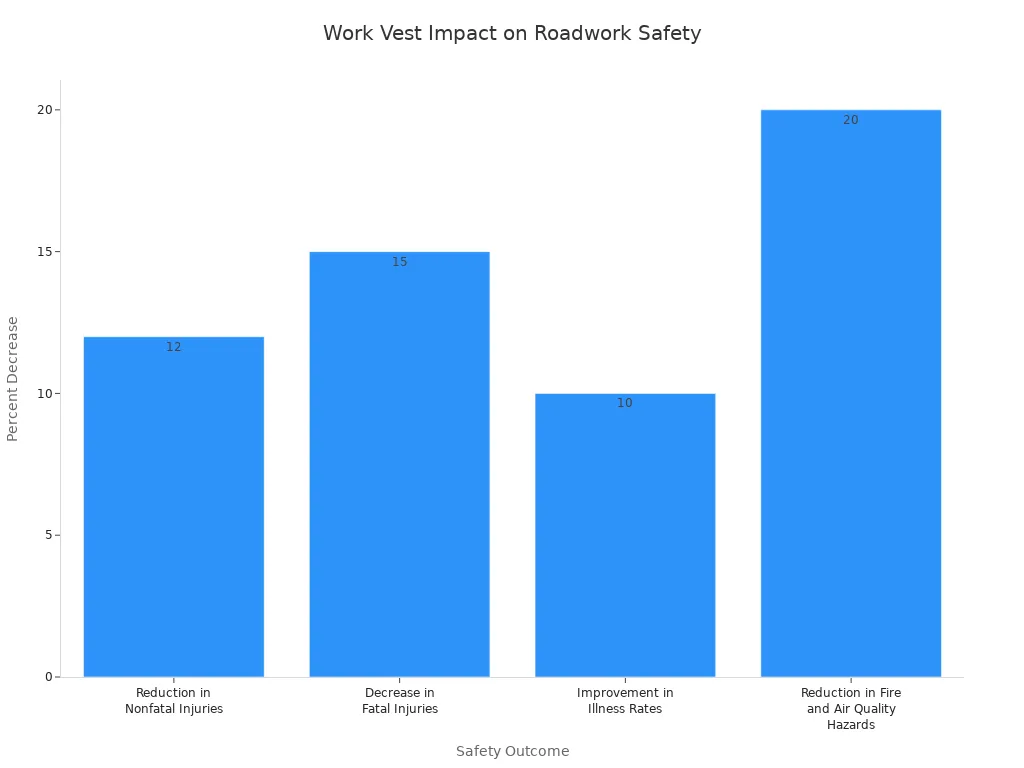
You also benefit from a 10% reduction in illness rates and a 20% decrease in incidents related to fire and air quality hazards. These improvements show how essential high-visibility safety gear is for roadwork and traffic control. You help emergency responders spot you faster during emergencies, which can save lives.
Logistics
In logistics, you move goods through busy warehouses and shipping centers. High-visibility work vests help you avoid accidents by making you easy to see among forklifts and other machinery. You also meet safety regulations, which protects your company from penalties. Work vests help you communicate and identify team members quickly, improving operational efficiency. You stay protected with features like flame-resistance and water-resistance, which are important in warehouse and manufacturing settings. Work vests also support your company’s brand image, making your team look professional and unified.
Tip: Always check that your work vest meets the latest high-visibility standards before starting your shift. You protect yourself and your coworkers every time you put on your safety gear.
Utilities
You work in the utilities sector, where safety and visibility matter every day. Utility workers often repair power lines, maintain water systems, or respond to emergencies on busy streets. You face many hazards, including moving vehicles, electrical equipment, and changing weather. High-visibility work vests help you stay safe and efficient in these challenging environments.
When you wear a work vest, you make yourself easy to spot. Bright colors and reflective strips catch the attention of drivers and coworkers. This visibility reduces the risk of accidents, especially when you work near traffic or in low-light conditions. OSHA requires you to wear high-visibility apparel during utility repairs, especially if you work on or near roadways. You meet these requirements by choosing a vest that follows ANSI/ISEA 107 standards.
Work vests do more than keep you visible. They also protect you from hazards. Many utility vests use durable, weather-resistant materials. You stay dry during rain and shielded from wind or cold. Some vests include flame-resistant fabrics, which protect you if you work near electrical lines or gas leaks. You also benefit from pockets and compartments that hold your tools, radios, and safety equipment. This organization lets you respond quickly to emergencies and reduces downtime.
You also notice a boost in morale when you and your team wear proper safety gear. When everyone feels safe, you work with more confidence and focus. This positive environment leads to higher productivity and fewer mistakes.
Here is a table that shows the main benefits of work vests in utility maintenance and repair:
Benefit Description | Explanation |
|---|---|
Visibility | High visibility vests ensure that employees are easily seen, reducing the risk of accidents in environments where they might blend into the background. |
Safety in Traffic | Wearing high visibility clothing helps drivers see workers in roadside construction, minimizing the risk of injury from vehicles. |
Enhanced Morale | Access to high visibility clothing contributes to a safer working environment, which can improve employee morale and productivity. |
Accident Reduction | The use of high visibility uniforms significantly lowers the chances of accidents related to workers not being seen. |
Tip: Always inspect your vest before each shift. Make sure the reflective strips are clean and the fabric is not damaged. A well-maintained vest keeps you safe and compliant with safety standards.
You play a key role in keeping your community running. By wearing the right work vest, you protect yourself and your team, reduce accident risks, and help everyone work more efficiently.
Choosing the Right Work Vest
Job Needs
You should always start by considering your job’s specific requirements when selecting a work vest. Each role demands different features to keep you safe and efficient. For example, electricians often need flame-retardant materials, while warehouse staff may prefer lightweight fabrics for comfort. Mechanics might look for reinforced pockets to hold heavy tools. The right choice depends on your daily tasks and the hazards you face.
Here is a table that highlights important factors to consider for your job:
Factor | Description |
|---|---|
Materials | Options include cotton, polyester, blended fabrics, and membrane fabric. |
Fit | Variants like straight cut, slim fit, and those with side panels for movement. |
Functional Elements | Includes pockets for tools, reflective inserts for visibility, and secure closures. |
Length | Standard waist-length or extended for back protection. |
Visibility | High-visibility colors and reflective strips for safety in low light. |
Industry-Specific Needs | Features tailored for electricians, warehouse staff, and mechanics. |
You should choose materials based on your job. Flame-retardant fabrics protect you if you work near electrical hazards. If you move a lot, look for a vest with side panels or a slim fit for better movement. Functional elements like tool pockets and reflective strips help you stay organized and visible. The length of your vest matters too. Extended vests offer more protection if you bend or kneel often.
Tip: Always match your work vest features to your daily tasks. This ensures you get the most out of your safety gear.
Environment Factors
Your work environment plays a big role in choosing the right vest. Weather and lighting conditions affect your visibility and comfort. High-visibility vests come in different classes to meet these needs. For daytime work, fluorescent materials help you stand out in natural light. If you work at night or in low-light areas, retroreflective strips are essential for safety.
Weather conditions like rain or cold require waterproof or insulated vests.
Lighting conditions determine if you need more fluorescent or retroreflective materials.
High-visibility vests improve your safety in both bright and dim environments.
You should always check your surroundings before starting work. If you work outdoors, pick a vest that protects you from wind and rain. For indoor jobs with low lighting, choose a vest with extra reflective strips.
Comfort and Fit
Comfort and fit are just as important as safety features. You will wear your vest for long hours, so it must feel good and allow you to move freely. Look for adjustable straps or side panels that let you customize the fit. A vest that is too tight can restrict your movement, while one that is too loose may get caught on equipment.
Choose a fit that matches your body type and job activity.
Adjustable features help you layer your vest over other clothing.
Breathable fabrics keep you cool during hot days.
You should try on different styles to find what works best for you. A comfortable vest helps you stay focused and productive throughout your shift.
Certification
You must verify certifications before purchasing a work vest for any industrial job. Certification ensures your vest meets strict safety standards and protects you in hazardous environments. You see several organizations that set these standards, including ANSI, OSHA, and DOT. Each group focuses on different aspects of safety, but all require high-visibility features for maximum protection.
High-visibility work vests must meet ANSI (American National Standards Institute) guidelines. ANSI sets the rules for color, reflectivity, and design. You find three main classes for high-visibility vests. Each class matches a specific risk level and job environment. The table below shows the requirements for each class:
Class | Description | Requirements |
|---|---|---|
Class 1 | For low-risk jobs (traffic ≤ 25 mph) | Minimum 155 sq. in. reflective tape, safety yellow/orange color |
Class 2 | For moderate-risk jobs (traffic ≤ 50 mph) | Minimum 775 sq. in. background material, 201 sq. in. reflective striping |
Class 3 | For high-risk jobs (traffic > 50 mph) | Minimum 1,240 sq. in. background material, 310 sq. in. reflective striping |
You must check the label on your vest for ANSI certification. This label confirms your vest meets the required standards for high-visibility and reflectivity. OSHA (Occupational Safety and Health Administration) also requires high-visibility apparel for workers exposed to vehicle traffic or heavy equipment. DOT (Department of Transportation) sets additional rules for roadwork and traffic control jobs.
Tip: Always inspect your work vest for certification tags before each shift. A missing or faded tag means your vest may not meet current safety standards.
Some work environments need more than just high-visibility. Flame-resistant features are important if you work near electrical hazards or flammable materials. ANSI provides flame-resistant standards that manufacturers use to rate their safety vests. You should look for vests that combine high-visibility with flame-resistance if your job involves welding, electrical work, or chemical handling.
You can use this checklist to confirm your vest’s certification:
Check for ANSI, OSHA, and DOT certification tags.
Verify the vest’s class matches your job’s risk level.
Inspect for flame-resistant ratings if needed.
Confirm the vest’s color and reflective striping meet high-visibility standards.
You protect yourself and your team when you choose certified high-visibility work vests. Certification reduces accident risks and keeps you compliant with workplace regulations. You show your commitment to safety every time you wear a properly certified vest.
You see how a work vest can transform your daily routine. Across industries, work vests boost safety and help you work more efficiently. Choosing the right safety gear for your job and environment protects you and your team. Always check that your vest meets current standards. Stay proactive about safety and encourage others to wear the correct gear every day.
FAQ
What makes a work vest high-visibility?
You see high-visibility work vests use bright colors like yellow or orange. Reflective strips help you stand out in low light. These features meet ANSI/ISEA 107 standards for safety.
How do you choose the right work vest for your job?
You should match your vest to your job’s risks. Check for ANSI class, material, and pocket design. Select flame-resistant vests for electrical work. Pick waterproof vests for outdoor tasks.
Are work vests required by law?
You must wear work vests in many industries. OSHA and DOT require high-visibility vests for roadwork, construction, and utility repairs. Always check your local regulations before starting work.
How do you maintain your work vest?
You should inspect your vest daily. Clean reflective strips with mild soap and water. Replace faded or damaged vests. Store your vest in a dry place to keep it in good condition.
Can you wear a work vest over other safety gear?
You can wear work vests over harnesses, jackets, or uniforms. Adjustable straps help you fit the vest securely. Make sure reflective strips remain visible at all times.
What features improve efficiency in work vests?
You benefit from multiple pockets, tool loops, and ID holders. These features help you organize tools and equipment. Quick access to gear reduces downtime and boosts productivity.
How do you know if your vest meets safety standards?
Look for ANSI/ISEA 107 certification tags inside your vest. Check the class and type. Inspect reflective strips and colors. Ask your supervisor if you are unsure about compliance.